Spring season open · Mar 15 – Jun 25 places left · Classic 7d · May 03Rhododendron bloom reported at Forest Camp
Trail status: Open
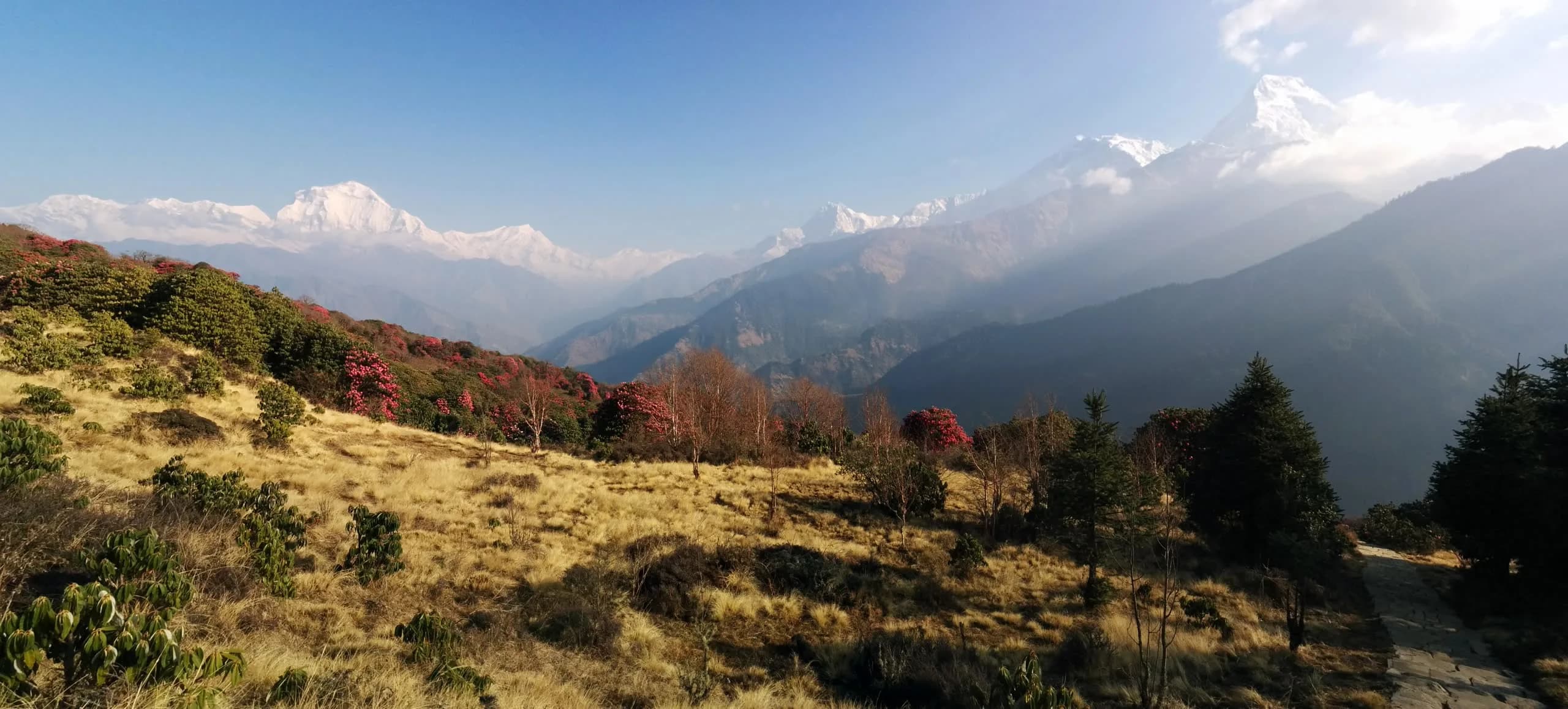
Sunrise light on Machhapuchhre from the Mardi Himal trail
Shooting the trail

Mardi Himal photography.

The Mardi Himal trek is one of the most photogenic short treks in Nepal, with Machhapuchhre filling the frame for days. This guide covers the best photo spots with their altitudes, how to catch the golden light, the gear that earns its weight, and the real drone rules inside the Annapurna Conservation Area, which are not what most websites tell you.

Best photo spots on the trail.

The trail climbs through a series of natural viewpoints, each with a different angle on Machhapuchhre (the sacred, climbing-prohibited Fishtail peak at 6,997 m) and the Annapurna wall. Altitudes rise as you go.

Golden hour & sunrise.

The best daily light is early morning, when the peaks first light up gold, with last light at sunset a close second. As a general rule, golden hour falls within one to two hours of sunrise and sunset, so the best frames come at the very start and end of the day, when most people are still in the lodge. High Camp is the classic place to be standing when the first light hits Machhapuchhre.

Autumn · Oct to Nov

Clearest peaks

The driest, most stable air gives the cleanest, sharpest views of the snow peaks. The prime window for crisp mountain photography.

Spring · Mar to May

Colour on the trail

Good clarity with the bonus of rhododendron bloom through the forest, adding foreground colour to your mountain frames.

Drone rules in the conservation area.

This is the part most websites get wrong, so read it carefully before you pack a drone. The whole Mardi trail is inside the Annapurna Conservation Area, which changes which rules apply.

The USD 1,500 fee myth

The widely-quoted USD 1,500 drone and filming fee is the national-park rate set by the Department of National Parks and Wildlife Conservation (DNPWC). It applies to parks such as Sagarmatha, not to Annapurna. Annapurna is a conservation area managed by NTNC, not a DNPWC national park, so that figure does not apply here.

No published ACAP fee

An official ACAP or NTNC drone fee is not published. You must confirm the actual cost and process for the conservation area with NTNC directly before you rely on any figure you read online.

Pokhara no-fly zone

Pokhara has a 5 km airport no-fly zone that covers much of the lower trail and Sarangkot. Flying is prohibited there at any altitude, regardless of any conservation-area permit.

CAAN registration

CAAN requires every drone to be registered, including units under 250 g, with no weight exemption. Registration is valid for one year and renewable.

120 m altitude cap

The standard ceiling is 120 m above the ground; anything higher needs explicit CAAN approval.

Daylight only

Night flying is prohibited and the drone must stay within visual line of sight, so the dawn and dusk light you most want needs careful timing within legal daylight hours.

Bottom line: a drone in the Annapurna region needs CAAN registration plus a separate NTNC conservation-area permit, the rules are strict, and several key figures are unverified. Confirm everything with NTNC and CAAN before you travel, and plan the trail itself with our best season guide.

Gear & tips.

You do not need a studio on your back, but a few choices make a real difference at altitude and in the cold mornings.

A zoom for the peaks

The big peaks are far off and a telephoto compresses the ridgelines beautifully. A phone handles wide valley scenes, but a zoom earns its weight here.

Spare batteries, kept warm

Cold mornings at High Camp drain batteries fast. Carry spares and keep them in an inside pocket close to your body overnight.

A small tripod for low light

Sunrise and sunset are the best light, and both sit at the edges of the day. A lightweight tripod steadies long exposures without much extra load.

Protect against dust and damp

Forest sections are humid and the high trail can be dusty. A simple rain cover and a lens cloth keep your kit clean between camps.

Photography questions.

What are the best photo spots on the Mardi Himal trek?

Australian Camp (around 2,060 m) for an early Annapurna panorama, Upper Sinuwa (around 2,360 m) for golden-hour Machhapuchhre on the lower trail, Low Camp (around 2,990 m) for the first clear snow peaks, Badal Danda (around 3,210 m) for open ridgeline views, and High Camp (around 3,540 to 3,580 m) for the premier sunrise and sunset. The Mardi Himal Viewpoint and Base Camp at around 4,250 to 4,500 m give the closest peak views.

When is the best light for mountain photos?

Early morning, when the peaks first light up gold, is the best of the day, with last light at sunset a close second. As a general rule, golden hour falls within one to two hours of sunrise and sunset. Autumn (October to November) gives the clearest peaks, while spring (March to May) is good and adds rhododendron colour.

Can I fly a drone on the Mardi Himal trek?

Only with the right permits, and even then there are real limits. The whole trail sits inside the Annapurna Conservation Area, so on top of registering your drone with the Civil Aviation Authority of Nepal (CAAN) you need a separate conservation-area permit from NTNC. Pokhara has a 5 km airport no-fly zone that covers much of the lower trail and Sarangkot, where flying is not allowed at all. Confirm the current rules before you travel.

Does the USD 1,500 drone fee apply in the Annapurna region?

No. The widely-quoted USD 1,500 filming fee is the national-park rate set by the Department of National Parks and Wildlife Conservation (DNPWC) for parks such as Sagarmatha. Annapurna is not a DNPWC national park; it is a conservation area managed by NTNC, so that figure does not apply here. An official ACAP or NTNC drone fee is not published, so you must confirm the actual cost with NTNC directly.

What are the core drone flight rules in Nepal?

CAAN requires every drone to be registered, including units under 250 g, with no weight exemption. You must keep the drone within visual line of sight, fly only in daylight, and stay at or below a 120 m altitude cap. Add the Pokhara 5 km airport no-fly zone over the lower trail and the separate ACAP and CAAN approvals, and casual filming is not as simple as it looks.

What camera gear should I bring?

A zoom or telephoto lens for the distant peaks, spare batteries kept warm against the cold mornings, a lightweight tripod for low-light sunrise and sunset shots, and simple protection against forest damp and high-trail dust. A phone alone covers the wide valley scenes but will not reach the summits.

More to shoot.

Add some action to your frames with the Mardi Himal adventure activities, and time your trip with the best season guide for the clearest peaks.

Read the mountain, then come walk it.

We run small-group trips from Pokhara every Saturday from September to May. We also run private trips any day. A $50 deposit holds your place. Pay the rest on arrival in cash or by card.