Express, 3 days
Jeep to Pitam Deurali and walk to Rest Camp on Day 1, High Camp on Day 2, then the Upper Viewpoint sunrise, the descent to Sidhing and a jeep to Pokhara on Day 3.
Full 3-day itinerary & 2026 price →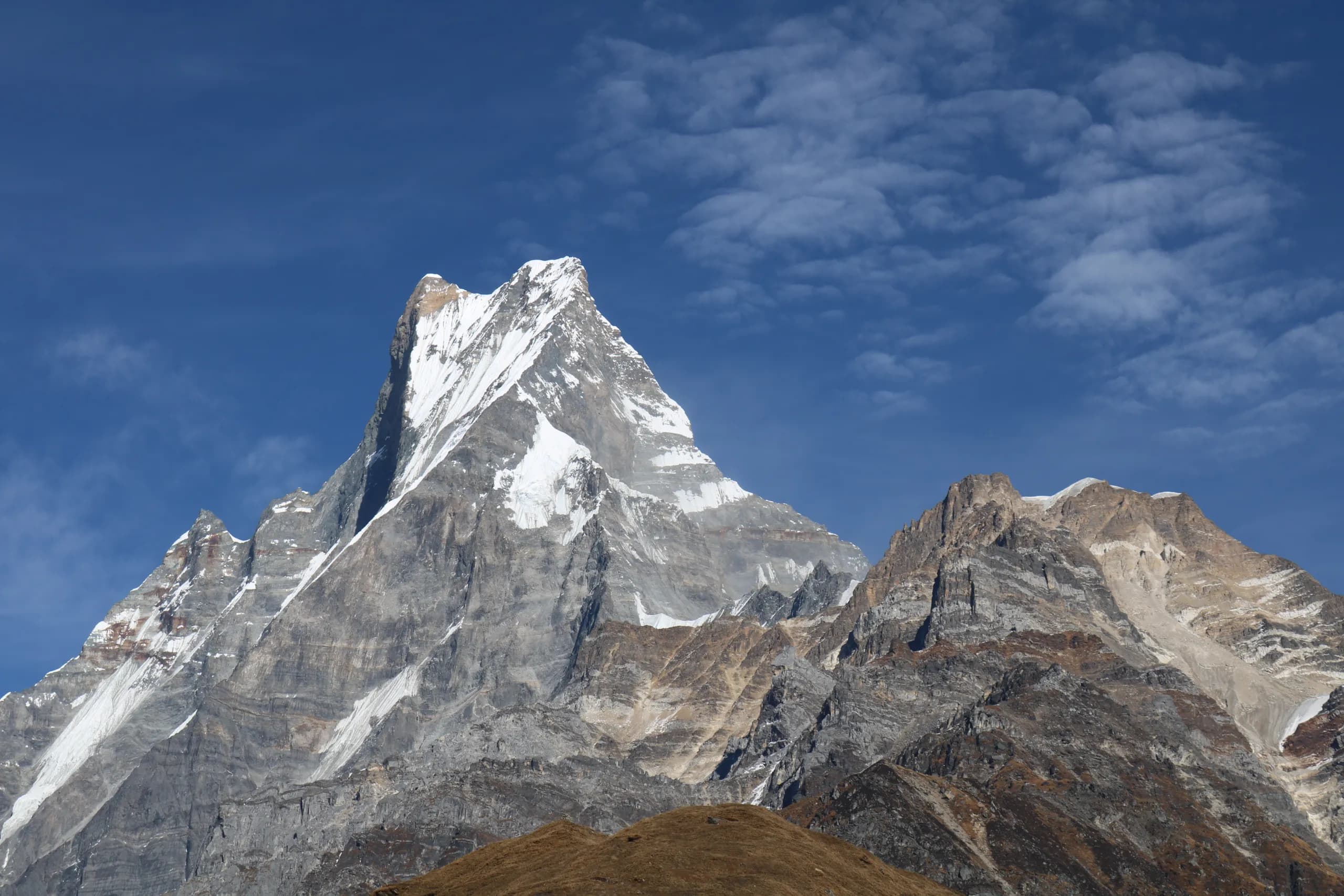
Every Mardi Himal itinerary we run, from the 3-day express to the 8-day homestay route, night by night, then the trail from Pokhara to the Upper Viewpoint at 4,200 metres section by section. Distances, walking hours, altitudes, and what each stretch actually feels like, written by guides who walk the route every week.
Every Mardi Himal trek we run walks the same trail from Pitam Deurali to the Upper Viewpoint at 4,200 metres. What changes with the length is where you sleep. The table shows each itinerary night by night; below it, the trail section by section, with walking times, altitudes, and who sleeps where.
Each column links to that trek's full day-by-day page and 2026 price. The 5-day Mardi Himal trek is the standard. Times are honest ranges for a moderate group walking with a guide.
| Night | 3-day trek | 4-day trek | 5-day trek | 6-day trek | 7-day trek | 8-day trek |
|---|---|---|---|---|---|---|
| 1 | Rest Camp | Rest Camp | Pitam Deurali | Pitam Deurali | Pitam Deurali | Australian Camp |
| 2 | High Camp | High Camp | Low Camp | Rest Camp | Forest Camp | Forest Camp |
| 3 | Back in Pokhara | Low Camp | High Camp | High Camp | Badal Danda | High Camp |
| 4 | Back in Pokhara | Badal Danda | Low Camp | High Camp | Low Camp | |
| 5 | Back in Pokhara | Sidhing | Badal Danda | Sidhing | ||
| 6 | Back in Pokhara | Ghalel | Ghalel | |||
| 7 | Back in Pokhara | Lwang | ||||
| 8 | Back in Pokhara |
Morning briefing in Pokhara, then a 1 to 1.5-hour drive on the Baglung Highway to the trailhead at Kande. The first hour is a steady climb on stone steps through small farms and goat pasture to Australian Camp at 2,060 metres, where Annapurna South and Hiunchuli open up across the valley for the first time.
From there a forest trail dips and rises to the Gurung village of Pothana (1,890 m), where the ACAP permit is checked at the conservation post. Stop for a tea or a hot lunch in one of the family-run lodges. The trail then drops briefly to a saddle, joins the older Annapurna circuit path for ten minutes, and climbs again into oak and rhododendron forest.
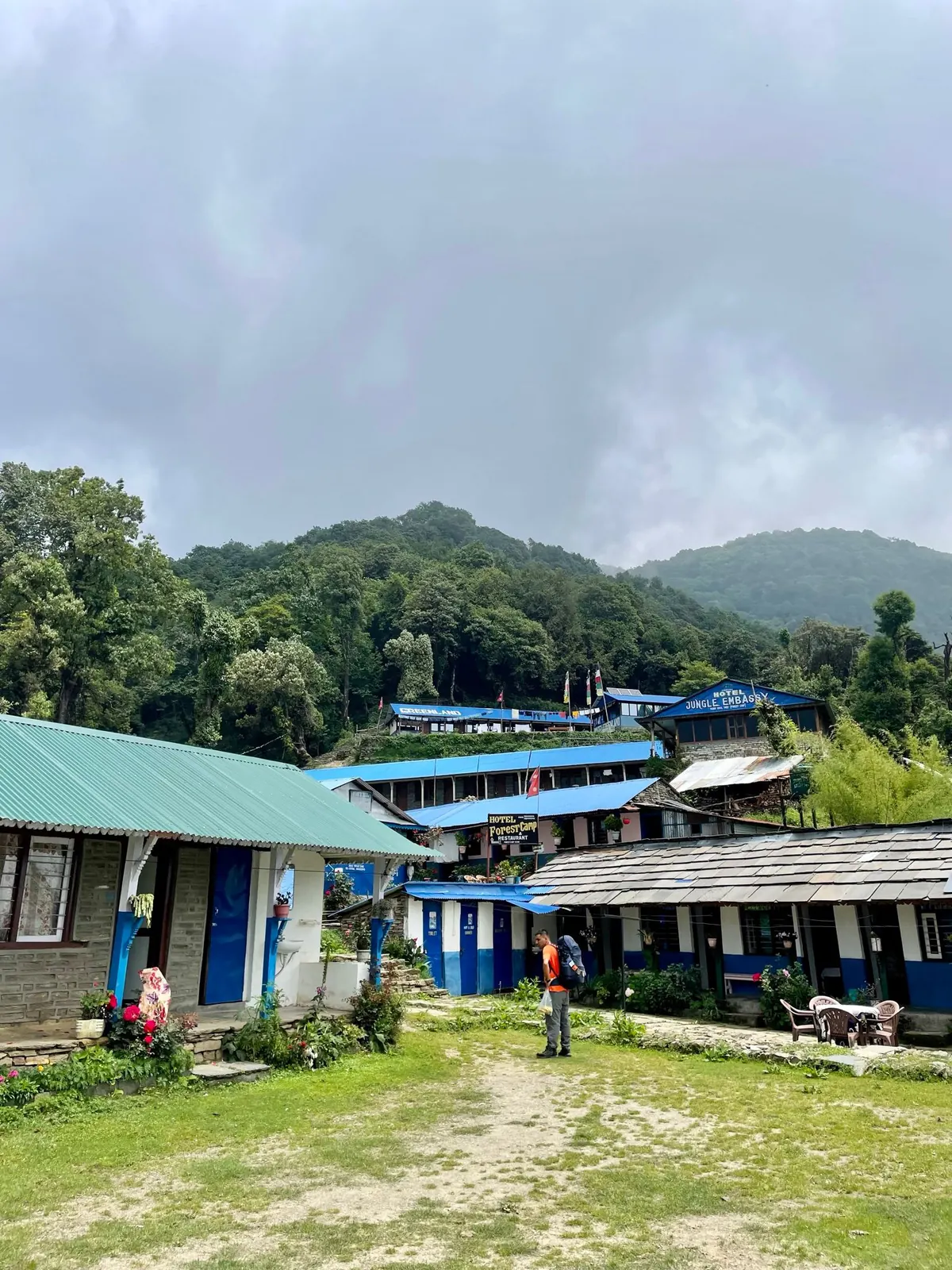
By mid-afternoon you reach Pitam Deurali at roughly 2,100 metres, the quiet junction where the dedicated Mardi Himal route branches off. Eight or more teahouses run here. Most groups arrive with two hours of daylight to spare, time enough for a short scout up through the forest behind the lodges.
Who it suitsA gentle warm-up on stone steps and forest path. Comfortable for any trekker in reasonable health, including first-timers and families with active teenagers. The 3 and 4-day treks skip it, driving by jeep all the way to Pitam Deurali.
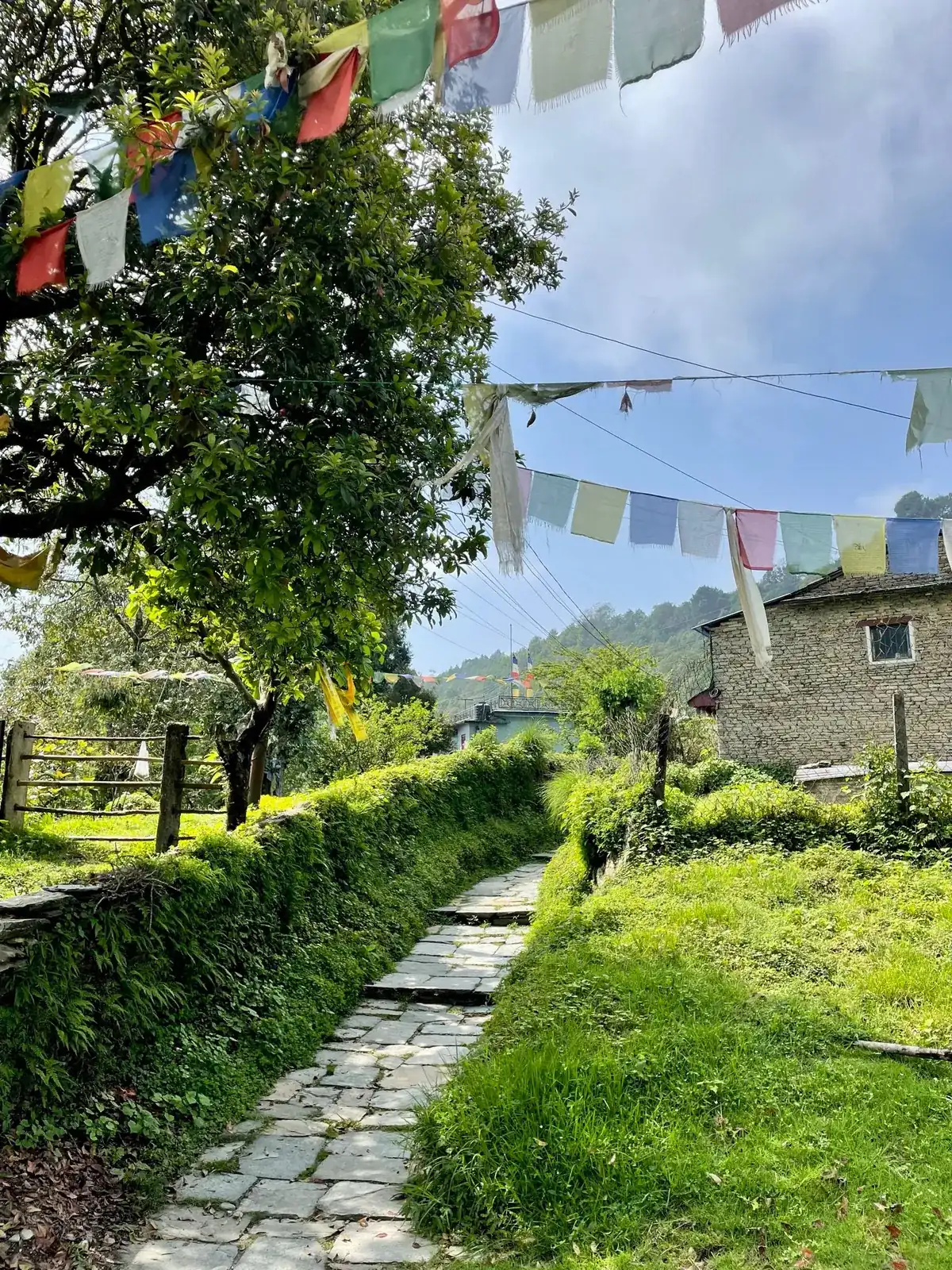
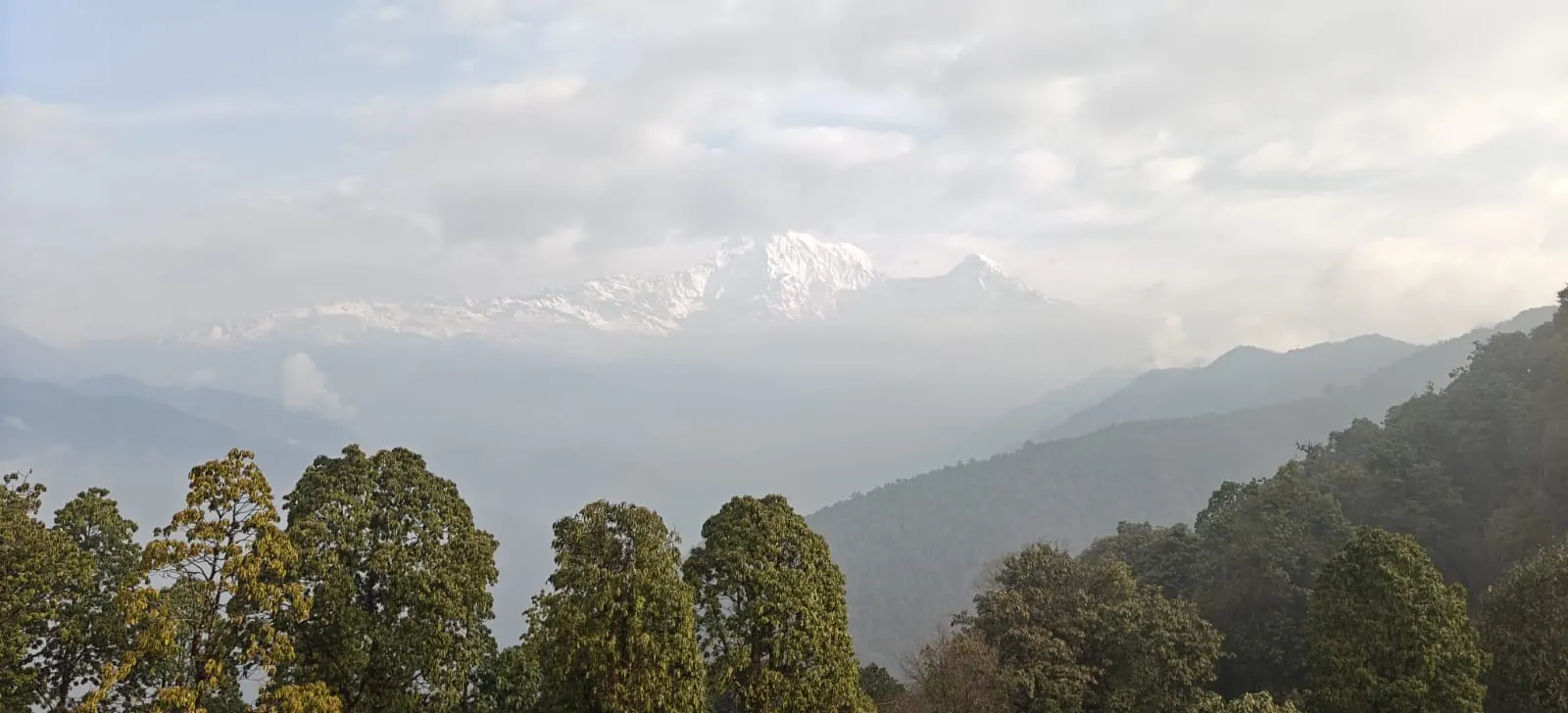
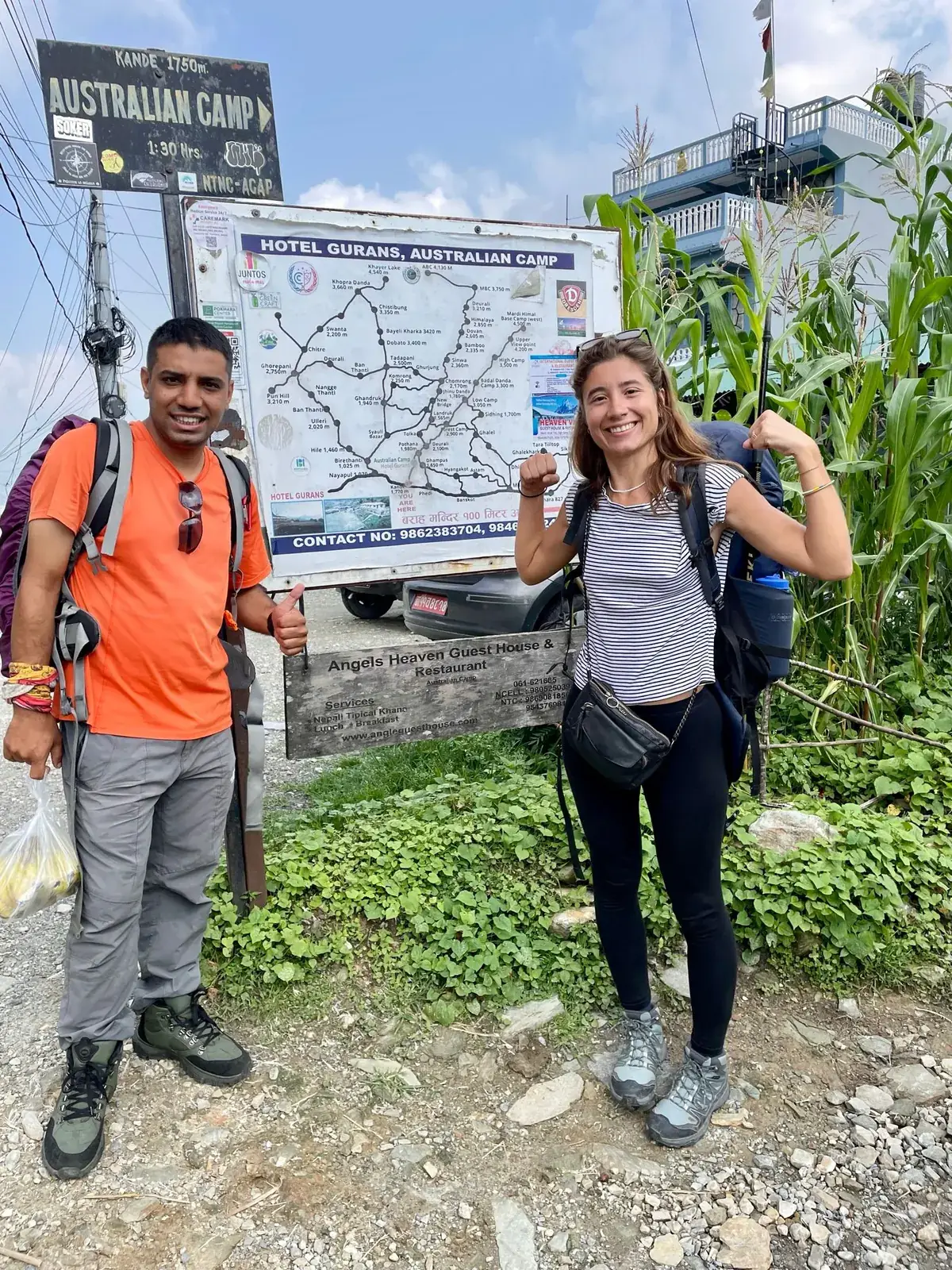
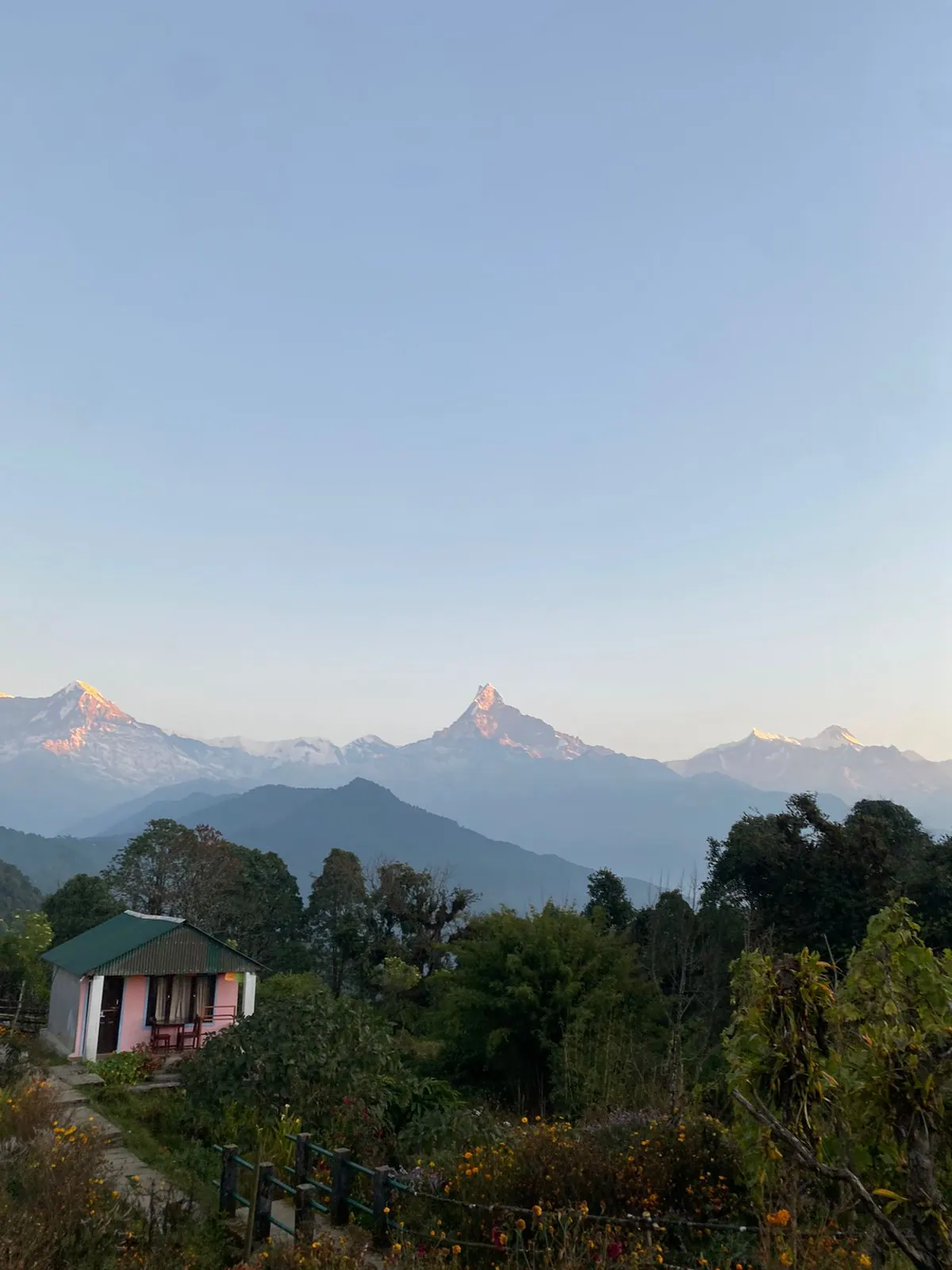
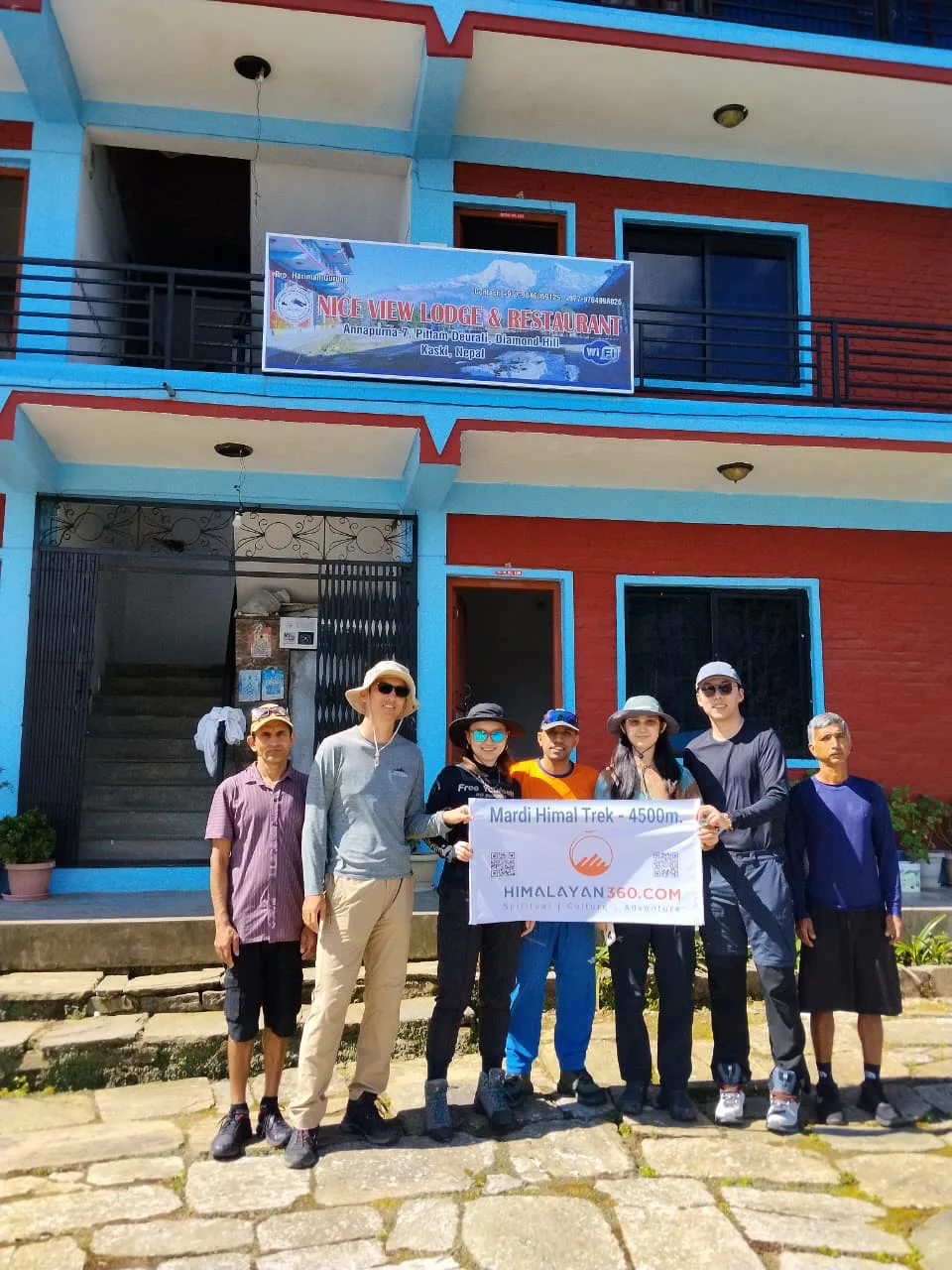
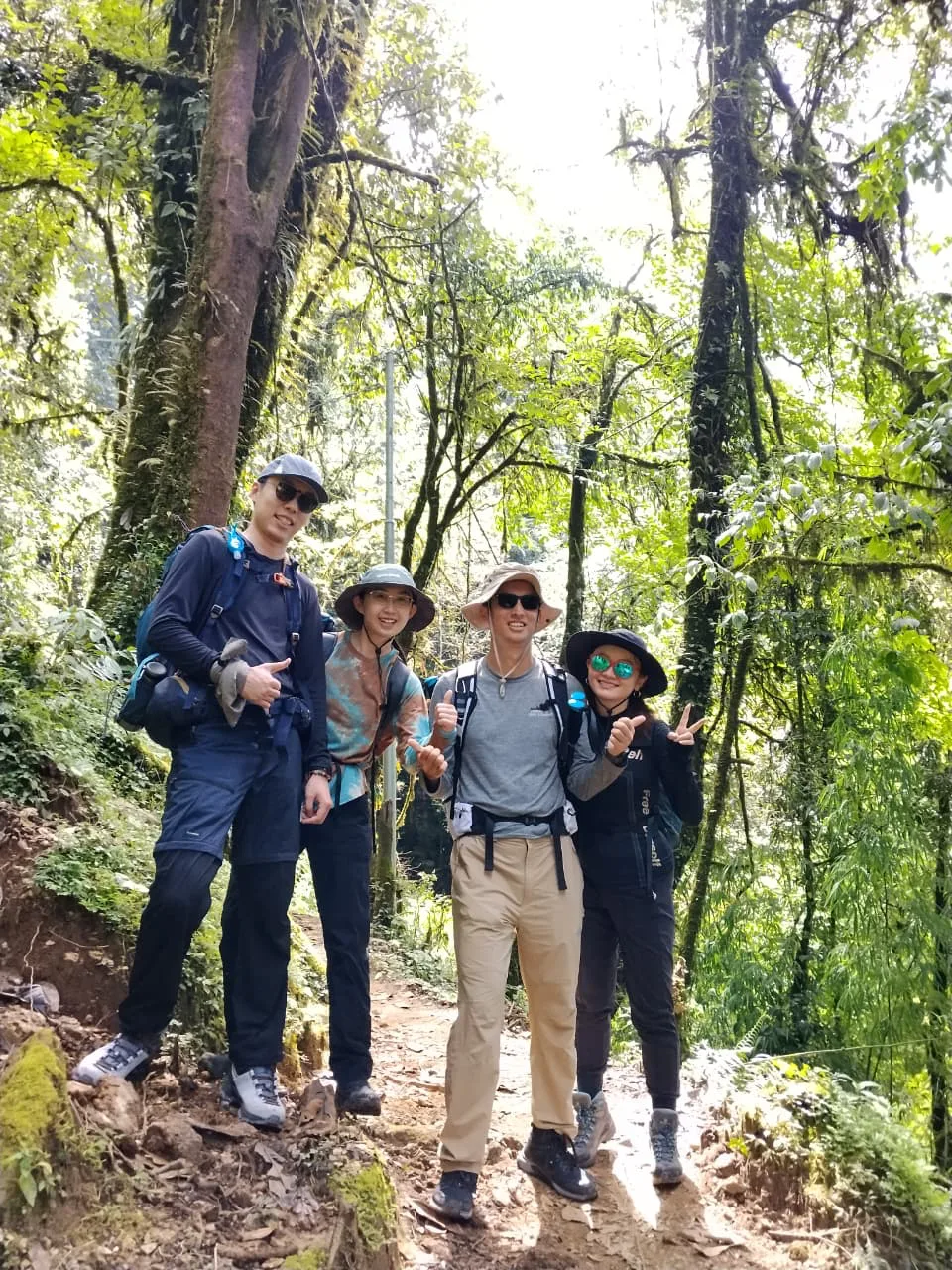
Most of a day inside the rhododendron and oak cloud forest. The trail is largely shaded under a mossy canopy, with brief openings where you cross small streams and clearings. Langur monkey troops are common in the upper canopy and are usually heard before they are seen.
In April the rhododendrons bloom red, pink, and white for hours of trail at a stretch, the most photographed stretch of the entire route. Small tea shacks at Banthanti Pati and again at Rest Stop give you reasons to break the climb.
Forest Camp at 2,550 metres is a cluster of eight or more teahouses sitting in a clearing where the trees briefly give way. WiFi is patchy and electricity is on a small solar bank, so charge devices over dinner rather than during the day. The newest lodge, Trekkers Inn, has the best kitchen on the lower route and serves dal bhat with home-grown greens.
Who it suitsA steady, continuous forest climb of four to five hours. Suited to anyone with everyday fitness who can walk uphill for a few hours. The 5 and 6-day treks walk on past Forest Camp the same day.
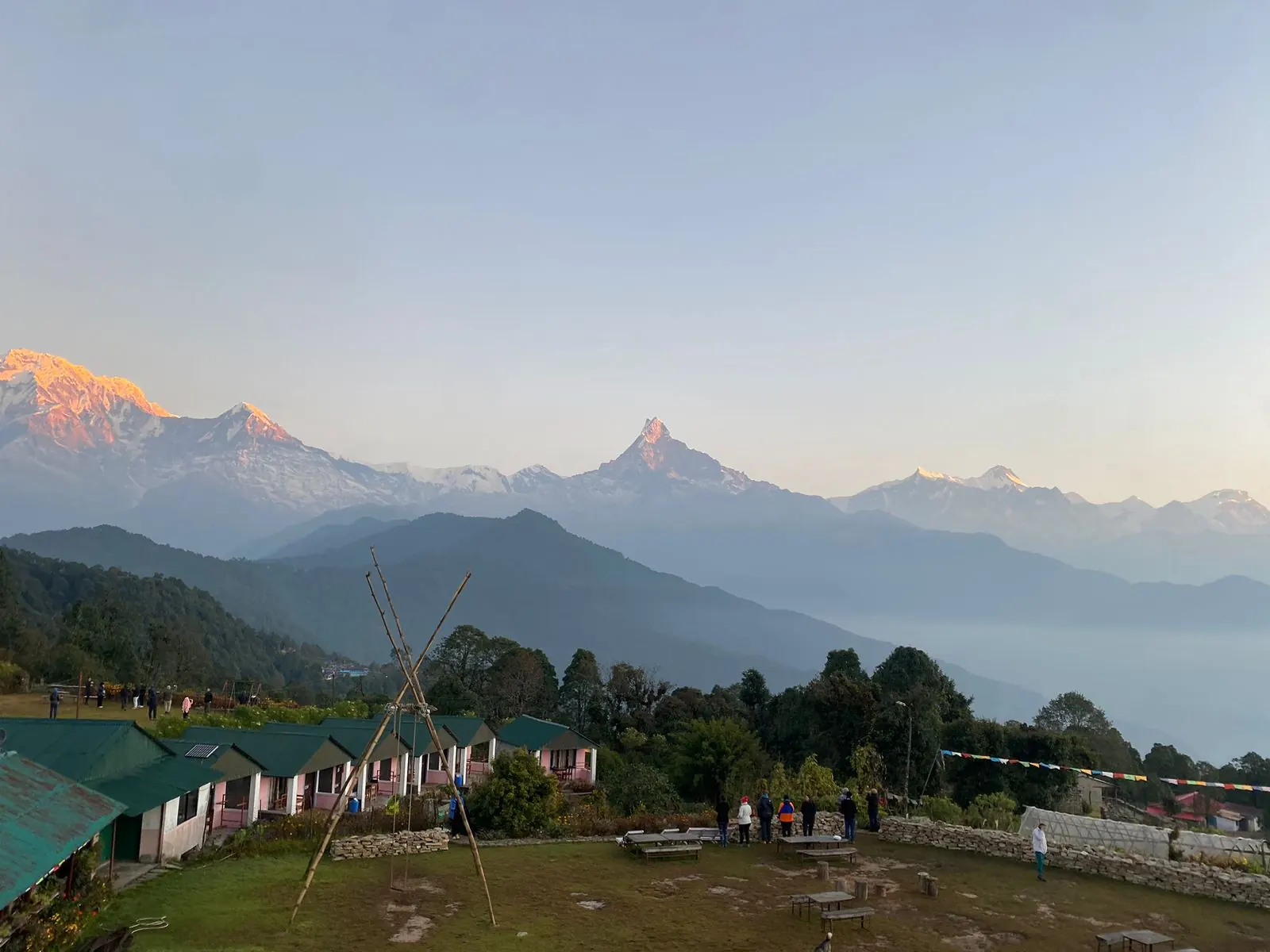
The forest thins as you climb. First glimpses of Annapurna South and Hiunchuli appear at the small clearing called Rest Camp at 2,600 metres, about an hour from Forest Camp.
The trail then climbs more steeply for ninety minutes through stunted rhododendron and dwarf bamboo to Low Camp at 2,985 metres, the first stop with full, uninterrupted mountain views. Most teahouses here face the Annapurna massif directly.
If you sleep here, the afternoon is for slow tea, journals, and watching Machhapuchhre rotate out of cloud. Many trekkers remember it most clearly of all the stops, partly because of the views, partly because the body is finally adjusting to the altitude.
Who it suitsA short climb out of the forest, the easiest stretch above Forest Camp. Suited to all levels. On the 5-day trek a night at Low Camp, below High Camp, gives your body time to adjust before the ridge.
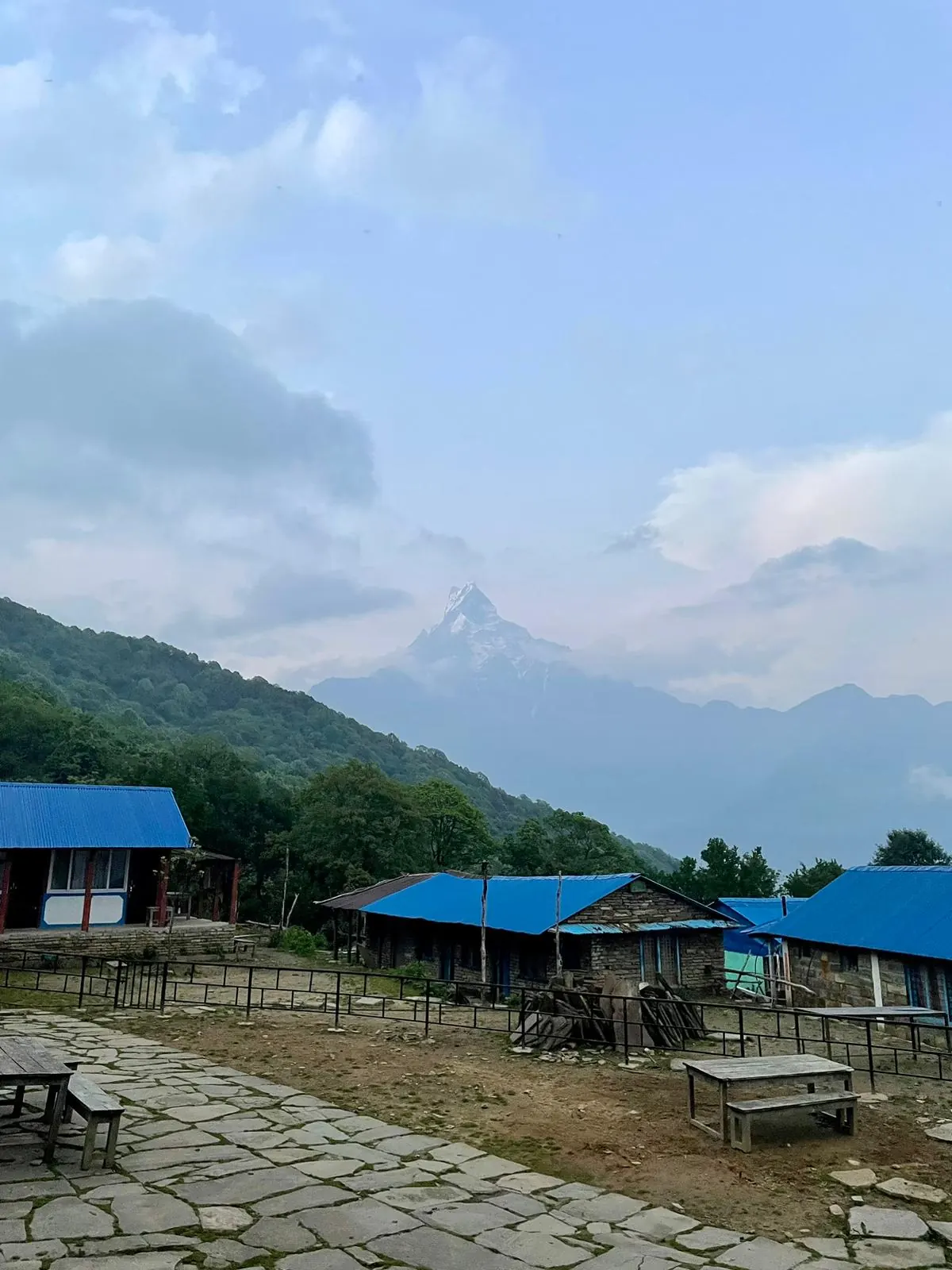
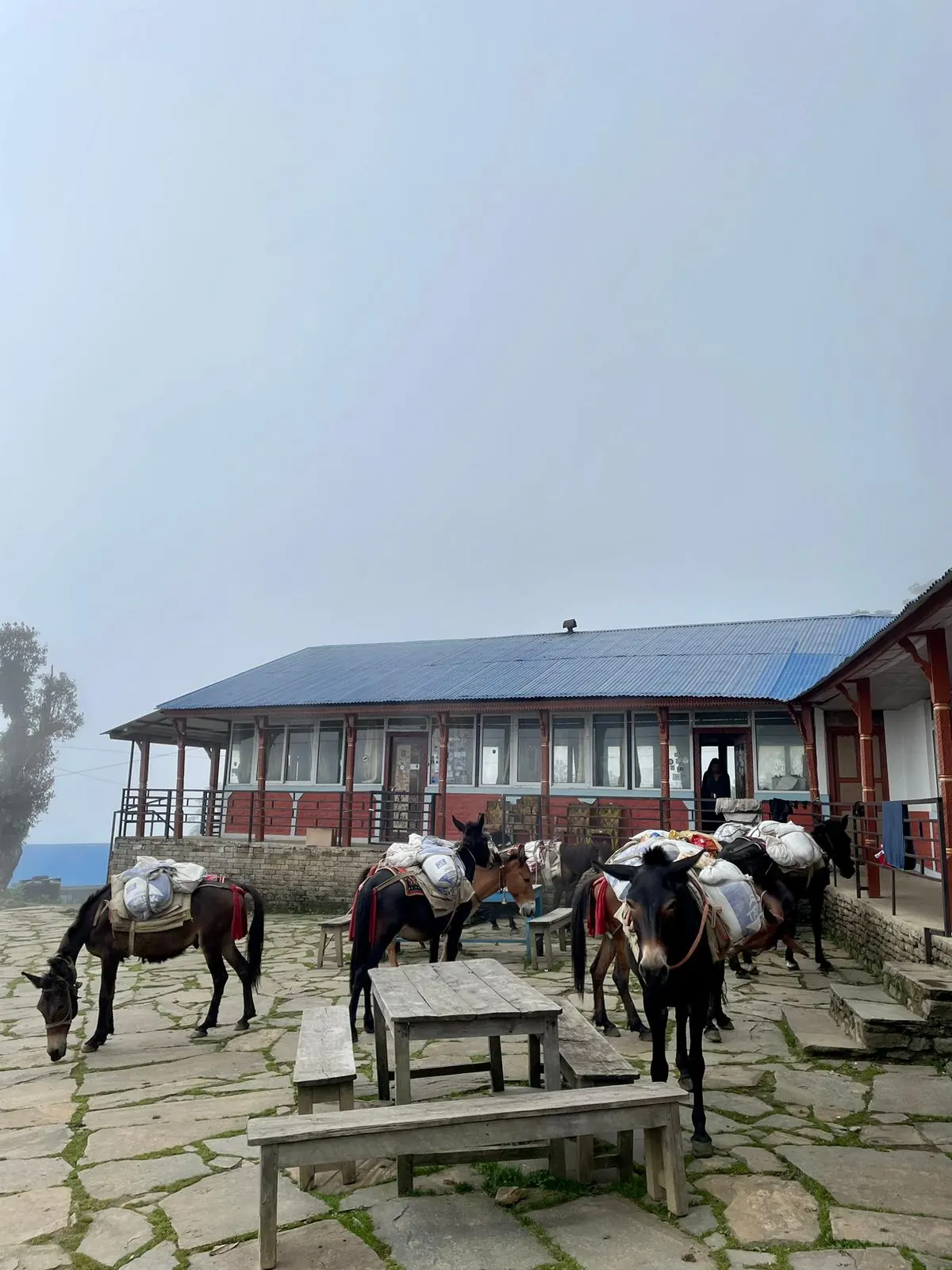
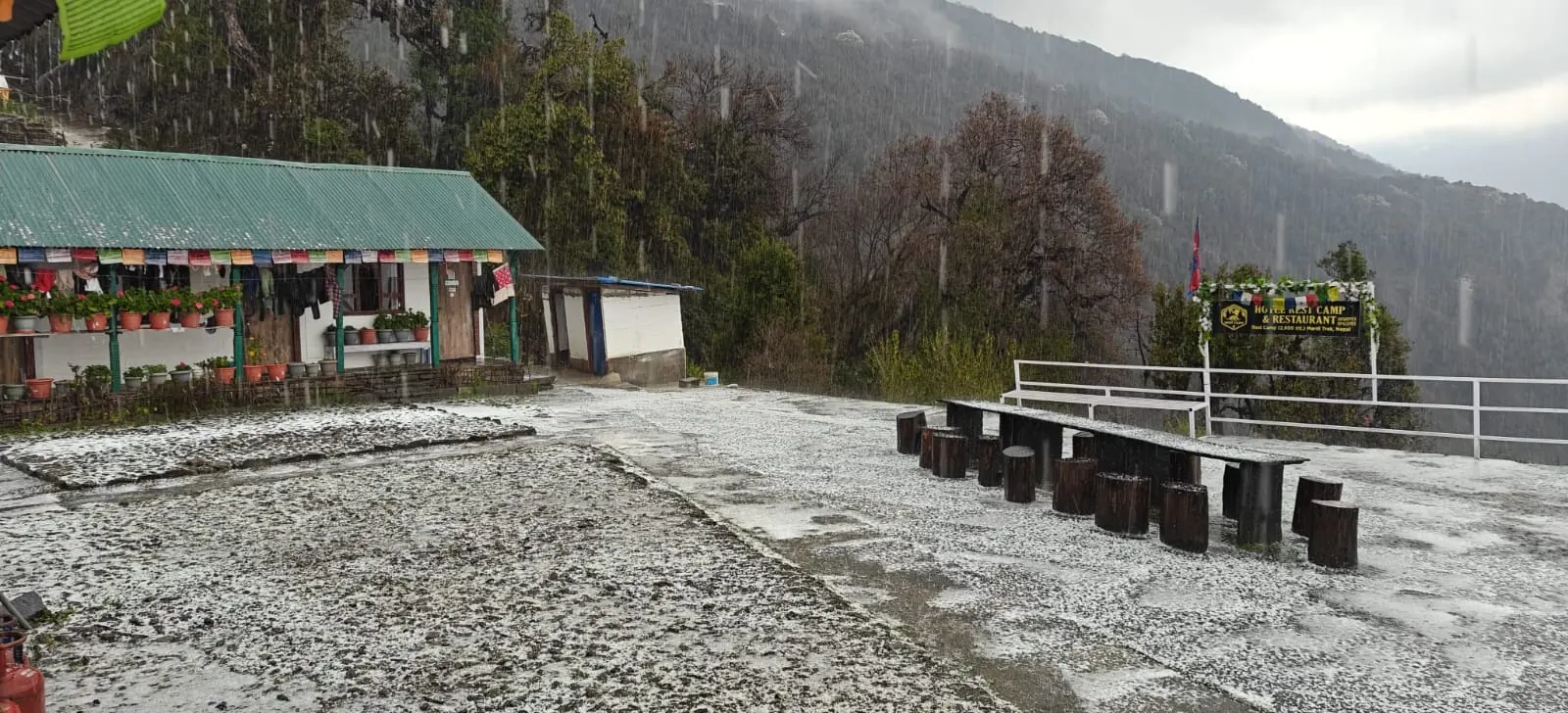
The first proper ridge walking, and the stretch most photographs are taken on. The treeline is crossed within the first hour. From here the trail rides an open spine past Badal Danda, the Cloud Ridge, at 3,210 metres, where Machhapuchhre stands directly ahead.
The wind picks up in the afternoons. Layers on, sun cream reapplied, and pace slowed to match breathing. The ridge has occasional shelter in small dips but is otherwise exposed. Lunch is taken at Badal Danda or at one of the smaller teahouses just above it, with the entire Annapurna sanctuary spread out below.
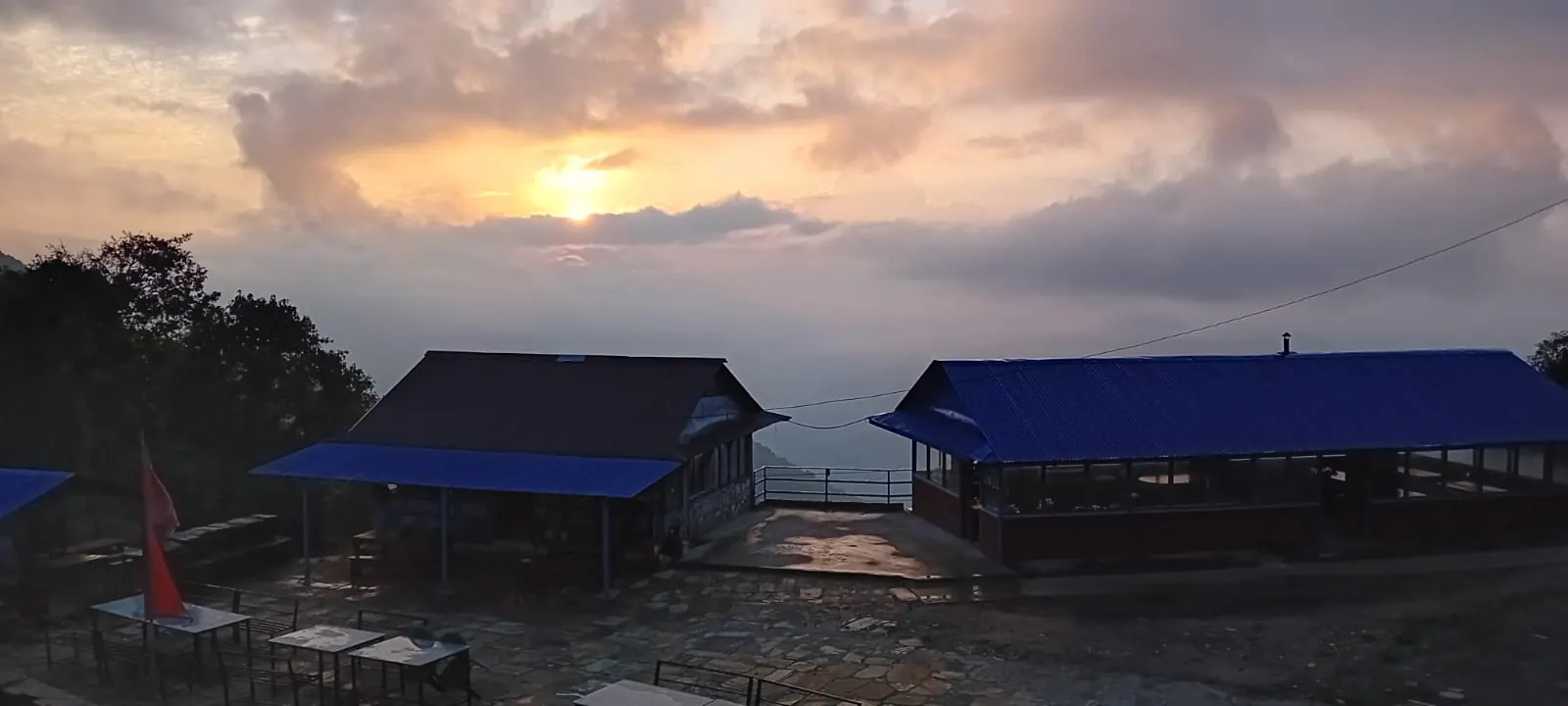
High Camp at 3,580 metres is the final overnight before the summit push on every itinerary. Rooms are basic plywood, shared bathrooms, and nights drop well below freezing even in autumn. The dining hall sunset, with the Annapurna massif glowing pink and the cloud sea filling the valleys below, is the moment most trekkers remember as the reason they came.
Who it suitsThe first exposed ridge walking, with wind, altitude, and roughly 595 metres of ascent. Suited to trekkers comfortable walking four to five hours on open, uneven ground. No technical skill needed, but a head for mild exposure helps.
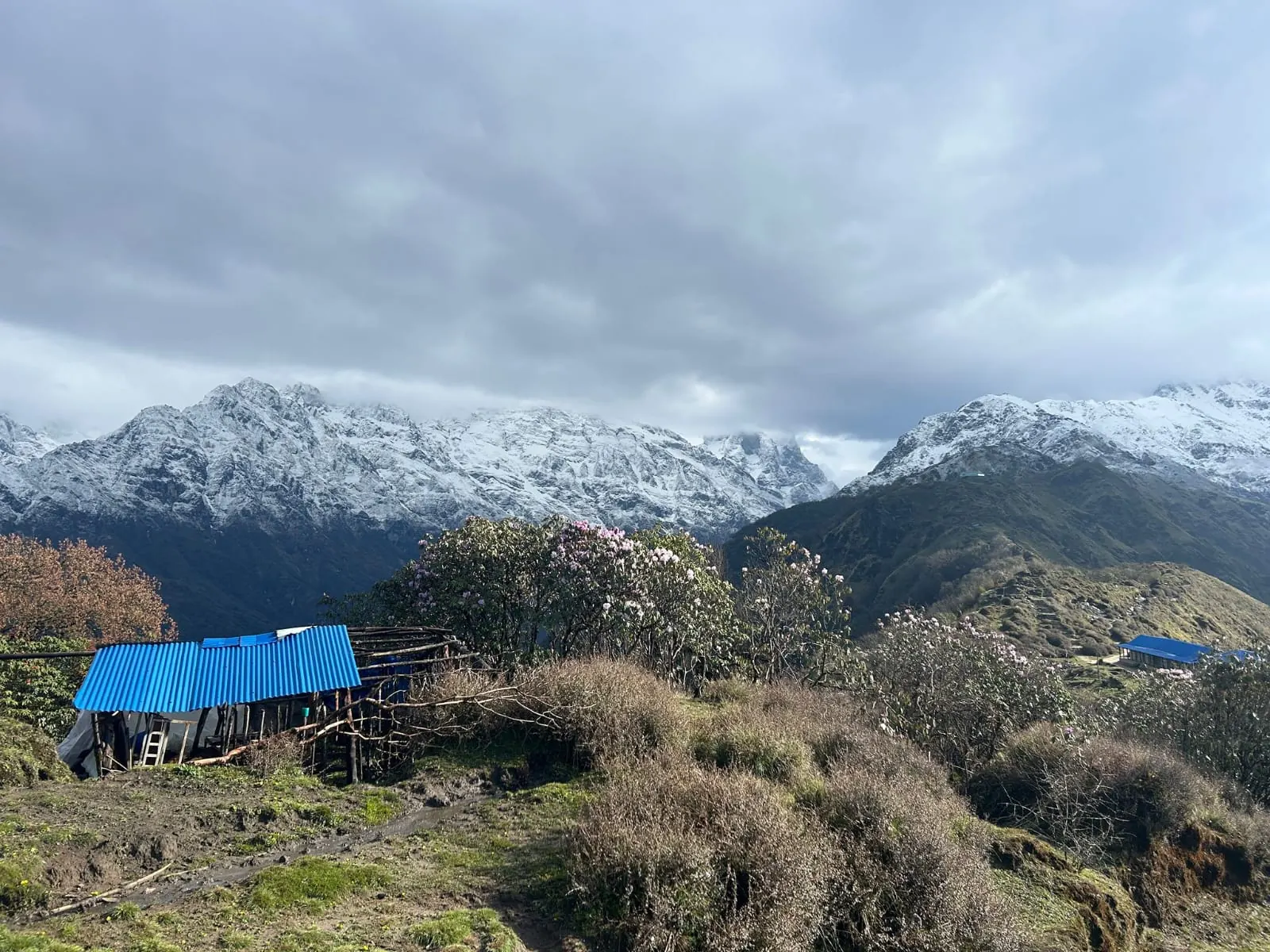
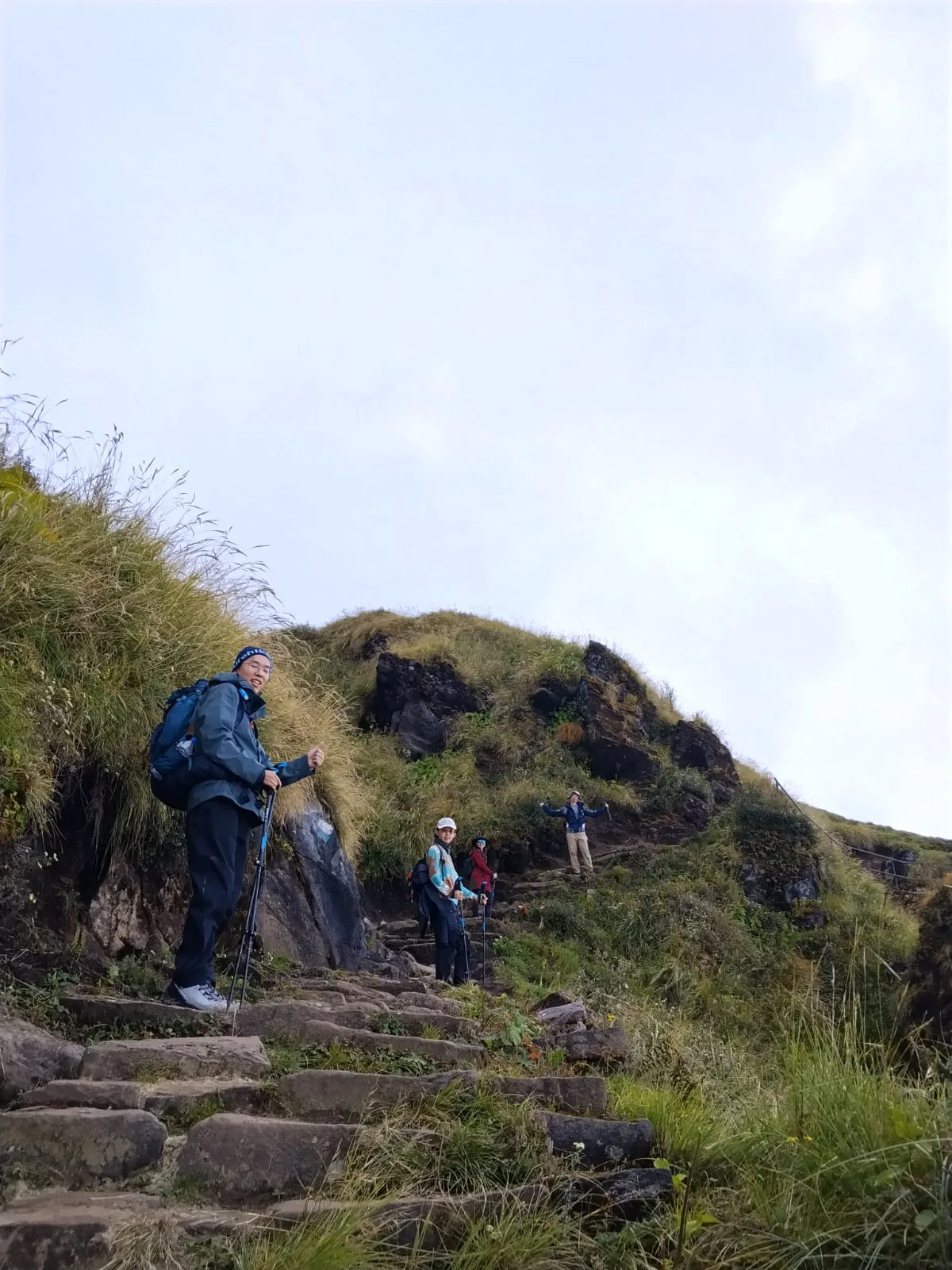
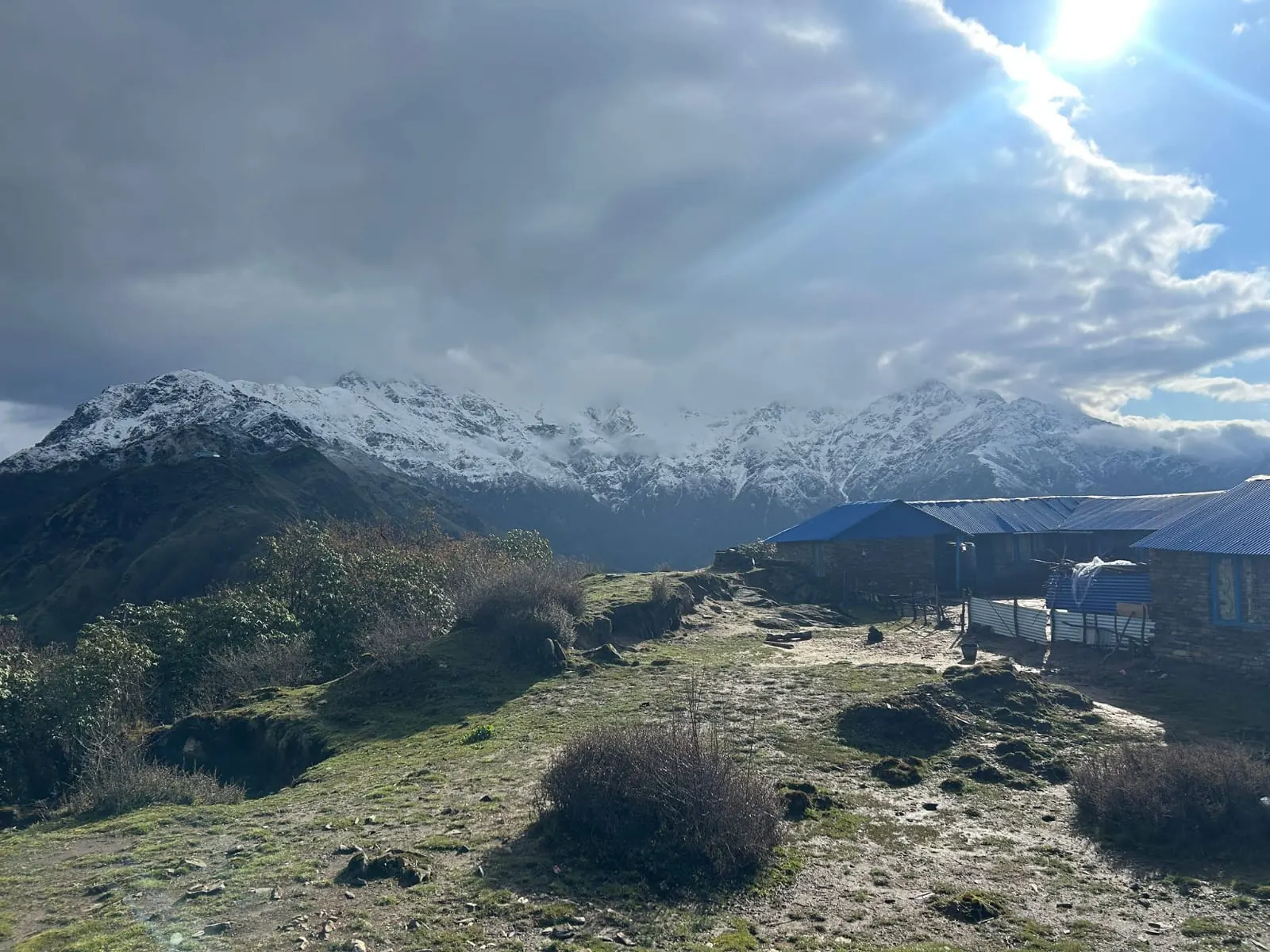
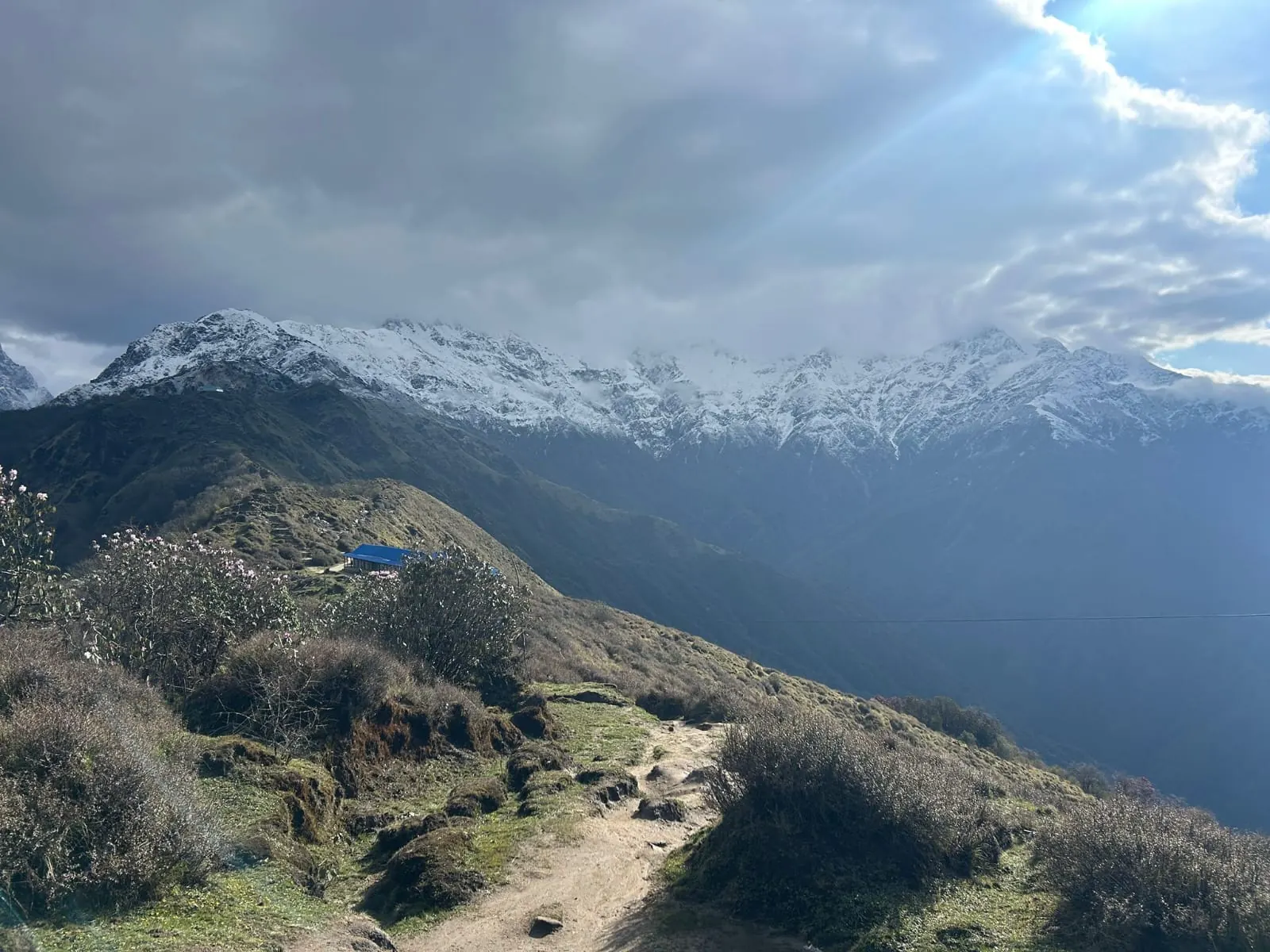
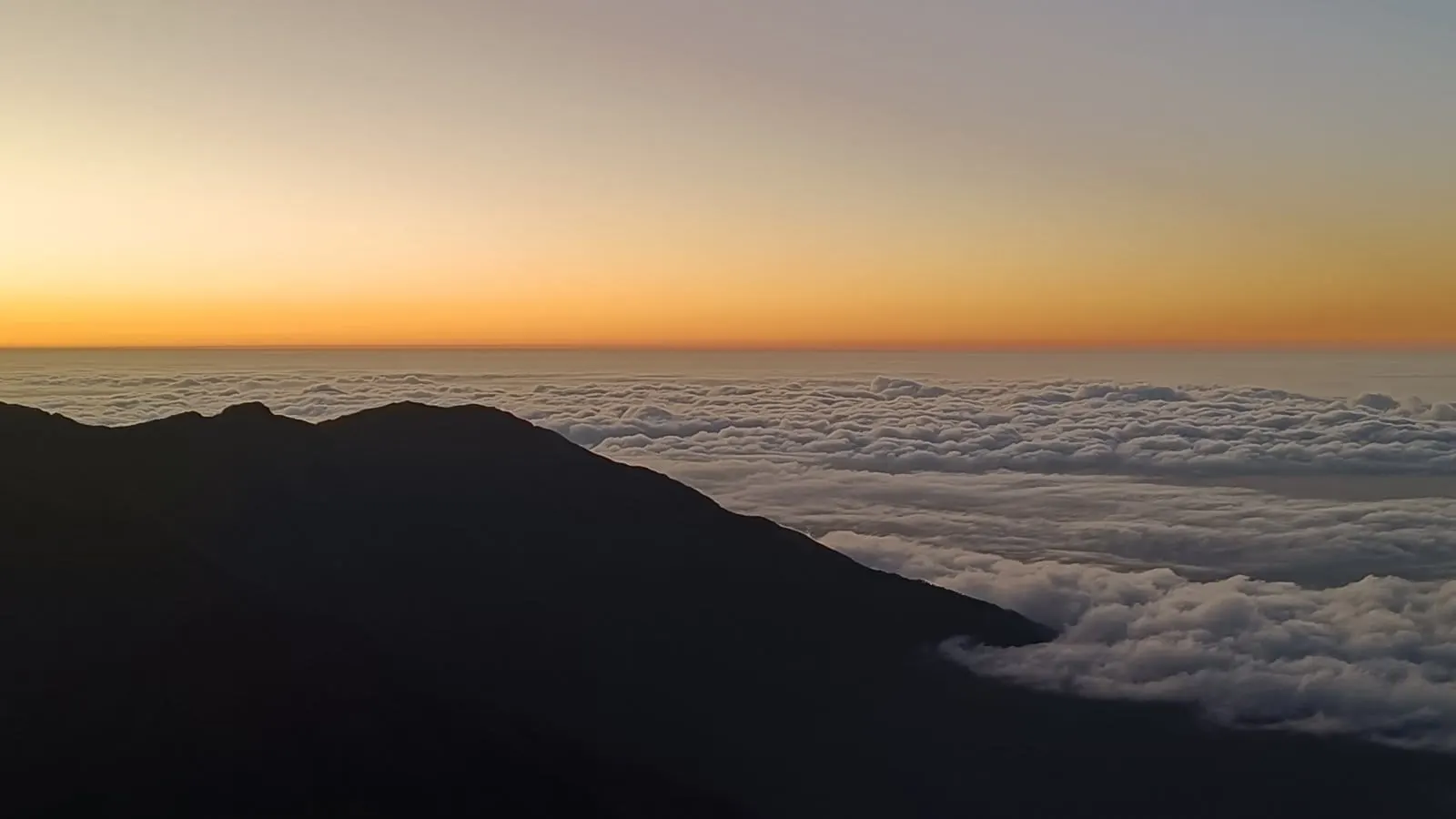
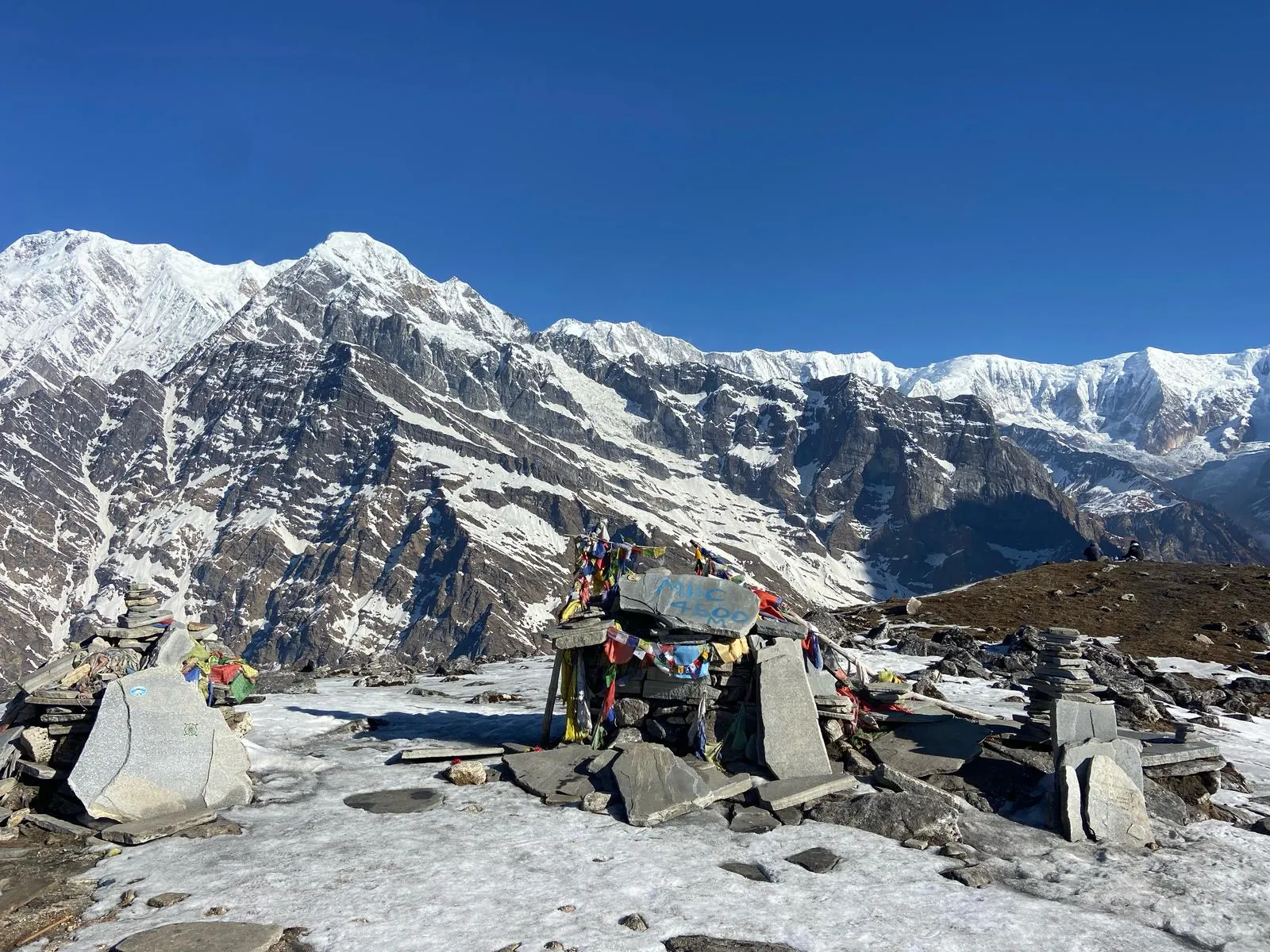
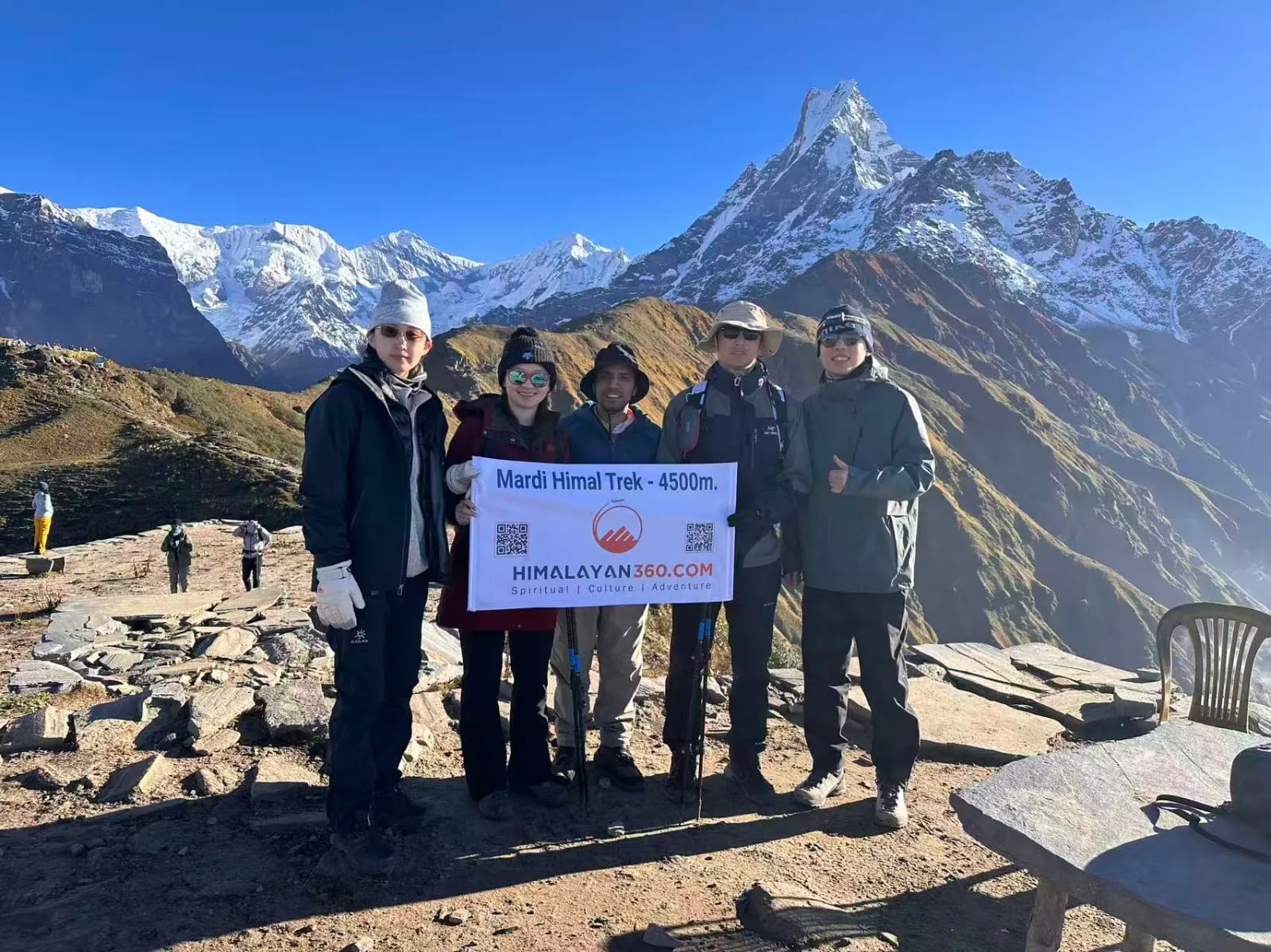
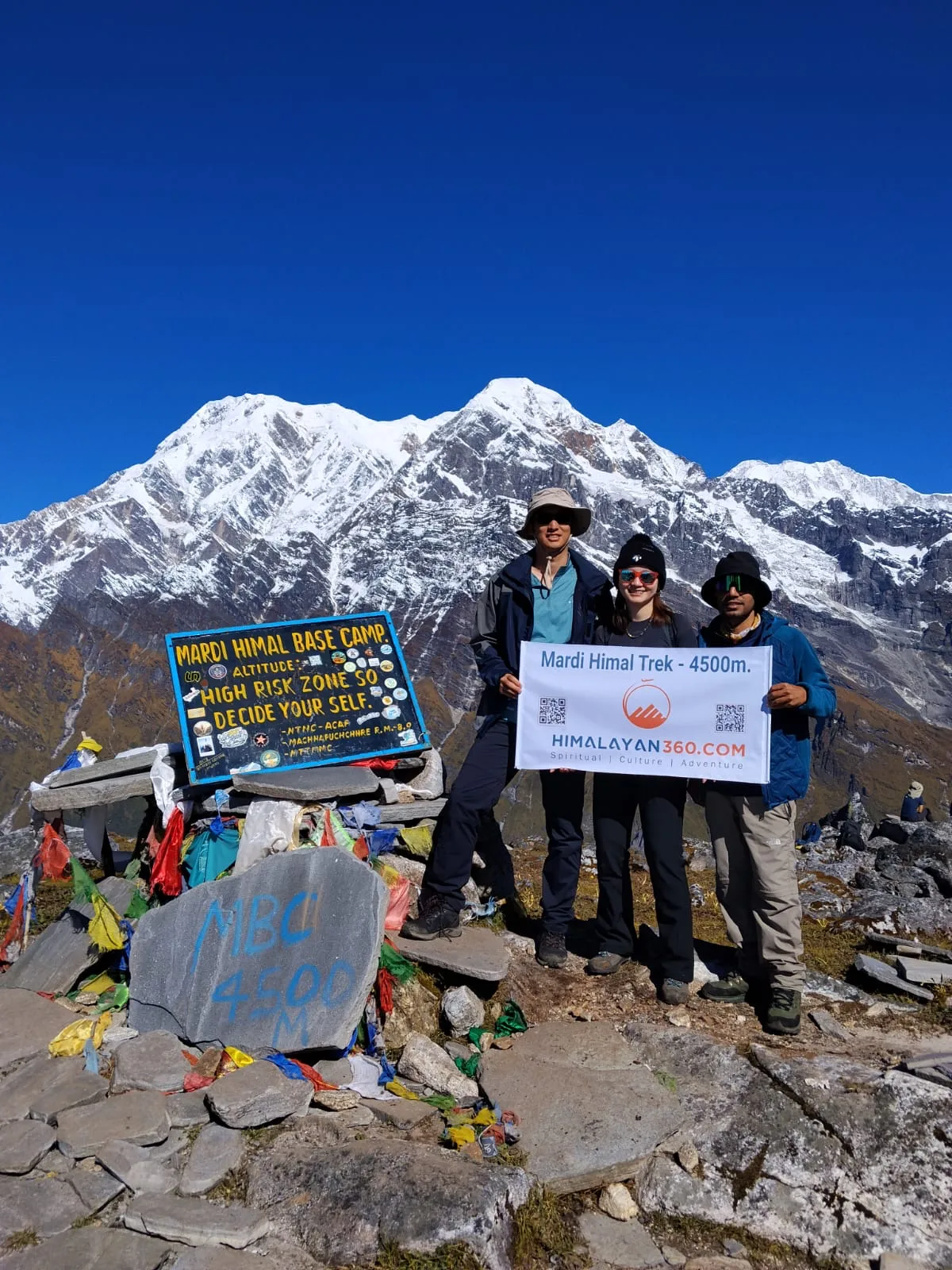
The big day. A pre-dawn start, headtorches on, climbing the narrowing ridge above High Camp. The terrain is gradient stone and earth, never technical, but altitude makes every breath count. Most trekkers reach the Lower Viewpoint at 3,900 metres in 90 minutes and the Upper Viewpoint at 4,200 metres in another hour. Faster groups push on to the moraine ledge at 4,250 metres. Mardi Himal Base Camp at 4,500 metres is about 1 hour 30 minutes beyond the Upper Viewpoint. If you want to go on, ask your guide, and expect a longer day.
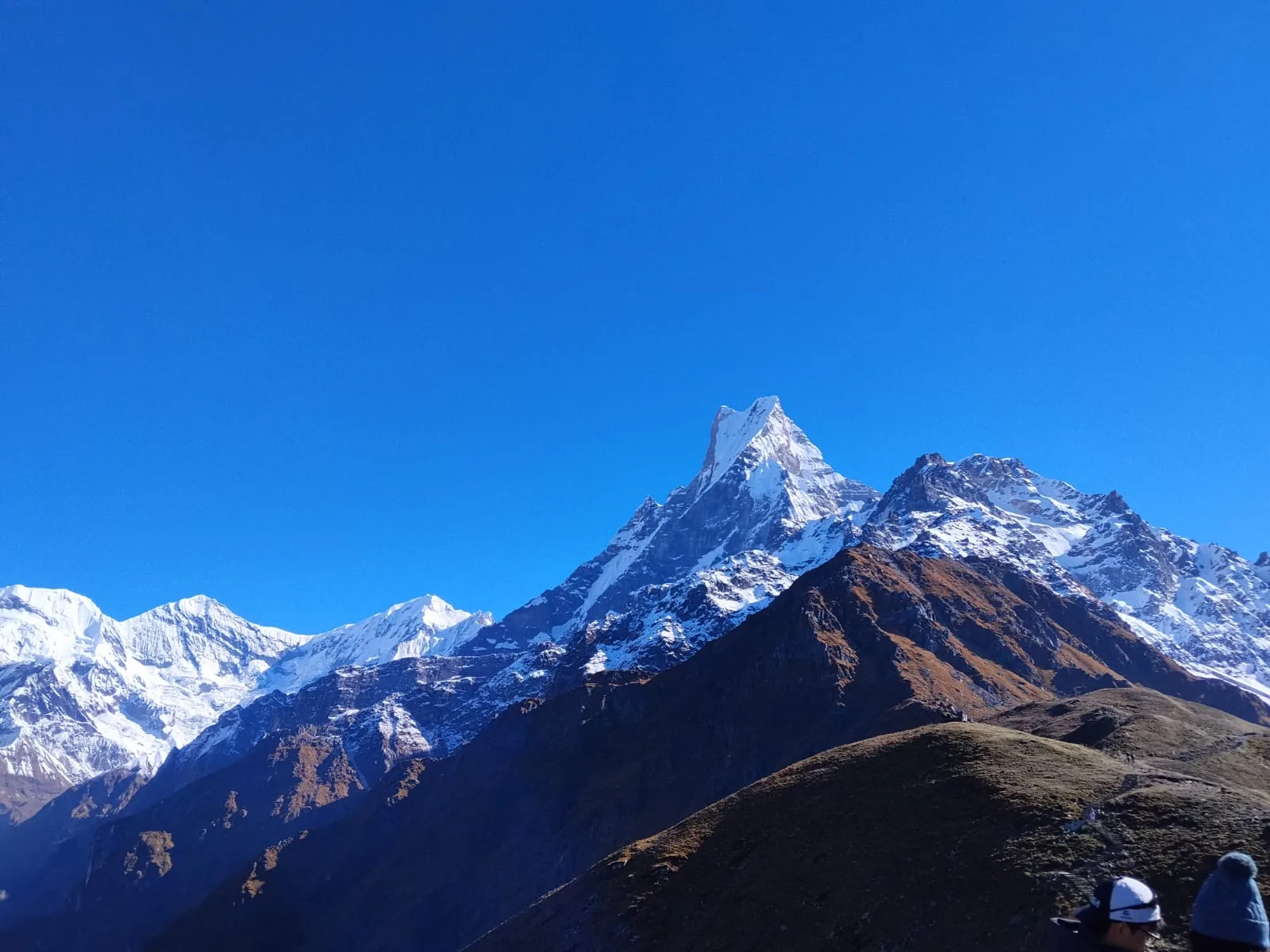
On a clear morning, Dhaulagiri at 8,167 metres appears far to the west, the Annapurna massif sits close enough to see avalanche paths on the south face, and Machhapuchhre fills the eastern view. Sunrise from this ridge is the photograph people travel for. Plan to arrive 20 minutes before first light. Bring a thermos of tea.
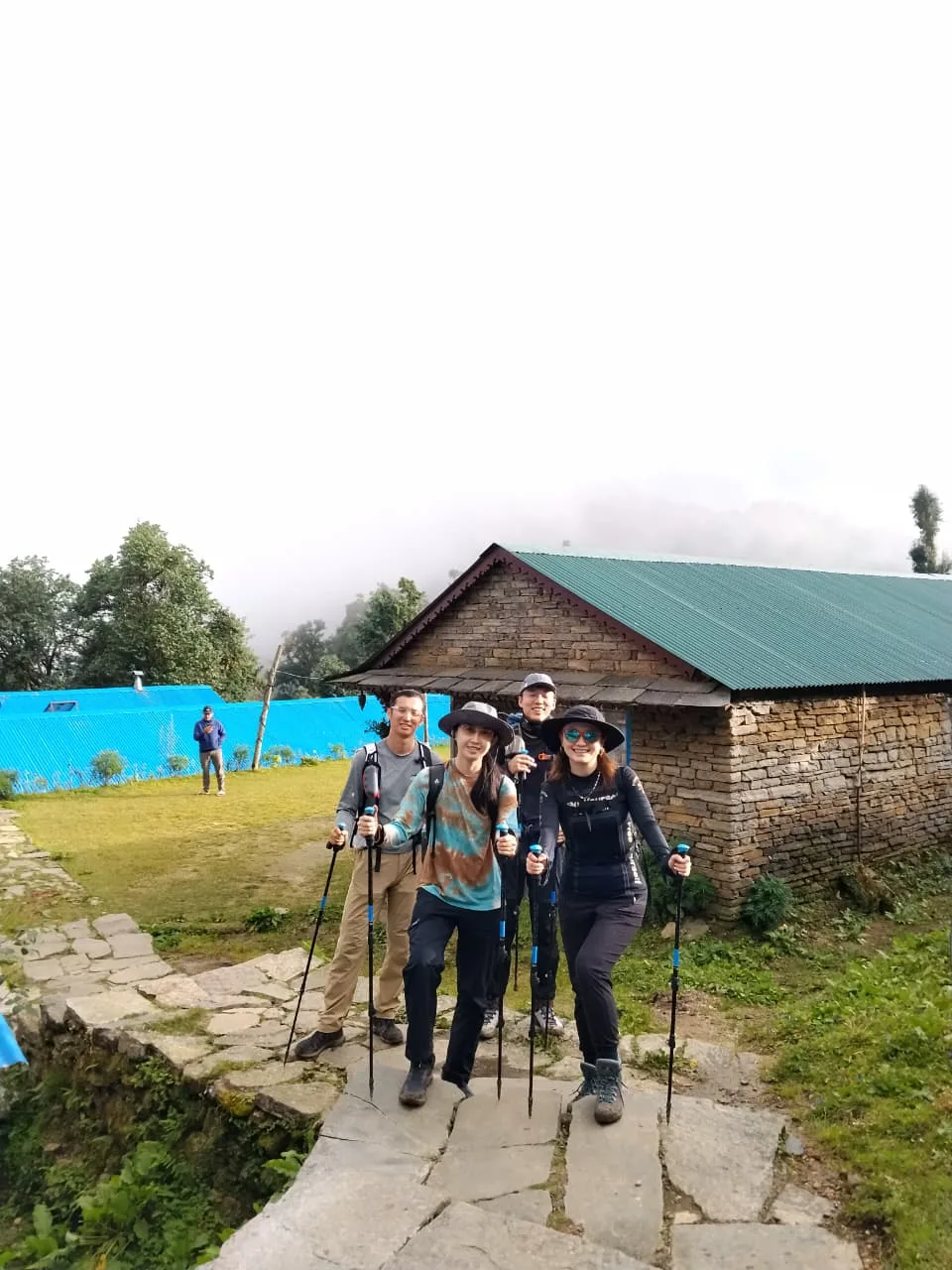
After photos, the descent retraces the ridge to High Camp for a hot breakfast, then carries on down to Badal Danda or Low Camp for the night. The descent is hard on the knees, and trekking poles are strongly recommended. Only the 3-day trek goes all the way to Sidhing the same day, more than 2,300 metres down, before a jeep back to Pokhara.
Who it suitsThe hardest day on every itinerary: a pre-dawn climb of 620 metres at altitude, then a long descent of about 1,000 metres to Badal Danda or 1,200 metres to Low Camp. Suited to trekkers with good general fitness and sound knees. Trekking poles, broken-in boots, and a full headtorch are non-negotiable.
Below the ridge the trail drops through terraced rice fields, millet farms, and traditional Gurung settlements. The path is well shaded and the gradient is forgiving after the steep forest section down to Sidhing at 1,860 metres.
How you leave depends on the itinerary. The 4 and 5-day treks drive out from Sidhing. The 6-day walks on to Lumre at about 1,400 metres for its jeep. The 7 and 8-day treks walk out through Ghalel to Lwang, a tea-garden village at 1,460 metres, where the jeep waits in the small bazaar.
The road back to Pokhara takes 2 to 3 hours. Lakeside, the tourist quarter of Pokhara, is where the trek ends, with the afternoon free for a hot shower, laundry, and a long sit by Phewa Lake.
Who it suitsMostly downhill through farmland and Gurung villages. Suited to all levels and a gentle way to let tired legs recover. The longer treks sleep in village homestays with a home-cooked dinner instead of a lodge menu.
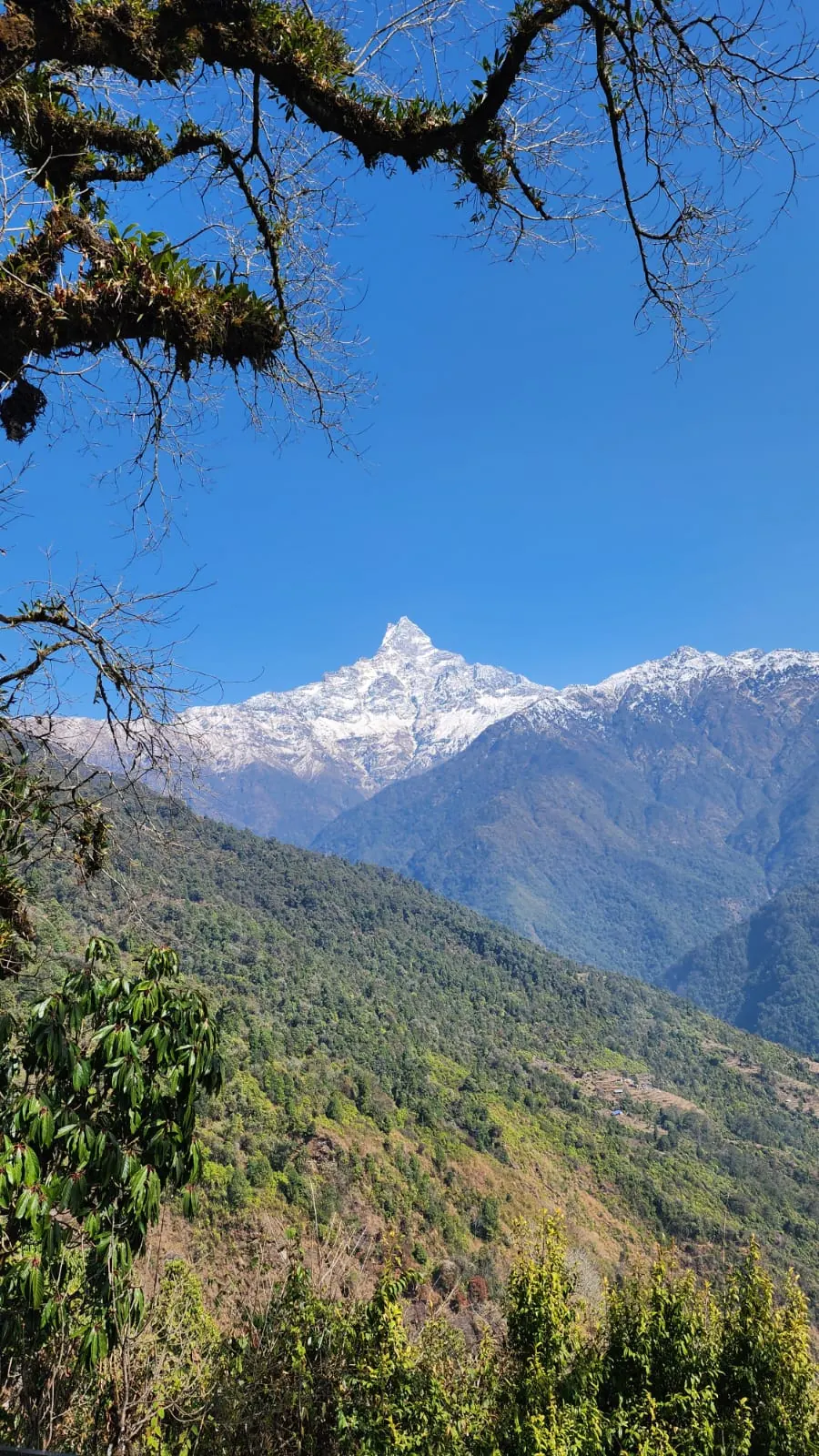
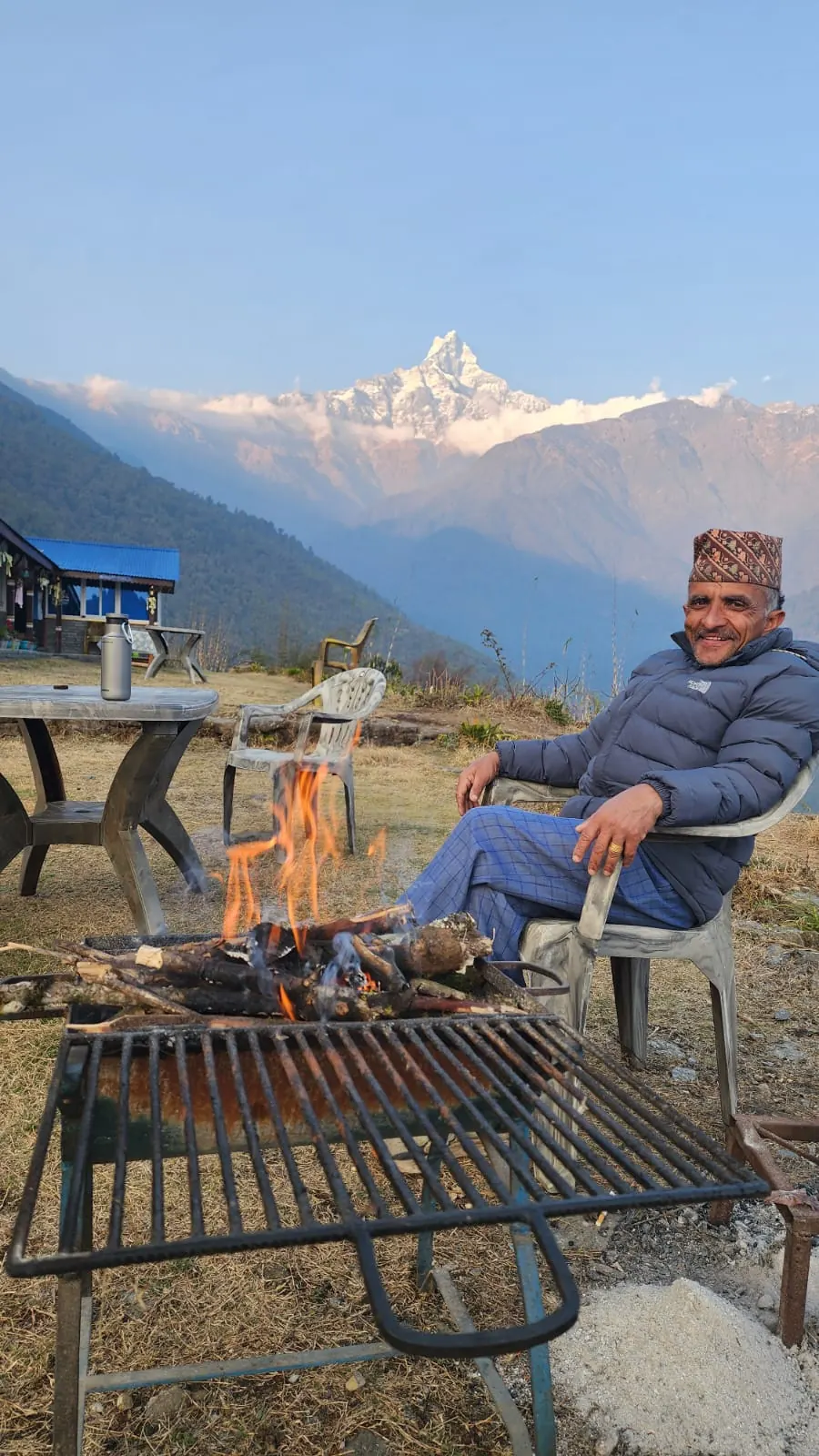
Mardi Himal is graded a moderate teahouse trek. There is no climbing, no ropes, no glacier travel, and no technical skill of any kind. What it asks for instead is the ability to walk four to seven hours a day for several days, a tolerance for one long and steep descent, and sensible caution about altitude. For the full grading breakdown and the route map, see the difficulty and map page.
The 7-day itinerary is the gentlest climb we run, with a night at Badal Danda before High Camp, and a guide sets the pace. Fit first-timers also manage the standard 5-day. Reasonable everyday fitness is enough. The only genuinely hard part is summit morning and the long descent after it.
If you have done multi-day walks or any trek before, you will find the route well within reach and can consider the faster 4-day version. You will enjoy the ridge days rather than just survive them.
Walkers with prior altitude experience and strong knees can compress the trek to three or four days, accepting a faster ascent profile. Read the altitude-sickness guide before choosing a compressed itinerary.
The trek reaches 4,200 metres and the descent day is long and steep. It is not technical, but it is sustained. If you have a relevant medical condition, get a doctor's clearance and talk to us about a slower custom pace, or ask about the scenic helicopter tour, which reaches the high viewing area above Mardi Himal without any walking.
Six to eight weeks of regular cardio (walking, running, cycling, or stairs) is plenty for the 5 to 7-day versions. Add a few longer weekend walks on hills with a loaded daypack if you can. The single most useful preparation is breaking in your boots and practising downhill walking with poles, because the walk out is mostly descent.
We have guided trekkers from roughly 10 to 70 on this route. Active children with hiking experience manage the 5 to 7-day pace well, and it is a popular family trek for that reason. There is no upper age limit, only a fitness and health one. Talk to us about a custom pace for mixed-ability groups, and read the altitude-sickness guide before you book.
We run the same trail at six different paces, from a fast 3-day walk-out to a relaxed 8-day version with extra village time. Each length is a bookable trip with its own full day-by-day page and current price. For something bigger, see the combined treks and the helicopter tour below.
Jeep to Pitam Deurali and walk to Rest Camp on Day 1, High Camp on Day 2, then the Upper Viewpoint sunrise, the descent to Sidhing and a jeep to Pokhara on Day 3.
Full 3-day itinerary & 2026 price →Jeep to Pitam Deurali and walk to Rest Camp on Day 1, High Camp on Day 2, the viewpoint on Day 3 and back down to Low Camp, out through Sidhing on Day 4.
Full 4-day itinerary & 2026 price →Kande in, an acclimatisation night at Low Camp, High Camp on night 3, the viewpoint on Day 4 with a night at Badal Danda, out through Sidhing on Day 5.
Full 5-day itinerary & 2026 price →Pitam Deurali and Rest Camp on the way up, High Camp on night 3, the viewpoint on Day 4 and back to Low Camp, a homestay night at Sidhing, then on foot to Lumre.
Full 6-day itinerary & 2026 price →Kande in, Forest Camp and Badal Danda on the way up, the viewpoint on Day 5, then down to Ghalel and Lwang.
Full 7-day itinerary & 2026 price →A short first day to Australian Camp, Forest Camp on night 2, High Camp on night 3, then three homestay nights on the way down, at Sidhing, Ghalel and Lwang.
Full 8-day itinerary & 2026 price →Mardi Himal gains altitude faster than most teahouse treks in the Annapurna region. From Kande at 1,770 metres, the standard 5-day trek climbs roughly 2,400 vertical metres in three and a half days, then drops back down the ridge in a day and a half. The chart and table below follow that 5-day trek, stop by stop.
| Day | Stop | Altitude | Walking time | Distance |
|---|---|---|---|---|
| Day 1 | Kande (start) | 1,770 m | Start | Start |
| Day 1 | Pitam Deurali | 2,100 m | 5-6 hrs | ~9 km |
| Day 2 | Forest Camp | 2,550 m | En route | En route |
| Day 2 | Low Camp | 2,985 m | 6-7 hrs | ~12 km |
| Day 3 | Badal Danda | 3,210 m | En route | En route |
| Day 3 | High Camp | 3,580 m | 4-5 hrs | ~6 km |
| Day 4 | Upper Viewpoint | 4,200 m | En route | En route |
| Day 4 | Badal Danda | 3,210 m | 6-7 hrs | ~10 km |
| Day 5 | Sidhing | 1,860 m | 4-5 hrs | ~9 km |
Summit morning is the hardest day on every itinerary. A pre-dawn climb of 620 vertical metres to the Upper Viewpoint, then a long descent to Badal Danda or Low Camp, and on the 3-day all the way to Sidhing. Trekking poles, broken-in boots, and a full headtorch are non-negotiable.
The 7-day Mardi Himal trek keeps daily ascent under roughly 700 metres from Forest Camp upward, with a night at Badal Danda before High Camp, the rough rule for limiting altitude risk. The 3-day version compresses the same climb into far fewer days, which is why we recommend it only to walkers with prior altitude experience; the standard 5-day sits in between and suits most trekkers.
On the 5-day and 6-day treks, expect 4 to 8 hours of walking a day with a moderate group; summit day is the longest, at 6 to 8 hours. Total walking time is roughly 25 to 32 hours, however many nights you spread it over.
The questions trekkers ask when comparing itineraries on booking calls. If yours isn't here, WhatsApp us. We typically reply within 30 minutes during Kathmandu office hours.
The 6 reviews below are all Mardi Himal treks, each rated 5 out of 5. Every one is on TripAdvisor or Google and links back to the original. Quotes are shortened excerpts; names, dates and trek lengths are taken from the source. Counts as of April 2026.
Our recent trip to Nepal and trek to Mardi Himal turned out to be one of the most memorable adventures of my life. Our guide Max was friendly, knowledgeable, and incredibly supportive, especially during the steep sections. The views along the route were breathtaking.
We had an excellent five-day trek on the Mardi Himal trail. It is frequented primarily by Nepali tourists. The views are incredible all along the trail, and many guest houses have spectacular views. Our guide was a joy to be with.
We were considering trekking to Annapurna Base Camp, but changed to the Mardi Himal based on Raj's advice. This was probably the best advice we got in Nepal. Mountains were fully covered in snow, the lower fields were green, and the rhododendron trees were flourishing.
Prakash was our trekking guide for the Mardi Himal trek. Even when we arrived feeling unwell, he showed immediate sympathy and organised a range of Pokhara-based activities for us. We can't recommend him enough. Prakash has completed over 500 trips on this route.
Our Mardi Himal trekking experience was great because of this team. Our guide Gautam was so professional, cordial and hospitable. We enjoyed it a lot. Looking forward to our next adventure with them.
Truly exceeded our expectations and made our trip to the Himalayas absolutely memorable. From the moment we inquired until the day we returned, their professionalism and attention to detail were outstanding.
We run scheduled departures from Pokhara, September to May. Most weeks the 5-day itinerary leaves on a Sunday and the 6-day on a Thursday, plus extra dates as groups form. Every other trip on this site runs privately, on your own dates. A 20 % deposit holds your place, and the balance is paid in Kathmandu before the trip starts.