The full schedule, three days flat.
Three days, fully walked, start to finish. Day 1 is a short settling-in climb from Pitam Deurali. Day 2 is the main altitude day to High Camp. Day 3 is the summit, the full descent to Sidhing, and a same-day jeep back to Pokhara: the longest day on the trek.
- Day 1
Pokhara → Pitam Deurali → Rest Camp
- Drive
- Private jeep, ~2 hrs (Pokhara → Pitam Deurali)
- Trek
- 3 – 4 hrs
- Distance
- ~8 km
- Altitude
- Pitam Deurali 2,100 m → Rest Camp 2,600 m
- Net change
- +500 m
Early start. A private jeep collects us in Pokhara around 07:00 and climbs the winding hill road to Pitam Deurali at 2,100 metres, the junction where the Mardi route leaves the busier Annapurna Base Camp trail and turns onto its own quiet ridge. Driving straight to Pitam Deurali, rather than starting on foot lower down, is what makes the 3-day plan possible at all: it removes the better part of a trekking day before boots ever touch the trail.
From Pitam Deurali the trail climbs through rhododendron and oak cloud forest, past Forest Camp, to Rest Camp at roughly 2,600 metres. It is the shortest trekking day of the trip, deliberately so, because tomorrow is the long one.
Arrive Rest Camp by mid-afternoon. Early dinner, early bed. This is the gentlest day of the trek, and it does not last.
Pitam Deurali 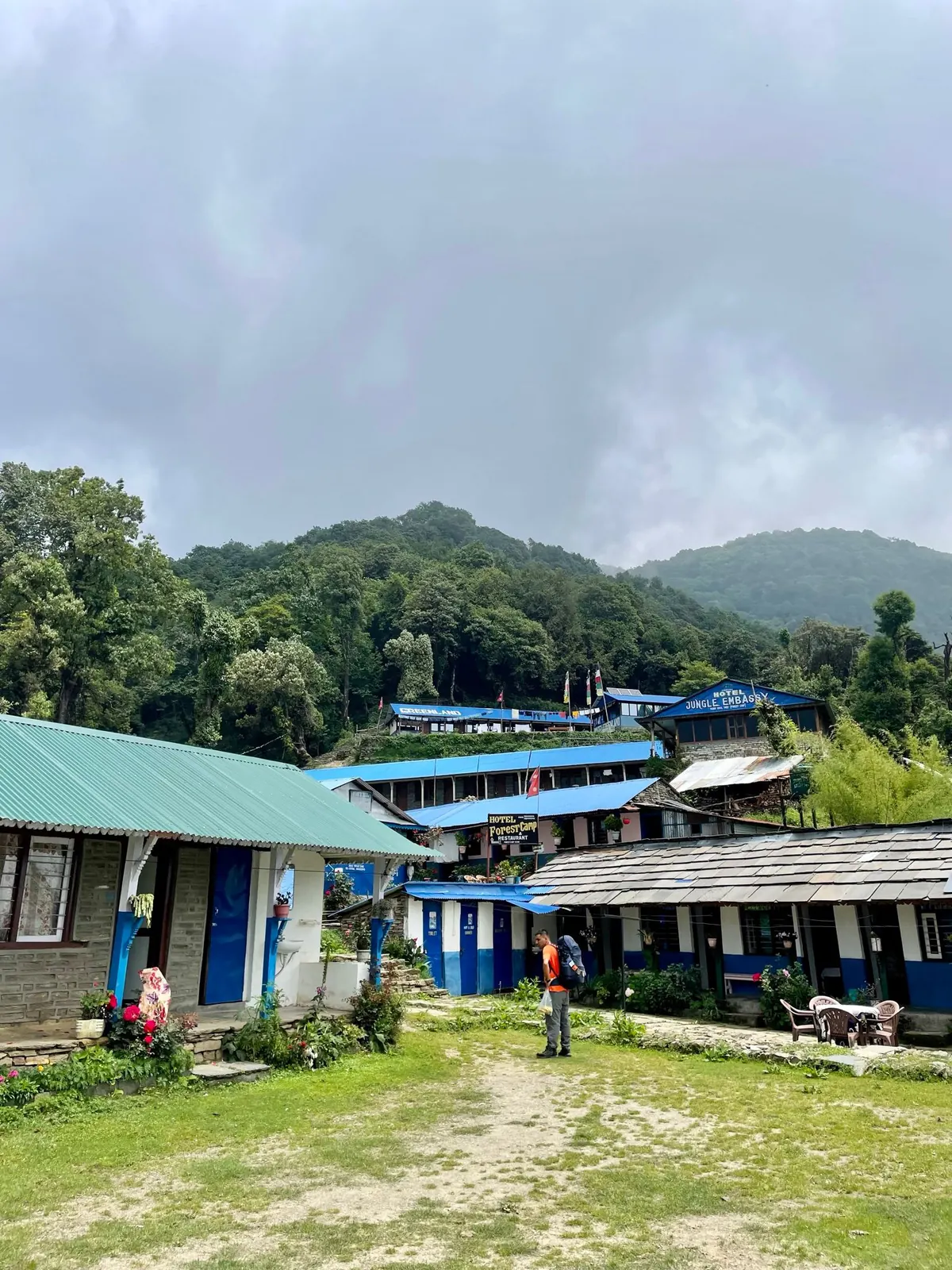
Forest Camp 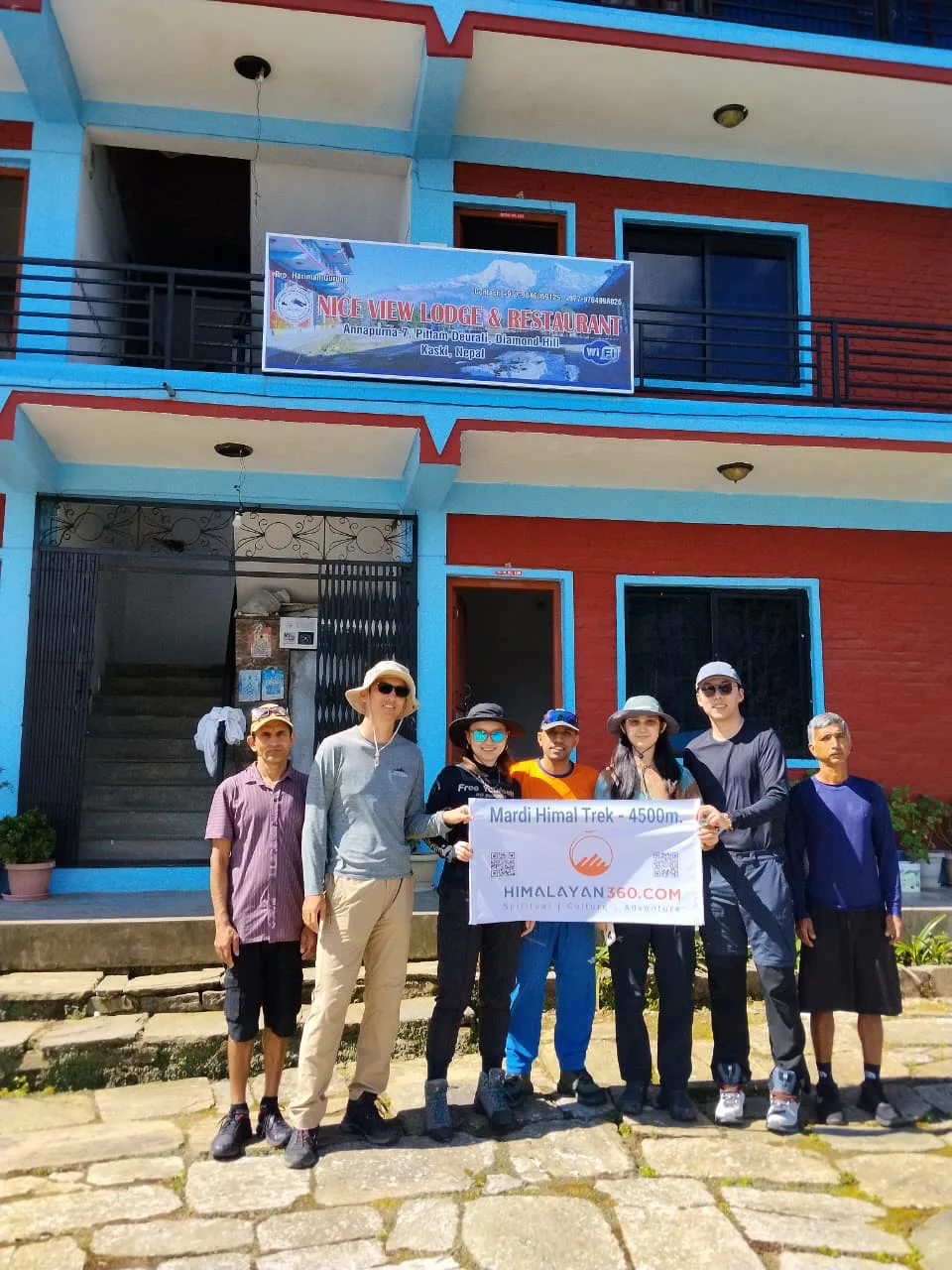
Pitam Deurali 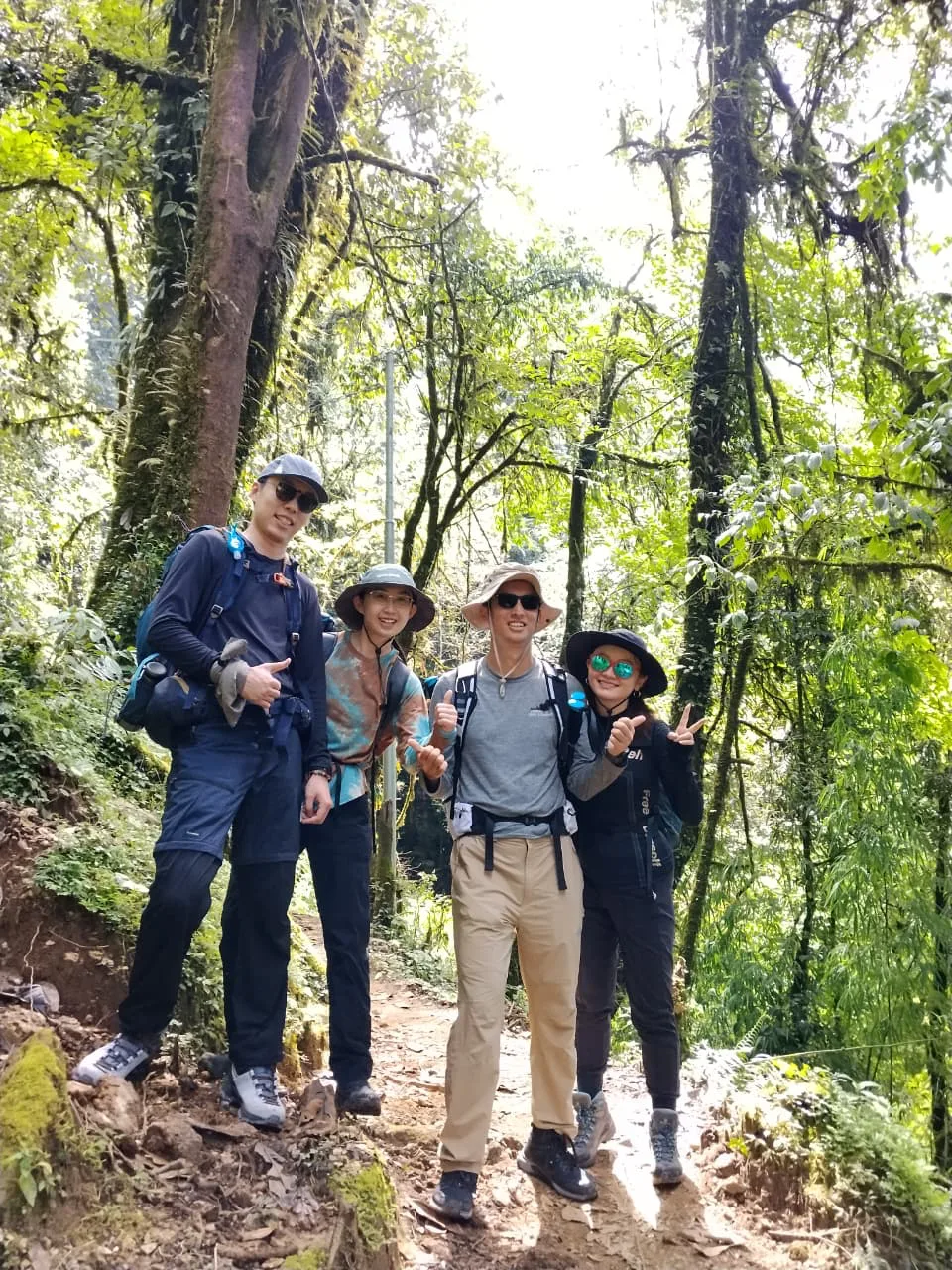
Trail to Forest Camp 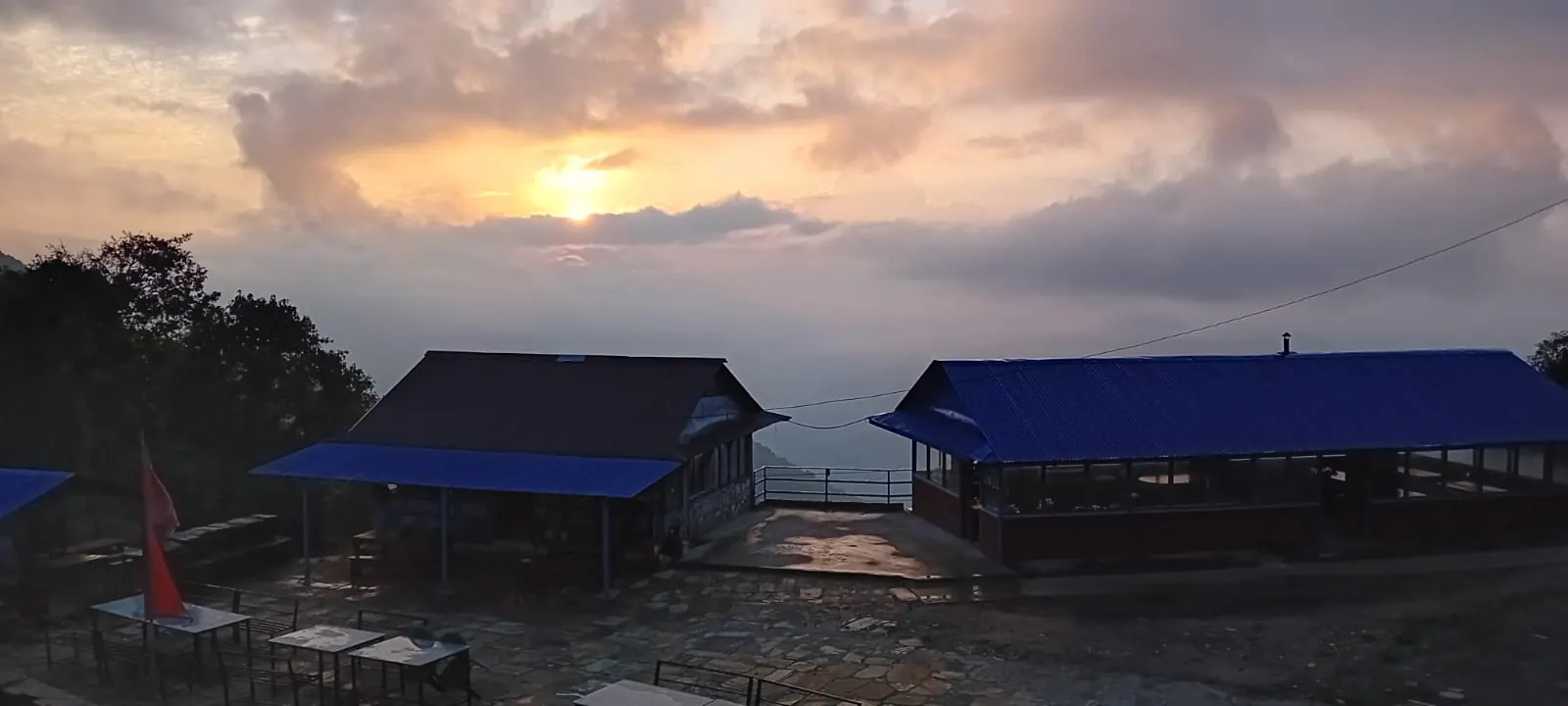
Pitam Deurali 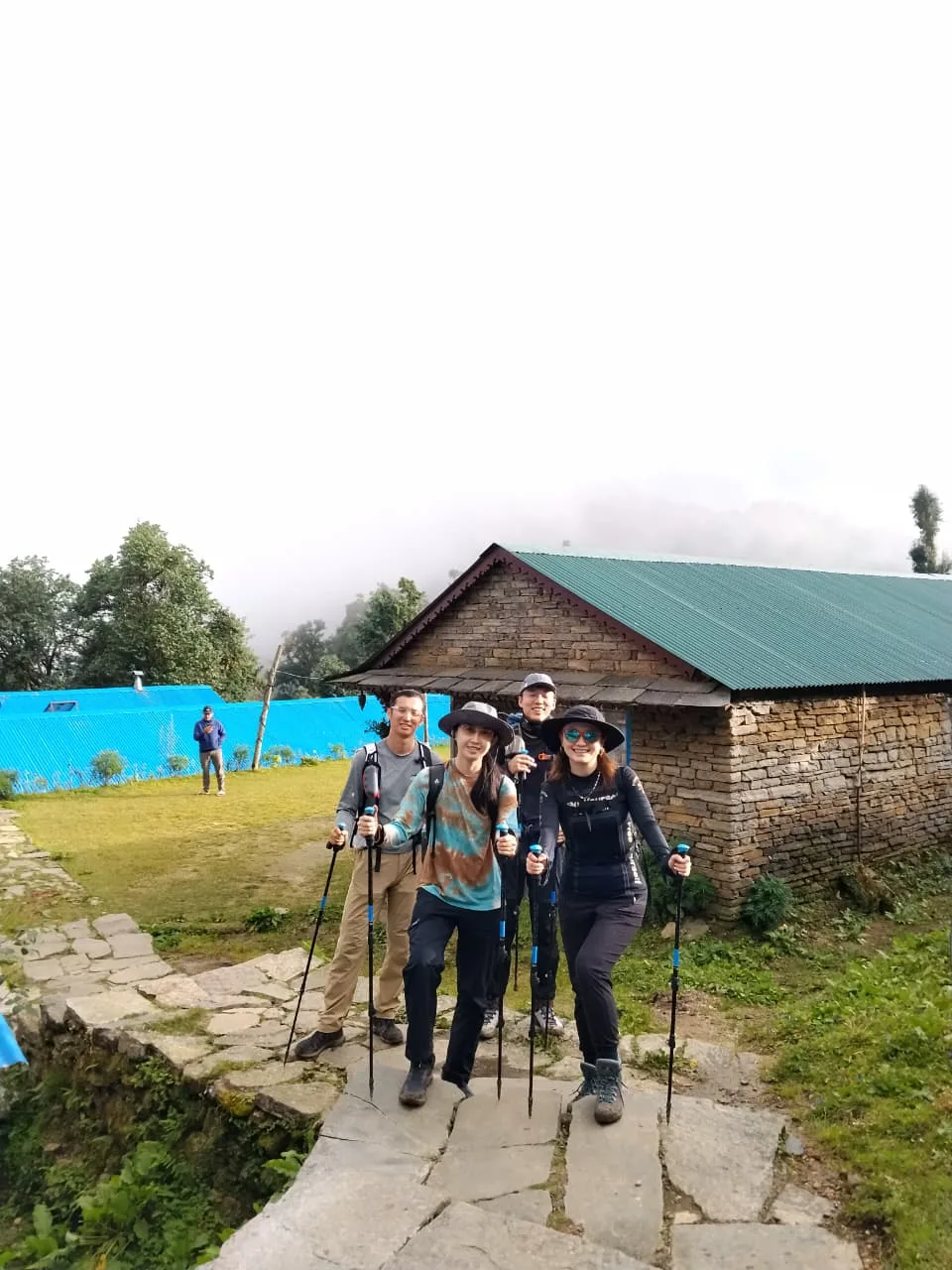
Trail to Forest Camp 6 photos from day 1, taken on the trail. - Day 2
Rest Camp → Low Camp → Badal Danda → High Camp
- Drive
- None
- Trek
- 6 – 7 hrs
- Distance
- ~9 km
- Altitude
- 2,600 → 2,985 → 3,210 → 3,580 m
- Net change
- +980 m
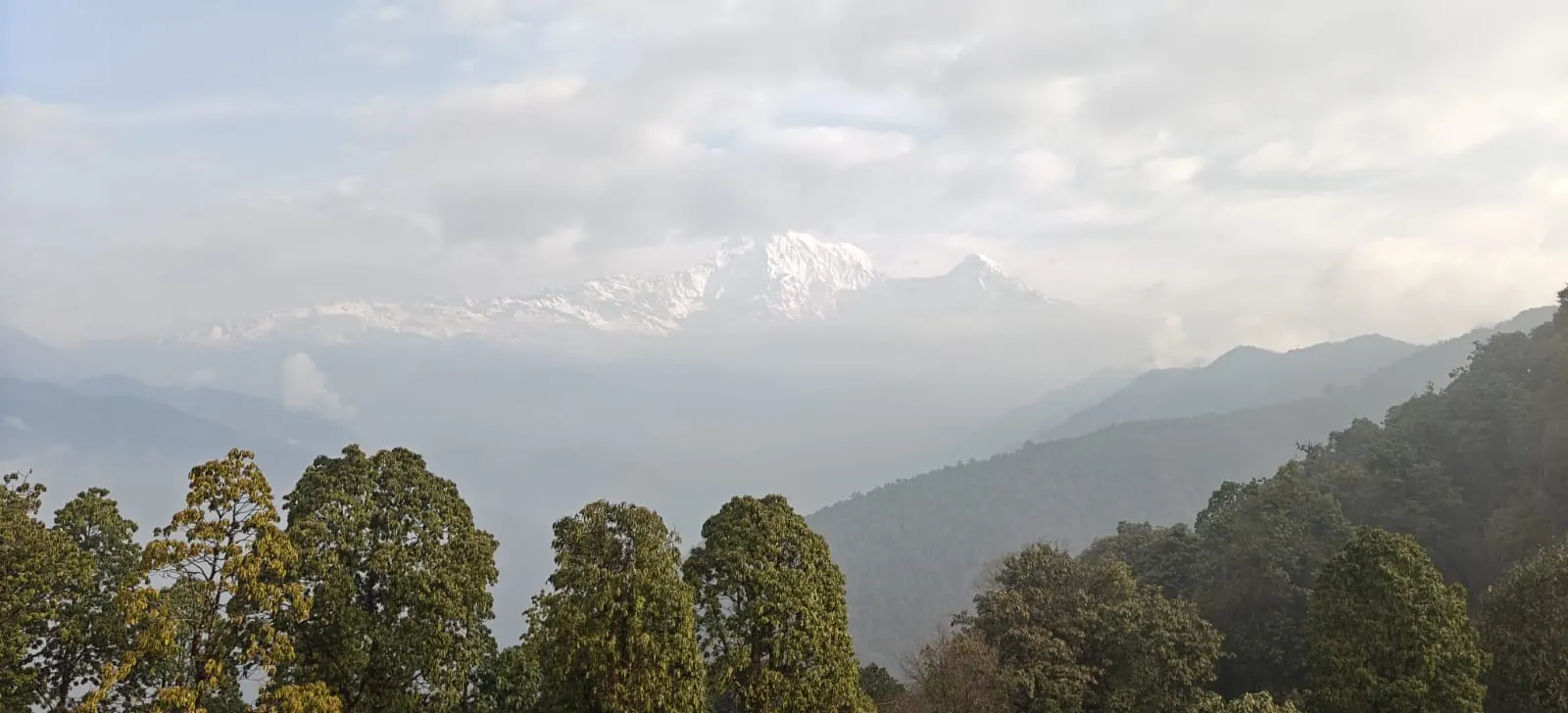
The hardest day on paper, and the one that decides whether the plan holds. The trail climbs steadily out of Rest Camp to Low Camp at 2,985 metres, where the forest thins and the full Annapurna massif appears across the valley. We stop here for lunch and a pulse-oximetry check before continuing.
Above Low Camp the route breaks onto the open ridge, crosses Badal Danda (Cloud Ridge) at 3,210 metres, and climbs on to High Camp at 3,580 metres: roughly 980 metres of net gain since breakfast. Pace is deliberately slow above Low Camp, and anyone showing early symptoms of altitude sickness is held there for the night rather than pushed on to High Camp. The 3-day plan has no slack to absorb that decision later, which is exactly why we take it seriously here.
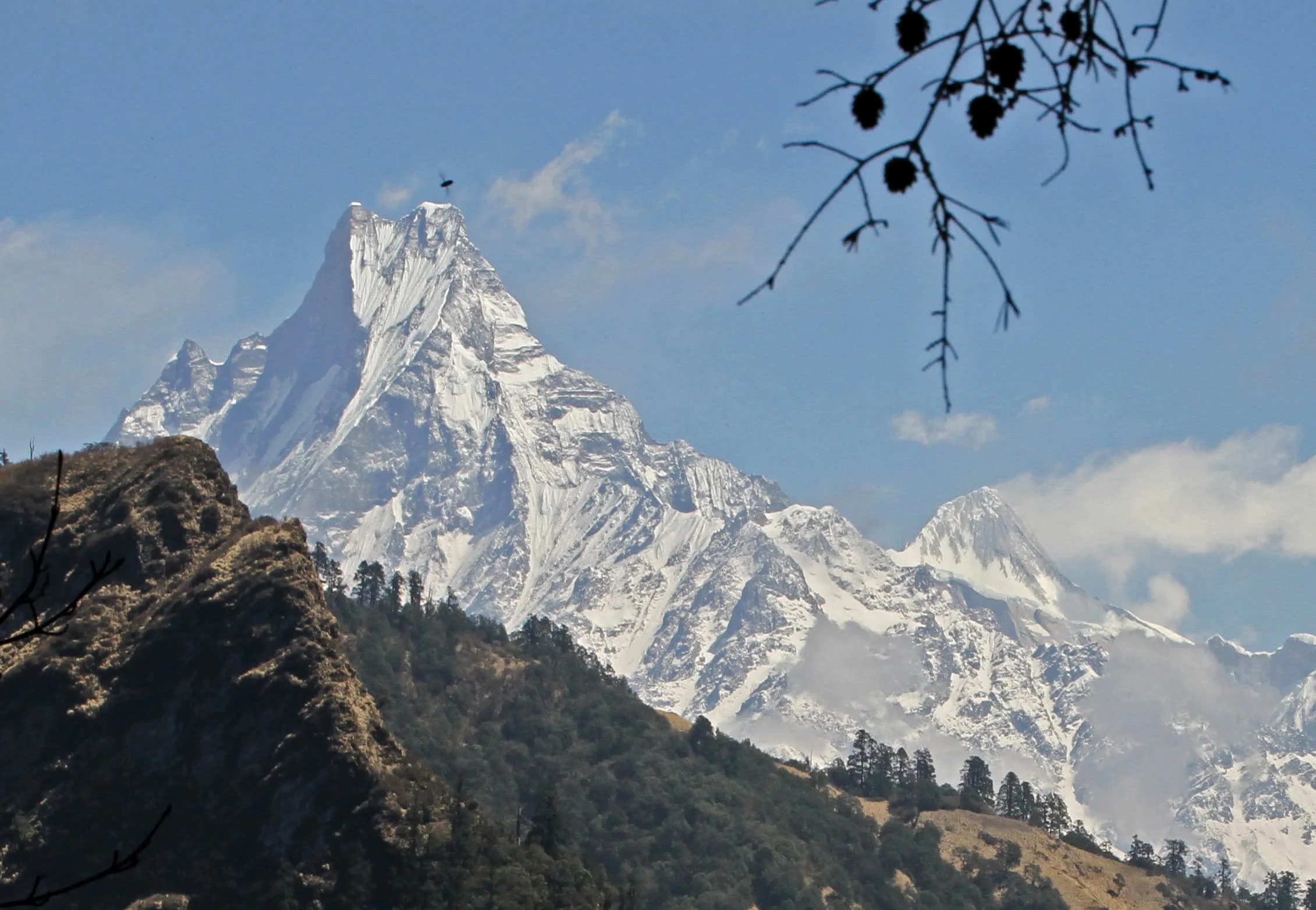
Arrive High Camp in the afternoon with time to rest before dinner. Machhapuchhre stands directly across the valley, and the sunset from the dining hall is worth the climb on its own.
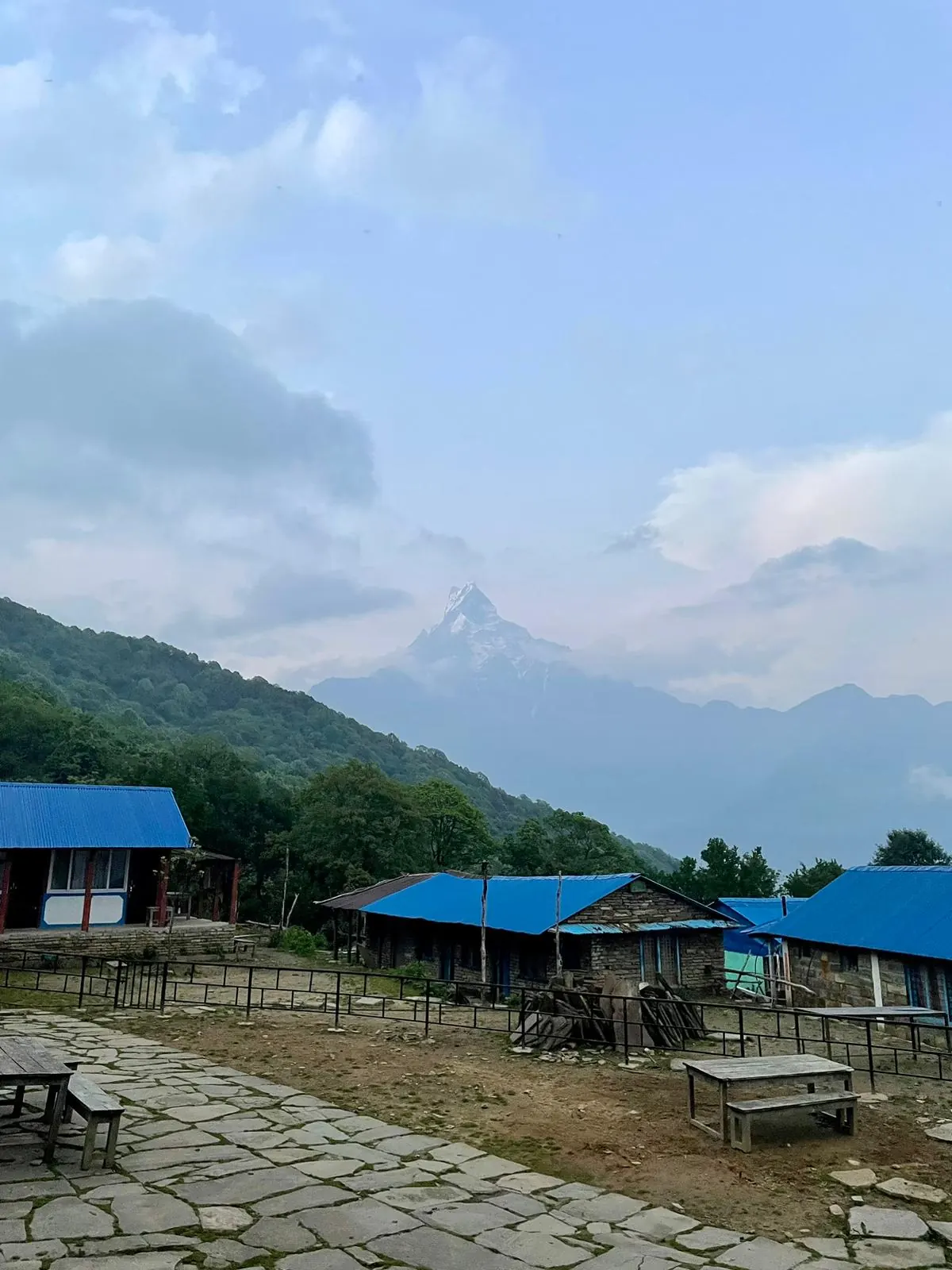
Low Camp 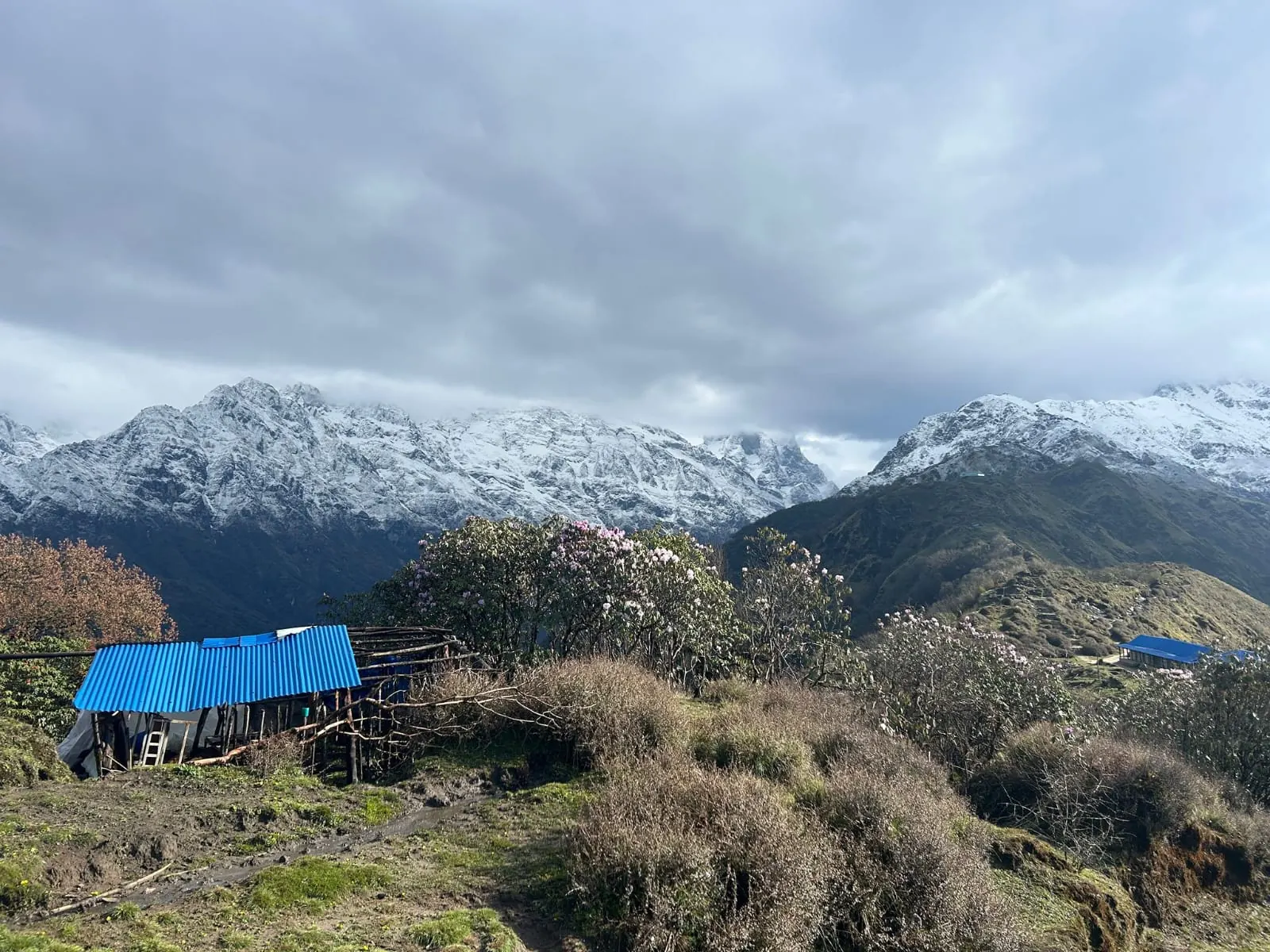
High Camp & Badal Danda 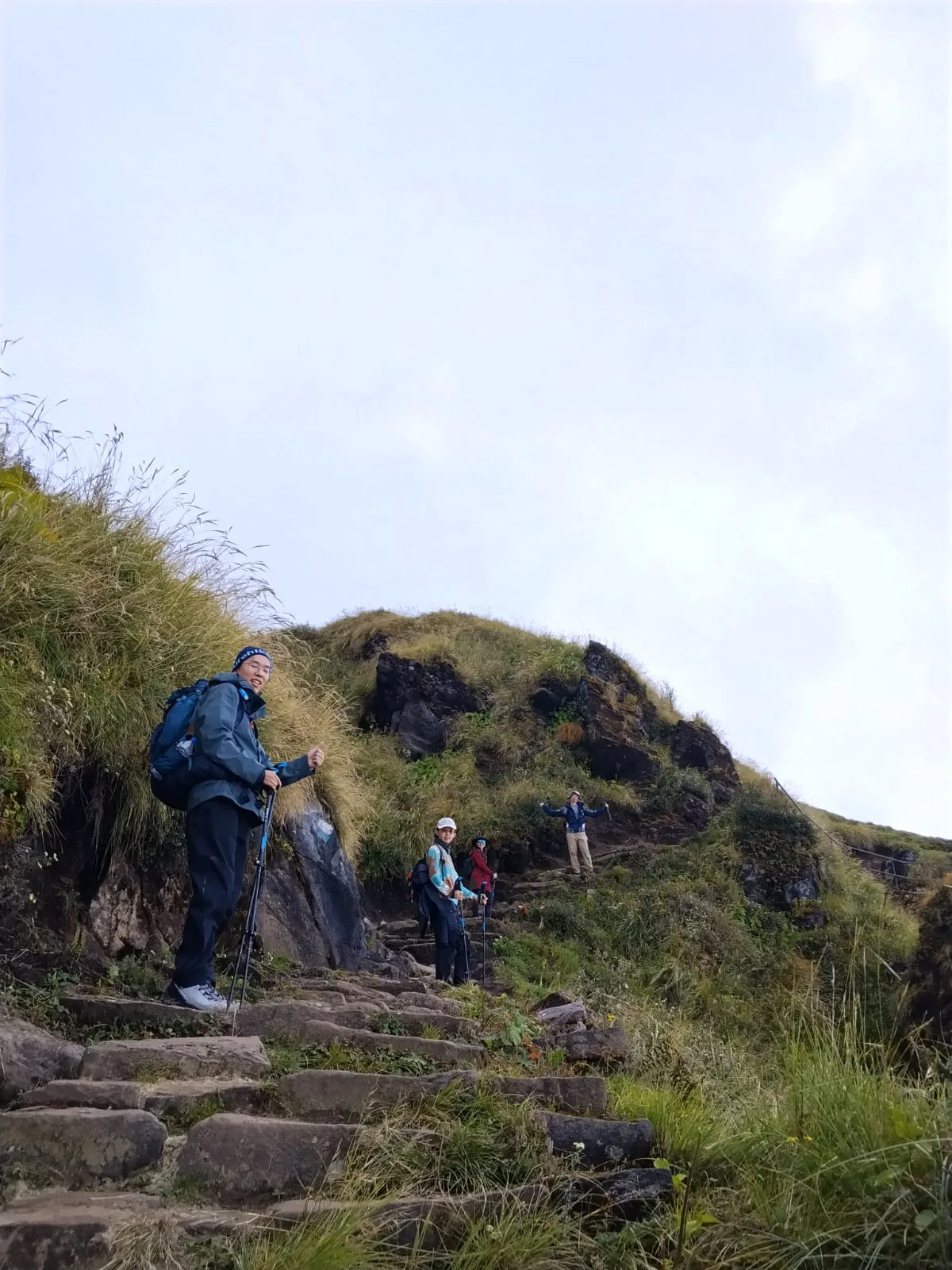
Trail to High Camp 
Low Camp 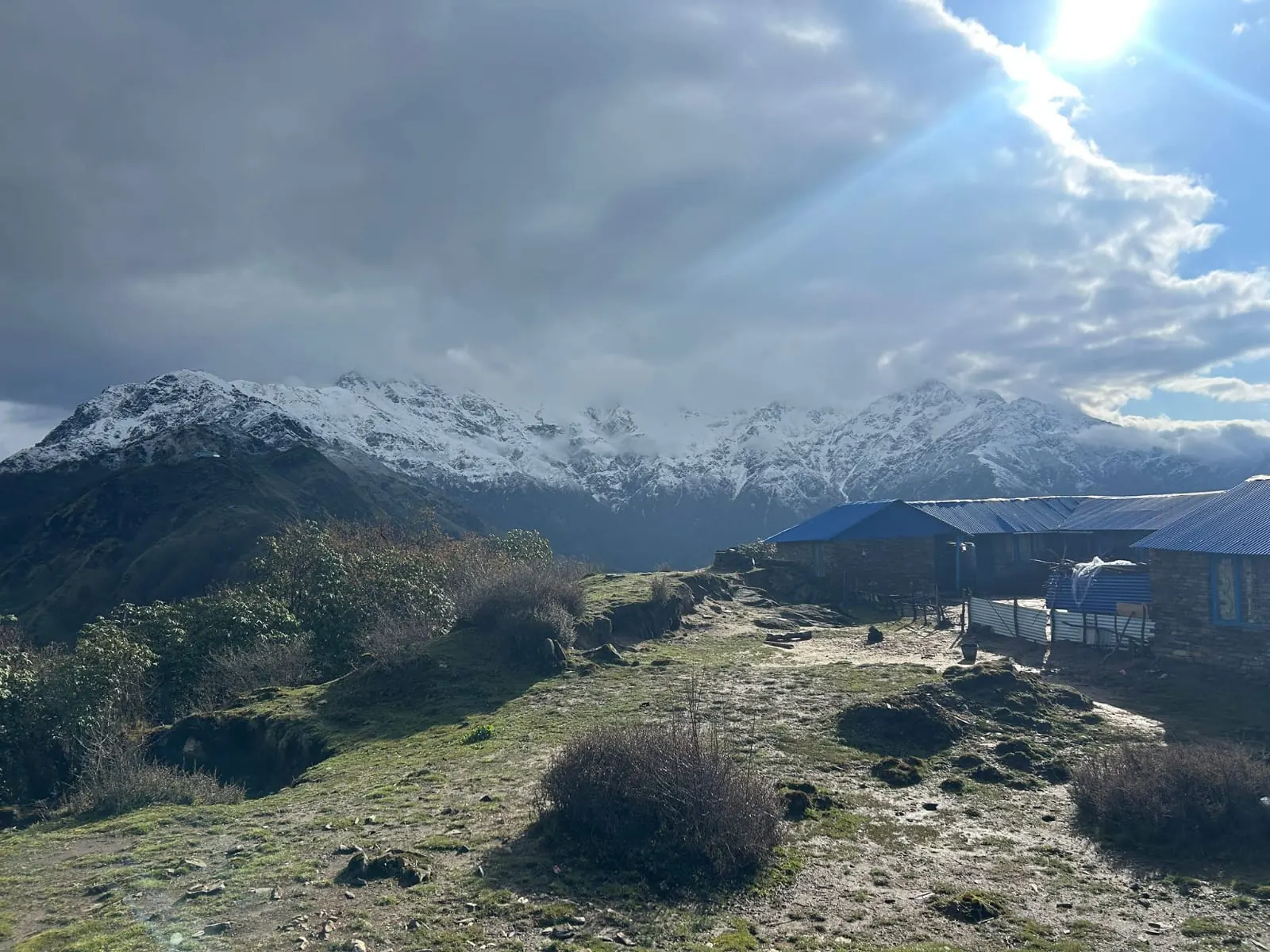
High Camp & Badal Danda 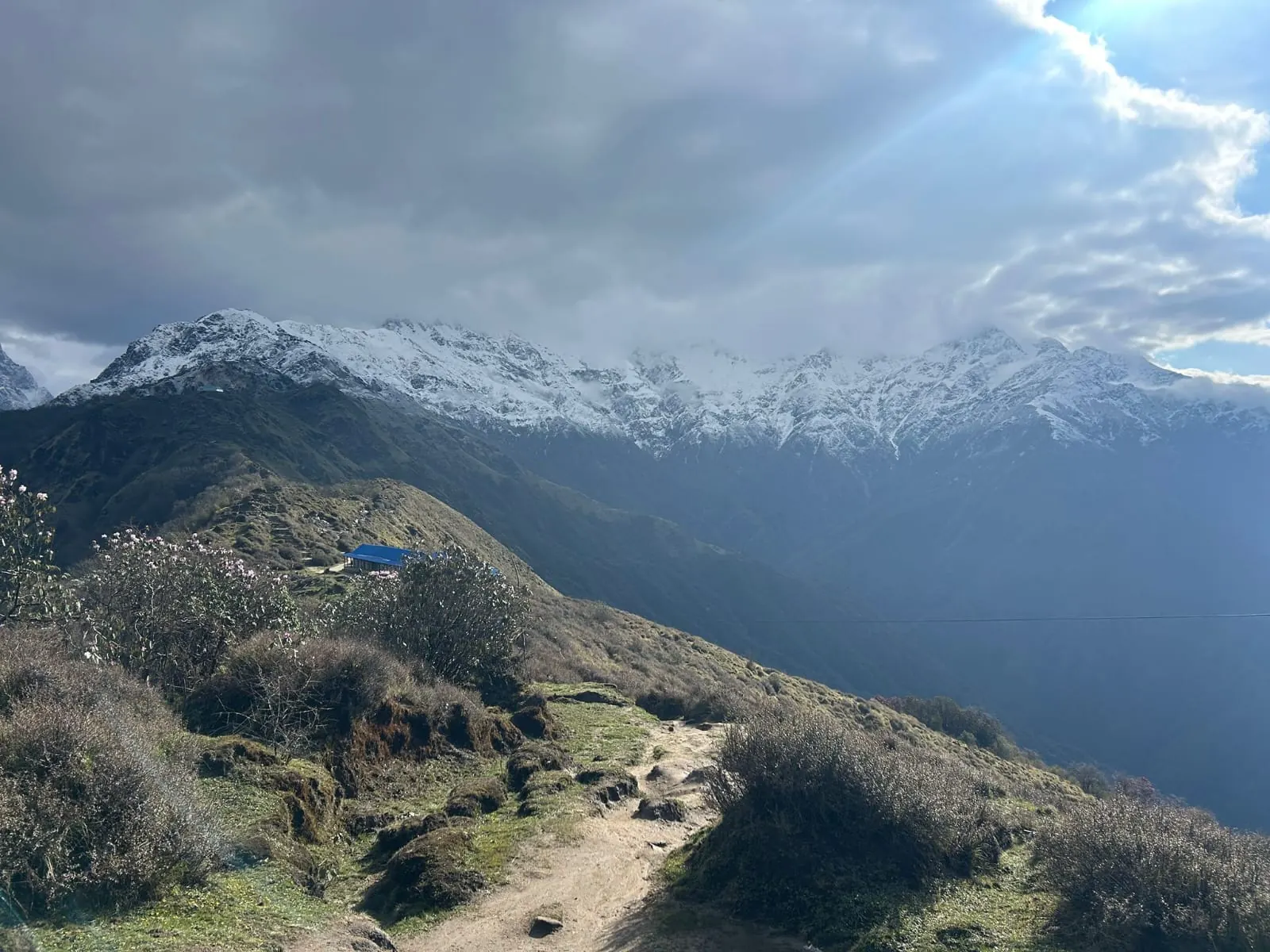
High Camp & Badal Danda 6 photos from day 2, taken on the trail. - Day 3
High Camp → Upper Viewpoint → Sidhing → Pokhara (jeep)
- Drive
- Local jeep, 2.5 – 3 hrs (Sidhing → Pokhara)
- Trek
- 8 – 9 hrs (summit + full descent)
- Distance
- ~16 km
- Altitude
- 3,580 → 4,200 → 1,860 m
- Net change
- +620 m / -2,340 m
The longest day of any Mardi Himal itinerary we run, and the reason the 3-day suits only very fit, well-prepared trekkers. We leave High Camp around 04:00 with headtorches for the pre-dawn ridge climb to the Upper Viewpoint at 4,200 metres. On a clear morning Dhaulagiri sits far to the west while the Annapurna wall fills the sky ahead, with Machhapuchhre close enough to touch. Mardi Himal Base Camp at 4,500 metres is about 1 hour 30 minutes further along the ridge. If you want to go on, ask your guide, though on this itinerary it makes the longest day longer still.
Back at High Camp for a quick breakfast, then the descent begins in earnest: through Low Camp, Forest Camp, and down through cloud forest to the Gurung village of Sidhing at 1,860 metres, over 2,300 metres of descent from the viewpoint in a single push. Trekking poles are not optional on this stretch, and by the time Sidhing comes into view most legs are done.
A local jeep meets us at Sidhing for the rough but scenic drive back to Pokhara at 820 metres, arriving by early evening. There is no overnight stop between High Camp and home: this is one day that starts on a 4,200-metre ridge and ends at a lakeside hotel. It is the whole point of the 3-day version, and it is not a gentle day.
High Camp & Badal Danda 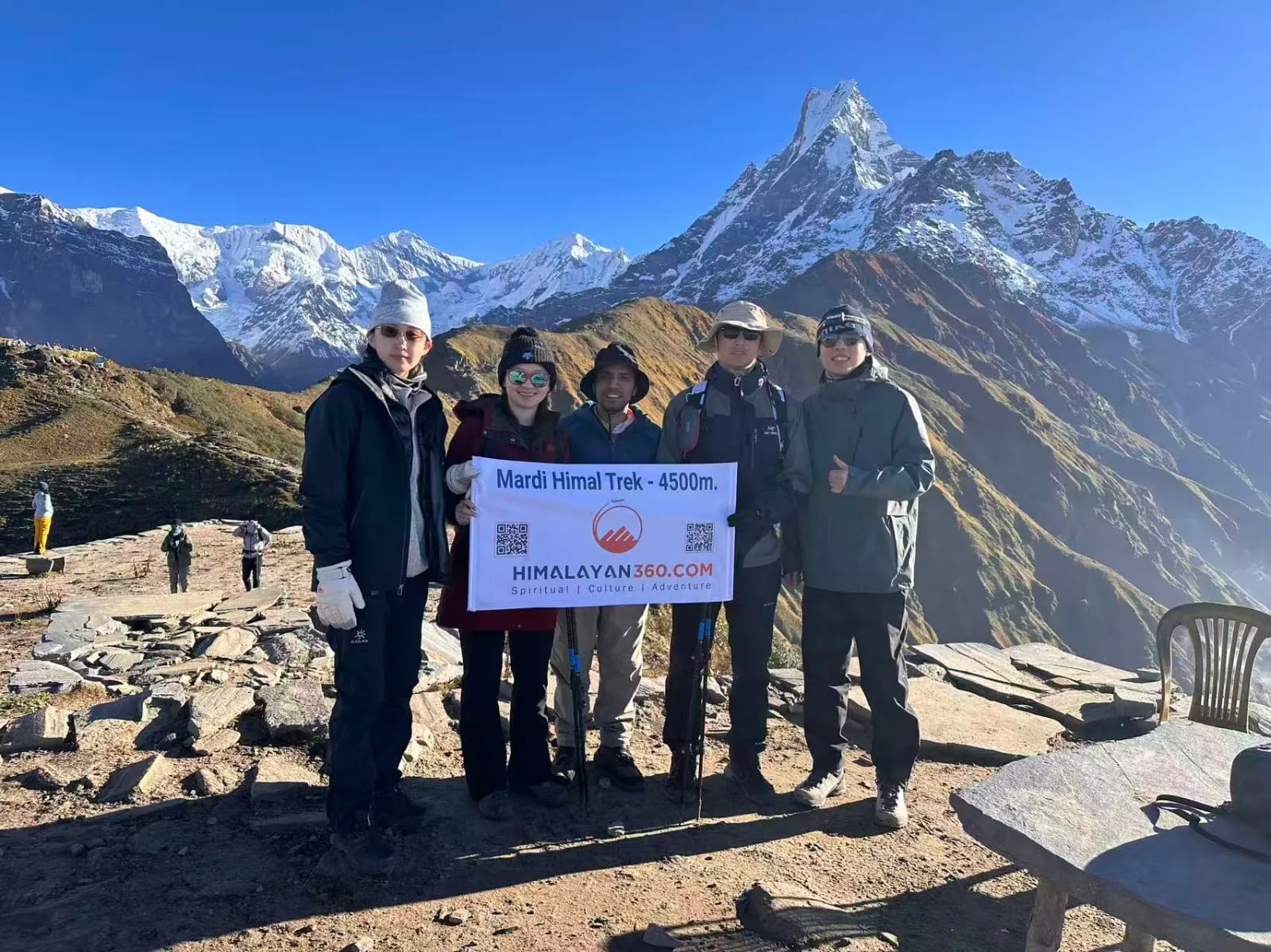
Upper Viewpoint 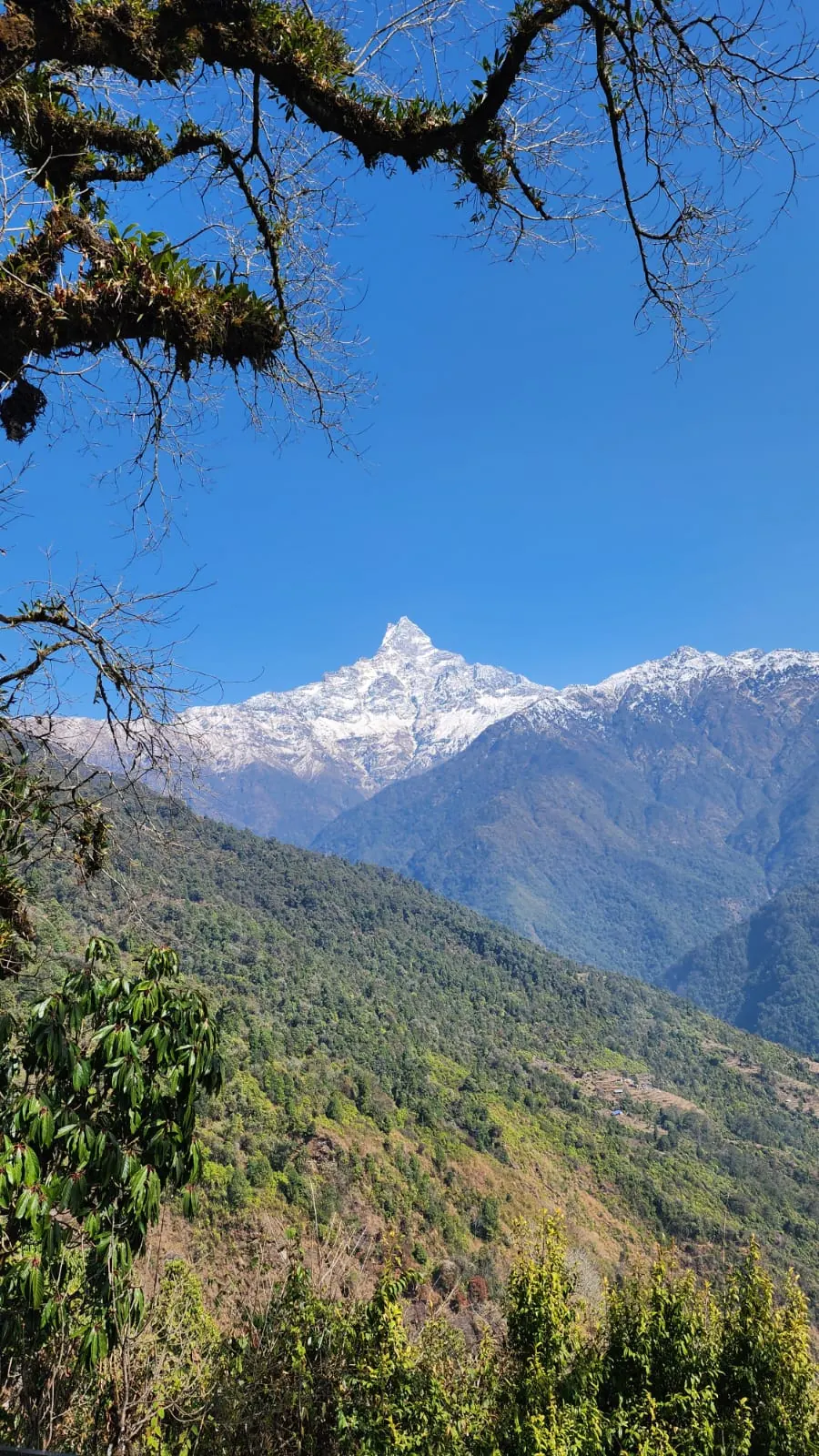
Sidhing High Camp & Badal Danda 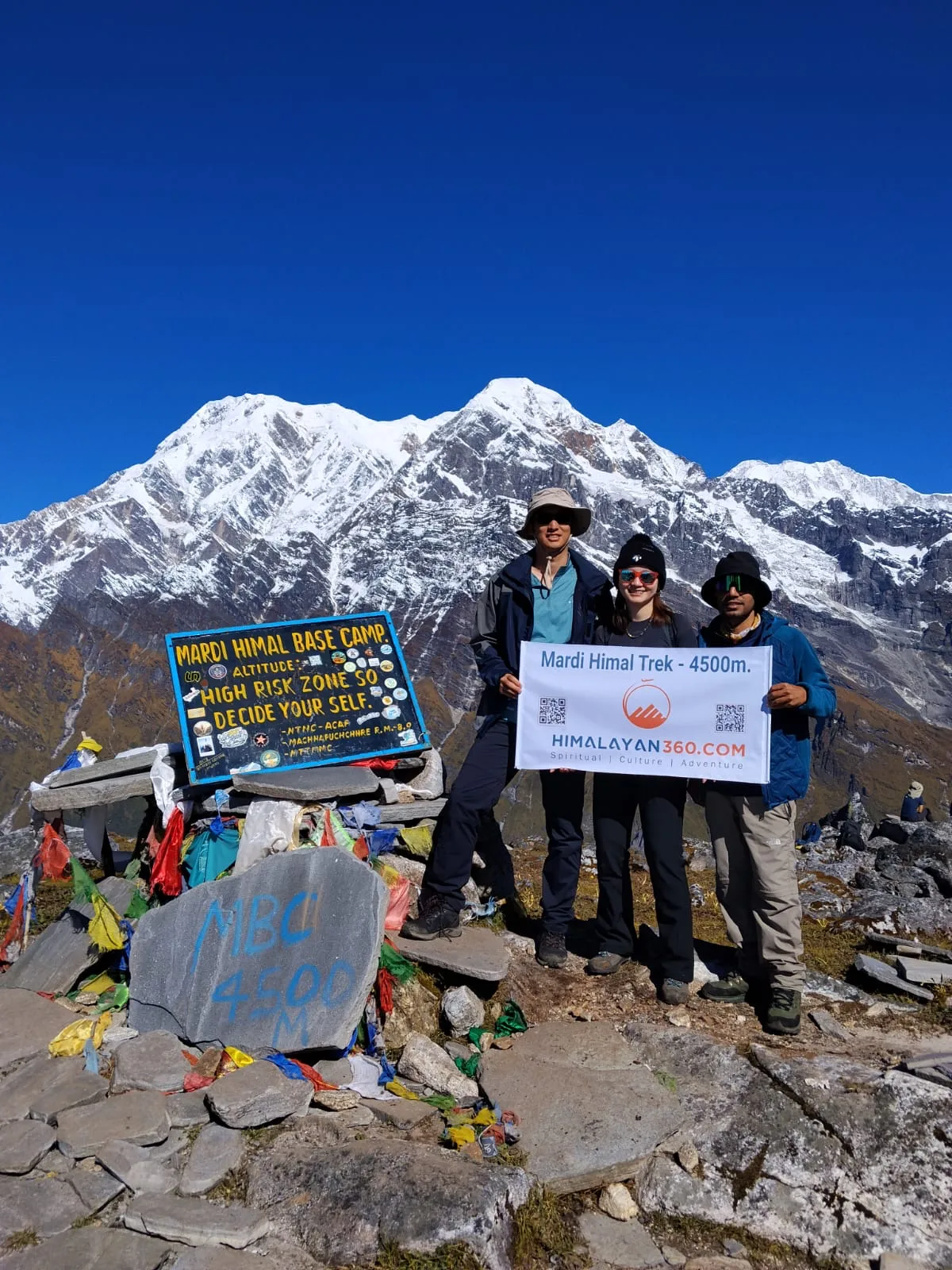
Mardi Himal Base Camp 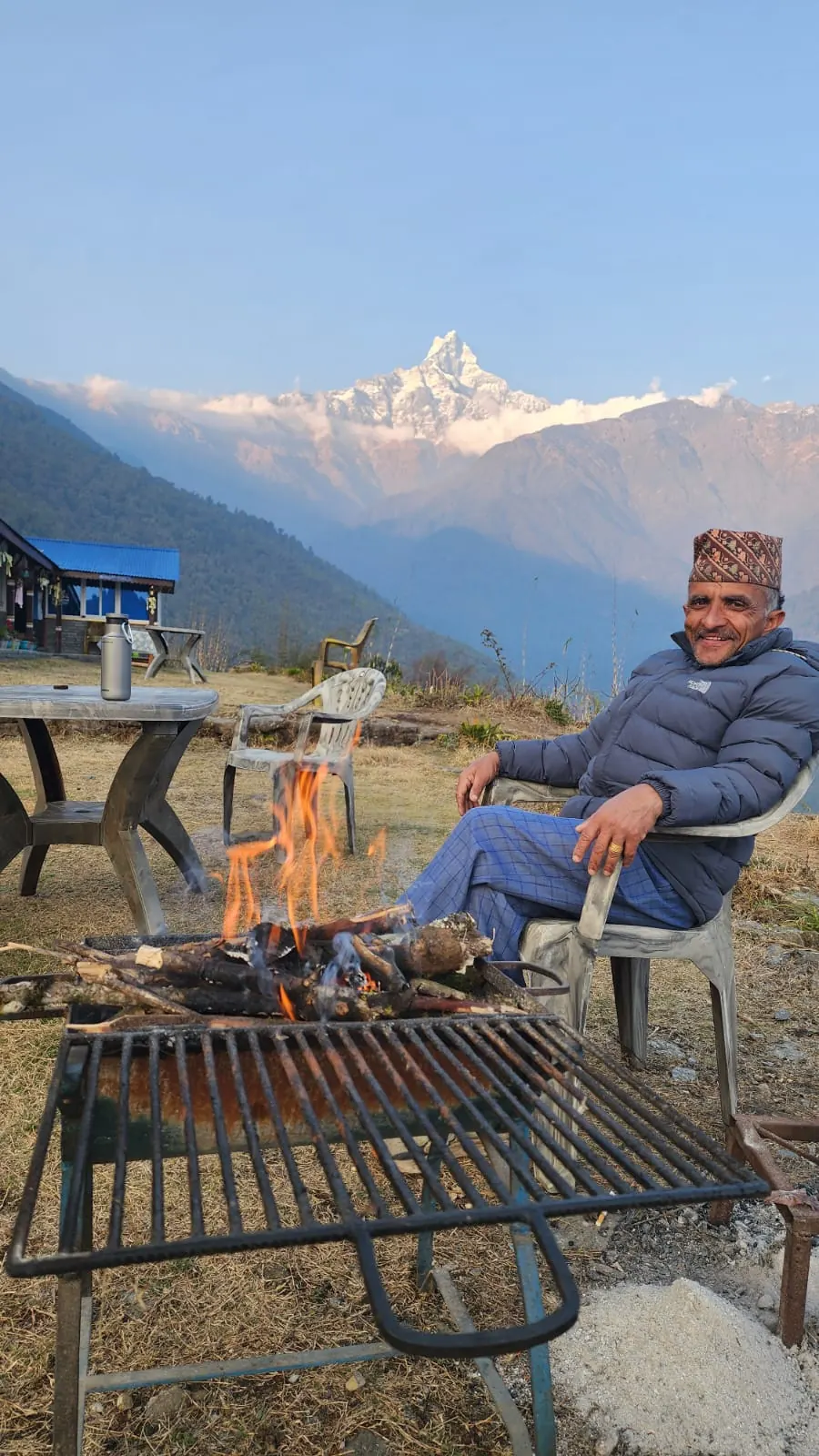
Sidhing 6 photos from day 3, taken on the trail.
Three versions, one ridge.
How the 3-day compares against the 4-day and 5-day itineraries on the same trail. Walking hours, acclimatisation buffer, cost, and who each version is for.
3-day
4-day
5-day
The 3-day works for some trekkers, not all.
We are explicit about who this version is for and who it is not. Compressed altitude profiles raise risk regardless of how the trek ends. If you are unsure, default to the 4-day or 5-day version.
- Fit, time-pressed trekkers. If you have a 4-day window in Pokhara and you can carry your daypack at altitude without stopping, the 3-day plan delivers the trek without a day off work in the way.
- Trekkers with prior altitude experience. If you have walked above 3,500 m before (Everest View, Kilimanjaro, Mont Blanc, Inca trail), your body knows how to acclimatise faster. The 3-day pacing is achievable.
- Photographers chasing one clear dawn. If you have a single window for clear skies on the ridge, the 3-day plan puts you at the Upper Viewpoint on a fixed, known date, with no spare days to wait out cloud.
- First-time Himalayan trekkers. The 3-day pacing assumes your body knows what 3,500 m feels like. First-timers should do the 5-day, or the 7-day for the gentlest climb. The trek is not the place to test new altitude.
- Anyone with cardiovascular conditions. Compressed ascent profiles raise cardiovascular load. We do not run the 3-day for trekkers with a history of hypertension, arrhythmia, or pulmonary issues, regardless of fitness.
- Trekkers under 18 or over 65. Our hard rule. Children and older trekkers are welcome on the 4-day and longer versions, and the 7-day is the gentlest climb. The 3-day pacing is outside our risk envelope for these age groups.
The price tag, itemised.
The 3-day is still the most expensive per-day Mardi Himal itinerary we run, because two private and local jeep transfers plus a guide for a very short trip carry a fixed cost that a longer trek spreads over more days. There is no helicopter in the price. Below is the 2026 per-person rate by group size, plus the full inclusion list.
Want it private, just your party with your own guide? Add 5% per person. Going private on your own, you pay the 1-person rate.
- ACAP entry permit
- TIMS card
- Licensed English-speaking local guide for 3 days
- Pokhara → Pitam Deurali private jeep
- Sidhing → Pokhara local jeep
- 2 nights teahouse accommodation
- 2 breakfast, 3 lunch and 2 dinner, each with a cup of tea
- Comprehensive first aid kit
- International flights to Kathmandu / Pokhara
- Pokhara hotel (we recommend Lakeside, USD 35 to 80 / night)
- Lunch and dinner in Pokhara on rest days
- Personal trekking gear
- Travel insurance (mandatory, must cover heli evacuation to 4,500 m)
- Tips for guide (10% to 30% of package price)
Before you book.
- Is 3 days enough for the Mardi Himal trek?
- Yes. Three days is enough to walk Mardi Himal in full, on foot, and reach the Upper Viewpoint at 4,200 metres, with no helicopter involved. It is the fastest itinerary we run, and it works by driving further on Day 1 (a private jeep to Pitam Deurali) and folding the summit push, the full descent to Sidhing, and the drive home into one very long final day. There is no buffer day for weather or altitude. If that trade-off sounds tight, the 4-day or 5-day gives you more room.
- How hard is the 3 day Mardi Himal trek?
- It is the most demanding Mardi Himal itinerary we offer. Day 2 gains roughly 980 metres to High Camp, and Day 3 climbs to 4,200 metres before dropping over 2,300 metres to Sidhing in a single push, followed by a jeep ride home the same evening. There is no in-between night to break up the descent and no spare day if the weather closes in. If you can comfortably walk 6 to 9 hours on steep terrain two days running, with a much longer third day, you can do it. If that sounds punishing rather than exciting, take the 4-day or 5-day instead.
- Can beginners do the 3 day Mardi Himal trek?
- We do not recommend it as a first Himalayan trek. The fast climb to High Camp on Day 2, and the summit-plus-full-descent-plus-drive-home Day 3, are built for trekkers who already know how their body handles altitude above 3,000 metres. Complete beginners are far better served by the 5-day or the 7-day, which spread the same route over more time and keep a margin for a slow morning. Read our altitude sickness guide before you decide, and be honest about your fitness and your acclimatisation history.
- Do I need a helicopter for the 3 day Mardi Himal trek?
- No. This itinerary is fully walked, both up and down: a private jeep gets you to Pitam Deurali on Day 1, you trek to the Upper Viewpoint and all the way down to Sidhing on foot, then a local jeep takes you back to Pokhara the same evening. There is no flight anywhere in it. If you would rather skip the walking altogether and see Mardi Himal Base Camp from the air in a couple of hours, that is a separate product; see our helicopter tour.
- What does the 3 day Mardi Himal trek cost?
- Prices are per person in USD for 2026 and drop as your group grows: USD 405 for a solo private trekker, USD 288 for two, USD 250 for a group of 3 to 5, USD 236 for 6 to 10, and USD 220 for 11 to 20. For a private trip, just your party with your own guide, add 5% per person; a solo trekker pays the 1-person rate. See the price table above for the full breakdown, and our permits and cost page for how the rate is built.
- Should I do the 3 day, 4 day, or 5 day Mardi Himal trek?
- All three reach the same 4,200-metre viewpoint, fully walked, with no helicopter. The 3-day is the leanest: it drives further on Day 1 and folds the summit, the descent, and the drive home into one long Day 3, with no buffer at all. The 4-day keeps that same summit-and-descent day but stops overnight in Sidhing rather than pushing on to Pokhara. The 5-day is the gentlest, splitting the descent over two days and keeping a spare day in Pokhara. Choose the 3-day only if you are very fit, short on time, and comfortable with almost no margin for error.
- When is the best time to do the 3 day Mardi Himal trek?
- Spring (March to May) and autumn (late September to November) give the most stable weather and the clearest views, which matters more here than on any other Mardi itinerary because there is no buffer day to wait out a clouded-over summit morning. Winter is colder and quieter with a real chance of snow at High Camp; the monsoon (June to August) brings cloud, leeches, and poor visibility. Our best season guide breaks the months down in detail.