Below the snow line, the Mardi Himal region runs on terraced rice and maize, the Lwang community tea garden, herds that climb to the summer pastures, and the old Gurung tradition of cliff honey hunting. Trekking is the newest layer on top. Here is how the local economy fits together, with the facts sourced.
The Annapurna foothills sit in Nepal's mid-hill band, roughly 500 to 3,000 m, where up to a third of the slopes are cut into terraces. The crop you see depends on the altitude and whether the land can be irrigated.
The mid-hills are split into khet (irrigated land for paddy rice) and bari (rainfed land worked mostly for maize). Rice grows on irrigated terraces below about 1,800 m; maize climbs higher on rainfed slopes and is often intercropped with soybean, millet, or wheat.
Beyond the two staples, families grow wheat, millet, barley, potato, and mustard. These secondary crops fill the calendar and the diet through the year, and mustard adds cooking oil to the mix.
Cropping intensity falls with altitude. The valley khet below 1,000 m can take three crops a year. Land between 1,000 and 1,800 m runs a two-crop system. Above 1,800 m, a single crop a year is the norm.
Lwang (Lwang Ghalel) is a Gurung village in the Annapurna Conservation Area, around 20 to 30 km from Pokhara at about 1,500 m, with views of Machhapuchhre, Hiunchuli, Annapurna II, and Annapurna South. Its name now travels with its tea.
The organic tea garden began in the 2000s as a community effort, run by around 16 local families with technical support from Demmers Teehaus, an up-market tea-house chain. The garden sits about 30 minutes uphill on foot from the village homestays.
The tea produced here is exported to European countries including Italy and Germany. Around 25 families also run the Lwang Community Homestay, where visitors stay with a host family, watch cultural dances, and try canyoning on the nearby Kudi River. Almond farming is sometimes mentioned in the village, though it is only lightly documented.
Above the treeline, herding follows the seasons. Animals climb to the high pastures when the grass is up, then come down to lower forests when the cold sets in. This back-and-forth is called transhumance.
Summer grazing at around 3,300 to 4,000 m lasts only about one to three months, roughly June to August. The herds graze high while they can, then move back down before the pastures lock under snow.
Herds are made up of yak, the yak-cattle hybrid known as chauri, sheep, and goats. Historically, some herders crossed the Himalaya into Tibet to herd yak and sheep through the winter.
Mad honey is harvested from the cliff nests of the Himalayan giant honeybee (Apis laboriosa), the world's largest honeybee. Its intoxicant effect comes from grayanotoxins in rhododendron nectar. It has been harvested in spring and autumn by Gurung communities for generations, with Magar and Rai hunters elsewhere in Nepal. Read the full honey hunting story.
Apis laboriosa nests on cliffs between roughly 3,000 and 10,000 ft, near water, and cannot be domesticated. A single colony can yield around 25 to 60 kg of honey a year. The Mardi region sits in Kaski, one of Nepal's honey-hunting districts.
Hunting happens twice a year: late spring (roughly late April to end May) and late autumn (late October to end November). Spring honey is the freshest and most potent, harvested while the rhododendrons are in bloom. Hunters scale the cliffs on bamboo rope ladders, using smoke to disperse the bees.
Grayanotoxins keep the body's sodium channels open, which can lower blood pressure and slow the heart, with dizziness, nausea, and hallucinations possible. Most symptoms subside after around 12 hours. In small doses (around half a tablespoon) it is used as a traditional remedy. Mad honey is legal in Nepal.
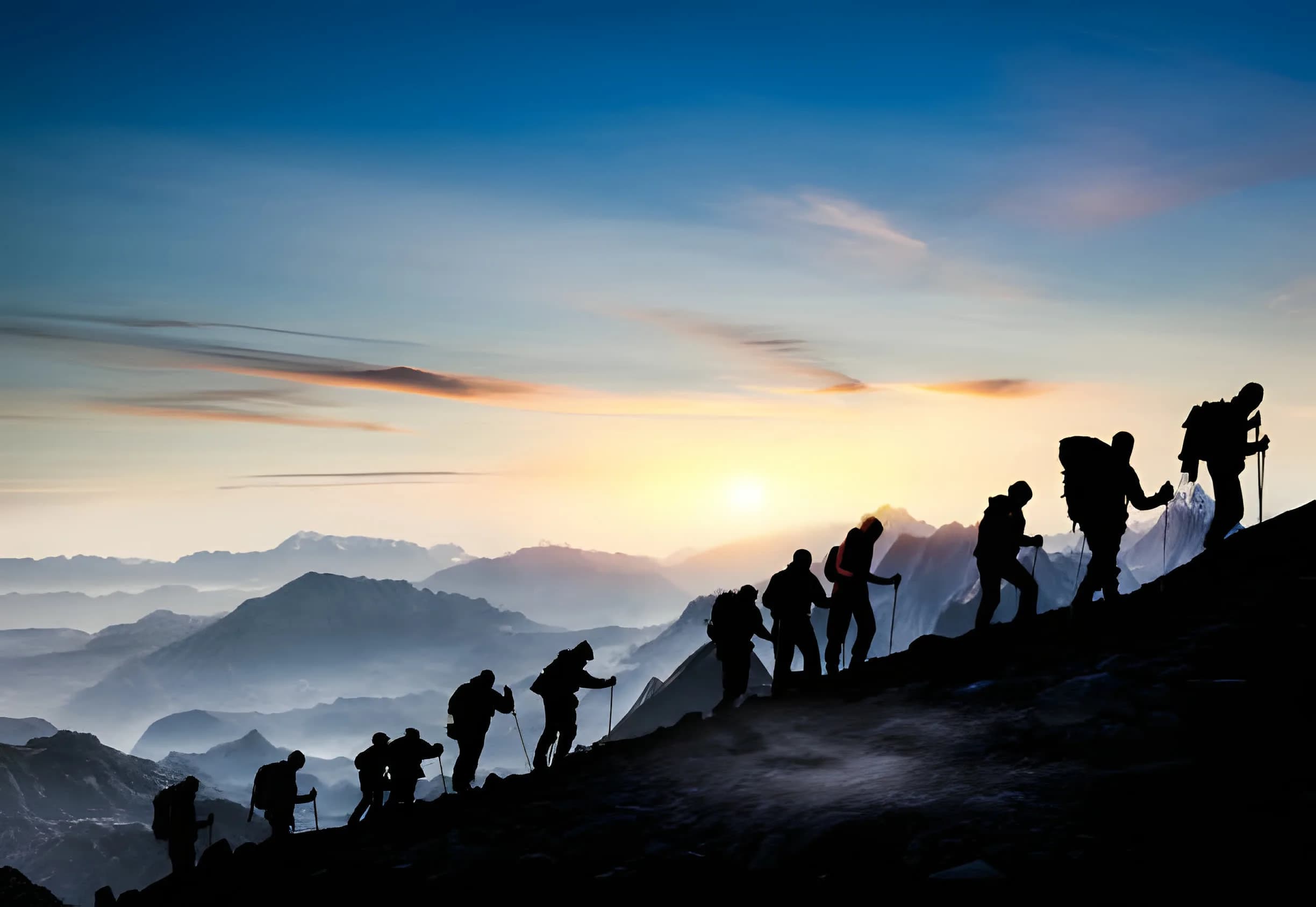
The Mardi Himal route was established in 2012, a short ~40 km trek of about five days reaching a base camp near 4,500 m. It added a cash income stream on top of farming and herding, and it spread that income across teahouse owners, porters, and guides.
Teahouse rooms run from around NPR 300 to 1,200 a night and meals from NPR 350 to 900, both rising with altitude as supplies get harder to carry up. Local porters earn roughly USD 16 to 25 a day and licensed guides around USD 25 to 35 a day, so a fair slice of the trekking spend stays in the valleys you walk through. For more on the people and how to travel responsibly, see our people and culture and responsible travel pages.
Rice and maize are the two staple crops. Rice grows on irrigated terraces (khet) below about 1,800 m, while maize is grown on rainfed land (bari) and reaches higher. Families also grow wheat, millet, barley, potato, and mustard as secondary crops. The lower valley land can take up to three crops a year, the middle band two, and land above 1,800 m usually a single crop.
Lwang (Lwang Ghalel) is a Gurung village in the Annapurna Conservation Area, around 20 to 30 km from Pokhara at roughly 1,500 m. It is known for its community organic tea garden, run by around 16 local families with technical support from the tea-house chain Demmers Teehaus, and for the Lwang Community Homestay, where about 25 families host visitors. The tea is exported to European countries including Italy and Germany.
Mad honey is a dark reddish honey harvested from the cliff nests of the Himalayan giant honeybee (Apis laboriosa). Its intoxicant effect comes from grayanotoxins in rhododendron nectar. It is harvested in spring and autumn by Gurung communities, who scale cliffs on bamboo rope ladders. The Mardi region sits in Kaski, one of Nepal's honey-hunting districts.
In large amounts it can be. Grayanotoxins bind to sodium channels in the body and keep them open, which can cause low blood pressure, a slowed heart rate, dizziness, nausea, blurred vision, and hallucinations. Most symptoms subside after around 12 hours. In small traditional doses (roughly half a tablespoon) it is used locally as a remedy. It is legal in Nepal.
Herders follow a transhumance pattern: they graze animals in high mountain pastures during the warm months and move down to lower forests in the cold season. The high-pasture window at around 3,300 to 4,000 m is short, roughly one to three months between June and August. Animals include yak, the yak-cattle hybrid chauri, sheep, and goats.
The Mardi Himal route opened in 2012 and added a new income stream alongside farming and herding. Teahouses rent rooms for around NPR 300 to 1,200 a night and serve meals from NPR 350 to 900, with prices rising at altitude. Trekking also employs local porters (around USD 16 to 25 a day) and guides (around USD 25 to 35 a day), keeping more of the trekking spend in the region.
We run small-group trips from Pokhara every Saturday from September to May. We also run private trips any day. A $50 deposit holds your place. Pay the rest on arrival in cash or by card.