Nepal's Hidden Ridge
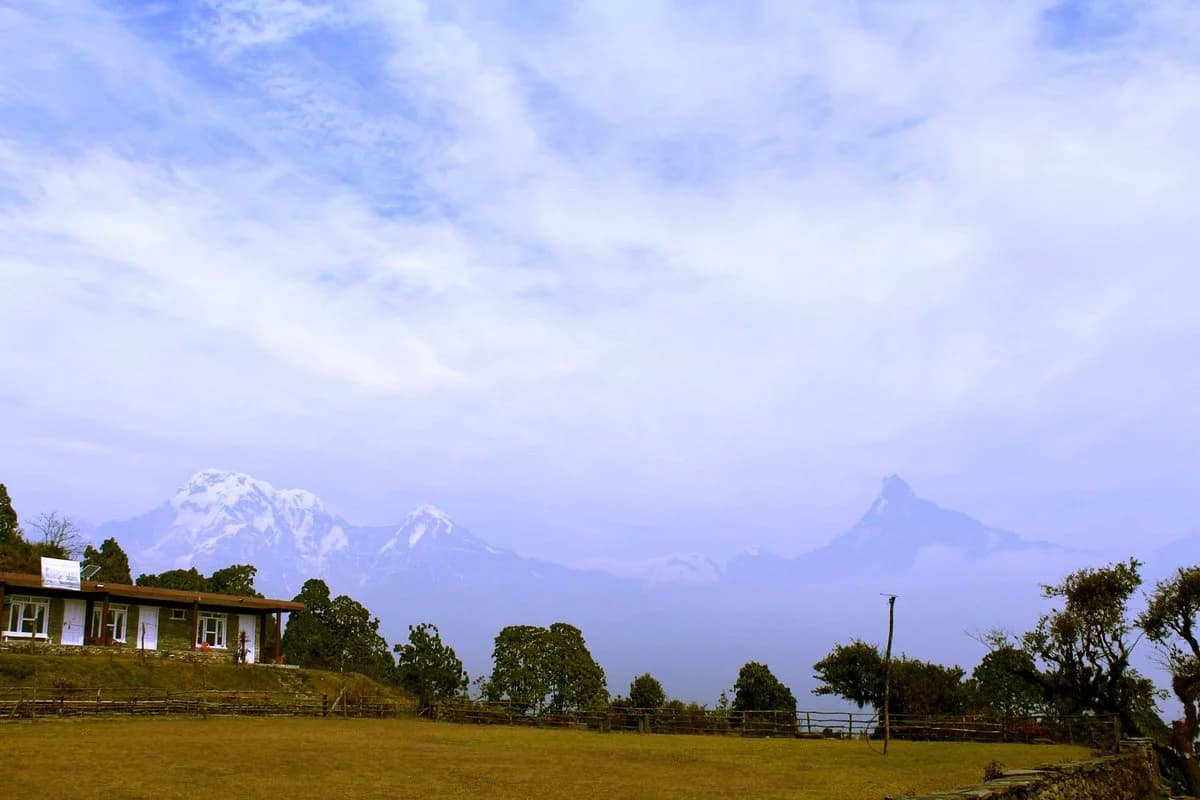
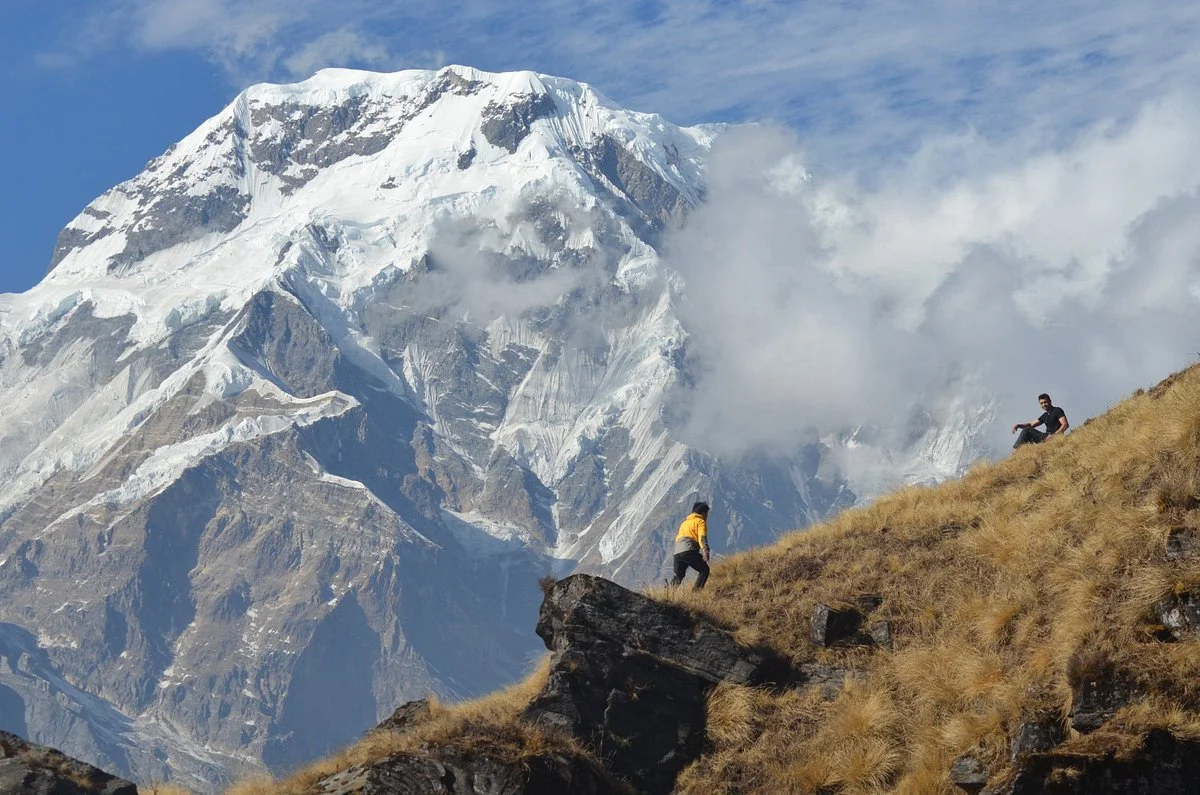
Mardi Himal is a 5,587-metre peak that extends like a southern finger from the Annapurna massif, rising between its two most famous neighbours, Machapuchare (the sacred “Fishtail,” 6,993 m) and Annapurna South (7,219 m). It takes its name from the Mardi Khola, the river that drains its southern flank and eventually joins the Seti, then the Trishuli, then the Ganges.
From a geological perspective, Mardi Himal shares the same ancient origins as the rest of the Annapurna range. It is formed from some of the oldest rocks in the Himalayas, shaped over millions of years by the ongoing collision between the Indian and Asian tectonic plates. Even today, the mountains are still slowly rising.
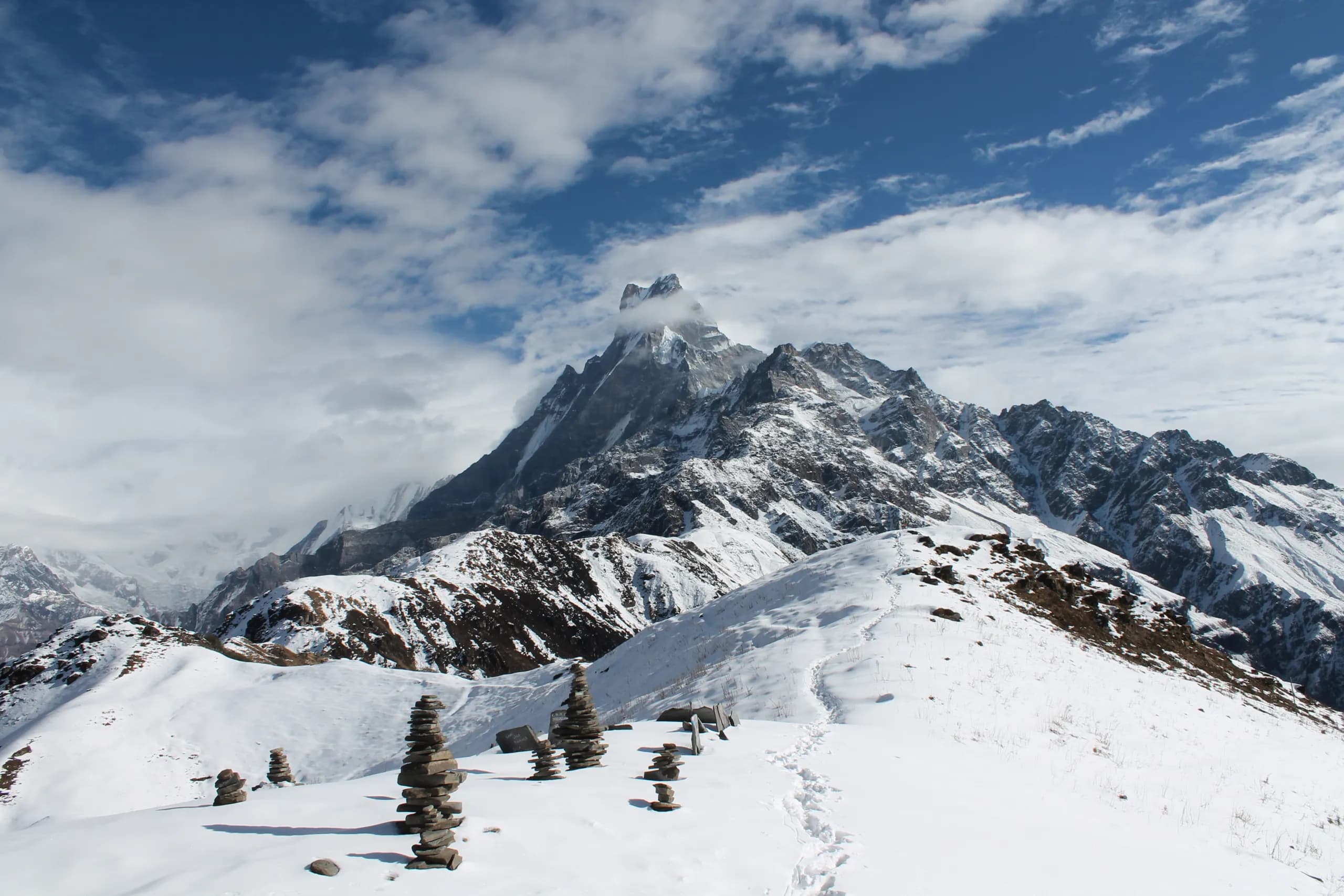
What truly sets Mardi Himal apart, however, is its striking ridge. A sharp, continuous line runs from the summit all the way down toward the foothills near Pokhara, about 40 kilometres to the south. This long, exposed ridge creates dramatic landscapes and offers some of the most unique and close-up mountain views you can experience in Nepal.
That ridge is why the trek exists. It offers a rare, direct line from lowland farmland at 820 m to the alpine zone at 4,200 m in four days of walking, passing through every climate belt of the central Himalaya on a single trail. The summit itself remains a climber's peak (first ascended 1961, open by permit), but the ridge up to High Camp is walkable without ropes or crampons.
The mountain was effectively unknown to trekkers until 2012, when the Annapurna Conservation Area opened the ridge as an official route. A decade later it remains one of the quietest major trails in the region, far less walked than the neighbouring Annapurna Base Camp path.