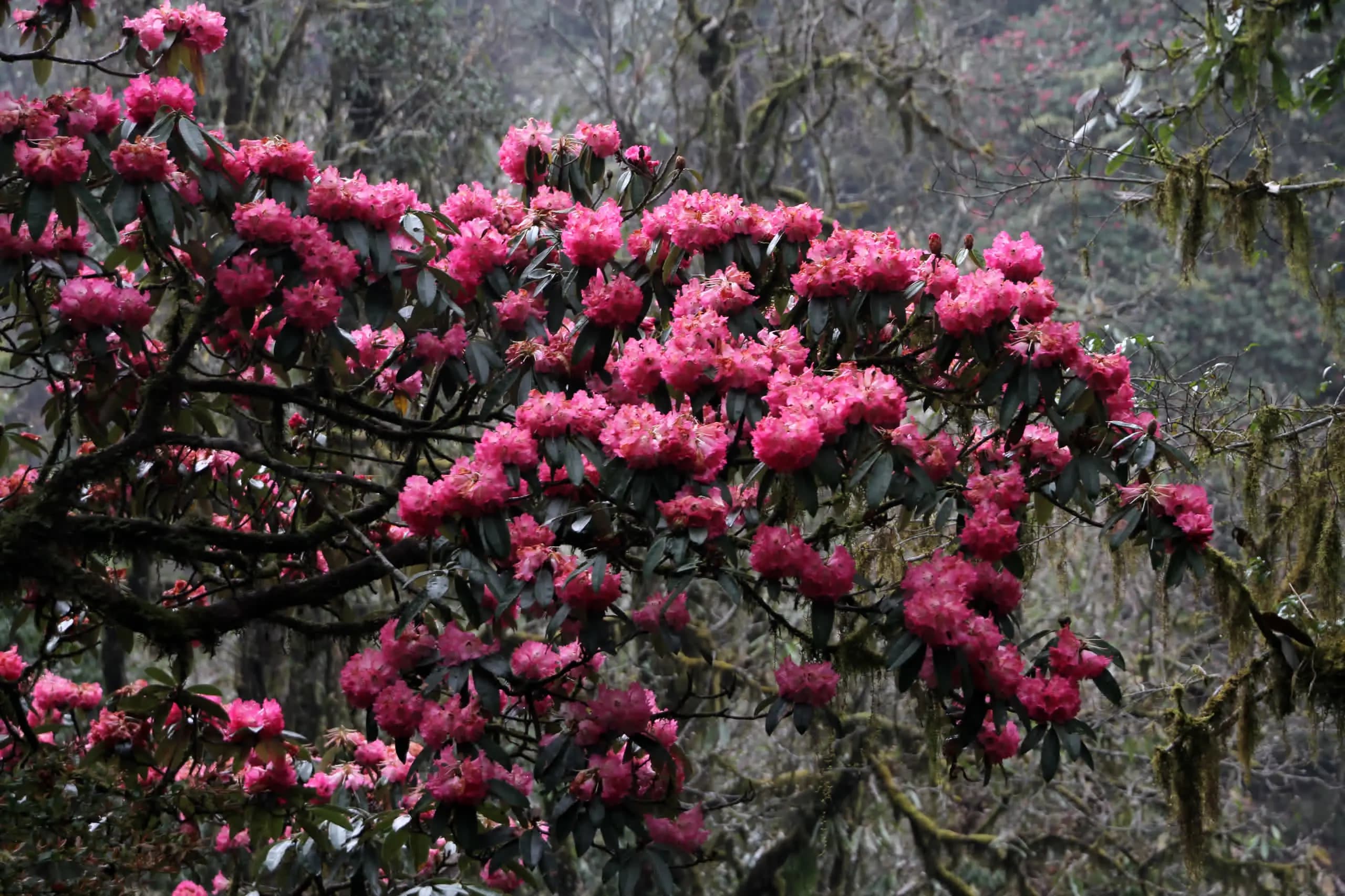
Spring season open · Mar 15 – Jun 25 places left · Classic 7d · May 03Rhododendron bloom reported at Forest Camp
Trail status: Open
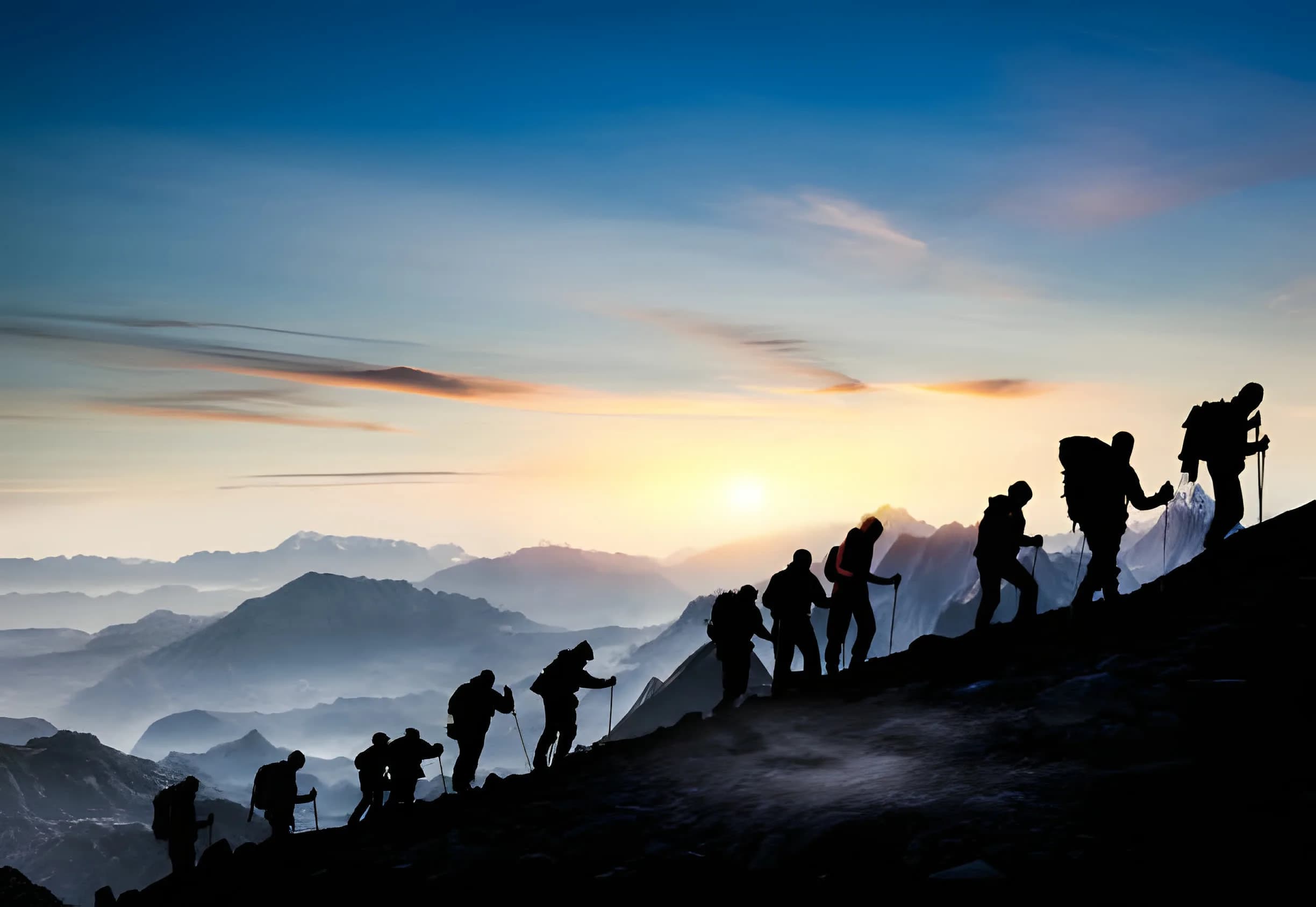
Cliffs and Gurung villages below Mardi Himal where wild honey is harvested
A Gurung tradition

Honey from the cliff face.

Twice a year, Gurung hunters lower bamboo ladders down sheer Himalayan cliffs to cut the combs of the world's largest honey bee. The harvest is part livelihood, part ritual, and part myth: the red "mad honey" that comes off the rock is famous, and the craft is now slowly fading.

The harvest, in numbers.

Bee
Apis laboriosa
World rank
Largest honey bee
Adult length
Up to ~3 cm
Nesting altitude
~2,500-3,000 m+
Nest yield
Up to ~60 kg
Harvests a year
Two (spring, autumn)
Mad-honey toxin
Grayanotoxin
Region district
Kaski (Mardi)

Honey hunting is one of the older livelihoods of the Annapurna foothills, practised by the same Gurung communities that farm the terraces and herd to the summer pastures. It belongs on our wider region livelihoods page; here we go deeper into the bee, the cliff, and the ritual.

The bee, the cliff, and the rope.

At the centre of the whole tradition is one insect: Apis laboriosa, the Himalayan giant honey bee, the largest honey bee in the world. Single adults can reach around 3 cm in length, and they build big, open combs under overhangs on the southwest-facing walls of vertical cliffs, mostly between about 2,500 and 3,000 m, foraging higher still up to around 4,100 m. A single nest can hold as much as 60 kg of honey. Because the bee cannot be kept in a box, the only way to the honey is up, or rather down, the cliff itself.

That is where the rope comes in. From the clifftop a team lowers a long ladder, woven from bamboo and vine, and one experienced cutter descends onto the rock with little or no protection. He works the combs loose with long bamboo poles, the tangos, steering each heavy slab of honeycomb into a basket lowered alongside him while smoke from a fire below drifts up to push the bees off the comb. The bees depend on the same rhododendron forests covered on our flora and fauna page.

The red honey with a kick.

Not all of the honey is ordinary. When the bees feed on rhododendron nectar in spring, the comb takes up grayanotoxins, the natural compounds that give "mad honey" its name and its dark reddish colour. The toxins bind to sodium channels in the body and keep them open, which can lower blood pressure, slow the heart, and bring on dizziness, nausea, blurred vision, and hallucinations. Most symptoms pass within about half a day.

In small, careful doses it has long been used locally as a folk remedy, and it is legal in Nepal. Its reputation as a psychoactive curiosity has built a real export market, with mad honey shipped to Europe, North America, and Asia, even as several countries restrict it. That market is now a large part of why the cliffs are climbed, and a large part of the pressure on the tradition. The spring timing ties the harvest to the seasonal calendar in our seasonal events guide.

An offering before the climb.

For the Gurung, the cliff is not just a worksite. Honey hunting is a sacred act, and before a hunter sets foot on the ladder the team makes offerings to the gods and spirits of the cliff and forest, asking for safe passage and a good harvest. Rituals can include prayers, flowers and food, and the sacrifice of a chicken, goat, or sheep, with a cliff or forest deity sometimes named, such as Rangkemi. The exact names and rites vary from village to village, so we treat the specific deity names as local rather than uniform.

The spiritual frame is not decoration: it sets who may cut, when, and how, and it binds the harvest to the wider belief system of the region. There is more on that worldview on our spirituality page, and on the Gurung communities themselves on our people and culture page.

A craft thinning out.

The tradition is fading. Fewer young people want to learn a skill this dangerous, and the knowledge now sits with a shrinking number of older master hunters. At the same time, giant-bee populations have declined in places, squeezed by habitat loss and a changing climate, so there are fewer nests to harvest. Commercialisation has pulled the craft away from its village roots: outside buyers chasing mad honey, and harvests staged for tourists and film crews, change both the pace and the purpose of the work.

The craft entered the wider world largely through one body of work. The photographer Eric Valli, with Diane Summers, lived among Gurung honey hunters and shot the images in 1987, published as a 1988 National Geographic feature and the book Honey Hunters of Nepal, their team led by an older master named Mani Lal. The practice drew a fresh wave of attention again around 2017 through documentary and online coverage. The same exposure that records the tradition also speeds its change, which is the quiet tension at the heart of cliff honey hunting today.

Honey-hunting questions.

What bee makes the cliff honey?

Apis laboriosa, the Himalayan giant honey bee, the world's largest honey bee. Single adults can reach about 3 cm in length. It builds large open nests under overhangs on vertical cliffs, mostly at altitudes between roughly 2,500 and 3,000 m, and forages up to around 4,100 m. A single nest can hold as much as 60 kg of honey. The bee cannot be domesticated, so the honey has to be taken from the cliff where it is built.

What is mad honey?

Mad honey is a dark reddish honey that carries grayanotoxins, natural compounds the bees pick up from rhododendron nectar. The toxins bind to the body's sodium channels and keep them open, which can lower blood pressure, slow the heart, and bring on dizziness, nausea, and hallucinations. Spring honey, harvested while the rhododendrons are in bloom, is the most potent. In small traditional doses it is used as a remedy, and it is legal in Nepal.

How do the hunters reach the nests?

On rope ladders. A team lowers a long ladder, often woven from bamboo and vine, down the cliff from above, and a single cutter descends with little or no protective gear. Long bamboo poles called tangos are used to cut and steer the heavy combs into a basket, while smoke from a fire lit at the cliff base drifts up to disperse the bees. It is slow, dangerous work, usually led by one experienced hunter.

When does the harvest happen?

Twice a year. The main harvests fall in late spring (roughly late April to the end of May) and late autumn (late October to the end of November). The spring harvest, taken during the rhododendron bloom, gives the freshest and most potent honey, including the prized red mad honey. The autumn harvest yields a milder, more ordinary honey.

Where does honey hunting happen near Mardi Himal?

The Mardi Himal region sits in Kaski District, one of Nepal's honey-hunting districts, alongside neighbouring Lamjung and others such as Gorkha, Lamjung, Myagdi, and Baglung. The Gurung villages on the cliffs and ridges of Kaski and Lamjung are the heartland of the tradition, and they are the same kind of communities the trail to Mardi Himal passes below.

Is the tradition dying out?

It is under pressure. Fewer young people are willing to learn a craft this dangerous, bee populations have declined in places, and the rise of commercial mad-honey buyers and staged tourist harvests has changed why and how the honey is taken. The knowledge sits with a small number of older hunters, so the risk is that it thins out as they retire.

Who made honey hunting famous outside Nepal?

The photographer Eric Valli, with Diane Summers, lived with Gurung honey hunters for several months and shot the images in 1987, published as a 1988 National Geographic feature and the book Honey Hunters of Nepal. Their team was led by an older master hunter, Mani Lal. The practice drew fresh international attention again around 2017 through documentary and online coverage.

Read the mountain, then come walk it.

We run small-group trips from Pokhara every Saturday from September to May. We also run private trips any day. A $50 deposit holds your place. Pay the rest on arrival in cash or by card.