Spring season open · Mar 15 – Jun 25 places left · Classic 7d · May 03Rhododendron bloom reported at Forest Camp
Trail status: Open
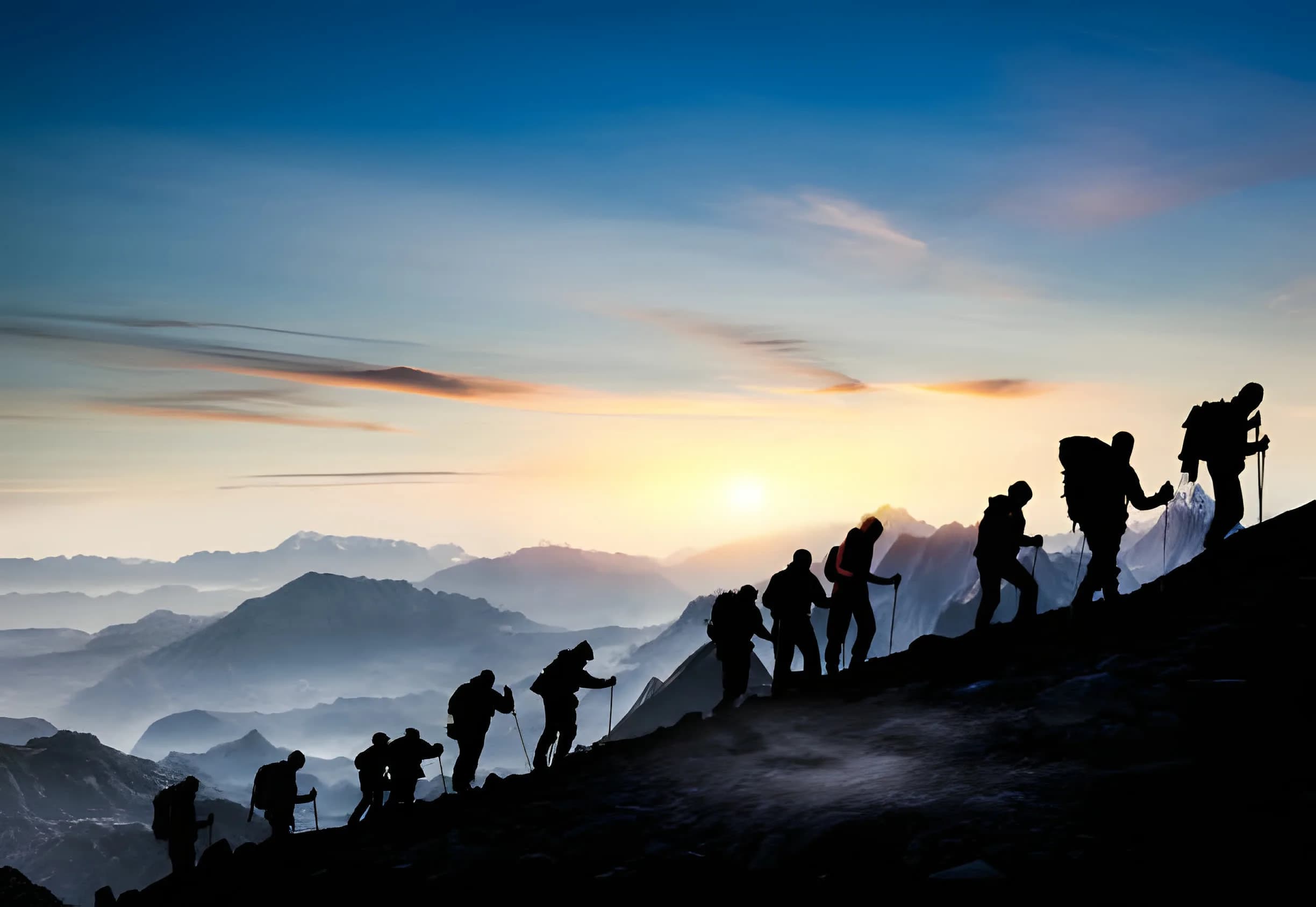
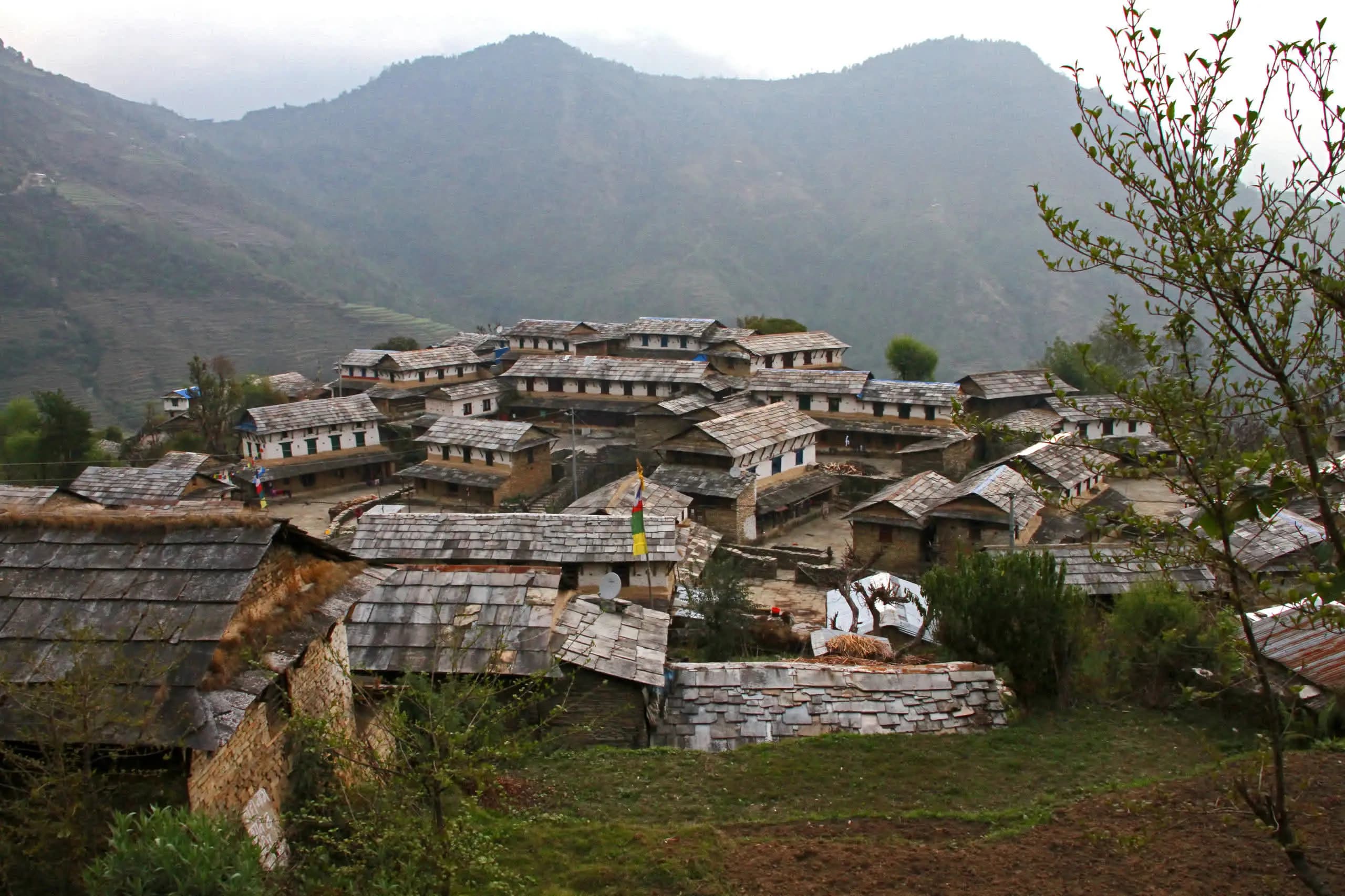
Mardi Himal ridge above Gurung village of Kaski, Annapurna
Gurung · Magar · Annapurna Conservation Area

People & Culture

The Mardi Himal ridge has been Gurung country for fifteen centuries. The trail you walk passes through stone-roofed Tamu villages, Magar settlements in the lower hills, and a shamanic religious world that was here long before Buddhism arrived from Tibet or Hinduism climbed up from the plains. This is the cultural ground the trek is built on.

The short version

The villages on the Mardi Himal trail are predominantly Gurung (endonym Tamu), a Tibeto-Burman people whose homeland is the south face of the Annapurna range. Kaski District is 29.3% Gurung, almost ten times the national average. The trail also passes Magar settlements and crosses pastures used by transhumant shepherds for centuries.

Two indigenous peoples. One ridge.

The Annapurna mid-hills are shared by the Gurung and the Magar. They are different peoples, with different languages, different clan systems and slightly different religious blends, but they have lived on these slopes for longer than the Nepali state has existed. The Mardi Himal trail crosses both homelands, with Gurung villages dominating the upper trail and Magar settlements more common at the lower exit routes through Lwang and Pristi.

Tamu Kyi

Gurung (Tamu)

The Tamu trace their migration south from the Tibetan plateau, with linguistic evidence pointing to arrival in the central Himalayan hills around the 6th century. Their villages sit between 1,000 m and 3,500 m on south-facing slopes, with the clan system divided into four upper clans (Kle, Lam, Kon, Lem, rendered in Nepali as Ghale, Lama, Ghotaney, Lamichhane) and sixteen lower clans (the Sora Jat) of farmers and shepherds.

Endonym
Tamu (རྟམུ)
Language family
Tibeto-Burman, Tamangic
Population (Nepal, 2021)
543,790
Gandaki Province
11.4% Gurung
Kaski District
29.3% Gurung
Religion
Buddhism · Bon · Hinduism
Magar Kura

Magar

The Magar are one of the oldest hill peoples of Nepal, with archaeological evidence of settlement going back more than three thousand years. The community splits into the eastern Magar of the central hills and the western Kham Magar of Rolpa and Rukum. On the Mardi route you meet eastern Magar, especially in the lower-belt villages and in the Modi Khola valley below Landruk.

Endonym
Magar / Mangar
Language family
Tibeto-Burman (Magaric)
Population (Nepal, est.)
~1.9 million
Heartland
Palpa, Baglung, Myagdi, Syangja
On the Mardi route
Pristi, Lwang lower belt
Religion
Hinduism · Buddhism · Animism

Source: National Population and Housing Census 2021 (Government of Nepal), Encyclopaedia Britannica, and the linguistic record collated by the Endangered Language Alliance.

Villages on the ridge.

The Mardi Himal route is unusually short on settlements compared to other Annapurna trails. The trail climbs out of the villages into uninhabited forest and herding country within a day, summits at an empty viewpoint, and then drops back into living villages on the descent. These are the places where the trek meets the culture, in order.

  1. 01
    Trailhead1,770 mGurung

    Kande

    An hour by jeep from Pokhara, Kande is where most Mardi Himal treks begin. The village sits on the Baglung Highway above the Modi Khola valley. Farmhouses here have the classic Gurung layout: dry-stone walls plastered with clay and cow dung, slate roofs, and a low porch where the kitchen hearth doubles as the social centre.

  2. 02
    Day 1 ridge1,900 – 2,100 mGurung-Magar mix

    Pothana & Pritam Deurali

    The first ridge teahouses sit on the saddle between Kande and the forest. Both villages are mixed Gurung-Magar settlements that grew up to serve the trail, with families running lodges that were built on family farmland.

  3. 03
    Days 2–32,500 – 3,300 mTranshumant herders

    Forest belt

    From Forest Camp to Badal Danda the trail crosses oak and rhododendron forest with no permanent settlements. The high grazing meadows above the forest are used in the warm months by Gurung shepherds from the lower villages, who move yaks, sheep and goats up the ridge in spring and back down before the snow.

  4. 04
    Day 33,580 mSeasonal lodge crews

    High Camp

    Not a traditional village, but a cluster of teahouses built since 2012, when ACAP opened the ridge as a trekking route. Crews are largely from the Gurung villages below and from Lwang. Most close for the winter and reopen in spring.

  5. 05
    Exit village1,750 mGurung

    Siding (Sidhing)

    The classic exit point on the descent. Siding is a small Gurung village in a side valley of the Modi Khola, with houses arranged in terraces above the river. A jeep road built in the 2010s now reaches the village, so most groups drive from here to Pokhara instead of walking out.

  6. 06
    Alternative exit1,400 mGurung

    Lwang

    A longer exit, two days from Mardi Base Camp, that passes through tea-growing country. Lwang is a community-tourism model village with a Gurung museum and homestay rotation managed by the Ama Samuha (Mothers' Group), which distributes guest income between participating households.

Three faiths, one ridge.

The religion you meet in a Mardi Himal village is not one religion but three, layered. The oldest is the Gurung shamanic tradition, which has its own priesthood, cosmology, and chants. Buddhism arrived from Tibet across the Annapurna passes and built monasteries and a Lama tradition on top. Hinduism climbed up from the plains and added the calendar festivals (Dashain, Tihar) and many of the household shrines. Most villages run all three in parallel without seeing a contradiction.

The three Gurung priests

Gurung shamanism (sometimes called Gurung Dharma) recognises three ritual specialists. They are not interchangeable: each handles different ceremonies, and most villages call on more than one over the course of a year.

Pachyu

also: Paju

Shaman of the living

The Pachyu is the everyday shaman. He performs healing rituals, communicates with local spirits, and reads omens for births, marriages and harvests. The Pachyu's chants describe a pre-Buddhist cosmology of mountains, rivers and ancestor spirits, and the role is hereditary within specific clans.

Khlepree

also: Klehbri / Ghyabre

Shaman of the dead

The Klehbri chants in an archaic register of Gurung that even fluent speakers no longer fully understand. The Klehbri is the priest of the Pae, the three-day death ritual that guides the soul through named landmarks, rivers and mountains to the land of the ancestors. The ritual is one of the longest continuously performed shamanic rites in South Asia.

Bonpo / Lama

also: Lama

Buddhist officiant

The Lama performs the Buddhist liturgies: prayers at Lhosar, monastery ceremonies, and the merit rituals that overlay the older shamanic frame. In many Gurung villages the Lama and the Pachyu work side by side at the same ceremony, each performing the part that belongs to their tradition.

Sources: Wikipedia (Gurung shamanism), Spirit Possession and Soul Guidance in a Gurung Death Rite(Macalester Himalaya journal), and Christoph von Fürer-Haimendorf's tribal-cultures survey (1985).

Language, dress, food, festival.

The texture of life in the villages: what people speak at home, what they wear at Lhosar, what they cook in a teahouse kitchen, and the calendar they keep. Gurung culture has held its shape here despite the trek, the cell-phone tower and the Gurkha pension cheques, but the shape is changing, especially in the younger generation.

Language

The home language in most Mardi Himal villages is Gurung (Tamu Kyi), a Tibeto-Burman language of the Tamangic subgroup. It is tonal, subject-object-verb in word order, and traditionally oral, with the written form using either Tibetan script or Devanagari. The neighbouring Magar (Magar Kura) is also Tibeto-Burman but not mutually intelligible. Almost every adult speaks Nepali as a second language, and on the Mardi trail your guide and most teahouse hosts will speak English at a working level.

A few useful phrases:

Gurung (Tamu Kyi)NepaliEnglish
Lah soNamasteHello / I greet you
Kya?Sanchai?How are you?
Khaba muKhanna milchaLet's eat
NgachiDhanyabadThank you
TamuGurungGurung person
KlehbriJhakriShaman / priest

Traditional dress

You rarely see full traditional Gurung dress on the trail today; it lives at Tamu Lhosar, at weddings, and at the Pae. When it comes out, the shapes are old. Men wear the bhangra, a white nettle-fibre wrap crossed over the chest that doubles as a carrying pouch, with a knee-length kachhad wrap and a sash. Women wear the cholo blouse, the phariya skirt, a patuka sash, and the ghalek shawl tied across the body from shoulder to waist. Gold earrings, the muga-ko-mala (coral and bead necklace) and the tiki (forehead ornament) mark status, occasion, and sometimes age.

The fibre itself is part of the culture. Himalayan nettle (allo) is still harvested and woven in some lower-belt villages along the Lwang exit, and the rough nettle weave is what the oldest bhangras were made from before cotton became cheap.

Food on the trail

The teahouse menu on Mardi Himal is a small set of dishes that repeat for good reason: they travel up the ridge by porter, they keep, and they fuel a walking day. The Gurung versions lean millet-heavy, since millet (kodo) grows where rice doesn't.

  • Dal BhatRice, lentil soup, vegetable curry and pickle. The staple two meals a day, served unlimited in teahouses.
  • Kodo ko RotiMillet flatbread. The lower-elevation grain on the Mardi ridge. Often paired with chutney.
  • GundrukFermented leafy greens, dried and stored for winter. Served as a soup or a side.
  • Sel RotiRing-shaped sweet rice bread, deep-fried. Made for Tihar and Tamu Lhosar.
  • TongbaHot millet beer drunk through a bamboo straw from a wooden pot. Refilled with hot water until the malt gives out.
  • RaksiDistilled millet or rice spirit. The home-distilled version on the ridge is locally called daru.

Festival calendar

The Gurung year is run on three overlapping calendars: the twelve-year Lohokor animal cycle, the lunisolar Nepali Bikram Sambat, and the Tibetan calendar that anchors Lhosar. In practice this means a Gurung household celebrates more festivals than almost anyone else in Nepal.

FestivalWhenWhat
Tamu Lhosar15 Poush (≈ 30 Dec)Gurung New Year. The most important Gurung festival, run on a 12-year animal cycle called Lohokor. Public holiday in Nepal.
DashainSept–OctNepal's longest festival. Tika and jamara are given by elders to younger family; even Gurung households observe it.
TiharOct–NovThe five-day festival of lights. The maruni dance, in which men in female costume go house to house, is a Magar tradition seen on the lower trail.
Sonam LhosarMagh (≈ Feb)Tamang New Year. Some lower-belt households observe it through marriage ties with Tamang families.

The Lohokor cycle assigns each Gurung year to one of twelve creatures: garuda, serpent, horse, sheep, monkey, bird, dog, deer, mouse, cow, tiger, cat. The animal of the incoming year shapes the fortunes and predictions read at Lhosar.

Why so many villages look prosperous.

If a Gurung village on the Mardi route has a new school, a tarmac path between the houses, and a half-dozen well-built stone lodges, the most likely reason is a British Army pension. The Gurung, along with the Magar, supply the majority of the soldiers in the Brigade of Gurkhas: the British, Indian, and Singaporean military units that have recruited from these hills continuously since the Treaty of Sugauli in 1816.

The recruitment system is selective and brutal. Each year, roughly 200 places open in the British Gurkhas. Around 25,000 young men apply. The selection runs in stages — the village hill run, the maths and English tests, the centralised selection at Pokhara — and is one of the most physically demanding military entries in the world. The ones who get through serve for 15 to 35 years, draw a UK pension, and since 2009 have the right to settle in Britain with their families.

The effect on the villages is visible. Slate roofs are kept up, kids go to private school in Pokhara, and many of the older men in the teahouses you'll stay in have lived years of their lives in Hong Kong, Brunei, the Falklands, or the Helmand valley. Ask them. The answers are not in any guidebook.

Sources, not opinion.

Everything on this page is grounded in published research, official census data, and ethnographic documentation. Where claims are contested or vary between sources, we note it inline. Where language is technical, the spelling follows the source publication.

  1. Gurung peopleWikipedia (consolidated demographic & cultural overview)en.wikipedia.org
  2. Gurung shamanismWikipedia (three priests: Pachyu, Khlepree, Bonpo)en.wikipedia.org
  3. A Guide to the GurungsAlan Macfarlane & Indrabahadur Gurung (ethnographic monograph)alanmacfarlane.com
  4. Spirit Possession and Soul Guidance in a Gurung Death RiteMacalester College Himalaya journal (ethnography of the Pae)digitalcommons.macalester.edu
  5. Tamu Lhosar: A Colorful Beginning of the Gurung New YearMount Elegance Treks (festival calendar & Lohokor cycle)mountelegancetreks.com
  6. The Gurung and Magar People: Nepal's Hill Tribe Culture GuideThe Everest Holiday (Pae ritual, Gurkha tradition, village context)theeverestholiday.com
  7. Music, Dance, and Festivals: Culture of the Magar PeopleNepal Traveller (Magar dance, Ghatu, traditional instruments)nepaltraveller.com
  8. Kande Village — The Beginning Point for Mardi Himal TrekHaven Holidays Nepal (trailhead village context)havenholidaysnepal.com
  9. National Population and Housing Census 2021Government of Nepal, National Statistics Office (population data)censusnepal.cbs.gov.np

Read the mountain, then come walk it.

We run small-group trips from Pokhara every Saturday from September to May. We also run private trips any day. A $50 deposit holds your place. Pay the rest on arrival in cash or by card.