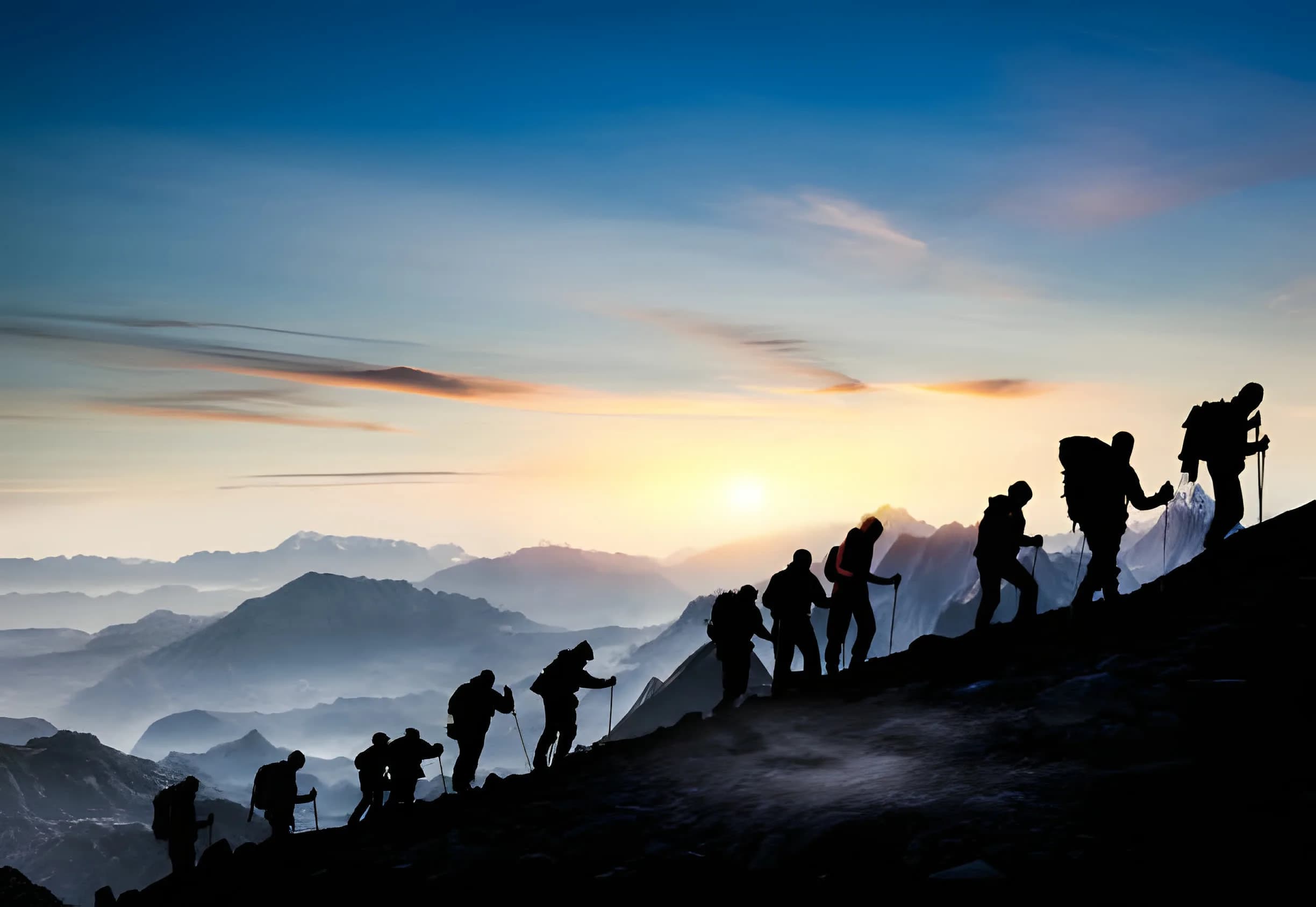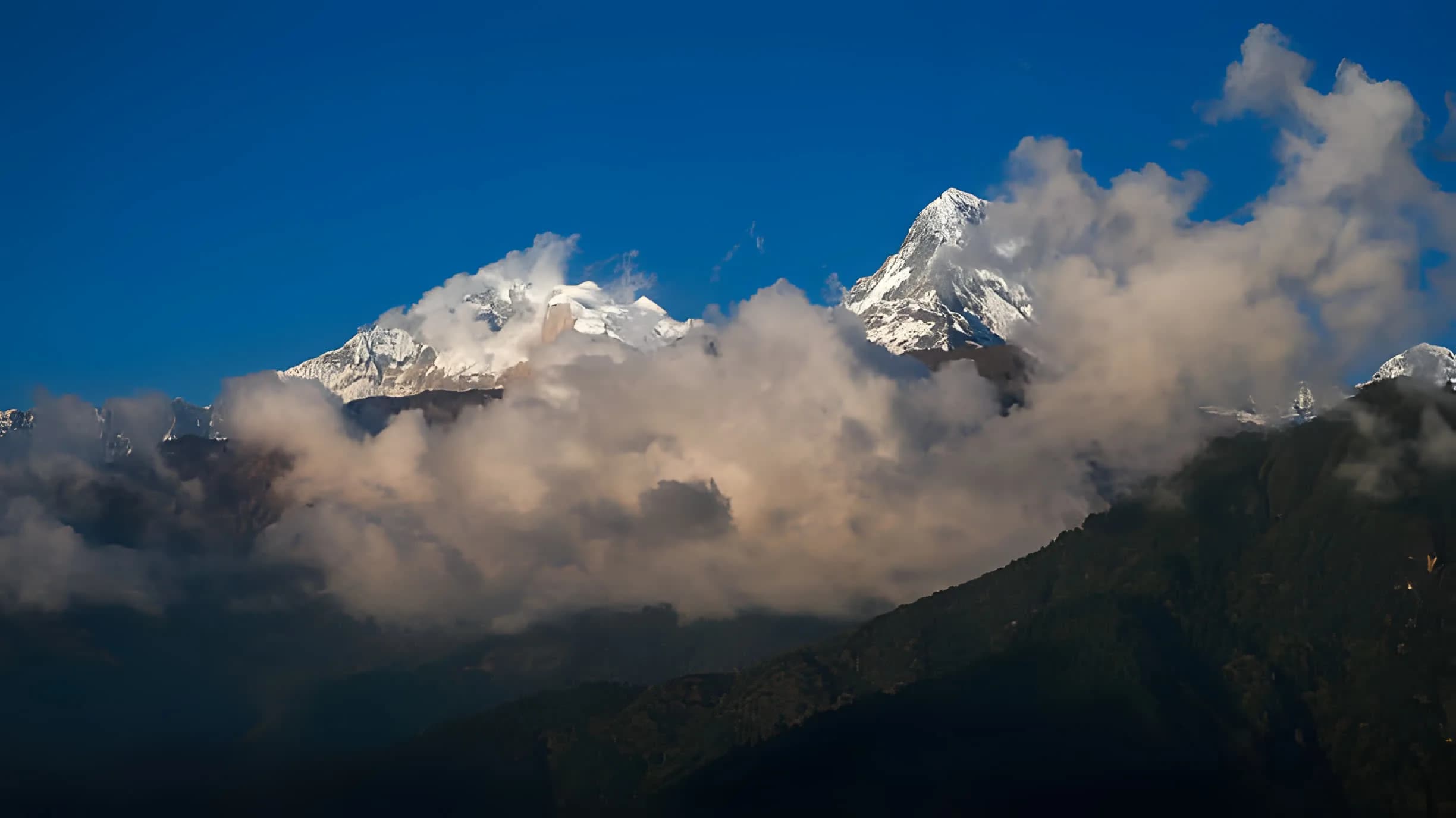
The gentle way up, the village way down.
The 7-day Mardi Himal trek is the slowest climb we run to the Upper Viewpoint at 4,200 metres. The difference is one night. Instead of walking from the forest straight up to High Camp, you stop at Badal Danda, 3,210 metres, and finish the climb the next morning in two or three hours. No night above 3,000 metres is more than 660 metres higher than the night before, and the night at High Camp is only 370 metres up from Badal Danda.
That pace suits first-time trekkers, trekkers over 45, and anyone who has felt the altitude before. Age on its own is not what causes altitude sickness. Climbing too fast is, and this itinerary is built to avoid it.
The way down is the other half of the trip. After the viewpoint you sleep back at Badal Danda, then walk down past Low Camp and Kalimati to a homestay night in Ghalel, and on to Lwang, a Gurung village known for its tea garden, before the jeep back to Pokhara. If time is tight, our 6-day trek and 5-day trek climb the same ridge faster. Every duration and the full route map live on our itinerary page.
The full schedule, day by day.
Seven days from Pokhara and back: four short days up to High Camp, the viewpoint on Day 5, and two days down through the villages. Altitudes and walking hours are listed for every day.
- Day 1
Pokhara → Kande → Australian Camp → Pitam Deurali
- Drive
- 1.5 hrs (Pokhara to Kande)
- Trek
- 4 – 5 hrs
- Distance
- ~6 km
- Altitude
- Kande 1,770 m → Pitam Deurali 2,100 m
- Net change
- +330 m
We drive from Pokhara to the trailhead at Kande by private jeep, then climb stone steps through terraced farmland and pine to Australian Camp at 2,060 metres, where Annapurna South and Hiunchuli come into view above the ridgeline.
From Australian Camp the trail drops briefly to Pothana, where the ACAP permit is checked, and climbs on to Pitam Deurali at 2,100 metres for the night. Some groups start at Phedi instead and walk up through Dhampus and Pothana to the same place. You can decide right up to the morning of the trek, and your guide will advise on the day.
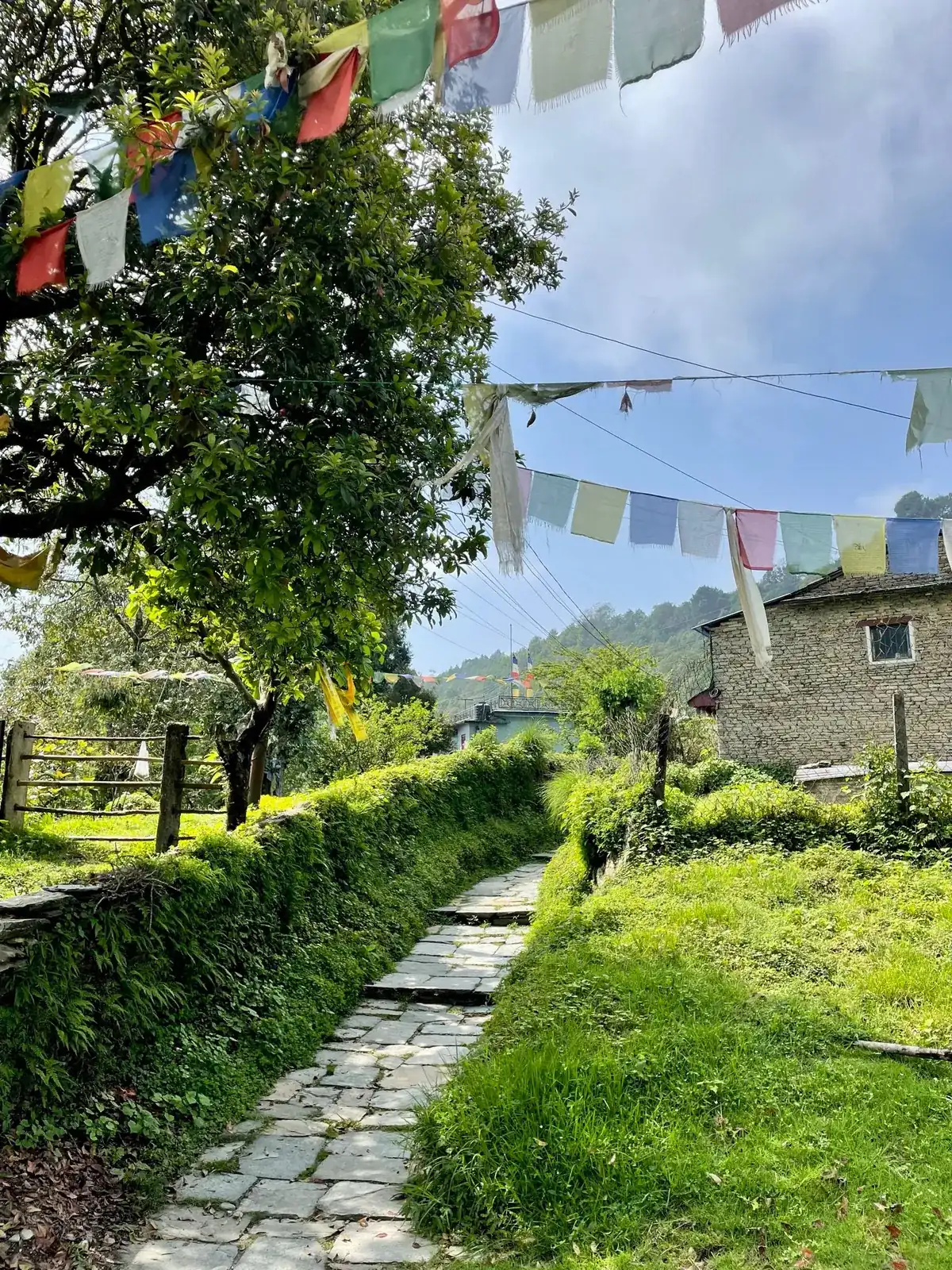
Kande 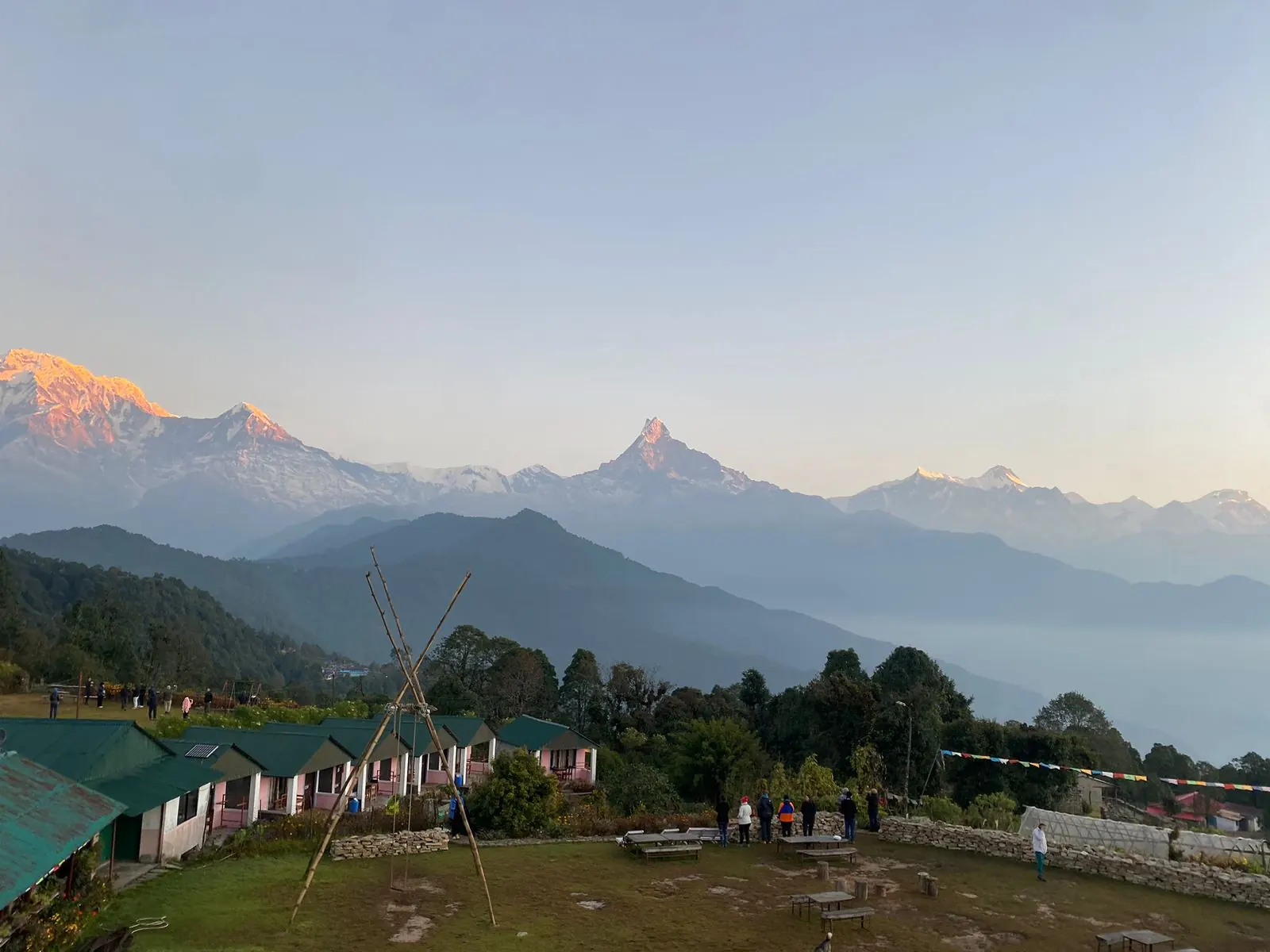
Australian Camp 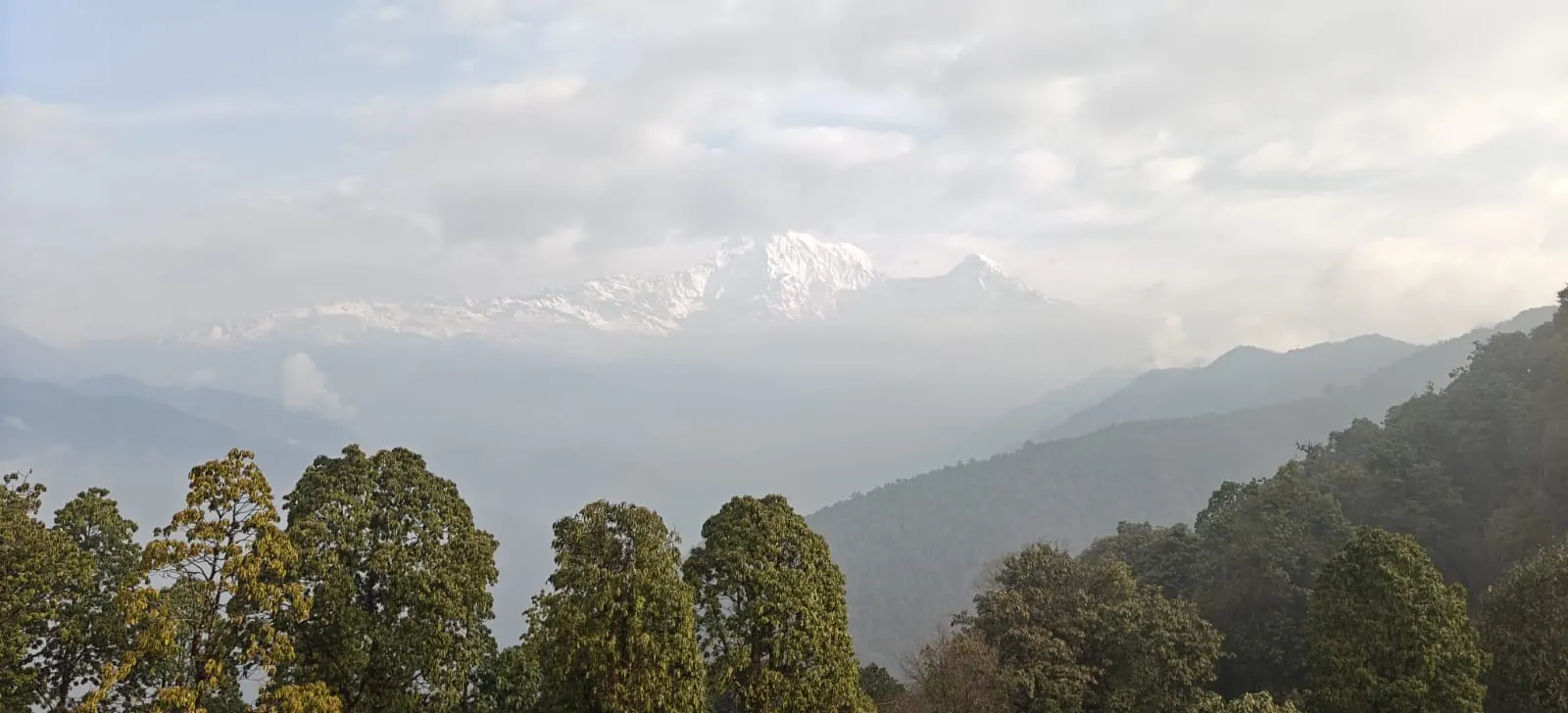
Pitam Deurali 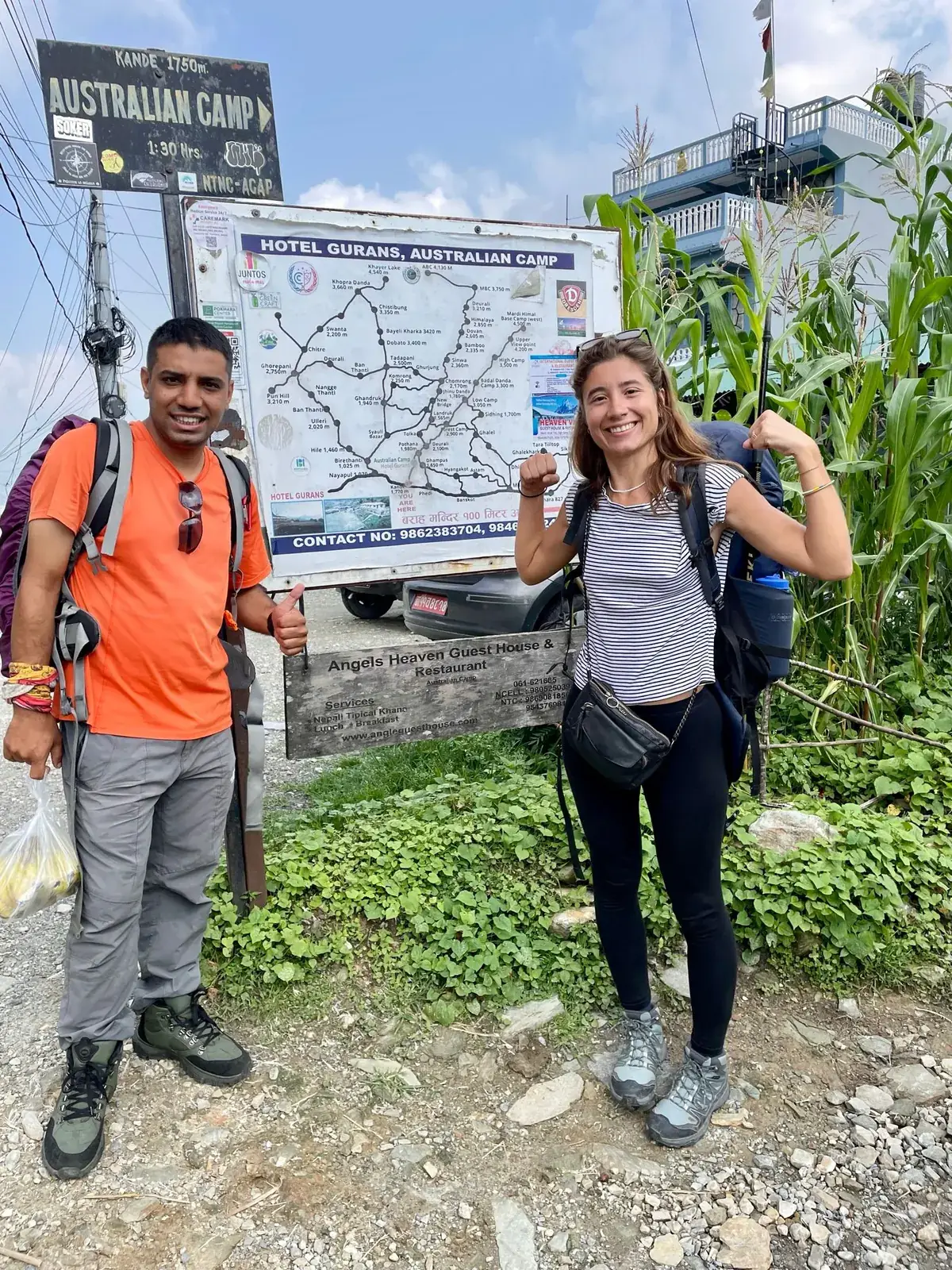
Kande 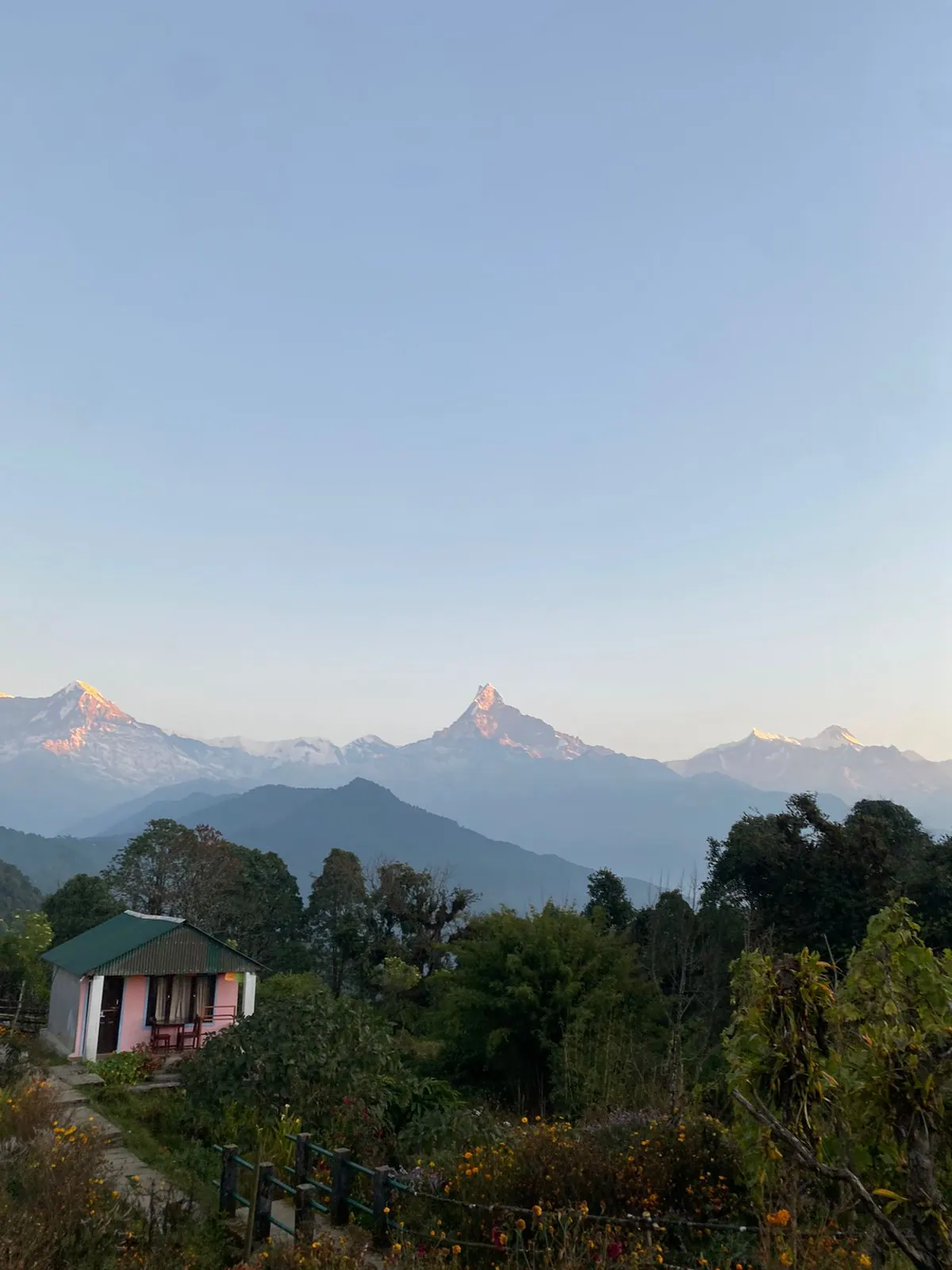
Australian Camp 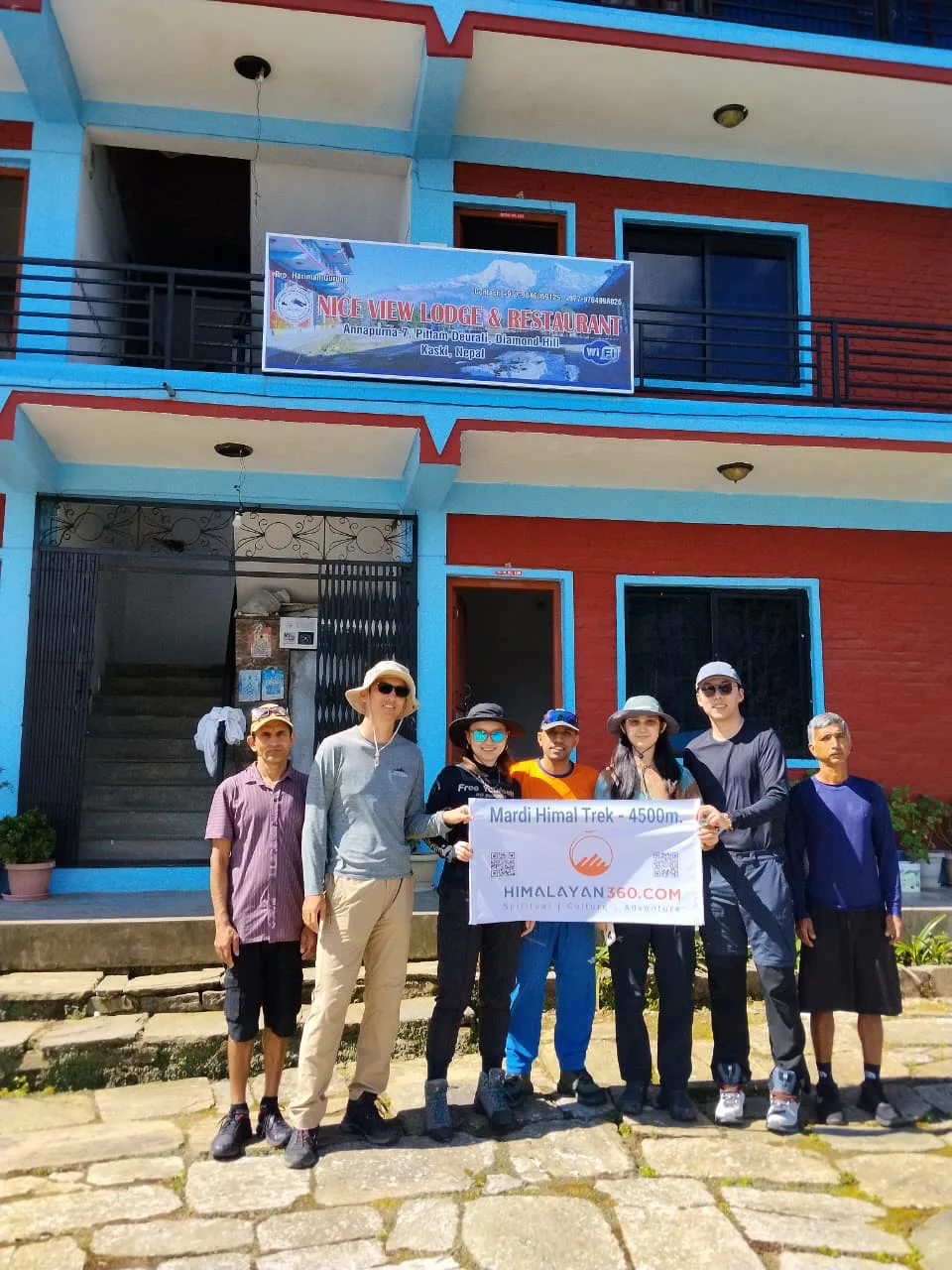
Pitam Deurali 6 photos from day 1, taken on the trail. - Day 2
Pitam Deurali → Forest Camp
- Drive
- None
- Trek
- 4 – 5 hrs
- Distance
- ~8 km
- Altitude
- Pitam Deurali 2,100 m → Forest Camp 2,550 m
- Net change
- +450 m
At Pitam Deurali the Mardi trail leaves the busier Annapurna path and climbs into cloud forest of oak, maple, and rhododendron. Langur monkeys are common in the canopy, and on a clear afternoon Machhapuchhre shows through the trees.
Forest Camp, also called Kokar, sits at 2,550 metres. This is a short day on purpose: you arrive with the afternoon free, and you sleep only 450 metres higher than the night before.
Pitam Deurali 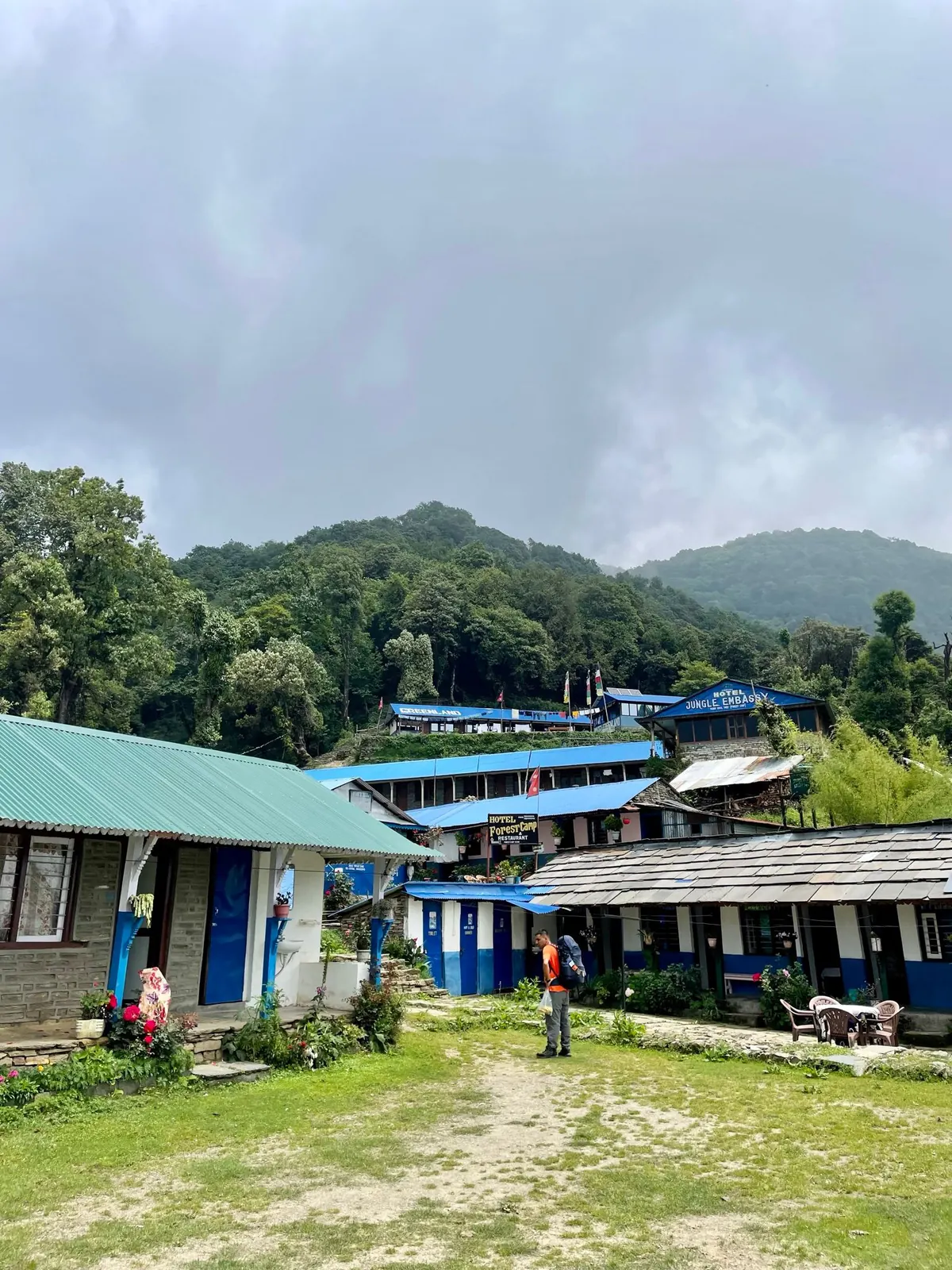
Forest Camp Pitam Deurali 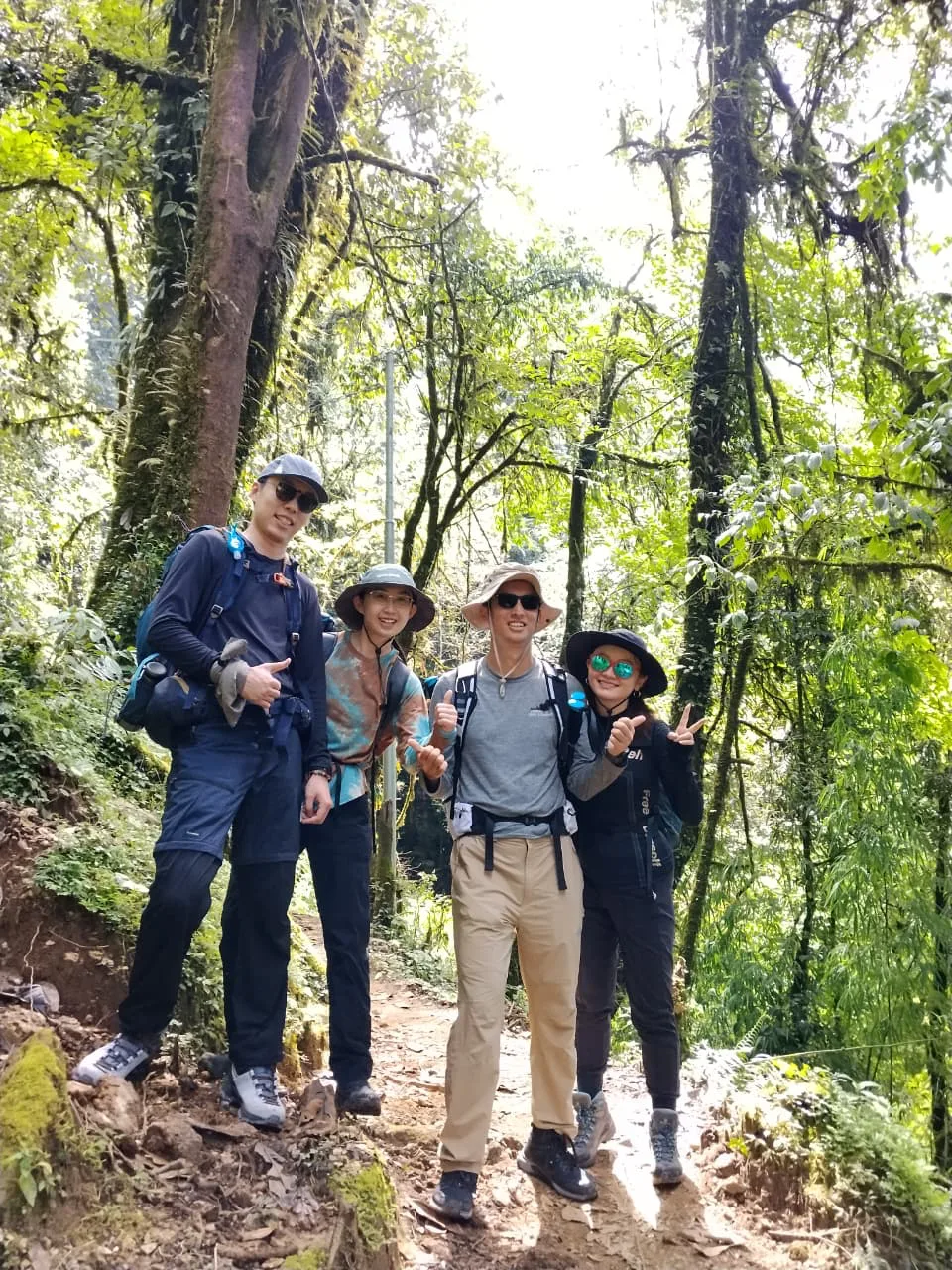
Trail to Forest Camp 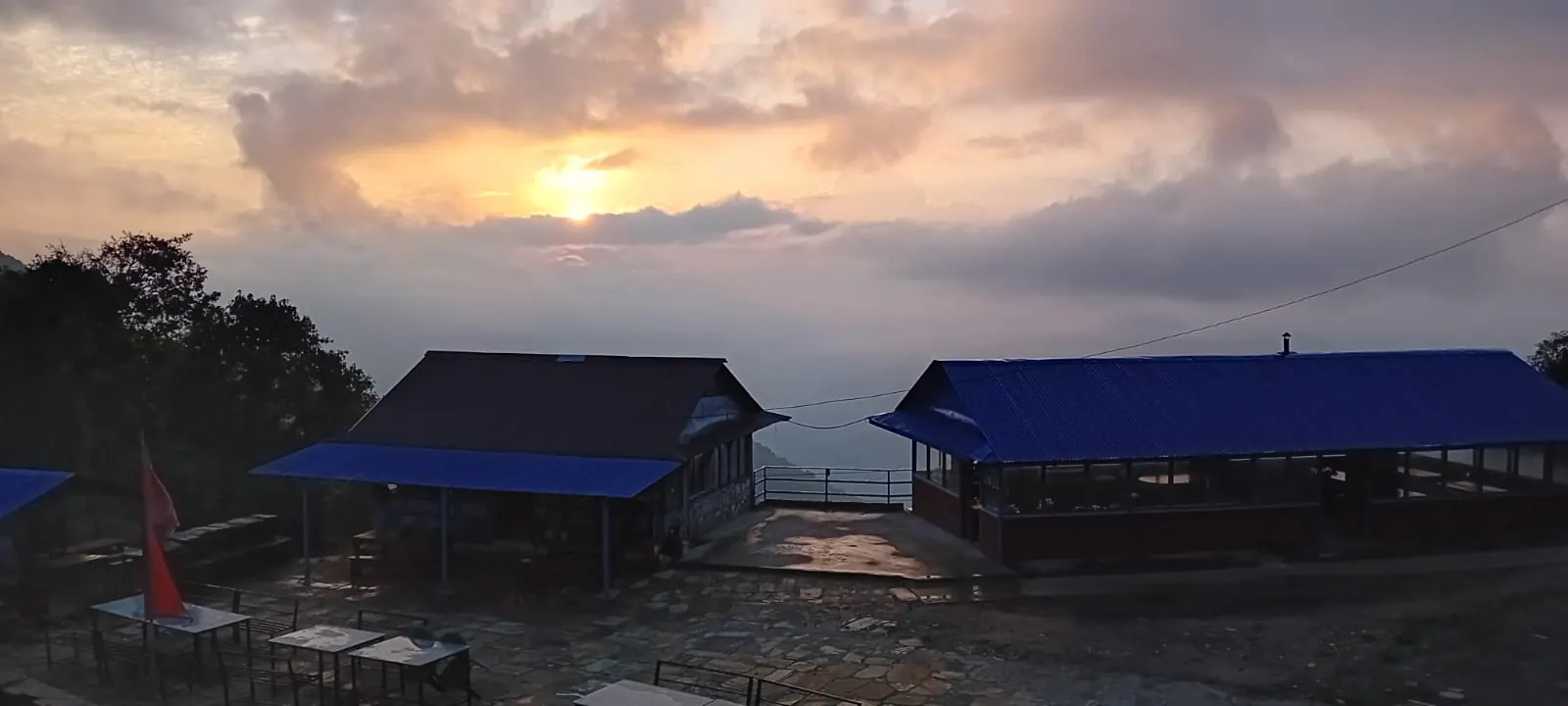
Pitam Deurali 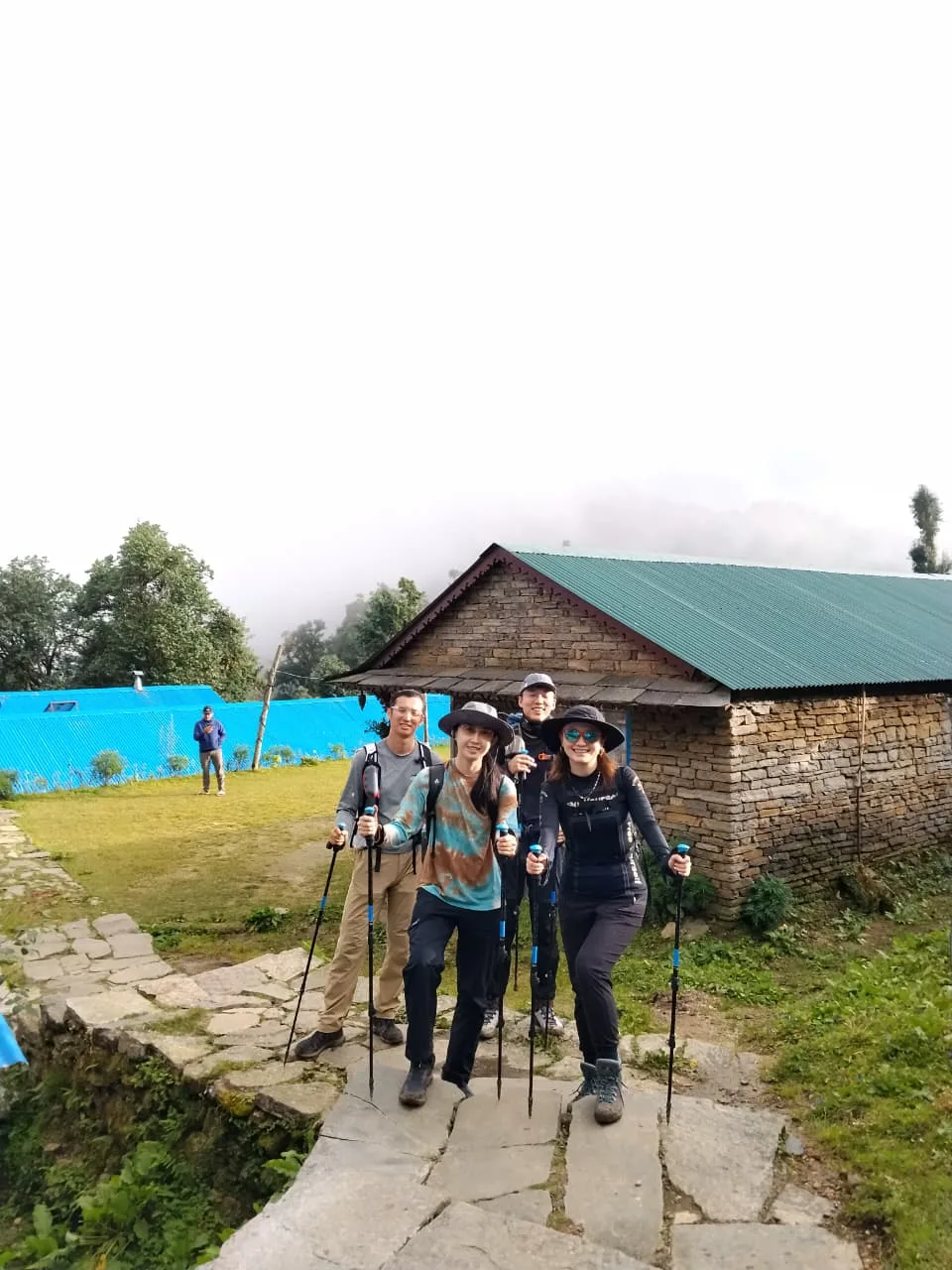
Trail to Forest Camp 6 photos from day 2, taken on the trail. - Day 3
Forest Camp → Low Camp → Badal Danda
- Drive
- None
- Trek
- 4 – 5 hrs
- Distance
- ~5 km
- Altitude
- Forest Camp 2,550 m → Low Camp 2,985 m → Badal Danda 3,210 m
- Net change
- +660 m
The forest thins past Rest Camp at about 2,600 metres, and at Low Camp, 2,985 metres, the full face of Machhapuchhre appears for the first time. Lunch is usually taken here.
From Low Camp it is a short climb to Badal Danda, the Cloud Ridge, at 3,210 metres. Most itineraries walk straight past it on the way to High Camp. We stop for the night. This is the biggest climb of the trip and your first night above 3,000 metres, so walk slowly and drink plenty of water.
Forest Camp 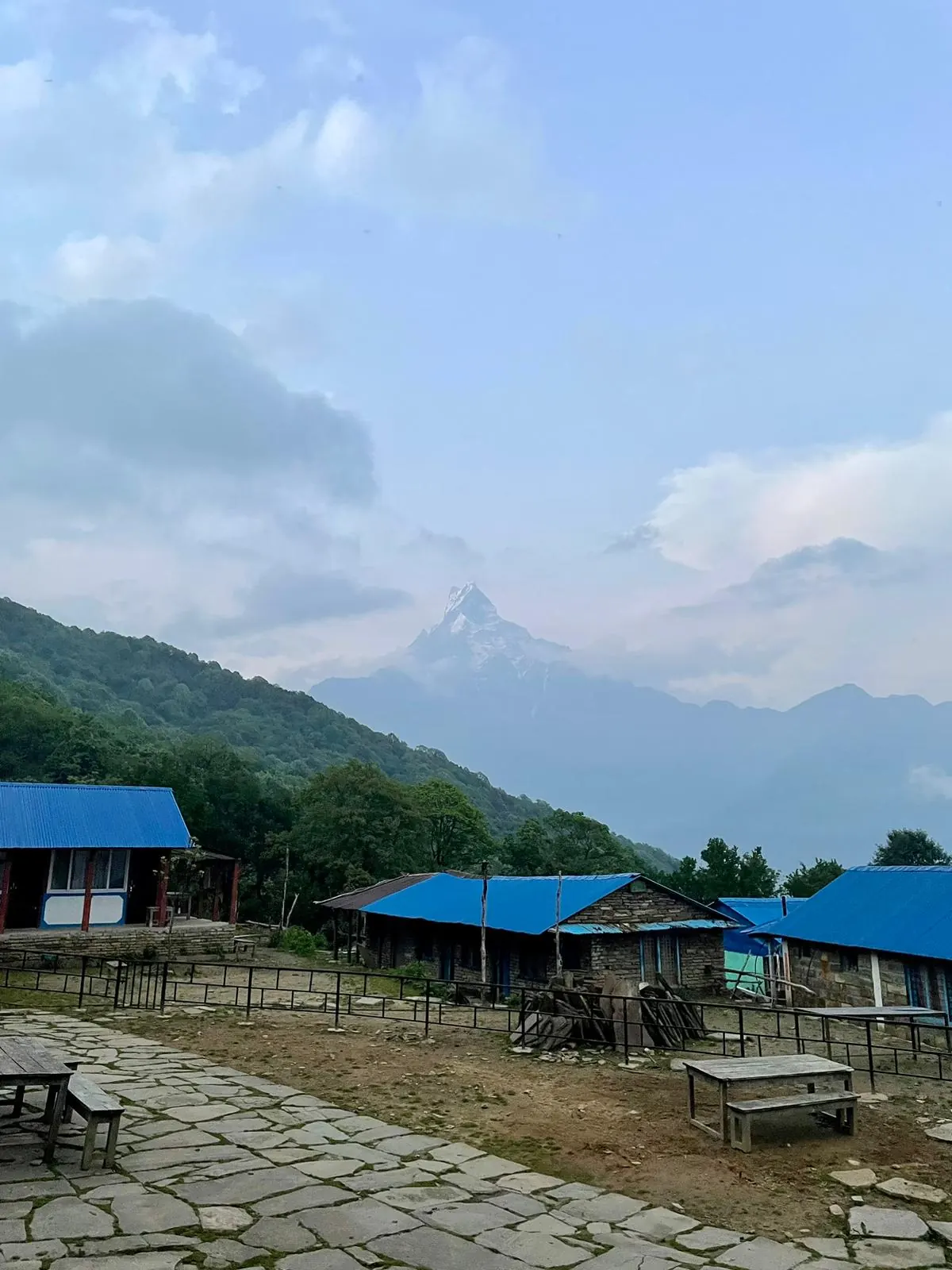
Low Camp 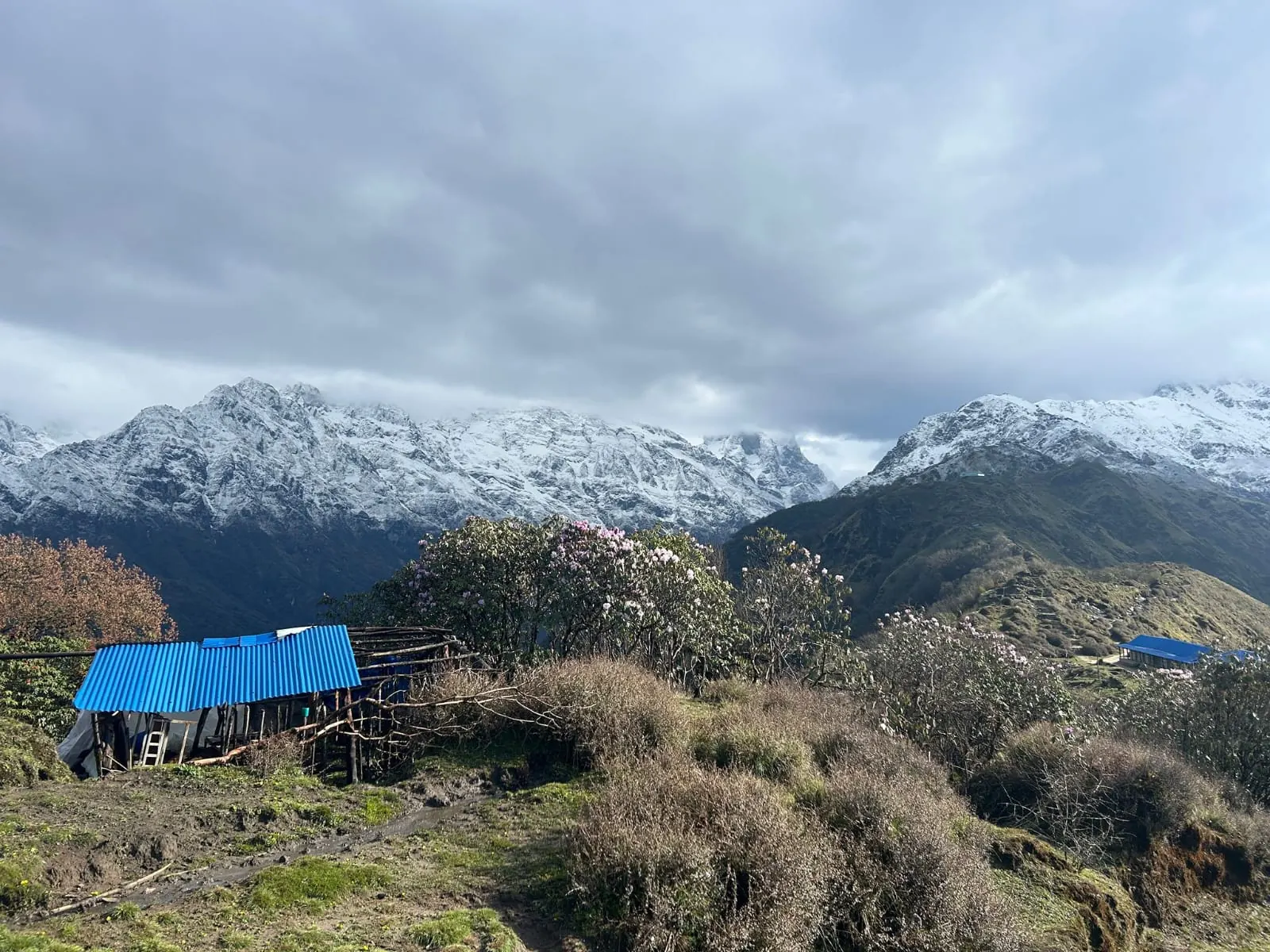
High Camp & Badal Danda Trail to Forest Camp 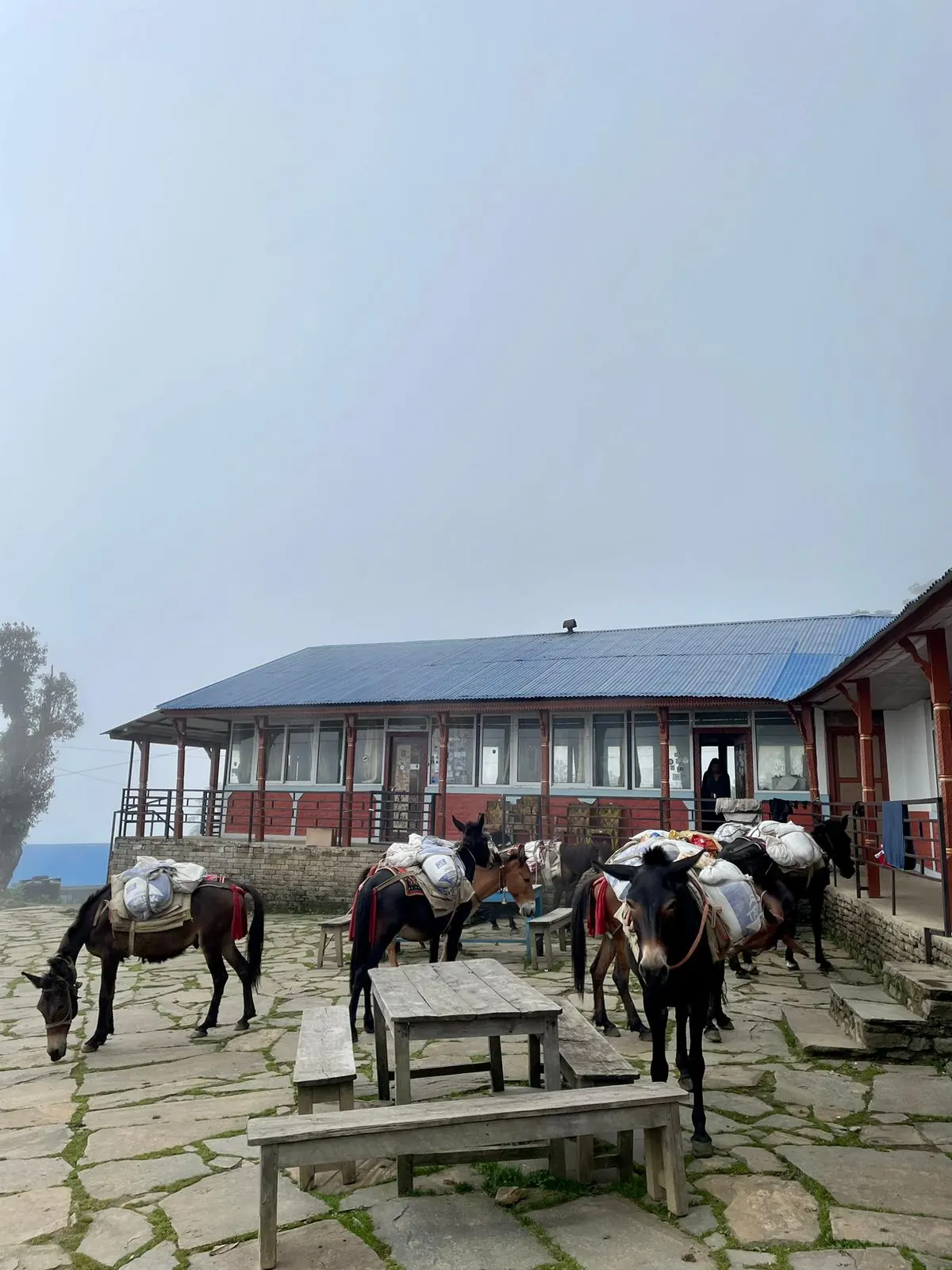
Low Camp 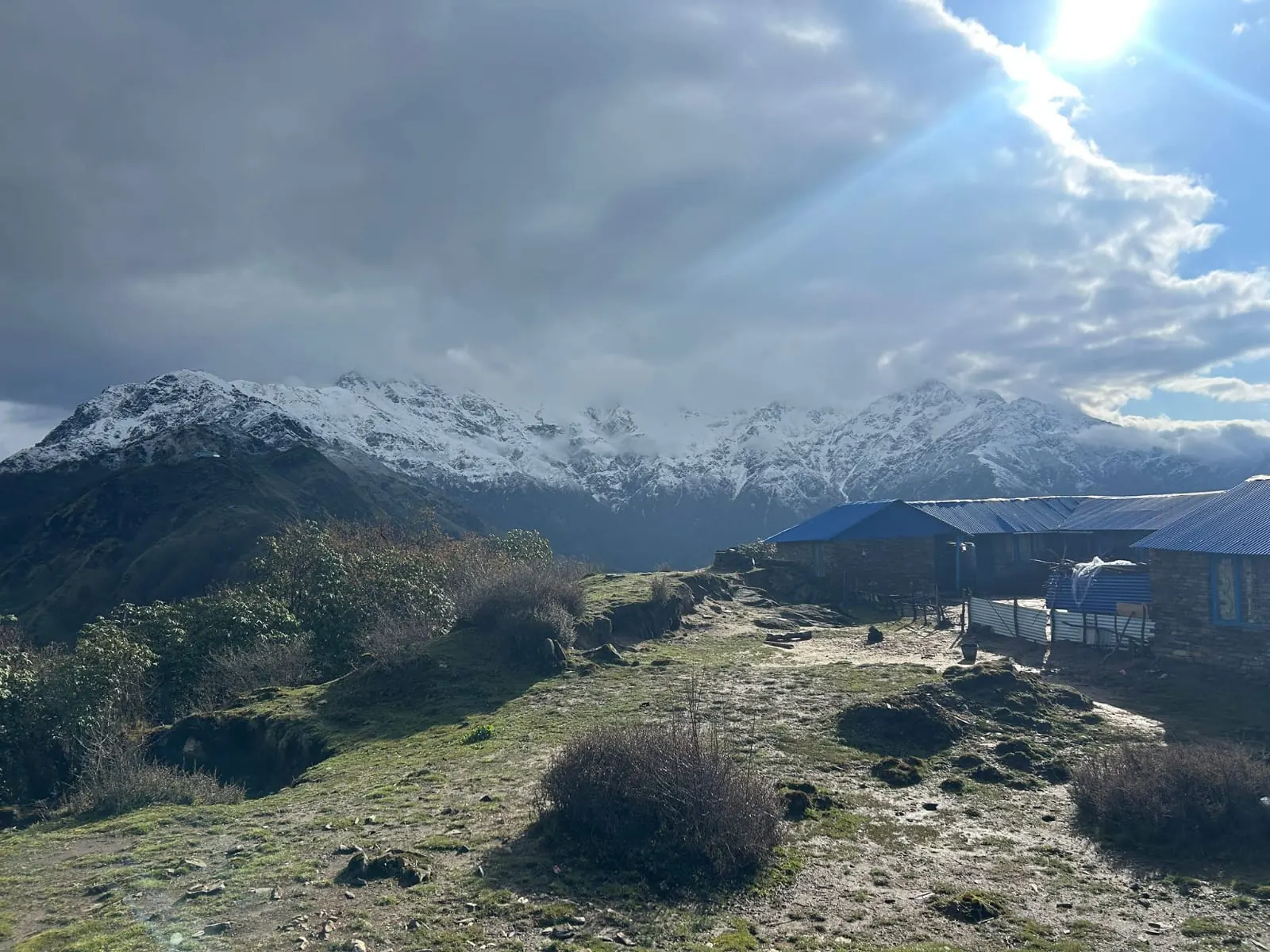
High Camp & Badal Danda 6 photos from day 3, taken on the trail. - Day 4
Badal Danda → High Camp
- Drive
- None
- Trek
- 2 – 3 hrs
- Distance
- ~3 km
- Altitude
- Badal Danda 3,210 m → High Camp 3,580 m
- Net change
- +370 m
The short day that makes this itinerary. The trail follows the open ridge above the tree line to High Camp at 3,580 metres, and you arrive by late morning with the rest of the day to rest and acclimatise.
Because you slept at Badal Danda, tonight is only 370 metres higher than last night, against close to a thousand metres on most other Mardi schedules. Watch the sun set on Machhapuchhre and get an early night: tomorrow starts in the dark.
High Camp & Badal Danda 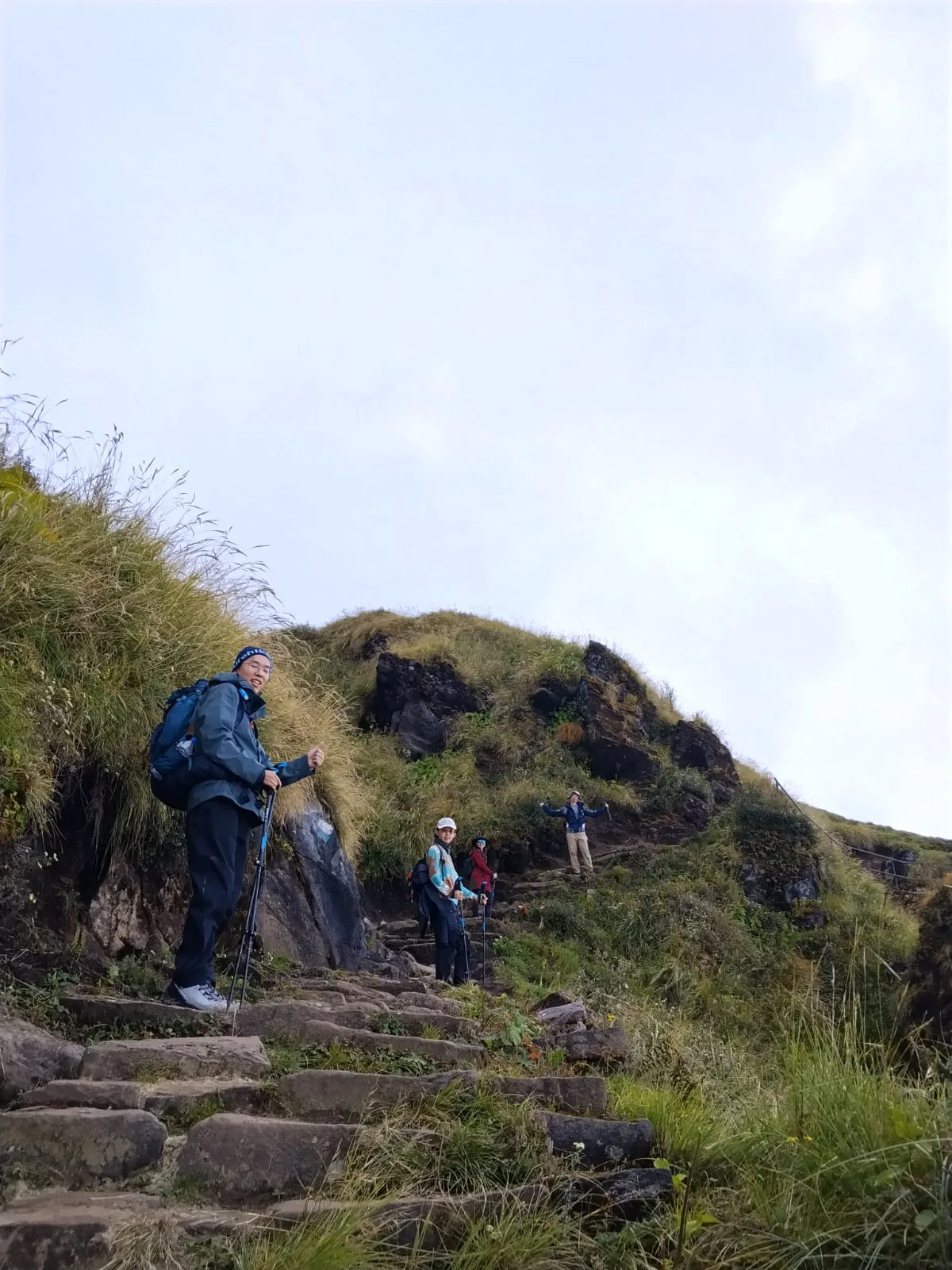
Trail to High Camp High Camp & Badal Danda 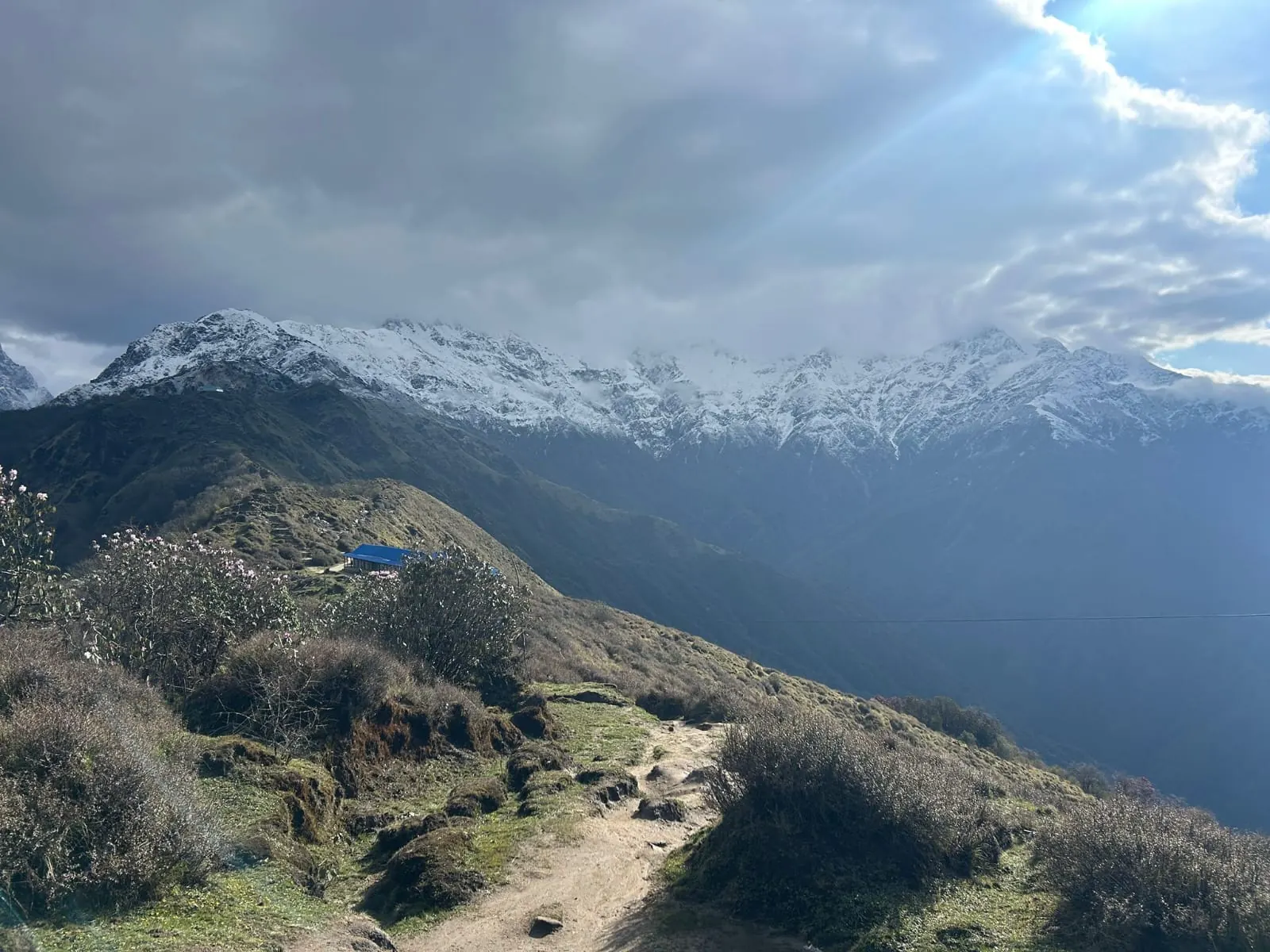
High Camp & Badal Danda 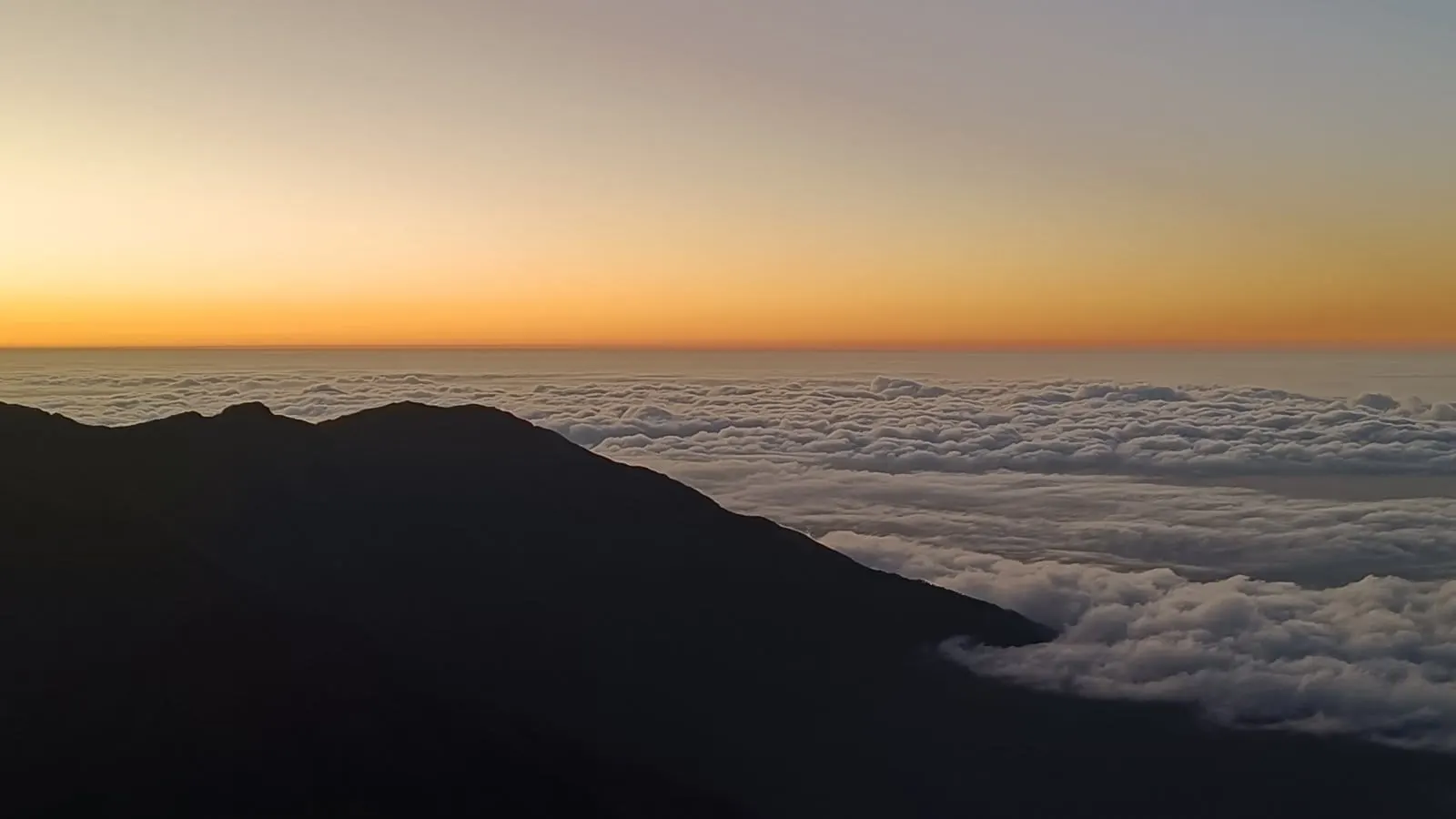
High Camp & Badal Danda 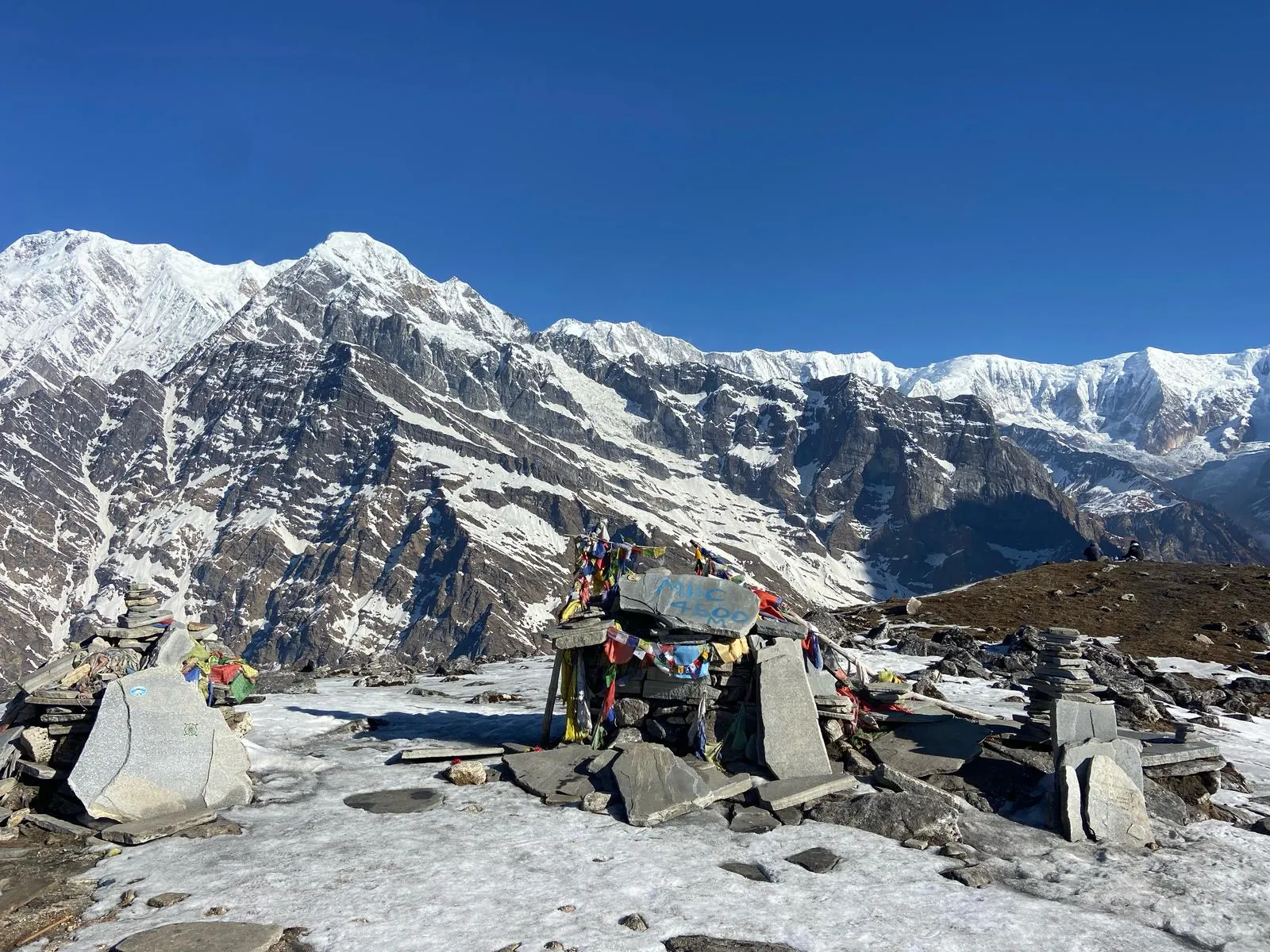
High Camp & Badal Danda 6 photos from day 4, taken on the trail. - Day 5
High Camp → Upper Viewpoint (Base Camp optional) → Badal Danda
- Drive
- None
- Trek
- 6 – 7 hrs
- Distance
- ~10 km
- Altitude
- High Camp 3,580 m → Upper Viewpoint 4,200 m → Badal Danda 3,210 m
- Net change
- +620 m / -990 m
We leave High Camp around 04:30 with headtorches and climb the ridge to the Upper Viewpoint at 4,200 metres for sunrise over Annapurna South, Hiunchuli, Machhapuchhre, and Mardi Himal itself.
Mardi Himal Base Camp, at about 4,500 metres, is roughly 1 hour 30 minutes further along the ridge. Your guide decides on the morning whether to continue, based on the weather, the state of the trail, how the group is moving, and how much daylight is left. If you go on, expect a longer day.
Back at High Camp for breakfast, we walk down to Badal Danda for the night, sleeping lower than the night before. Use your trekking poles from here on: the descent starts today.
High Camp & Badal Danda 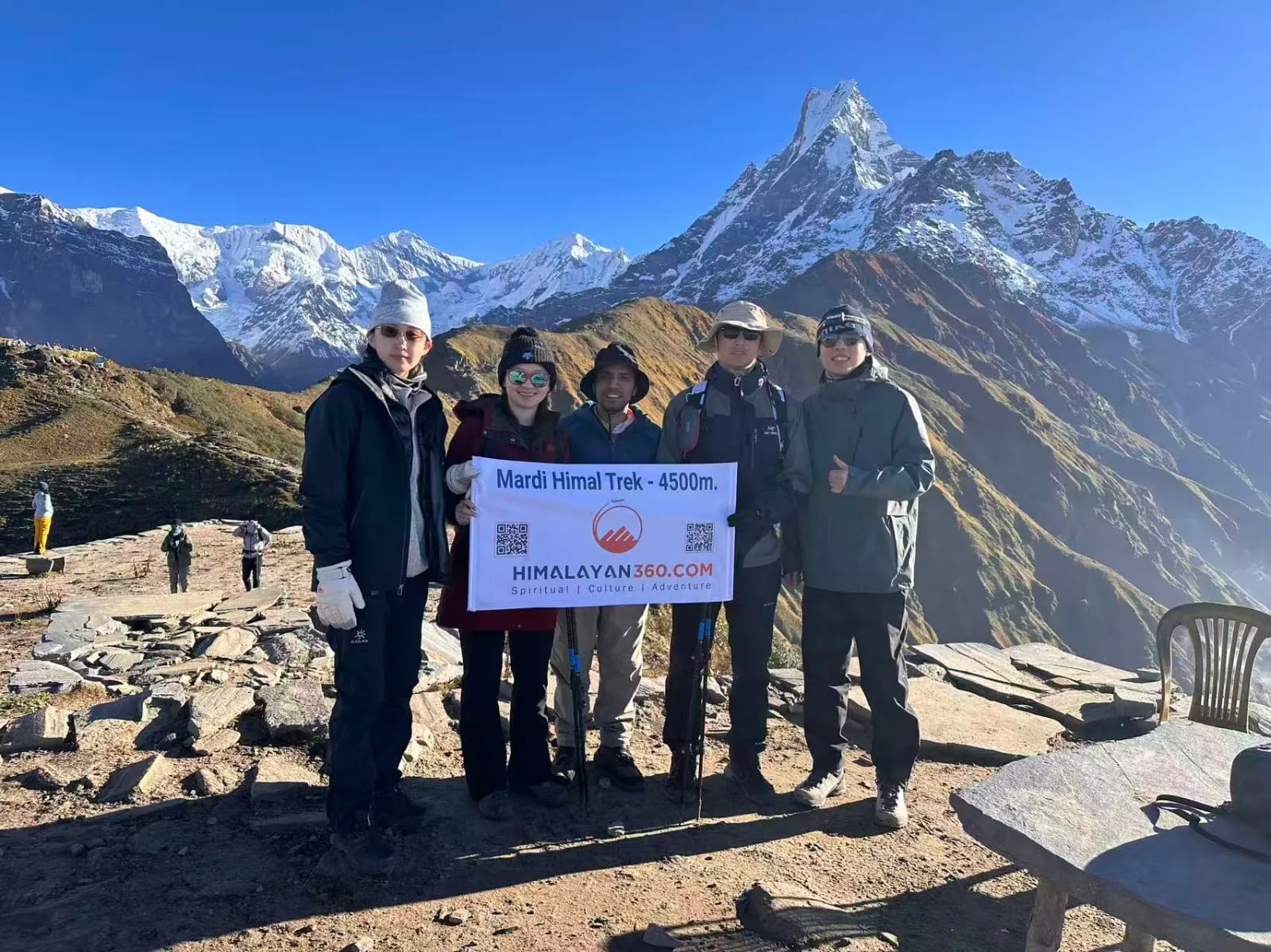
Upper Viewpoint High Camp & Badal Danda 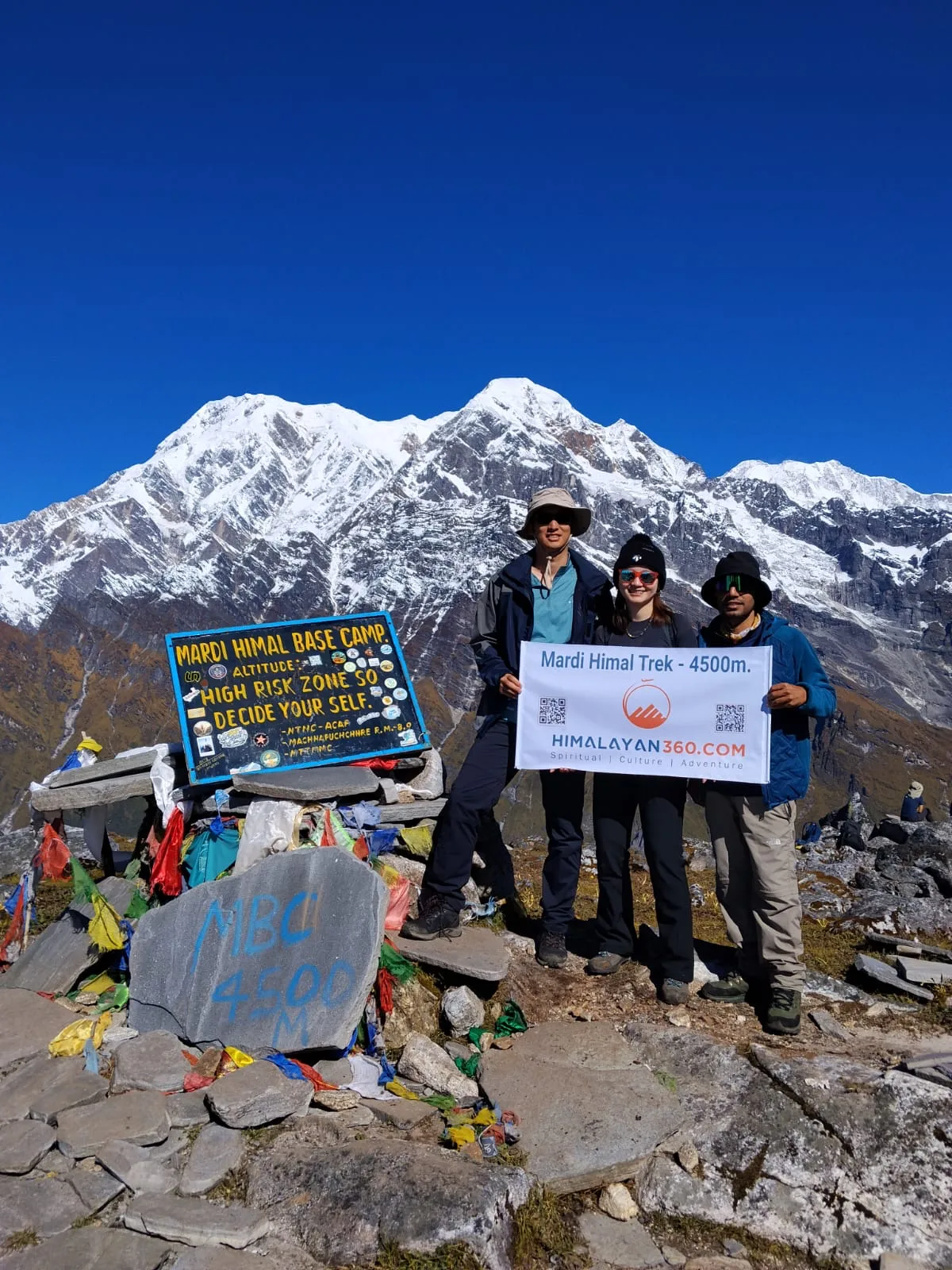
Mardi Himal Base Camp High Camp & Badal Danda 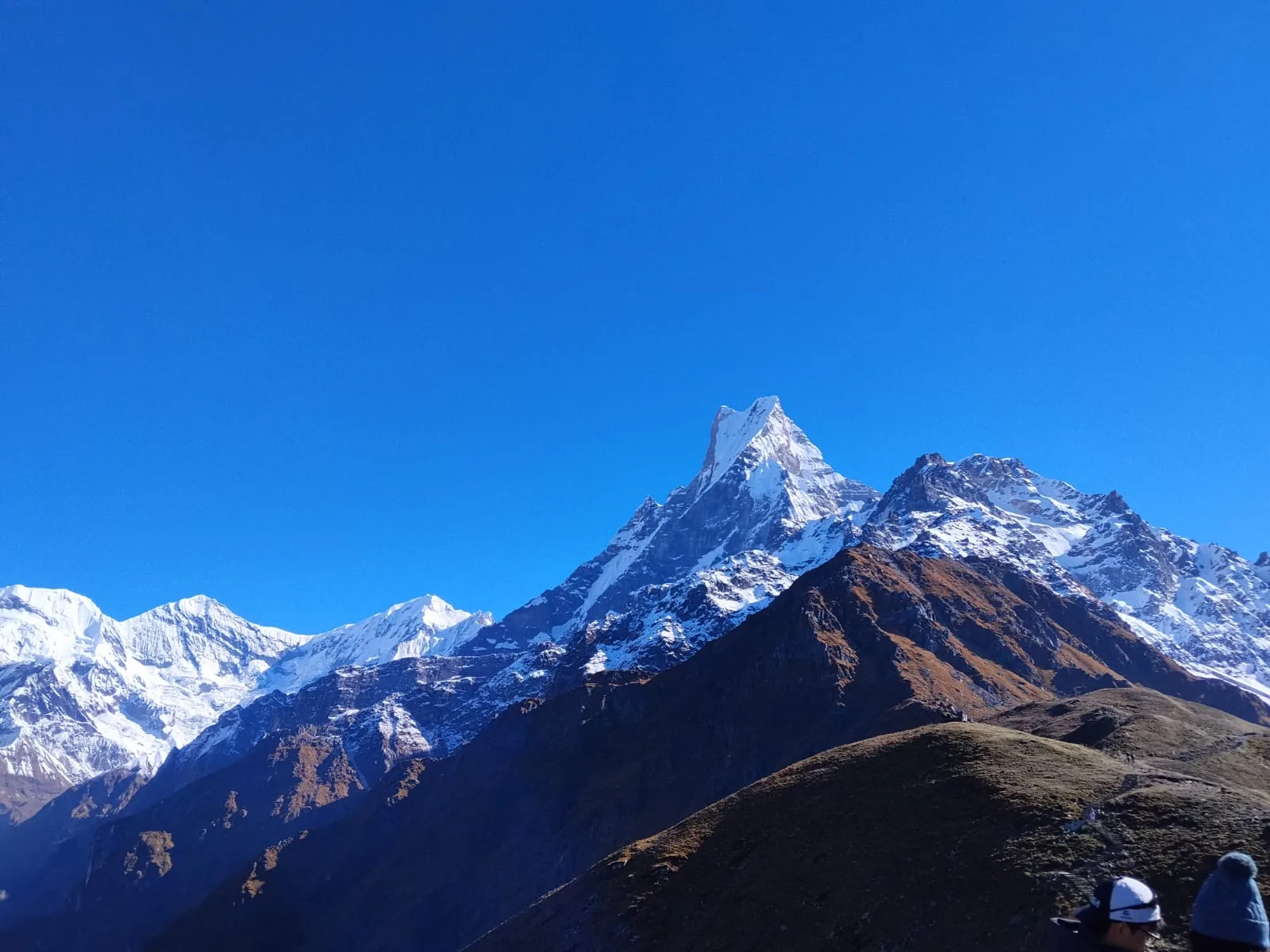
Trail to the Viewpoint 6 photos from day 5, taken on the trail. - Day 6
Badal Danda → Low Camp → Kalimati → Ghalel
- Drive
- None
- Trek
- 5 – 6 hrs
- Distance
- ~11 km
- Altitude
- Badal Danda 3,210 m → Low Camp 2,985 m → Kalimati ~1,800 m → Ghalel ~1,500 m
- Net change
- -1,710 m
The long way down. We pass back through Low Camp and on down through quiet forest and farmland to Kalimati, a farming village at about 1,800 metres. From Kalimati it is an easy hour down to Ghalel.
This is the hardest day on the knees: about 1,700 metres of descent, much of it on stone steps. Walk it with two trekking poles, take the steps slowly, and let the guide set the pace. Nobody is rushing you to a jeep.
Overnight in Ghalel, a village of Gurung and Brahmin families, in a homestay with a home-cooked dinner rather than a teahouse menu.
High Camp & Badal Danda Low Camp High Camp & Badal Danda Low Camp High Camp & Badal Danda High Camp & Badal Danda 6 photos from day 6, taken on the trail. - Day 7
Ghalel → Lwang → drive to Pokhara
- Drive
- 2 – 2.5 hrs (Lwang to Pokhara)
- Trek
- 3 – 4 hrs
- Distance
- ~6 km
- Altitude
- Ghalel ~1,500 m → Lwang 1,460 m → Pokhara 820 m
- Net change
- -40 m on foot, -640 m by jeep
A village day. The trail runs between farms and houses to Lwang at 1,460 metres, a Gurung village of stone houses best known for its tea garden, which climbs the hillside above the village. If time allows, we walk up into the tea garden before lunch.
A local jeep takes us back to Pokhara. The road is rough, so the drive takes 2 to 2.5 hours, and we are back at the lakeside in the late afternoon.
Why this is our gentlest climb.
Altitude sickness comes from gaining height faster than your body can adjust, and what counts most is how much higher you sleep each night. Here is where you sleep on the 7-day, and how its step up to High Camp compares with our other itineraries.
The CDC's travel health guide, following the Wilderness Medical Society, advises that once above 3,000 metres you should raise your sleeping altitude by no more than 500 metres a day. On the 7-day, Night 3 is the one night past that figure: you sleep 660 metres higher, at Badal Danda, on your first night above 3,000 metres. Every night after it stays well inside it.
On age, the same guide notes that people over 50 have slightly less risk of altitude illness than younger travellers. After 45, what matters more is general fitness, your knees, and any heart or lung condition, so see your doctor before booking if you have one. Our altitude sickness guide covers the symptoms to watch for and what the guide does about them.
For most trekkers over 45 the hard part is not the climb but the way down: about 1,700 metres of descent on Day 6, much of it on stone steps. Bring two trekking poles and use them on Days 5 and 6. They take a real share of the load off your knees.
The villages on the way down.
Most Mardi itineraries come off the ridge and into a jeep at Sidhing. The 7-day keeps walking, through farming villages that see far fewer trekkers than the trail above them.
Kalimati
A farming village of mostly Brahmin families, on the way down from Low Camp. From here it is an easy hour to Ghalel.
Ghalel
A village of Gurung and Brahmin families with a community homestay. You spend Night 6 here with a local family, eating what the household eats.
Lwang
A Gurung village of stone houses, known for its community-managed tea garden, which climbs the hillside above the village from about 1,500 to 2,100 metres.
Want more village nights? The 8-day trek sleeps in homestays in Sidhing, Ghalel, and Lwang. More on the communities of this valley on our people and culture page.
Seven days, or fewer?
Every Mardi itinerary reaches the same 4,200-metre viewpoint. What changes is how fast you climb and how you come back down.
- This is your first Himalayan trek.
- You are over 45, or you simply want the slowest climb.
- You have felt the altitude before, or acclimatise slowly.
- You want village time on the way down, not just the view at the top.
- You are fit and have trekked at altitude before.
- You have five or six days rather than seven.
- You are happy with a bigger climb to High Camp in one day.
The 6-day trek spends its extra day on the way down instead, and the 8-day trek adds more homestay nights. All of them are costed on our permits and cost page.
2026 price, per person, by group size.
All prices are per person in USD for the 7-day Mardi Himal itinerary departing from Pokhara, valid through 31 December 2026. The bigger your group, the lower the per-person rate.
Want it private, just your party with your own guide? Add 5% per person. Going private on your own, you pay the 1-person rate.
For the full fee breakdown, ACAP and TIMS permit costs, and optional add-ons such as a porter, see our permits and cost page.
Secure card payment. The balance is paid in Kathmandu before the trek. See the booking policy.
- ACAP entry permit and TIMS card
- Licensed English-speaking local guide for all 7 days
- Pokhara → Kande private jeep
- Lwang → Pokhara local jeep
- 6 nights teahouse and homestay accommodation
- 6 breakfast, 7 lunch, and 6 dinner, each with a cup of tea
- Trip success certificate
- Comprehensive first aid kit
- International flights to Kathmandu or Pokhara
- Pokhara hotel (Lakeside, USD 35 to 80 a night)
- Lunch and dinner in Pokhara on rest days
- Personal trekking gear, including trekking poles
- Travel insurance (mandatory, must cover heli evacuation to 4,500 m)
- Tips for the guide (10% to 30% of the package price)
Our packing list covers what to bring for the cold nights at High Camp and the warmer villages lower down. Pick a stable window with the best season guide.
Before you book.
- Why is the 7-day the gentlest Mardi Himal itinerary?
- Because of one extra night on the way up. Instead of climbing from the forest straight to High Camp, you sleep at Badal Danda (3,210 m) and finish the climb the next morning. That keeps every night above 3,000 metres small: the biggest step is 660 metres, from Forest Camp to Badal Danda, and the night at High Camp is only 370 metres higher than the night before. On our 6-day and 8-day treks that last step to High Camp is close to 1,000 metres.
- Is the 7-day Mardi Himal trek good for beginners and first-time trekkers?
- Yes, it is the itinerary we suggest for a first Himalayan trek. The walking days are short on the way up, two to five hours of walking on most days, and the slow gain in sleeping altitude gives your body more time to adjust. You still need reasonable fitness for stone steps and a long descent, so some regular walking or hill training in the weeks before helps a lot.
- Can I do the Mardi Himal trek if I am over 45 or over 50?
- Yes. Age on its own is not what causes altitude sickness: the CDC's travel health guide notes that people over 50 have slightly less risk than younger travellers. Climbing too fast is the main risk, and this itinerary is built to avoid it. What matters more after 45 is general fitness, your knees on the descent, and any heart or lung condition, so see your doctor before booking if you have one, and bring trekking poles.
- How hard is the descent on the 7-day trek?
- Day 6 is the hardest day on the knees: about 1,700 metres down from Badal Danda to Ghalel over 5 to 6 hours, much of it on stone steps. The last hour, from Kalimati to Ghalel, is easy. Two trekking poles make a real difference here, and the guide keeps the pace unhurried because there is no jeep to catch that day.
- What are Ghalel and Lwang like?
- Ghalel is a village of Gurung and Brahmin families with a community homestay, where you spend the sixth night with a local family. Lwang is a Gurung village of stone houses, known for its community-managed tea garden on the hillside above the village. The 7-day walks through Lwang on the last morning and, if time allows, into the tea garden before the jeep back to Pokhara.
- Can we start the trek from Phedi instead of Kande?
- Yes. Some groups start at Phedi and walk up through Dhampus and Pothana, joining the Kande route before Pitam Deurali, where both spend the first night. You can choose right up to the morning of the trek, and your guide will advise on the day.
- How is the 7-day different from the 6-day and 8-day treks?
- All three reach the same 4,200-metre viewpoint. The 7-day spends its extra time on the way up, with a night at Badal Danda, and then walks out through Ghalel and Lwang. The 6-day climbs faster and spends its extra day on the way down, exiting through Sidhing and Lumre. The 8-day starts with a short first day to Australian Camp and adds three homestay nights on the descent, in Sidhing, Ghalel, and Lwang, but climbs from Forest Camp to High Camp in a single day.
- What does the 7-day Mardi Himal trek cost?
- Group rates run from USD 395 per person for a group of 11 to 20, USD 417 for 6 to 10, USD 438 for 3 to 5, USD 494 for two trekkers, and USD 656 for a solo private trek. For a private trip, just your party with your own guide, add 5% per person; going private on your own, you pay the 1-person rate. These are 2026 rates and include the ACAP permit, TIMS card, a licensed guide for all 7 days, both jeep transfers, 6 nights of teahouse and homestay accommodation, and the meals listed on this page. See our permits and cost page for the full fee breakdown.