The honest version of trail food on Mardi Himal: dal bhat as the engine of the trek, a fixed teahouse menu that repeats from lodge to lodge, prices that climb with every metre of altitude, and how to drink safely without leaving a trail of plastic.
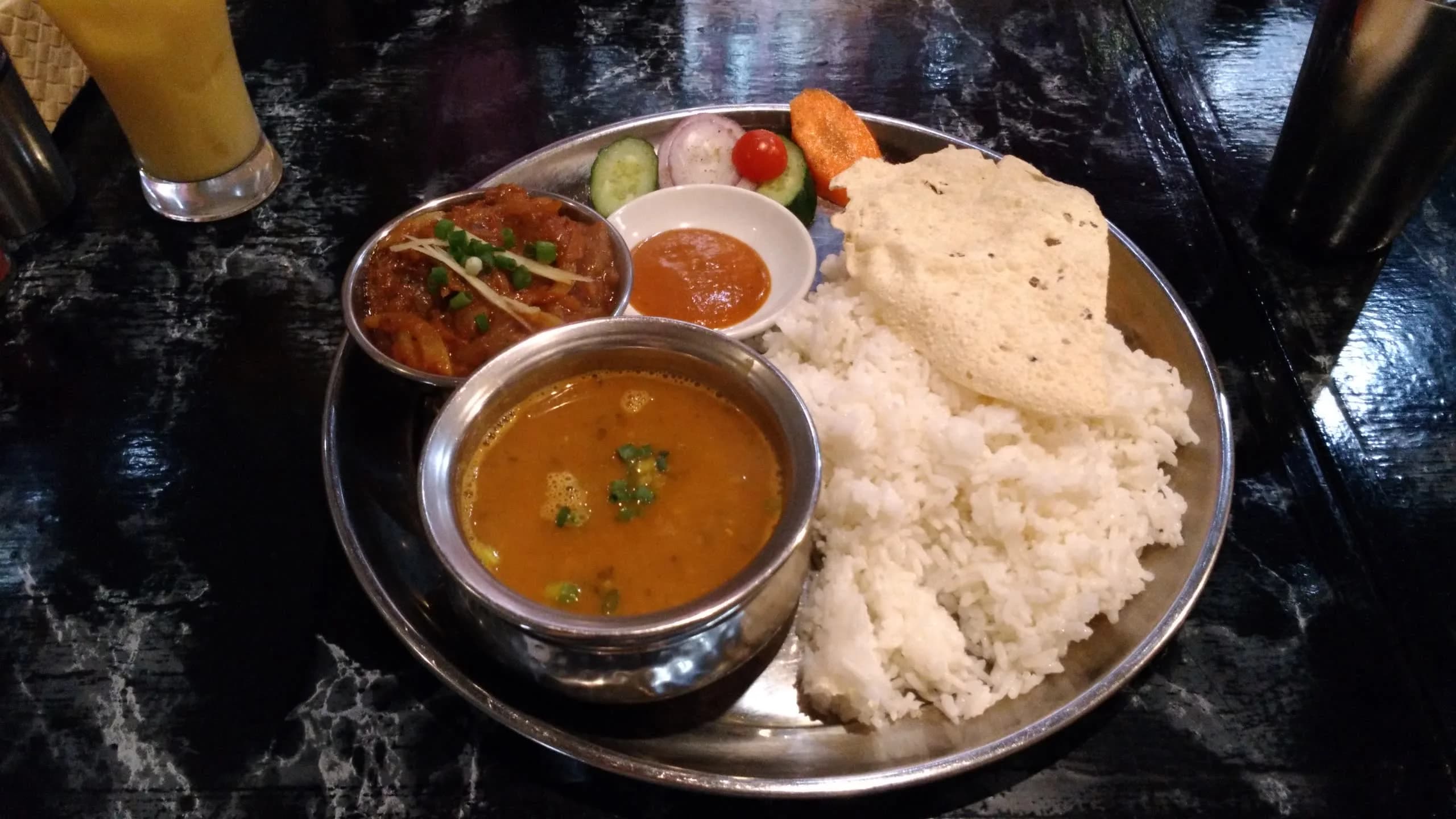
Every trekking day on Mardi Himal runs on dal bhat: steamed rice, a lentil soup, a vegetable curry, and a sharp pickle, eaten twice a day. The reason it dominates the menu is not romance, it is the refill convention. Unlike anything else on the list, dal bhat comes with free seconds and thirds, and the kitchen will keep ladling rice and dal onto your plate until you wave them off. One order fuels a full walking day for a fixed price.
It is also what the people who do this for a living eat. Your guide and porters order dal bhat almost every meal, because it is fresh, balanced, filling, and the best value on the board. Following their lead is the single easiest food decision on the trek. The Gurung kitchens that cook it lean millet-heavy in their own homes, a story we tell on our people and culture page; this page sticks to the practical business of what lands on your plate.
Teahouse menus on Mardi Himal are remarkably standardised. You will open a laminated, multi-page menu at almost every lodge and find the same dishes in roughly the same order: noodle soups and thukpa, fried rice and fried noodles, vegetable momos, pasta and macaroni, pancakes and porridge, eggs cooked any way, Tibetan bread, and garlic soup. The repetition is deliberate. These are the dishes that travel well up the ridge, keep without refrigeration, and reheat into a hot meal at the end of a cold day.
Garlic soup deserves a note. It appears on every menu and carries a piece of trail folklore: that it helps stave off altitude sickness. That claim is anecdotal, not medical. The soup is warm, hydrating, and easy to digest, all genuinely useful at height, but there is no solid evidence it prevents acute mountain sickness. Order it because it is good, not because it is a safeguard. The real protection is in our altitude-sickness guide.
There is one rule that explains the whole price list: everything is carried up. Every sack of rice, every egg, every gas canister rides up the ridge on a porter's back, so the higher the lodge, the higher the bill. A main dish that runs around NPR 350–550 at the lower camps lands closer to NPR 600–1,000 at High Camp. The figures below are indicative ranges, not a fixed tariff; they shift year to year and lodge to lodge, so budget on the high side.
Indicative only. Prices set by individual lodges and change seasonally. On a guided trip your trekking-day meals are typically included; drinks, snacks, boiled water, and extras are paid locally. For how this fits the wider trip budget, see our Nepal travel and money notes and the accommodation guide.
Meals fall into a steady rhythm. Breakfast is eaten at your overnight lodge before you set off: porridge, eggs and Tibetan bread, pancakes, or muesli, with tea or coffee. Lunch is taken at a teahouse along the route, usually around midday, and dal bhat or a fried-rice plate is the standard choice because it sets you up for the afternoon. Dinner is back at the next lodge, ordered on arrival so the kitchen has time to cook, and is again often dal bhat.
Two small habits make this run smoothly. Order dinner soon after you check in, since a single stove serves the whole lodge and food comes faster when the kitchen can batch orders. And eat well even when the altitude dulls your appetite, because the calories matter most on the days you least feel like eating.
The drinks menu is short and warming: masala tea and black tea by the pot, hot lemon, and ginger tea. Coffee exists but manage your expectations, since it is usually instant; a few lower lodges have a proper machine, but real espresso is a Pokhara pleasure, not a trail one. Beer and some spirits are sold too, and a cold beer at a low camp is fine. Higher up, alcohol is best avoided: it dehydrates you, wrecks sleep, and can mask the early signs of altitude sickness.
Water is the decision that matters most. Do not drink untreated tap or stream water. Buy boiled water by the litre at teahouses, where it costs more the higher you climb, or treat your own with tablets, drops, or a filter. Please avoid bottled water: the empty plastic has nowhere to go inside the conservation area and ends up burned or dumped. A reusable bottle plus a treatment method keeps you hydrated and keeps the trail clean.
Above Low Camp the kitchen is effectively vegetarian, and that is a feature, not a limitation. Meat is carried up the hill unrefrigerated, so most guides advise skipping it at altitude, and the vegetarian spread of dal bhat, fried rice, noodles, momos, eggs, and soups is more than enough. Vegan eating is workable if you say so early, since eggs, butter, milk tea, and cheese hide in many dishes; your guide can ask kitchens to leave them out. Gluten-free is genuinely harder, because wheat runs through bread, noodles, momos, and pancakes, so lean on rice and potato dishes and communicate every need through your guide rather than the menu.
A few hygiene habits keep your stomach settled. Favour food that is cooked hot and served hot, which is exactly why dal bhat is the safe default. Carry hand sanitiser and use it before every meal, since washing facilities are basic. Carry your own snacks too: nuts, chocolate, energy bars, dried fruit, and electrolyte sachets bought cheaply in Pokhara, where they cost far less than on the trail. With a little planning, eating on Mardi Himal is simple, hot, and genuinely good. Build it into your wider plan on our Mardi Himal trek overview.
The backbone of every trekking day is dal bhat: steamed rice, lentil soup, a vegetable curry, and pickle, served twice a day with free refills. Around it sits a fixed teahouse menu that repeats from lodge to lodge: fried rice and fried noodles, thukpa and other noodle soups, vegetable momos, pasta and macaroni, pancakes, porridge and muesli, eggs, Tibetan bread, and garlic soup. Higher up the menu narrows, but the staples are always there.
Tap and stream water is not safe to drink untreated. The two reliable options are boiled water bought by the litre at teahouses (it costs more the higher you go) and treating your own with purification tablets, drops, or a filter. We discourage buying bottled water on the trail because the empty plastic has nowhere to go in the conservation area and ends up burned or dumped. Bring a reusable bottle and a treatment method, top up with boiled water at lodges, and you will drink safely without the plastic.
Prices climb with altitude because every ingredient is carried up by porter. A main dish runs roughly NPR 350–550 at the lower camps and around NPR 600–1,000 at High Camp and above. These figures are indicative and change year to year, so budget on the higher side. On a guided trip your meals on trekking days are usually covered by the package; the costs that fall to you are drinks, snacks, boiled water, and any extras. See our notes on money and budgeting for how the daily numbers add up.
Vegetarian food is the default above Low Camp, and for good reason: meat is carried up unrefrigerated, so most guides advise sticking to vegetarian dishes at altitude. Dal bhat, fried rice, noodles, momos, eggs, and soups give you plenty of choice. Vegan eating is workable if you flag it early, since eggs, butter, milk tea, and cheese turn up in many dishes; your guide can ask kitchens to leave them out. Gluten-free is harder because wheat is everywhere, so plan around rice and potatoes and communicate clearly.
Garlic soup is a teahouse fixture and a long-standing trail remedy, but the altitude-sickness claim is anecdotal, not medical. Locals and many trekkers swear by it, and it is warm, hydrating, and easy to digest, which are all genuinely useful at altitude. There is no solid evidence that it prevents acute mountain sickness, so treat it as a comforting bowl rather than a safeguard. Real protection comes from a sensible ascent profile, hydration, and watching for symptoms. See our altitude-sickness guide.
Beer and some spirits are sold at teahouses, and a cold beer at a low camp is a fine end to a day. At altitude it is a different story. Alcohol dehydrates you, disturbs sleep, and can mask or worsen the early signs of altitude sickness, so the standard advice is to skip it above Low Camp and especially at High Camp. Save the celebration for when you are back down in Pokhara.
Bring a few high-energy snacks from Pokhara: nuts, trail mix, chocolate, energy bars, dried fruit, and electrolyte sachets for your water. They are cheaper and better in town than on the trail, where the same items cost more the higher you go. A couple of hundred grams of your own snacks keeps you going between meals on long days and is worth the small weight.
We run small-group trips from Pokhara every Saturday from September to May. We also run private trips any day. A $50 deposit holds your place. Pay the rest on arrival in cash or by card.