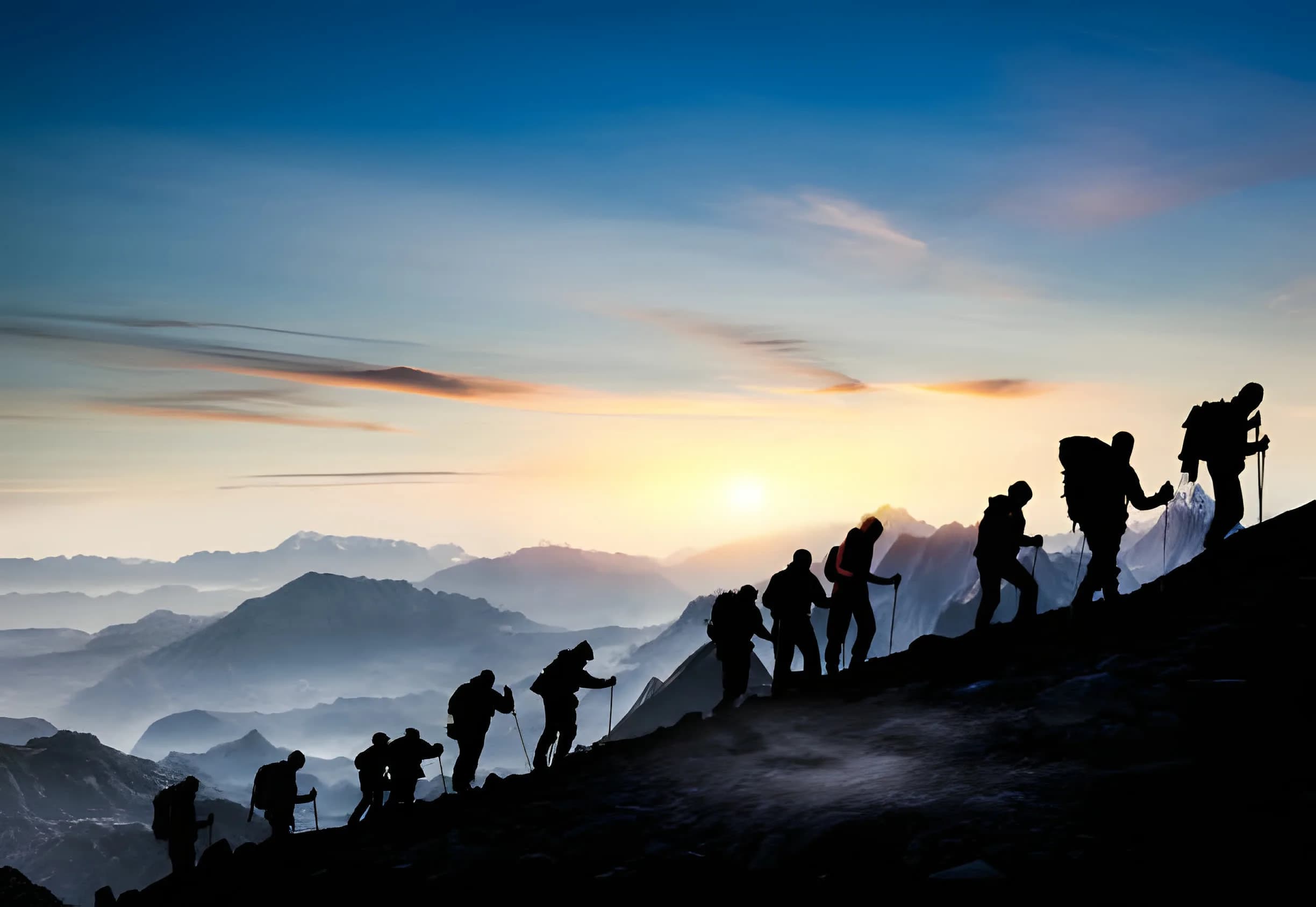
The standard Mardi Himal trek, five days flat.
When people ask us how long the Mardi Himal trek takes, the honest answer is that five days is the version we run most often. It walks the same ridge as the longer 6-day itinerary, reaches the same Upper Viewpoint at 4,200 metres, and starts and finishes in Pokhara. What it removes is slack, not scenery. You climb to High Camp on Day 3, you stand on the viewpoint at dawn on Day 4, and you walk out to Sidhing and drive back to the lakeside on Day 5.
That compression is the whole story of this page. The 5-day packs more walking into each day than the 6-day trek, and Day 2 in particular asks for close to 900 metres of climbing from Pitam Deurali to Low Camp in a single push. For most reasonably fit walkers that is well within reach. For first-time trekkers, for anyone who has felt the effects of altitude before, or for slow acclimatisers, our 7-day trek is worth the extra two days: it sleeps at Badal Danda before High Camp, the gentlest climb we run. We would rather you arrive at the viewpoint feeling strong than tick a box. If altitude is new to you, read our altitude sickness guide before you commit to the pace.
The 5-day sits in the middle of our durations. It is slower and safer than the 3-day express version, which compresses the same route into three walking days, and it is a touch faster than the 6-day. If you have a working week to spare in Nepal, this is the itinerary that fits. The full day-by-day plan, the route map, and the variants all live on our itinerary page too.
The full schedule, day by day.
Five days from Pokhara and back: four days of trekking to the ridge and a fifth day that finishes the descent and drives you out. Altitudes and walking hours are listed for every day. Day 2 is the longest climbing day; Day 4 is the summit morning and the start of the descent.
- Day 1
Pokhara → Kande → Australian Camp → Pitam Deurali
- Drive
- 1.5 hrs (Pokhara to Kande)
- Trek
- 5 – 6 hrs
- Distance
- ~9 km
- Altitude
- Kande 1,770 m → Pitam Deurali 2,100 m
- Net change
- +330 m
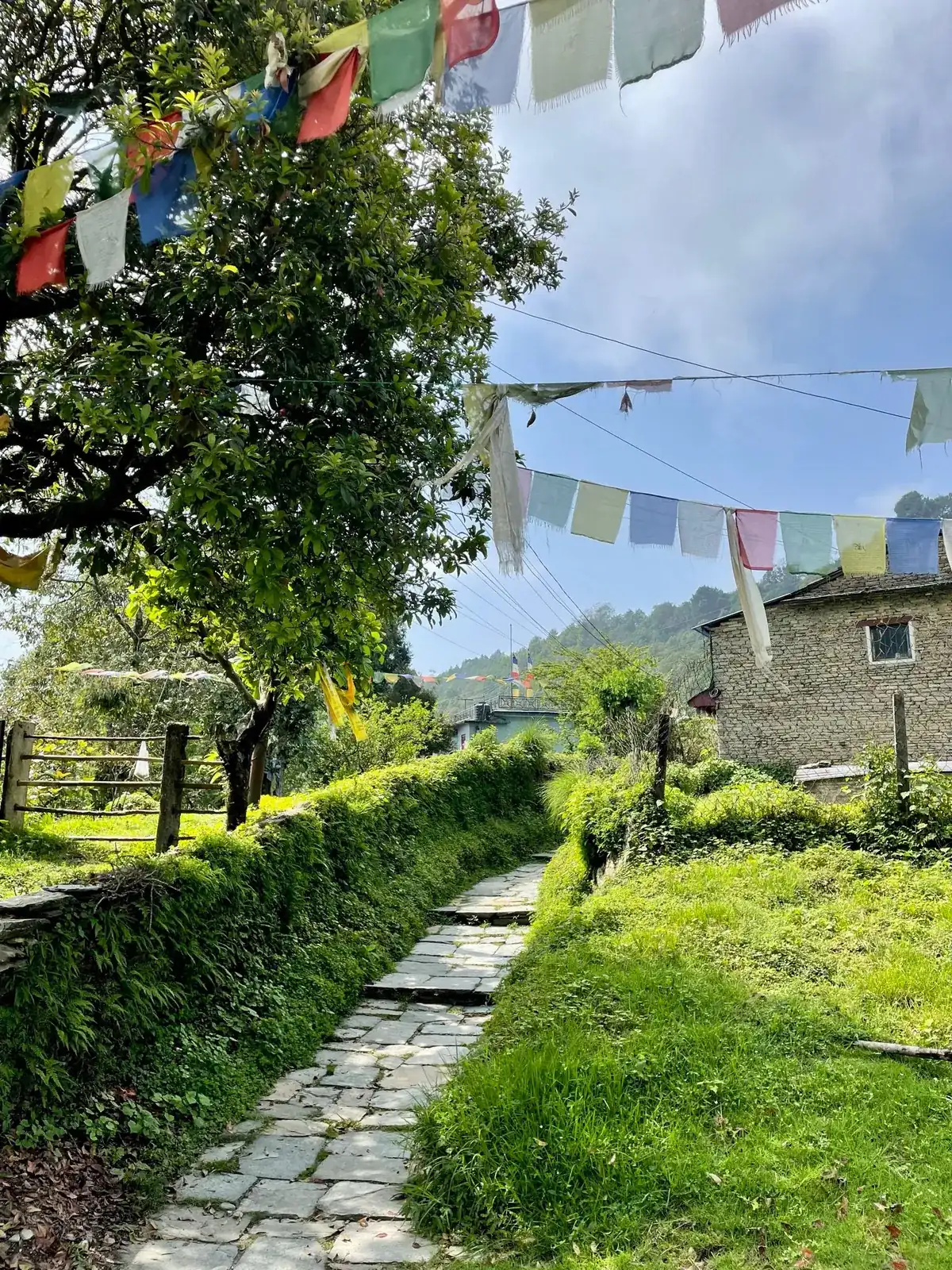
We leave Pokhara around 07:30 for the 1 to 1.5-hour drive to the Kande trailhead at 1,770 m. Stone steps climb steadily to Australian Camp at 2,060 m, where the first wide view of Annapurna South and Hiunchuli opens up and the ACAP permit is checked.
From Australian Camp the trail continues through rhododendron and oak forest to Pitam Deurali at 2,100 m, the junction where the Mardi route leaves the busier Annapurna Base Camp path and turns onto its own quiet ridge. Lunch is taken here.
Arrive Pitam Deurali by mid afternoon. The teahouses on this stretch are simple but warm, and the ridge ahead is already visible through the trees. Early dinner, early night, because Day 2 is the longest day of the trek.
Kande 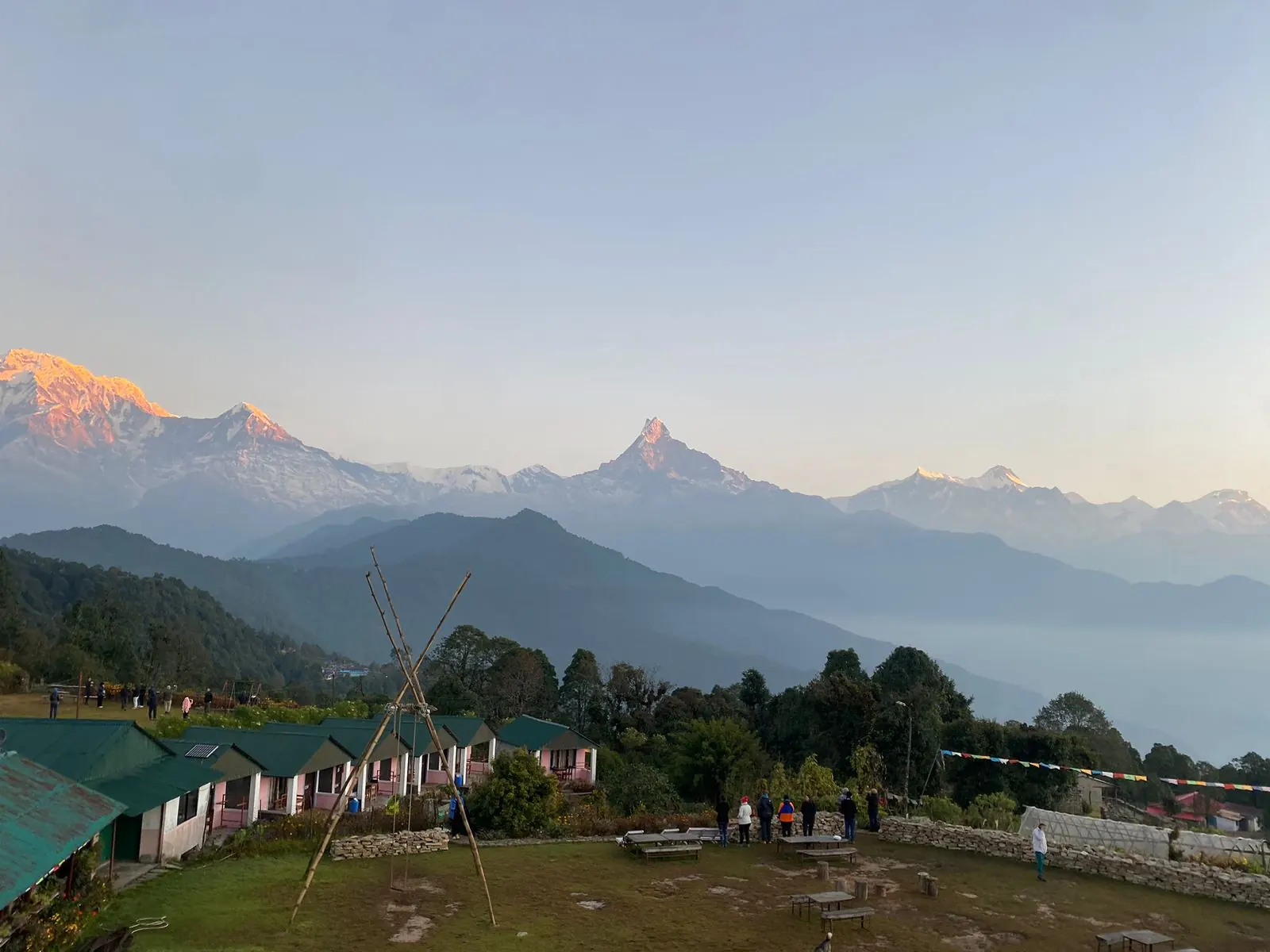
Australian Camp 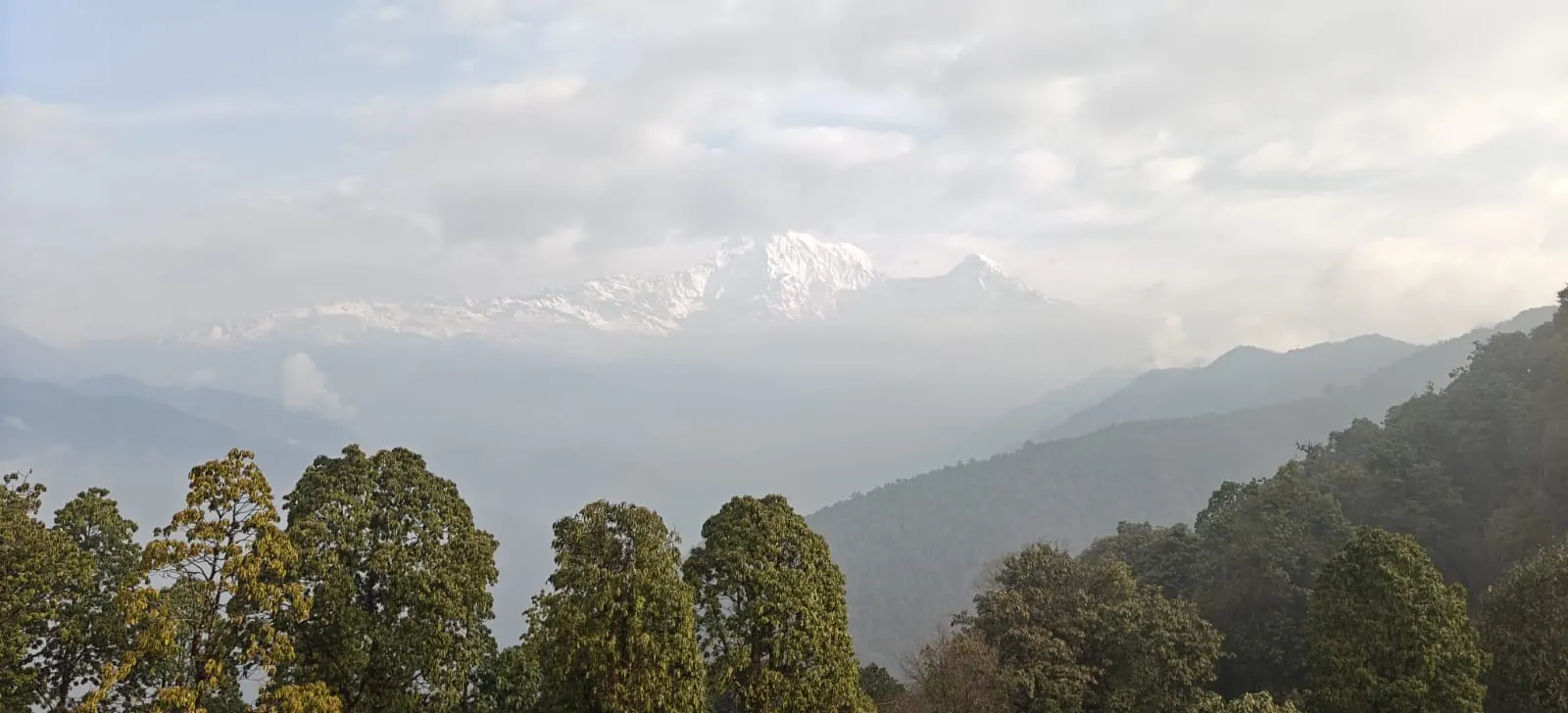
Pitam Deurali 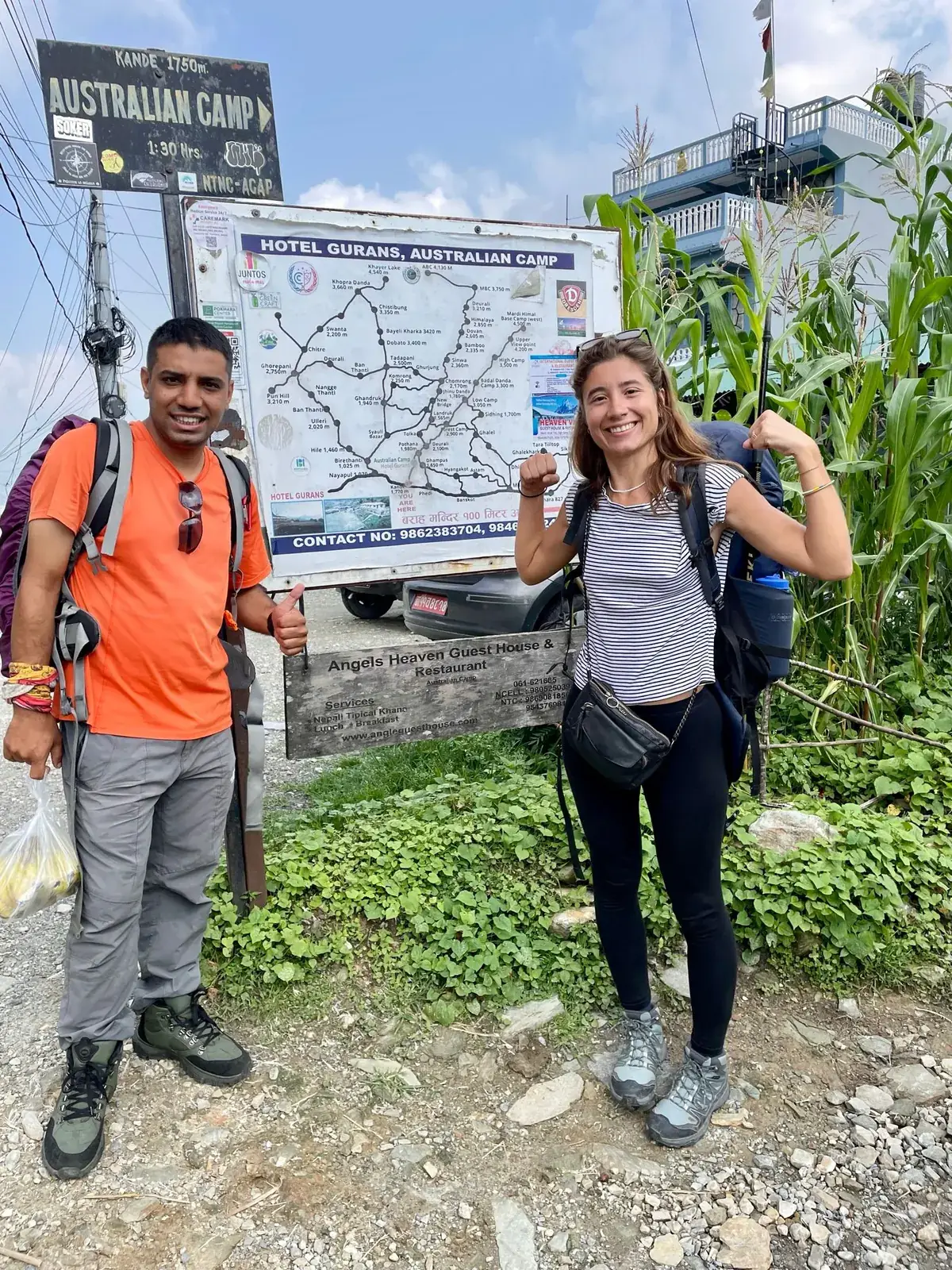
Kande 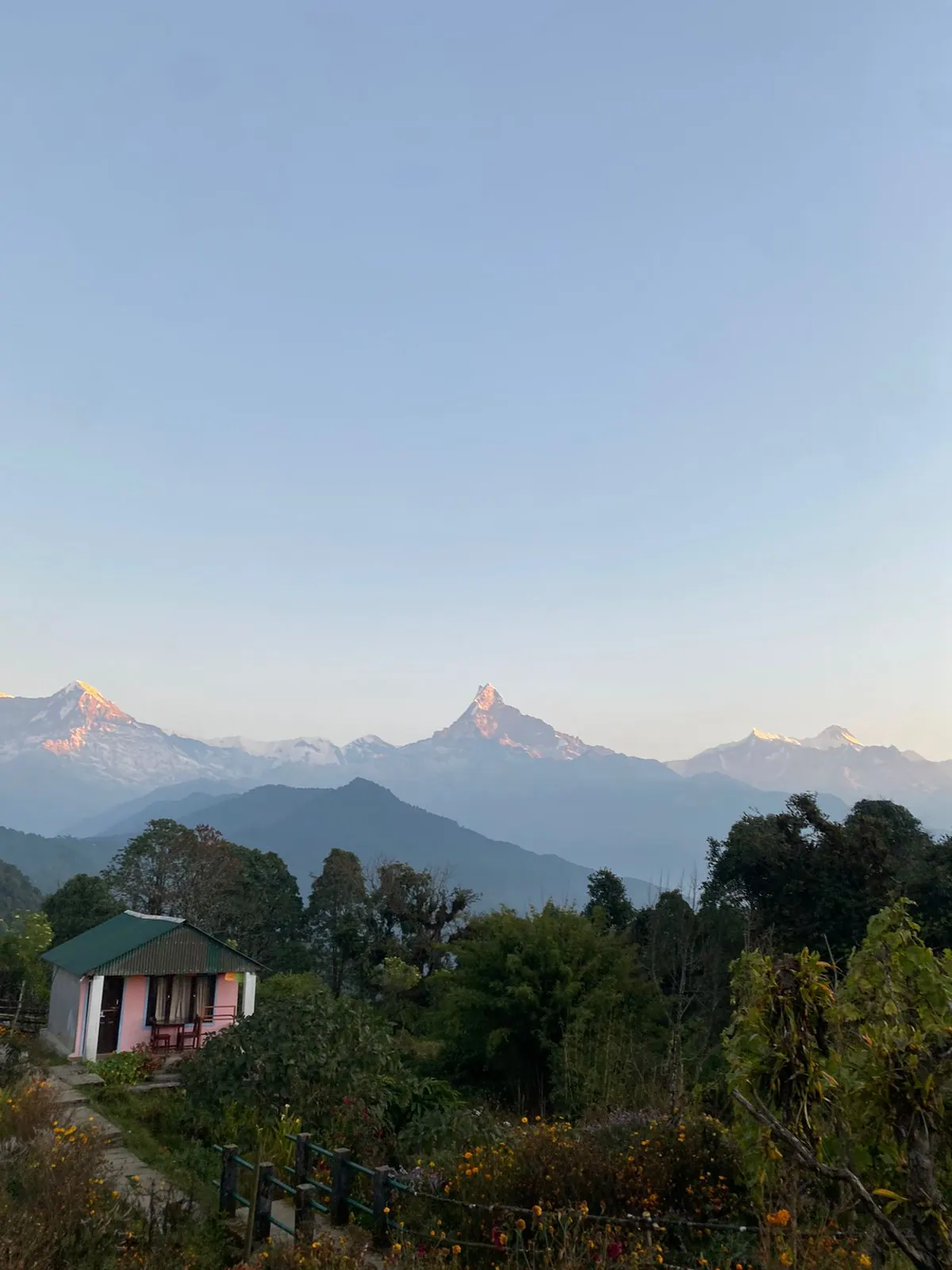
Australian Camp 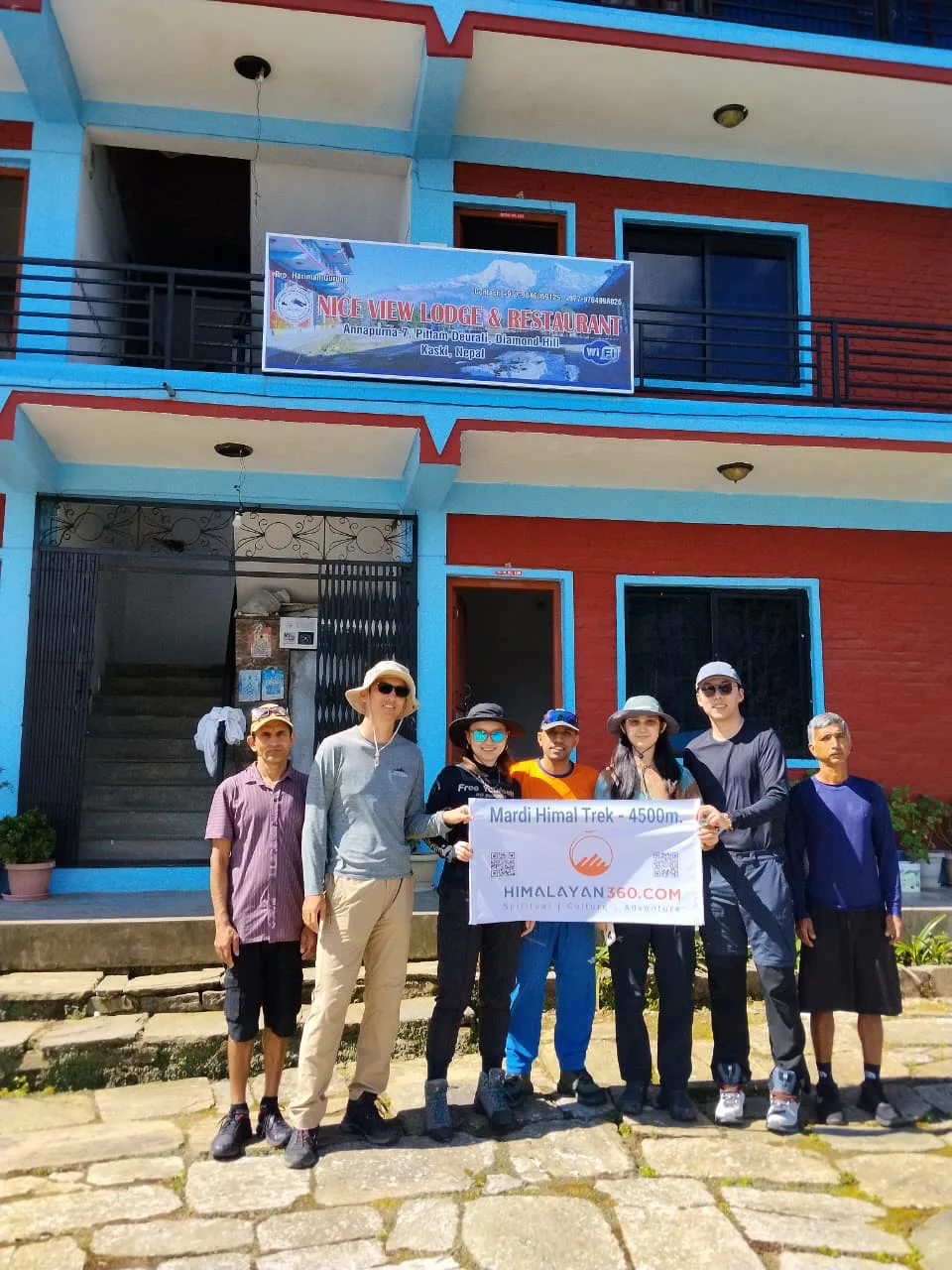
Pitam Deurali 6 photos from day 1, taken on the trail. - Day 2
Pitam Deurali → Forest Camp → Rest Camp → Low Camp
- Drive
- None
- Trek
- 6 – 7 hrs
- Distance
- ~12 km
- Altitude
- 2,100 → 2,550 → 2,985 m
- Net change
- +885 m
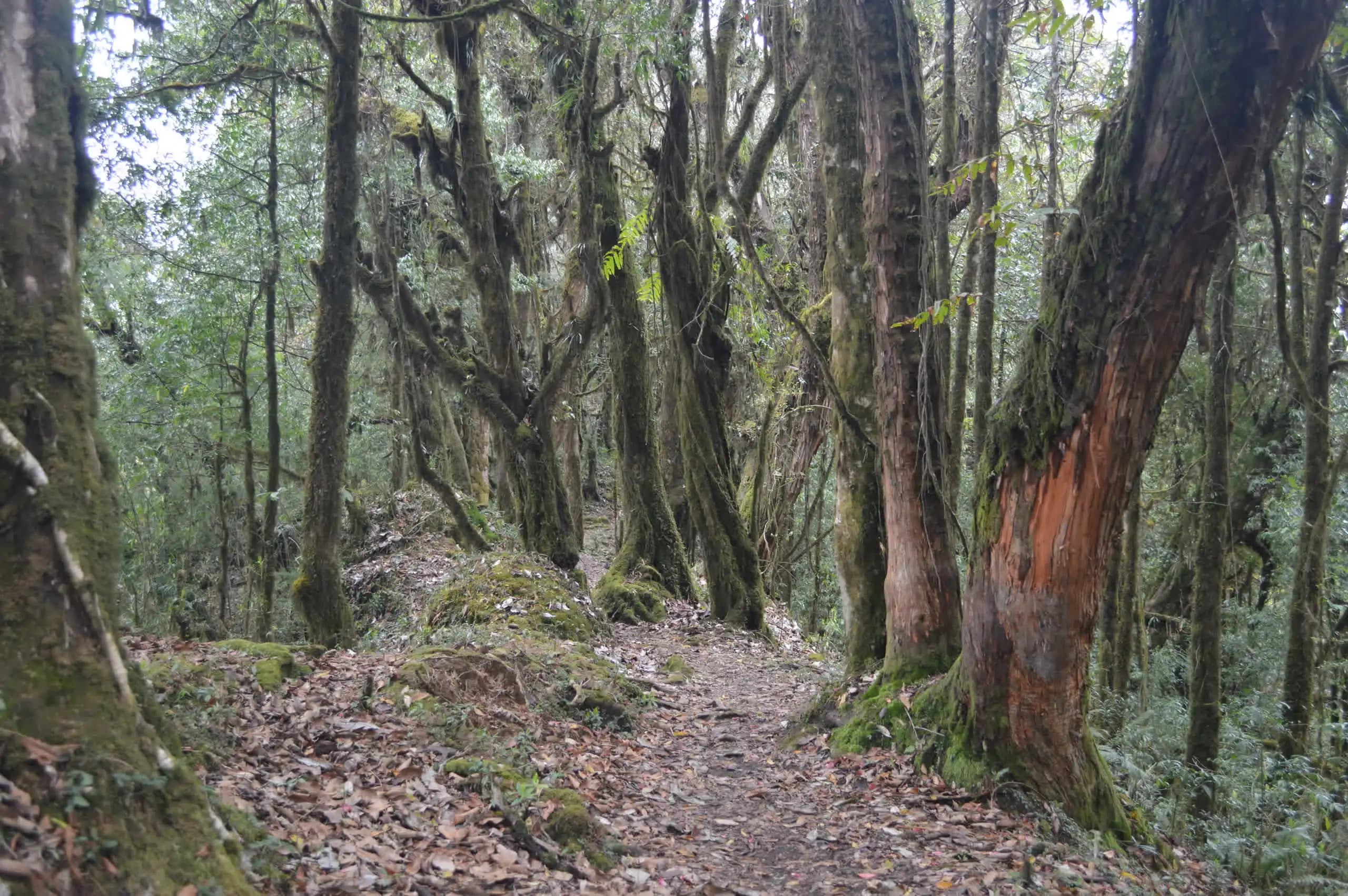
The longest day of the five. The trail climbs through cloud forest of oak, maple, and rhododendron to Forest Camp at 2,550 m, where langur troops are common in the canopy, then continues to Rest Camp at roughly 2,600 m for a short break.
From Rest Camp the forest thins as the trail pushes on to Low Camp at 2,985 m, gaining close to 900 m over the day. This is the day to pace yourself: eat and drink on schedule, and say something if you notice a headache or nausea building.
Arrive Low Camp in the afternoon with the first real views of the Annapurna massif opening up above the treeline. Dinner and an early night, because Day 3 finishes at High Camp.
Pitam Deurali 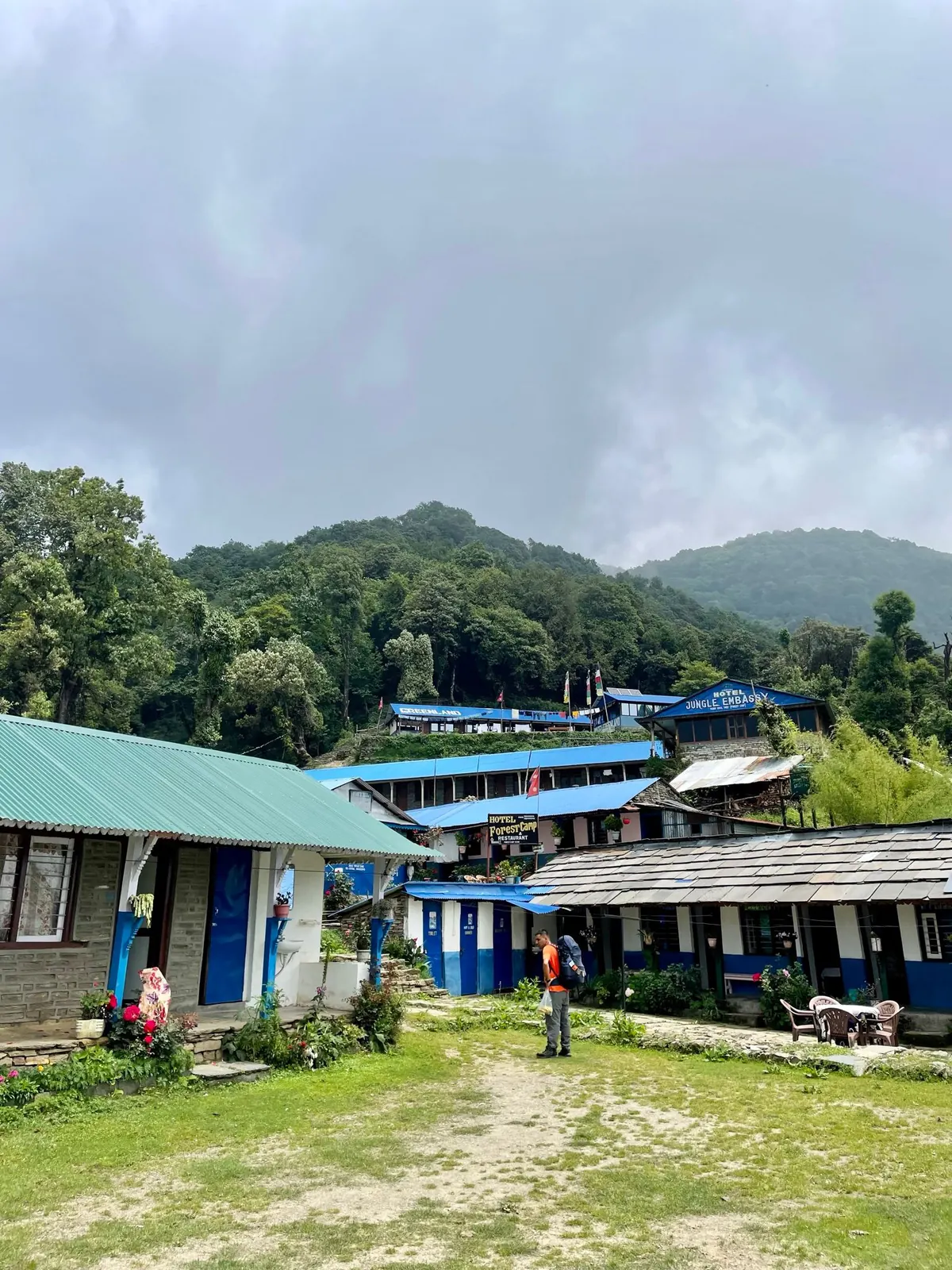
Forest Camp 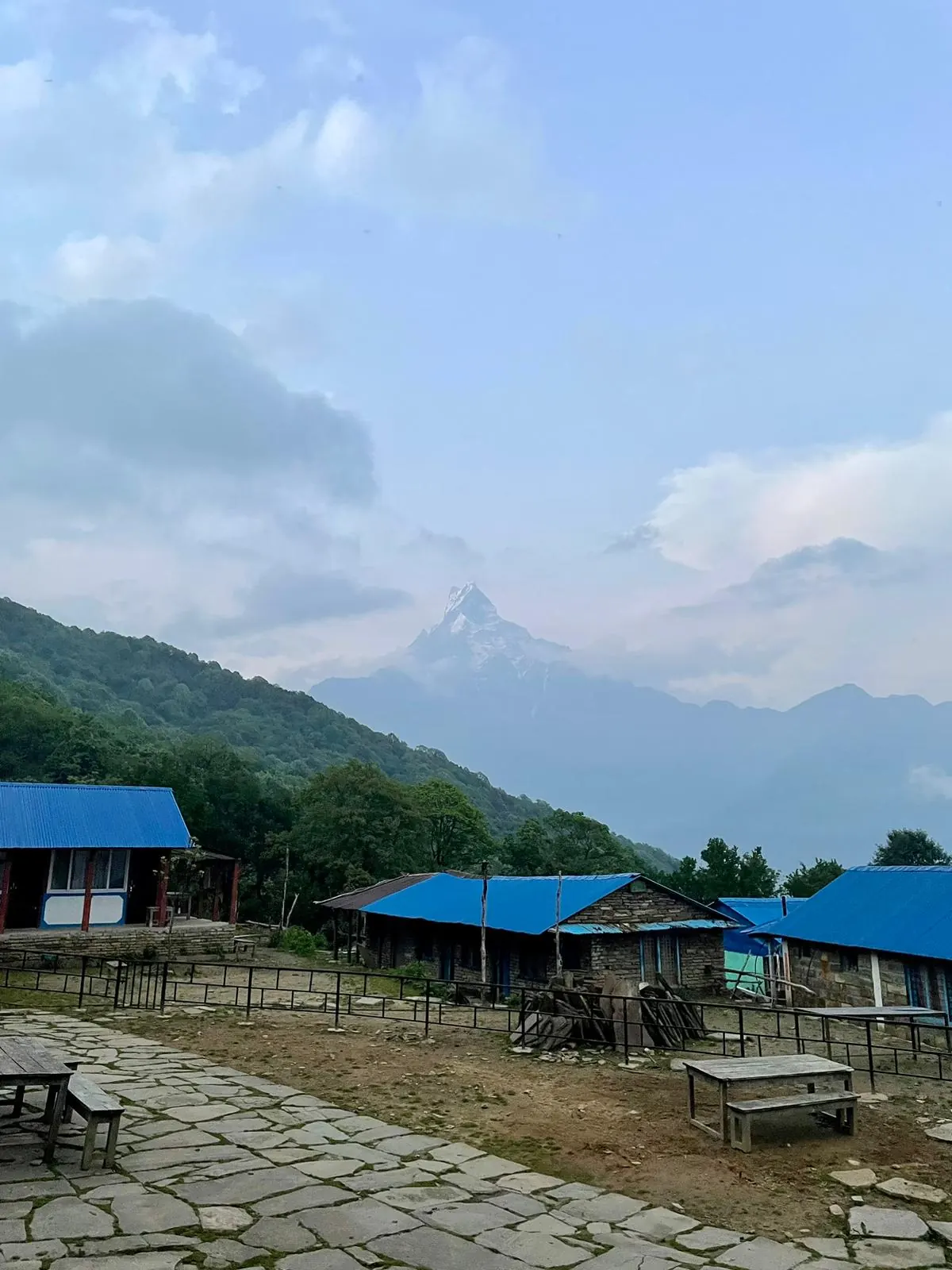
Low Camp Pitam Deurali 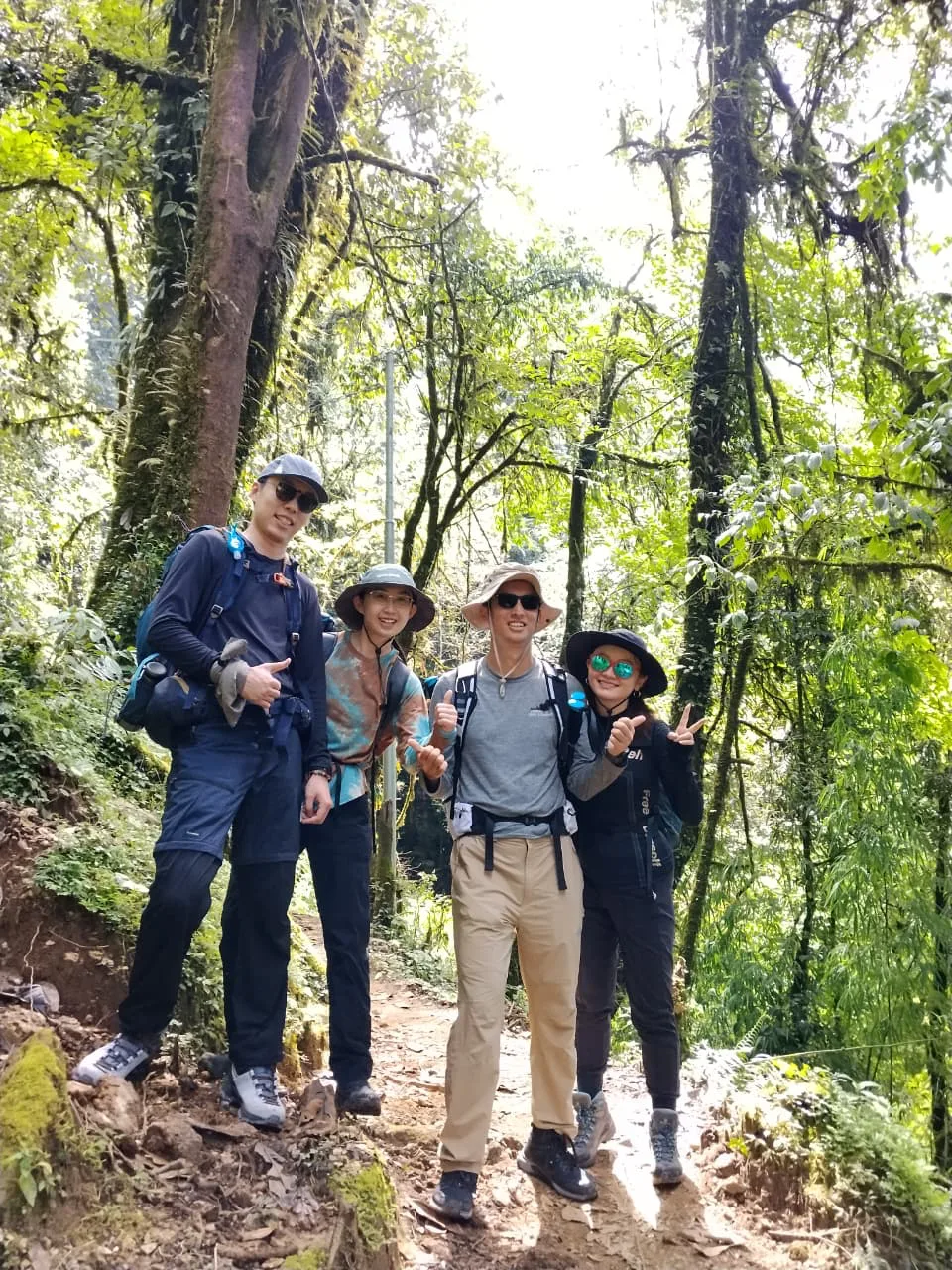
Trail to Forest Camp 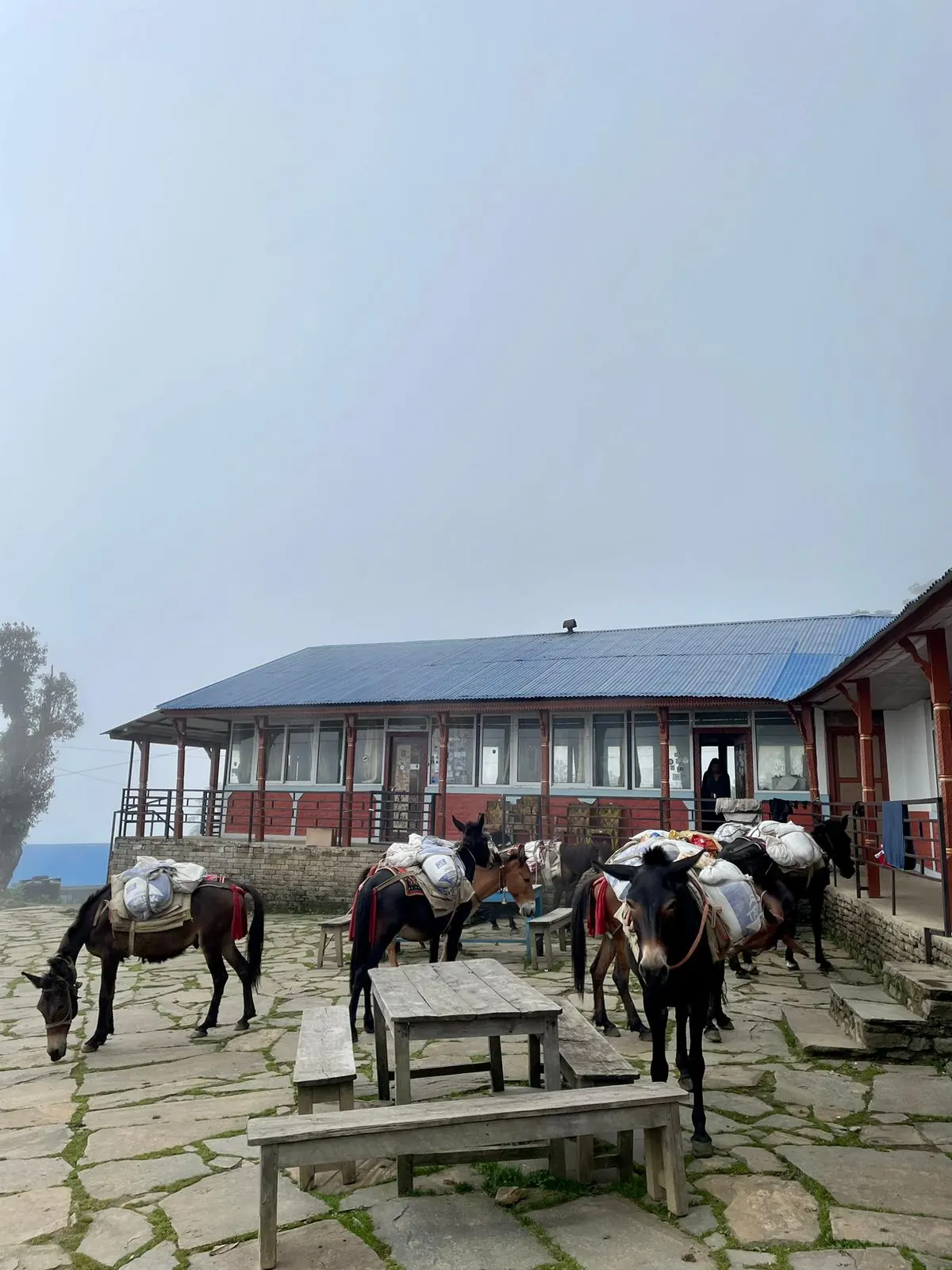
Low Camp 6 photos from day 2, taken on the trail. - Day 3
Low Camp → Badal Danda → High Camp
- Drive
- None
- Trek
- 4 – 5 hrs
- Distance
- ~6 km
- Altitude
- 2,985 → 3,210 → 3,580 m
- Net change
- +595 m
A shorter day on paper, but the altitude starts to matter. The trail breaks out of the last forest above Low Camp and onto the open ridge, crossing Badal Danda (Cloud Ridge) at 3,210 m, where the trees give way to rhododendron scrub and rock.
From Badal Danda the path climbs steadily to High Camp at 3,580 m. We run a pulse-oximetry check on arrival and keep the pace deliberately slow above Low Camp; anyone showing early symptoms is held here rather than pushed on toward the viewpoint. If you are new to walking above 3,000 m, read our guide to altitude sickness before you book.
Arrive High Camp in the early afternoon with time to rest before the pre-dawn start. Machhapuchhre stands directly ahead across the valley, and the sunset from the dining hall is the moment most trekkers remember from the whole trip.
Low Camp 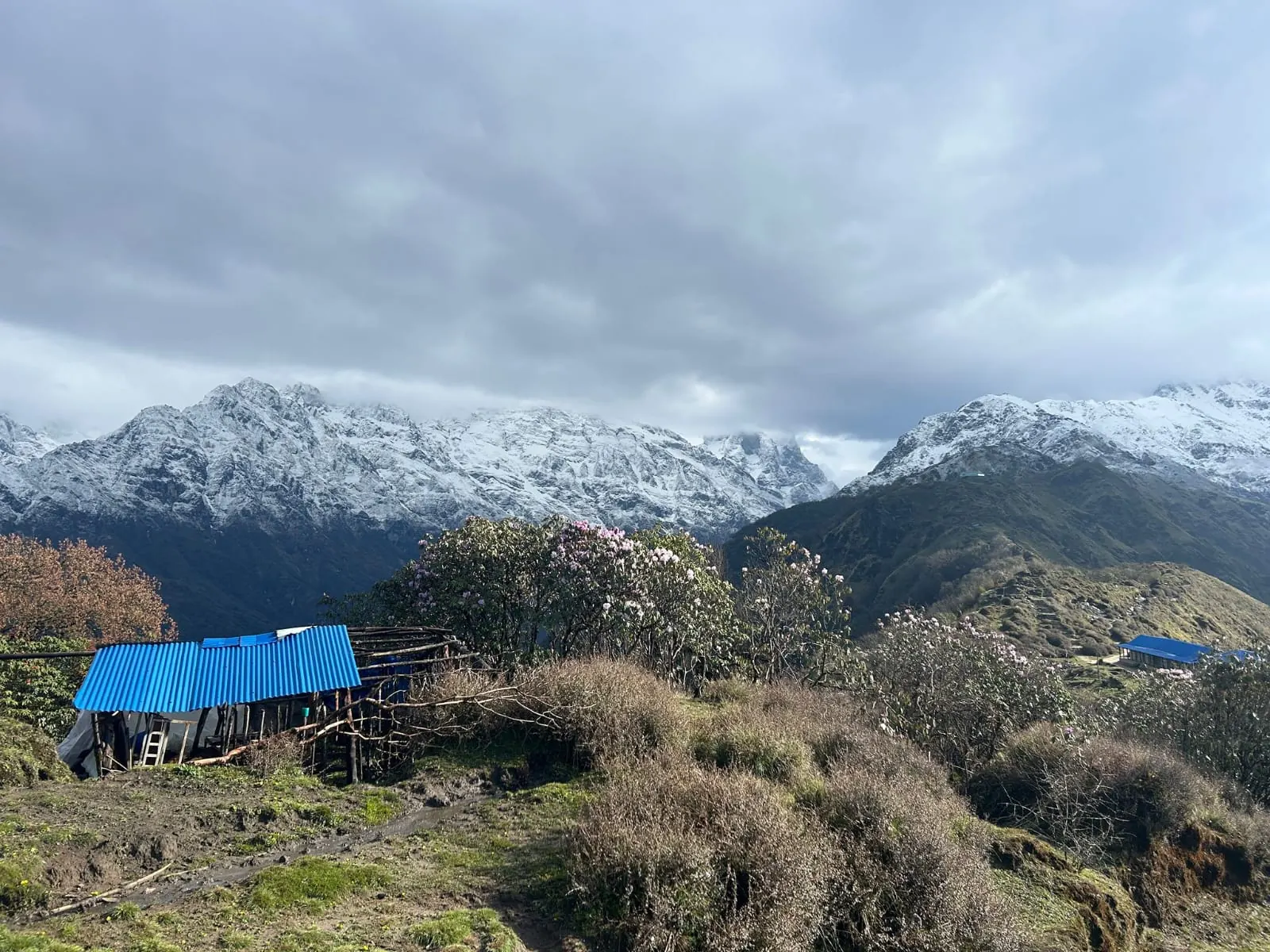
High Camp & Badal Danda 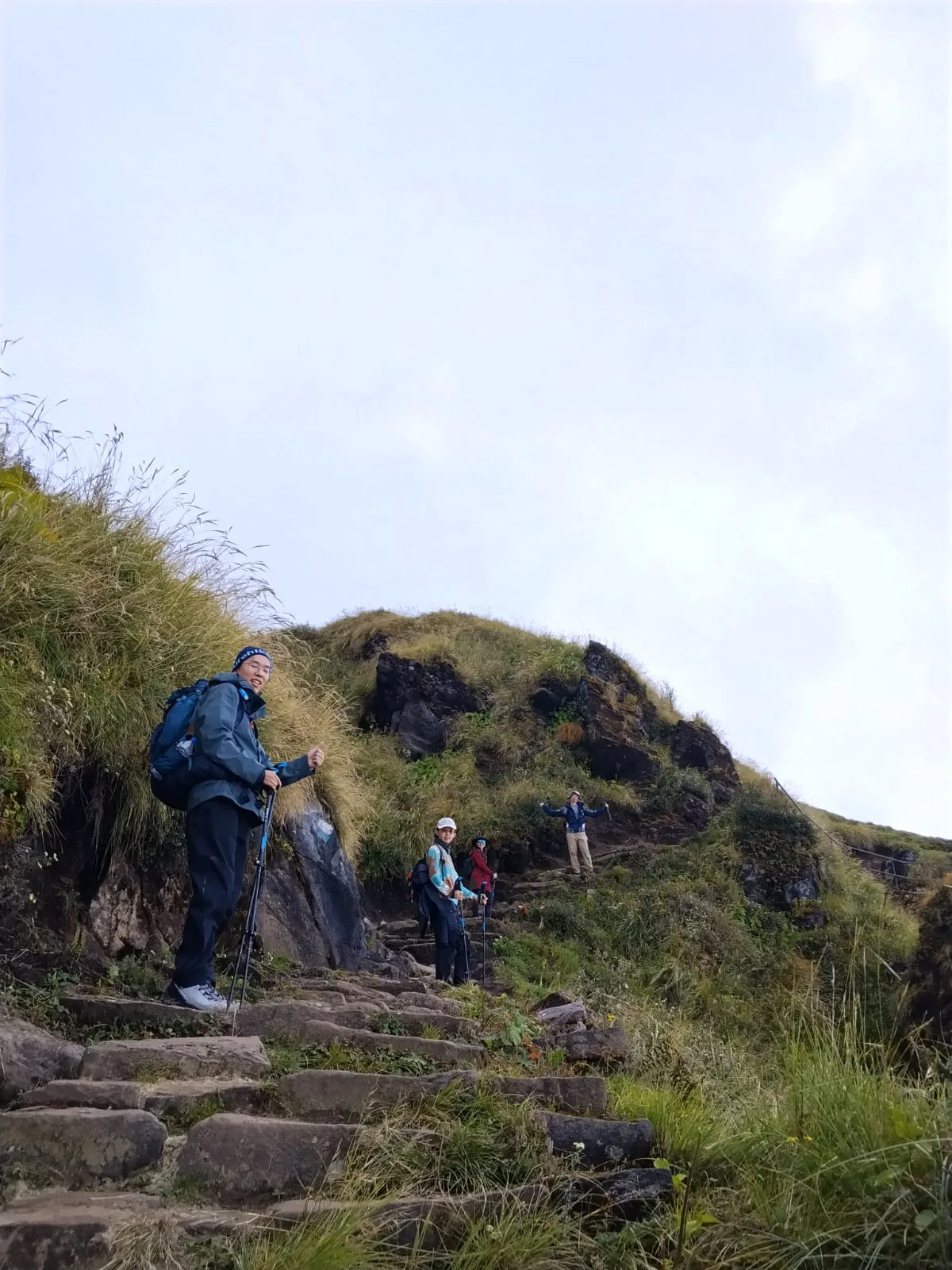
Trail to High Camp Low Camp 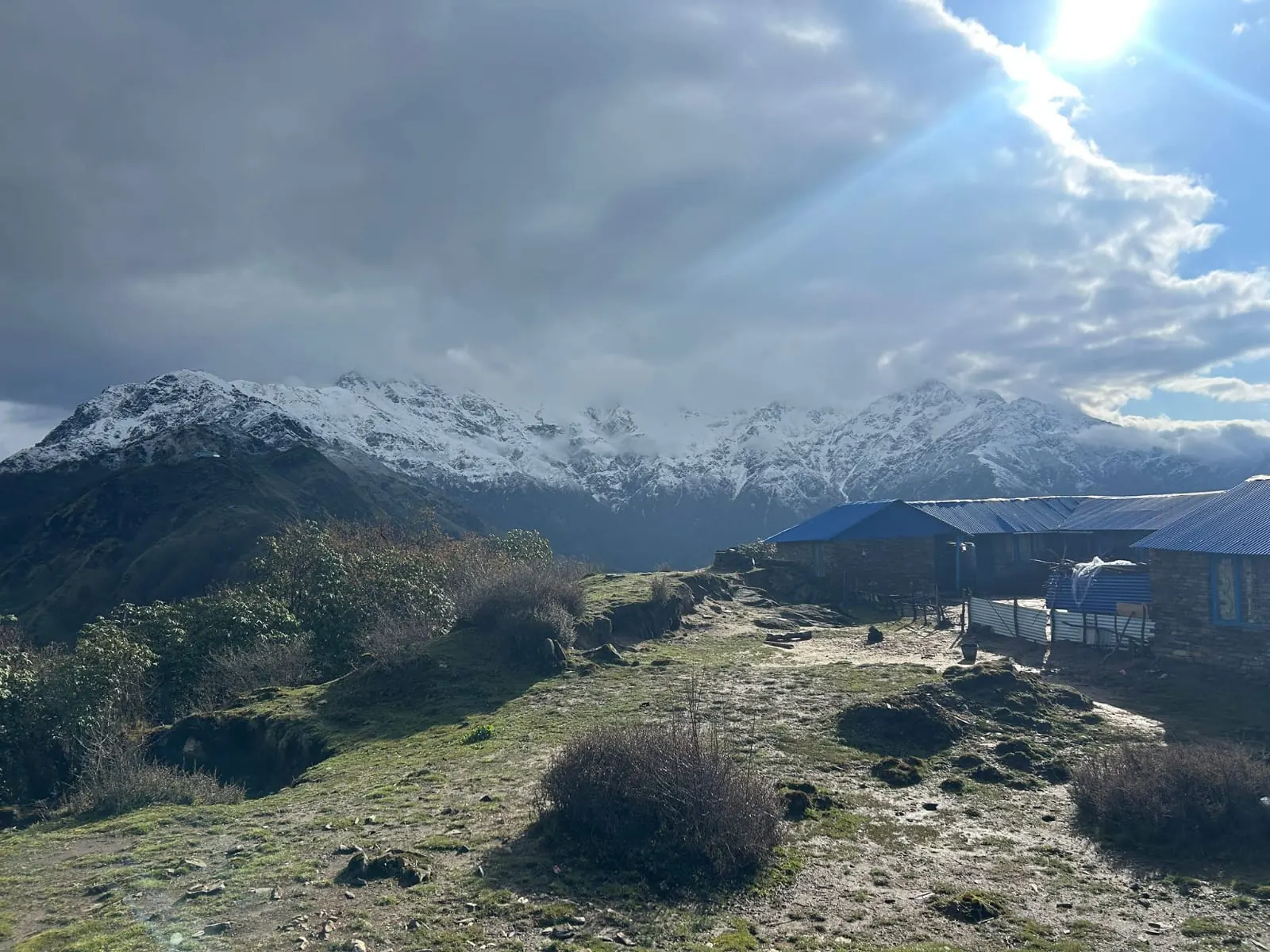
High Camp & Badal Danda 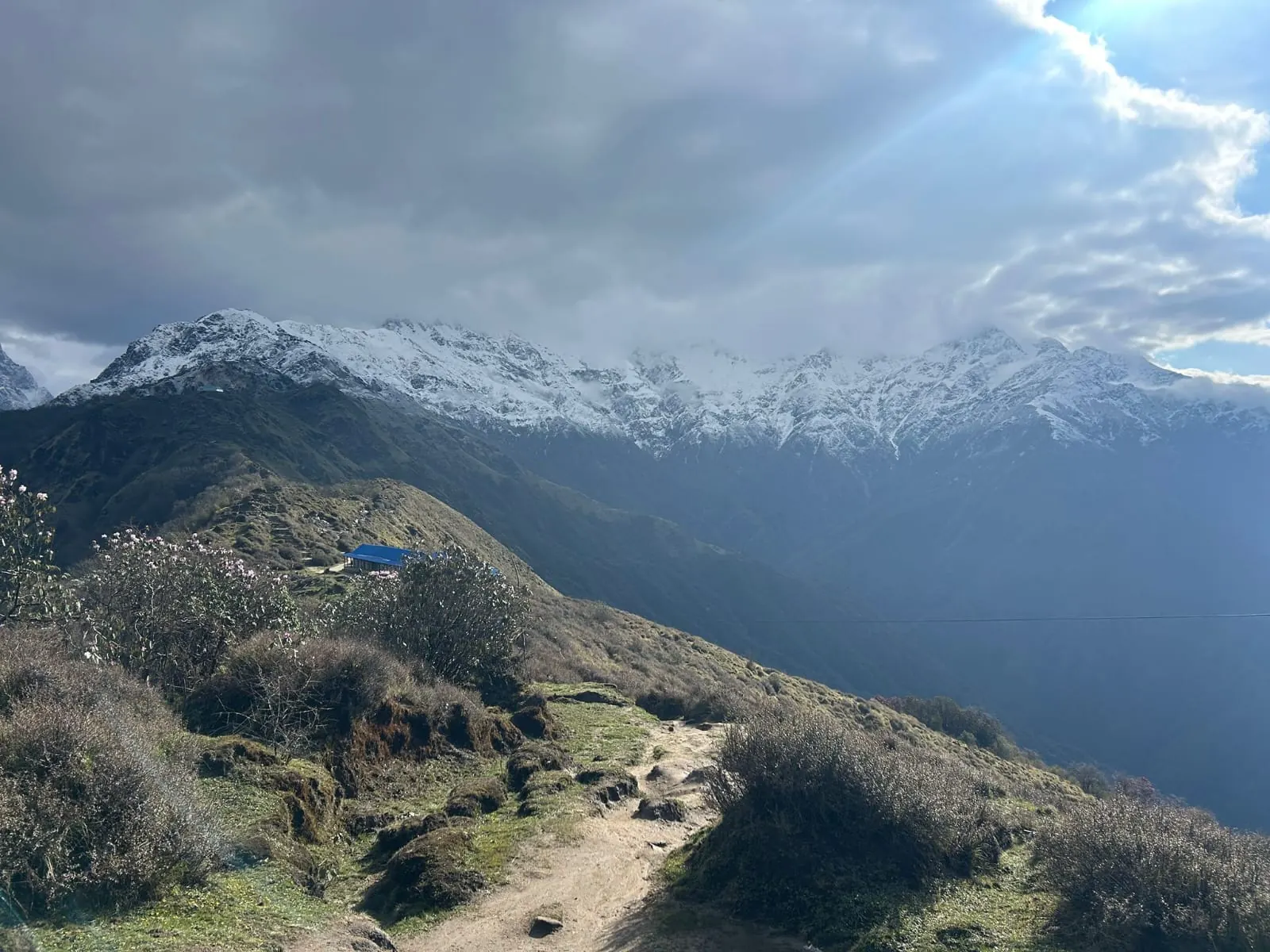
High Camp & Badal Danda 6 photos from day 3, taken on the trail. - Day 4
High Camp → Upper Viewpoint → Badal Danda
- Drive
- None
- Trek
- 6 – 7 hrs
- Distance
- ~10 km
- Altitude
- 3,580 → 4,200 → 3,210 m
- Net change
- +620 m / -990 m
The summit morning. We leave High Camp around 04:30 with headtorches for the climb to the Mardi Himal Upper Viewpoint at 4,200 m. On a clear morning the sun lifts over the eastern peaks while Dhaulagiri sits far to the west and the Annapurna wall fills the sky in front of you. This is the highest point of the trek. Mardi Himal Base Camp at 4,500 m is about 1 hour 30 minutes further along the ridge. If you want to go on, ask your guide, and expect a longer day.
Return to High Camp for a proper breakfast, then descend the ridge to Badal Danda at 3,210 m, between High Camp and Low Camp. Trekking poles matter on this stretch; the drop is steep in places and the knees feel it.
Overnight at Badal Danda. The hard climbing is behind you, and Day 5 is a walk down to the road and a jeep back to the lake.
High Camp & Badal Danda 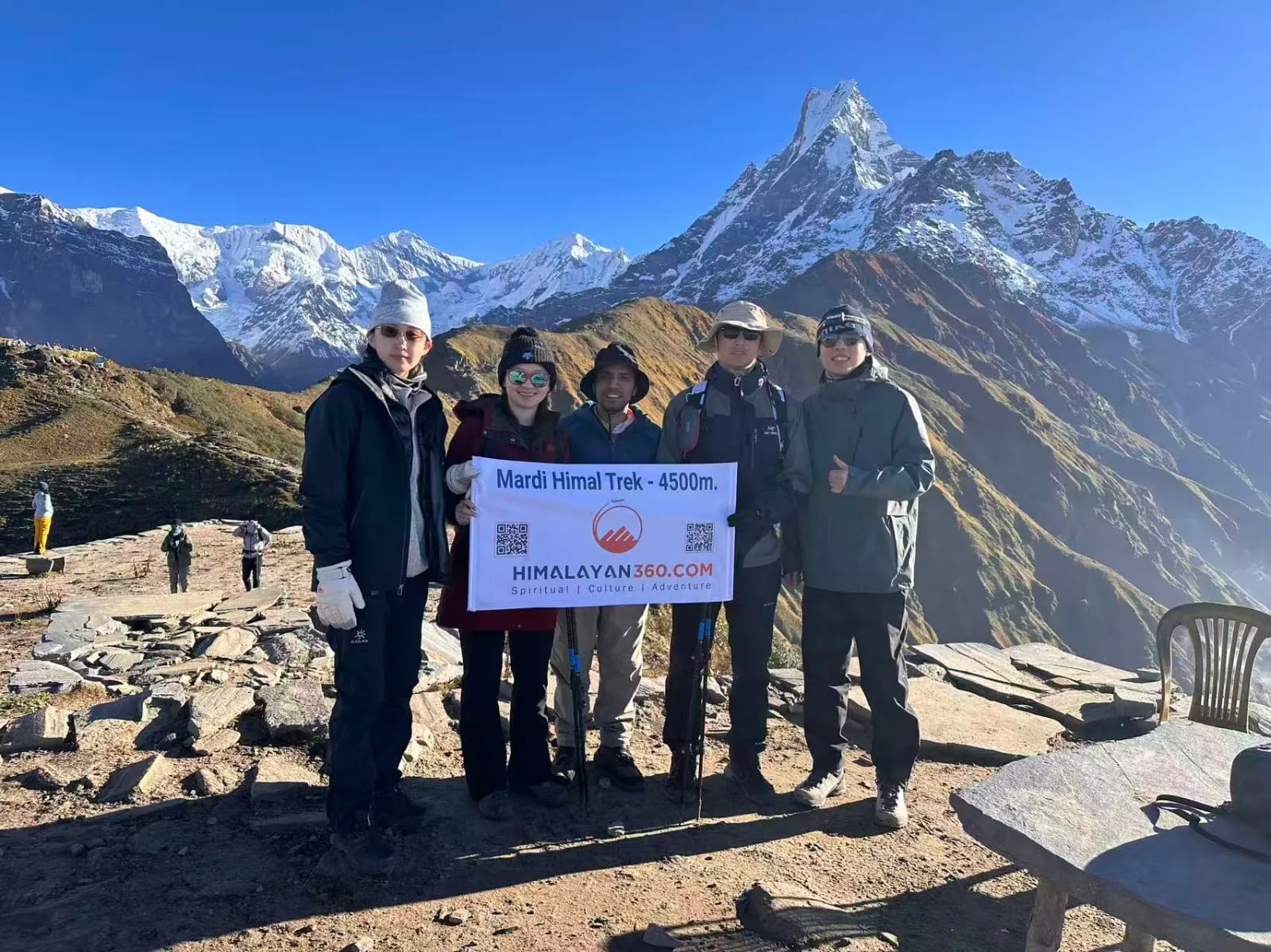
Upper Viewpoint High Camp & Badal Danda 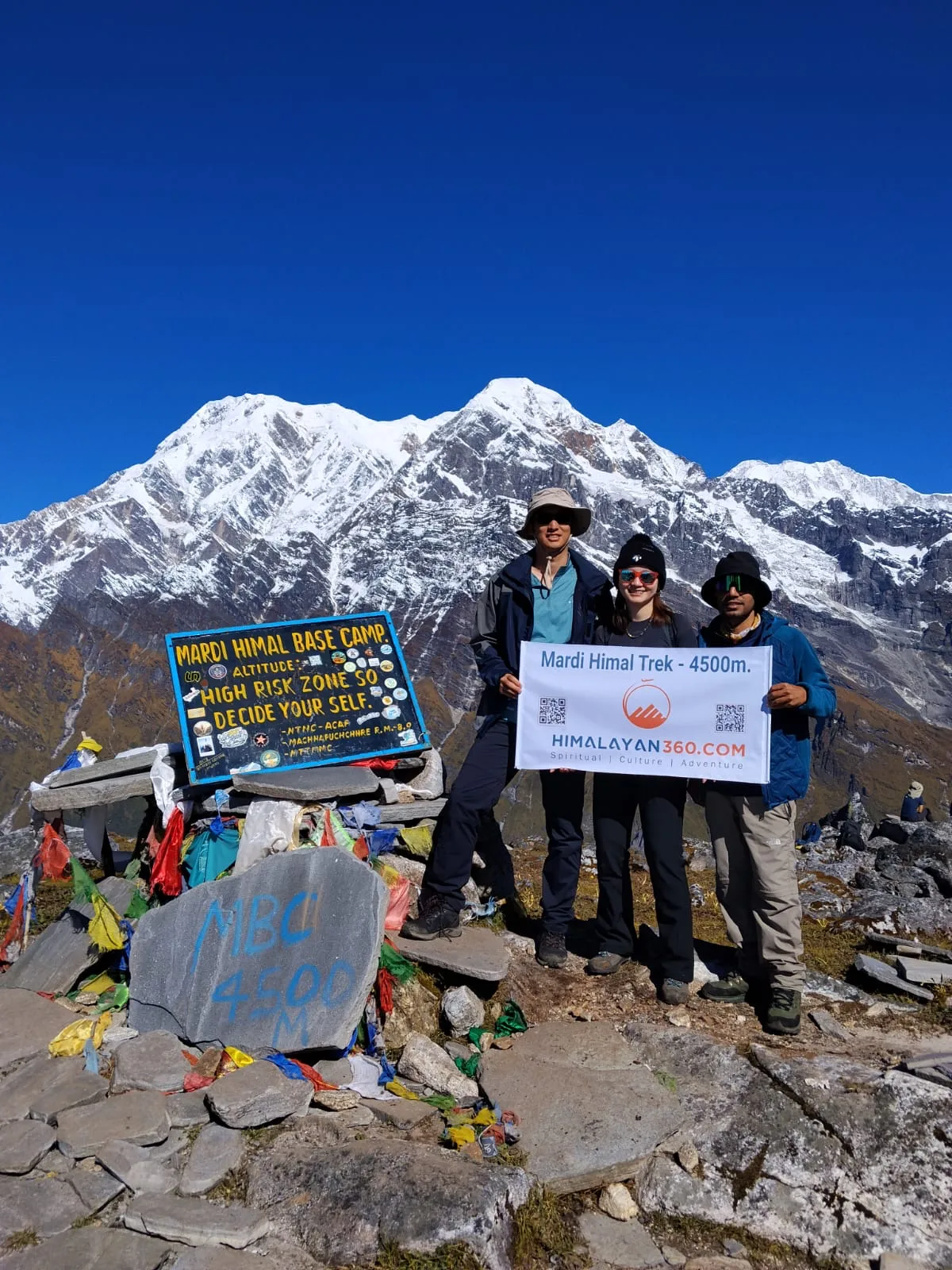
Mardi Himal Base Camp High Camp & Badal Danda 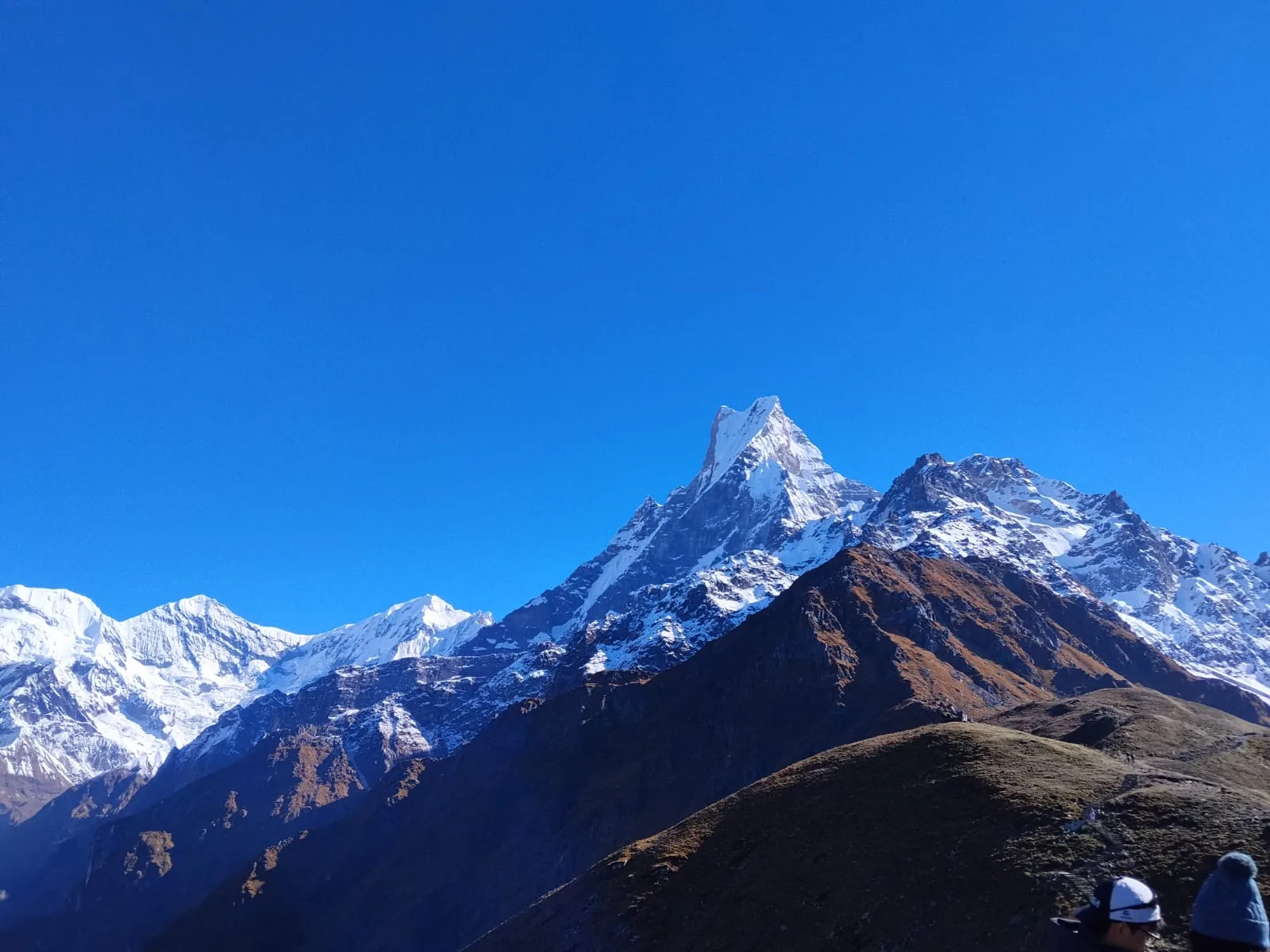
Trail to the Viewpoint 6 photos from day 4, taken on the trail. - Day 5
Badal Danda → Sidhing → Pokhara
- Drive
- 2.5 to 3 hrs (Sidhing to Pokhara)
- Trek
- 4 – 5 hrs (descent)
- Distance
- ~9 km
- Altitude
- 3,210 → 1,860 → 820 m
- Net change
- -2,390 m
A steady final descent through terraced farmland to Sidhing at 1,860 m, a working Gurung village where the trekking properly ends. The local jeep meets us here for the road back to Pokhara at 820 m, roughly 2.5 to 3 hours depending on the state of the track.
We reach the Pokhara lakeside by mid to late afternoon. A hot shower and a real bed close out the trip. After four nights on the trail the contrast is the point.
High Camp & Badal Danda 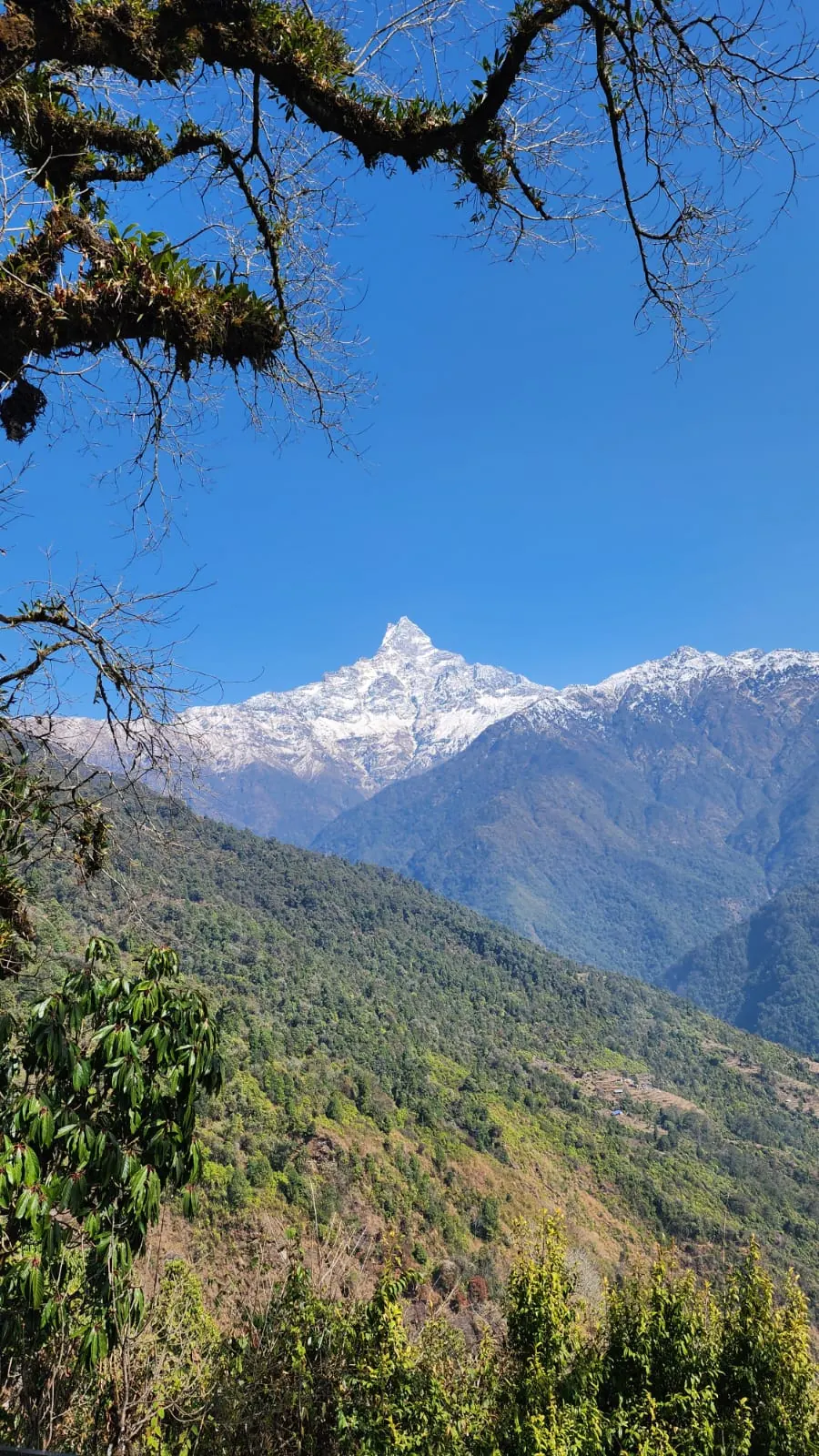
Sidhing High Camp & Badal Danda 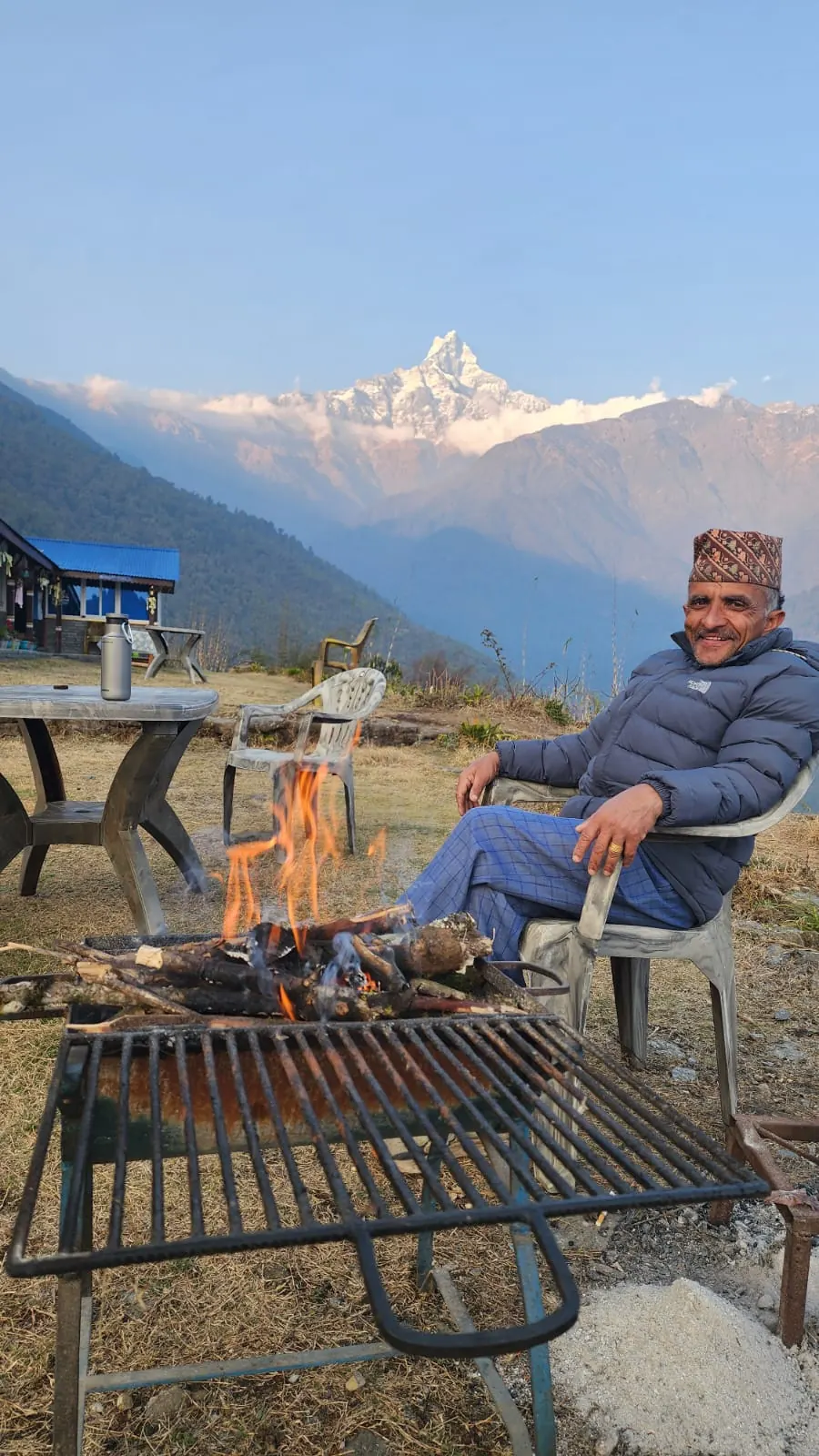
Sidhing High Camp & Badal Danda 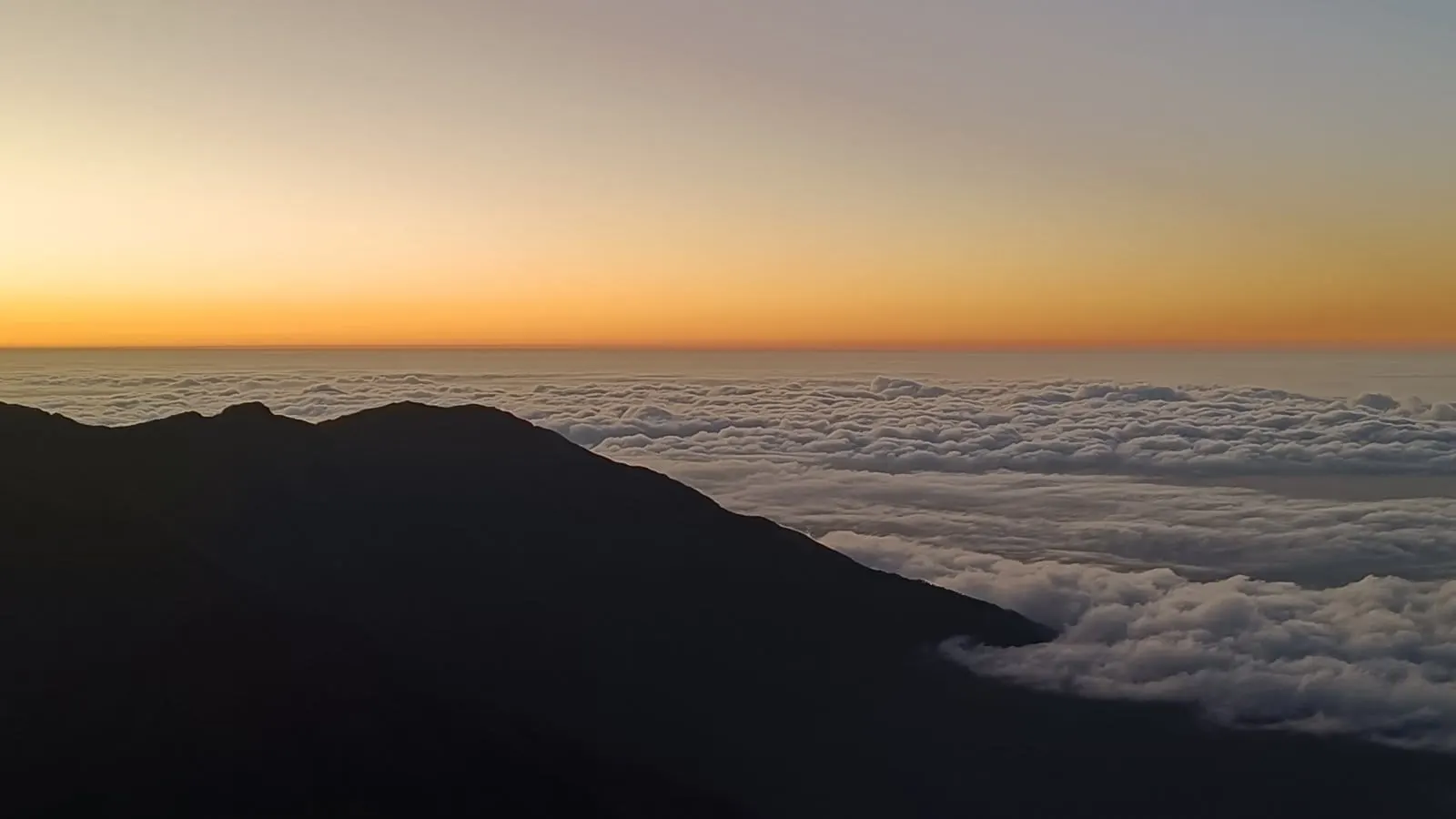
High Camp & Badal Danda 6 photos from day 5, taken on the trail.
Five days or six? An honest call.
Both versions walk the same ridge and reach the same 4,200-metre viewpoint. The difference is pace, acclimatisation, and time. Here is who should take which, against the express 3-day for context.
- You are reasonably fit and comfortable on hill terrain.
- You want the trek done inside a working week in Nepal.
- You have walked a few long hill days back to back before.
- You are happy to climb close to 900 metres on Day 2.
- This is your first Himalayan or high-altitude trek.
- You are over 45, or trekking with older walkers.
- You acclimatise slowly or have felt altitude before.
- You want village time on the way down, through Ghalel and Lwang.
3-day
5-day
6-day
In a hurry, fit, and with prior altitude experience? The 3-day express version compresses the same climb into three walking days, fully on foot.
2026 price, per person, by group size.
All prices are per person in USD for the standard 5-day Mardi Himal itinerary departing from Pokhara, valid through 31 December 2026. Every trek runs on one board standard: breakfast, lunch, and dinner on the trail, each with a cup of tea. The bigger your group, the lower the per-person rate.
Want it private, just your party with your own guide? Add 5% per person. Going private on your own, you pay the 1-person rate.
For the full fee breakdown, ACAP and TIMS permit costs, and optional add-ons such as a porter or domestic flight, see our permits and cost page. Fixed group departures with shared rates are listed on fixed departures.
Secure card payment. The balance is paid in Kathmandu before the trek. See the booking policy.
- ACAP entry permit and TIMS card
- Licensed English-speaking local guide for all 5 days
- Pokhara to Kande private jeep, Sidhing to Pokhara local jeep
- 4 nights teahouse accommodation
- 4 breakfast, 5 lunch, and 4 dinner, each with a cup of tea
- Trip success certificate
- Comprehensive first aid kit
- International flights to Kathmandu or Pokhara
- Pokhara hotel (Lakeside, USD 35 to 80 per night)
- Lunch and dinner in Pokhara on rest days
- Personal trekking gear
- Travel insurance (mandatory, must cover heli evacuation to 4,500 m)
- Tips for the guide (10% to 30% of package price)
Not sure what to bring for a trek that touches 4,200 metres? Our packing list covers layering, footwear, and the kit that matters at High Camp. Pick your window with the best season guide.
Before you book.
- Is 5 days enough for the Mardi Himal trek?
- Yes. Five days is the standard way to do Mardi Himal and the version most trekkers book. It reaches the Upper Viewpoint at 4,200 metres via High Camp, Badal Danda, and Low Camp, then finishes with the descent to Sidhing and the drive back to Pokhara. The 6-day version spreads the same route over an extra day with a gentler pace, not a higher summit.
- How hard is the 5 day Mardi Himal trek?
- It is a moderate trek with two demanding days. Day 2 is the longest, gaining close to 900 metres from Pitam Deurali to Low Camp, and Day 3 continues the climb to High Camp at 3,580 metres. Day 4 adds the pre-dawn climb to 4,200 metres followed by a long descent to Badal Danda. If you can walk 5 to 7 hours on hill terrain with a daypack, you can do the 5-day trek. No technical climbing or equipment is involved.
- What does the 5 day Mardi Himal trek cost?
- Group rates run from USD 294 per person for a group of 11 to 20, USD 315 for 6 to 10, USD 336 for 3 to 5, USD 380 for two people travelling together, and USD 508 for a solo private trekker. For a private trip, just your party with your own guide, add 5% per person; going private on your own, you pay the 1-person rate. On your own and happy to share the trail? Join a guaranteed fixed departure at the USD 380 two-person rate. Every rate covers the same standard board: breakfast, lunch, and dinner on the trail with a cup of tea each meal. All prices are valid through 31 December 2026.
- Does the 5 day trek gain altitude too fast?
- It reaches High Camp on the third night, like the 6-day, and its last step up, 595 metres from Low Camp, is smaller than the 6-day's 980. The 3-day climbs faster. Day 2 is the day to watch, with close to 900 metres of net gain from Pitam Deurali to Low Camp. We pace the climb deliberately, run pulse-oximetry checks along the way, and hold trekkers showing early symptoms rather than push on. If you have never walked above 3,000 metres, read our altitude sickness guide and consider the 7-day version, which spreads the climb over more nights with a stop at Badal Danda before High Camp.
- Should I choose the 5 day or the 6 day Mardi Himal trek?
- Choose the 5-day if you are reasonably fit, comfortable on hill terrain, and want the trek done inside a working week. Choose the 6-day if you want a gentler daily pace and an unhurried walk out. If it is your first Himalayan trek, you are over 45, or you acclimatise slowly, look at the 7-day instead: it sleeps at Badal Danda before High Camp, the gentlest climb we run. All three reach the same 4,200-metre viewpoint and start and finish in Pokhara.
- What permits do I need for the 5 day Mardi Himal trek?
- You need the ACAP entry permit for the Annapurna Conservation Area and the TIMS card. Both are arranged for you and are included in the trek price. You do not need a separate climbing permit because the trek tops out at a viewpoint, not the summit of Mardi Himal itself. See our permits and cost page for the current fees and paperwork.
- When is the best time to do the 5 day Mardi Himal trek?
- Spring (March to May) and autumn (late September to November) give the most stable weather and the clearest mountain views. Winter is colder and quieter with a real chance of snow at High Camp. The monsoon (June to August) brings cloud, leeches, and obscured views. Our best months guide breaks the seasons down in detail.