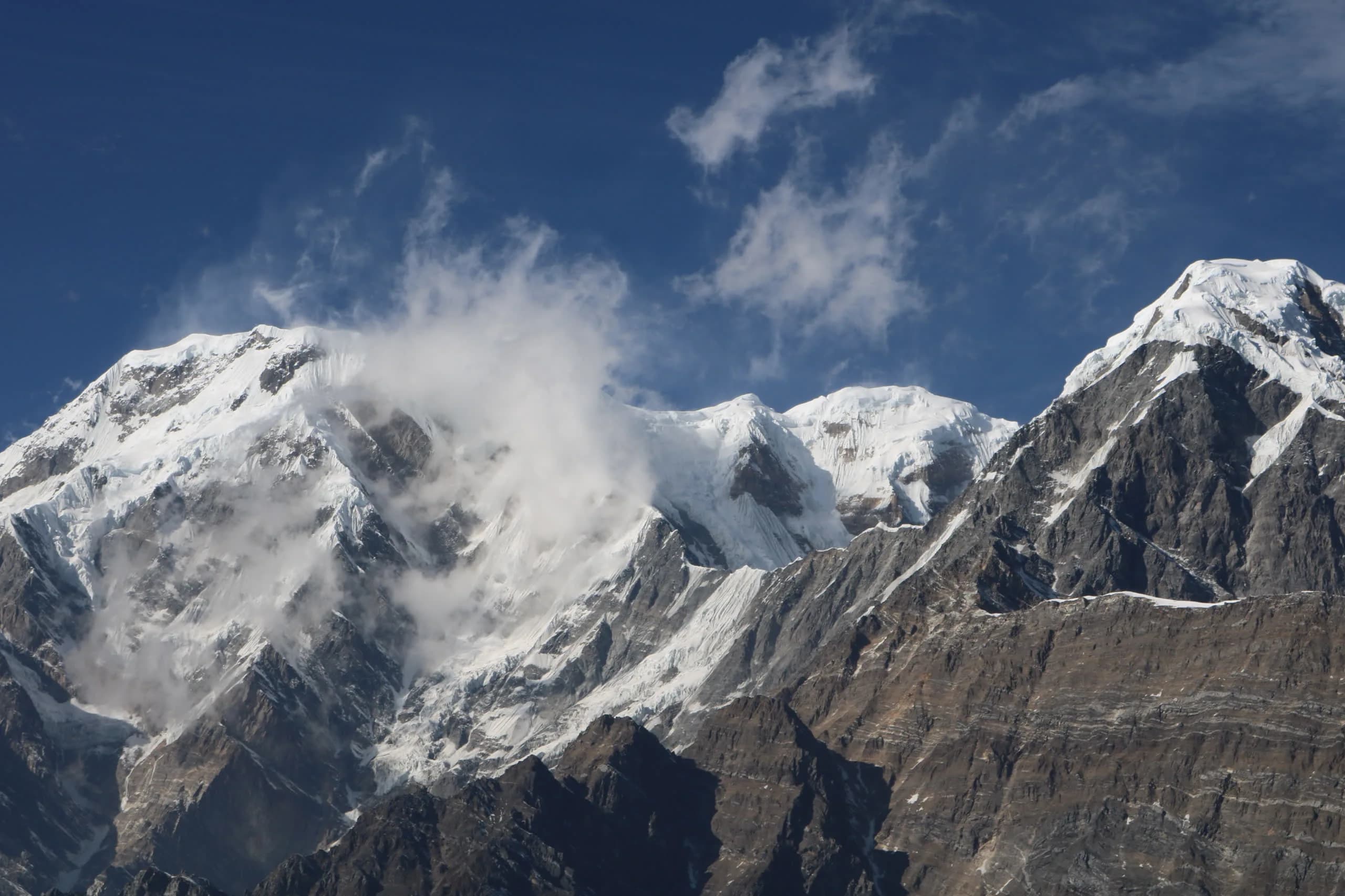
A relaxed pace, an unhurried walk out.
The 6-day Mardi Himal trek takes the forest slowly and the way down slower still. It reaches the same Upper Viewpoint at 4,200 metres as every other Mardi duration and, like the 5-day trek, sleeps at High Camp on the third night. On the way up it takes two short days to Rest Camp, then makes the biggest climb of the trek, about 980 metres, to High Camp. After the viewpoint it sleeps at Low Camp rather than Badal Danda.
It also finishes differently. Instead of driving out from Sidhing the way the 4 and 5-day itineraries do, the 6-day spends a night there and walks one more day toward Lumre, so you exit through ground those shorter versions never touch rather than retracing your own steps. If altitude is new to you, our altitude sickness guide explains how we manage the climb to High Camp.
We are clear about who this suits. Take the 6-day if you want short forest days and an unhurried walk out without committing to the full 8-day version, which adds two further homestay nights beyond Sidhing. The full route map and every duration variant live on our itinerary page too.
The full schedule, day by day.
Six days from Pokhara and back, with five days of trekking and jeep transfers on Day 1 and Day 6. Altitudes and walking hours are listed for every day. Day 3 is the main altitude day; Day 4 is the summit morning, kept shorter than on the faster itineraries by sleeping at Low Camp again afterward.
- Day 1
Pokhara → Kande → Pitam Deurali
- Drive
- 1.5 hrs (Pokhara to Kande)
- Trek
- 4 – 5 hrs
- Distance
- ~7 km
- Altitude
- Kande 1,770 m → Pitam Deurali 2,100 m
- Net change
- +330 m
We leave Pokhara by private jeep around 08:00 for the drive to the Kande trailhead at 1,770 metres. From there the trail climbs through stone steps and rhododendron forest, with the first wide views of Annapurna South and Hiunchuli opening up as you gain height. The 6-day keeps a gentle pace, so we stop for a proper lunch on the trail.
The afternoon climb ends at Pitam Deurali (2,100 m), the junction where the Mardi Himal trail branches off the busier Annapurna Base Camp route and turns onto its own quiet ridge.
Overnight at a teahouse in Pitam Deurali.
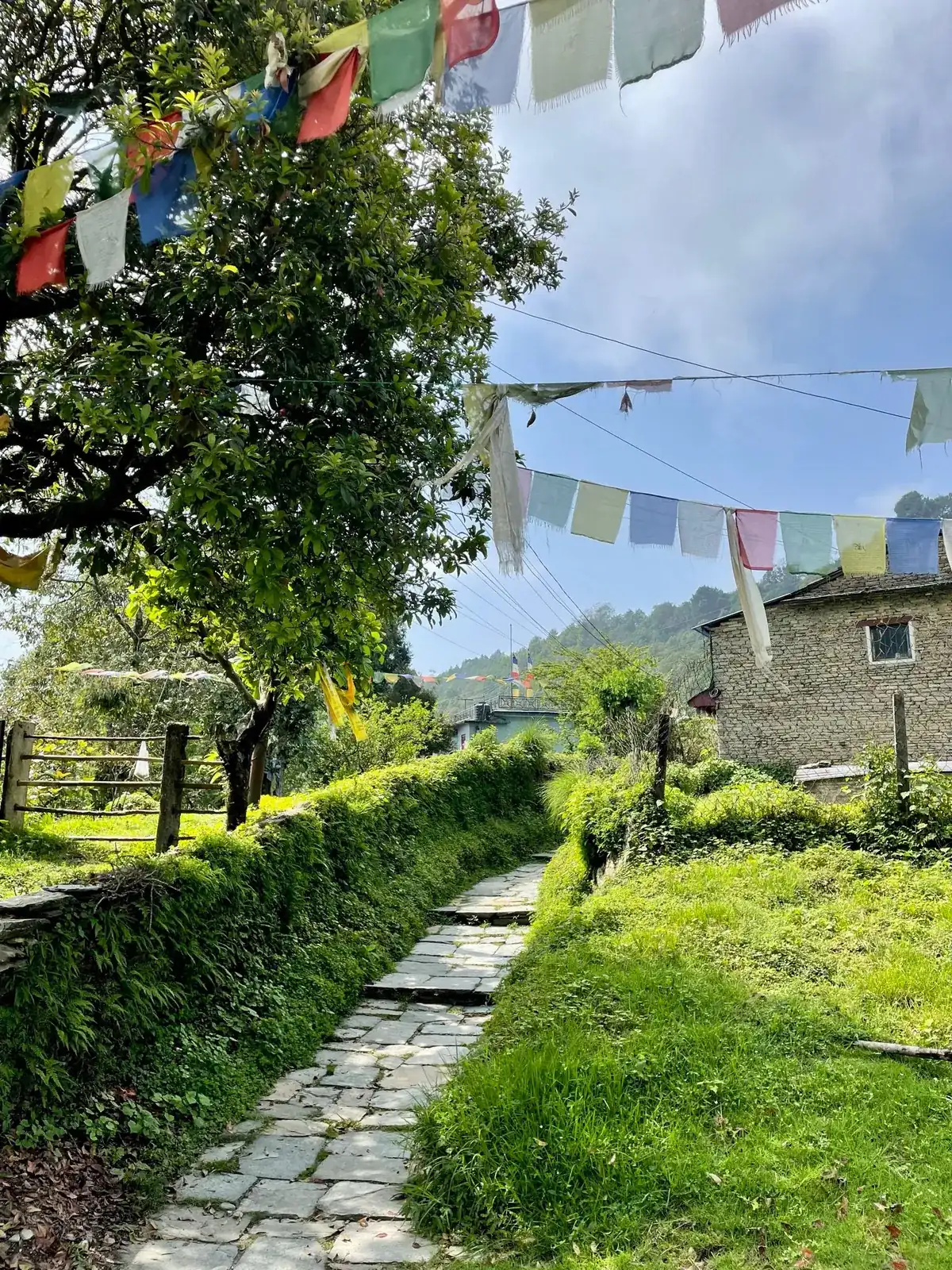
Kande 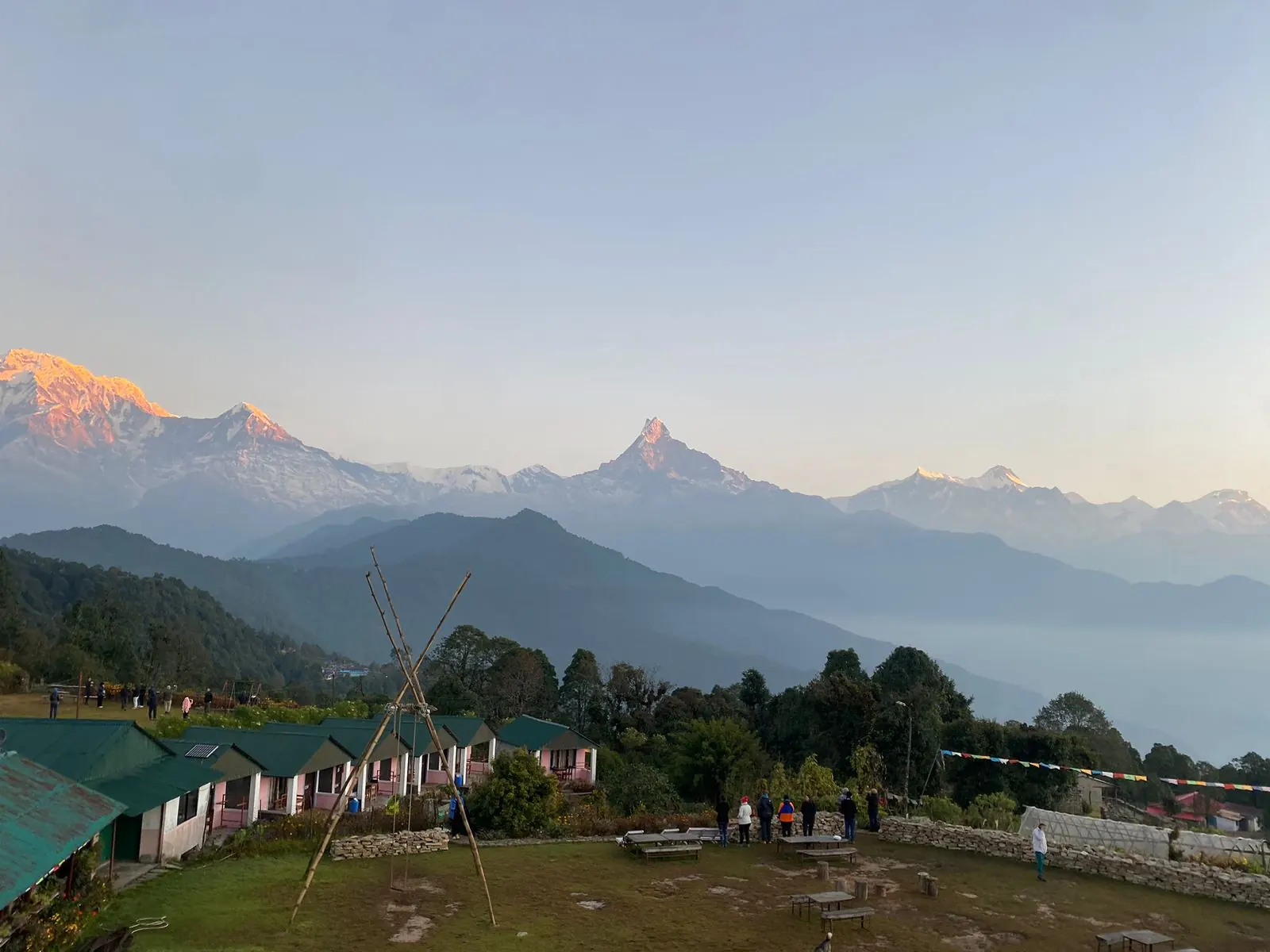
Australian Camp 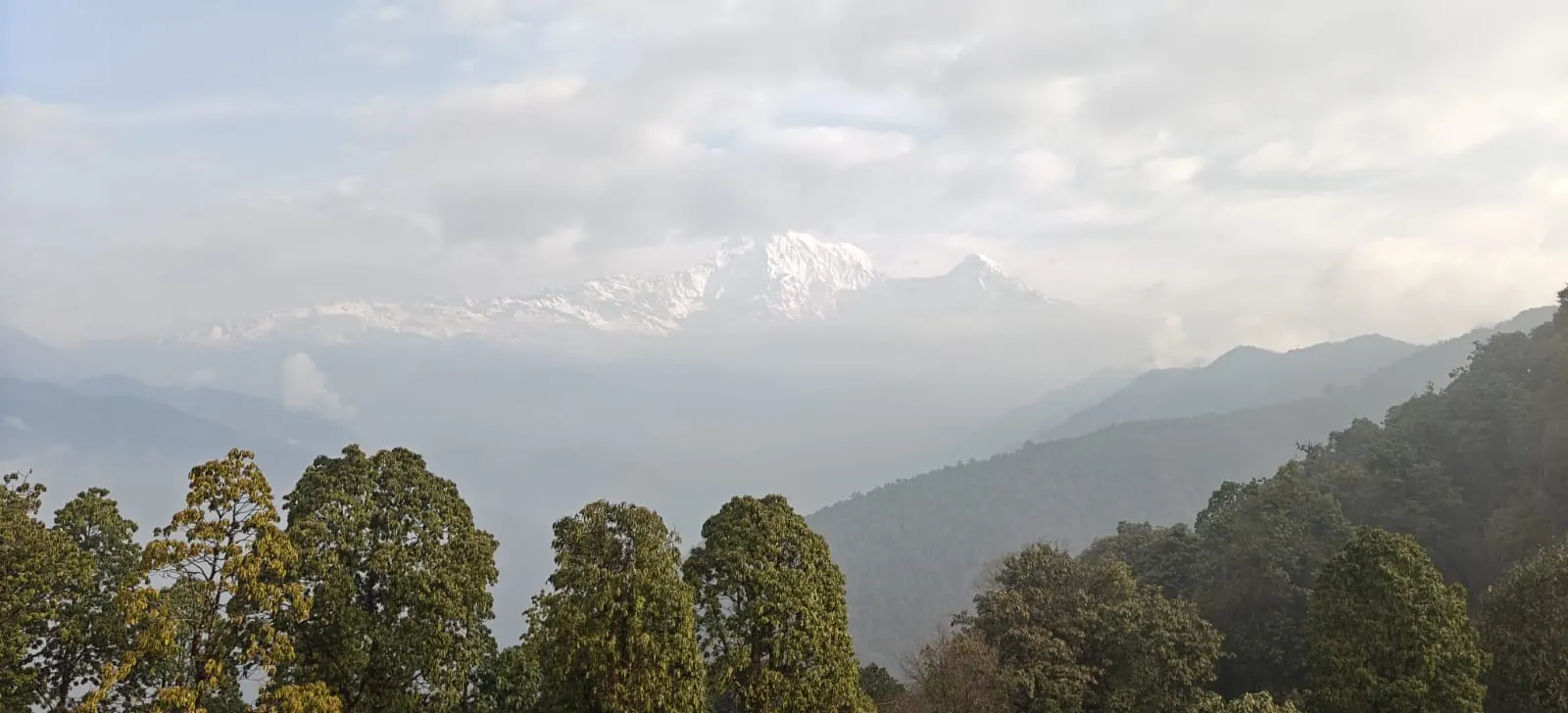
Pitam Deurali 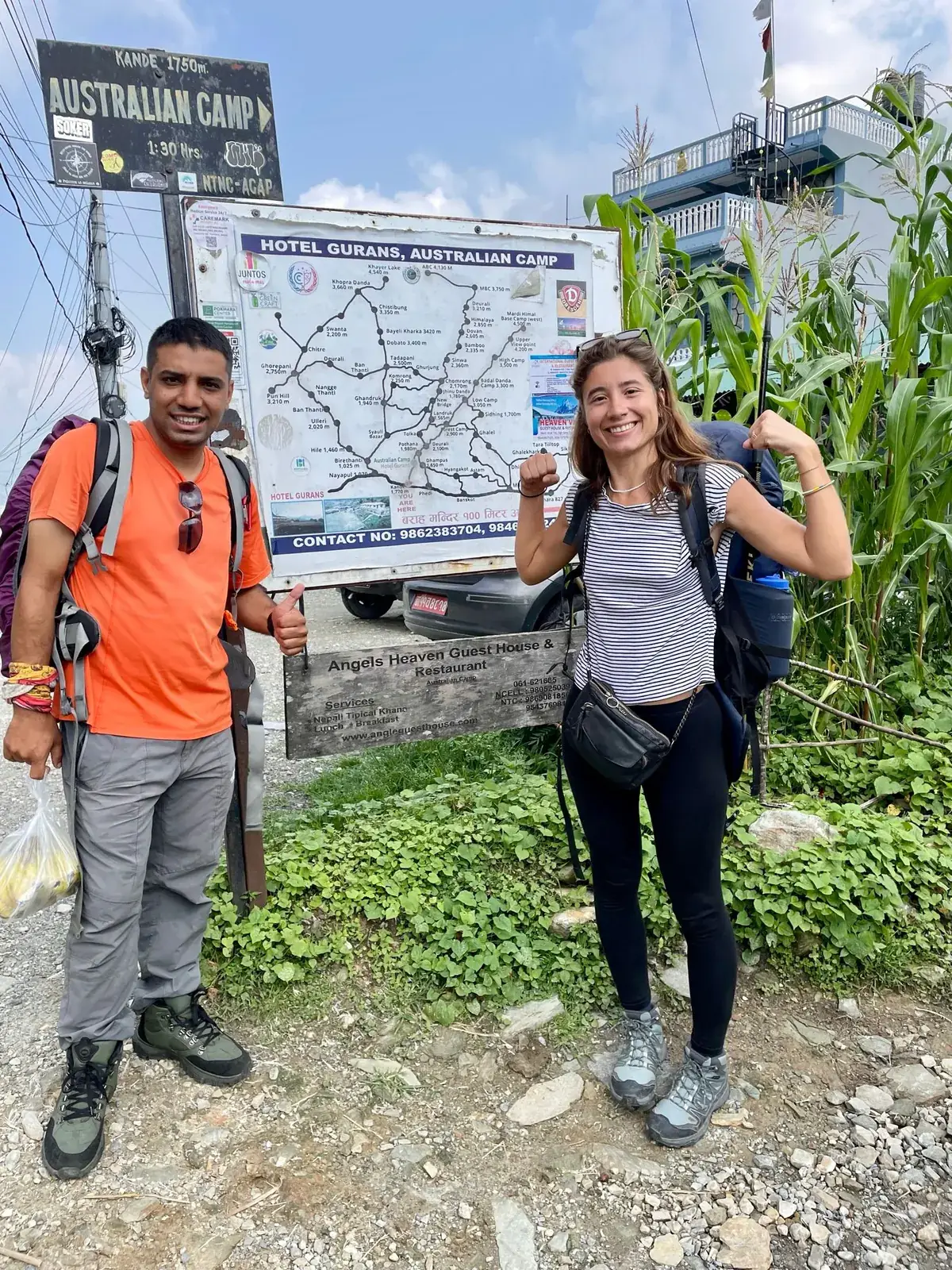
Kande 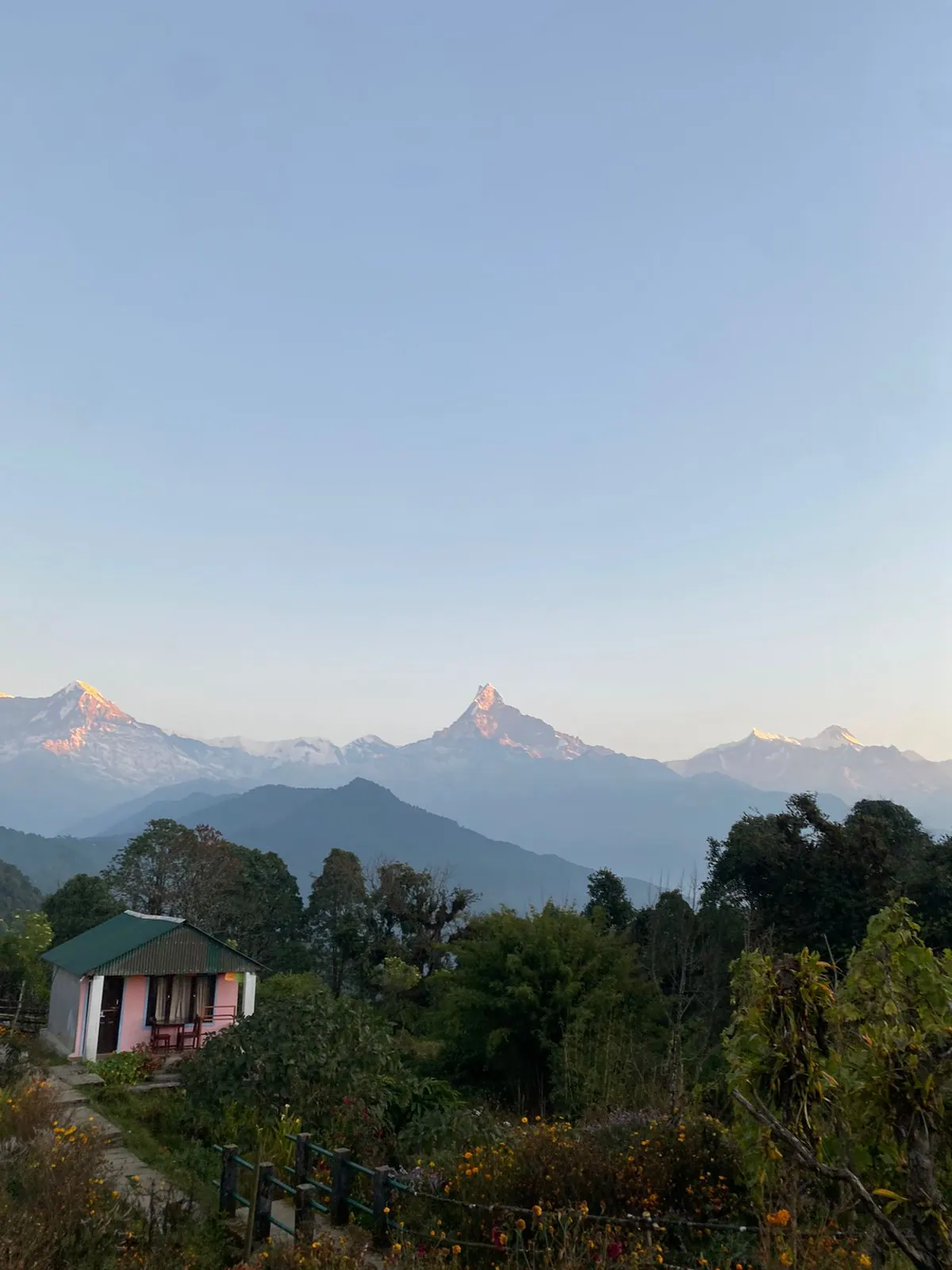
Australian Camp 
Pitam Deurali 6 photos from day 1, taken on the trail. - Day 2
Pitam Deurali → Forest Camp → Rest Camp
- Drive
- None
- Trek
- 4 – 5 hrs
- Distance
- ~8 km
- Altitude
- 2,100 → 2,550 → 2,600 m
- Net change
- +500 m
A steady climb through oak, maple, and rhododendron forest to Forest Camp (2,550 m), the stretch locals call Kokar and one of the more reliable places on the route to spot langur troops moving through the canopy. The 5-day walks on past it to Low Camp the same day; here it is a relaxed half-day.
From Forest Camp the trail continues gently upward to Rest Camp at roughly 2,600 metres, a cluster of eight or more teahouses that the 5-day walks straight through without stopping. Splitting the forest climb this way keeps the first two days short, four to five hours each.
Overnight at Rest Camp. Two short days in, you start tomorrow, the biggest climb of the trek, with energy in reserve.
Pitam Deurali 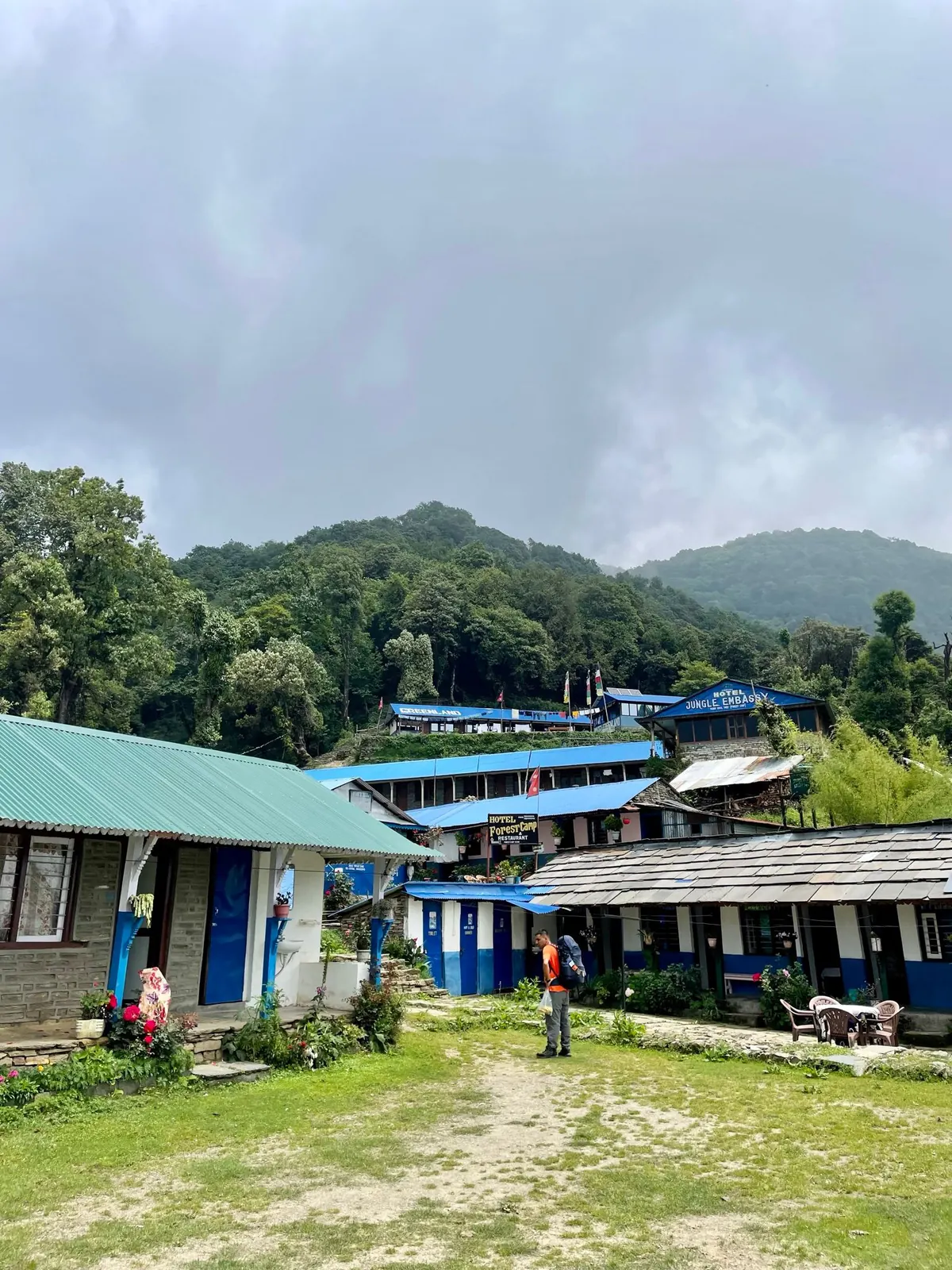
Forest Camp Pitam Deurali 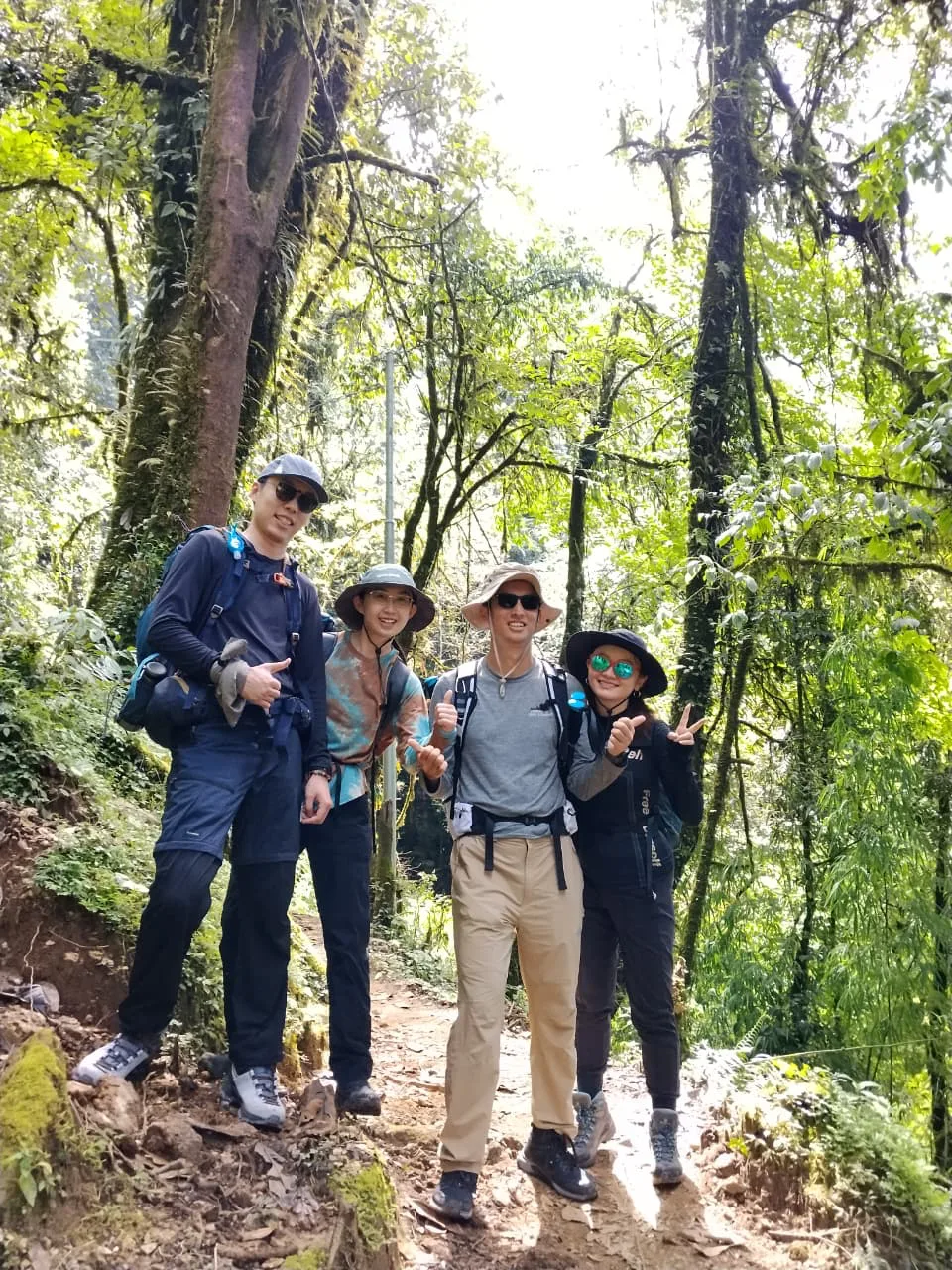
Trail to Forest Camp 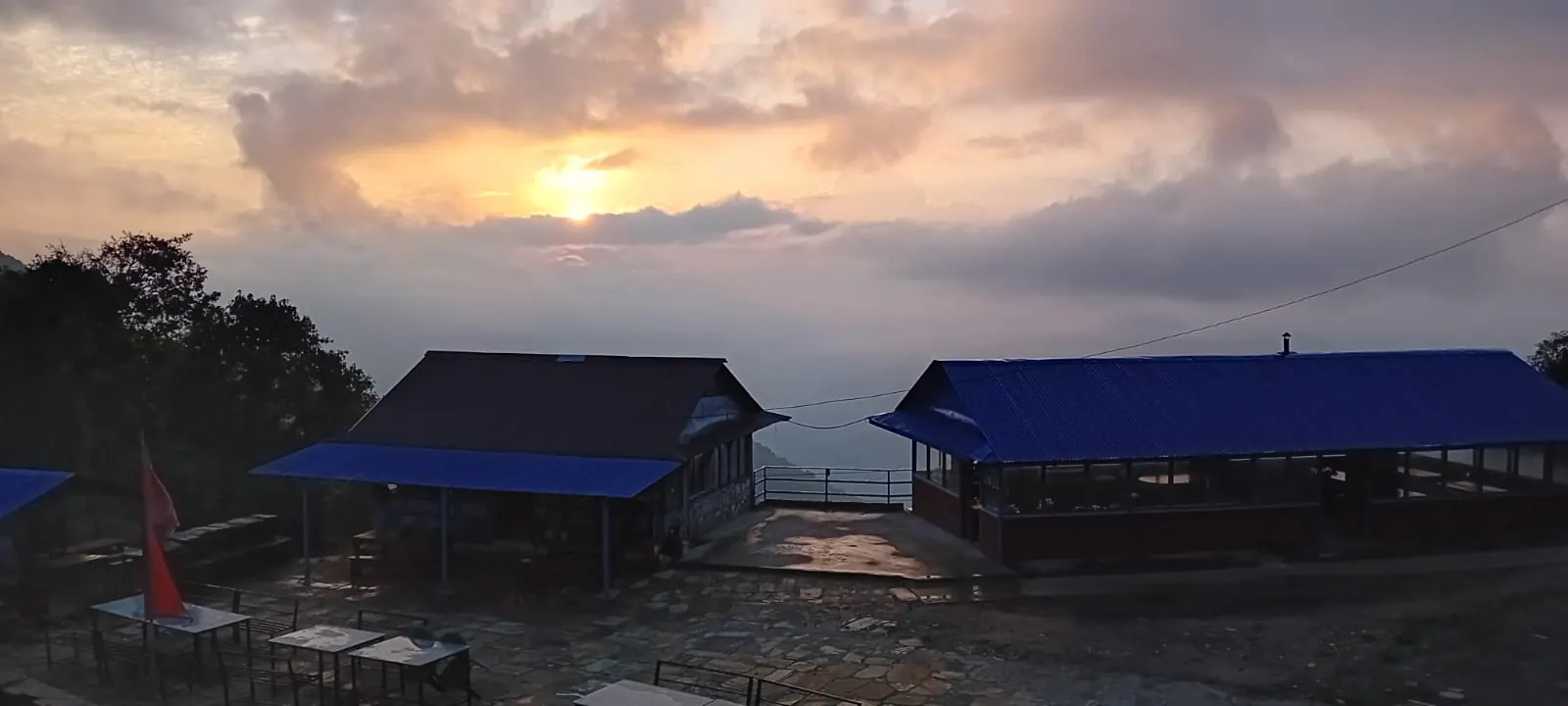
Pitam Deurali 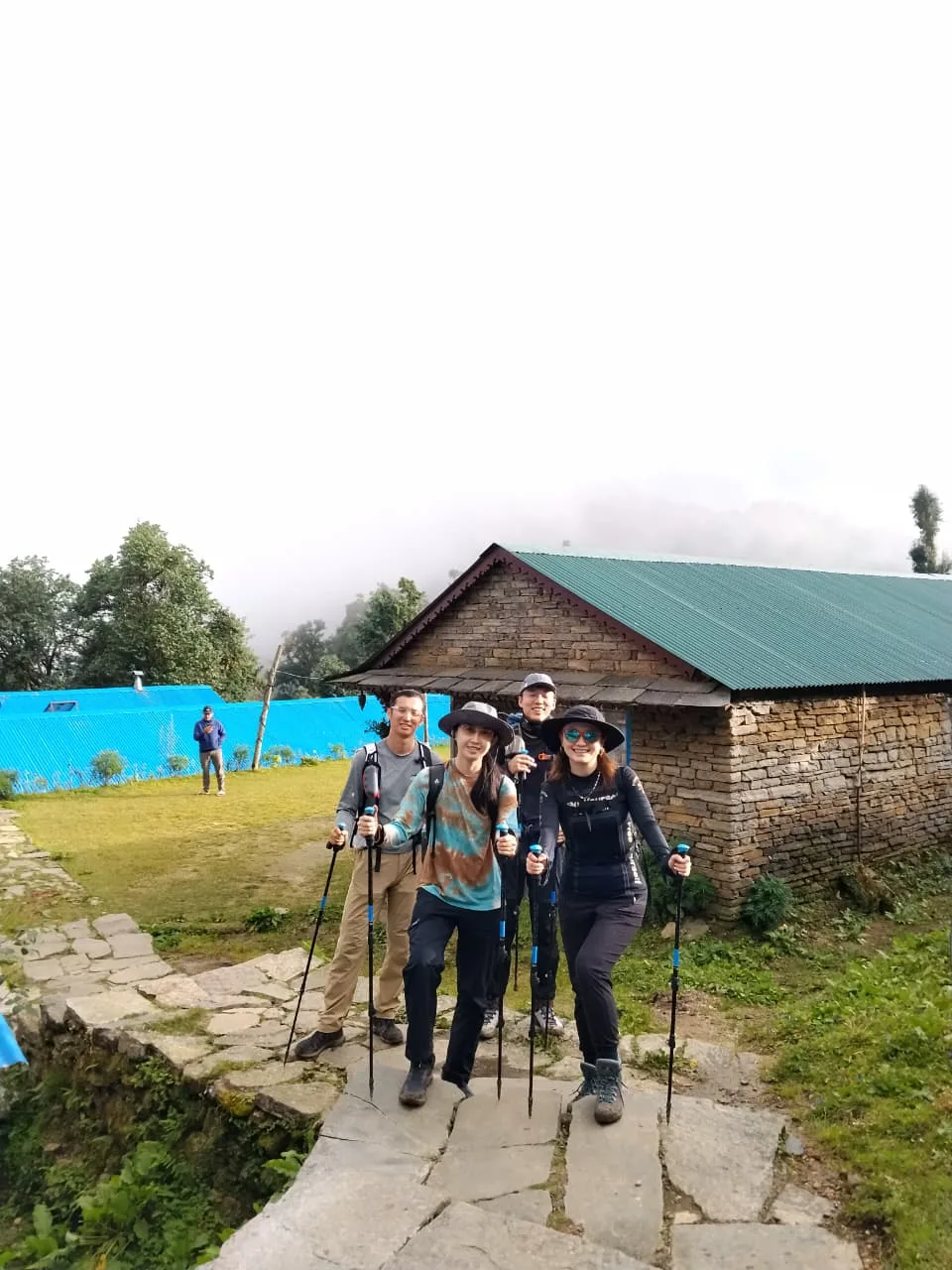
Trail to Forest Camp 6 photos from day 2, taken on the trail. - Day 3
Rest Camp → Low Camp → Badal Danda → High Camp
- Drive
- None
- Trek
- 5 – 6 hrs
- Distance
- ~9 km
- Altitude
- 2,600 → 2,985 → 3,210 → 3,580 m
- Net change
- +980 m
The trail climbs through the last of the upper forest to Low Camp (2,985 m), where the trees thin out and the full Annapurna massif comes into view for the first time. We stop here for lunch and, if needed, a pulse-oximetry check before the final push of the day.
Above Low Camp the route breaks onto the open ridge, crosses Badal Danda (Cloud Ridge, 3,210 m), and climbs to High Camp at 3,580 metres. That is roughly 980 metres of net gain since the morning, the biggest climb and the biggest jump in sleeping altitude on this itinerary. Walk slowly, drink plenty of water, and tell your guide about any headache.
Arrive High Camp in the afternoon with time to rest before dinner. Machhapuchhre fills the view directly across the valley, and the sunset from the dining hall is the moment most trekkers on this route remember.
Forest Camp 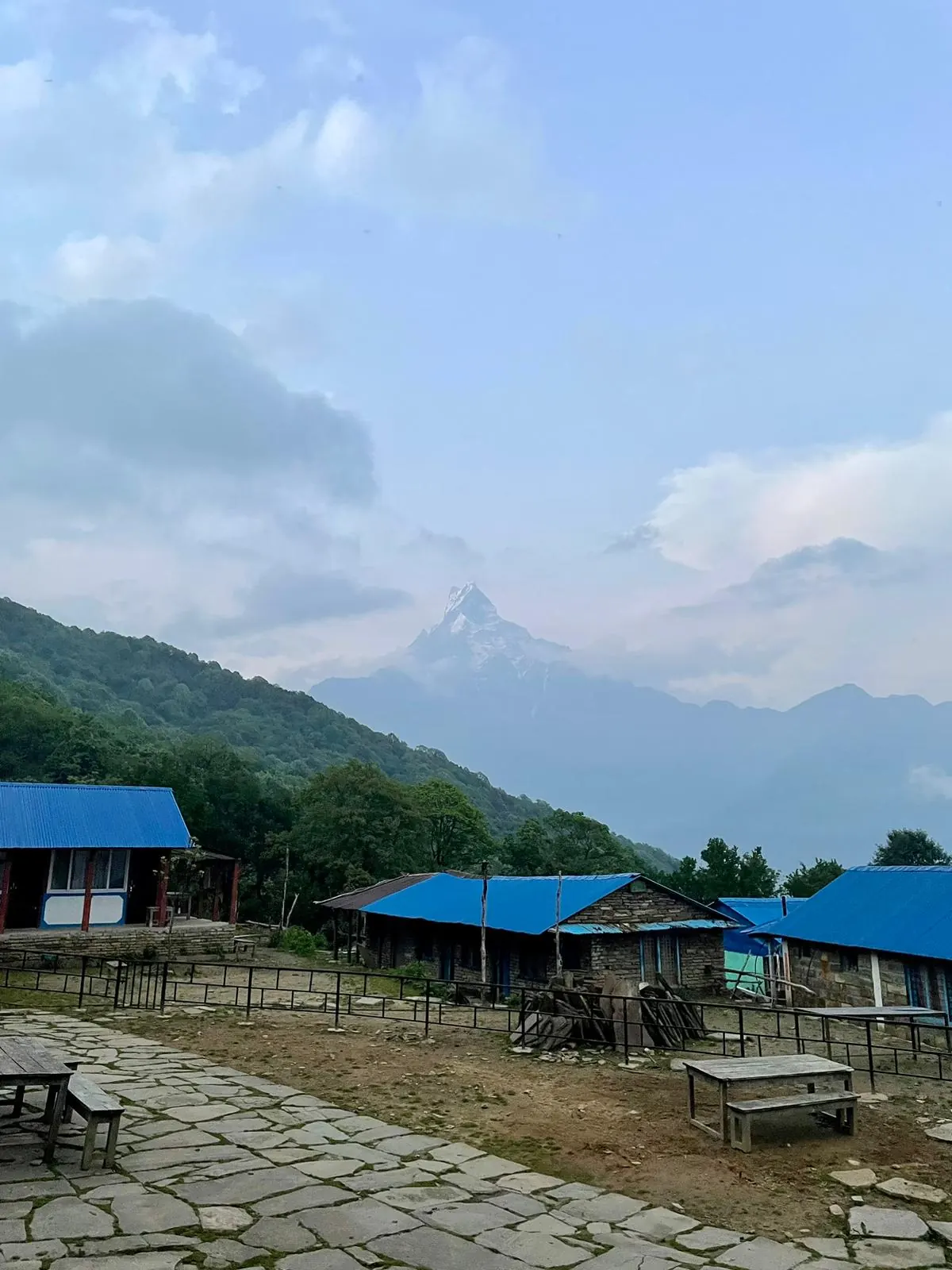
Low Camp 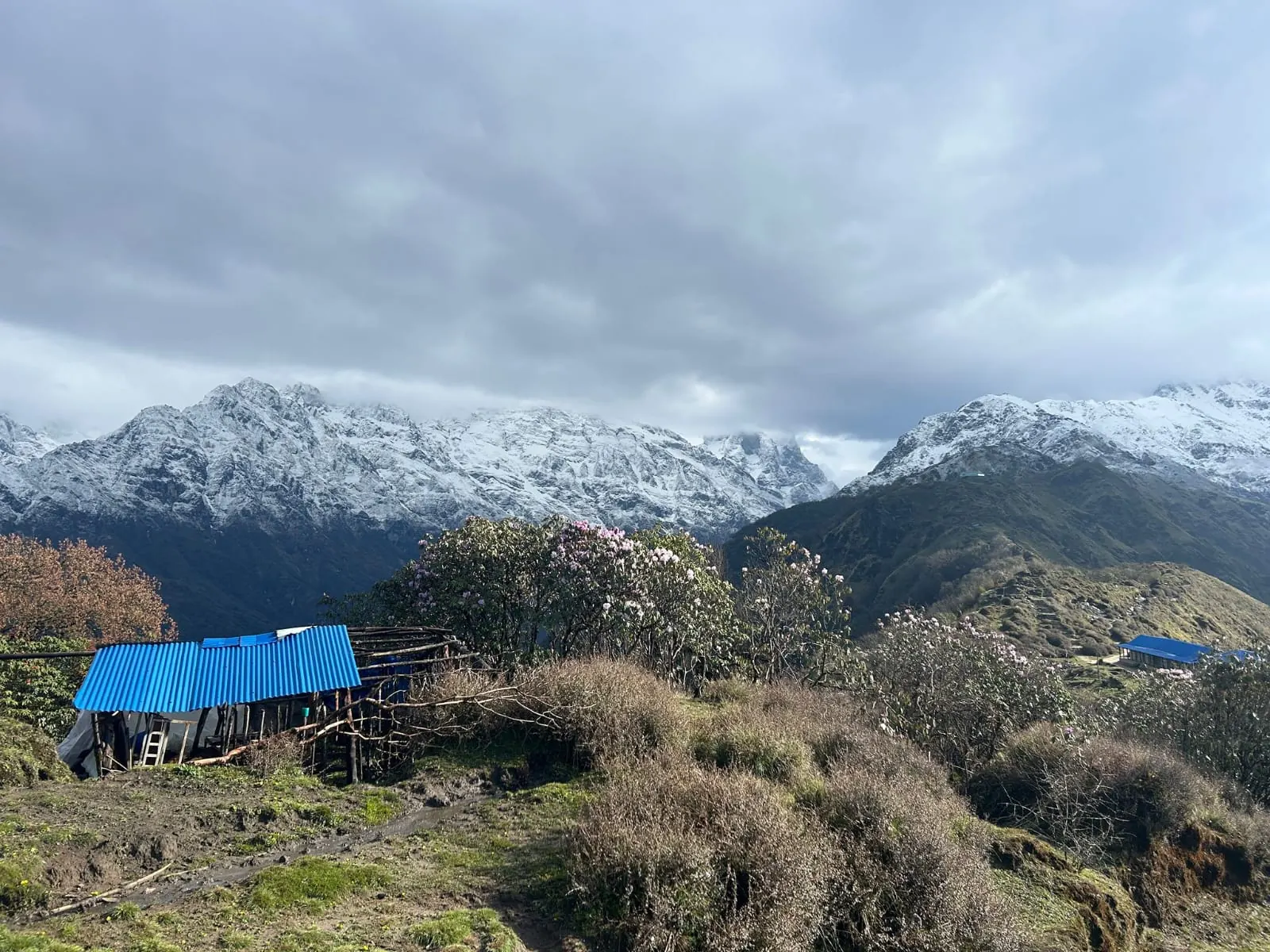
High Camp & Badal Danda 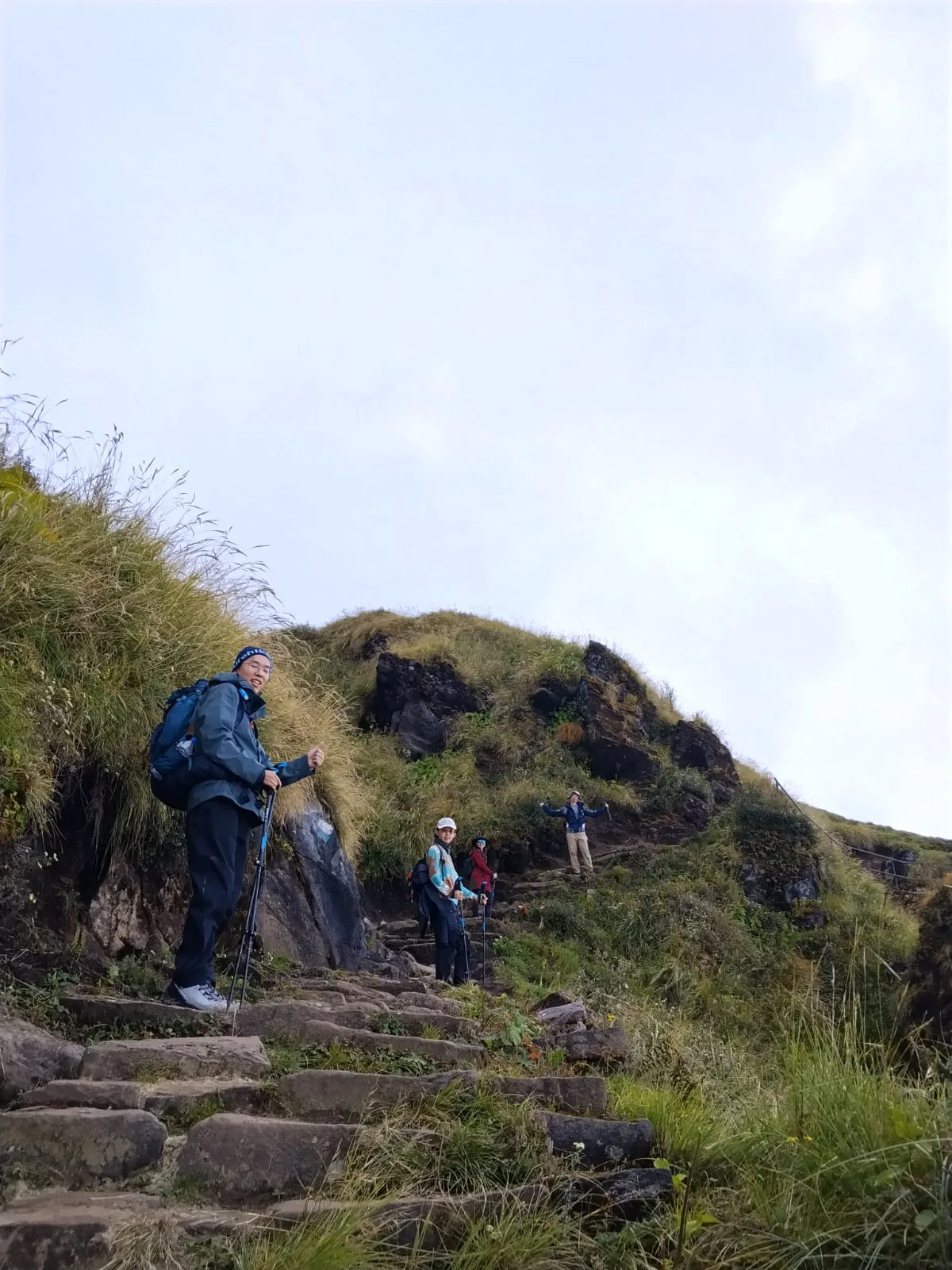
Trail to High Camp Trail to Forest Camp 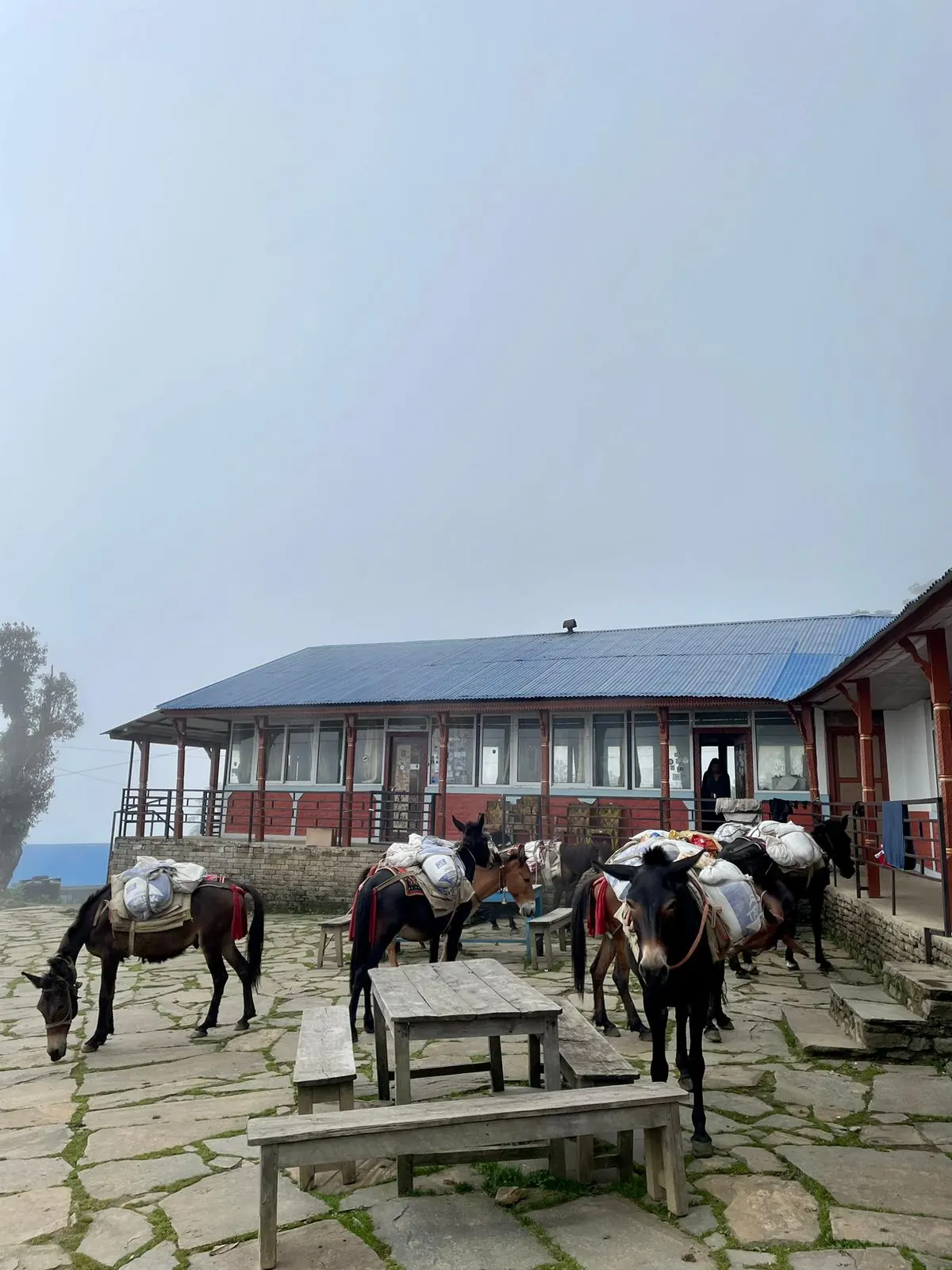
Low Camp 6 photos from day 3, taken on the trail. - Day 4
High Camp → Upper Viewpoint → Low Camp
- Drive
- None
- Trek
- 7 – 8 hrs
- Distance
- ~12 km
- Altitude
- 3,580 → 4,200 → 2,985 m
- Net change
- +620 m / -1,215 m
The summit morning. We leave High Camp around 04:30 with headtorches for the climb to the Mardi Himal Upper Viewpoint at 4,200 metres, the highest point of the trek. On a clear morning the sun lifts over the eastern peaks while Dhaulagiri sits far to the west and the full Annapurna wall fills the sky ahead. Mardi Himal Base Camp at 4,500 metres is about 1 hour 30 minutes further along the ridge. If you want to go on, ask your guide, and expect a longer day.
Return to High Camp for a proper breakfast, then descend back through Badal Danda to Low Camp (2,985 m) for the night, about 1,215 metres below the viewpoint. It is the longest day of the trek, so take the steps steadily and use trekking poles on the way down.
Overnight at Low Camp. The hard climbing is now behind you, and the rest of the trek is a gradual, scenic walk down.
High Camp & Badal Danda 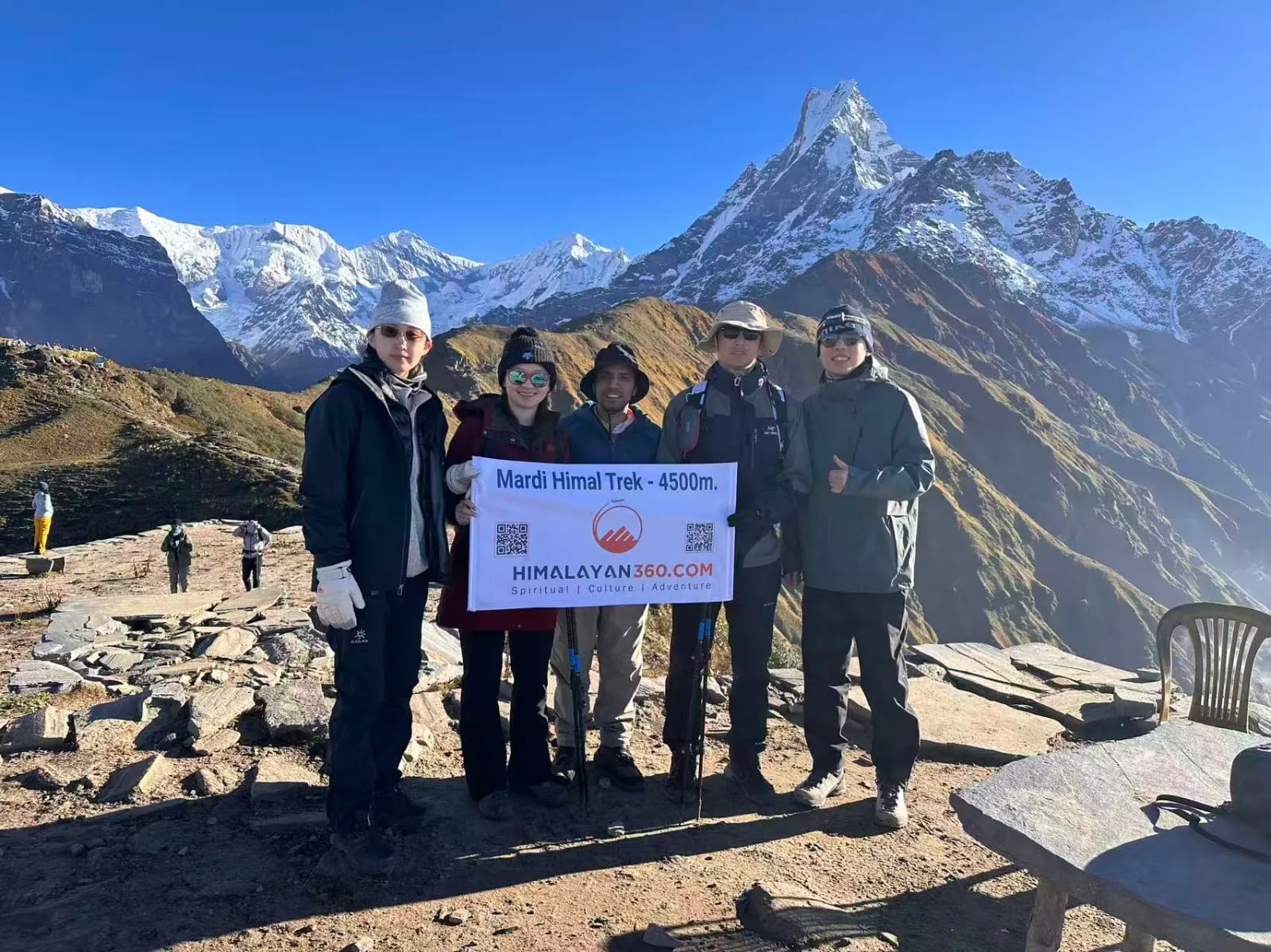
Upper Viewpoint Low Camp 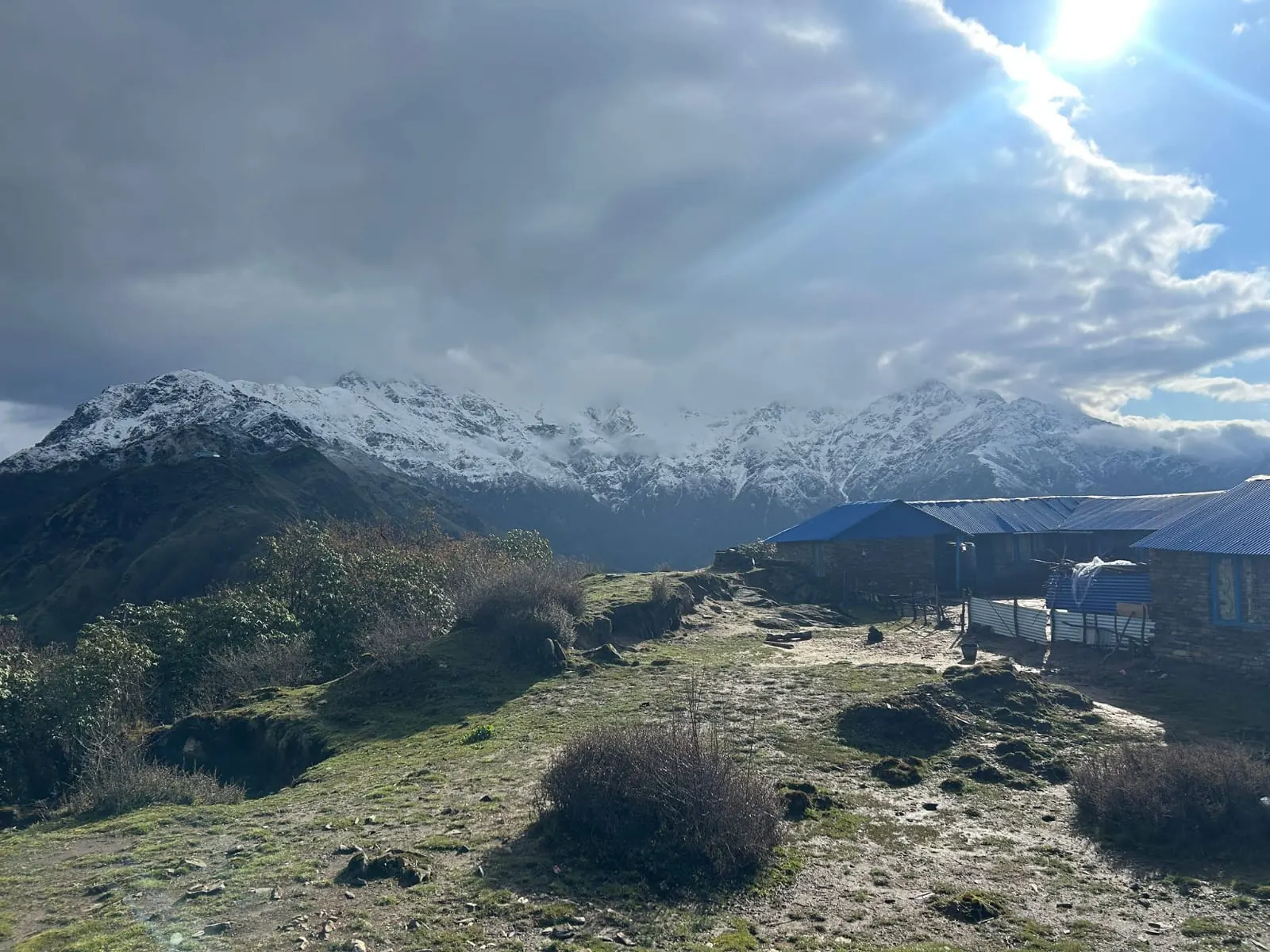
High Camp & Badal Danda 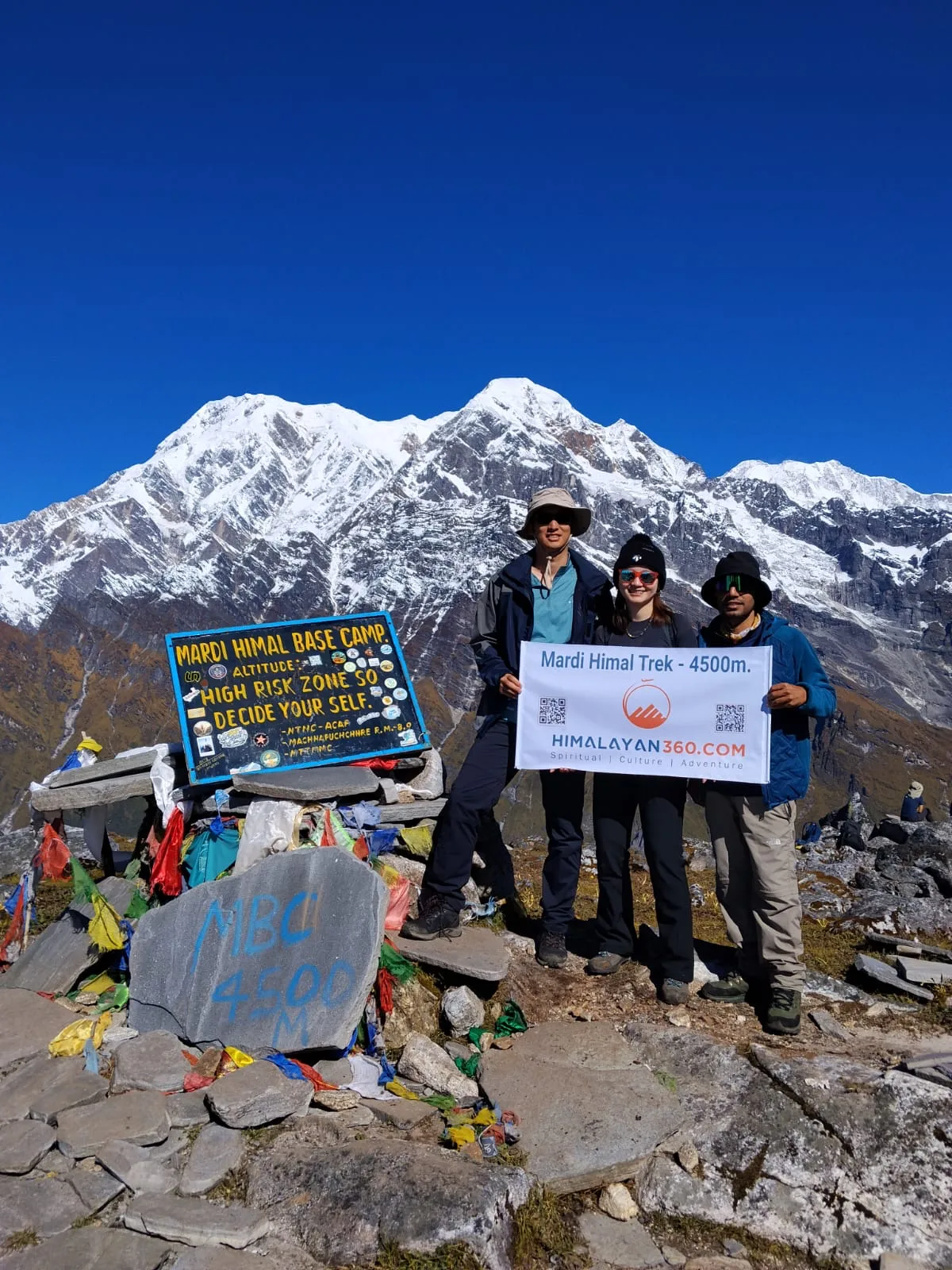
Mardi Himal Base Camp Low Camp 6 photos from day 4, taken on the trail. - Day 5
Low Camp → Sidhing homestay
- Drive
- None
- Trek
- 4 – 5 hrs
- Distance
- ~9 km
- Altitude
- Low Camp 2,985 m → Sidhing 1,860 m
- Net change
- -1,125 m
A full day of descent through rhododendron and oak forest, dropping steadily toward the terraced farmland above the Mardi Khola valley. The trail is gentler underfoot than the ridge above, and there is time to actually look around rather than watch your footing on loose scree.
We reach Sidhing (1,860 m) in the afternoon, a working Gurung village with homestay-style teahouses and a slower rhythm than the high camps. It is also where the 6-day parts from the 4 and 5-day routes: they drive out from Sidhing, while we stay the night and walk one more day into a valley those shorter itineraries never see.
Overnight at a Sidhing homestay. After three nights above 2,500 metres, a low-altitude night in a village with proper beds and home-cooked food is a welcome change of pace.
Low Camp 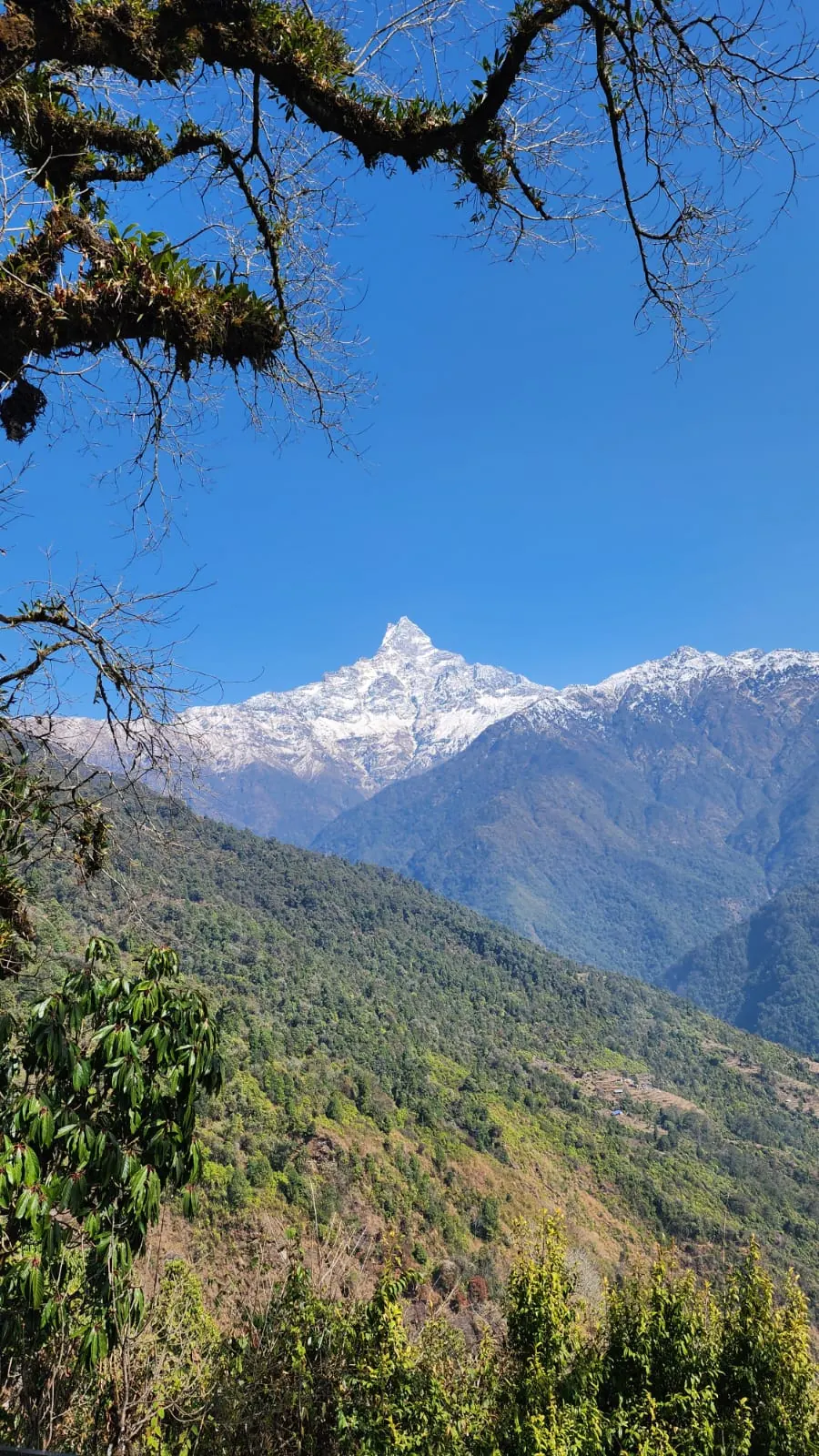
Sidhing Low Camp 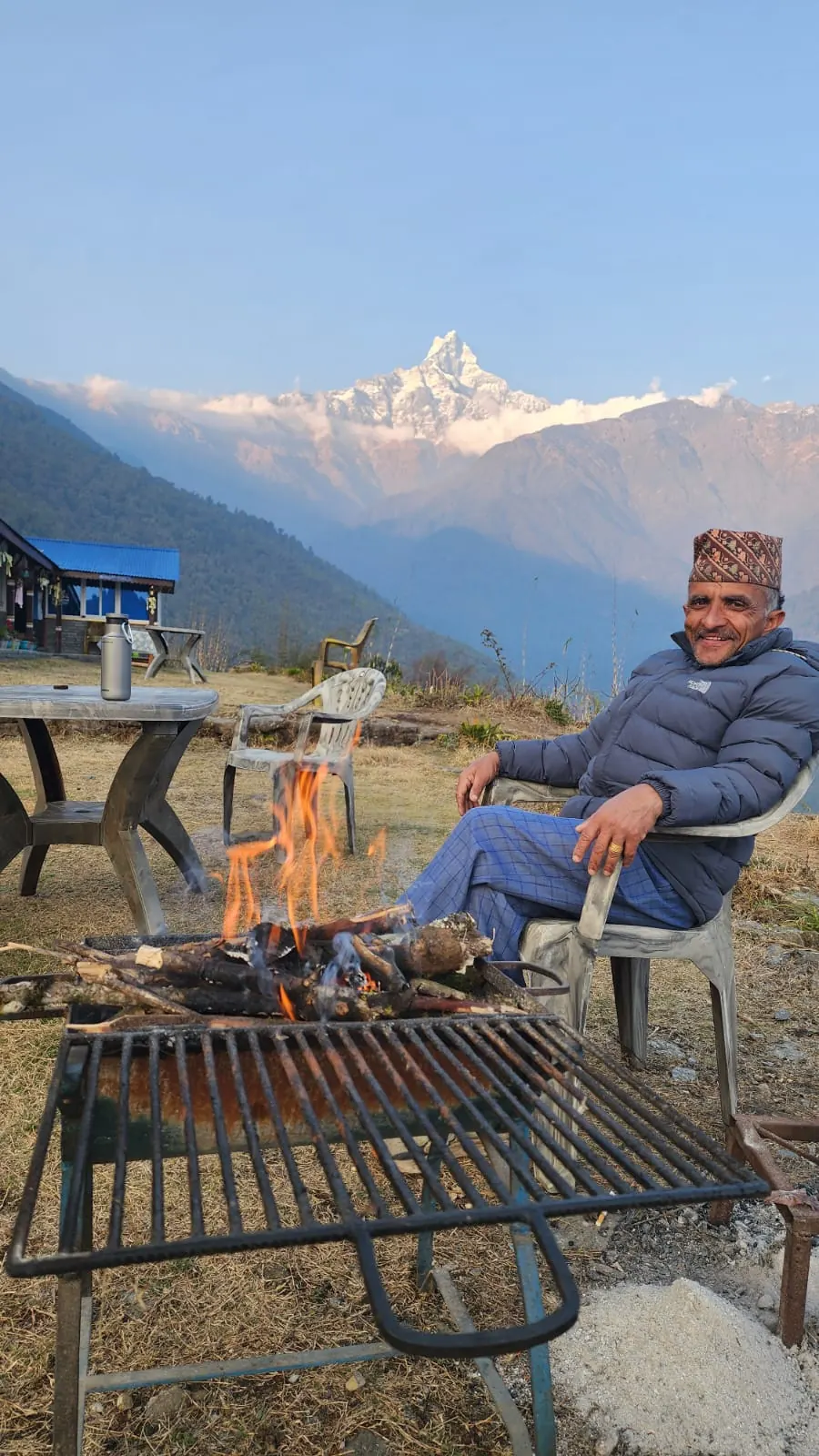
Sidhing 4 photos from day 5, taken on the trail. - Day 6
Sidhing → Lumre → drive to Pokhara
- Drive
- 2.5 to 3 hrs (Lumre to Pokhara)
- Trek
- 2 – 3 hrs
- Distance
- ~6 km on foot
- Altitude
- Sidhing 1,860 m → Lumre 1,400 m → Pokhara 820 m
- Net change
- -1,040 m
The final trekking day: a gentle descent through terraced fields and mixed farmland to Lumre at roughly 1,400 metres. Unlike the 4 and 5-day itineraries, which drive out from Sidhing itself, the 6-day continues on foot into this lower valley, so the last day is a genuinely different walk rather than a retrace of ground already covered.
A local jeep meets us at the Lumre road head for the drive back to Pokhara at 820 metres, passing farming villages and tea gardens on the way down. We reach the lakeside by mid to late afternoon.
Hot shower, a real bed, and an evening by Phewa Lake to close out six unhurried days on the Mardi ridge.
Sidhing Sidhing 2 photos from day 6, taken on the trail.
The extra day sits on the way down.
The 6-day reaches the viewpoint on the same morning as the 5-day and spends its extra day on the descent. If you would rather have the extra time on the way up, that is the 7-day trek.
As on the 5-day, you sleep at High Camp on the third night and reach the Upper Viewpoint for sunrise on Day 4. The main climb is Day 3, about 980 metres from Rest Camp to High Camp. After the viewpoint, the 6-day spreads the descent over three walking days instead of two, with a night back at Low Camp and a homestay night at Sidhing, and it finishes on foot at Lumre rather than in a jeep at Sidhing. The extra day buys an easier walk out and a stretch of valley the 5-day never walks.
Want a slower climb rather than a slower descent? Our 7-day Mardi Himal trek sleeps at Badal Danda before High Camp, so the last step up is 370 metres instead of 980, and it walks out through Ghalel and Lwang. It is the one we suggest for a first Himalayan trek or for trekkers over 45.
Five, six, or eight? An honest call.
All three reach the same 4,200-metre viewpoint. The difference is daily pace, how big the climb into High Camp is, and how much of the lower valley you walk on the way out. Here is who should take which.
- You want short walking days through the forest.
- You would rather spread the descent over three days.
- You want a homestay night in Sidhing.
- You want to walk out through new ground to Lumre.
- You are fit, time-pressed, and comfortable on hill terrain.
- You have trekked at altitude before.
- You want the fastest fully-walked, no-helicopter option.
- One fewer night and jeep leg matters to your budget.
5-day
6-day
8-day
Want the fastest walkable version, with no helicopter? The 5-day trek compresses the same ridge into one less night. Want the slowest, most gradual pace with extra homestay villages? The 8-day version spreads the same route further.
2026 price, per person, by group size.
All prices are per person in USD for the 6-day Mardi Himal itinerary departing from Pokhara, valid through 31 December 2026. The bigger your group, the lower the per-person rate.
Want it private, just your party with your own guide? Add 5% per person. Going private on your own, you pay the 1-person rate.
For the full fee breakdown, ACAP and TIMS permit costs, and optional add-ons such as a porter, see our permits and cost page. Fixed group departures with shared rates are listed on fixed departures.
Secure card payment. The balance is paid in Kathmandu before the trek. See the booking policy.
- ACAP entry permit and TIMS card
- Licensed English-speaking local guide for all 6 days
- Pokhara → Kande private jeep
- Lumre → Pokhara local jeep
- 5 nights teahouse accommodation
- 5 breakfast, 6 lunch, and 5 dinner, each with a cup of tea
- Trip success certificate
- Comprehensive first aid kit
- International flights to Kathmandu or Pokhara
- Pokhara hotel (Lakeside, USD 35 to 80 per night)
- Lunch and dinner in Pokhara on rest days
- Personal trekking gear and clothing
- Travel insurance (mandatory, must cover heli evacuation to 4,500 m)
- Tips for the guide (10% to 30% of package price)
The 6-day touches 4,200 metres and covers five distinct overnight stops, so kit matters. Our packing list covers layering, footwear, and what to bring for the homestay night at Sidhing. Pick a stable window with the best season guide.
Before you book.
- Is there a 7 day Mardi Himal trek?
- Yes. Our 7-day Mardi Himal trek spends its extra day on the way up instead of the way down: it sleeps at Badal Danda (3,210 m) before High Camp, so the last climb to High Camp is 370 metres rather than the 980 metres on this 6-day, and it walks out through the villages of Ghalel and Lwang. It is the itinerary we suggest for a first Himalayan trek or for trekkers over 45. For seven days that include the Poon Hill sunrise, see the Mardi Himal and Poon Hill trek.
- How hard is the 6 day Mardi Himal trek?
- Moderate. The first two days are short, four to five hours each, but Day 3 climbs about 980 metres to High Camp, the biggest climb of the trek, and Day 4, the viewpoint morning and the walk down to Low Camp, runs 7 to 8 hours. The other days sit in the 2 to 6 hour range. You still need reasonable fitness and comfort on steep stone steps, and the descent is spread over three days, so it is easier on the knees than the 5-day. For the gentlest climb of all, the 7-day trek sleeps at Badal Danda before High Camp. See our altitude sickness guide for how we manage the pace.
- Who should take the 6 day Mardi Himal trek?
- It suits trekkers who want short walking days through the forest and an unhurried walk out, with a homestay night in Sidhing. It is also a good fit if you want to see more of the route: the exit through Sidhing and Lumre covers ground the 5-day never walks. If this is your first Himalayan trek or you acclimatise slowly, the 7-day trek is the gentler climb. If you are fit, short on time, and have trekked at altitude before, the 5-day trek reaches the same viewpoint in one less day.
- What is the difference between the 6 day and 5 day Mardi Himal trek?
- Both reach the same 4,200-metre viewpoint and both sleep at High Camp on the third night. The 5-day climbs from Pitam Deurali to Low Camp in one longer day, then makes a short climb to High Camp; the 6-day stops at Rest Camp and makes the bigger climb to High Camp on Day 3. After the viewpoint the 5-day sleeps at Badal Danda and drives out from Sidhing the next day, while the 6-day sleeps at Low Camp, spends a night in Sidhing and walks out to Lumre. It costs a little more because it runs a day longer, and the extra day is spent on the way down.
- What is the difference between the 6 day and 8 day Mardi Himal trek?
- The 8-day version is slower again: it starts toward Australian Camp instead of pushing to Pitam Deurali on Day 1, and after the viewpoint it adds two more homestay nights, at Ghalel and Lwang, before driving out. The 6-day is the middle option, more relaxed than the 5-day but faster and cheaper than the full 8-day. Choose the 8-day if village time and cultural immersion matter as much to you as the summit itself; choose the 6-day if you want a relaxed walk out and a village night without adding that much extra time or cost.
- What does the 6 day Mardi Himal trek cost?
- Group rates run from USD 354 per person for a group of 11 to 20, USD 390 for 6 to 10, USD 412 for 3 to 5, USD 461 for two trekkers, and USD 607 for a solo private trek. For a private trip, just your party with your own guide, add 5% per person; going private on your own, you pay the 1-person rate. On your own and happy to share the trail? Join a guaranteed fixed departure at the USD 461 two-person rate. These are 2026 rates and include the ACAP permit, TIMS card, a licensed guide for all 6 days, both jeep transfers, 5 nights of teahouse accommodation, and the meals listed on this page. See our permits and cost page for the full fee breakdown.
- When is the best time to do the 6 day Mardi Himal trek?
- Spring (March to May) and autumn (late September to November) give the most stable weather and the clearest mountain views, which matters most for the sunrise from the Upper Viewpoint on Day 4. Winter is colder and quieter with a real chance of snow at High Camp. The monsoon (June to August) brings cloud, leeches, and obscured views. Our best months guide breaks the seasons down in detail.