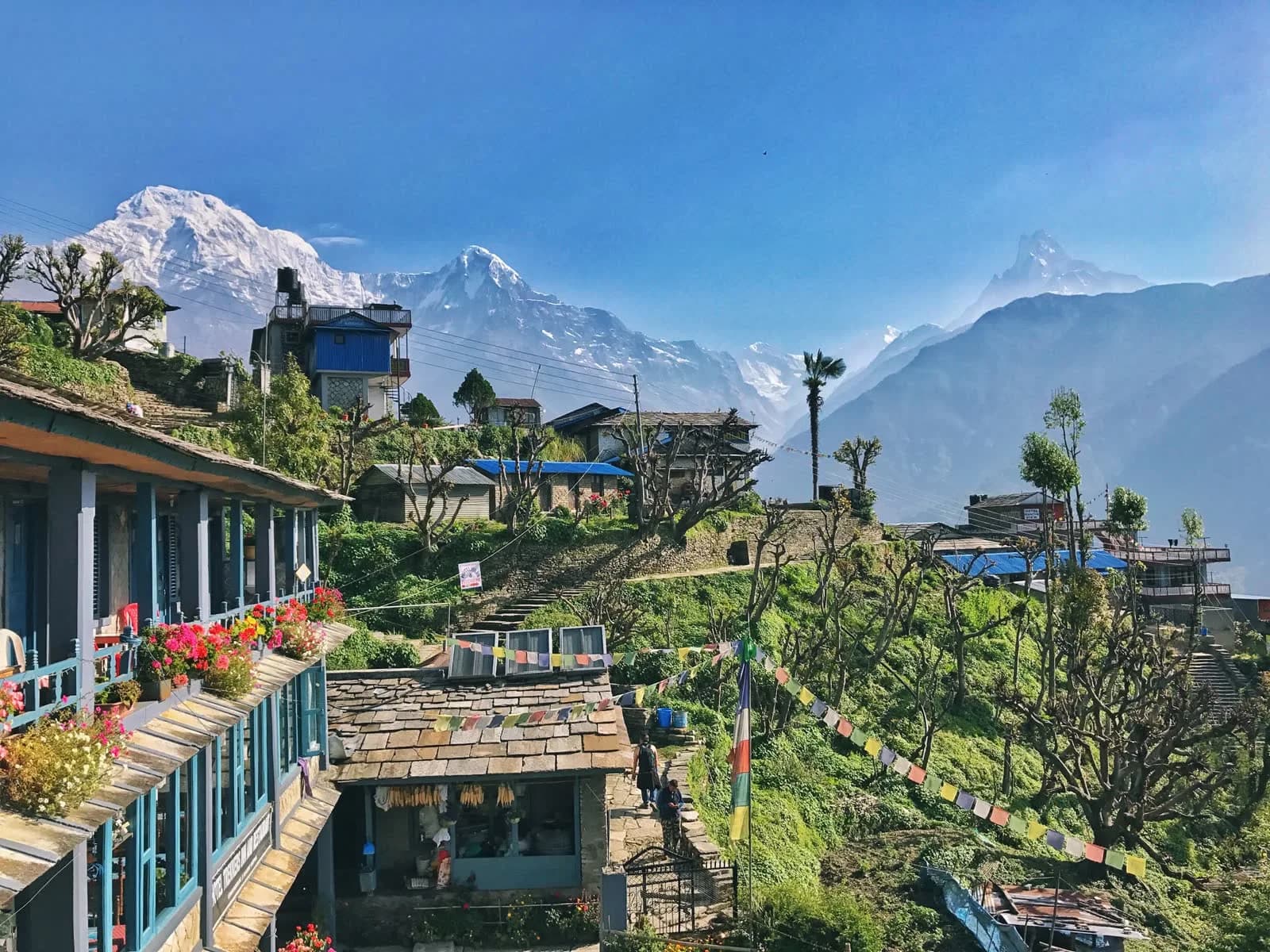
Mardi Himal, the slow way.
The 8-day Mardi Himal trek is the fullest version of the route we run. It reaches the same Upper Viewpoint at 4,200 metres as every other itinerary, but it gets there over two gentle warm-up days instead of one long first climb, and it comes back down over four unhurried days through the Gurung homestay villages of Sidhing, Ghalel, and Lwang rather than a same-day jeep out. Nothing about this schedule is rushed.
That extra time changes the trip in two ways. The start is easier, with a short first afternoon to Australian Camp before the main climb. If a slow climb matters most to you, our 7-day trek sleeps at Badal Danda before High Camp and is gentler still on the way up. And the descent stops being a logistics exercise and becomes part of the trip: three nights with local families instead of three nights in standard teahouses, tea gardens at Lwang, and a genuine look at Gurung village life that the shorter itineraries simply do not have time for.
Take the 8-day if you have the days to spare and want Mardi done properly rather than quickly. If time is tight, our 6-day version walks the same ridge with a shorter, faster exit, and our 5-day version is the standard, most-booked schedule. All of the duration variants and the full route map live on our itinerary page.
The full schedule, day by day.
Eight days from Pokhara and back: three days up to the 4,200-metre viewpoint, four slow days down through the homestay villages, and a jeep on the final day. Altitudes and walking hours are listed for every day. No day gains or loses more than about a thousand metres.
- Day 1
Pokhara → Kande → Australian Camp
- Drive
- 1.5 hrs (Pokhara to Kande)
- Trek
- 3 – 4 hrs
- Distance
- ~5 km
- Altitude
- Kande 1,770 m → Australian Camp 2,060 m
- Net change
- +290 m
We leave Pokhara mid-morning and reach the Kande trailhead by jeep in 1 to 1.5 hours. From there the trail climbs a steady set of stone steps through terraced farmland and pine, gaining under 300 metres in the whole afternoon. This is a deliberately short first day.
The 8-day is the slow, cultural version of Mardi, and it starts slow on purpose: a gentle half-day walk gives your body its first taste of altitude without asking much of it, and leaves the afternoon free to settle into Australian Camp at 2,060 metres, where the first open view of Annapurna South and Hiunchuli appears above the ridgeline.
Overnight in a teahouse at Australian Camp. Early dinner, and a night that sets the tone for the whole trip: nothing here is rushed.
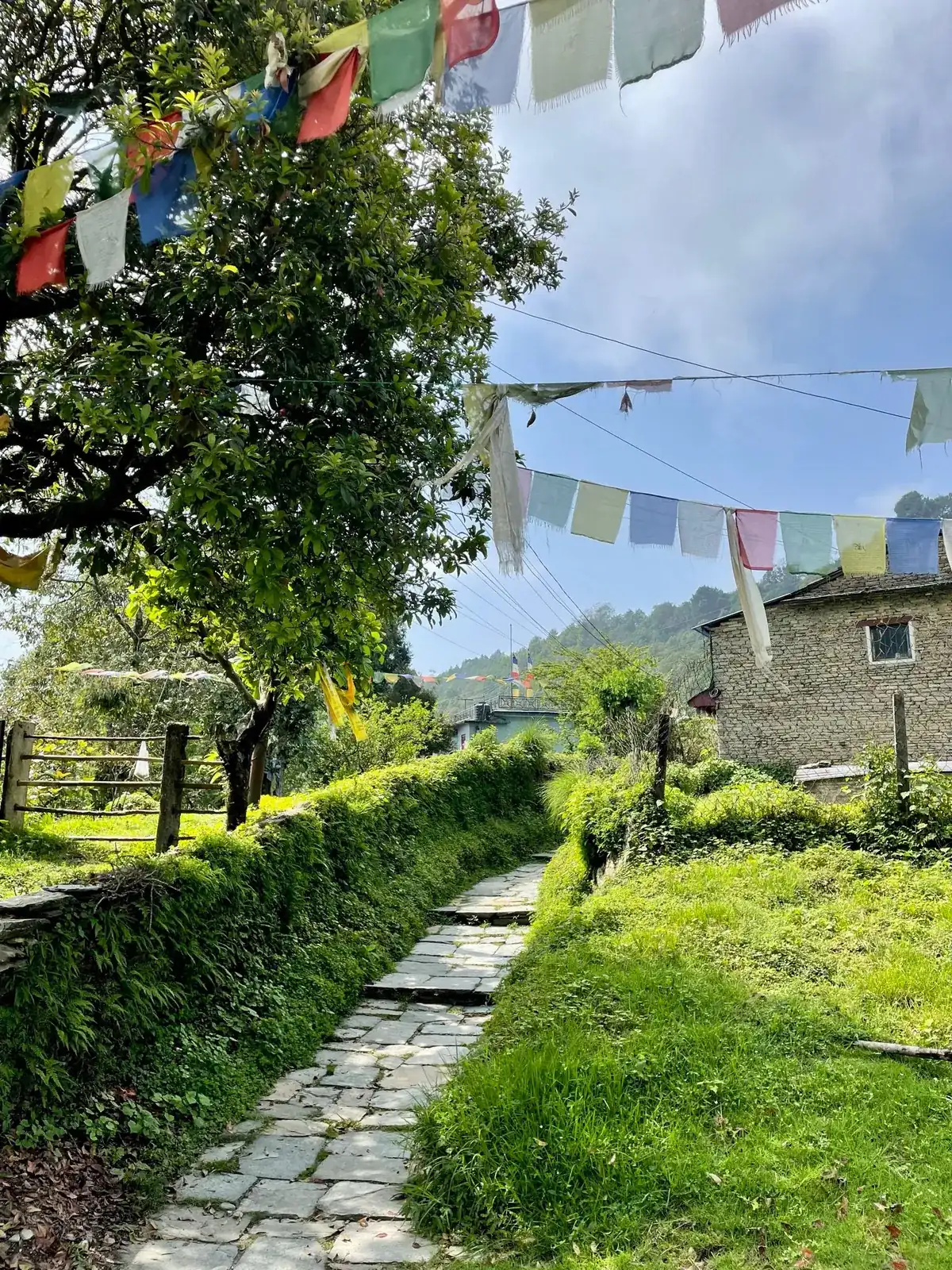
Kande 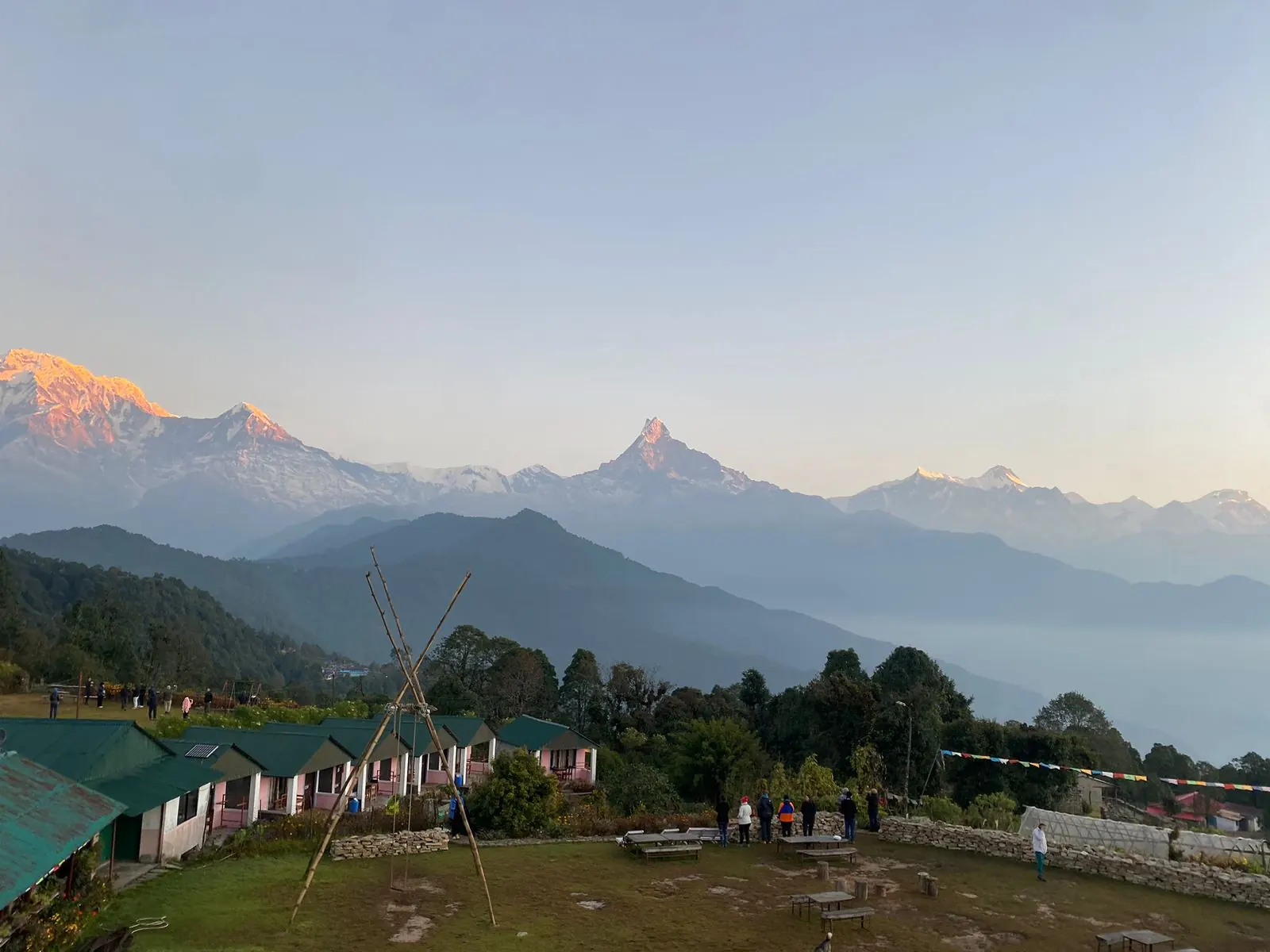
Australian Camp 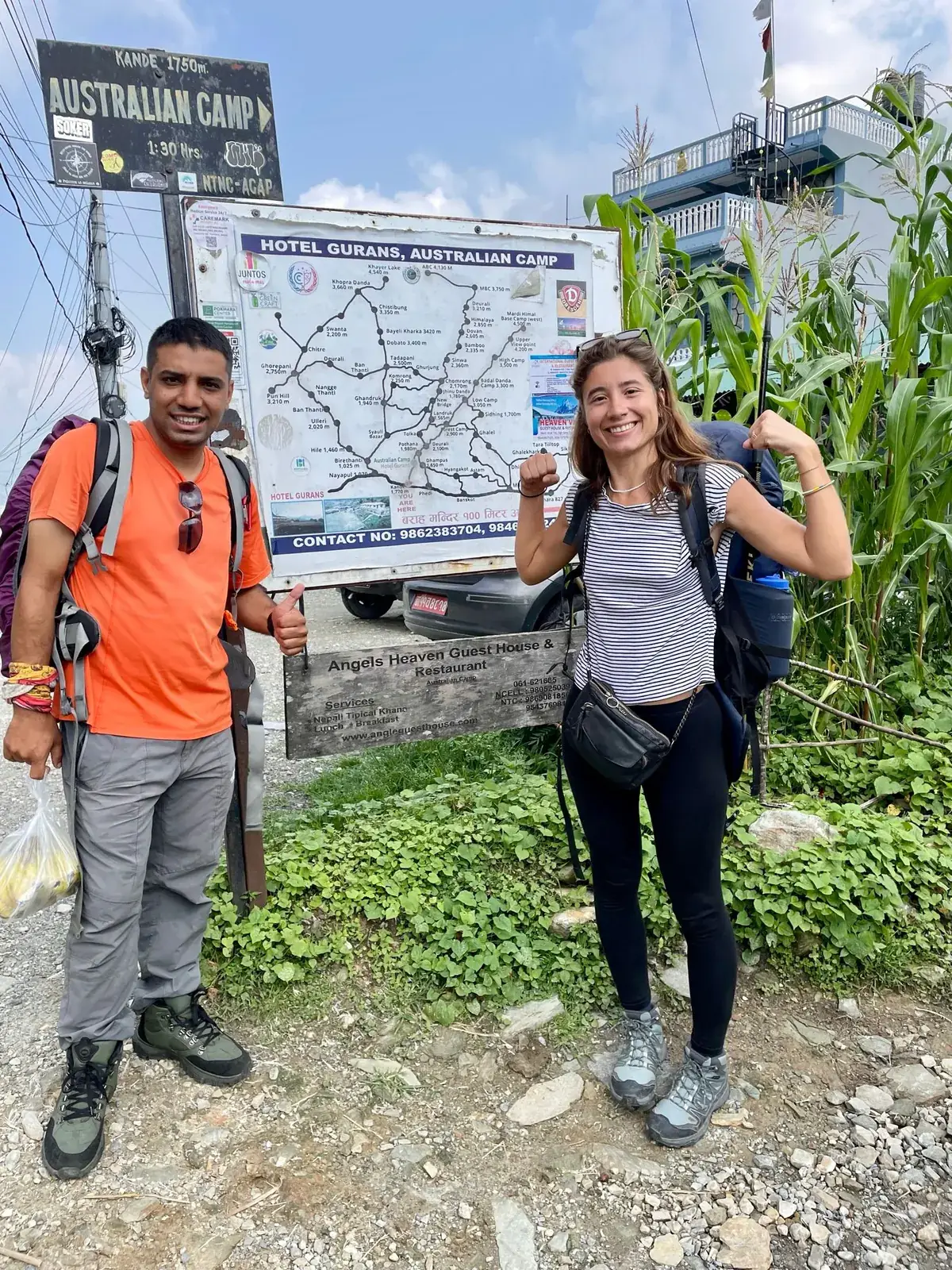
Kande 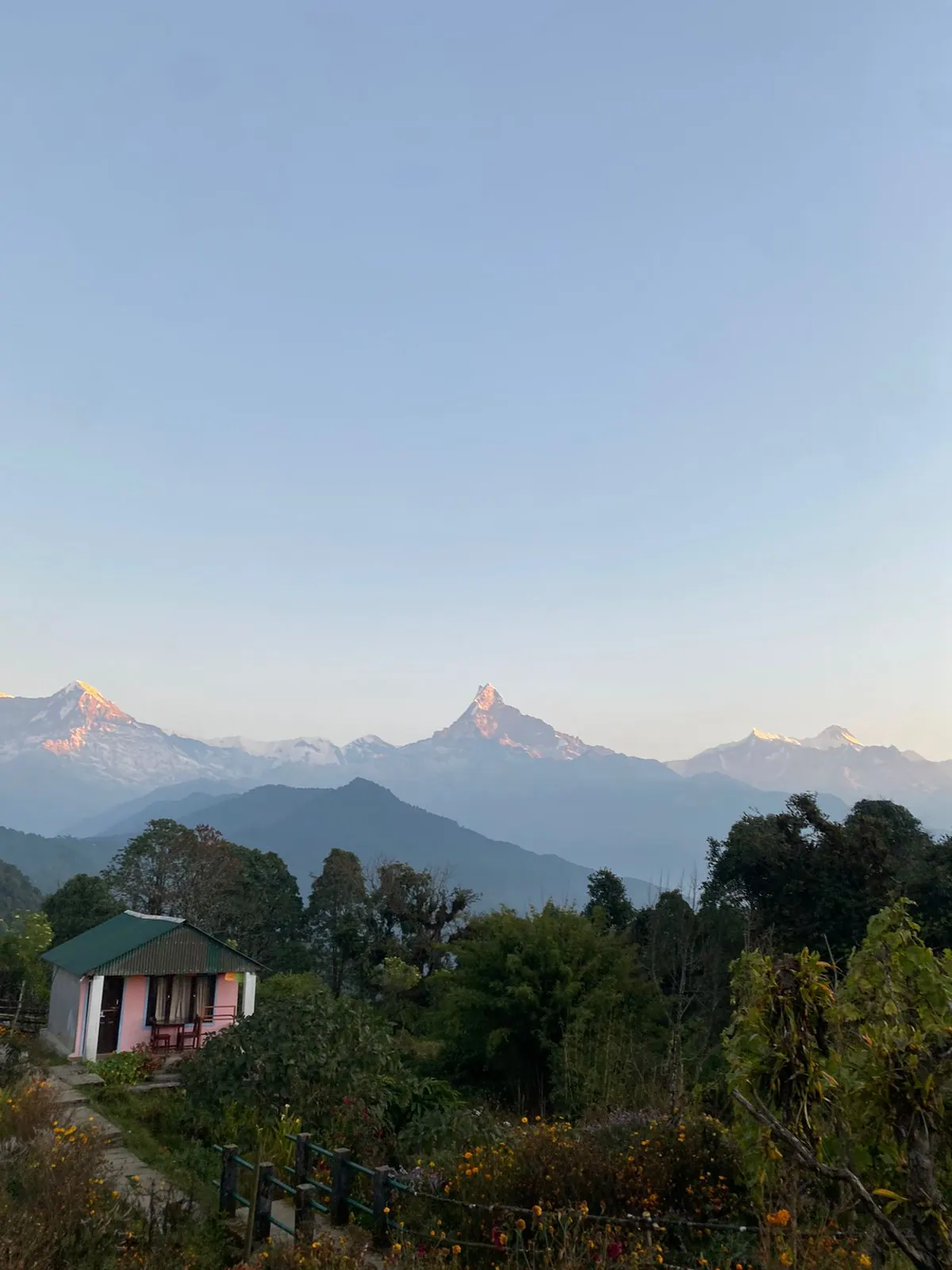
Australian Camp 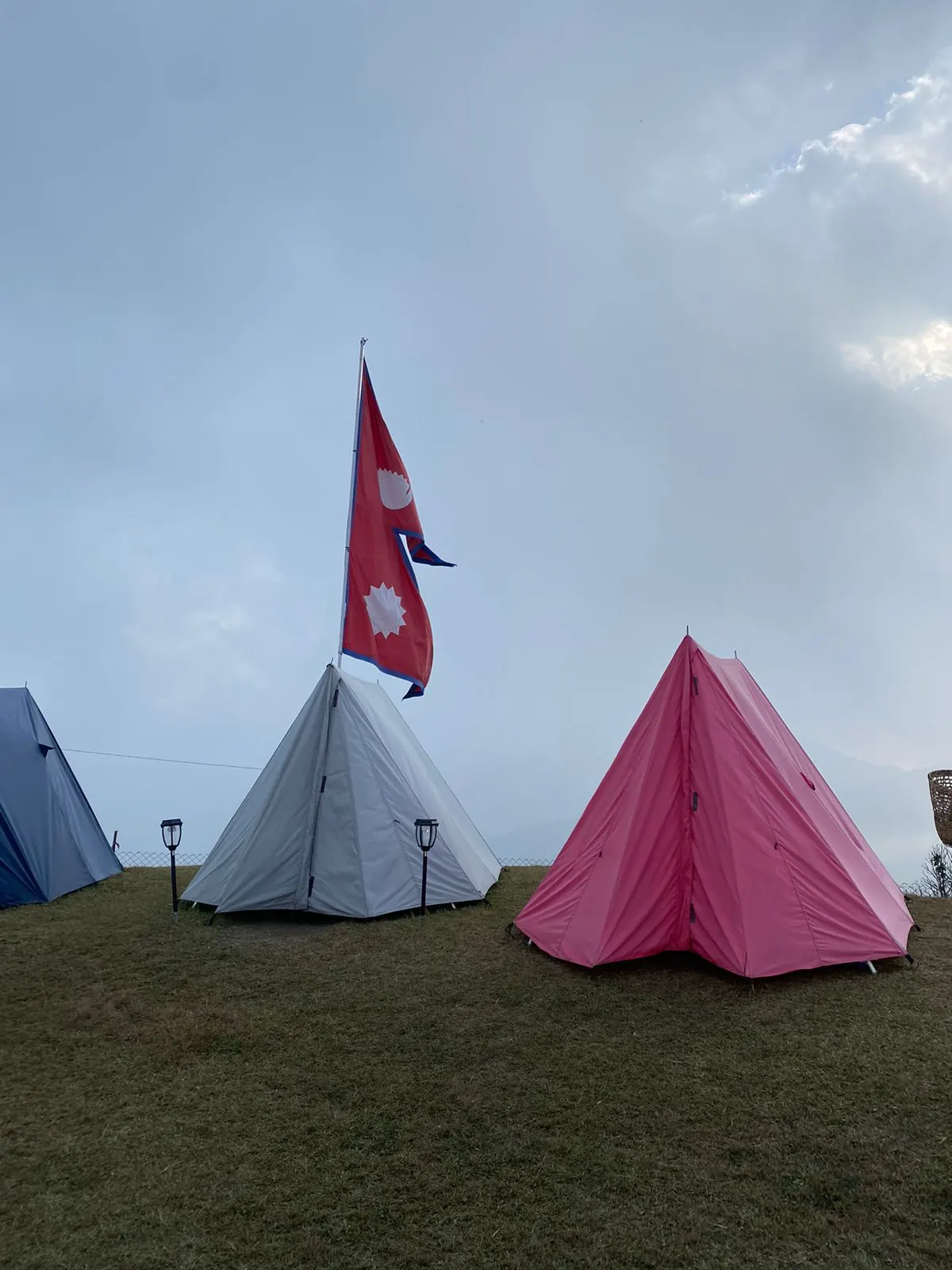
Australian Camp 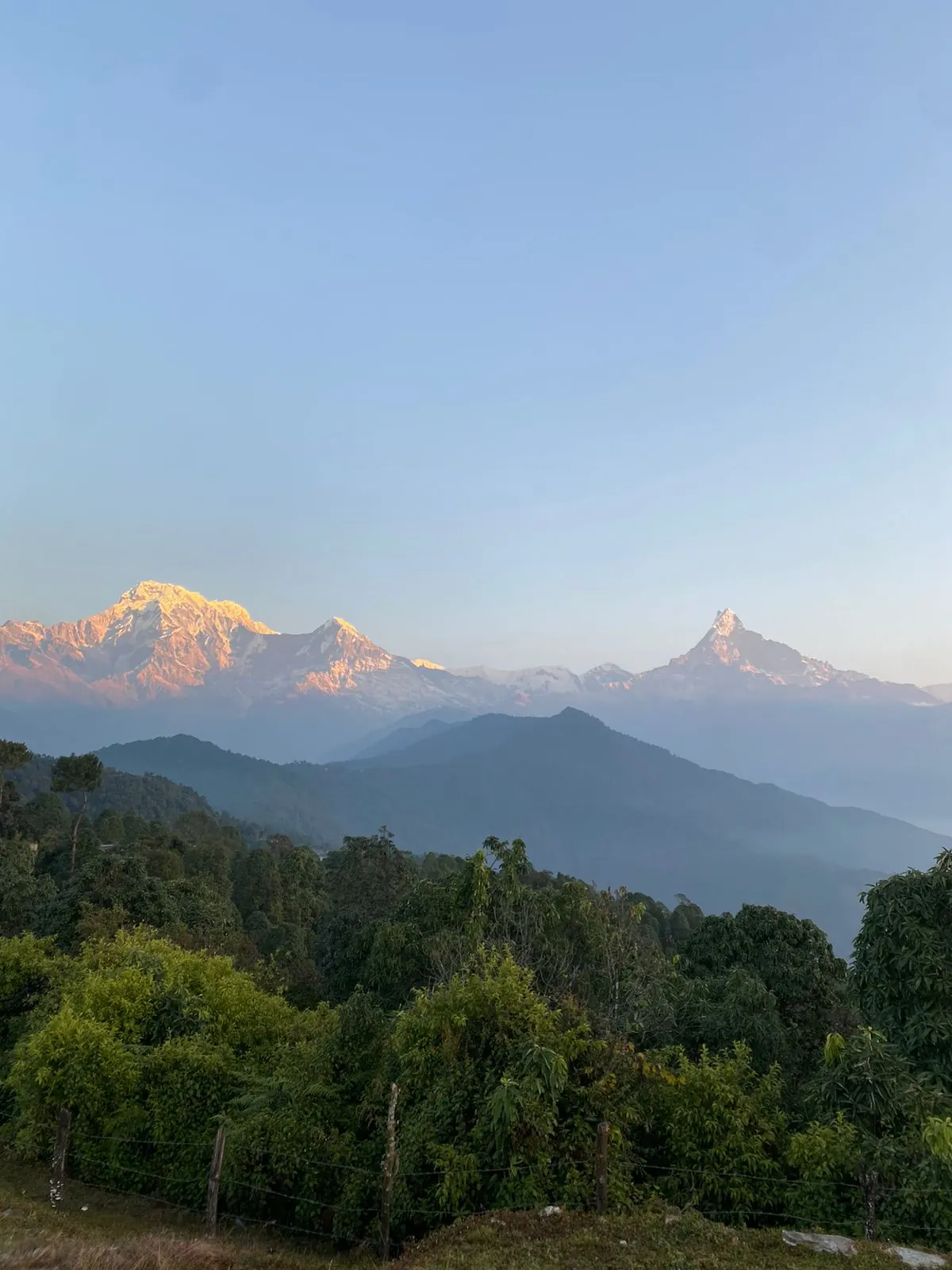
Australian Camp 6 photos from day 1, taken on the trail. - Day 2
Australian Camp → Pitam Deurali → Forest Camp
- Drive
- None
- Trek
- 5 – 6 hrs
- Distance
- ~9 km
- Altitude
- Australian Camp 2,060 m → Pitam Deurali 2,100 m → Forest Camp 2,550 m
- Net change
- +490 m
The trail continues through Pothana, where the ACAP permit is checked, and on to Pitam Deurali at 2,100 metres, the junction where the Mardi route leaves the busier Annapurna Base Camp path and turns onto its own quiet ridge. Lunch is usually taken here.
From the junction the path climbs through cloud forest, oak, maple, and rhododendron thickening as the trail gains height, to Forest Camp at 2,550 metres. Langur troops are common in the canopy on this stretch, and on a clear afternoon Machhapuchhre starts to show itself through the trees.
Overnight at Forest Camp. Still an easy day by Mardi standards, well within a 5-to-6-hour walk, and another rested night ahead of the bigger climbing to come.
Australian Camp 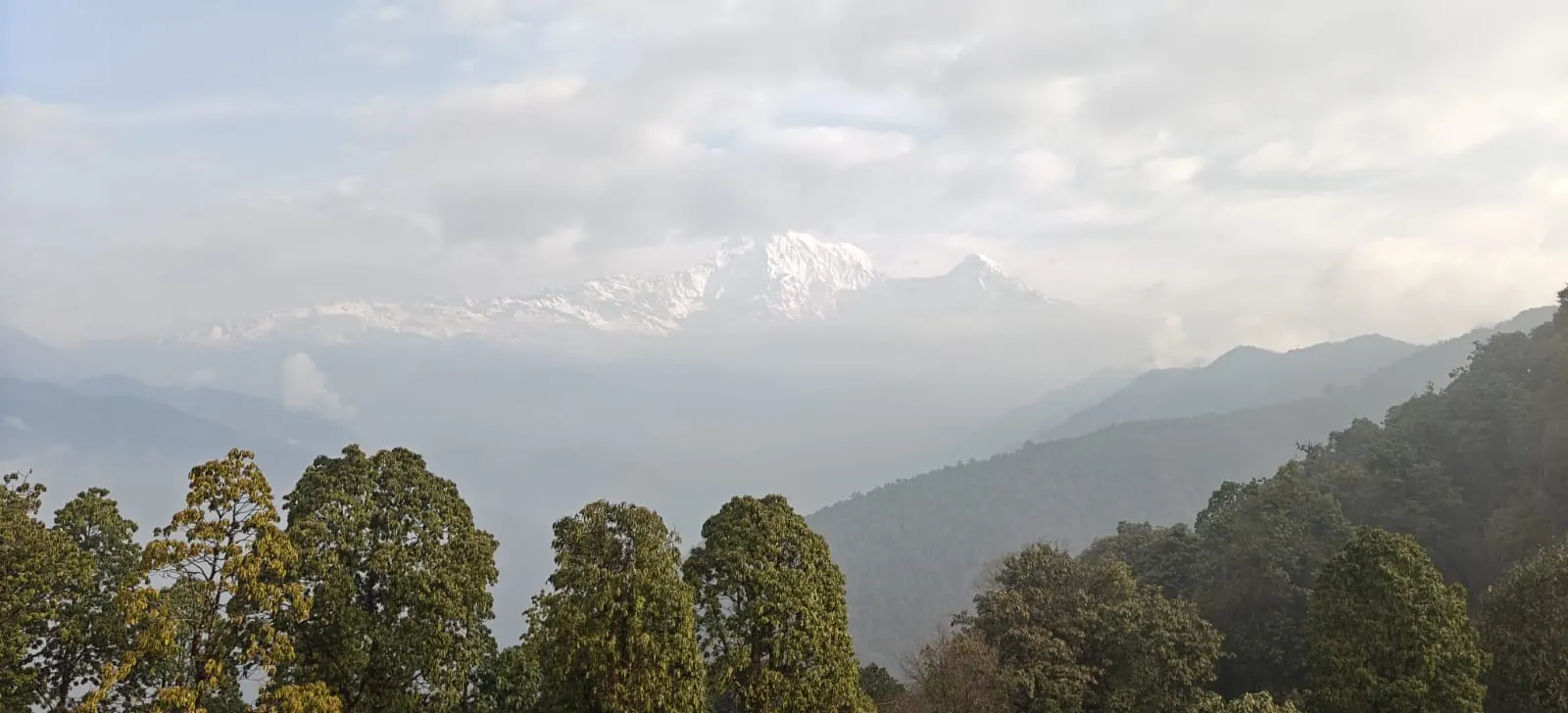
Pitam Deurali 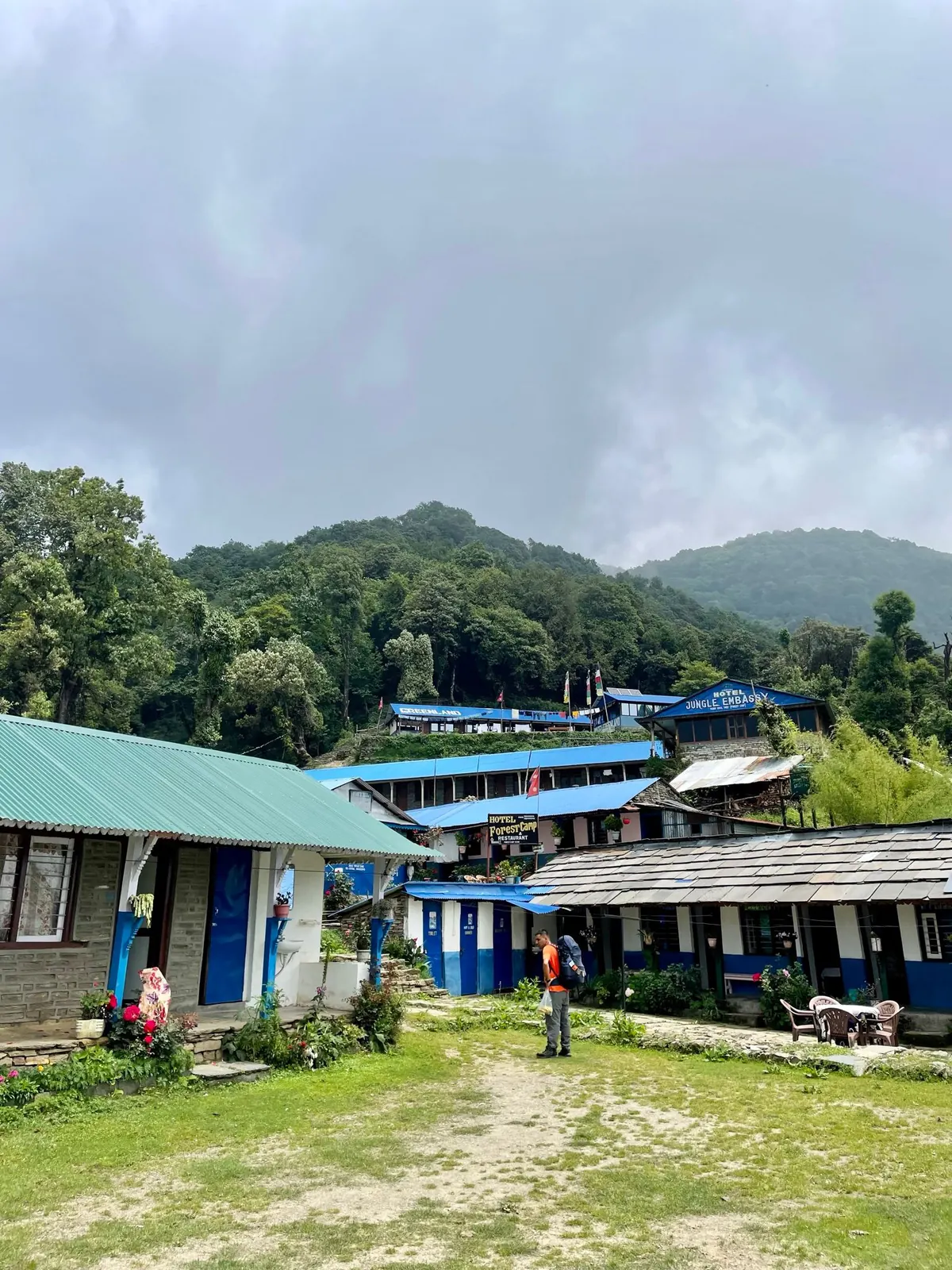
Forest Camp Australian Camp 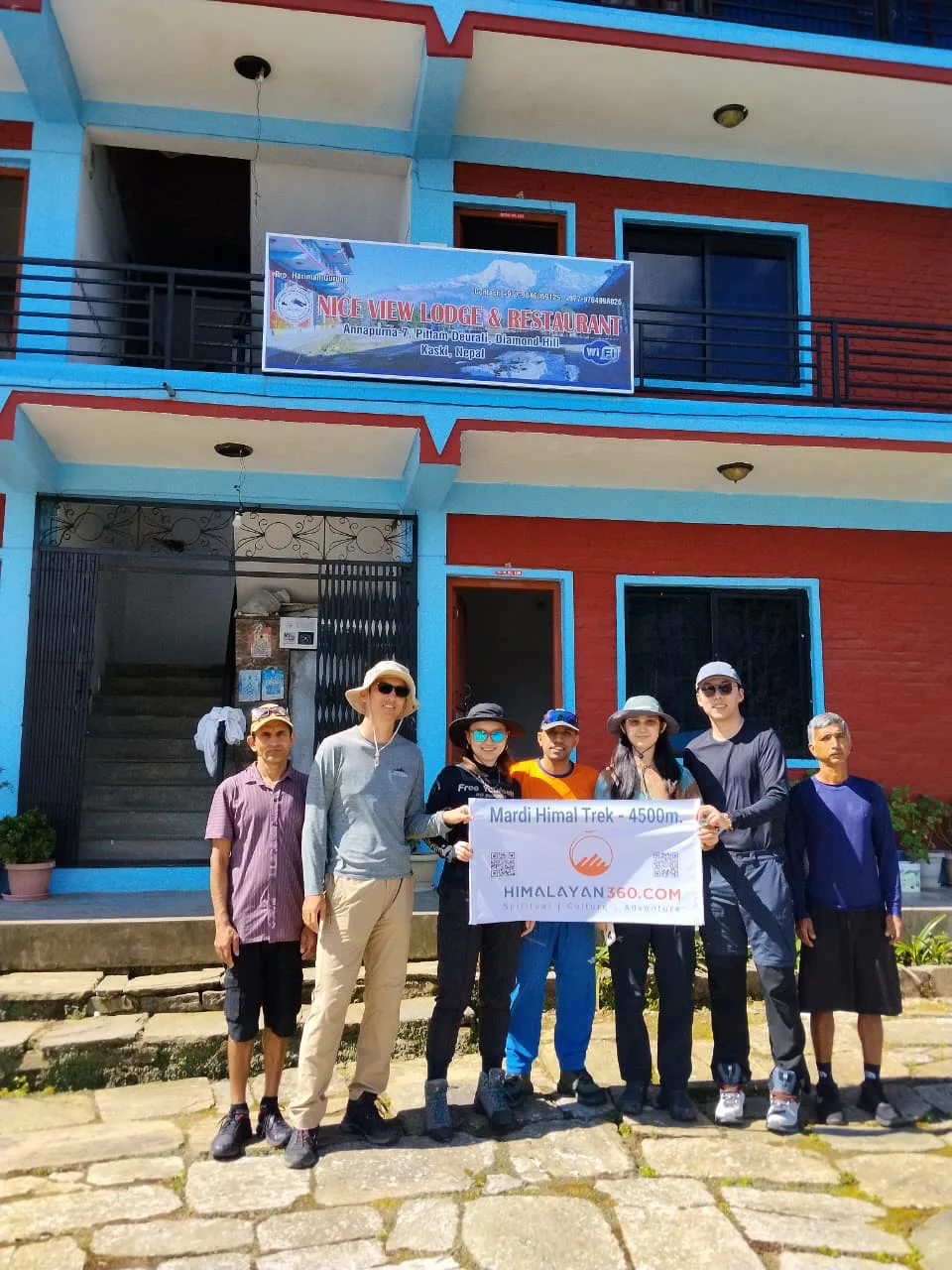
Pitam Deurali 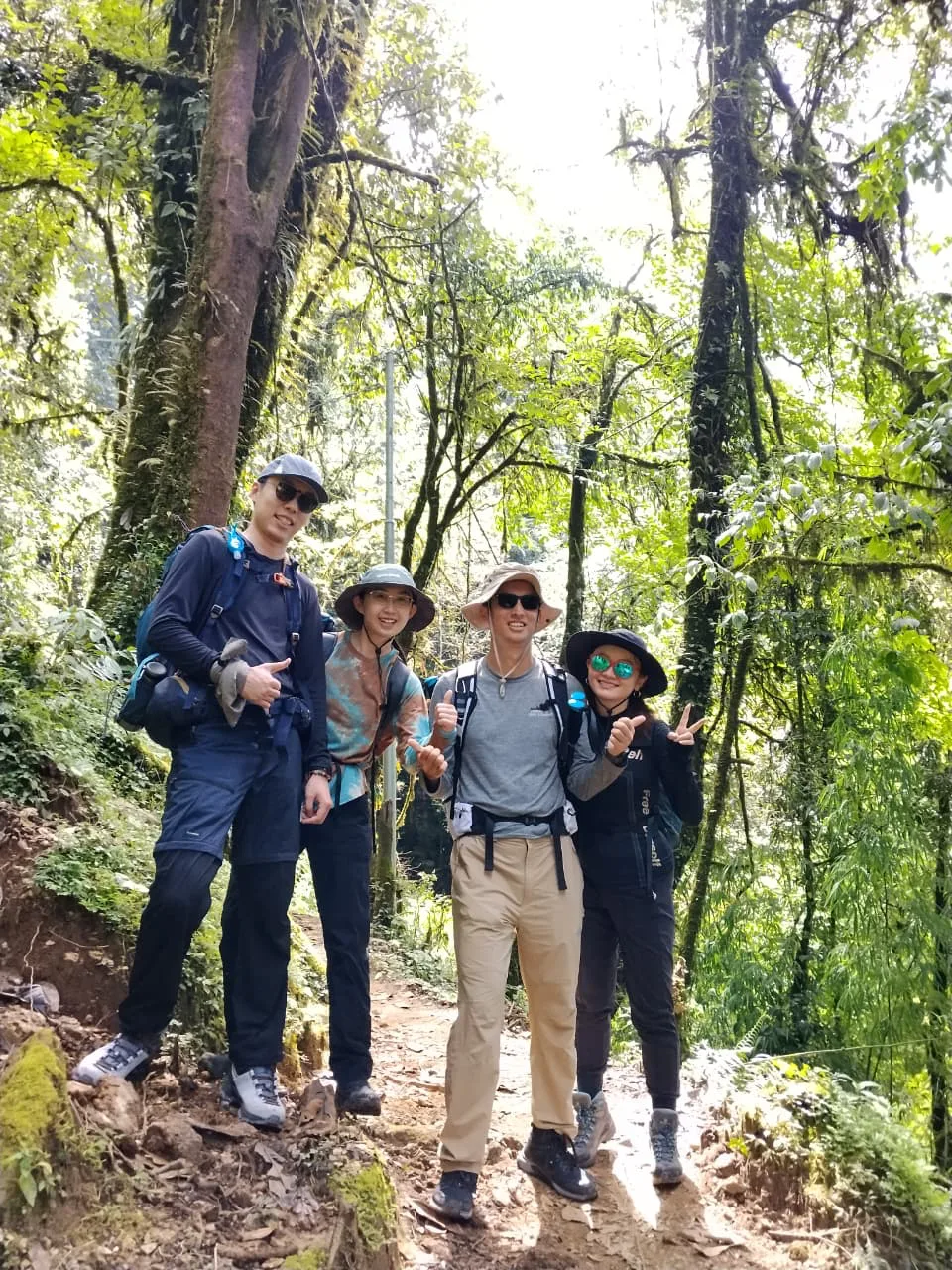
Trail to Forest Camp 6 photos from day 2, taken on the trail. - Day 3
Forest Camp → Rest Camp → Low Camp → Badal Danda → High Camp
- Drive
- None
- Trek
- 6 – 7 hrs
- Distance
- ~10 km
- Altitude
- Forest Camp 2,550 m → Rest Camp ~2,600 m → Low Camp 2,985 m → Badal Danda 3,210 m → High Camp 3,580 m
- Net change
- +1,030 m
This is the main altitude day, a little over a thousand metres of net gain, but it comes after two easy warm-up days rather than on a rushed first or second morning, which is the whole argument for the 8-day version. The trail climbs past Rest Camp at roughly 2,600 metres and on to Low Camp at 2,985 metres, where the trees thin and the full Annapurna massif comes into view for the first time.
Above Low Camp the route breaks onto the open ridge, crosses Badal Danda (Cloud Ridge) at 3,210 metres, and climbs steadily to High Camp at 3,580 metres. Pace is kept deliberately slow on this stretch, and because the itinerary has already banked two gentle acclimatisation days, most trekkers find this climb noticeably more comfortable than on the shorter versions of the trek. If altitude is new to you, our guide to altitude sickness explains what to watch for.
Arrive High Camp in the afternoon with time to rest before the cold sets in. Machhapuchhre stands directly across the valley, and the dining hall fills up early as everyone settles in for the summit morning ahead.
Forest Camp 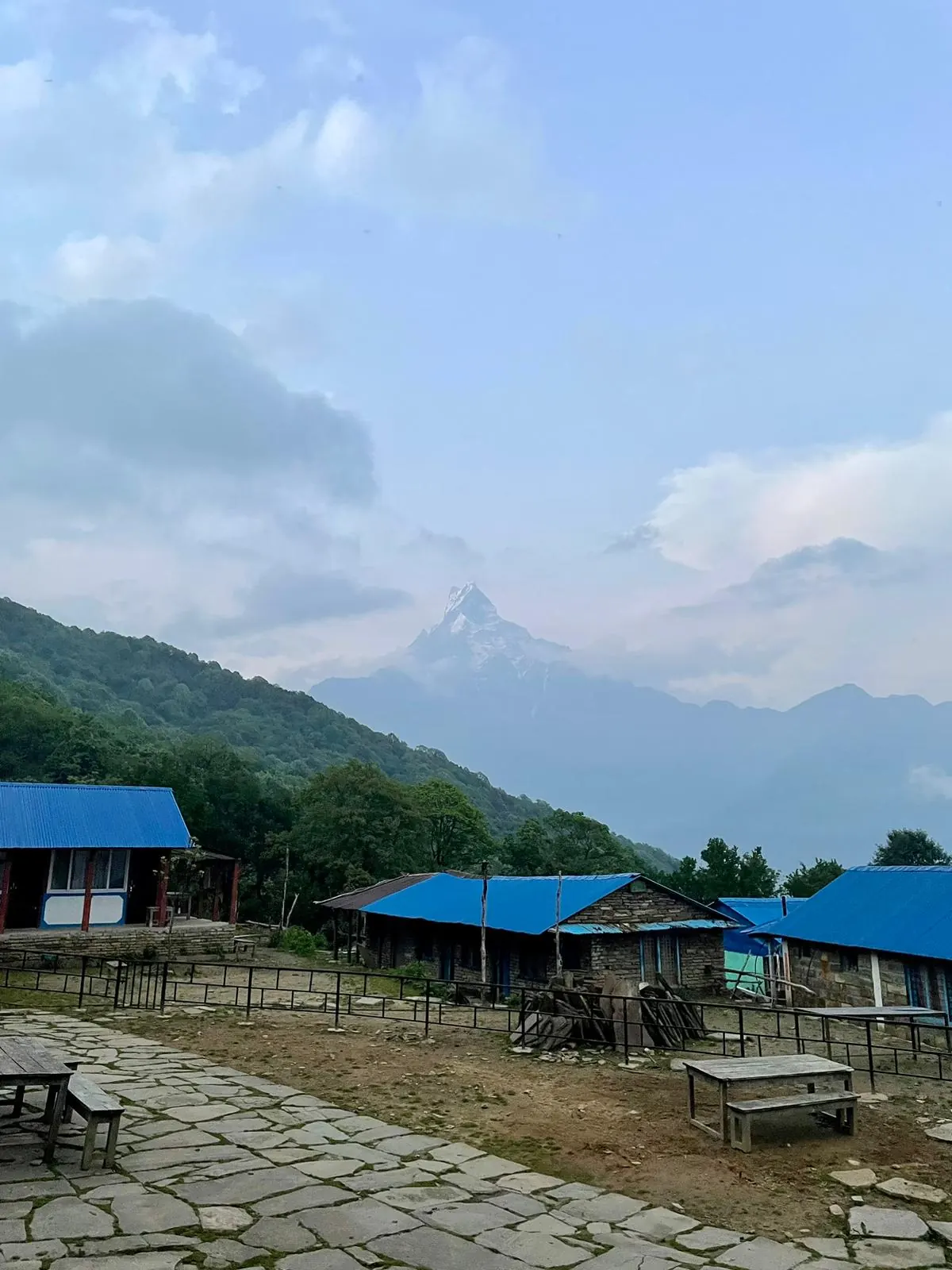
Low Camp 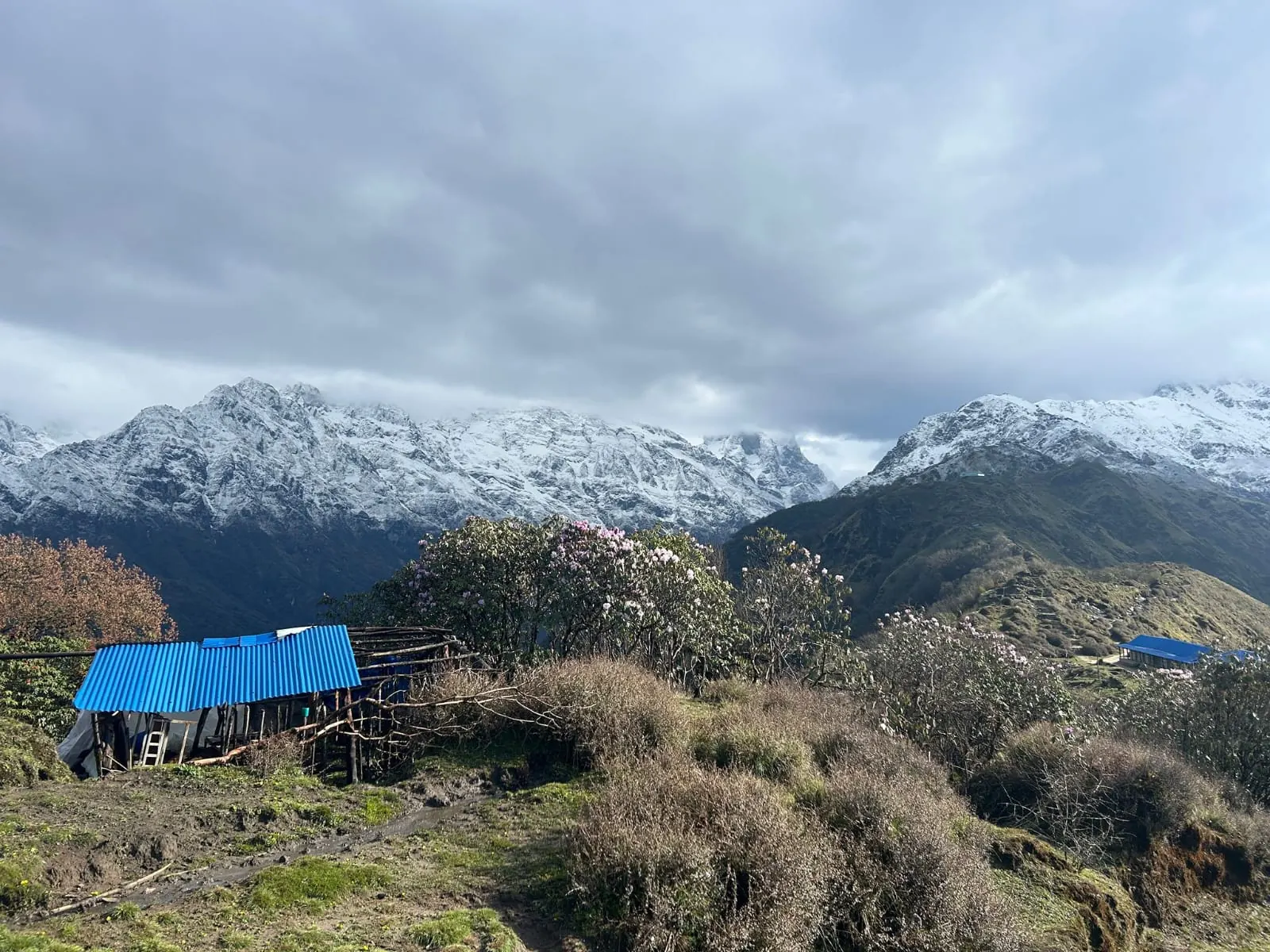
High Camp & Badal Danda 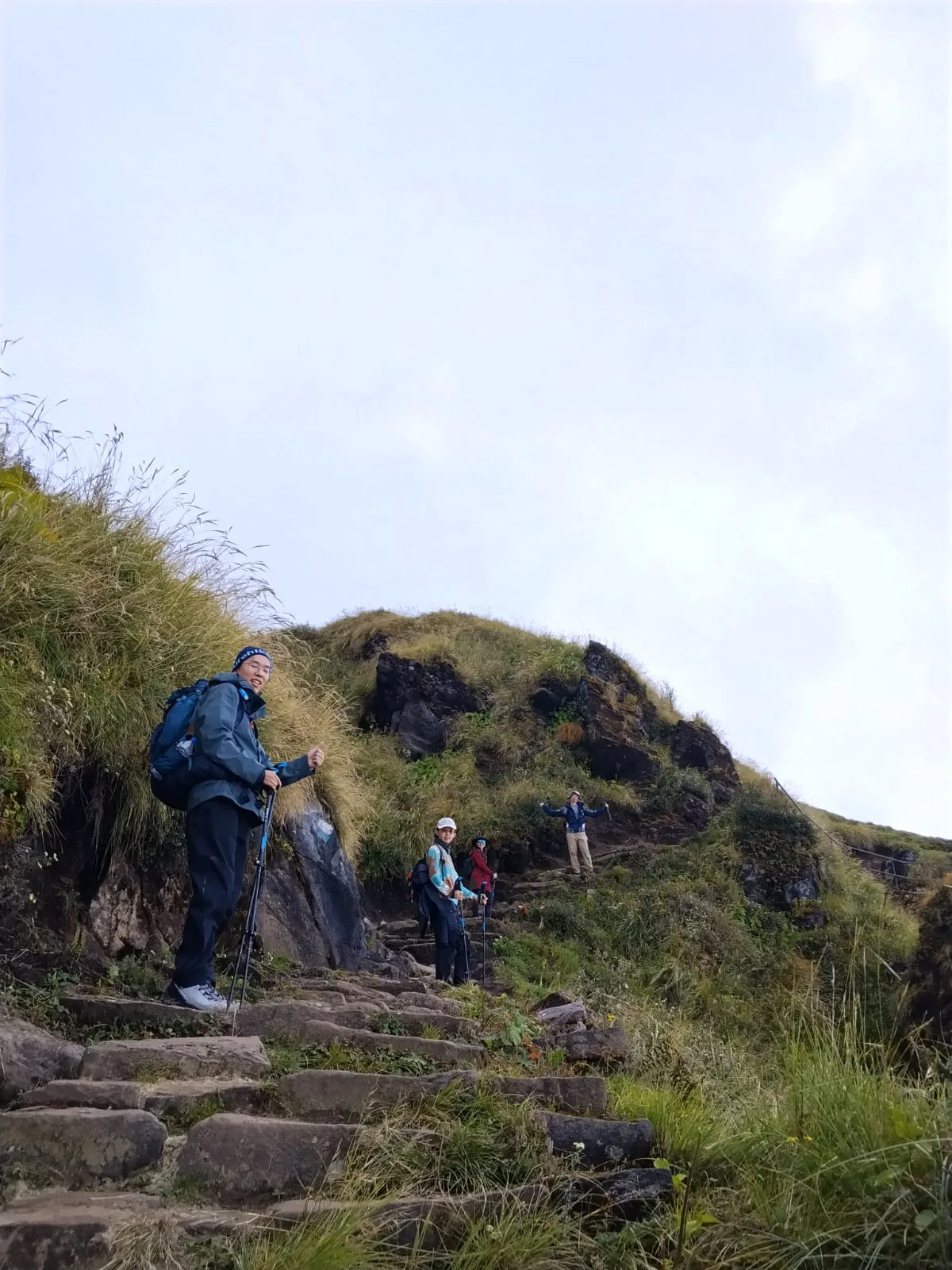
Trail to High Camp Trail to Forest Camp 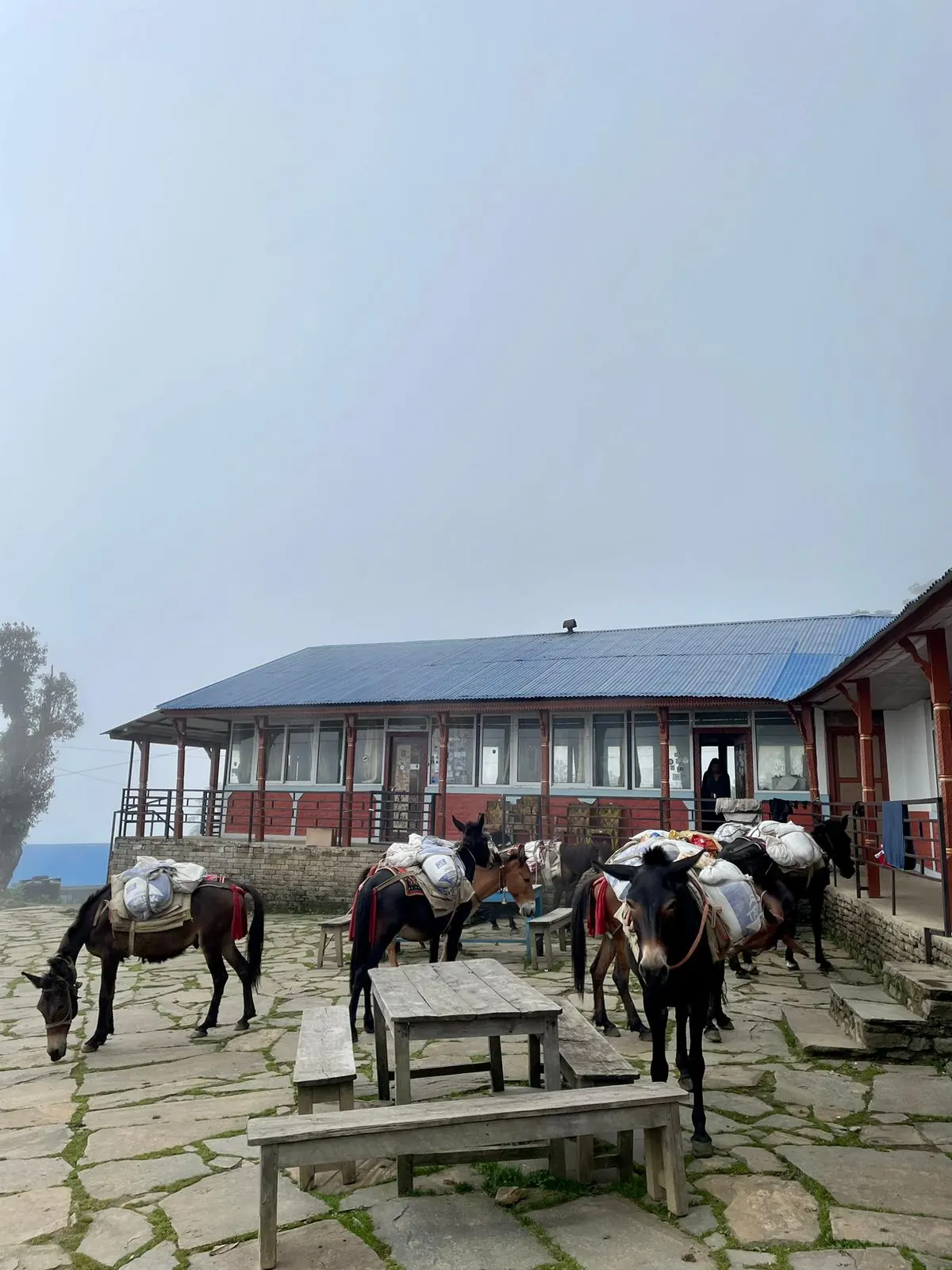
Low Camp 6 photos from day 3, taken on the trail. - Day 4
High Camp → Mardi Himal Upper Viewpoint → Low Camp
- Drive
- None
- Trek
- 7 – 8 hrs
- Distance
- ~12 km
- Altitude
- High Camp 3,580 m → Upper Viewpoint 4,200 m → Low Camp 2,985 m
- Net change
- +620 m / -1,215 m
The summit morning. We leave High Camp around 04:30 with headtorches for the pre-dawn ridge climb to the Mardi Himal Upper Viewpoint at 4,200 metres, the highest point of the trek and the reason most people come. On a clear morning the sun lifts over the eastern peaks while Dhaulagiri sits far to the west and the sheer Annapurna wall fills the sky directly in front of you. Mardi Himal Base Camp at 4,500 metres is about 1 hour 30 minutes further along the ridge. If you want to go on, ask your guide, and expect a longer day.
We return to High Camp for a proper breakfast, then begin the descent. Unlike the shorter itineraries, the 8-day does not push all the way down in one push: we stop for the night at Low Camp, 2,985 metres, keeping the descent gentle and giving knees and joints an easier day than the summit-plus-full-descent push that the 3 and 4-day versions require.
Overnight at Low Camp. The hard climbing is behind you now. What is left is four unhurried days walking down through Gurung country to Pokhara, rather than a race for the road.
High Camp & Badal Danda 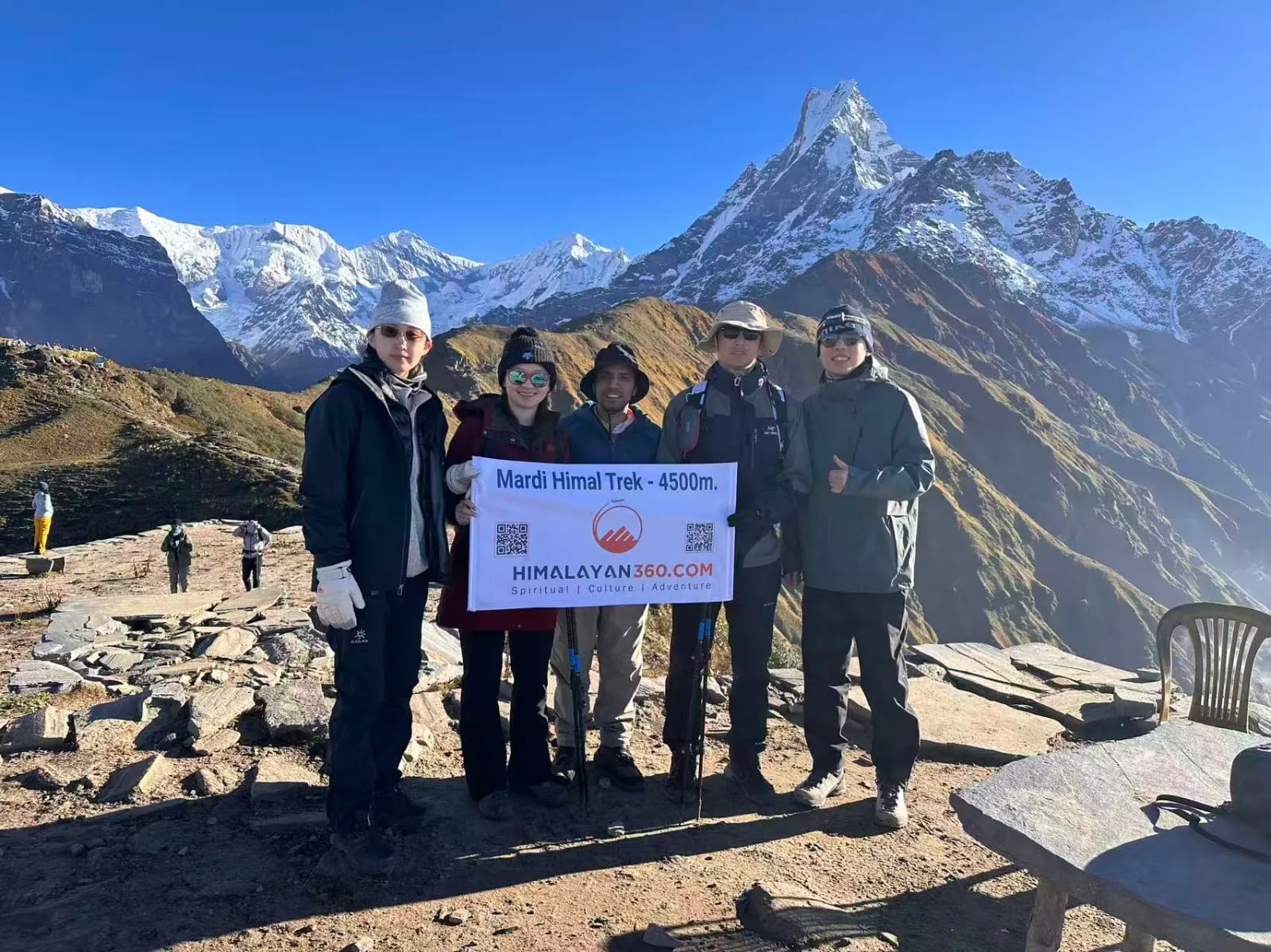
Upper Viewpoint Low Camp 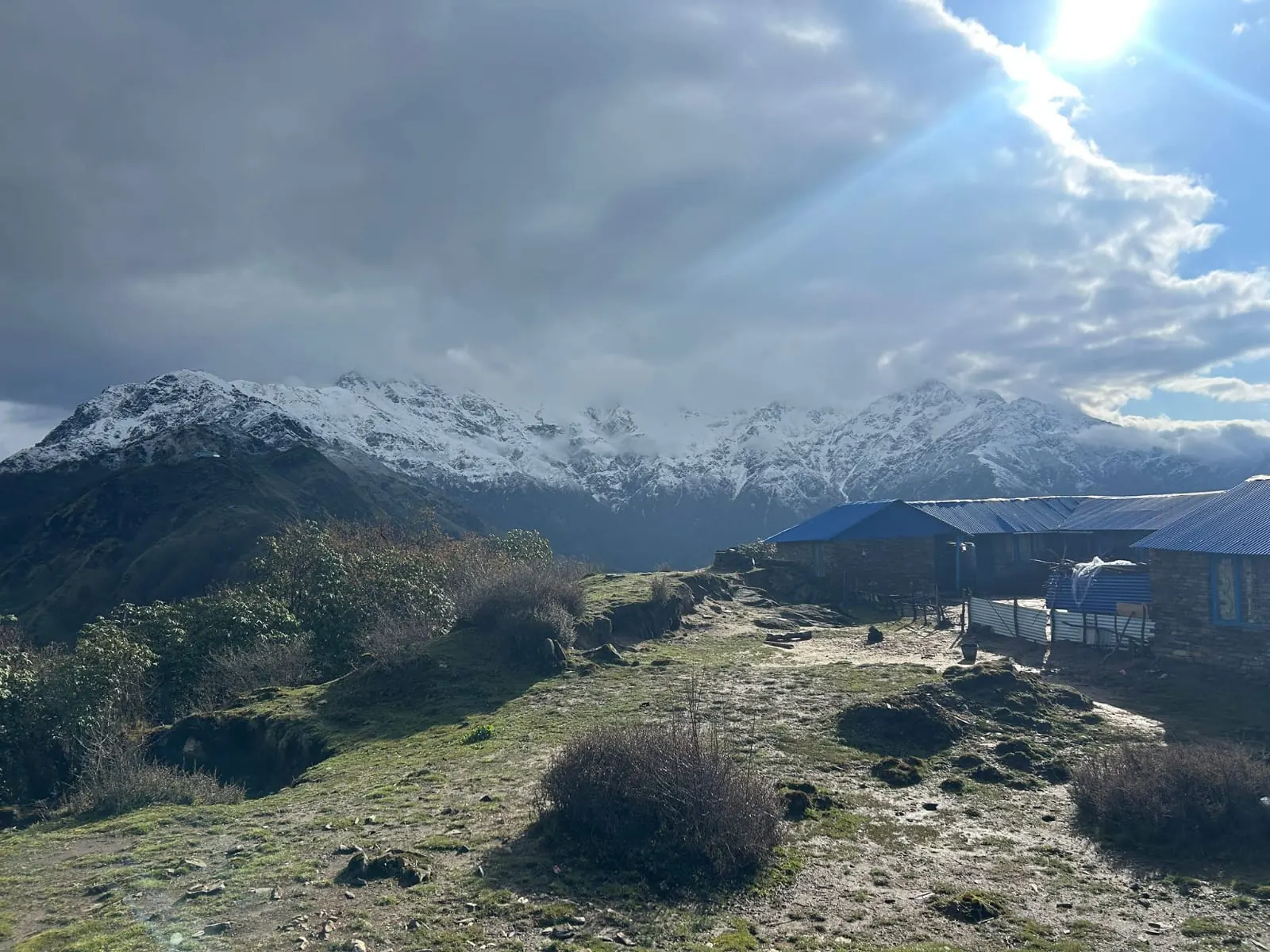
High Camp & Badal Danda 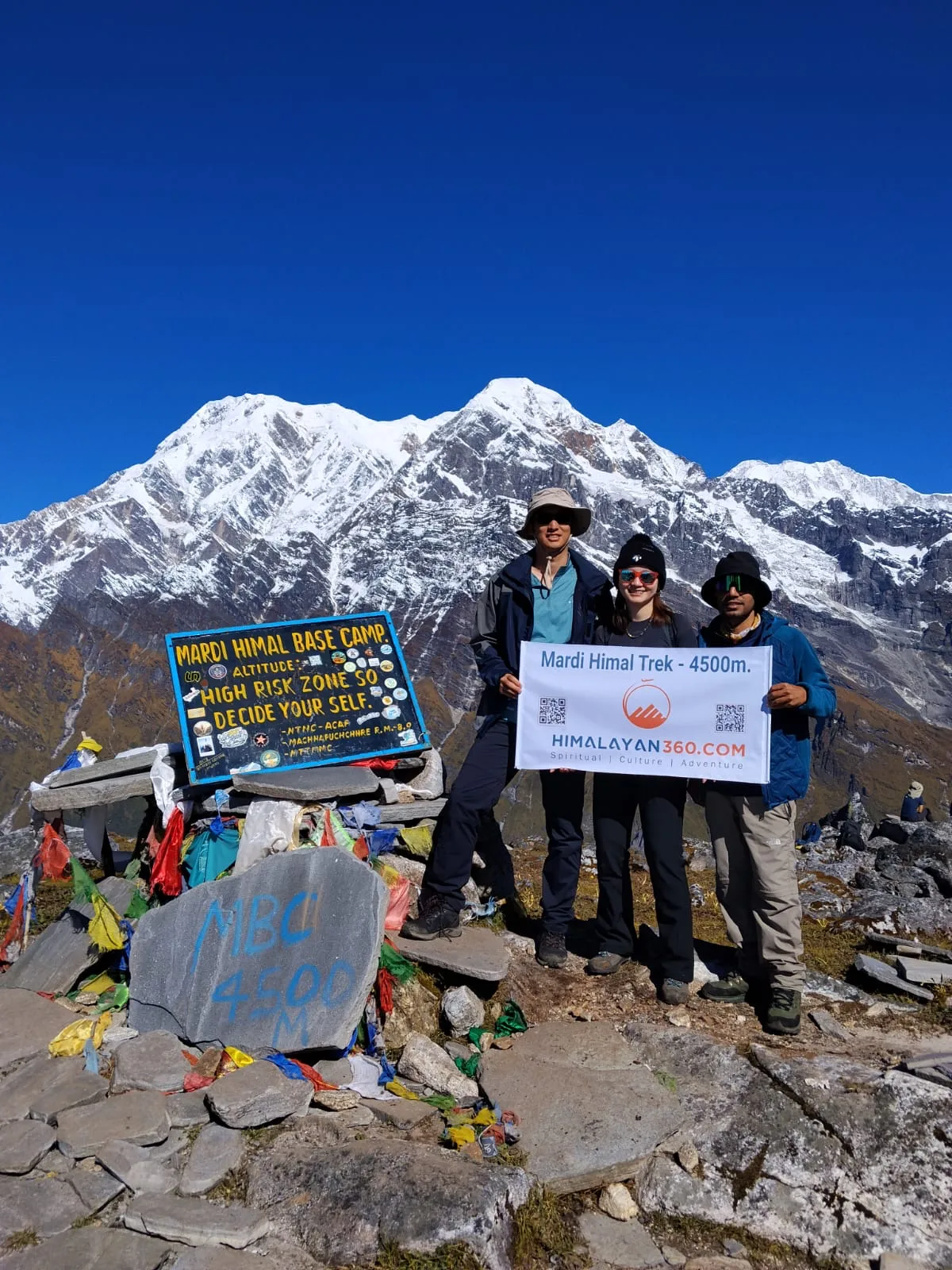
Mardi Himal Base Camp Low Camp 6 photos from day 4, taken on the trail. - Day 5
Low Camp → Sidhing homestay
- Drive
- None
- Trek
- 5 – 6 hrs
- Distance
- ~9 km
- Altitude
- Low Camp 2,985 m → Sidhing 1,860 m
- Net change
- -1,125 m
This is where the 8-day itinerary earns its name: instead of jeeping straight out from the base of the mountain, we keep walking, dropping through forest and terraced farmland to the Gurung village of Sidhing at 1,860 metres.
Sidhing is a working homestay village, not a trekking-lodge strip, and the change of pace is immediate. Stone houses, millet drying on rooftops, and a community that has hosted trekkers on a homestay basis for years rather than running purpose-built teahouses. We stay the night with a local family rather than in a standard lodge.
This is the first of three homestay nights that make the 8-day the most immersive way to walk Mardi Himal, and it is a very different trip from here on than the itineraries that jeep straight back to the lake.
Low Camp 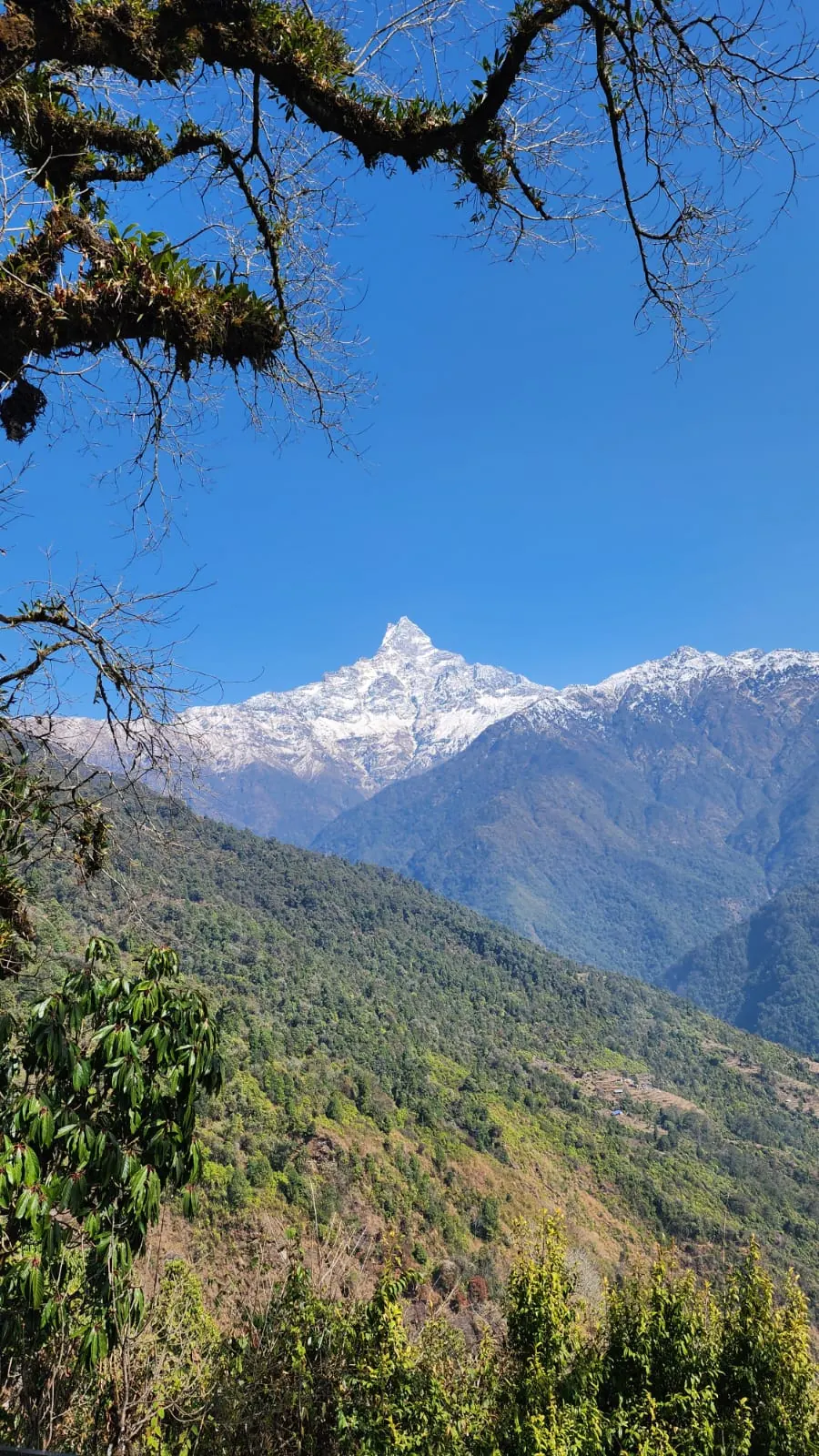
Sidhing Low Camp 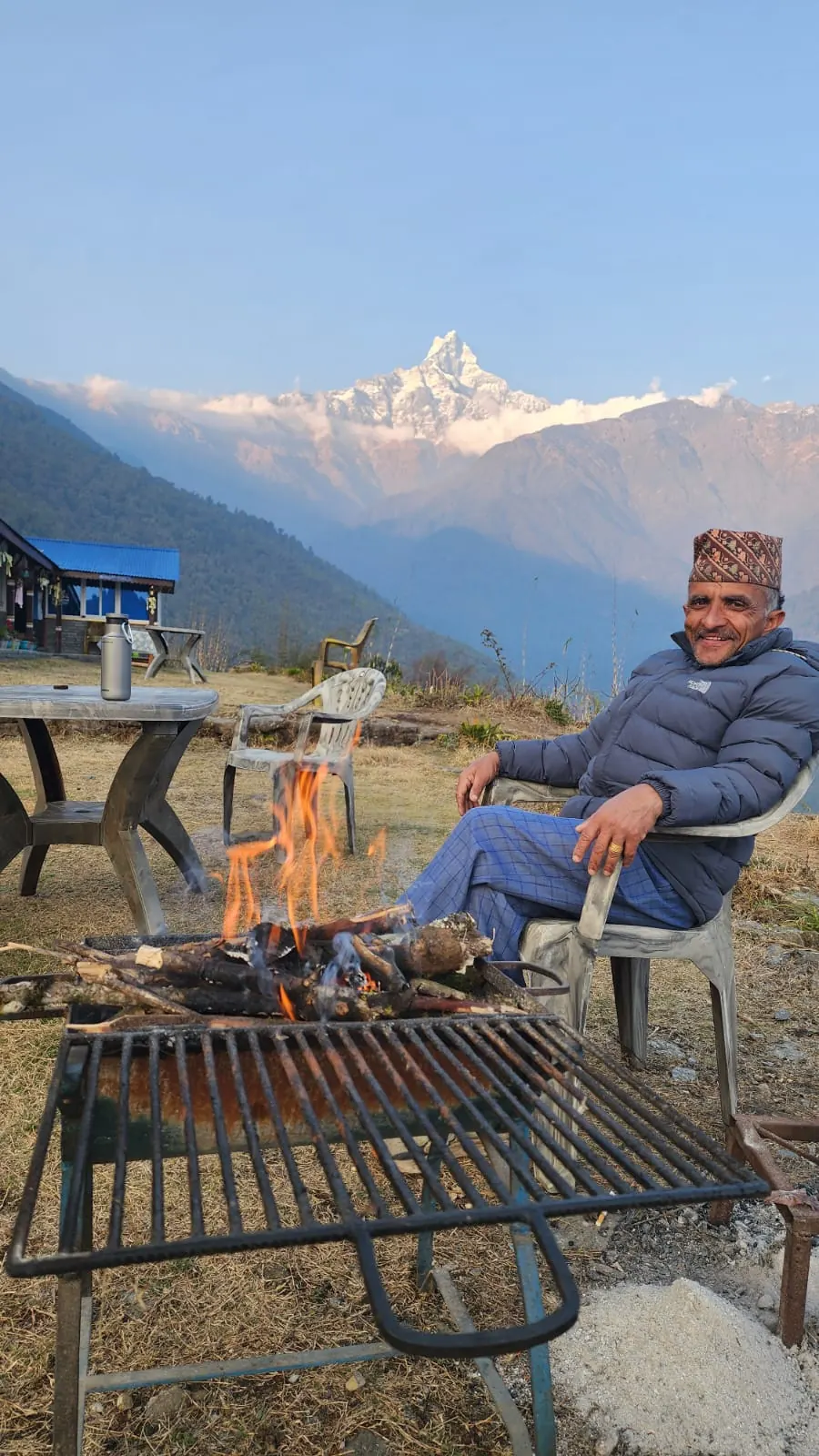
Sidhing 4 photos from day 5, taken on the trail. - Day 6
Sidhing → Ghalel homestay
- Drive
- None
- Trek
- 4 – 5 hrs
- Distance
- ~8 km
- Altitude
- Sidhing 1,860 m → Ghalel ~1,500 m
- Net change
- -360 m
A gentler day, following farm trails and forest paths between villages rather than a defined trekking highway. The walk drops steadily through terraced fields to Ghalel, another Gurung homestay village at roughly 1,500 metres.
Ghalel sees far fewer trekkers than the main Mardi route, and the day is as much about village life as mileage: greetings from farmers in the fields, tea offered along the trail, and a homestay evening that usually includes a shared meal with the host family rather than a printed menu.
Overnight in a Ghalel homestay. Two villages down, one to go, and the pace by this point of the trip is closer to a slow village-to-village walk than a mountain trek.
Sidhing Sidhing 2 photos from day 6, taken on the trail. - Day 7
Ghalel → Lwang homestay
- Drive
- None
- Trek
- 3 – 4 hrs
- Distance
- ~6 km
- Altitude
- Ghalel ~1,500 m → Lwang 1,460 m
- Net change
- -40 m
The shortest and easiest walking day of the trip, dropping gently through forest and past Lwang's tea gardens, the village's best-known feature and a striking change of scenery after a week of high ridgelines and forest trail.
Lwang is the largest and best-organised of the three homestay villages on this route, with an established community homestay programme, and it is a fitting place for the last night on the trail. Most groups mark the occasion with a small farewell gathering, sometimes with local music, before the final night.
Overnight in a Lwang homestay. Tomorrow is a short morning and a jeep ride, the only day of the trip with no real walking.
- Day 8
Lwang → Pokhara
- Drive
- 2 to 2.5 hrs (Lwang to Pokhara)
- Trek
- None
- Distance
- None (jeep only)
- Altitude
- Lwang 1,460 m → Pokhara 820 m
- Net change
- -640 m
A relaxed final morning in Lwang before a local jeep collects the group for the drive back to Pokhara, descending through the lower Annapurna foothills to the lakeside at 820 metres. The road is rough, so the drive takes 2 to 2.5 hours.
We arrive back in Pokhara by early to mid afternoon. Hot shower, a real bed, and a trip success certificate to mark eight days from the lakeside, over the 4,200-metre ridge, and back down through three Gurung villages that most Mardi itineraries never see.
Fast exit, or slow one?
Every Mardi itinerary from three days to eight reaches the same 4,200-metre viewpoint. What changes is how quickly you get there and how you come back down. Here is the short version.
- You want an easy first day and the most time on the trail.
- You care about village life as much as the summit view.
- This is a first Himalayan trek, or you are travelling with family.
- You have the time and would rather spend it on the trail than in a jeep.
- You want a taste of the homestay villages without four full days of it.
- Your schedule is tighter but you still want to exit slowly, not by helicopter.
- You are comfortable with a slightly faster climbing pace.
Short on time and happy to move faster? Our 6-day trek and 5-day trek walk the same ridge in less time, and our 3-day express version compresses the route further with a fully walked, no-helicopter schedule. All of them are covered on our permits and cost page.
2026 price, per person, by group size.
Published rates for the standard 8-day Mardi Himal itinerary departing from Pokhara, valid through 31 December 2026. The bigger your group, the lower the per-person rate.
Want it private, just your party with your own guide? Add 5% per person. Going private on your own, you pay the 1-person rate.
For the full fee breakdown, ACAP and TIMS permit costs, and optional add-ons such as a porter, see our permits and cost page. Fixed group departures with shared rates are listed on fixed departures.
Secure card payment. The balance is paid in Kathmandu before the trek. See the booking policy.
- ACAP entry permit
- TIMS card
- Licensed English-speaking local guide for 8 days
- Pokhara → Kande private jeep
- Lwang → Pokhara local jeep
- 7 nights teahouse and homestay accommodation
- 7 breakfast, 8 lunch, and 7 dinner, each with a cup of tea
- Trip success certificate
- Comprehensive first aid kit
- International flights to Kathmandu or Pokhara
- Pokhara hotel (Lakeside, USD 35 to 80 a night)
- Lunch and dinner in Pokhara on rest days
- Personal trekking gear
- Travel insurance (mandatory, must cover heli evacuation to 4,500 m)
- Tips for the guide (10% to 30% of the package price)
Eight days at altitude means eight days of layering choices. Our packing list covers what to bring for both the high ridge and the warmer homestay villages lower down. Pick a stable window with the best season guide.
Before you book.
- Why take 8 days for the Mardi Himal trek?
- Eight days is the fullest, most immersive way to walk Mardi Himal. It keeps the same three trekking days up to the 4,200-metre viewpoint as the shorter itineraries, but it spreads the approach over two gentle warm-up days instead of one long first push, and it replaces the jeep-straight-out descent with a slow four-day walk through the Gurung homestay villages of Sidhing, Ghalel, and Lwang. If you have the time and want to see village life on the way down rather than just the mountain on the way up, this is the version built for that.
- Who is the 8-day Mardi Himal trek best for?
- It suits trekkers who want short walking days, families, and anyone who cares as much about the cultural side of Nepal as the summit view. Day 3 is still a climb of about 1,030 metres from Forest Camp to High Camp. If a slow climb matters most, for a first Himalayan trek or if you are over 45, the 7-day trek sleeps at Badal Danda first and is gentler on the way up. If your priority is finishing quickly, the 6-day or 5-day trek covers the same ridge in less time.
- What are the homestay villages on the 8-day route like?
- Sidhing, Ghalel, and Lwang are working Gurung villages on the southern slopes below Mardi Himal, well off the main jeep road most trekkers use to exit. Rather than staying in standard teahouses on these three nights, you stay with local families in community-run homestays, sharing meals and, in Lwang, a small farewell gathering. Lwang in particular is known for its tea gardens. It is a genuinely different experience from a lodge-to-lodge trek, and it is the main reason to choose the 8-day over a shorter version.
- How is the 8-day different from the 6-day Mardi Himal trek?
- Both trek the same ridge to the same 4,200-metre viewpoint. The 6-day exits in two days via Sidhing and Lumre, with a jeep pickup soon after the homestay villages begin. The 8-day stretches the same exit into four unhurried days, adding Ghalel and Lwang and taking the descent at a genuinely slow pace instead of covering it quickly. Choose the 6-day if you want the cultural taste in less time; choose the 8-day if you want the full village experience without compressing it.
- What does the 8-day Mardi Himal trek cost?
- Published 2026 group rates run from USD 780 per person for a solo private trekker down to USD 492 per person for a group of 11 to 20, with USD 607 for two, USD 550 for three to five, and USD 519 for six to ten. The rate covers permits, guide, transfers, accommodation, and meals as listed above. Our permits and cost page breaks down the ACAP and TIMS fees and optional add-ons the quote is built on. For a private trip, just your party with your own guide, add 5% per person; a solo trekker pays the 1-person rate.
- When is the best time for the 8-day Mardi Himal trek?
- Spring (March to May) and autumn (late September to November) give the most stable weather and the clearest mountain views, and they also make the lower homestay villages more pleasant, with rhododendron in bloom in spring and clear terraced-field views in autumn. Winter is colder at High Camp with a real chance of snow; the monsoon (June to August) brings cloud and leeches to the lower forest sections. Our best season guide breaks the months down in detail.