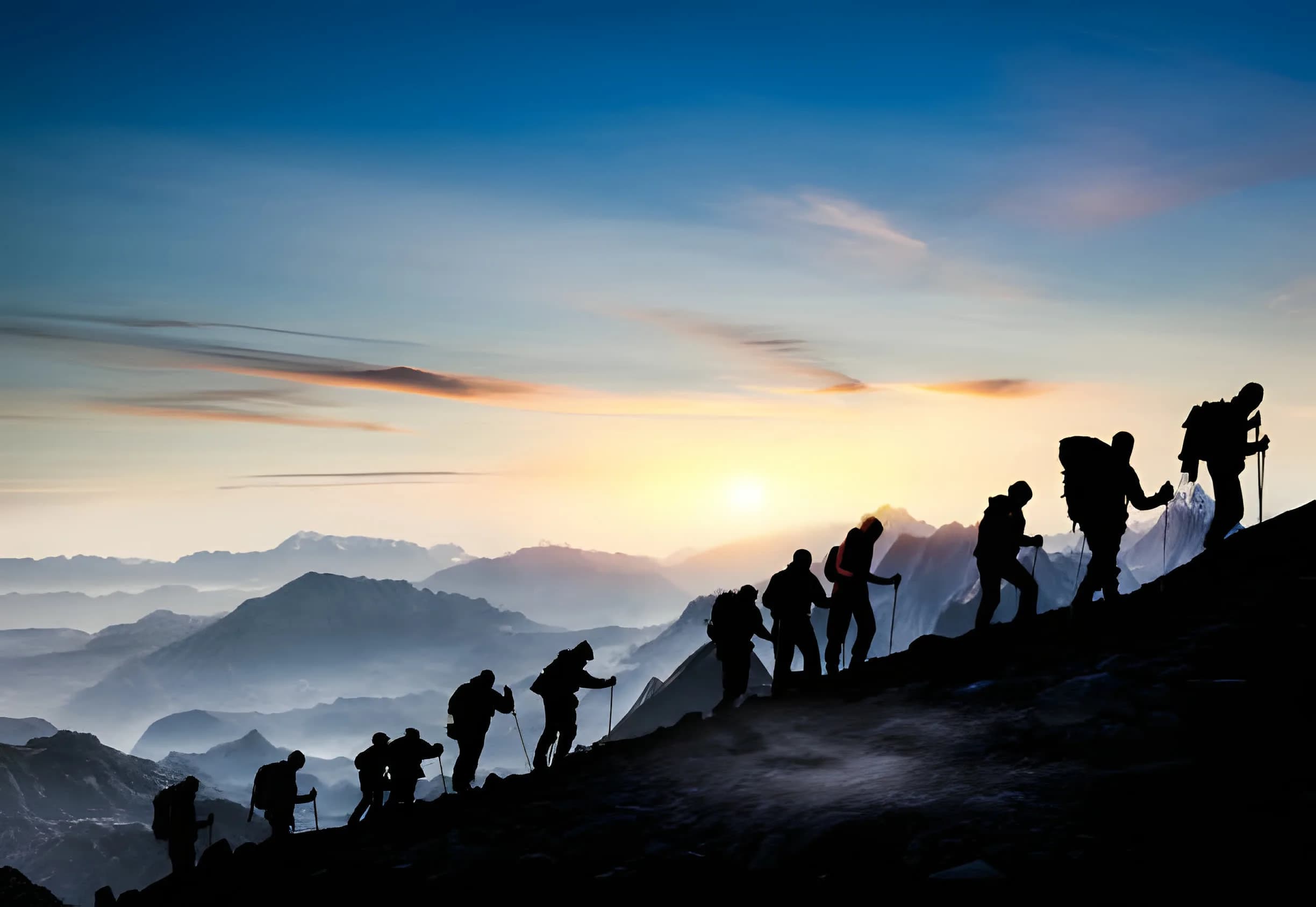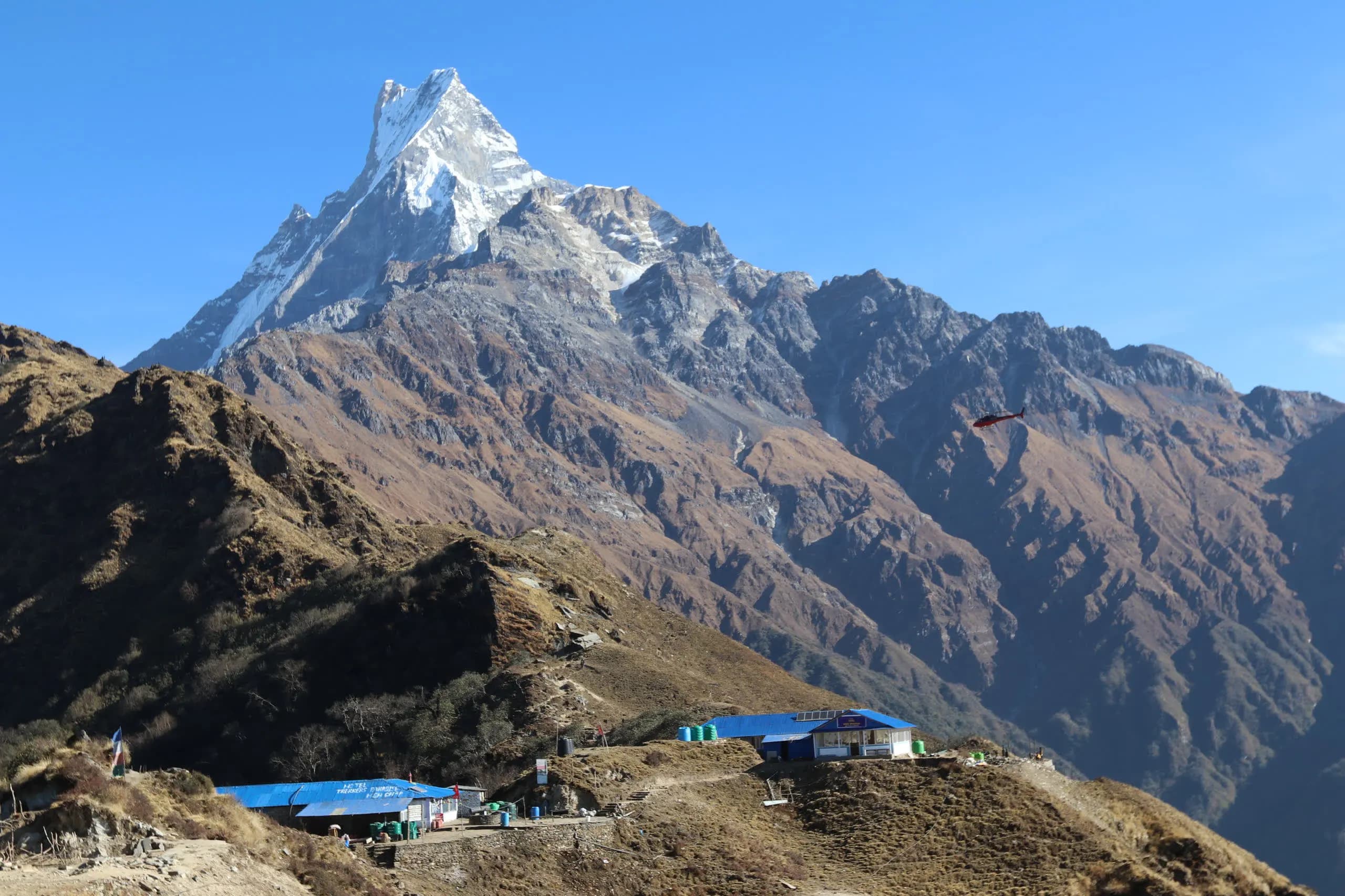
The shortest Mardi you can walk.
The 4-day Mardi Himal trek sits in a specific gap. It is faster than the 5-day standard, and like the 3-day express version it needs no helicopter to make the timing work, only a longer private jeep ride. The jeep carries you straight past the Kande trailhead to Pitam Deurali at 2,100 metres on Day 1, then you climb on foot to the Upper Viewpoint at 4,200 metres and walk back down to Sidhing under your own steam, with a local jeep for the final road section. If you want Mardi done quickly and you would rather spend the money on the trail than on a flight, this is the version that fits.
The way it saves a day is straightforward. The private jeep drives all the way to Pitam Deurali, well past the point where the 5-day’s jeep drops you at Kande, which removes an entire day’s walk-in through Australian Camp and Pothana. From Pitam Deurali the climb to High Camp and the Upper Viewpoint runs on a similar schedule to the longer treks, and the descent comes back down in two manageable stages rather than one huge push: first to Low Camp on Day 3, then out to Sidhing and the road on Day 4. It is a compressed trek, not a rushed one, but Day 2’s climb to High Camp is still the biggest single altitude gain of the trip. Read our altitude sickness guide before you commit to this pace if 3,500 metres and above is new to you.
We are clear about who this suits. Take the 4-day if you are reasonably fit, comfortable on long hill days, and short on time. Take the 5-day version instead if it is your first high trek, if you acclimatise slowly, or if you want a buffer day in case the summit morning clouds over. Both reach the same ridge sunrise; the 4-day simply trades an extra acclimatisation day for a longer jeep ride. The full route map and all the duration variants live on our itinerary page too.
The full schedule, day by day.
Four days from Pokhara and back. A private jeep opens Day 1 with the drive to Pitam Deurali, and a local jeep closes Day 4 from Sidhing. Altitudes and walking hours are listed for every day. Day 2 is the main altitude day; Day 3 is the sunrise viewpoint push, descending back to Low Camp rather than all the way to Sidhing in one go.
- Day 1
Pokhara → Pitam Deurali → Rest Camp
- Drive
- 2.5 to 3 hrs (Pokhara to Pitam Deurali)
- Trek
- 3 to 4 hrs
- Distance
- ~6 km
- Altitude
- Pitam Deurali 2,100 m → Rest Camp ~2,600 m
- Net change
- +500 m
We leave Pokhara by private jeep, usually around 07:00, and drive well past the old Kande trailhead on a rough but scenic road all the way to Pitam Deurali at 2,100 metres. This is the single biggest difference on the 4-day plan: instead of walking in through Australian Camp and Pothana, you skip that whole first day on the road, and the ACAP permit check happens here at Pitam Deurali rather than on the trail.
From the road head the trail turns off the busier Annapurna Base Camp route and climbs its own quiet ridge through oak, maple, and rhododendron forest. Langur troops are common in the canopy on this stretch. It is a modest first trekking day precisely because the jeep has already done the hard climbing for you.
We reach Rest Camp at roughly 2,600 metres by mid afternoon. Early dinner, early night, because Day 2 is the big altitude day and the whole 4-day profile depends on starting it rested.
Kande 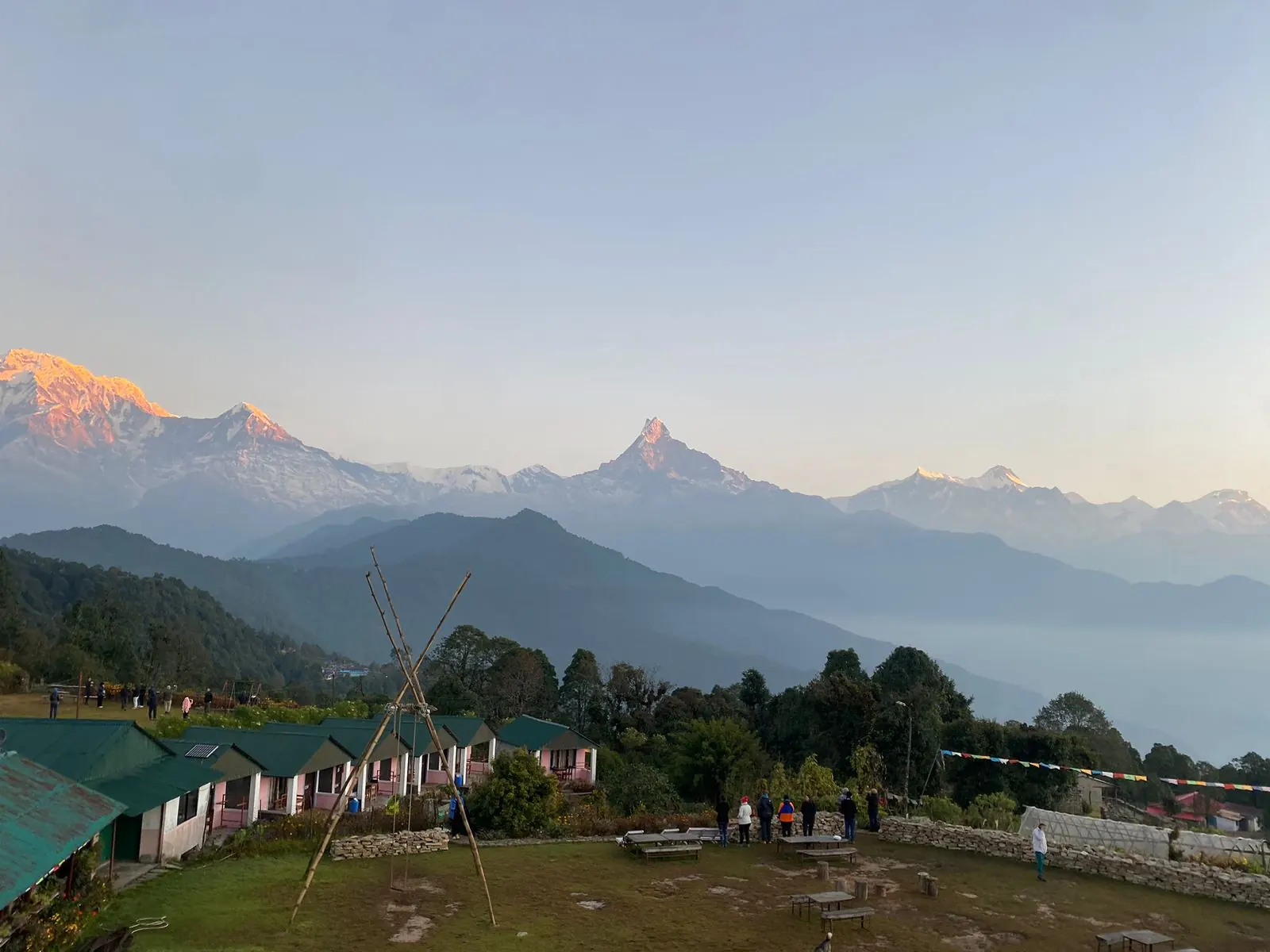
Australian Camp 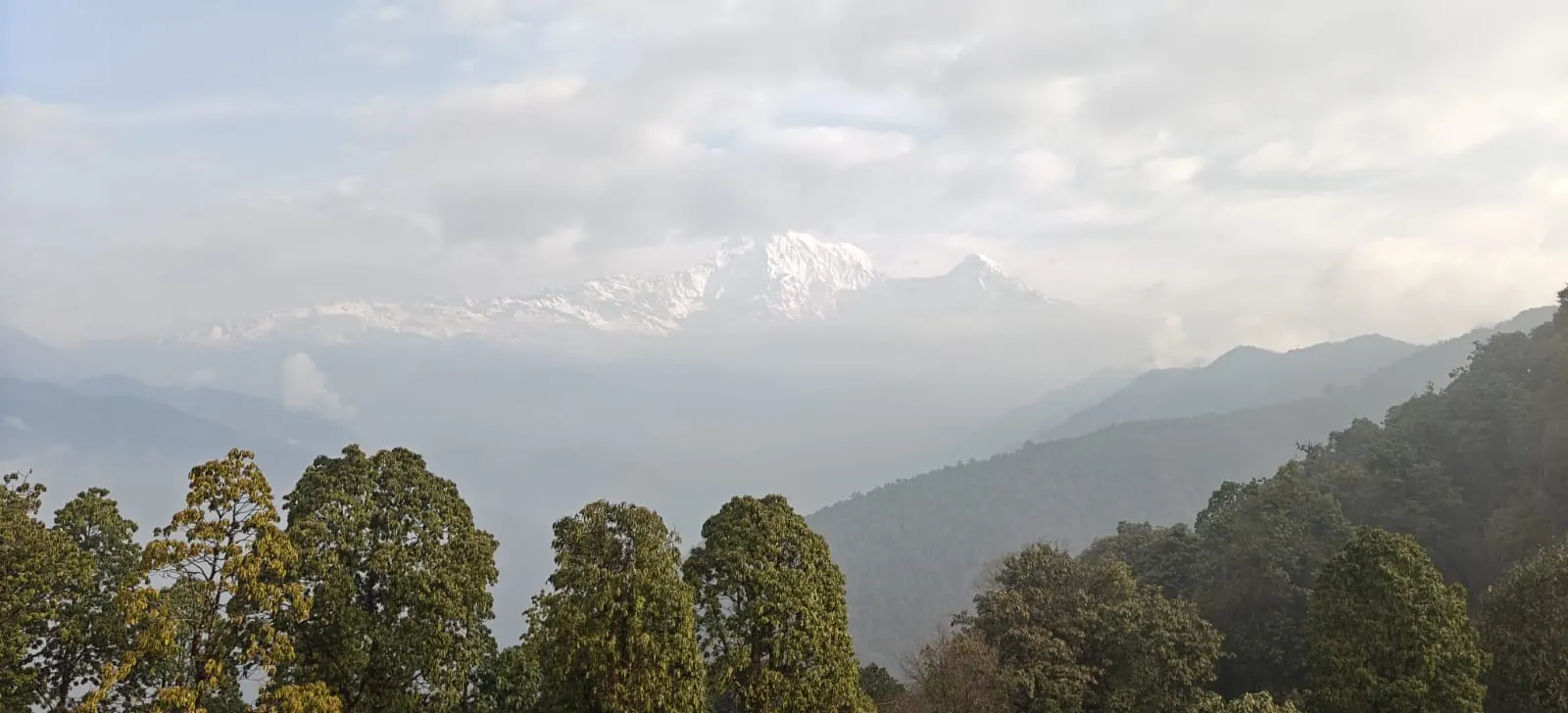
Pitam Deurali 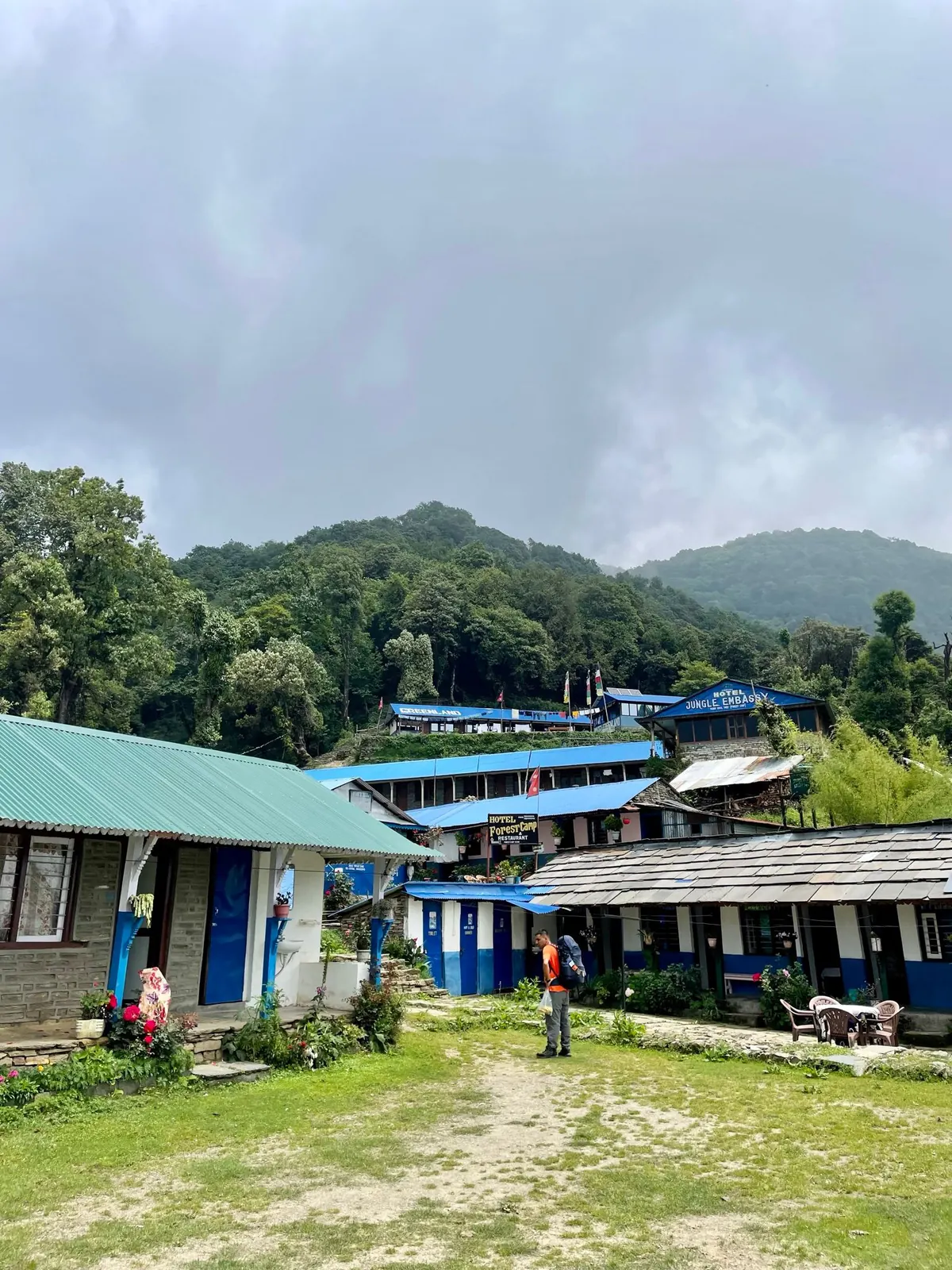
Forest Camp 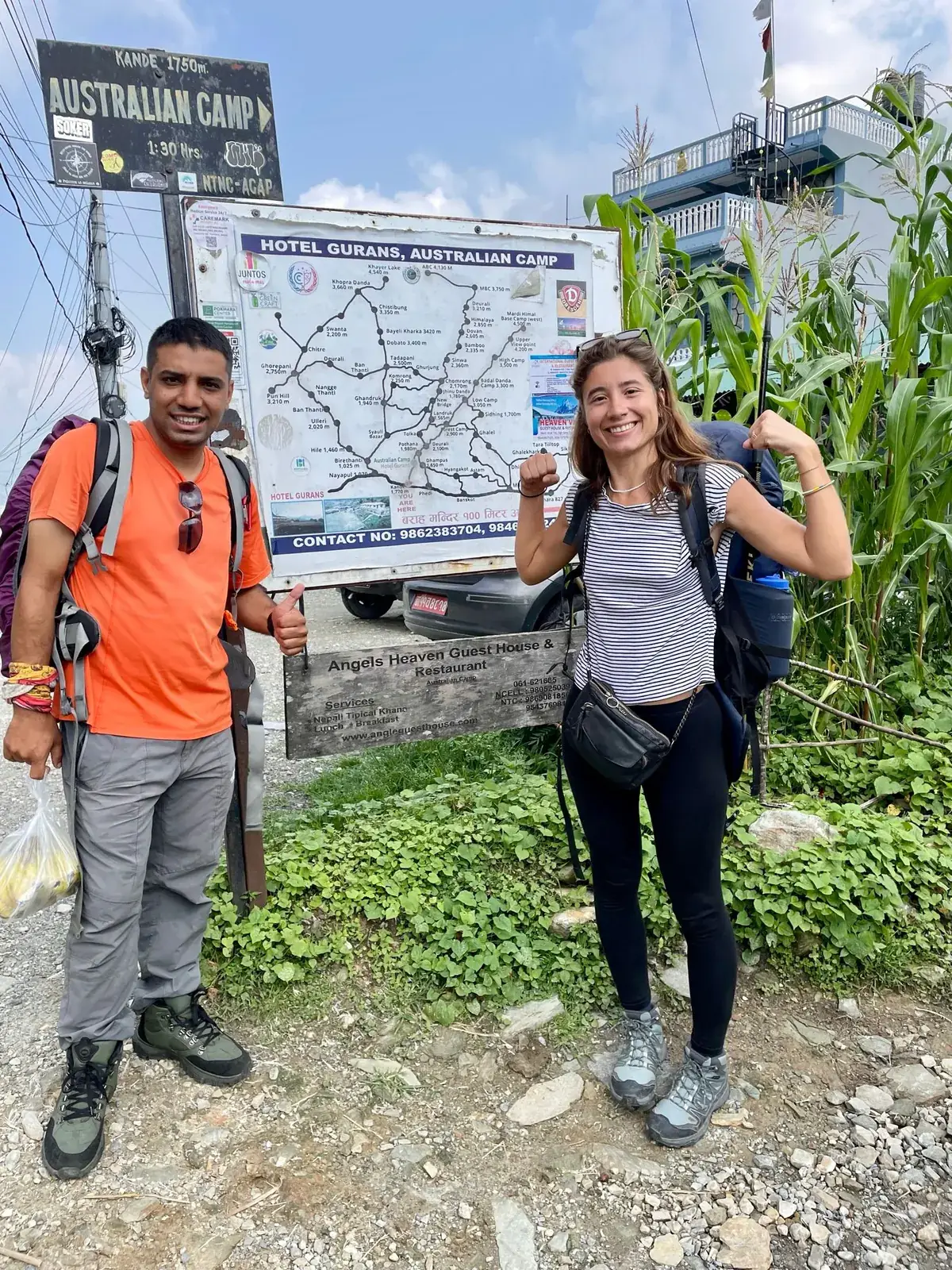
Kande 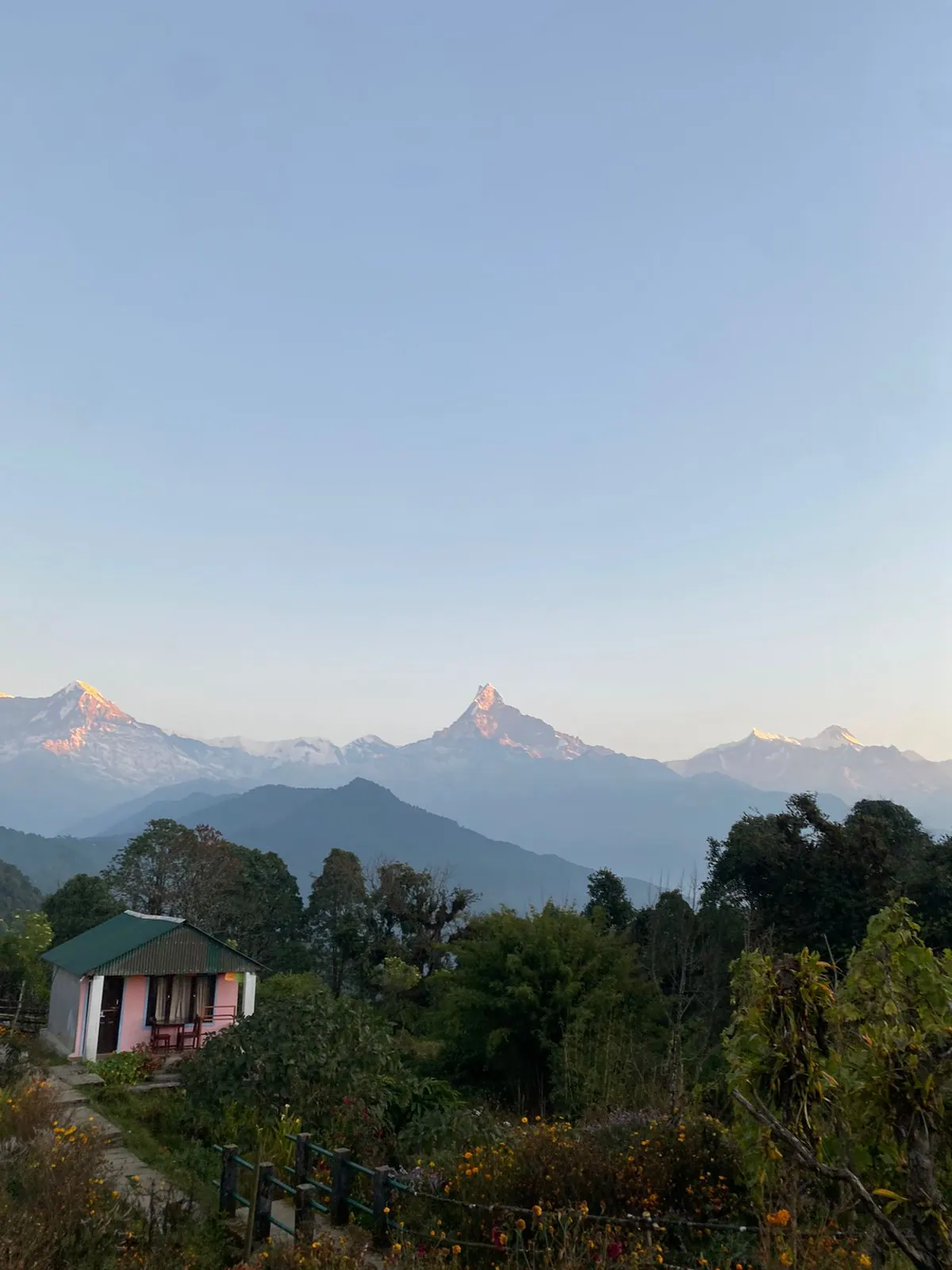
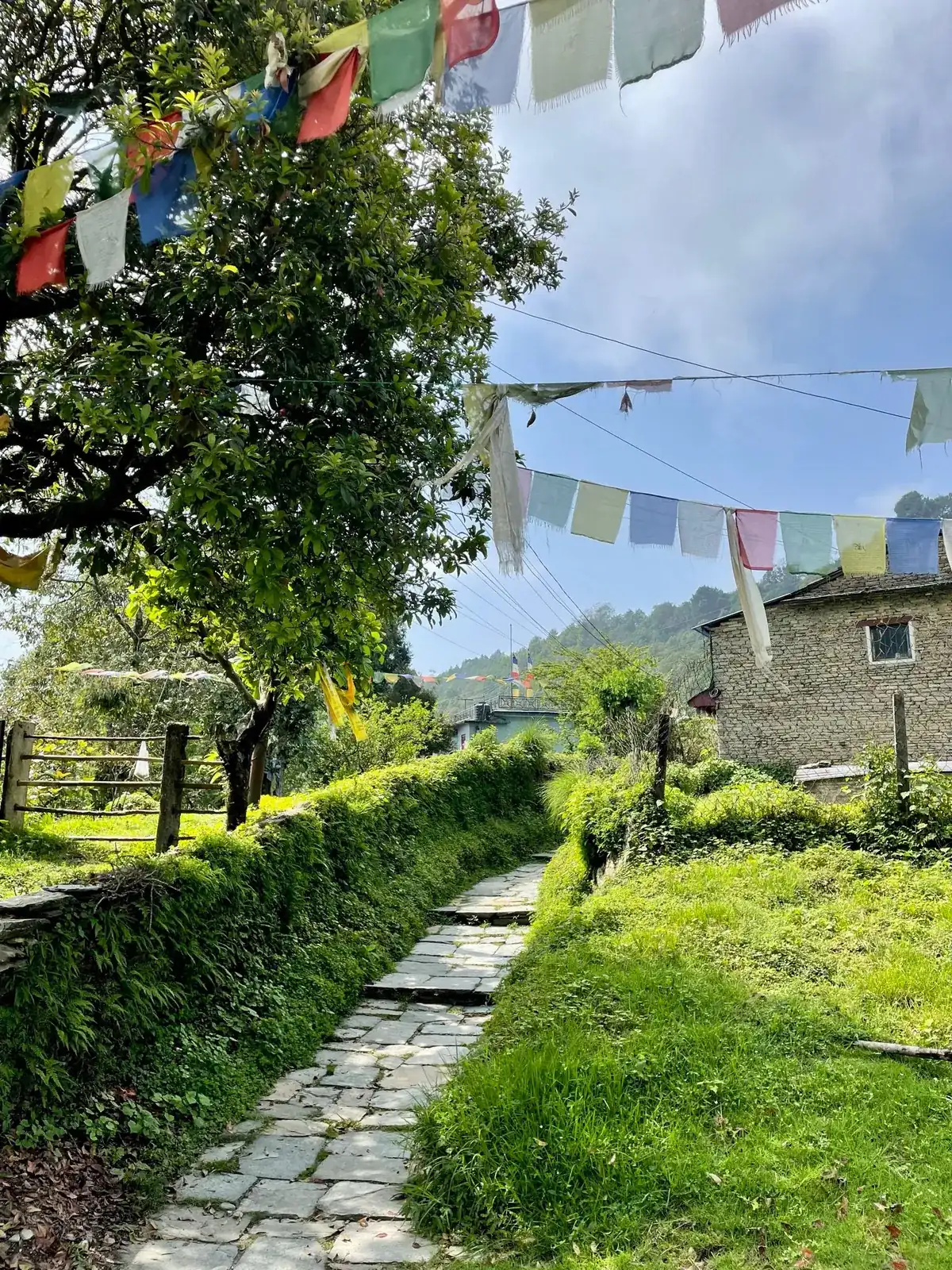
Australian Camp 6 photos from day 1, taken on the trail. - Day 2
Rest Camp → Low Camp → Badal Danda → High Camp
- Drive
- None
- Trek
- 5 to 6 hrs
- Distance
- ~8 km
- Altitude
- 2,600 → 2,985 → 3,210 → 3,580 m
- Net change
- +980 m
The day with the most altitude, and the reason this itinerary needs honesty up front. The trail climbs steadily through the upper forest to Low Camp at 2,985 metres, where the trees thin and the full Annapurna massif comes into view. We stop here for an early lunch and a pulse-oximetry check before continuing.
Above Low Camp the route breaks onto the open ridge, crosses Badal Danda (Cloud Ridge) at 3,210 metres, then climbs to High Camp at 3,580 metres. That is roughly 980 metres of net gain in a single day, and it is the part of the 4-day that asks the most of your body. Pace is deliberately slow above Low Camp, and anyone showing early symptoms is held at Low Camp for the night rather than pushed on. If you are new to walking above 3,000 metres, read our guide to altitude sickness before you book this version.
Arrive High Camp in the afternoon with time to rest. Machhapuchhre stands directly ahead across the valley, and the sunset from the dining hall is the moment most trekkers remember from the whole trip.
Forest Camp 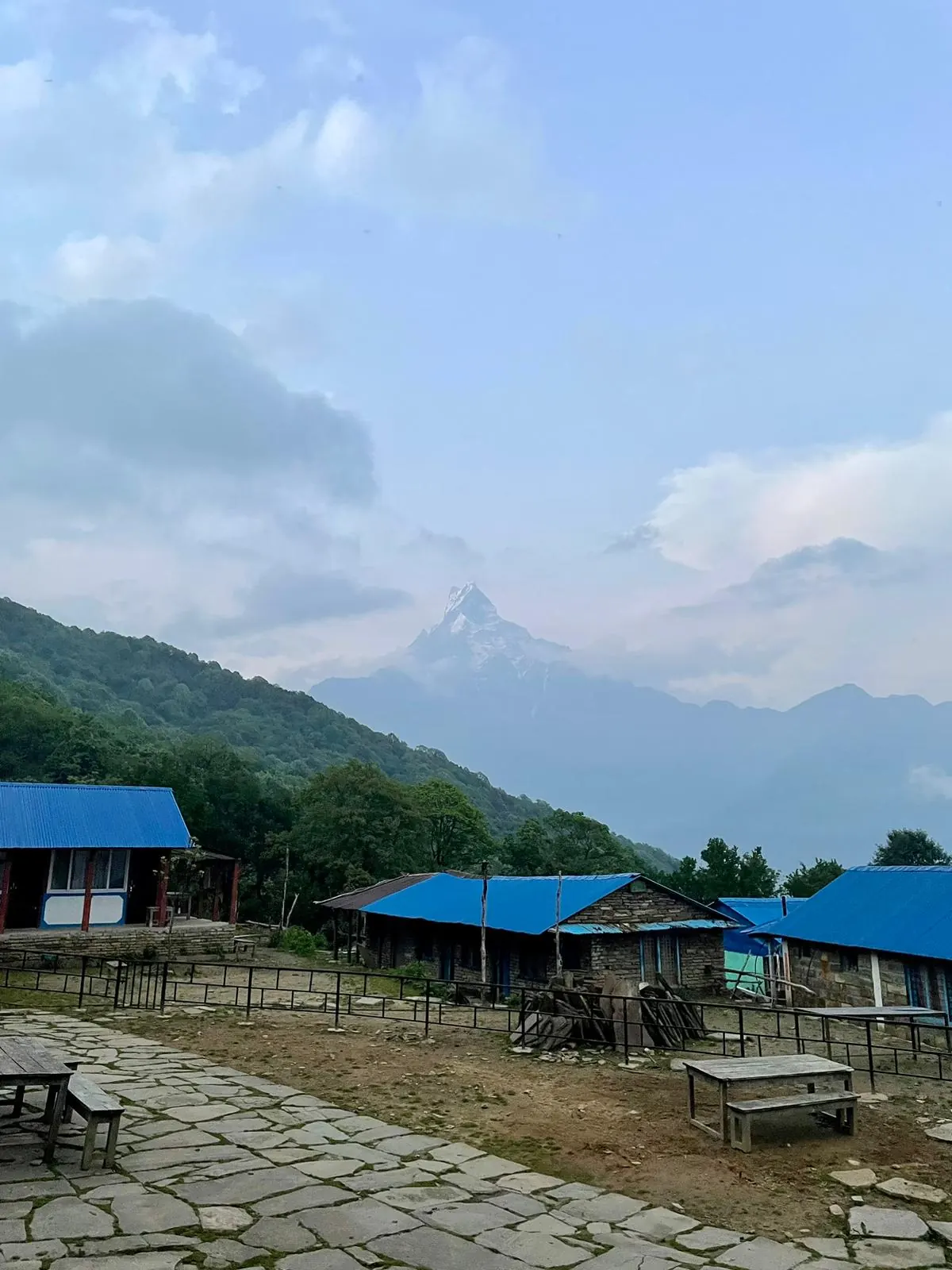
Low Camp 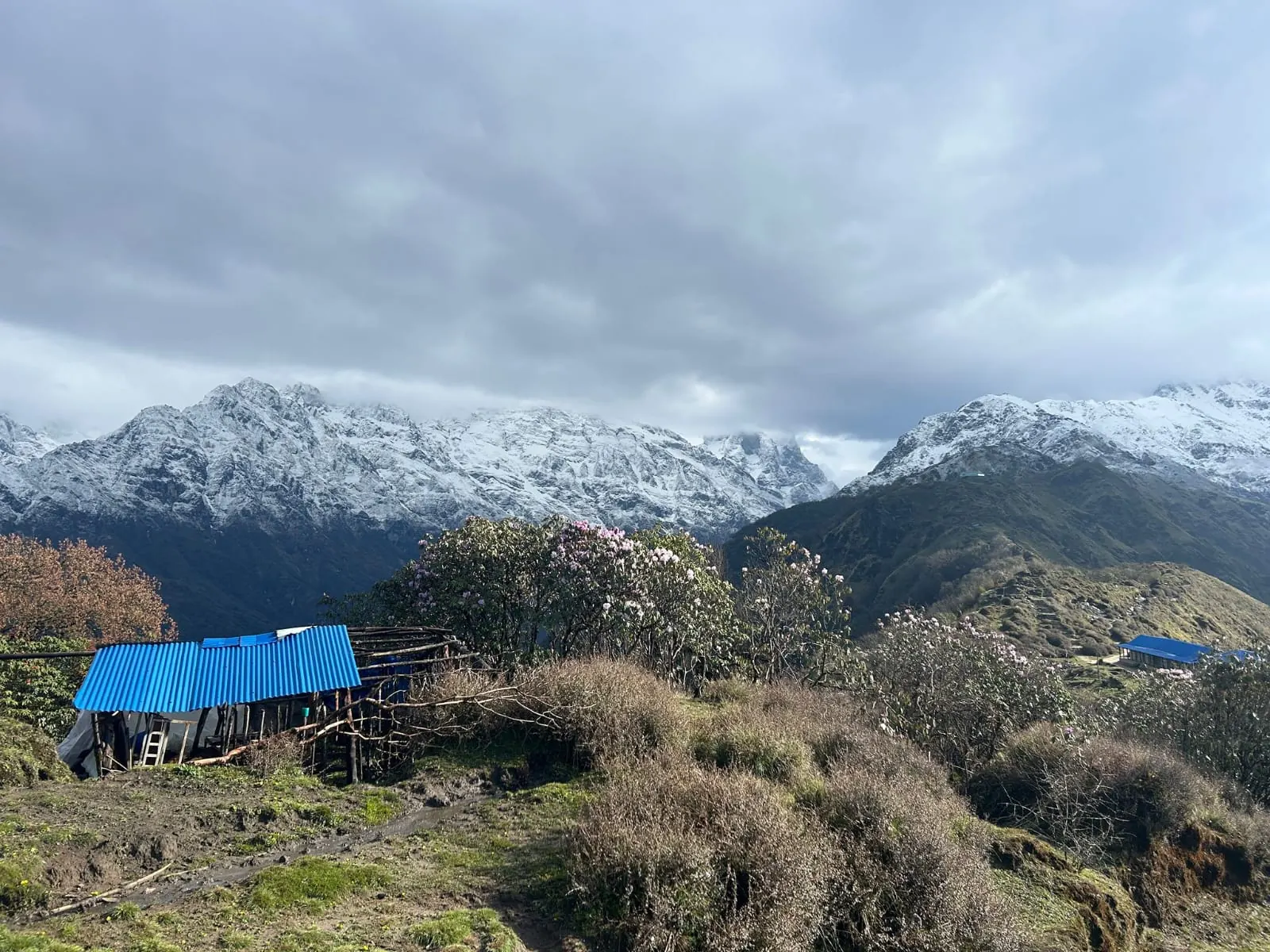
High Camp & Badal Danda 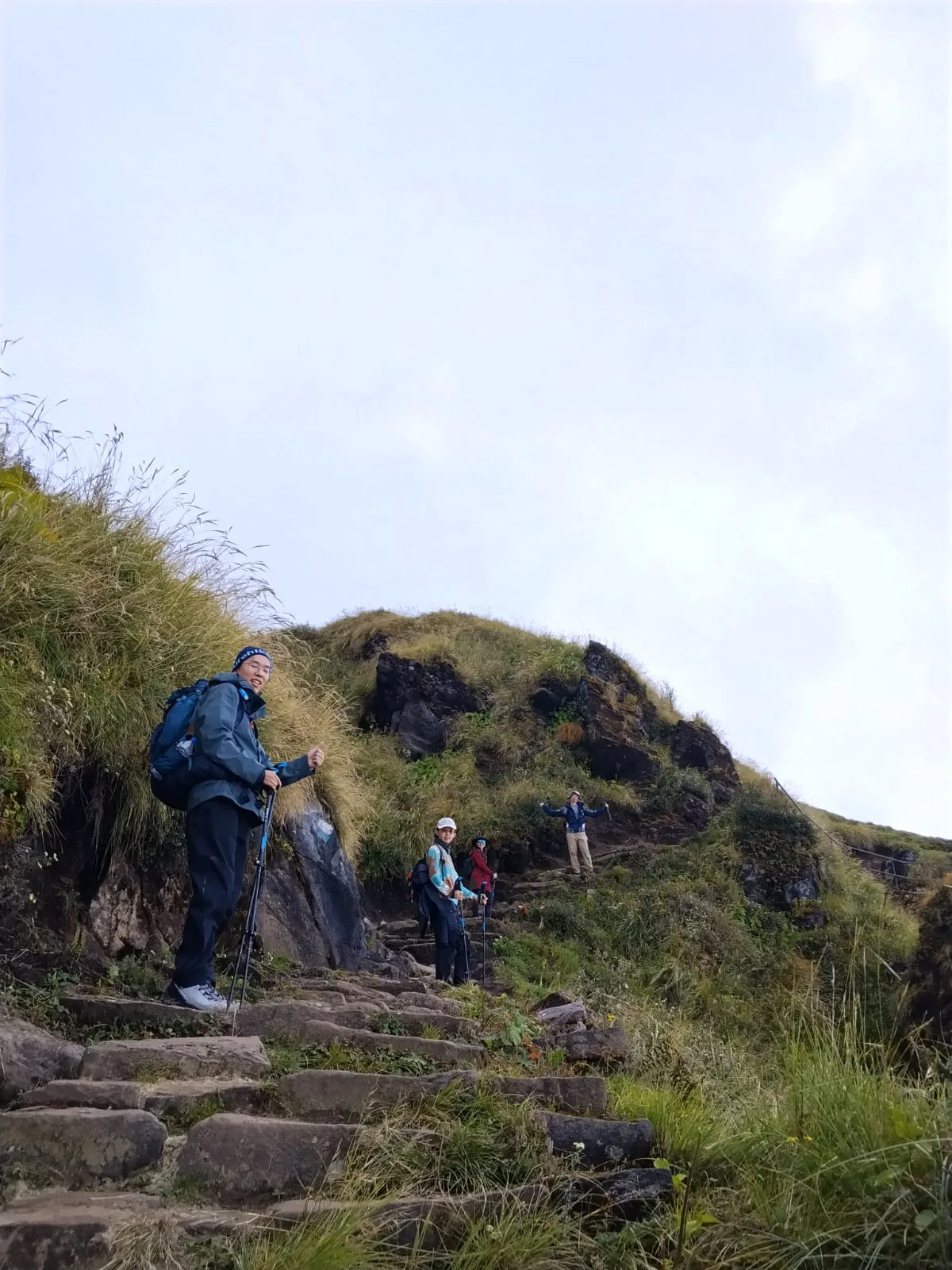
Trail to High Camp 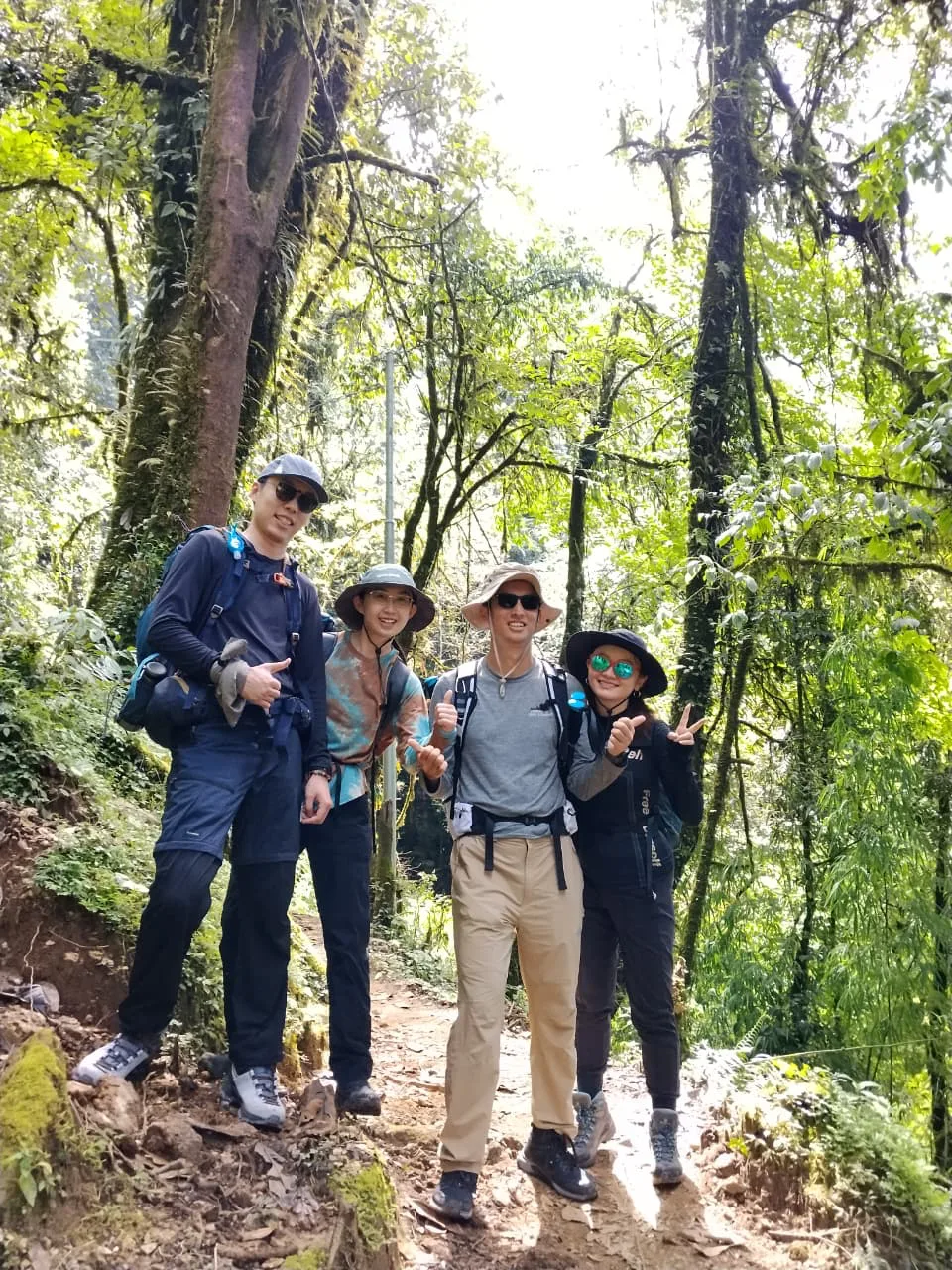
Trail to Forest Camp 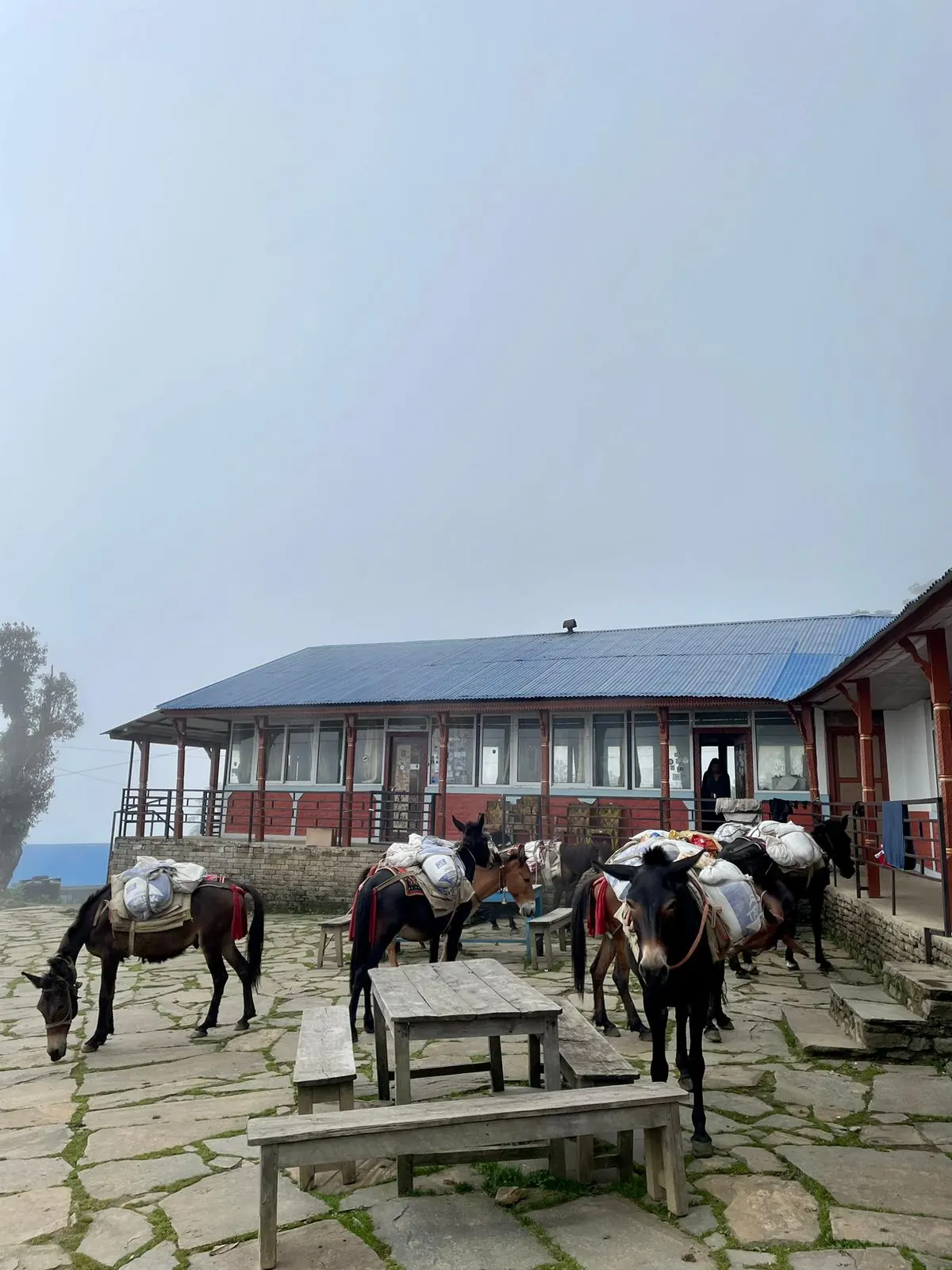
Low Camp 6 photos from day 2, taken on the trail. - Day 3
High Camp → Upper Viewpoint → back down to Low Camp
- Drive
- None
- Trek
- 7 to 8 hrs
- Distance
- ~13 km
- Altitude
- 3,580 → 4,200 → 2,985 m
- Net change
- +620 m / -1,215 m
The summit morning. We leave High Camp around 04:30 with headtorches for the pre-dawn ridge climb to the Upper Viewpoint at 4,200 metres. On a clear morning the sun lifts over the eastern peaks while Dhaulagiri sits far to the west and the Annapurna wall fills the sky in front of you. This is the highest point of the trek and the reason most people come. Mardi Himal Base Camp at 4,500 metres is about 1 hour 30 minutes further along the ridge. If you want to go on, ask your guide, and expect a longer day.
Return to High Camp for a proper breakfast, then descend back through Low Camp for the night, rather than pushing on to Sidhing in the same push. Trekking poles help on this stretch, and dropping to sleep near 2,985 metres after touching 4,200 metres is the kind of climb-high, sleep-low pattern that makes the next day's legs feel better than they have any right to.
Arrive Low Camp by mid to late afternoon. The hard climbing is now behind you, Day 4 is a walk downhill and a jeep, and a teahouse bed here feels earned.
High Camp & Badal Danda 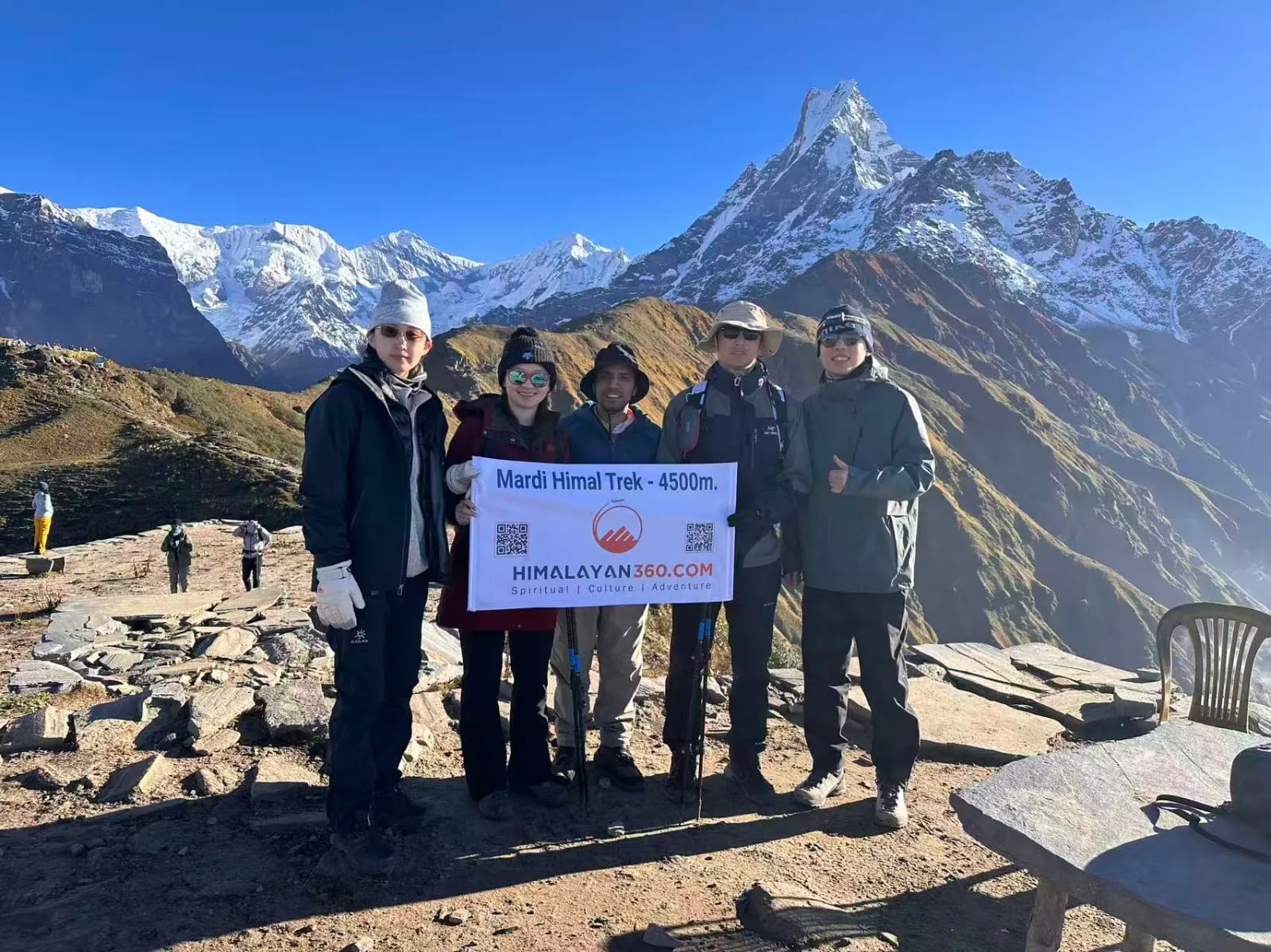
Upper Viewpoint Low Camp 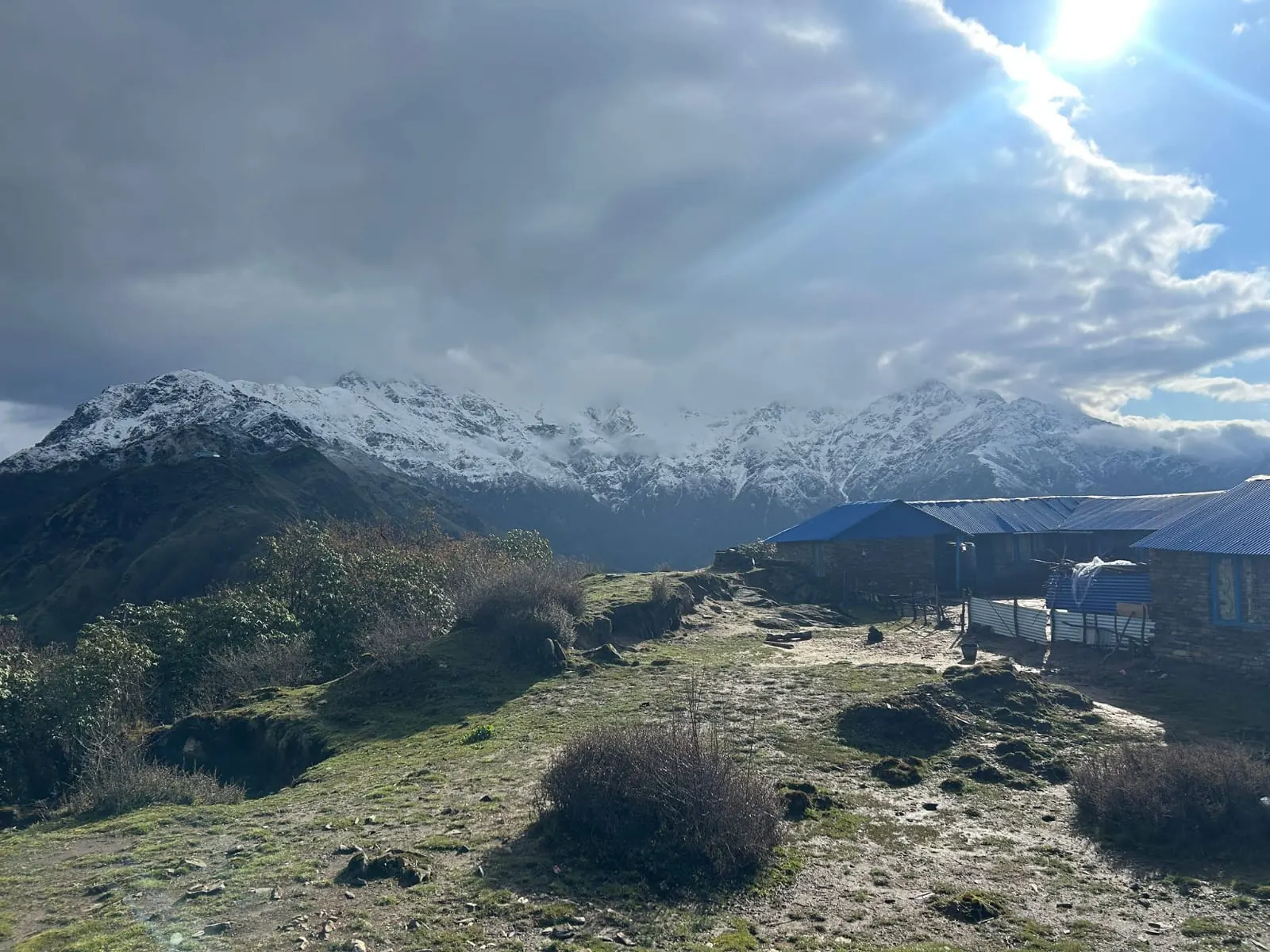
High Camp & Badal Danda 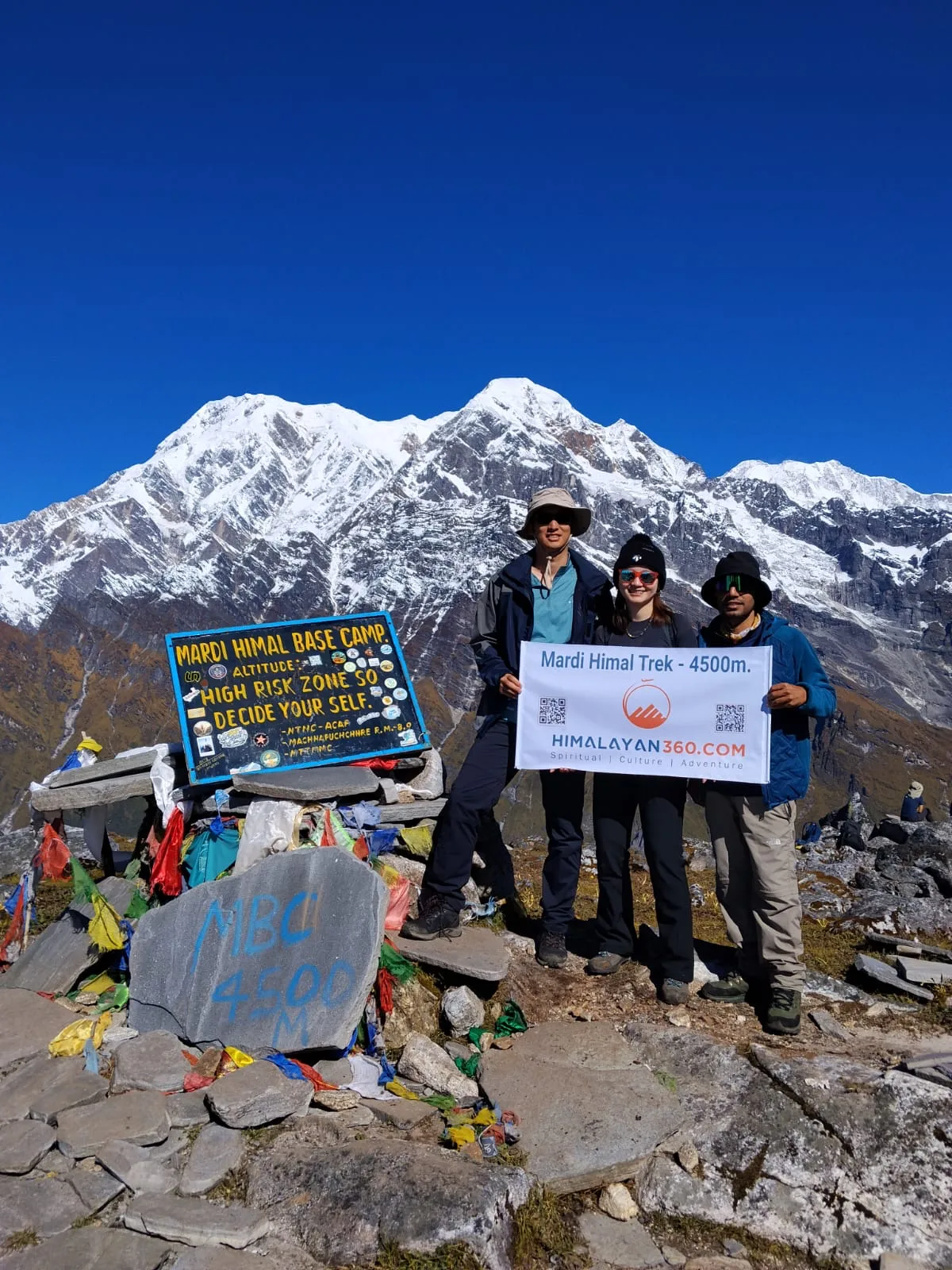
Mardi Himal Base Camp Low Camp 6 photos from day 3, taken on the trail. - Day 4
Low Camp → Sidhing → jeep to Pokhara
- Drive
- 2.5 to 3 hrs (Sidhing to Pokhara)
- Trek
- 5 to 6 hrs
- Distance
- ~11 km
- Altitude
- Low Camp 2,985 m → Sidhing 1,860 m → Pokhara 820 m
- Net change
- -1,125 m (trek) / -1,040 m (drive)
A long final walking morning down through forest and terraced farmland from Low Camp to the Gurung village of Sidhing at 1,860 metres. It is a proper trekking day, not a stroll, and after the summit push the day before, most people are glad it is downhill.
A local jeep meets us at Sidhing for the rough but scenic drive back to Pokhara at 820 metres, passing through Lwang and its tea gardens on the way. We reach the lakeside by late afternoon: hot shower, a real bed, and an evening free by Phewa Lake. Four days from the lakeside to the upper ridge and back, with a jeep doing the road work at both ends, is the whole point of this version.
Low Camp 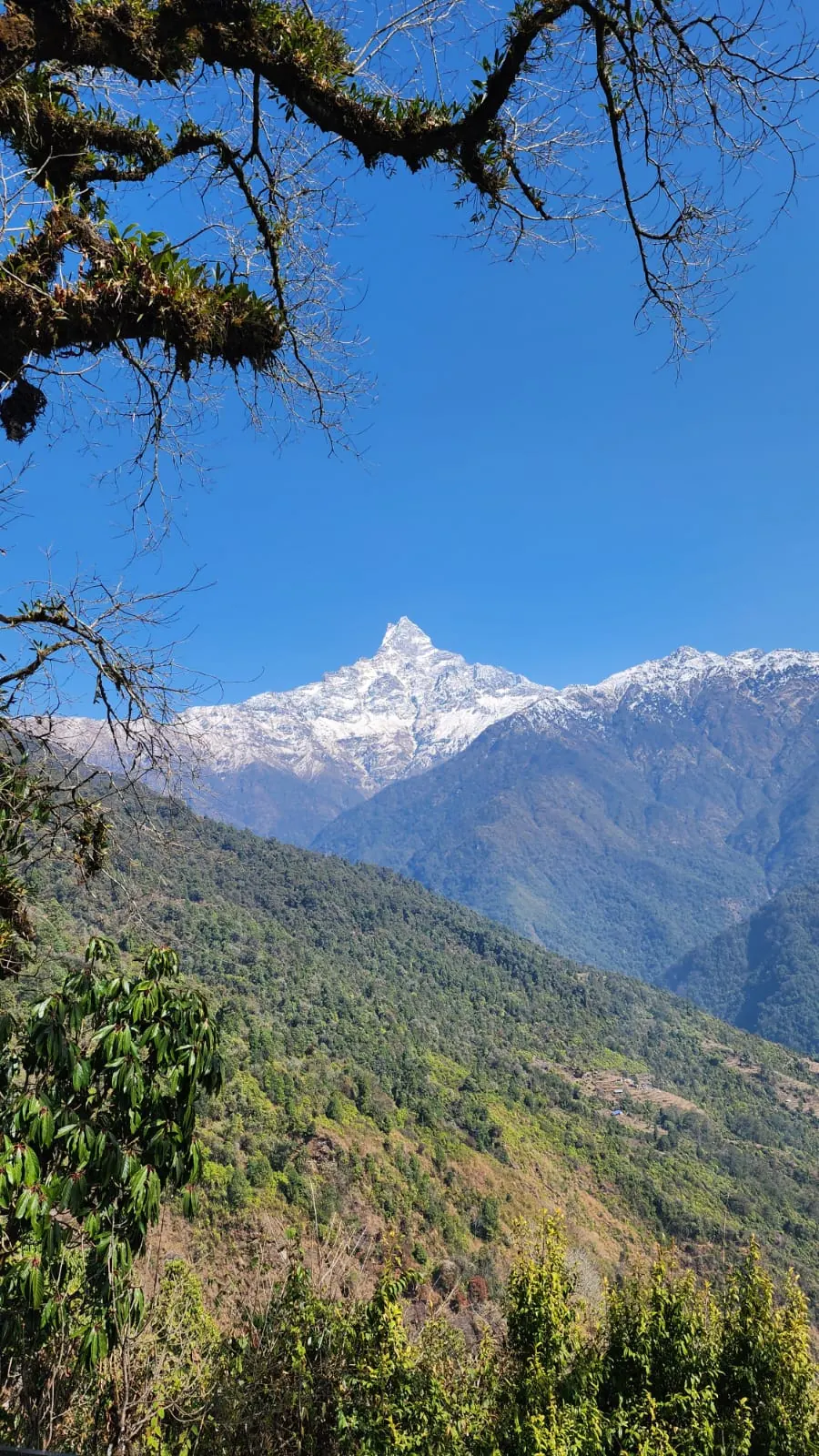
Sidhing Low Camp 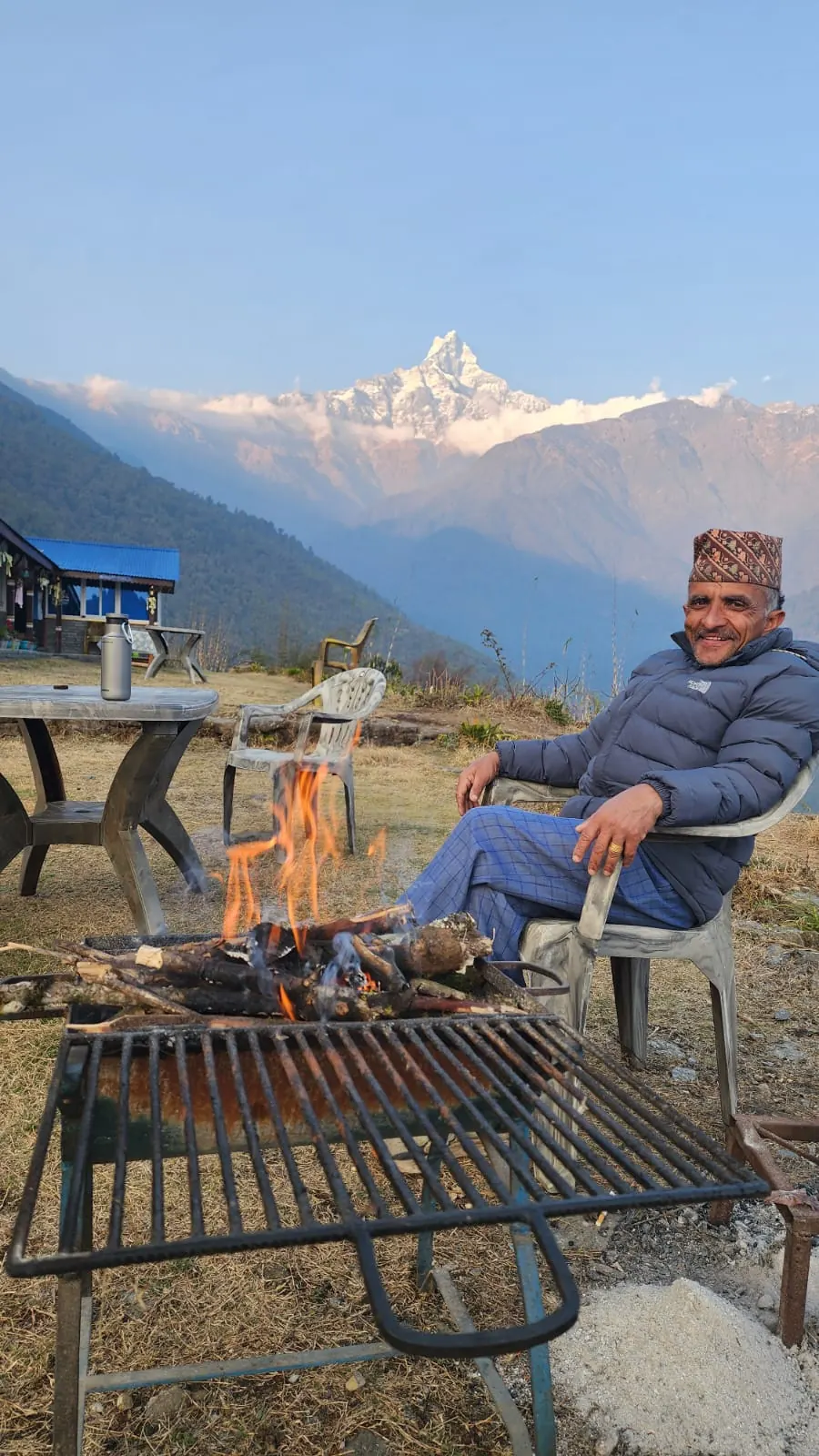
Sidhing 4 photos from day 4, taken on the trail.
Three, four, or five? An honest call.
All three reach the same 4,200-metre viewpoint, fully walked, with no helicopter on any of them. The difference is how far the jeep carries you before you start walking, how much altitude you gain per day, and whether you keep a weather buffer. Here is who should take which.
- You are fit and comfortable on steady high-altitude days.
- You want Mardi fully walked above Pitam Deurali, with no helicopter cost.
- You are short on time and would rather jeep past the Kande walk-in.
- You are fine with a brisk overall pace, even though no single day is extreme.
- This is your first Himalayan or high-altitude trek.
- You want the classic walk-in from Kande over Australian Camp.
- You want an extra acclimatisation night before the High Camp push.
- You want a buffer day in case the summit clouds over.
3-day
4-day
5-day
Want even less time on the trail? The 3-day express version compresses the same jeep-to-Pitam-Deurali start into one non-stop summit-and-descent day, fully walked with no helicopter. Want the gentlest acclimatisation? The 7-day Mardi Himal trek reaches High Camp on its fourth night, after a night at Badal Danda. The 6-day version climbs like the 5-day and adds its extra day on the walk out.
Published prices, no guesswork.
The 4-day runs on fixed per-person rates by group size, from USD 258 for a group of eleven to twenty up to USD 470 if you trek solo with a private guide and jeep. Larger groups split the jeep and permit costs further, so the per-person price drops as more people join your dates.
- 1 person
- USD 470
- 2 people
- USD 340
- 3 to 5
- USD 298
- 6 to 10
- USD 280
- 11 to 20
- USD 258
Want it private, just your party with your own guide? Add 5% per person. Going private on your own, you pay the 1-person rate.
The 4-day is priced below our 5-day rate at every group size, since it is one night and one route-day shorter thanks to the longer jeep transfer to Pitam Deurali. The full rate structure, the per-day cost breakdown, the ACAP and TIMS permit fees, and optional add-ons such as a porter all live on the permits and cost page. Guaranteed group dates and how to reserve are on fixed departures.
Secure card payment. The balance is paid in Kathmandu before the trek. See the booking policy.
- ACAP entry permit
- TIMS card
- Licensed English-speaking local guide for all 4 days
- Pokhara to Pitam Deurali private jeep
- Sidhing to Pokhara local jeep
- 3 nights teahouse accommodation
- 3 breakfast, 4 lunch, and 3 dinner, each with a cup of tea
- Trip success certificate
- Comprehensive first aid kit
- International flights
- Pokhara hotel (Lakeside, USD 35 to 80 per night)
- Lunch and dinner in Pokhara on rest days
- Personal trekking gear
- Travel insurance (mandatory, must cover heli evacuation to 4,500 m)
- Tips for the guide (10% to 30% of package price)
The 4-day touches 4,200 metres and includes a two-day descent down to Sidhing, so kit matters. Our packing list covers layering, footwear, and the trekking poles you will be glad of on Day 3 and Day 4. Pick a stable window with the best season guide, which matters more here because there is no buffer day for bad weather.
Before you book.
- Is 4 days enough for the Mardi Himal trek?
- Yes, four days is enough to walk Mardi Himal in full and reach the Upper Viewpoint at 4,200 metres, with no helicopter and no shortcut on the mountain itself. A private jeep drives you straight to Pitam Deurali on Day 1, which is what makes four days possible, and every metre above that is on foot. What it removes compared with the 5-day is slack, not scenery: there is no buffer day for weather and the acclimatisation window is tighter. If you are reasonably fit and have a tight schedule, four days works. If you want a safety margin for weather or altitude, take the 5-day.
- How hard is the 4 day Mardi Himal trek?
- It is a compressed but sensible Mardi Himal profile, not a reckless one. Day 2 gains roughly 980 metres to High Camp at 3,580 metres, and Day 3 climbs to 4,200 metres before descending back to Low Camp, with the rest of the descent to Sidhing saved for Day 4. There is no technical climbing, but the daily hours are demanding, especially Day 3, and Day 4 is a real trekking day, not a stroll. If you can walk 5 to 8 hours on steep hill terrain with a daypack on back-to-back days, you can do it. If that sounds like a lot, the 5-day spreads the same route over more time.
- Can beginners do the 4 day Mardi Himal trek?
- We do not recommend the 4-day as a first Himalayan trek. The jeep transfer to Pitam Deurali removes a full acclimatisation day that the longer treks use to ease into altitude, so the climb to High Camp and the summit morning both come faster than on the 5-day. Complete beginners are far better served by the 5-day or the 7-day, which give the body more time to acclimatise and keep a buffer for a bad-weather morning. Read our altitude sickness guide before deciding, and be honest with yourself about your fitness.
- Should I do the 4 day or 5 day Mardi Himal trek?
- Both walk the same ridge and reach the same 4,200-metre viewpoint with no helicopter. The 4-day saves a day mainly through a longer private jeep ride, all the way to Pitam Deurali rather than the standard Kande trailhead, which trims a full walking day off the front of the trip and leaves less time to acclimatise. Choose the 4-day if you are fit, time-pressed, and comfortable with a demanding pace. Choose the 5-day if you want the classic walk-in from Kande, an extra acclimatisation night, and a buffer day in case the viewpoint clouds over. The 5-day is the safer default; the 4-day is the lean option for people who know they can handle it.
- What does the 4 day Mardi Himal trek cost?
- The 4-day is priced by group size: USD 470 per person to trek solo with a private guide and jeep, USD 340 for two people, USD 298 for a group of three to five, USD 280 for six to ten, and USD 258 per person for a group of eleven to twenty. For a private trip, just your party with your own guide, add 5% per person; a solo trekker pays the 1-person rate. All published rates include the ACAP and TIMS permits, the private jeep to Pitam Deurali, the local jeep back from Sidhing, a licensed guide, three nights of teahouse accommodation, and the listed meals. Our permits and cost page has the full rate structure and the per-day breakdown the price is built on.
- Do I need a helicopter for the 4 day Mardi Himal trek?
- No. Nothing in this itinerary flies. The private jeep only covers the road sections, Pokhara to Pitam Deurali on Day 1 and Sidhing back to Pokhara on Day 4, and every metre between those two points, including the push to the Upper Viewpoint, is walked. If you want the mountain without any trekking at all, that is a different product entirely: our helicopter tour, a same-morning flight to Mardi Himal Base Camp and back with no walking involved.
- When is the best time to do the 4 day Mardi Himal trek?
- Spring (March to May) and autumn (late September to November) give the most stable weather and the clearest mountain views, which matters more on the 4-day because there is no buffer day to absorb a clouded-over summit morning. Winter is colder and quieter with a real chance of snow at High Camp, and the monsoon (June to August) brings cloud, leeches, and obscured views. Our best months guide breaks the seasons down in detail.