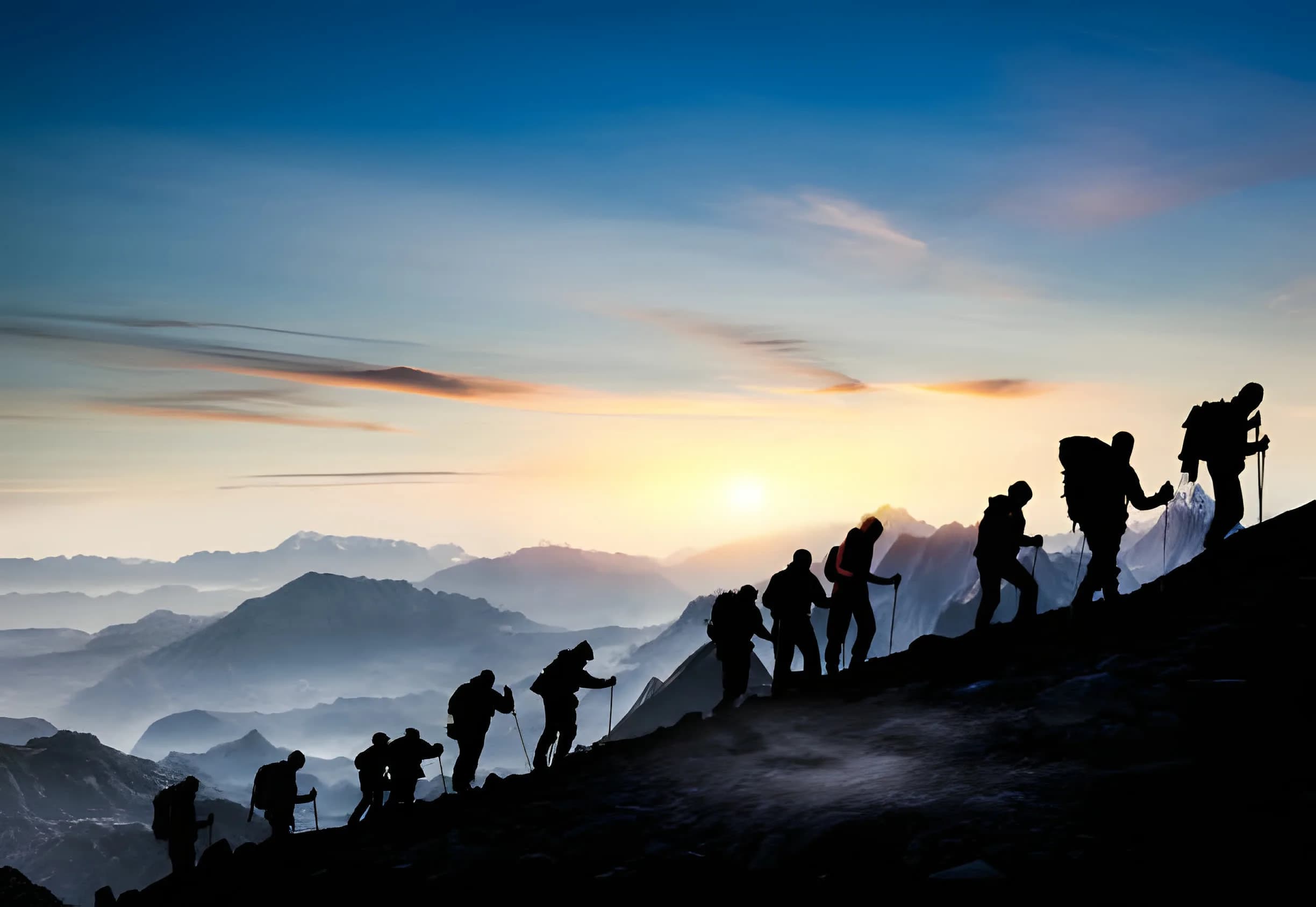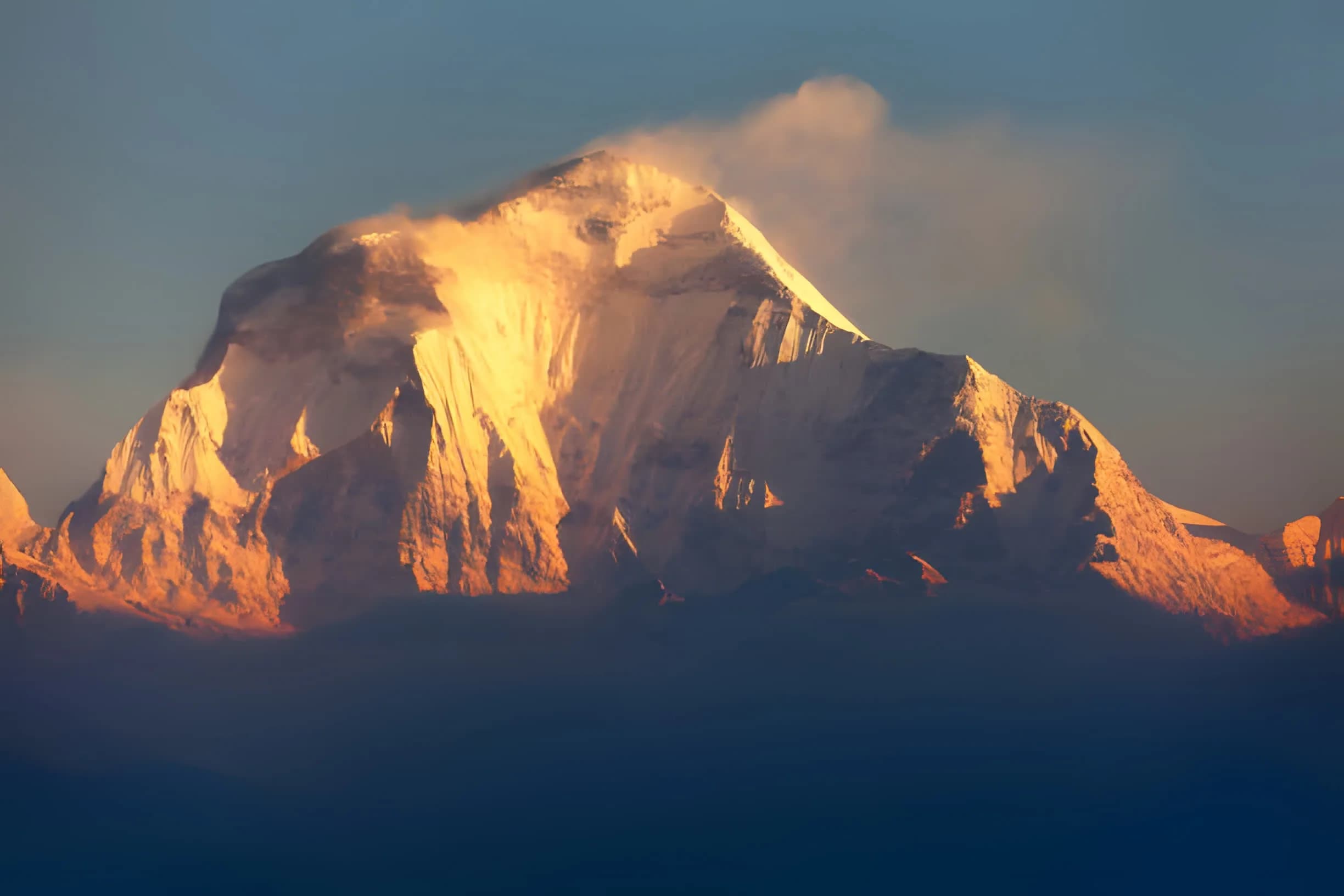
Two ridges, one quiet trip.
Most trekkers who reach the Annapurna region walk Poon Hill or Annapurna Base Camp and share the trail the whole way. This route does the opposite. It strings together the Mardi Himal and Khopra Danda ridges, the two the crowds skip, into a single 11-day circuit that starts and finishes in Pokhara. You climb from Kande to a ridge with Machhapuchhre at arm’s length, then a week later stand on a west-facing balcony opposite an eight-thousander before a pilgrimage to the trek’s highest point, and you do almost all of it on quiet trails.
The two ridges cannot be joined on one high traverse, because they sit on opposite sides of the central foothills. Instead the trek climbs Mardi Himal first from Kande, then drops through Ghandruk, Tadapani, and Dobato to pick up the Khopra ridge from below. The staging matters: doing Mardi first, up to the Upper Viewpoint at 4,200 metres, works as acclimatisation for the harder push to come, and it saves the trek’s true high point, Khayer Lake at 4,660 metres, for the second half. If you want the figures side by side, our Khopra Danda vs Mardi Himal comparison lays the two routes out row by row.
The reward for the extra days is contrast. Mardi is closeness, the sacred fishtailat arm’s length, with family-run teahouses on the ridge. Khopra is sweep and depth, Dhaulagiri across the Kali Gandaki gorge, with community lodges run by the villages themselves. Add the hike up to Khayer Lake and you also touch the single highest point of either trek, a serious day at close to 4,660 metres. We are honest about the cost of that: 11 days, two big ascents, and one long high day for the lake. If altitude is new to you, read our altitude sickness guide before you book. For the wider region, see how this route sits among the other treks near Mardi Himal.
The combined route, in numbers.
Both ridges sit inside the Annapurna Conservation Area, so both need the same paperwork. The Mardi ridge comes first on this trip, Khopra Danda second, and Khayer Lake sits near the end as the trek’s highest point.
- Duration
- 11 days, Pokhara to Pokhara
- Mardi Upper Viewpoint
- 4,200 m (day 4)
- Khopra Danda ridge
- 3,660 m (day 8)
- Khayer Lake, highest point
- 4,660 m (day 9)
- Big ascents
- Two, plus the Khayer Lake day
- Lodging
- Family teahouses, then community lodges
- Permits
- ACAP + TIMS
- Grade
- Moderate, three demanding days
The full schedule, day by day.
Eleven days from Pokhara and back. The first half climbs the Mardi ridge from Kande to the Upper Viewpoint, then the trail drops through Ghandruk, Tadapani, and Dobato to link across to Khopra Danda and the Khayer Lake day near the end. Altitudes and walking hours are listed for every day, and the staging is tailored to your group and the weather.
- Day 1
Pokhara → Kande → Pitam Deurali
- Drive
- 1.5 hrs (Pokhara to Kande)
- Trek
- 3 – 4 hrs
- Distance
- ~7 km
- Altitude
- Kande 1,770 m → Pitam Deurali 2,100 m
- Net change
- +330 m
We leave the Pokhara lakeside after breakfast and drive about ninety minutes to the Kande trailhead, on the western rim of the Annapurna Conservation Area and the start of the Mardi Himal ridge. Stone steps climb quickly through forest to Australian Camp at 2,060 metres, where the first wide view of Annapurna South and Hiunchuli opens up, then on through the small settlement of Pothana where the ACAP permit is checked.
The trail eases past Pothana to Pitam Deurali at 2,100 metres, the junction where the Mardi route leaves the busier Annapurna Base Camp path and turns onto its own quiet ridge. It is a short first day by design: eleven days ahead means no need to rush the acclimatisation, and the teahouse at Pitam Deurali is a gentle place to start.
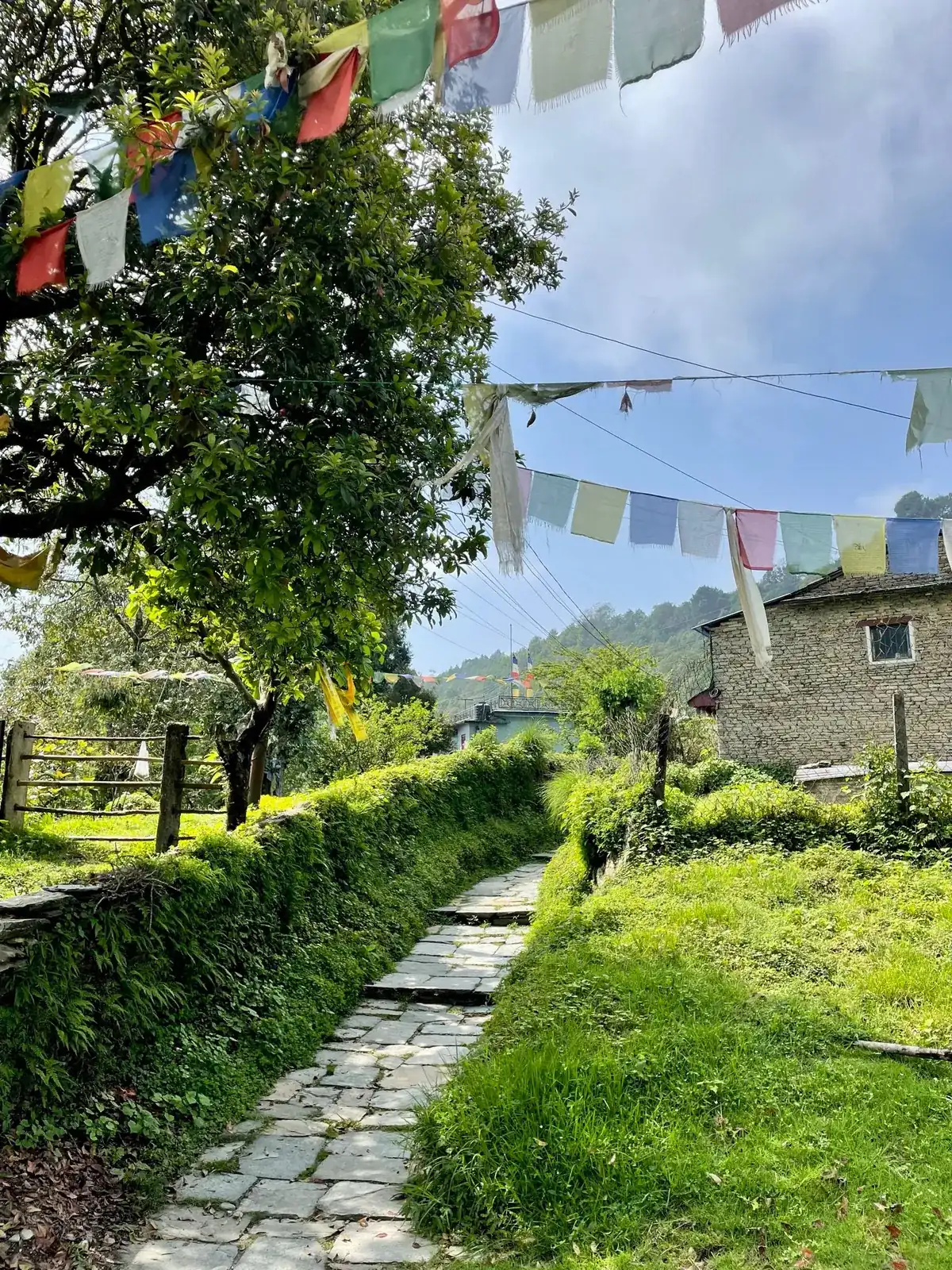
Kande 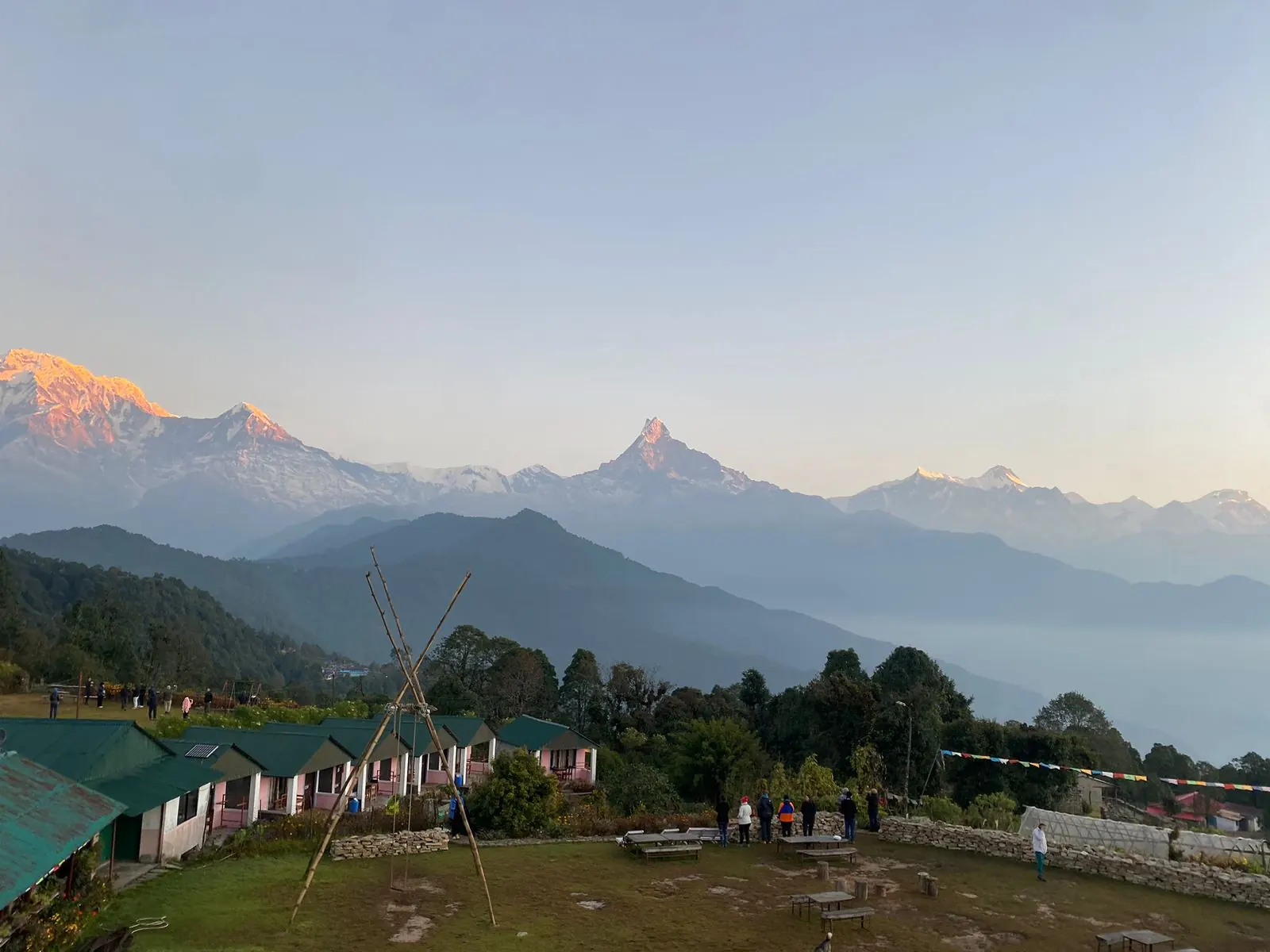
Australian Camp 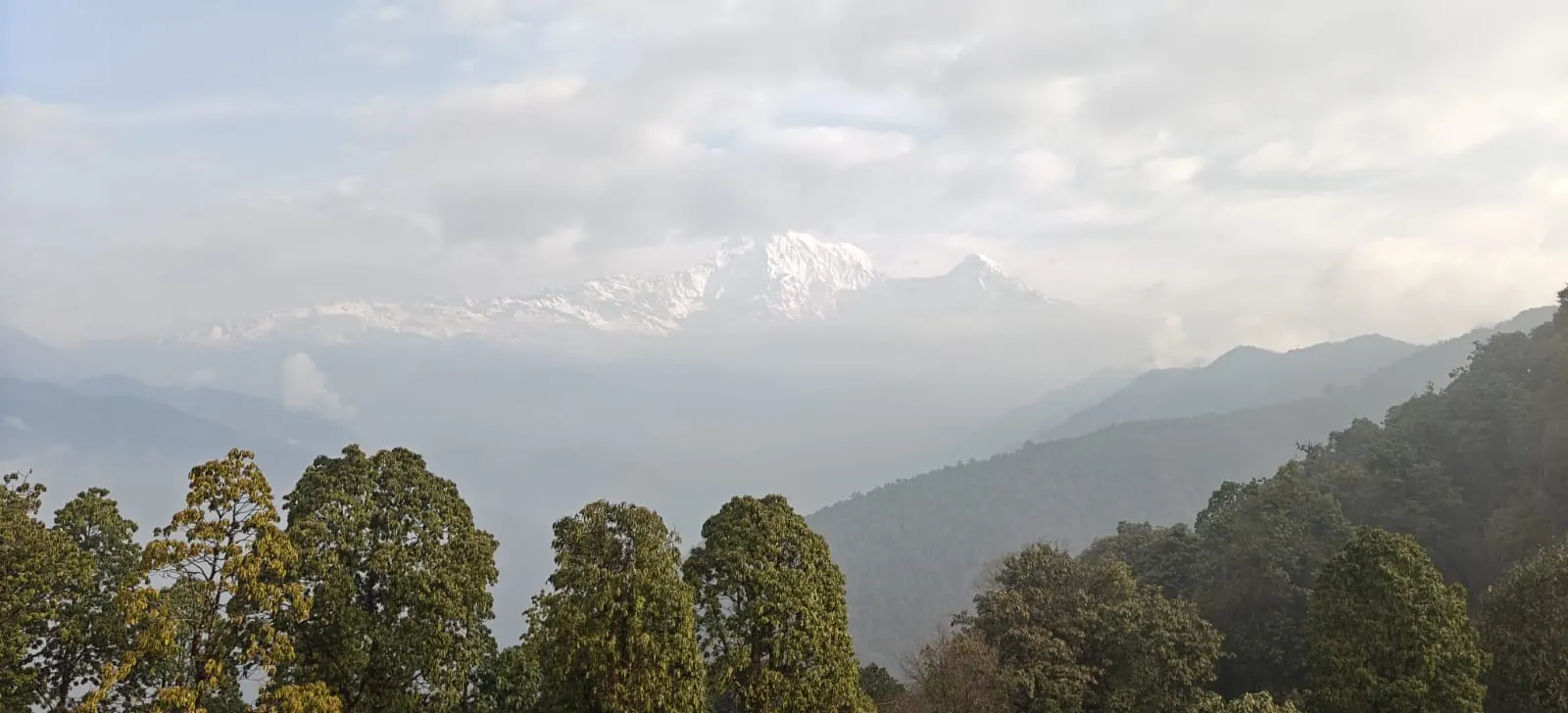
Pitam Deurali 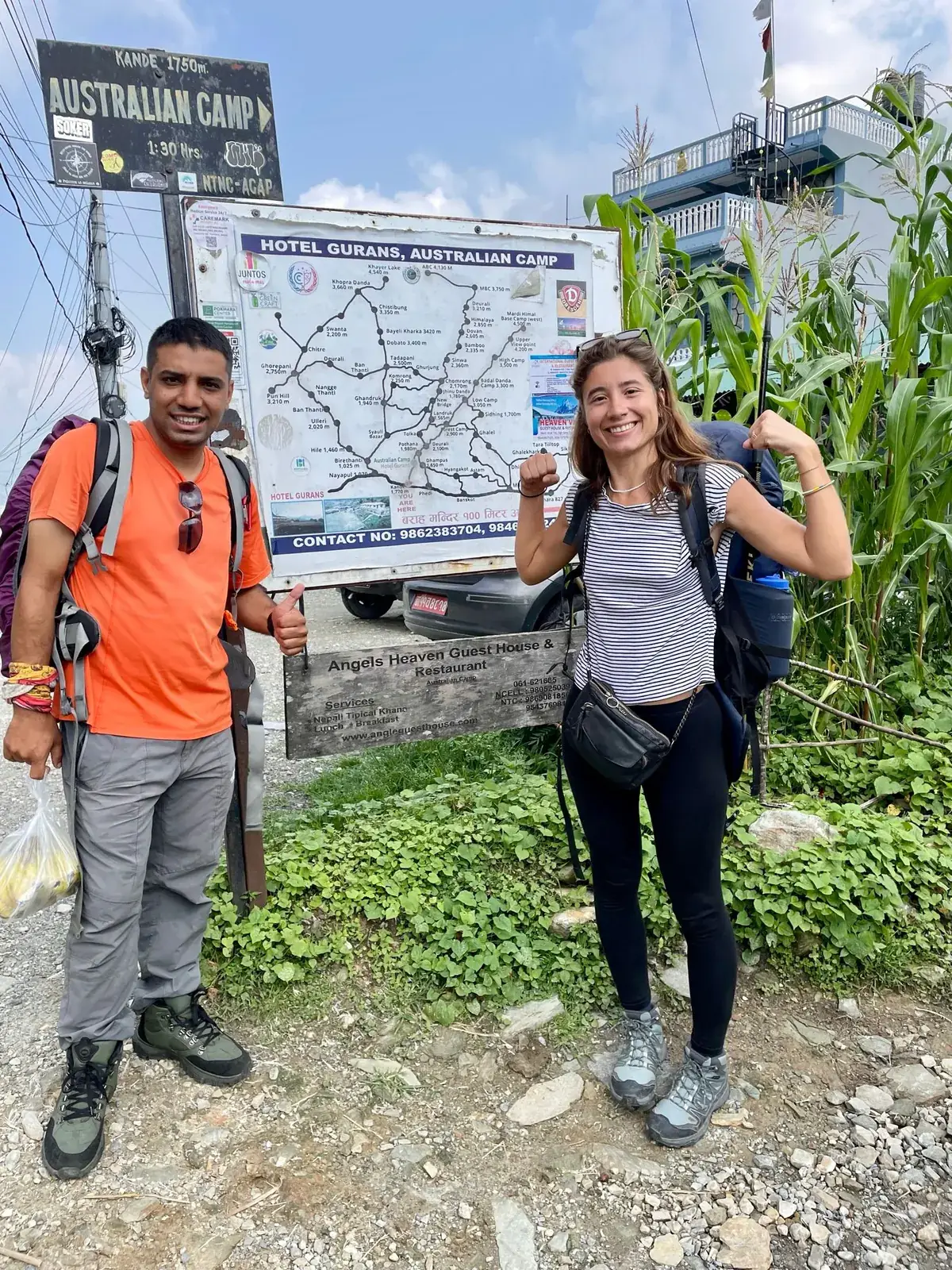
Kande 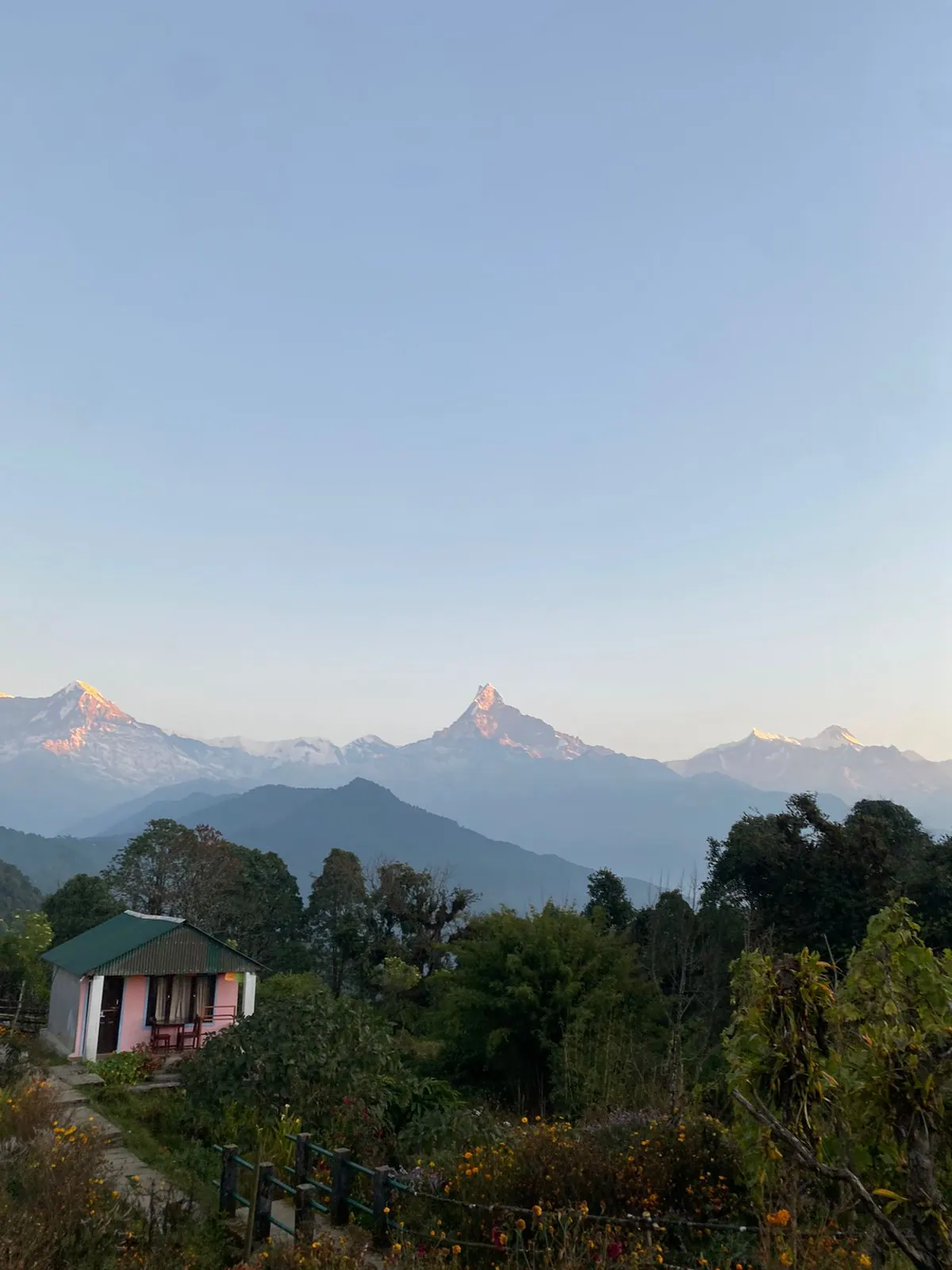
Australian Camp 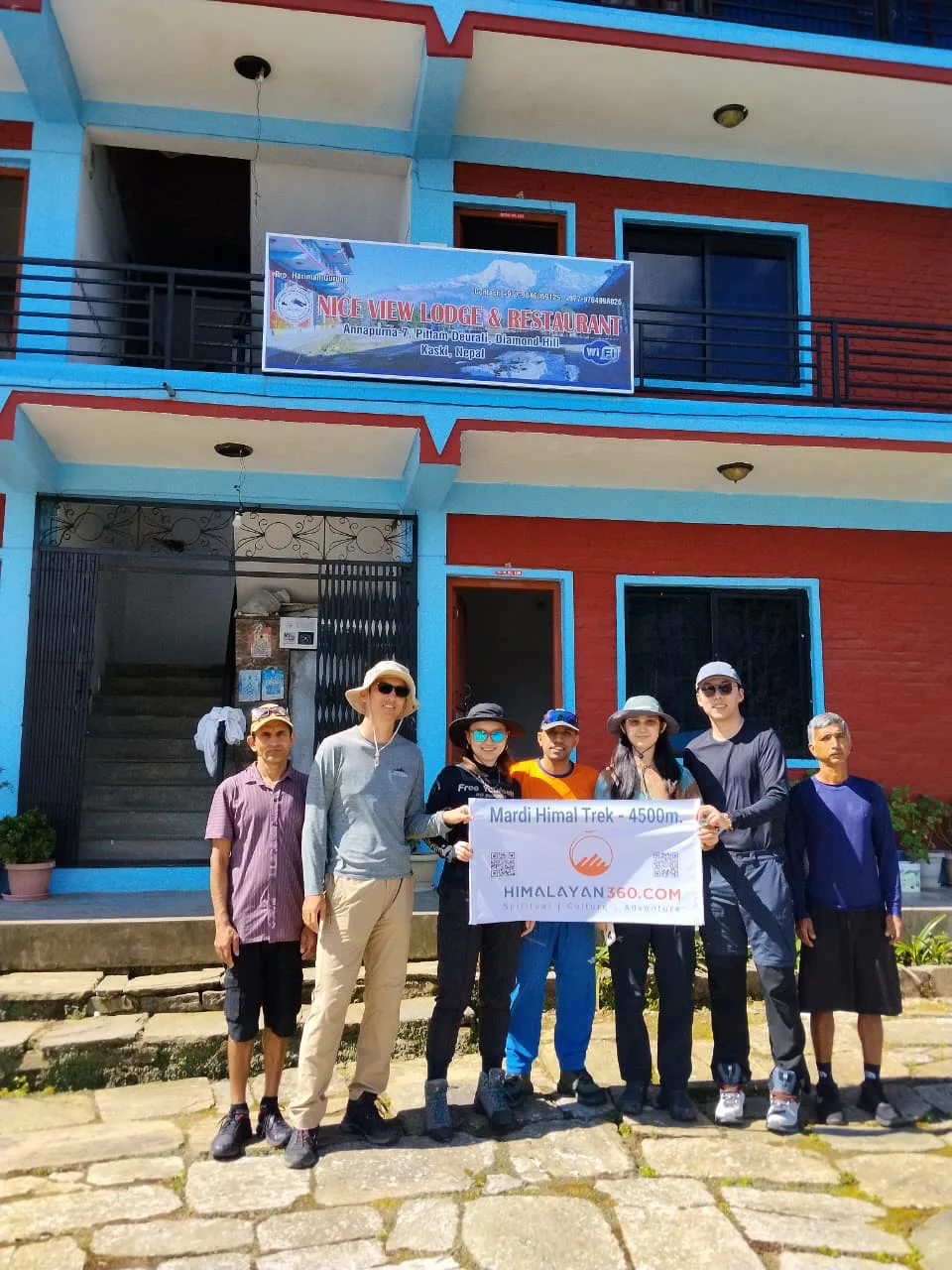
Pitam Deurali 6 photos from day 1, taken on the trail. - Day 2
Pitam Deurali → Forest Camp → Rest Camp
- Drive
- None
- Trek
- 5 – 6 hrs
- Distance
- ~9 km
- Altitude
- 2,100 m → Forest Camp 2,550 m → Rest Camp ~2,600 m
- Net change
- +500 m
The trail turns into cloud forest of oak, maple, and rhododendron, climbing steadily to Forest Camp at 2,550 metres. Langur troops are common in the canopy here, and in spring the rhododendron is thick enough to slow you down on its own account.
Beyond Forest Camp the path continues a short way further to Rest Camp, a cluster of eight or more lodges at roughly 2,600 metres that sits between Forest Camp and Low Camp. It is a modest, unhurried day that banks height gradually before the two bigger climbs still ahead.
Pitam Deurali 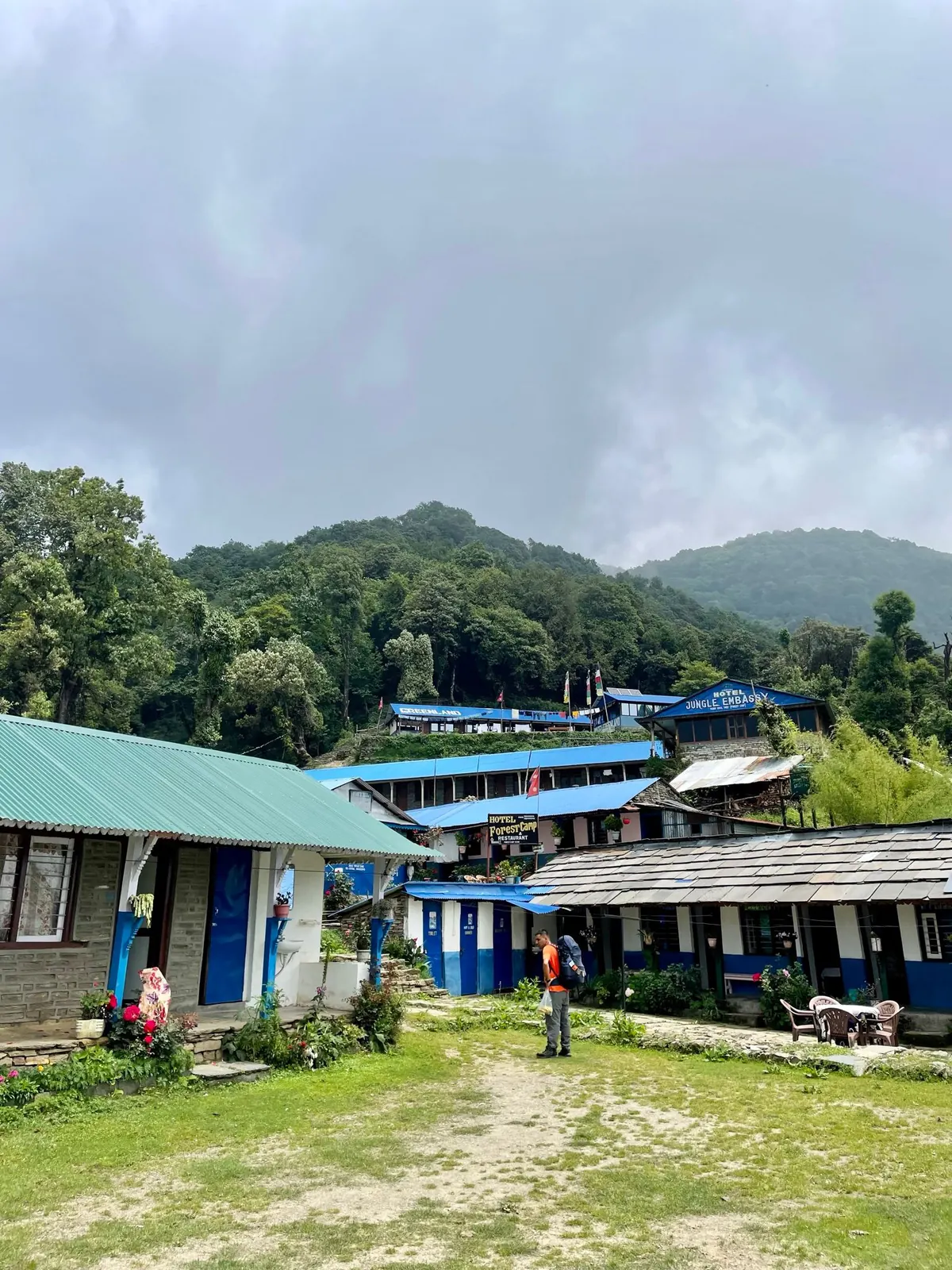
Forest Camp Pitam Deurali 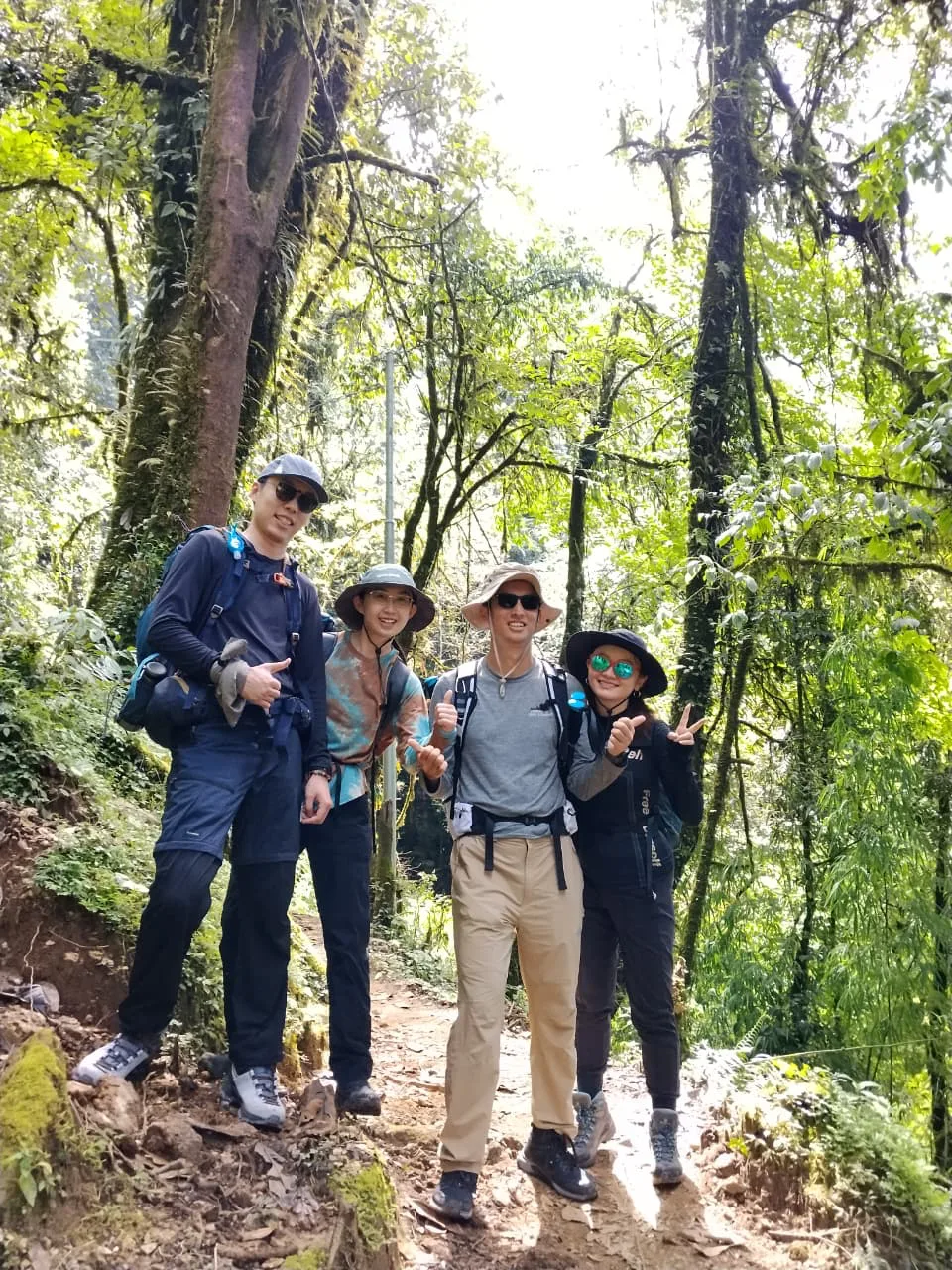
Trail to Forest Camp 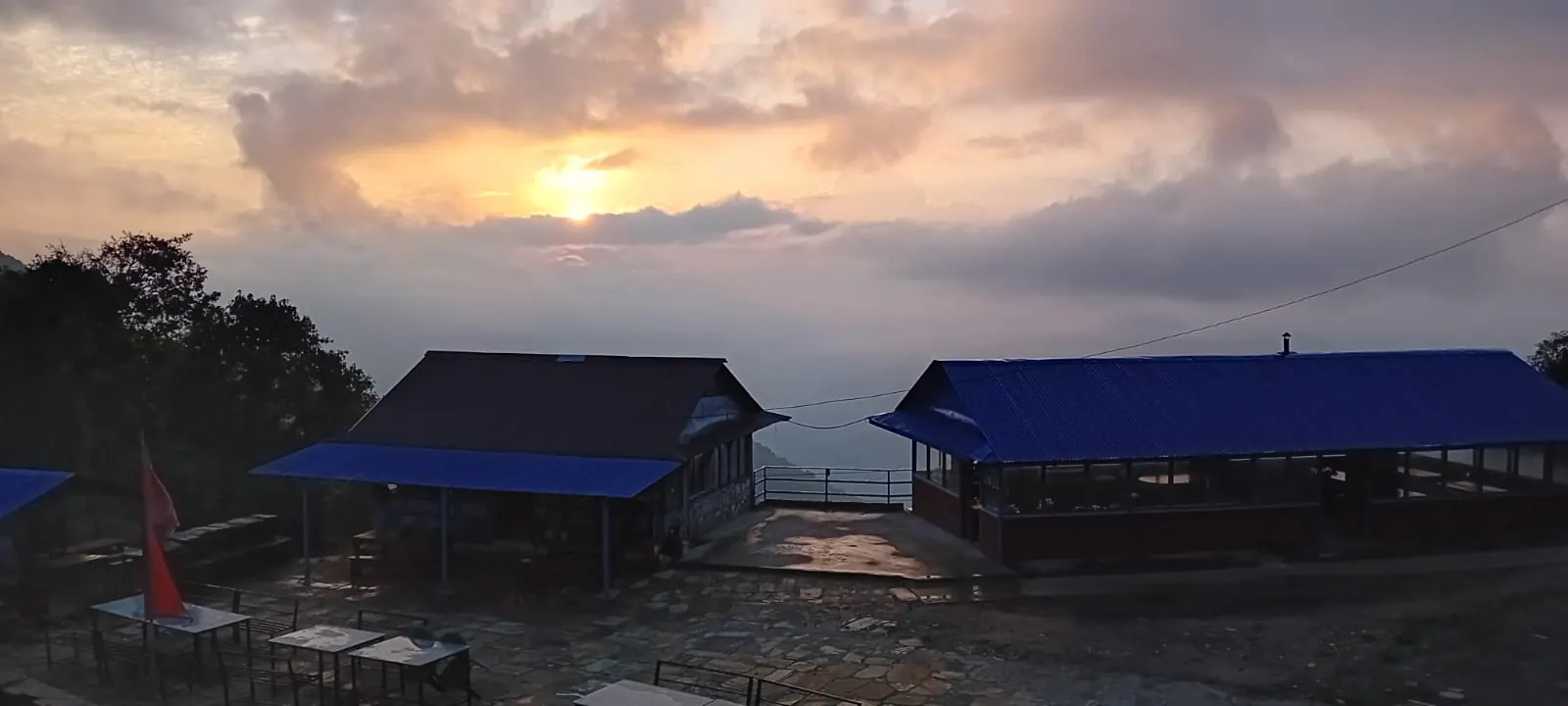
Pitam Deurali 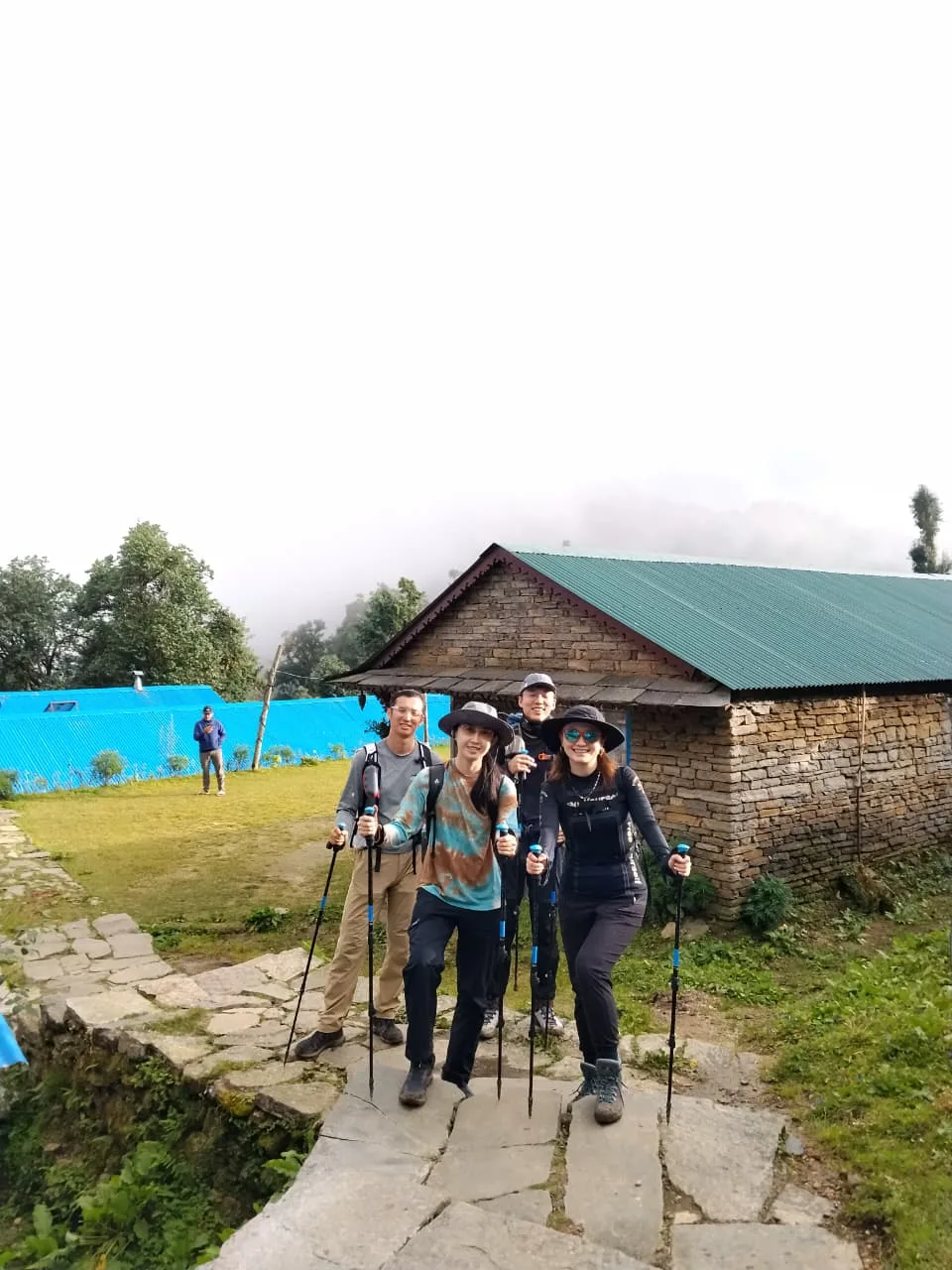
Trail to Forest Camp 6 photos from day 2, taken on the trail. - Day 3
Rest Camp → Low Camp → Badal Danda → High Camp
- Drive
- None
- Trek
- 5 – 6 hrs
- Distance
- ~9 km
- Altitude
- ~2,600 m → Low Camp 2,985 m → Badal Danda 3,210 m → High Camp 3,580 m
- Net change
- +980 m
The first big ascent of the trek. The trail climbs through the upper forest to Low Camp at 2,985 metres, where the trees thin and the full Annapurna massif comes into view for the first time. We stop here for an early lunch and a pulse-oximetry check before continuing.
Above Low Camp the route breaks onto the open ridge, crosses Badal Danda (Cloud Ridge) at 3,210 metres, and climbs to High Camp at 3,580 metres. Pace is deliberately slow above Low Camp, and anyone showing early symptoms is held lower for the night rather than pushed on. Machhapuchhre stands directly ahead across the valley, and the sunset from the dining hall is the moment most trekkers remember from the Mardi side.
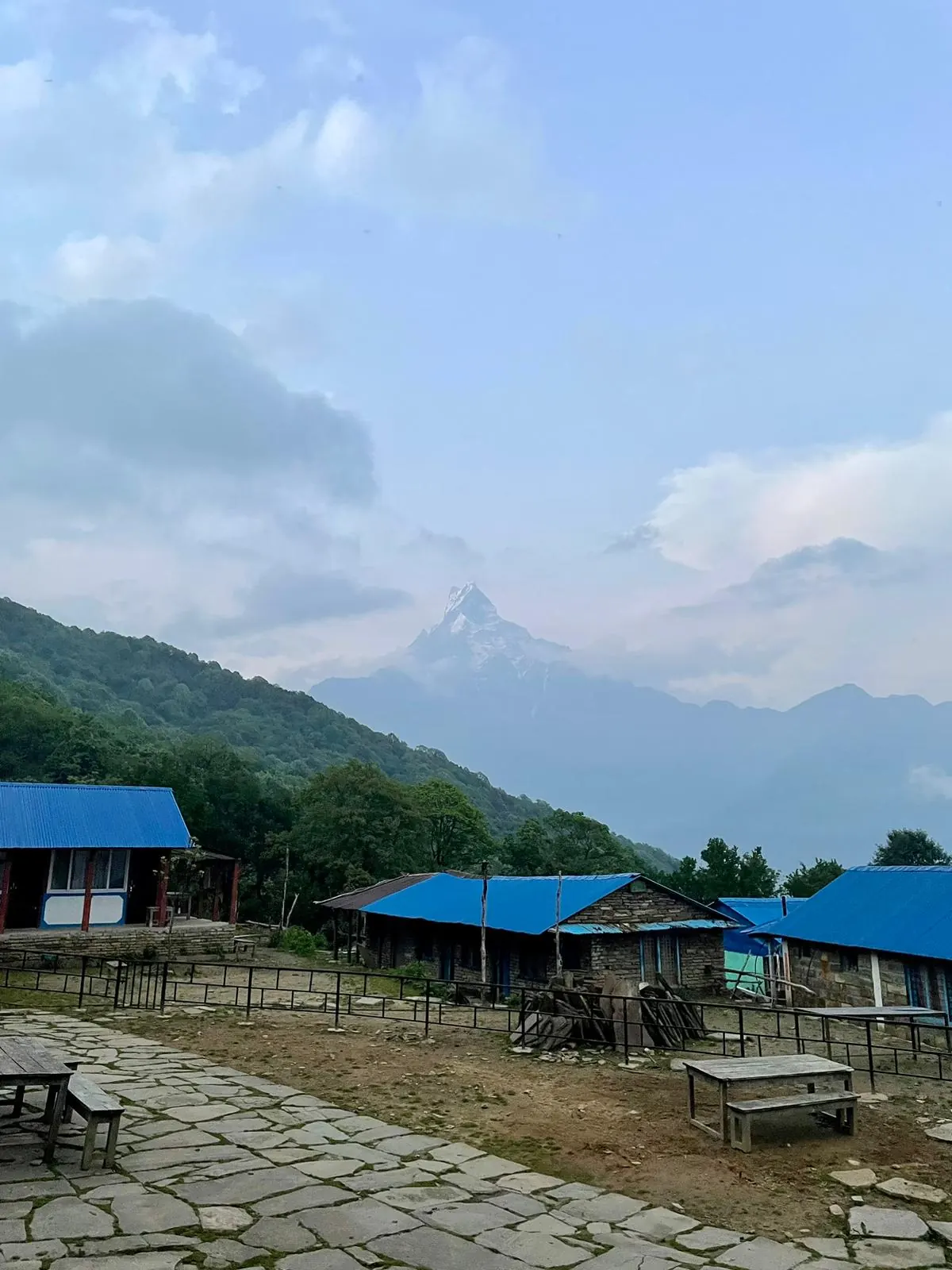
Low Camp 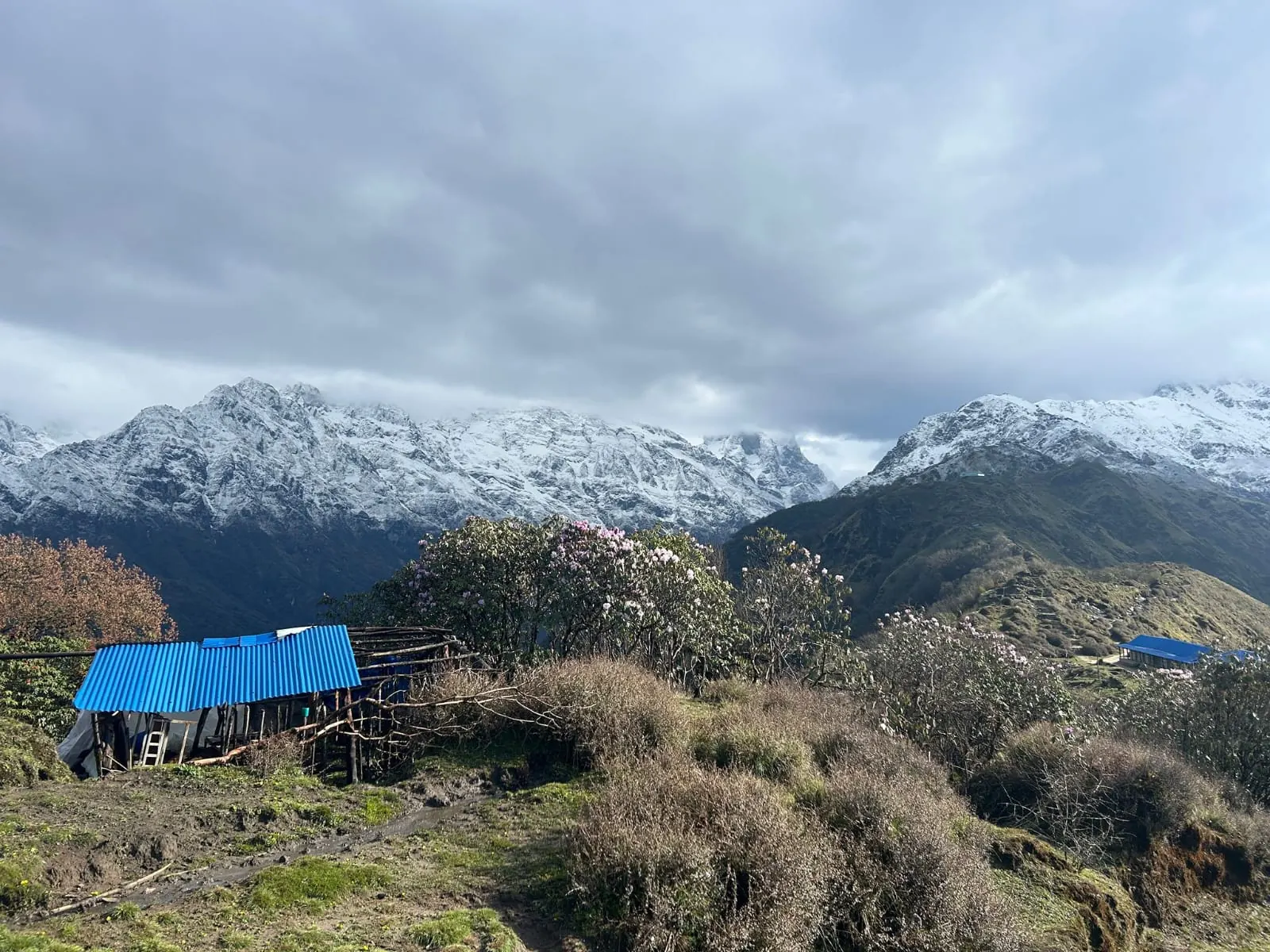
High Camp & Badal Danda 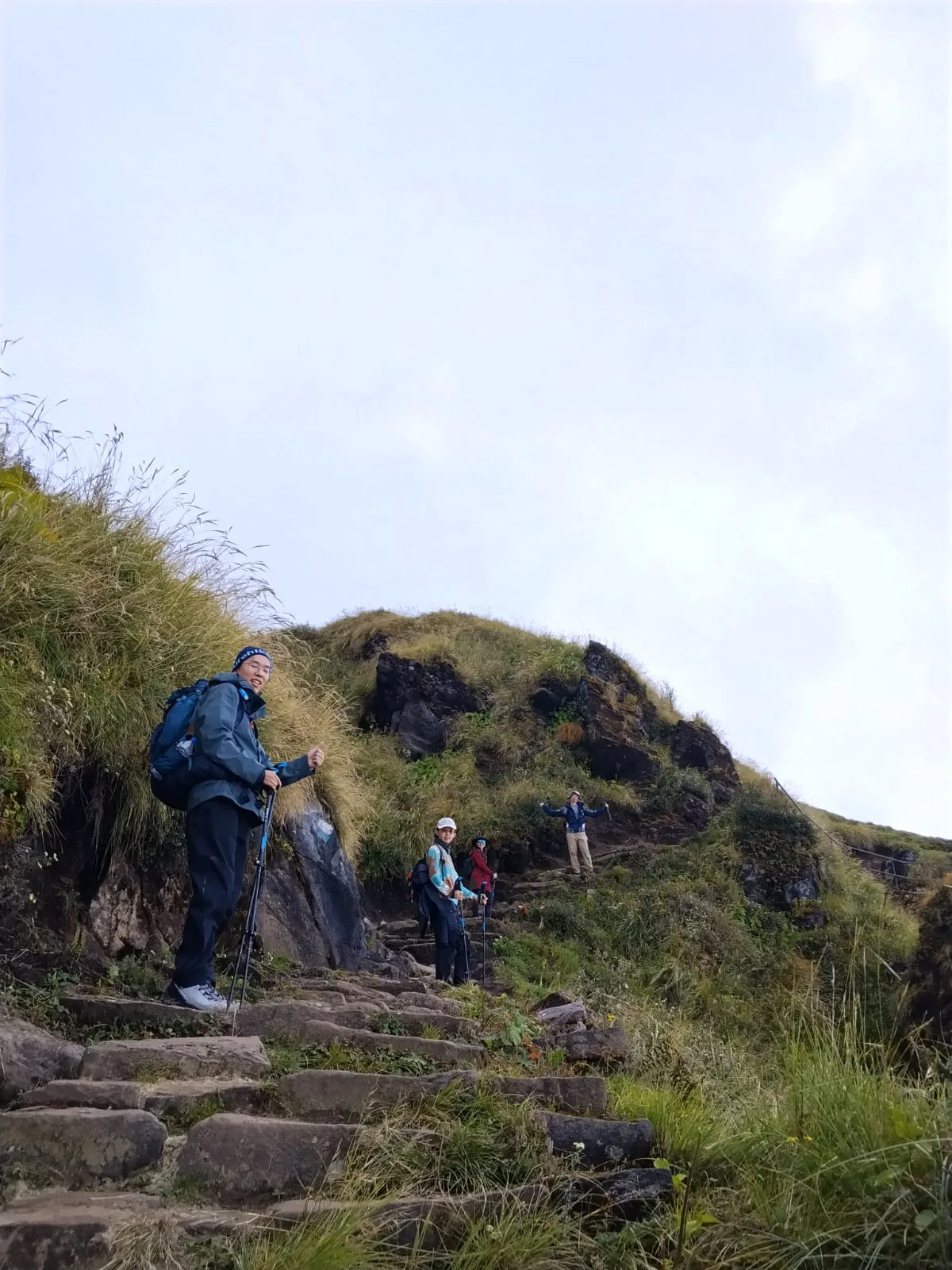
Trail to High Camp 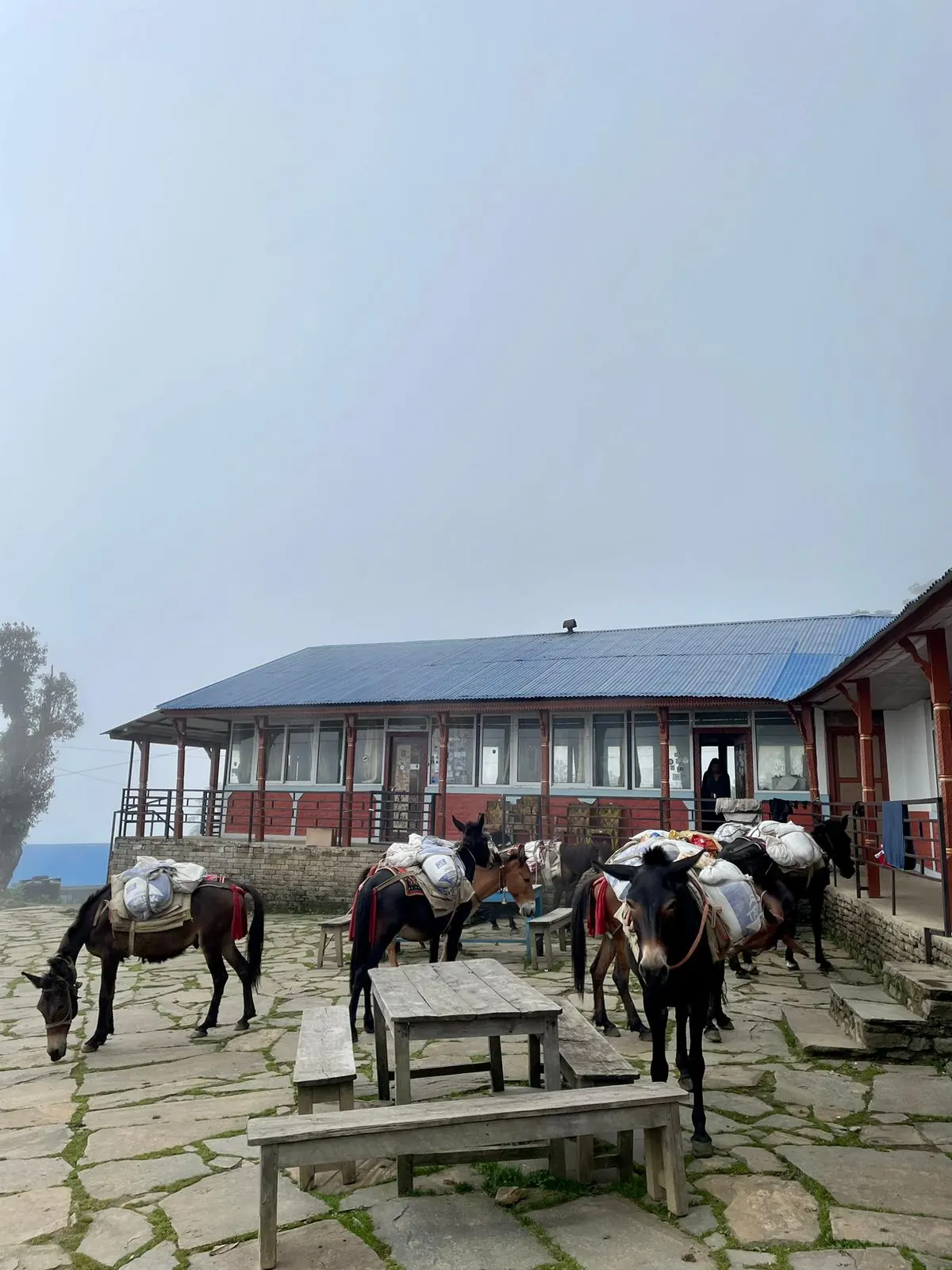
Low Camp 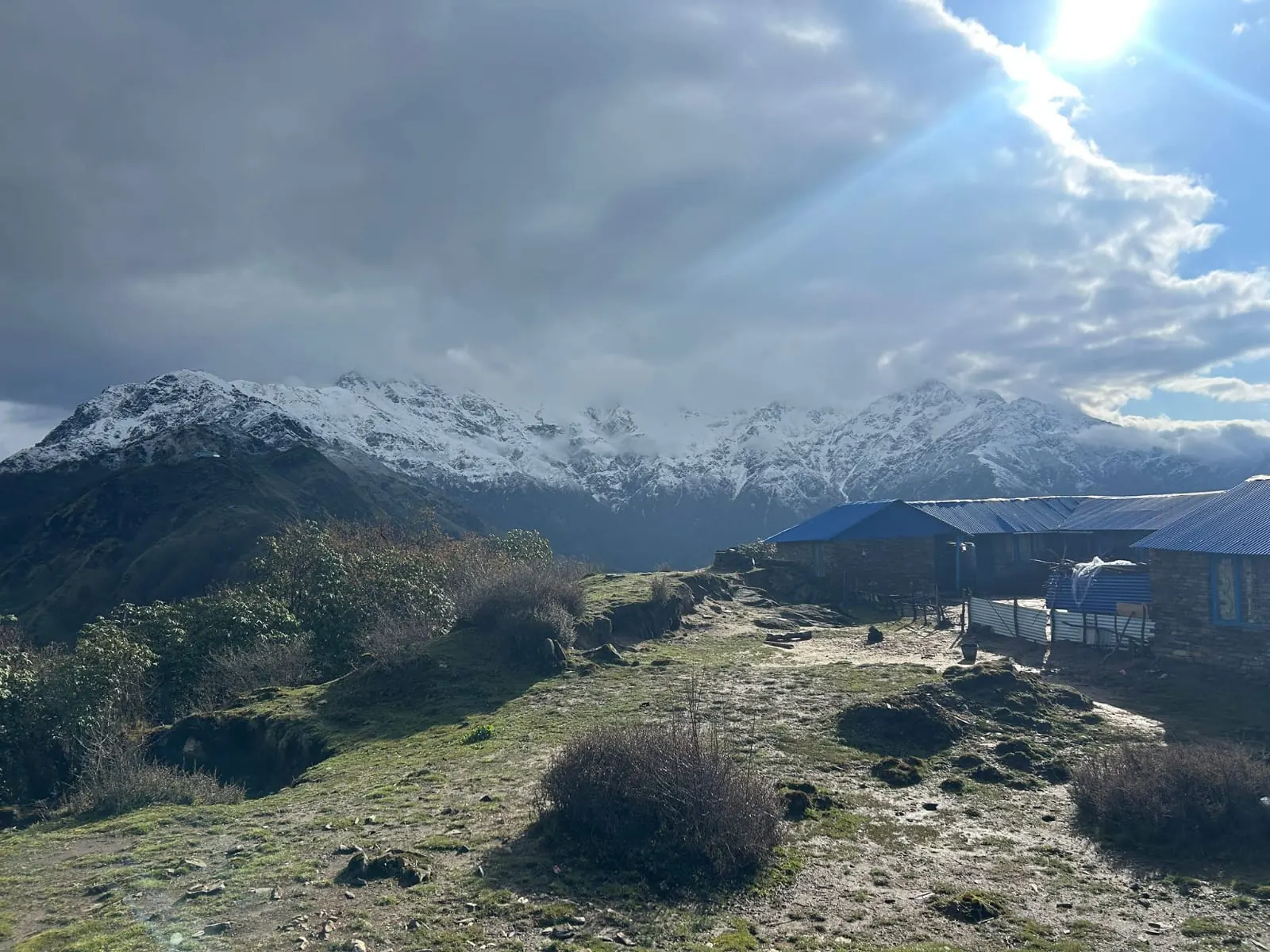
High Camp & Badal Danda 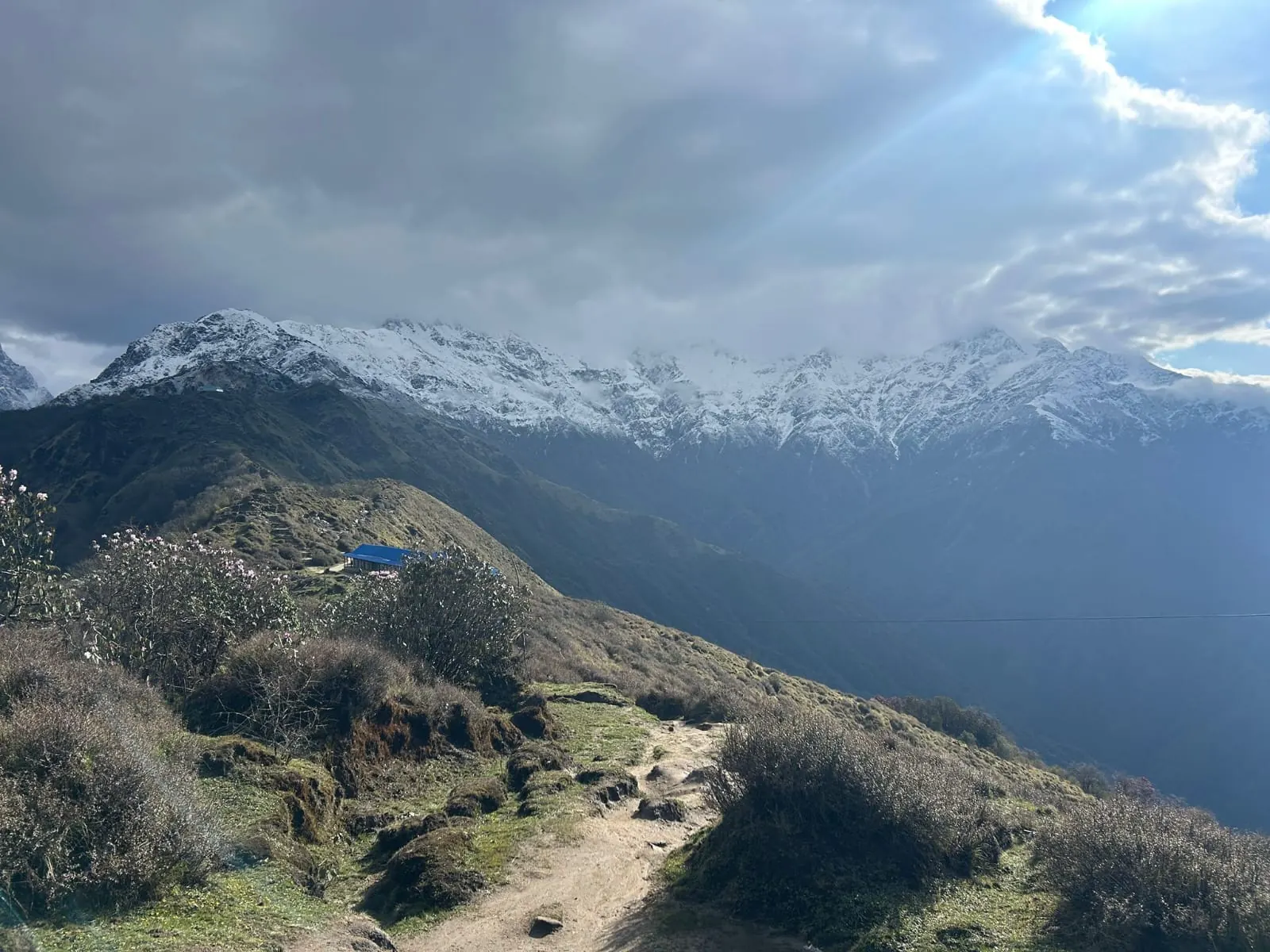
High Camp & Badal Danda 6 photos from day 3, taken on the trail. - Day 4
Upper Viewpoint sunrise → descent to Forest Camp
- Drive
- None
- Trek
- 7 – 8 hrs
- Distance
- ~13 km
- Altitude
- 3,580 m → Upper Viewpoint 4,200 m → Forest Camp 2,550 m
- Net change
- +620 m / -1,650 m
The summit morning of the Mardi side. We leave High Camp around 04:30 with headtorches for the pre-dawn ridge climb to the Upper Viewpoint at 4,200 metres. On a clear morning Machhapuchhre fills the sky at close range, while Dhaulagiri, the peak this trek visits from the other side a week from now, sits far to the west across the whole Annapurna wall. Mardi Himal Base Camp at 4,500 metres is about 1 hour 30 minutes further along the ridge. If you want to go on, ask your guide, and expect a longer day.
Back at High Camp for a proper breakfast, then the long descent begins. Rather than staging it over two days, we drop all the way back through Low Camp, Rest Camp, and Forest Camp in one push. Trekking poles matter on this stretch, the descent is steep and long, but it also sets up the transfer toward Khopra with the hardest part of the Mardi side already behind you. If you are new to walking above 3,500 metres, our altitude sickness guide is worth reading before this day.
High Camp & Badal Danda 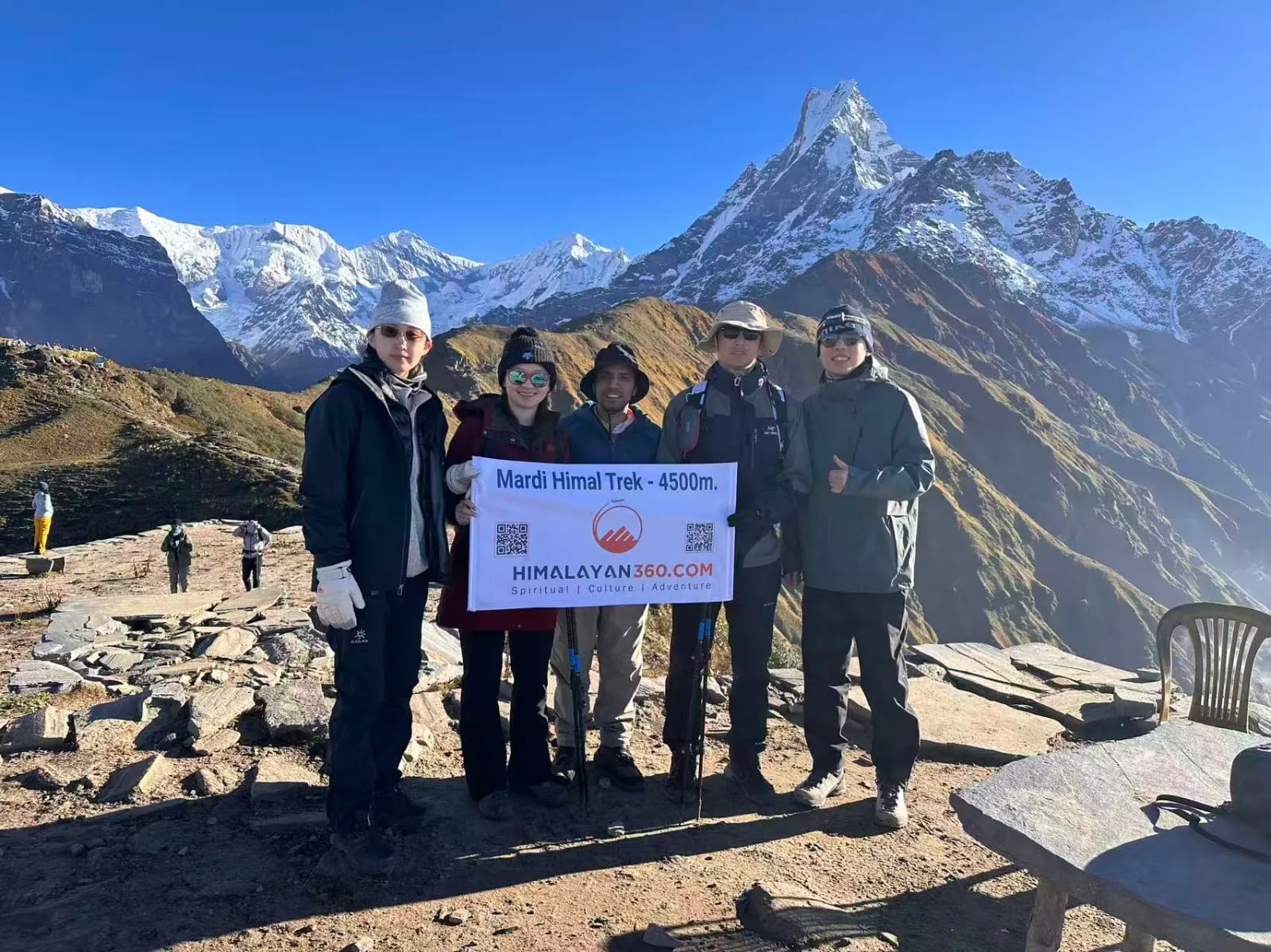
Upper Viewpoint High Camp & Badal Danda 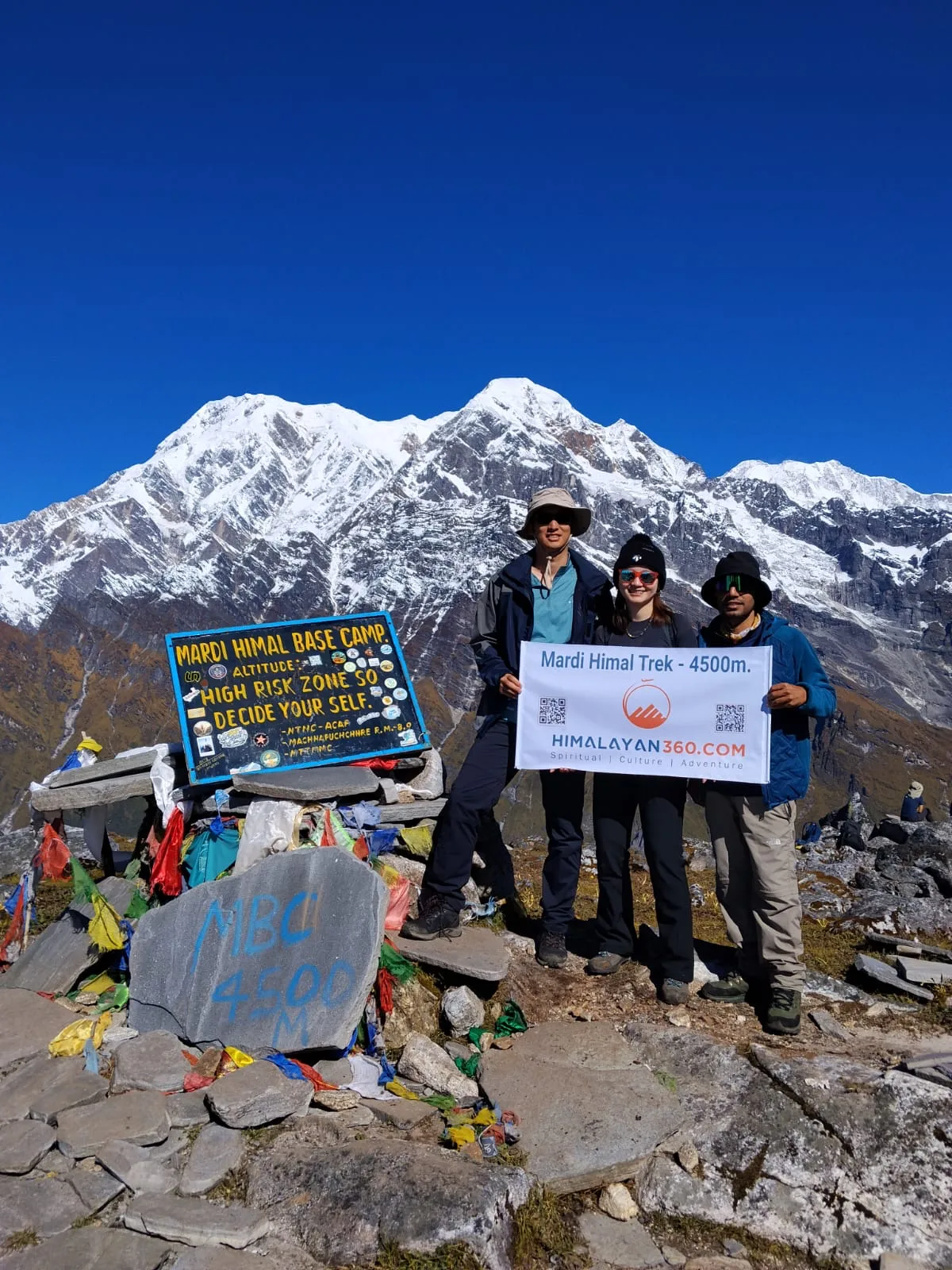
Mardi Himal Base Camp High Camp & Badal Danda 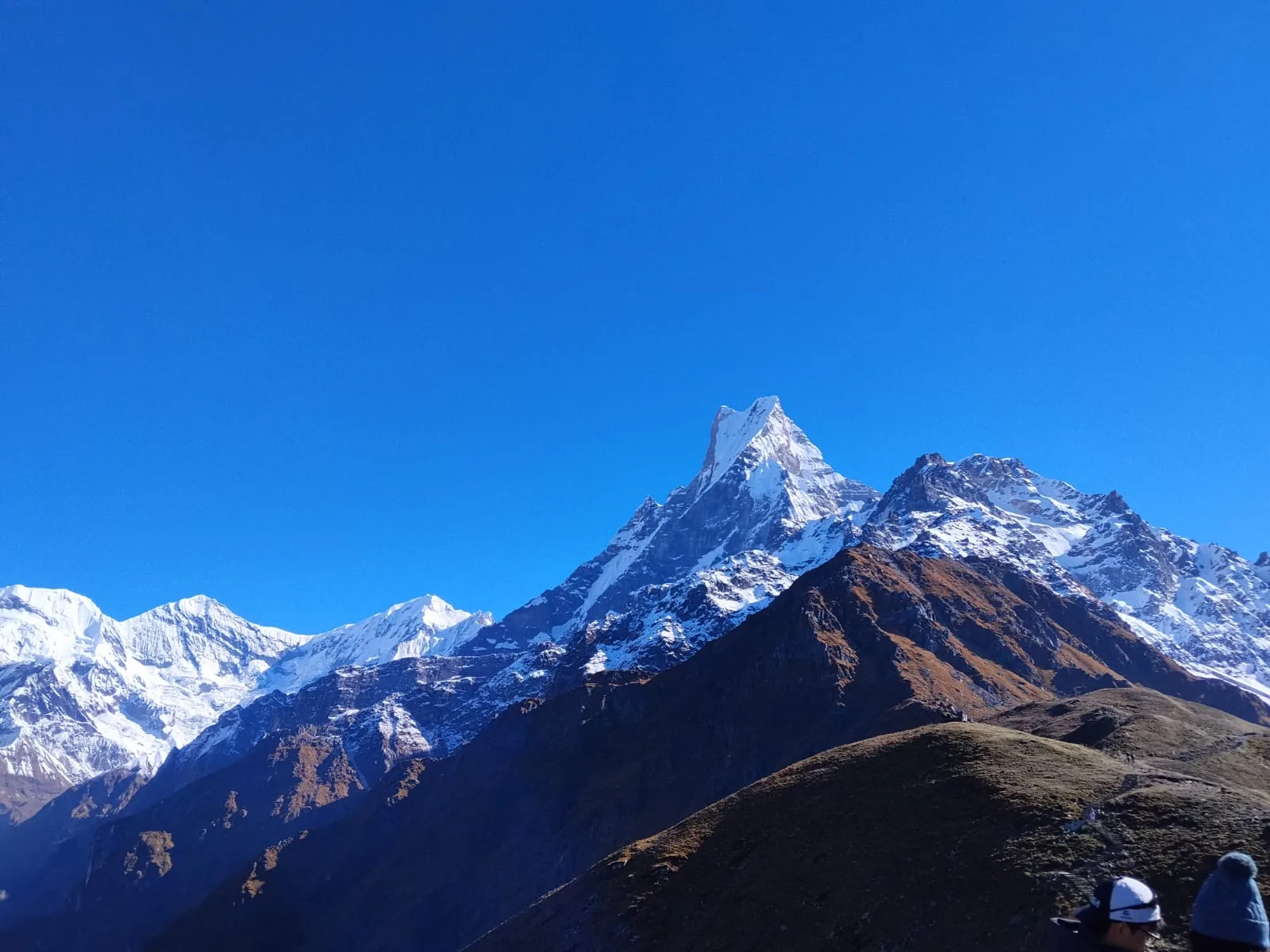
Trail to the Viewpoint 6 photos from day 4, taken on the trail. - Day 5
Forest Camp → Ghandruk
- Drive
- None
- Trek
- 5 – 6 hrs
- Distance
- ~11 km
- Altitude
- 2,550 m → Ghandruk 1,940 m
- Net change
- -610 m
We leave the Mardi ridge behind and descend through forest and terraced farmland toward the Modi Khola valley, dropping steadily off the ridge that has held us for the past four days.
The day ends in Ghandruk, the large and handsome Gurung village famous for its slate-roofed houses, its museum, and its head-on view of Annapurna South and Machhapuchhre. It is a good place to slow down for an afternoon, the first proper village since Pothana, and a cultural change of pace before the climb back up toward Khopra begins.
- Day 6
Ghandruk → Tadapani
- Drive
- None
- Trek
- 5 – 6 hrs
- Distance
- ~10 km
- Altitude
- 1,940 m → Tadapani 2,630 m
- Net change
- +690 m
A climb back into the hills, through rhododendron and oak forest that is one of the richest stretches of woodland on either ridge. Danphe pheasant and langur are both regularly seen on this section, and the forest floor is thick with moss and fern below the canopy.
Tadapani, a small cluster of lodges in the trees at 2,630 metres, sits at the point where the trails toward Poon Hill and toward Khopra Danda split. We take the quieter branch the next morning, but Tadapani itself is a pleasant, forested overnight with occasional views of Annapurna South through the trees.
- Day 7
Tadapani → Dobato
- Drive
- None
- Trek
- 5 – 6 hrs
- Distance
- ~9 km
- Altitude
- 2,630 m → Dobato 3,420 m
- Net change
- +790 m
The trail leaves the Poon Hill side of the region and climbs through dense rhododendron and oak forest toward the Khopra ridge. It is a steady, sustained climb rather than a technical one, gaining back most of the height lost on the way down to Ghandruk.
Dobato sits on an open ridge at 3,420 metres, close to the Mulde, or Muldai, viewpoint, which adds a near 360-degree panorama of both the Annapurna and Dhaulagiri ranges for those with the energy for a short side climb before dinner. The lodge here is simple and the night is cold, a preview of the altitude still to come.
- Day 8
Dobato → Khopra Danda
- Drive
- None
- Trek
- 4 – 5 hrs
- Distance
- ~7 km
- Altitude
- 3,420 m → Khopra Danda 3,660 m
- Net change
- +240 m
A shorter day by distance but a significant one by view. The trail follows the ridge crest through juniper and dwarf rhododendron to Khopra Danda, a west-facing balcony perched on the rim of the Kali Gandaki, one of the deepest gorges on Earth.
Dhaulagiri I rises across the void at 8,167 metres, with Nilgiri and Annapurna South ranged alongside. The community lodge on the ridge is simple and the evening is cold at this height, but the sunset over Dhaulagiri is the reason people come to Khopra, and the reason this trek pairs it with Mardi rather than leaving it out.
- Day 9
Khayer Lake day hike
- Drive
- None
- Trek
- 7 – 8 hrs (out and back)
- Distance
- ~14 km
- Altitude
- 3,660 m → Khayer Lake 4,660 m → 3,660 m
- Net change
- +1,000 m / -1,000 m (out and back)
The hardest single push of the whole trek, and its true high point. We climb out of Khopra Danda into a high, austere valley beneath Annapurna South, following a Hindu pilgrimage trail to the sacred Khayer Lake at 4,660 metres, visited in numbers at the August full moon.
It is a long, serious eight-hour day at altitude, higher than the Mardi Upper Viewpoint we stood on five days earlier, so we keep the pace deliberate and watch everyone closely on the final approach. Because this day touches the trek's highest point, it is worth reading our guide to altitude sickness before you commit to the itinerary. We return to the same lodge at Khopra Danda for a second night.
- Day 10
Khopra Danda → Swanta
- Drive
- None
- Trek
- 5 – 6 hrs
- Distance
- ~11 km
- Altitude
- 3,660 m → Swanta 2,200 m
- Net change
- -1,460 m
The long way down. The trail drops off the Khopra ridge through the herders' settlement of Chistibung and back into forest, losing most of the height gained over the past two days in one steady descent.
Swanta is a traditional Magar village at around 2,200 metres and one of the community lodges that give the Khopra side its character. The path here is quiet, the lodges are small and locally run, and after the exposed ridge days it is a welcome return to village life and warmer air.
- Day 11
Swanta → Ghorepani → Banthanti → jeep to Pokhara
- Drive
- 3 to 4 hrs (Banthanti to Pokhara)
- Trek
- 5 – 6 hrs (Swanta to Banthanti via Ghorepani)
- Distance
- ~13 km
- Altitude
- 2,200 m → Ghorepani 2,860 m → Banthanti ~2,250 m → Pokhara 820 m
- Net change
- +660 m / -1,440 m, then drive
The last trekking day. We climb from Swanta back up to Ghorepani at 2,860 metres, rejoining the main trekking trail for a short stretch, then descend through forest to Banthanti, a small settlement on the Ghorepani side at around 2,250 metres where the jeep is waiting.
From Banthanti it is a rough but scenic three to four hour drive back down to Pokhara at 820 metres. We reach the lakeside by late afternoon for a hot shower, a real bed, and an evening free by Phewa Lake, eleven days and two ridges after we started. We arrange your onward transfer to the airport or tourist bus whenever your departure is timed.
Who this trek suits.
The combined route asks for more time and more fitness than either ridge on its own. It rewards trekkers who want quiet and contrast above all else. Here is the honest call on whether it fits your trip.
- You want to avoid the Poon Hill and Annapurna Base Camp crowds.
- You have 11 clear days and want both ridges, not one.
- You want Machhapuchhre from the Mardi ridge first, then Dhaulagiri from Khopra.
- You want to finish on the sacred Khayer Lake, the trek’s highest point.
- You are comfortable with two big climbs and one long high day over a longer trek.
- You have under a week and want one clear high finish.
- You would rather do Mardi alone on the 5-day trek.
- You want the close-up of Machhapuchhre without the Khopra and Khayer Lake days.
- This is your first Himalayan trek and altitude is new to you.
- You prefer a single ridge rather than linking two.
Weighing this against other pairings? We also run Mardi Himal and Annapurna Base Camp for a sanctuary finish, and Mardi Himal and Poon Hill for a shorter combined trip. Pick your window with the best season guide.
Fixed rates, by group size.
Eleven days of guiding, lodging, and food across two ridges, priced per person in USD by group size. Book solo and travel private, share the trail with one companion, or bring a group and the per-person rate drops. These are our fixed rates for the full route, Khayer Lake day included.
- 1 person (private)
- USD 868
- 2 people
- USD 666
- 3 to 5 people
- USD 598
- 6 to 10 people
- USD 558
- 11 to 20 people
- USD 528
Want it private, just your party with your own guide? Add 5% per person. Going private on your own, you pay the 1-person rate.
Secure card payment. The balance is paid in Kathmandu before the trek. See the booking policy.
- ACAP (Annapurna Conservation Area Project) entry permit
- TIMS (Trekkers’ Information Management System) card
- Licensed English-speaking local guide for all 11 days
- Pokhara to Kande private jeep transfer
- Banthanti to Pokhara local jeep transfer
- 10 nights teahouse and community-lodge accommodation
- 10 breakfast, 11 lunch, and 10 dinner, each with a cup of tea
- Trip success certificate
- Comprehensive first aid kit
- International flights to Kathmandu or Pokhara
- Pokhara hotel (Lakeside recommended, USD 35 to 80 per night)
- Lunch and dinner in Pokhara on rest days
- Personal trekking gear and clothing
- Travel insurance (mandatory, must cover helicopter evacuation to 4,500 m)
- Tips for the guide (10% to 30% of the package price)
For the ACAP and TIMS fee breakdown and optional add-ons such as a porter, see our permits and cost page. Shared fixed group departures are listed on fixed departures, and the full route overview lives on the Mardi Himal trek page.
Before you book.
- Can you combine Mardi Himal and Khopra Danda in one trek?
- Yes. Although the two ridges sit on opposite sides of the central Annapurna foothills and you cannot link them on a single high traverse, you can walk them in one trip by joining their trails lower down. We run the Mardi ridge first, climbing from Kande to the Upper Viewpoint, then drop through Ghandruk, Tadapani, and Dobato to pick up the Khopra ridge and finish with the hike to Khayer Lake. We run it as an 11-day route, and the result is the two quietest ridges of the region in one continuous walk.
- How many days does the Mardi Himal and Khopra Danda trek take?
- We run the combined route as a fixed 11 days from Pokhara and back, which includes the hike up to Khayer Lake as a scheduled day rather than an optional extra. Operators sell versions from about 11 to 14 days depending on how many rest days and Kathmandu transfers they fold in. If you want the Khayer Lake day and a comfortable pace throughout, plan for the full 11 days rather than trying to compress it.
- Do I need camping gear for this trek?
- No. The whole route is on lodges, so there is no camping. The Mardi side uses family teahouses at Pitam Deurali, Rest Camp, and High Camp, and the Khopra side uses small community-run lodges in villages like Swanta and on the ridge at Khopra Danda. You sleep indoors every night and meals are cooked for you. You only need your personal trekking kit and warm layers for the cold nights at altitude, not tents, stoves, or cooking gear.
- How hard is the combined Mardi Himal and Khopra Danda trek?
- It is a moderate trek with three genuinely demanding days. The first is the pre-dawn climb to the Mardi Upper Viewpoint at 4,200 metres on day four. The second is the climb onto the Khopra ridge at 3,660 metres on day eight. The third, and hardest, is the out-and-back push to Khayer Lake at 4,660 metres on day nine, the trek's highest point. Over 11 days the daily walking is 4 to 8 hours on hill terrain with a daypack. There is no technical climbing, but the length and the three big pushes ask for reasonable fitness.
- What is the highest point of the trek?
- Khayer Lake, at 4,660 metres, reached on day nine as an out-and-back hike from Khopra Danda. It is the true high point of the whole trip, higher than the Mardi Upper Viewpoint at 4,200 metres and well above the Khopra ridge itself at 3,660 metres. Because that day touches this altitude, read our altitude sickness guide before you book, and expect a long, hard morning.
- Why combine these two ridges instead of doing one?
- Because they show you opposite halves of the same great mountain wall and stay quiet doing it. Mardi Himal climbs the eastern flank for a close-up of Machhapuchhre, the fishtail peak; Khopra Danda is a west-facing balcony looking across the Kali Gandaki gorge at Dhaulagiri, an eight-thousander seen from a distance. Both deliberately avoid the busy Poon Hill and Annapurna Base Camp crowds. Doing both in one trip, Mardi first and Khopra second, means one Machhapuchhre close-up, one Dhaulagiri panorama, and one pilgrimage to Khayer Lake from a single set of permits and transfers.
- What does the combined trek cost?
- We publish fixed per-person rates for the full 11-day route: USD 868 if you travel solo as a private trekker, USD 666 for two, USD 598 for a group of three to five, USD 558 for six to ten, and USD 528 for eleven to twenty people travelling together. The price covers the ACAP and TIMS permits, your guide, both jeep transfers, ten nights of teahouse and community-lodge accommodation, and all meals on the trail. See our permits and cost page for the fee breakdown, or contact us for a group booking. For a private trip, just your party with your own guide, add 5% per person; a solo trekker pays the 1-person rate.