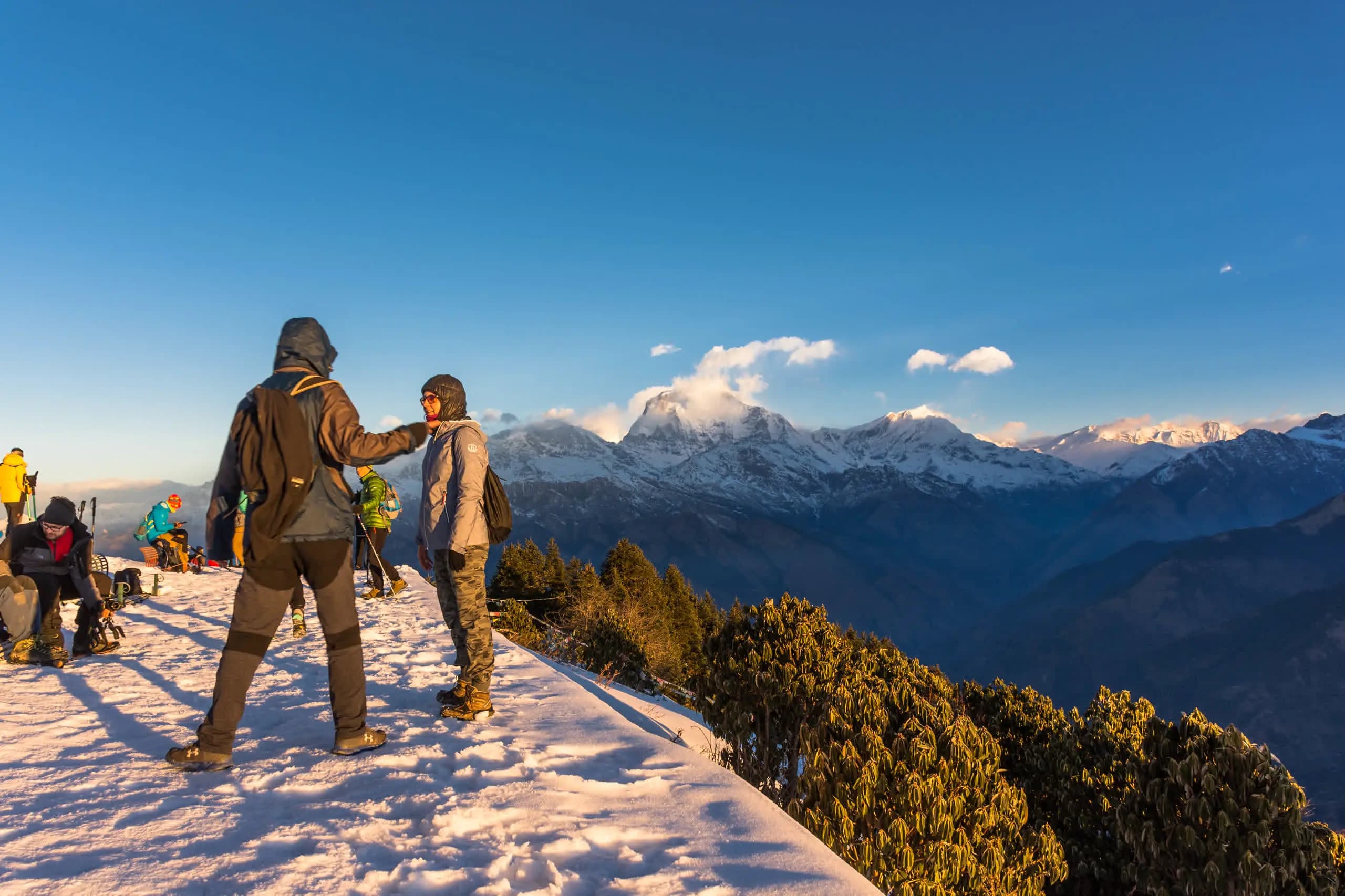
Two treks, one loop.
This is the combination most people end up booking when they cannot choose between the two classic short treks of the Annapurna region. Rather than pick the wide Poon Hill sunrise or the close Mardi ridge, you do both in a single loop from Pokhara. The route opens on the busy, village-rich Ghorepani side, climbs to Poon Hill for the first sunrise, then crosses through Tadapani and Landruk before turning up the quiet Mardi ridge for the second. If you are still weighing one against the other, our Poon Hill versus Mardi comparison sets out the trade-offs in full; this page is for trekkers who have decided to have both.
The order is deliberate. Poon Hill first means your body builds altitude gradually: you reach 3,210 metres on the Ghorepani side early, spend a few days in the 1,500 to 3,000 metre band, and only then climb to High Camp at 3,580 metres and the Upper Viewpoint at 4,200 metres. That is a gentler profile than going straight up the Mardi ridge from Kande, which is part of why the combo suits first-timers as well as seasoned walkers. If altitude is new to you, it is worth reading our main trek overview on pacing before you commit.
The other draw is contrast. The Poon Hill leg is cultural and lived-in, threading Magar and Gurung villages and the best rhododendron forest in the region. Landruk, the last village before the Mardi ridge, sits at the hinge of the trek, the point where the busy Ghorepani side gives way to the quiet climb. Then the Mardi ridge delivers the wild counterpart: a forested spine with far fewer trekkers and the fishtail peak almost overhead. You finish having walked both the villages and the wild ridge of the Annapurnas.
The combined trek, in numbers.
- Standard duration
- 7 days
- Poon Hill
- 3,210 m
- Mardi viewpoint
- 4,200 m
- Sunrise viewpoints
- Two
- Walking distance
- ~71 km
- Walking hours
- 4 – 7 / day
- Start / finish
- Pokhara
- Permits
- One ACAP + TIMS set
The standard 7-day plan.
Seven days from Pokhara and back. Days 1 and 2 run the Ghorepani Poon Hill loop to the first sunrise; Day 3 crosses to Landruk, the gateway to the Mardi side; Days 4 to 6 climb the Mardi ridge to the second sunrise; Day 7 descends to Sidhing and drives back to Pokhara. Altitudes and walking hours are listed for every day.
- Day 1
Pokhara → Ulleri → Ghorepani
- Drive
- 2.5 to 3 hrs (Pokhara to Ulleri)
- Trek
- 4 – 5 hrs
- Distance
- ~10 km
- Altitude
- Ulleri 1,960 m → Ghorepani 2,860 m
- Net change
- +900 m
We leave Pokhara after breakfast and drive up the Modi Khola valley by private jeep, past Nayapul and Tikhedhunga and up the switchbacks below the Ulleri staircase, all the way to Ulleri at 1,960 metres. The road now covers ground that older itineraries used to walk over two days, staircase included, so the trek proper starts higher and fresher than it used to.
From Ulleri the trail climbs through dense rhododendron and oak forest, passing Banthanti and Nangethanti with the canopy thick enough that the sun comes through in patches. In spring this is one of the best stretches of rhododendron forest in the whole Annapurna region, the trees in full red and pink bloom. We reach Ghorepani at 2,860 metres by mid afternoon, a busy ridge village of blue-roofed lodges straddling the pass. Early dinner, because the sunrise climb starts in the dark.
- Day 2
Poon Hill sunrise → Tadapani
- Drive
- None
- Trek
- 5 – 6 hrs
- Distance
- ~11 km
- Altitude
- Poon Hill 3,210 m → Tadapani 2,630 m
- Net change
- +350 m / -580 m
The first sunrise. We leave Ghorepani around 04:30 with headtorches for the 45-minute climb to the Poon Hill viewing tower at 3,210 metres. On a clear morning the panorama is one of the great Himalayan views: Dhaulagiri to the west, the whole Annapurna wall in front, and Machhapuchhre off to the right, all lit up as the sun lifts. This is the wide, classic photograph that draws people to Ghorepani, and it comes on Day 2 rather than as a separate side trip.
Back down to Ghorepani for breakfast, then we continue over the ridge and through more rhododendron forest to Tadapani at 2,630 metres, a small cluster of lodges in a forest clearing with Annapurna South filling the view to the north.
- Day 3
Tadapani → Landruk
- Drive
- None
- Trek
- 6 – 7 hrs
- Distance
- ~13 km
- Altitude
- 2,630 → Landruk 1,565 m
- Net change
- -1,065 m (net)
A long descent day, and the hinge of the trek. The trail drops steadily through oak and rhododendron forest and past terraced farmland, losing height for most of the day as the Annapurna wall slips out of view behind the ridgeline.
Lower down we reach the Modi Khola, cross the river, and climb a short rise into Landruk at 1,565 metres, the last proper village before the Mardi route. From here the path turns up and away from the busy Ghorepani side onto the quiet Mardi ridge.
- Day 4
Landruk → Forest Camp
- Drive
- None
- Trek
- 4 – 5 hrs
- Distance
- ~8 km
- Altitude
- 1,565 → Forest Camp 2,550 m
- Net change
- +985 m
The trail climbs steeply out of Landruk through cloud forest of oak, maple, and rhododendron to Forest Camp at 2,550 metres. The contrast with the Poon Hill side is immediate: fewer people, smaller lodges, and the trail closing in to a single forested spine.
Langur troops are common in the canopy on this stretch, and the birdlife picks up as the forest thickens. Forest Camp itself is a cluster of eight or more lodges on a ridge shoulder, but it is the gateway to the open ground above.
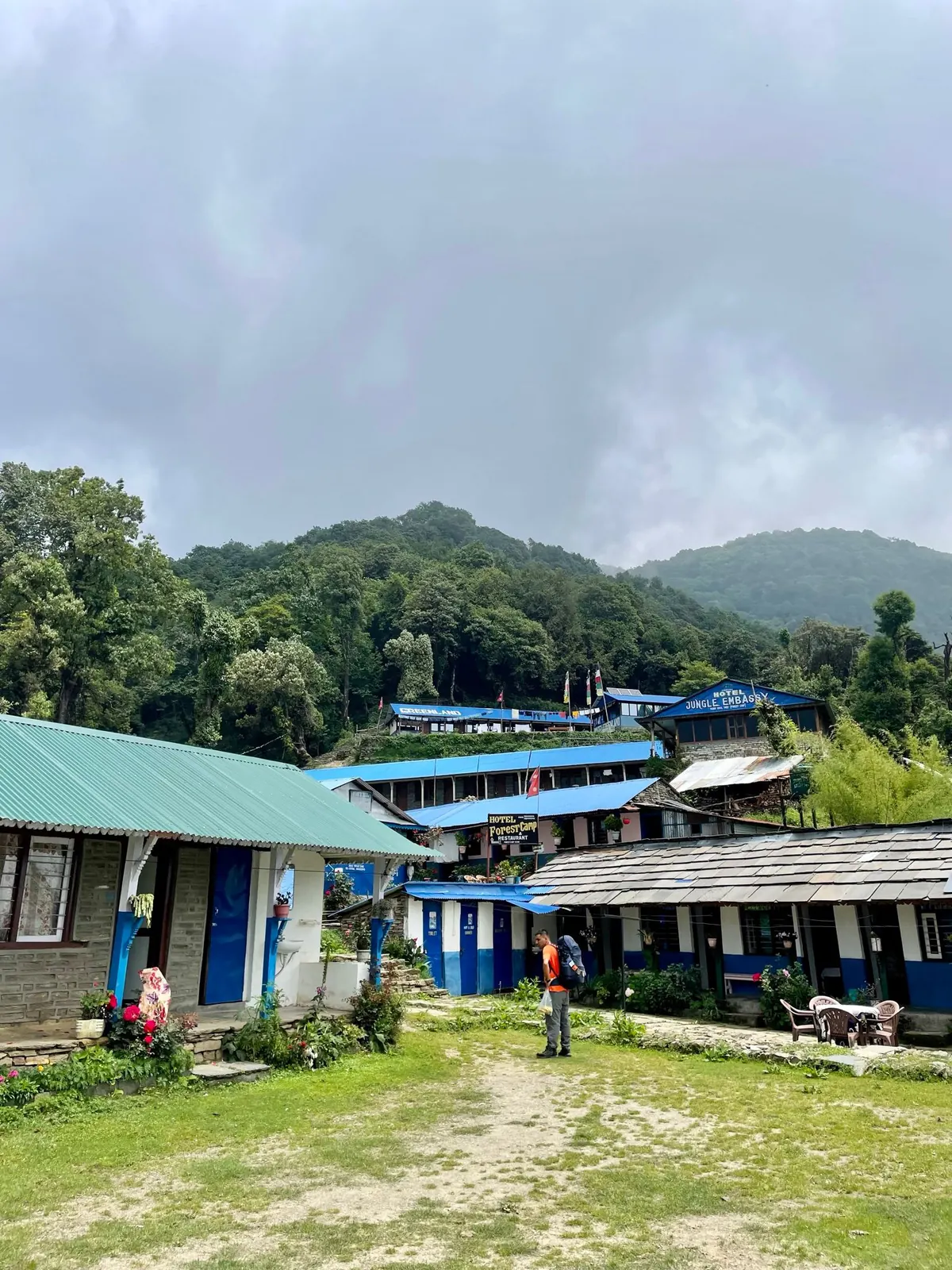
Forest Camp 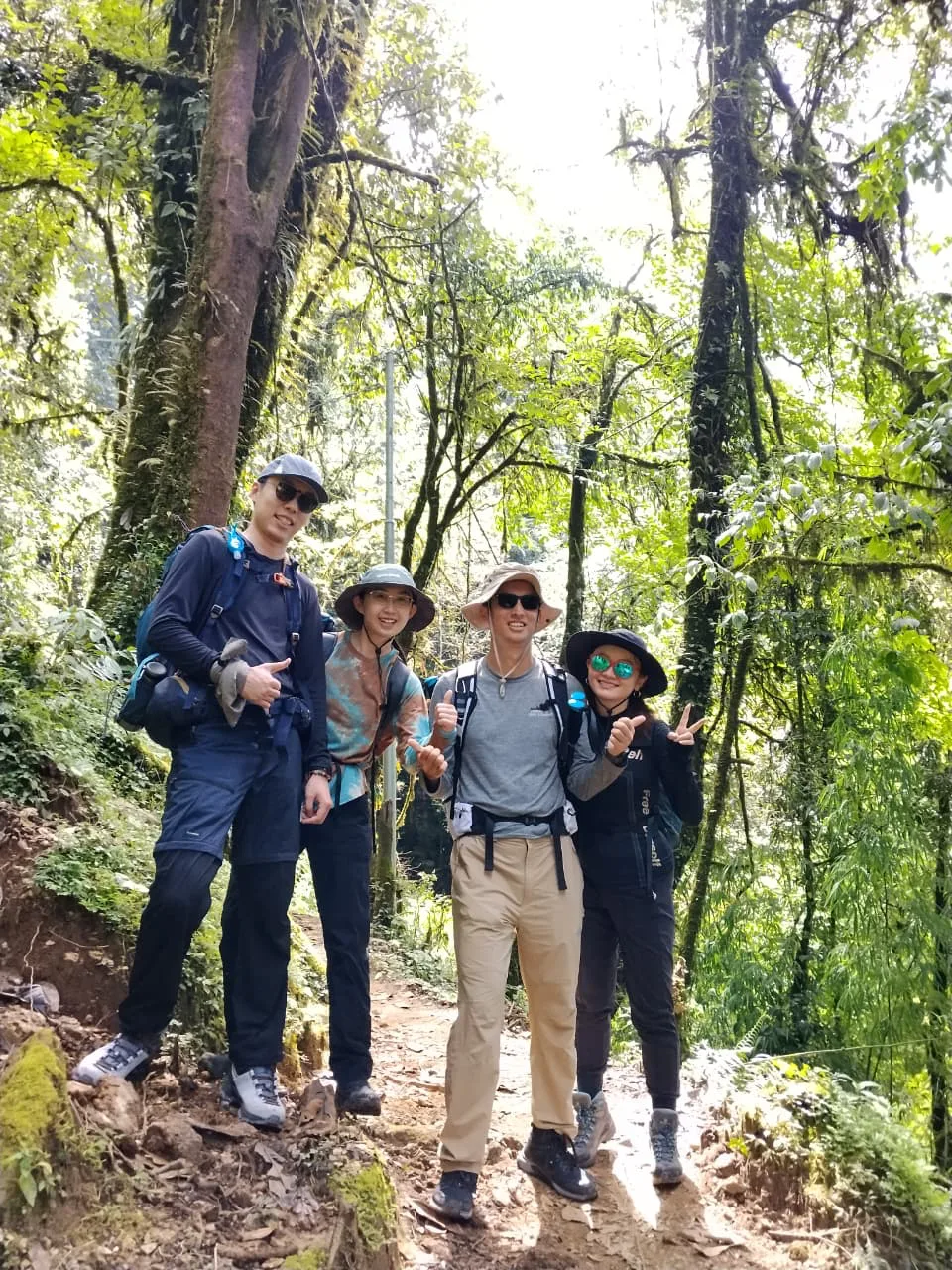
Trail to Forest Camp 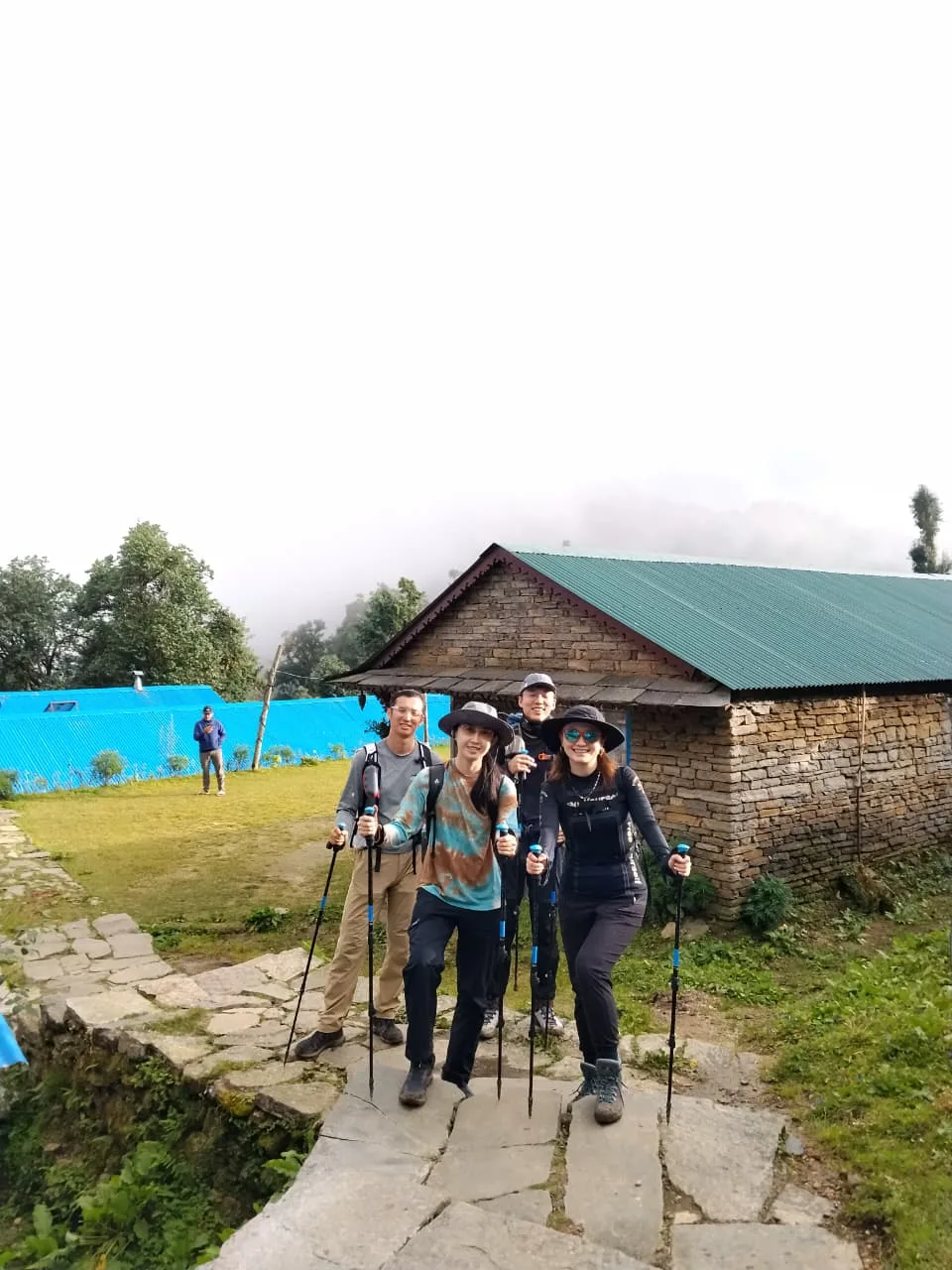
Trail to Forest Camp 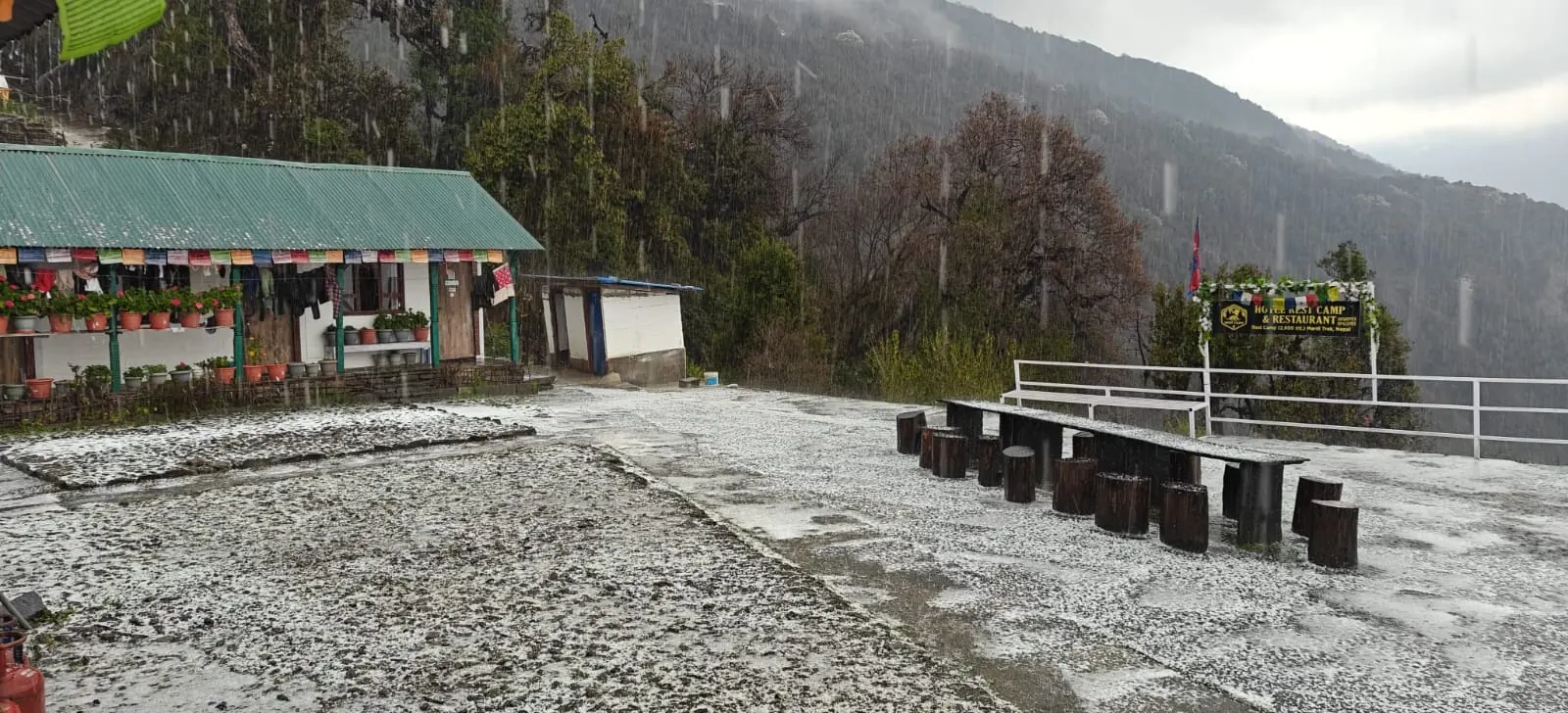
Rest Camp 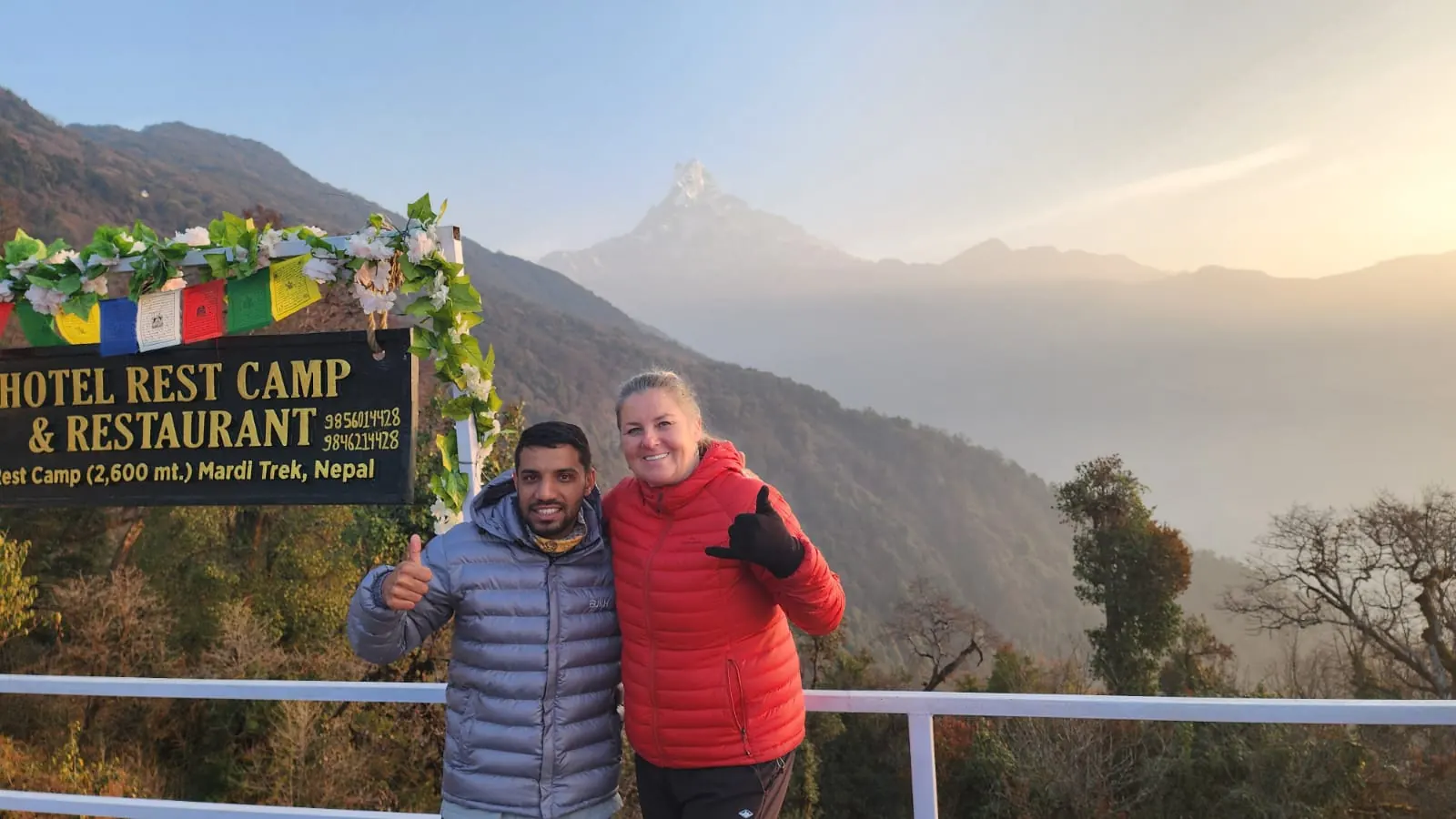
Rest Camp 5 photos from day 4, taken on the trail. - Day 5
Forest Camp → Low Camp → High Camp
- Drive
- None
- Trek
- 5 – 6 hrs
- Distance
- ~9 km
- Altitude
- 2,550 → Low Camp 2,985 m → High Camp 3,580 m
- Net change
- +1,030 m
The main altitude day on the Mardi side. The trail climbs steadily through the upper forest to Low Camp at 2,985 metres, where the trees thin and the full Annapurna massif comes into view. We stop here for an early lunch and a pulse-oximetry check before continuing.
Above Low Camp the route breaks onto the open ridge and crosses Badal Danda at 3,210 metres, then climbs to High Camp at 3,580 metres. Because Poon Hill came first, you reach this point already part-acclimatised, which is the quiet advantage of doing the combo in this order. Pace is deliberately slow above Low Camp, and anyone showing early symptoms is held lower rather than pushed on. If altitude is new to you, read our altitude sickness guidance before you commit to the pace.
Arrive High Camp in the afternoon with time to rest. Machhapuchhre stands directly ahead across the valley, and the sunset from the dining hall is the moment most trekkers remember.
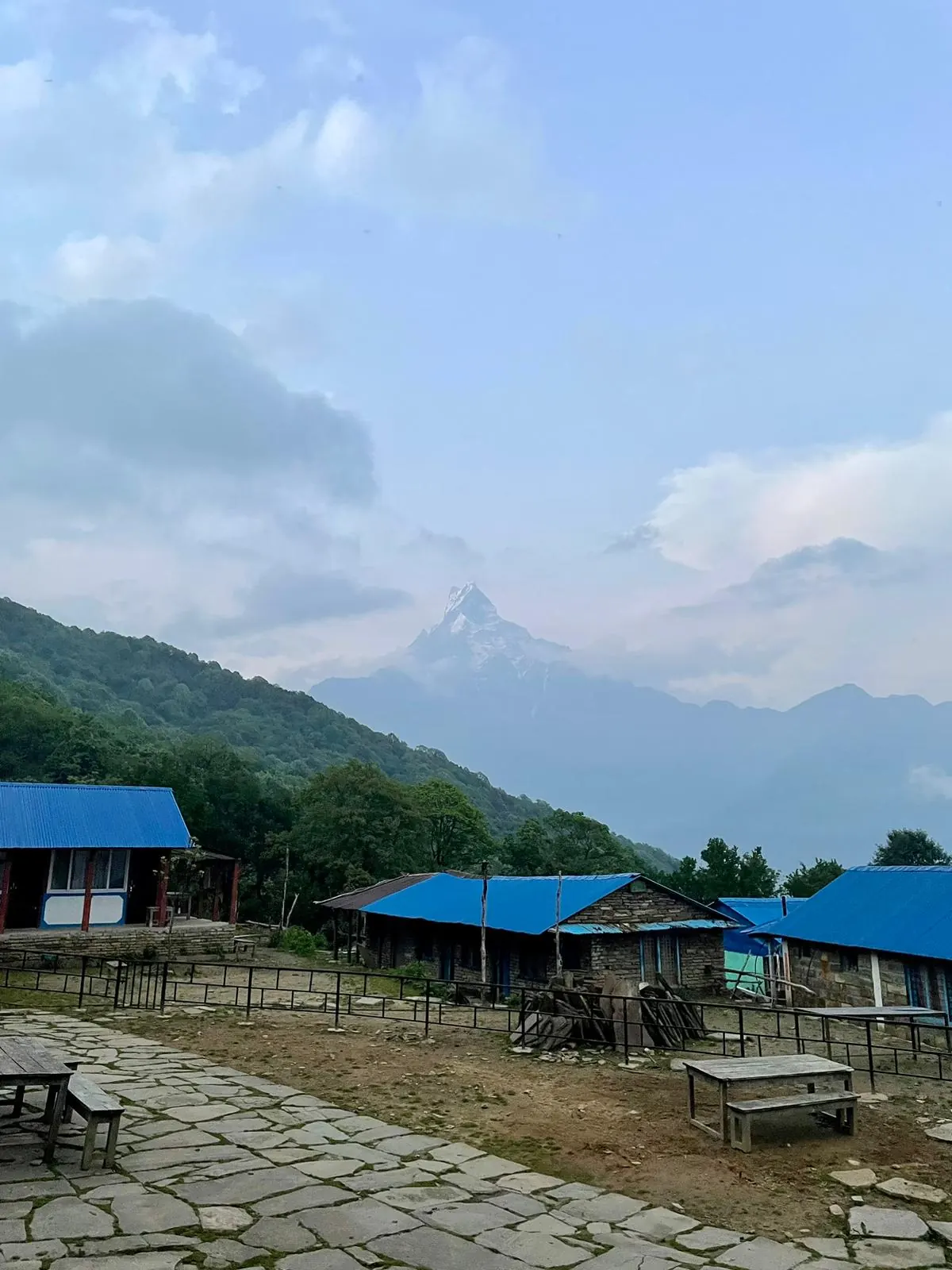
Low Camp 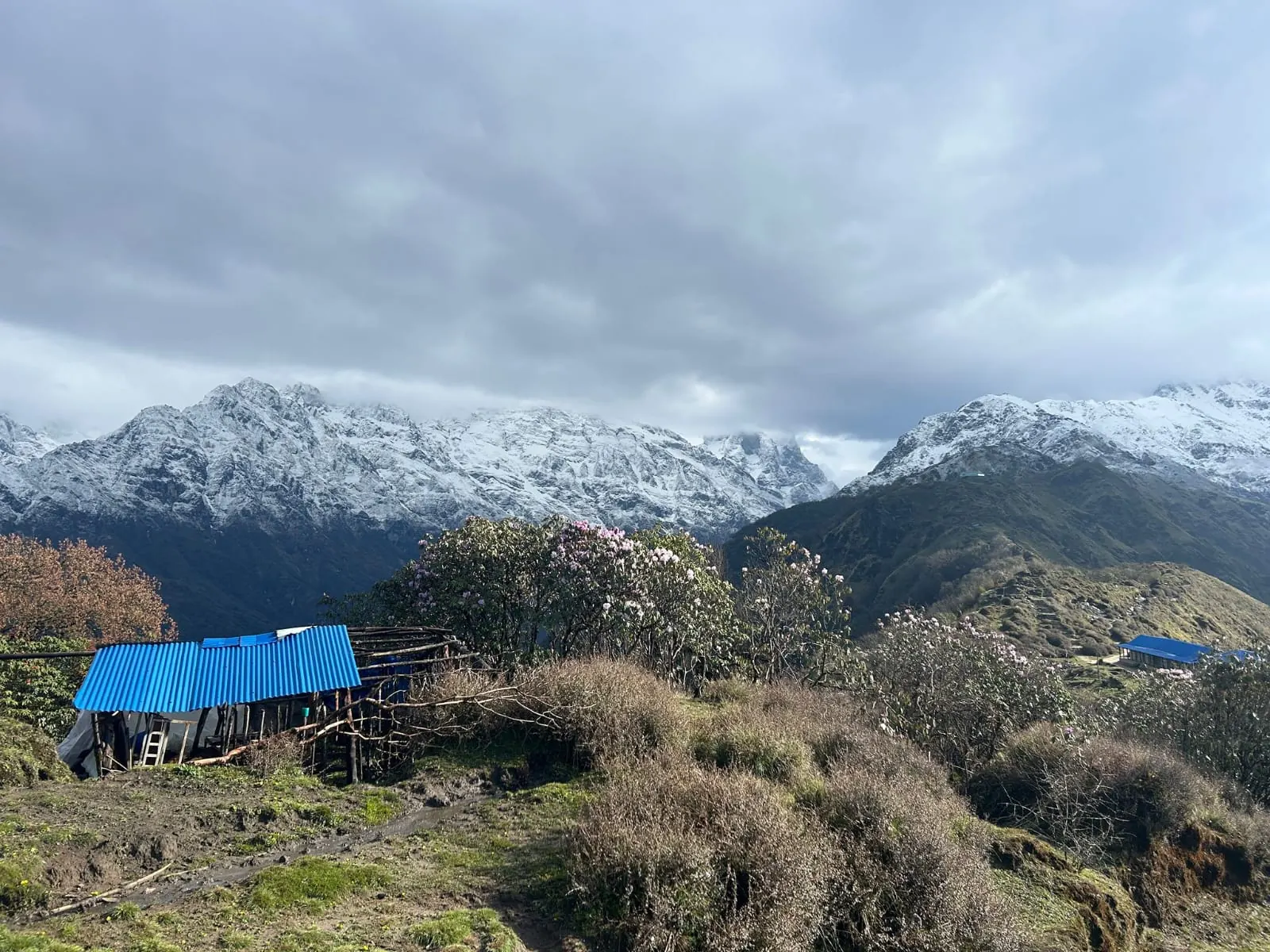
High Camp & Badal Danda 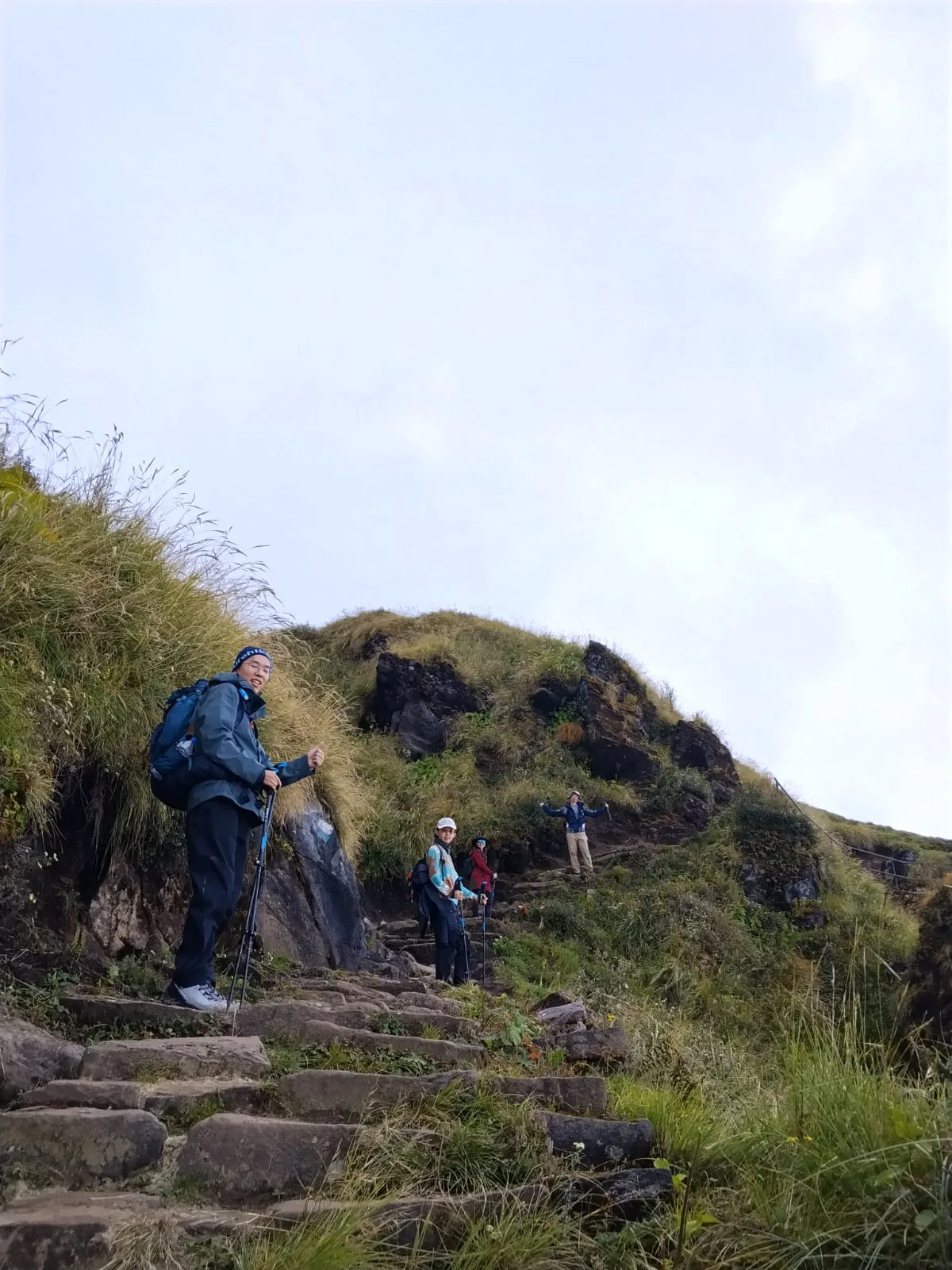
Trail to High Camp 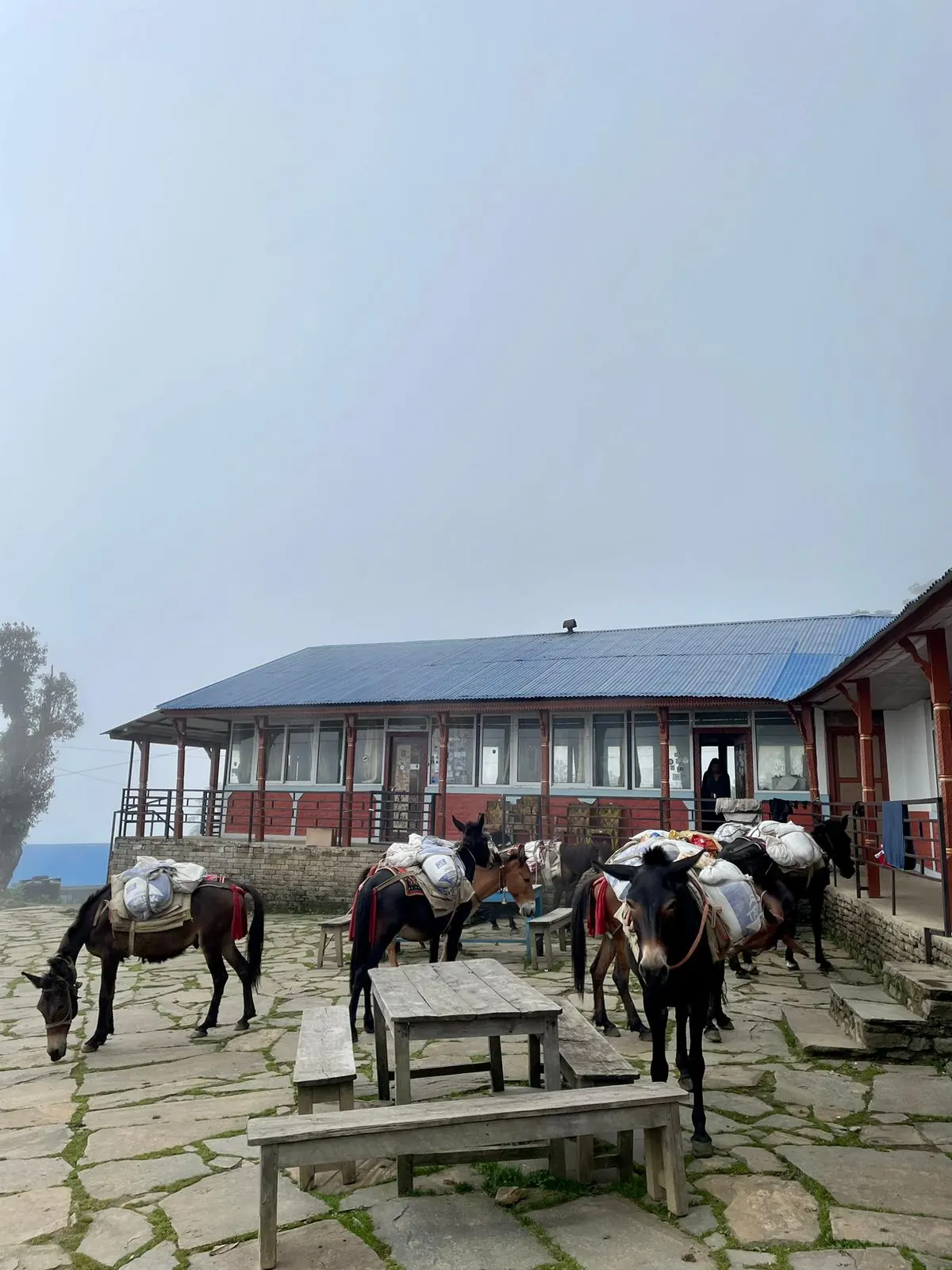
Low Camp 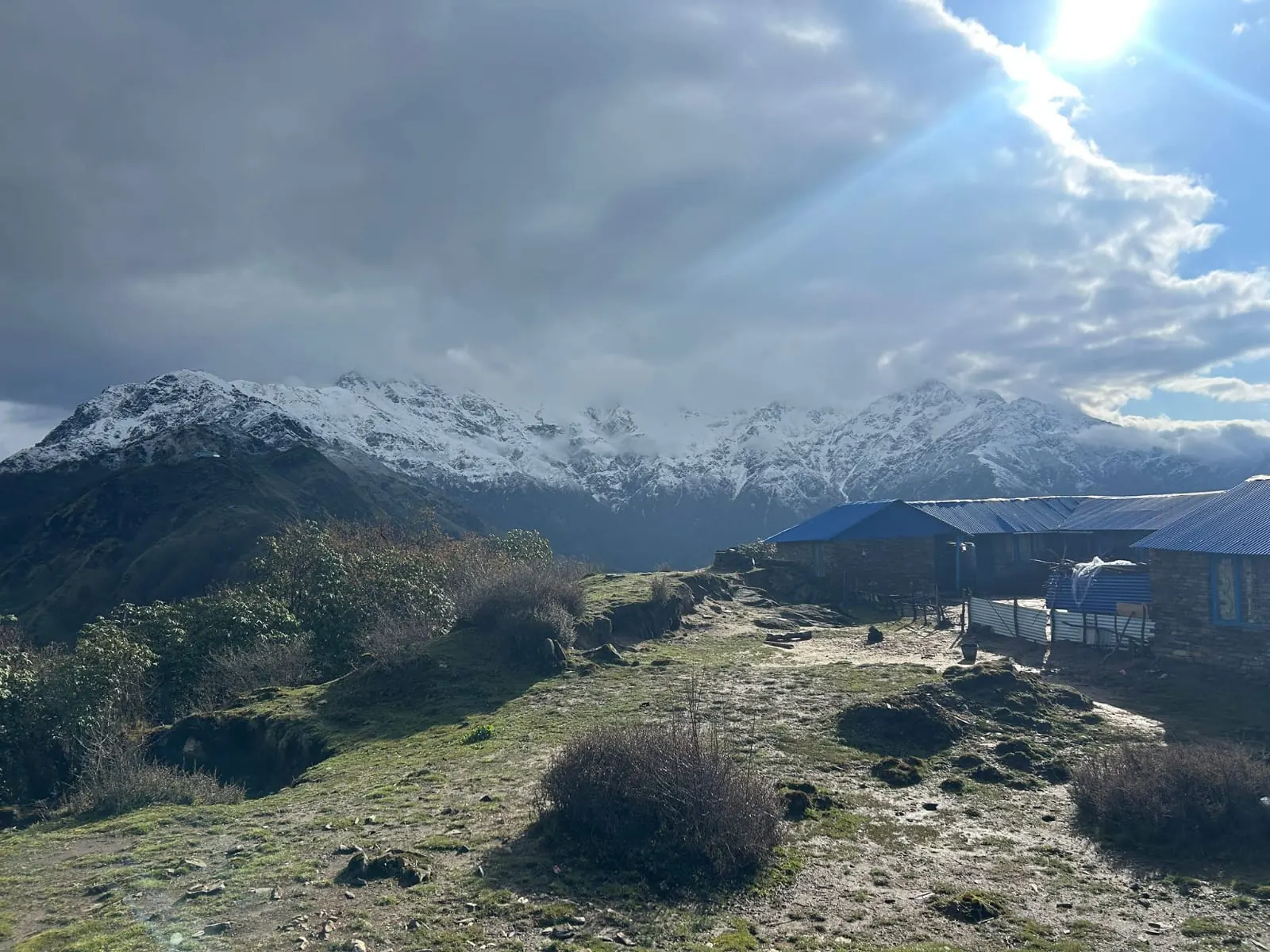
High Camp & Badal Danda 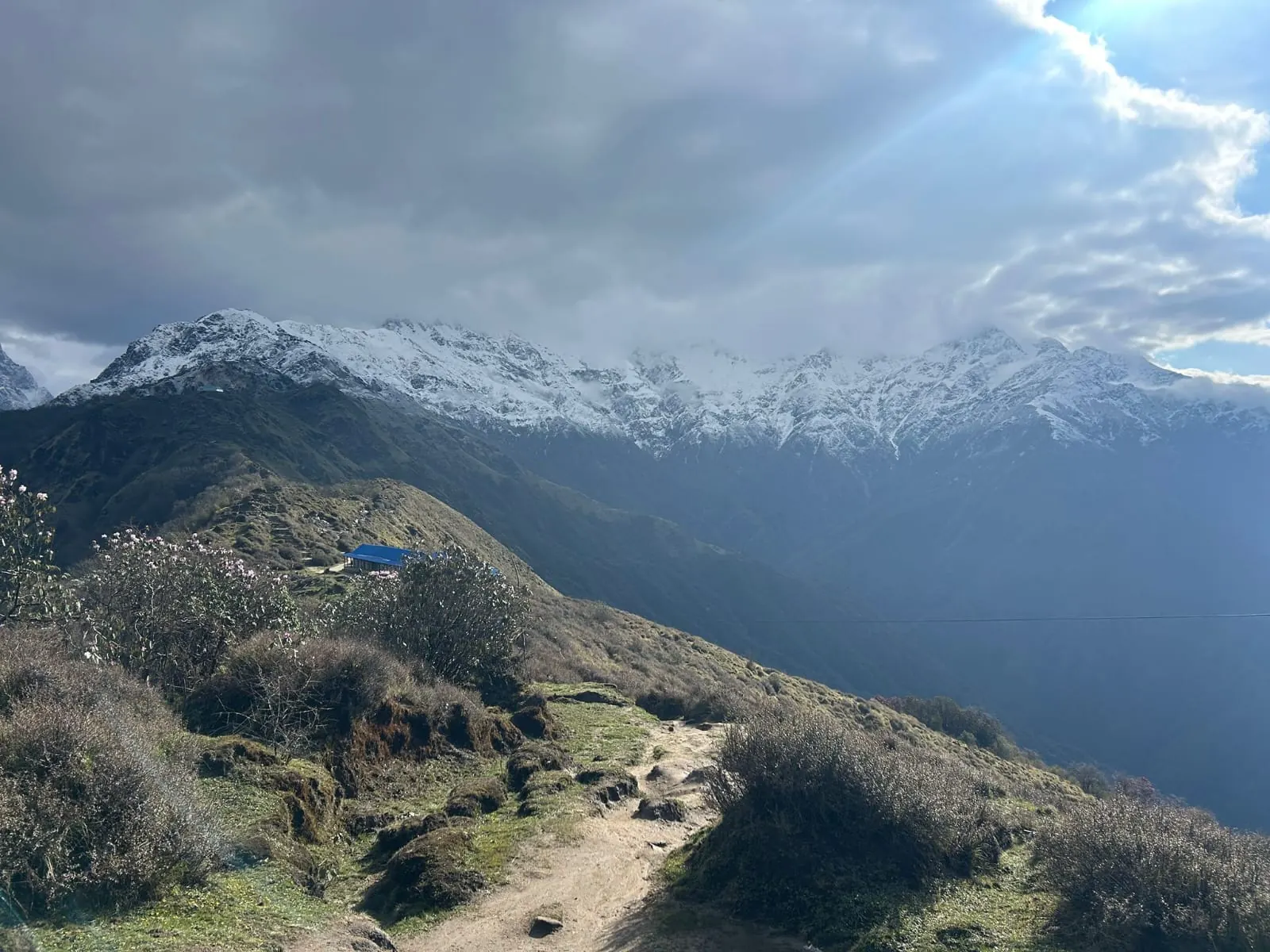
High Camp & Badal Danda 6 photos from day 5, taken on the trail. - Day 6
High Camp → Upper Viewpoint → Low Camp
- Drive
- None
- Trek
- 6 – 7 hrs
- Distance
- ~11 km
- Altitude
- 3,580 → Upper Viewpoint 4,200 m → Low Camp 2,985 m
- Net change
- +620 m / -1,215 m
The second sunrise, and the highest point of the trek. We leave High Camp around 04:30 for the pre-dawn ridge climb to the Upper Viewpoint at 4,200 metres. This is the close-up to Poon Hill's wide shot: Machhapuchhre and Annapurna South rise almost overhead, near enough to feel rather than just photograph, with Dhaulagiri far to the west. Two sunrises, two completely different kinds of mountain view, in one trip. Mardi Himal Base Camp at 4,500 metres is about 1 hour 30 minutes further along the ridge. If you want to go on, ask your guide, and expect a longer day.
Back to High Camp for a late breakfast, then we descend the same ridge past Low Camp for the night, giving the body an easier drop after the highest point of the trek rather than pushing straight down to the valley.
High Camp & Badal Danda 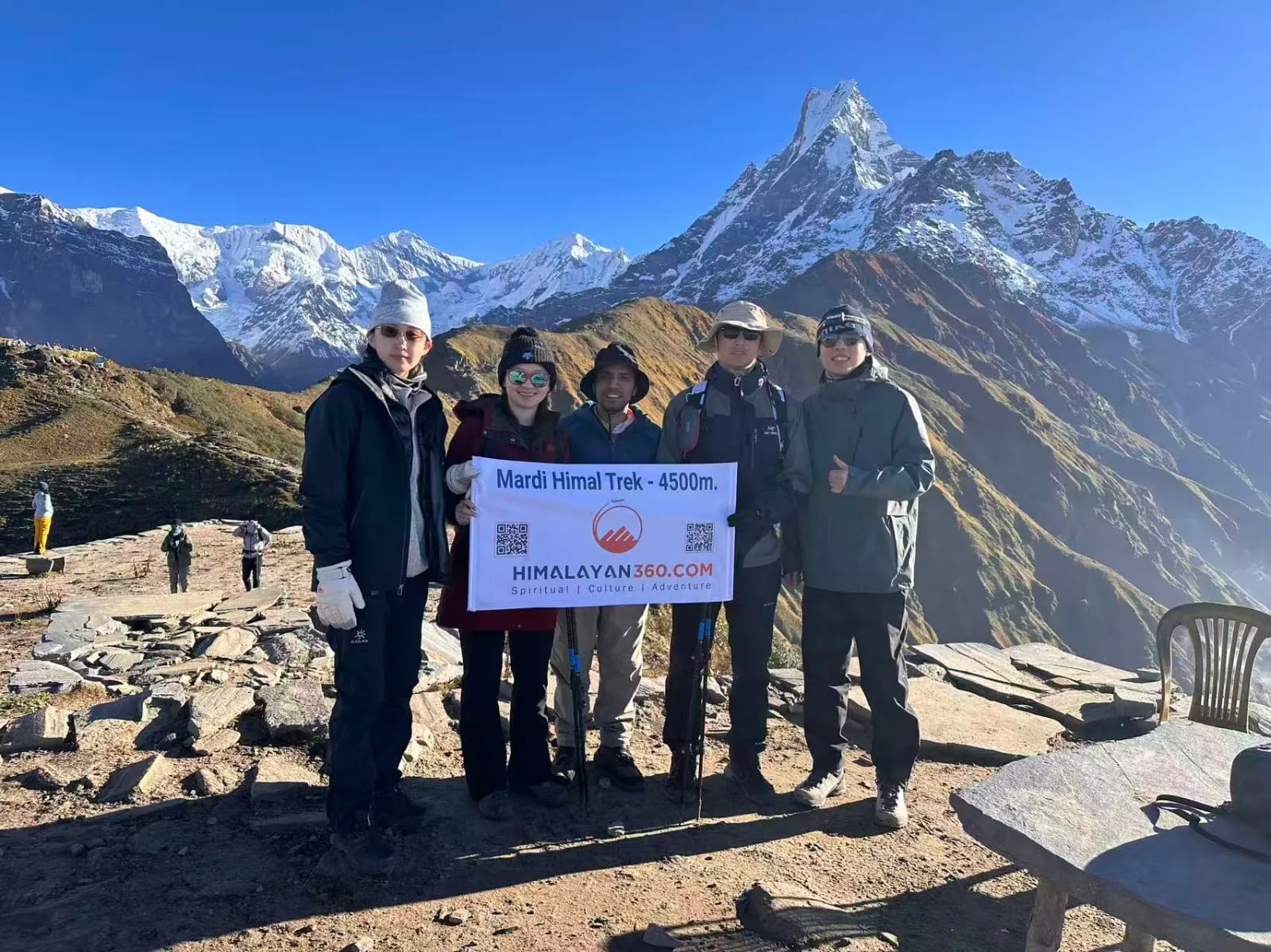
Upper Viewpoint Low Camp High Camp & Badal Danda 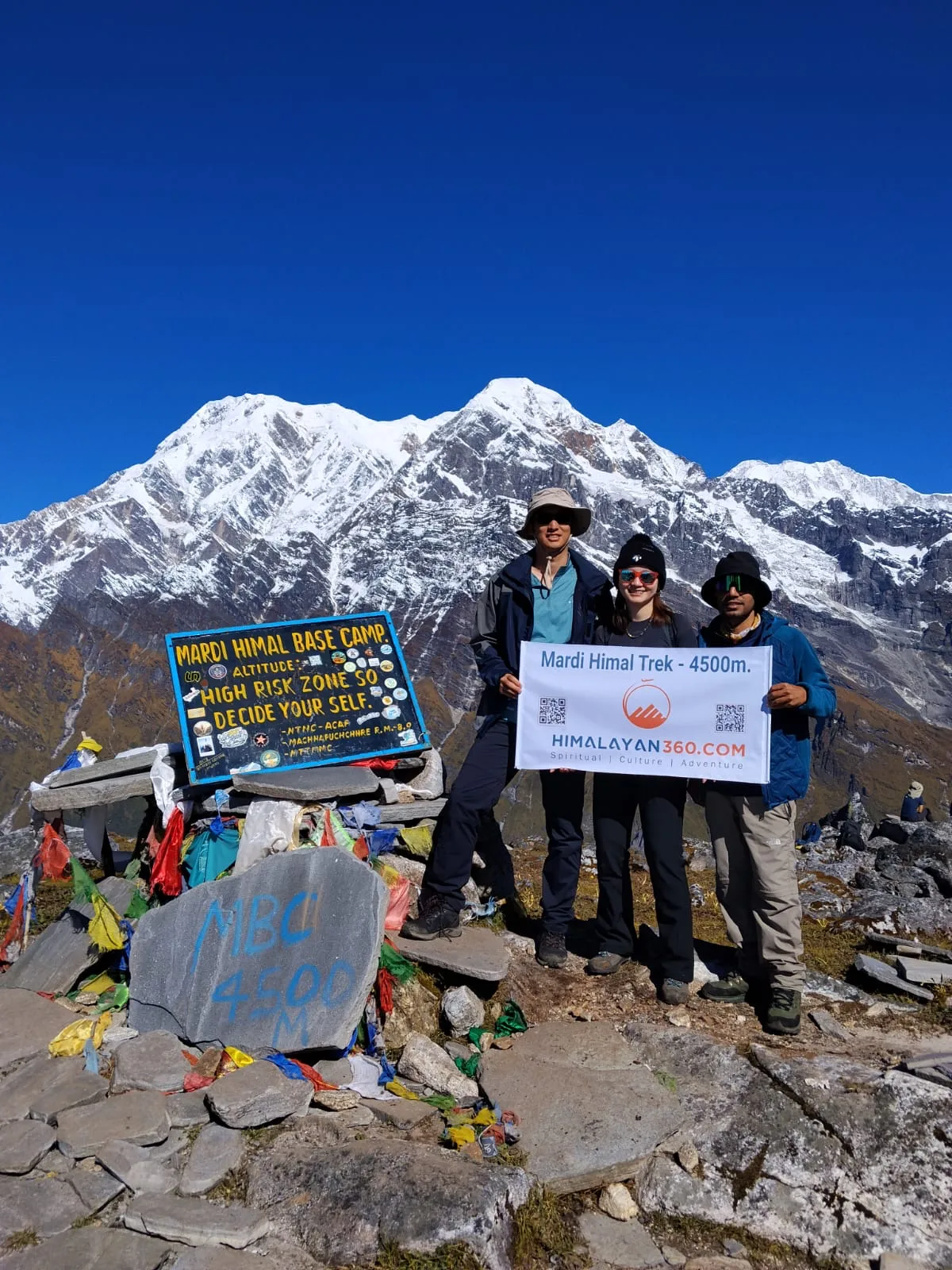
Mardi Himal Base Camp Low Camp 6 photos from day 6, taken on the trail. - Day 7
Low Camp → Sidhing → Pokhara
- Drive
- 2.5 to 3 hrs (Sidhing to Pokhara)
- Trek
- 3 – 4 hrs
- Distance
- ~9 km on foot
- Altitude
- Low Camp 2,985 m → Sidhing 1,860 m → Pokhara 820 m
- Net change
- -1,125 m (trek) / -1,040 m (drive)
A steep forest descent from Low Camp toward the Gurung village of Sidhing, on fresh ground rather than retracing the inbound trail. Trekking poles matter here; the last big descent of the trip is hard on the knees.
The jeep meets us at Sidhing for the rough but scenic road back to Pokhara at 820 metres, passing through Lwang and its tea gardens on the way. We reach the lakeside by early to mid afternoon: hot shower, a real bed, and an evening free by Phewa Lake. After a week on the trail through two sunrises and one quiet ridge, the contrast is the point.
Low Camp 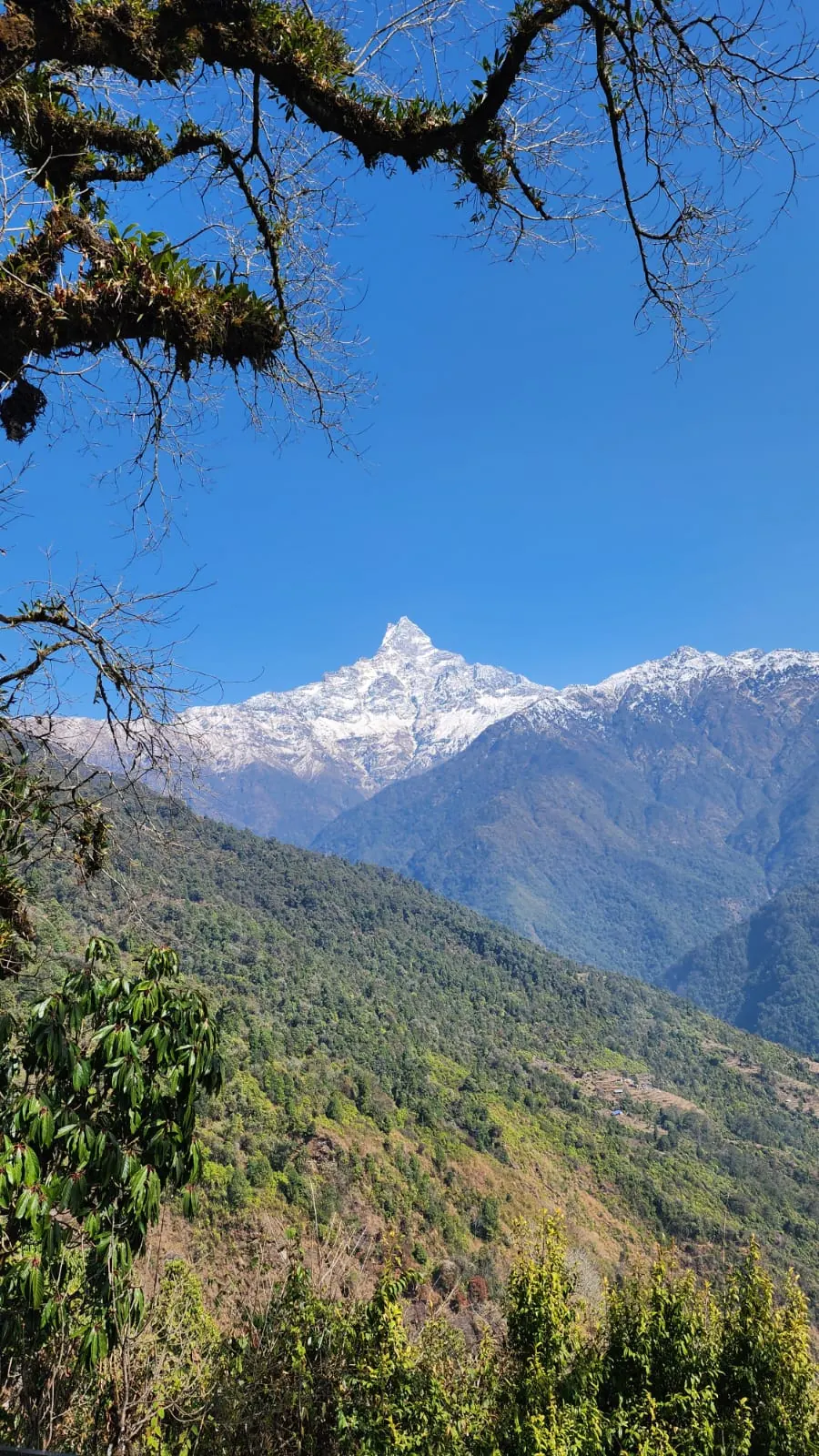
Sidhing Low Camp 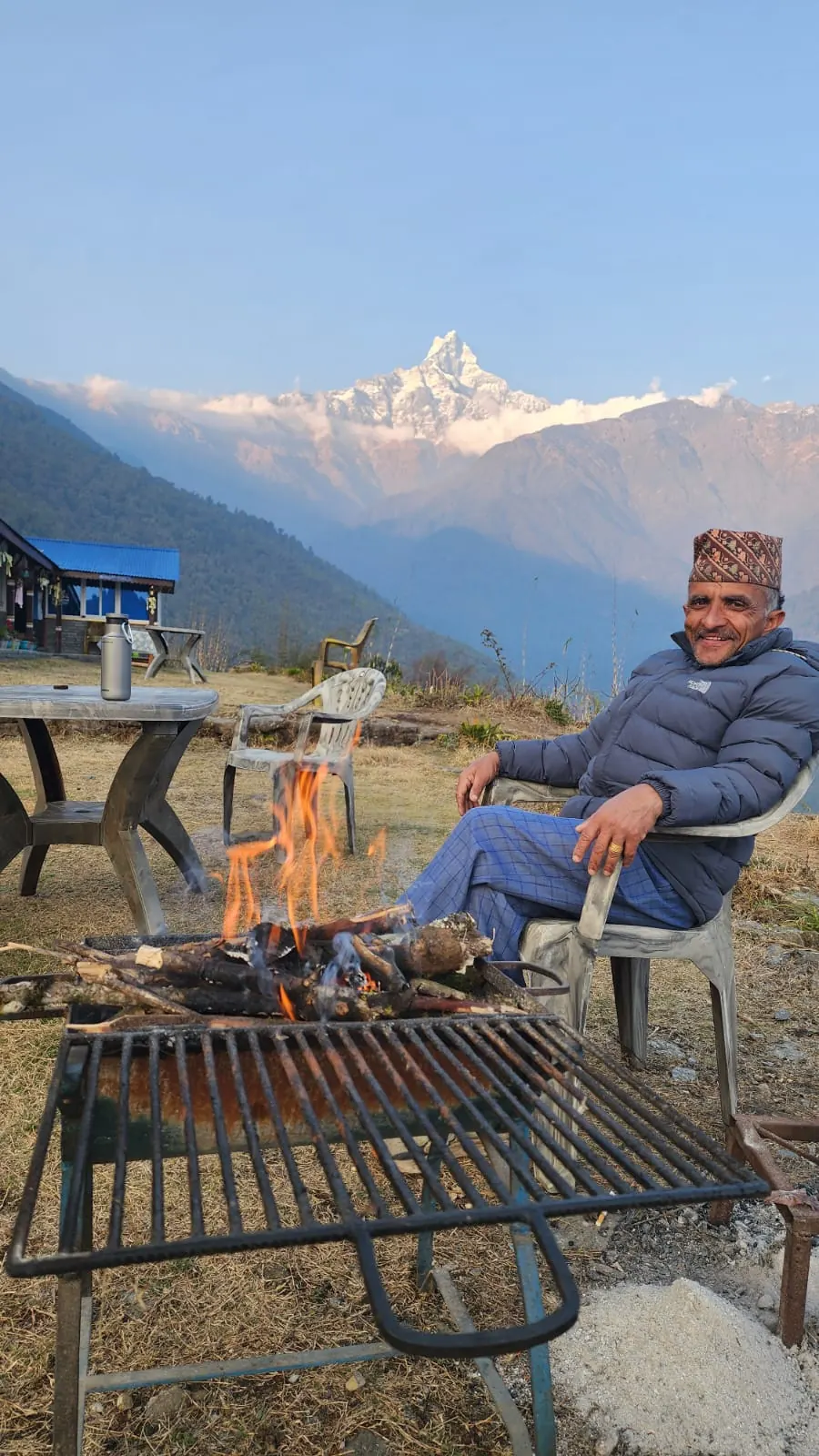
Sidhing 4 photos from day 7, taken on the trail.
The hinge at Landruk.
- Altitude
- 1,565 m
- People
- Gurung and Magar farming village on the Modi Khola
- On this trek
- Day 3 night, gateway to the Mardi ridge
- Why it matters
- Last village before the climb onto Mardi
Landruk is not a headline stop the way Poon Hill or the Mardi viewpoint are, but it is the hinge the whole route turns on. It sits at 1,565 metres above the Modi Khola, a working Gurung and Magar village of terraced fields and stone houses, the last proper settlement before the trail leaves the busy Ghorepani side behind. Trekkers doing the standalone Annapurna Base Camp trek pass through here too, and the paths only split above the village.
From Landruk the route turns away from the main valley trails and climbs onto the quiet Mardi ridge, a single forested spine with a fraction of the foot traffic of the Poon Hill side. It is a short overnight rather than an extended stay, but it marks the point where the trip changes character, from village trekking to the wilder, emptier climb toward the viewpoint. For more on the Gurung and Magar communities of the region, their festivals, and daily life, see our people and culture guide.
Seven days, or something adjacent.
The 7-day plan above is the version most people book, and it is the one that reaches both sunrises. If your schedule will not stretch to seven days, the standalone Mardi trek covers the same viewpoint in six without Poon Hill. If you want more altitude and distance once you are already up on the ridge, pairing Mardi with Annapurna Base Camp extends the trip to ten days. Three real, bookable itineraries, not padding.
Mardi only
6 daysSkips the Ghorepani side entirely and starts from Kande, reaching the same Upper Viewpoint at 4,200 metres in less time and at a lower cost. Take this if the two-sunrise combination is more than your schedule allows.
Standard
7 daysThe version on this page. Poon Hill first for the wide sunrise and a gentler altitude build, then the quiet Mardi ridge for the close-up second sunrise at 4,200 metres. No side trips and no wasted days, just the seven days it actually takes.
Add Annapurna Base Camp
10 daysPairs the Mardi ridge with a push on to Annapurna Base Camp at 4,130 metres via Jhinu Danda and Sinuwa, for a longer high-mountain trip in one go rather than two separate bookings.
2026 price, per person, by group size.
All prices are per person in USD for the standard 7-day Poon Hill and Mardi Himal itinerary departing from Pokhara. The bigger your group, the lower the per-person rate. Tell us your dates and group size and we confirm your slot the same day.
Want it private, just your party with your own guide? Add 5% per person. Going private on your own, you pay the 1-person rate.
The full fee breakdown, ACAP and TIMS permit costs, and optional add-ons such as a porter all live on the permits and cost page. Guaranteed group dates and how to reserve are on fixed departures.
Secure card payment. The balance is paid in Kathmandu before the trek. See the booking policy.
- ACAP (Annapurna Conservation Area Project) entry permit
- TIMS card
- Licensed English-speaking local guide for 7 days
- Pokhara to Ulleri private jeep
- Sidhing to Pokhara local jeep
- 6 nights teahouse accommodation
- 6 breakfast, 7 lunch and 6 dinner, each with a cup of tea
- Trip success certificate
- Comprehensive first aid kit
- International flights to Kathmandu or Pokhara
- Pokhara hotel (Lakeside, USD 35 to 80 per night)
- Lunch and dinner in Pokhara on rest days
- Personal trekking gear
- Travel insurance (mandatory, must cover heli evacuation to 4,500 m)
- Tips for the guide (10% to 30% of package price)
Not sure what to pack for a route that touches 4,200 metres? Our packing list covers layering, footwear, and the kit that matters at High Camp. Pick your window with the best season guide.
Before you book.
- Can you combine Poon Hill and Mardi Himal in one trek?
- Yes, and it is the most popular Mardi combination on the market. The route runs the Ghorepani Poon Hill leg first, crosses through Tadapani and the gateway village of Landruk, then climbs the quiet Mardi ridge to the Upper Viewpoint. You get the wide Poon Hill sunrise panorama and the close-up Mardi viewpoint in a single seven-day trip, plus one of the best stretches of rhododendron forest in the region. One ACAP and TIMS permit set covers the whole thing.
- How many days do you need for the Poon Hill and Mardi Himal trek?
- Seven days is the standard route from Pokhara and back: two days on the Ghorepani Poon Hill side, a crossing day to Landruk, and three days on the Mardi ridge to the second sunrise and back down through Sidhing. If your schedule will not stretch to seven days, our standalone 6-day Mardi Himal trek reaches the same viewpoint without Poon Hill. If you want more altitude once you are already up on the ridge, pairing Mardi with Annapurna Base Camp extends the trip to ten days.
- Which comes first, Poon Hill or Mardi Himal?
- Poon Hill comes first, and that order matters. Starting on the Ghorepani side means you climb to 3,210 metres at Poon Hill on Day 2, before you tackle the higher Mardi ridge, so your body acclimatises gradually rather than all at once. By the time you reach High Camp at 3,580 metres and the Upper Viewpoint at 4,200 metres on Day 6, you have already had several days of altitude behind you. It is a gentler profile than going straight up the Mardi ridge from Kande.
- Is the combined trek harder than Mardi Himal on its own?
- It is longer rather than steeper. The combo adds the Poon Hill loop at the front, two lower-altitude, cultural days, before the Mardi ridge that the standalone trek covers. So you walk more total days and more kilometres, but the altitude builds more gradually because Poon Hill softens the acclimatisation. The one long stretch unique to this route is the Tadapani to Landruk descent on Day 3, a full day of losing height rather than a technical climb. If you are weighing the combo against a single trek, our Poon Hill versus Mardi comparison lays out the trade-offs.
- Do you get two different sunrises on this trek?
- Yes, and they are the whole reason for the combination. Poon Hill gives a wide, open panorama from a single famous hill at 3,210 metres on Day 2, with Dhaulagiri, the Annapurnas, and Machhapuchhre spread across the horizon. The Mardi Upper Viewpoint at 4,200 metres on Day 6 gives the opposite: a close, intimate view with Machhapuchhre and Annapurna South almost overhead. One trip, two sunrises, two completely different kinds of mountain view.
- What does the combined Poon Hill and Mardi Himal trek cost?
- USD 392 to USD 690 per person, depending on group size, for the standard 7-day itinerary. A solo private trekker pays USD 690; two people pay USD 508 each; groups of three to five pay USD 448 each; six to ten pay USD 420 each; and eleven to twenty pay USD 392 each. Prices include permits, a licensed guide, jeep transfers, teahouse accommodation, and meals on the trail. Tell us your dates and group size and we confirm your slot the same day. Our permits and cost page shows the ACAP and TIMS fees the price is built on. For a private trip, just your party with your own guide, add 5% per person; a solo trekker pays the 1-person rate.
- What permits do I need for the Poon Hill and Mardi Himal trek?
- One set covers both legs. Both Ghorepani Poon Hill and the Mardi ridge sit inside the Annapurna Conservation Area, so a single ACAP entry permit and one TIMS card cover the whole seven-day route. Since 1 April 2023 foreign trekkers must also hire a licensed guide arranged through a registered agency, which we provide. We arrange the permits and guide together; both are included in your price.