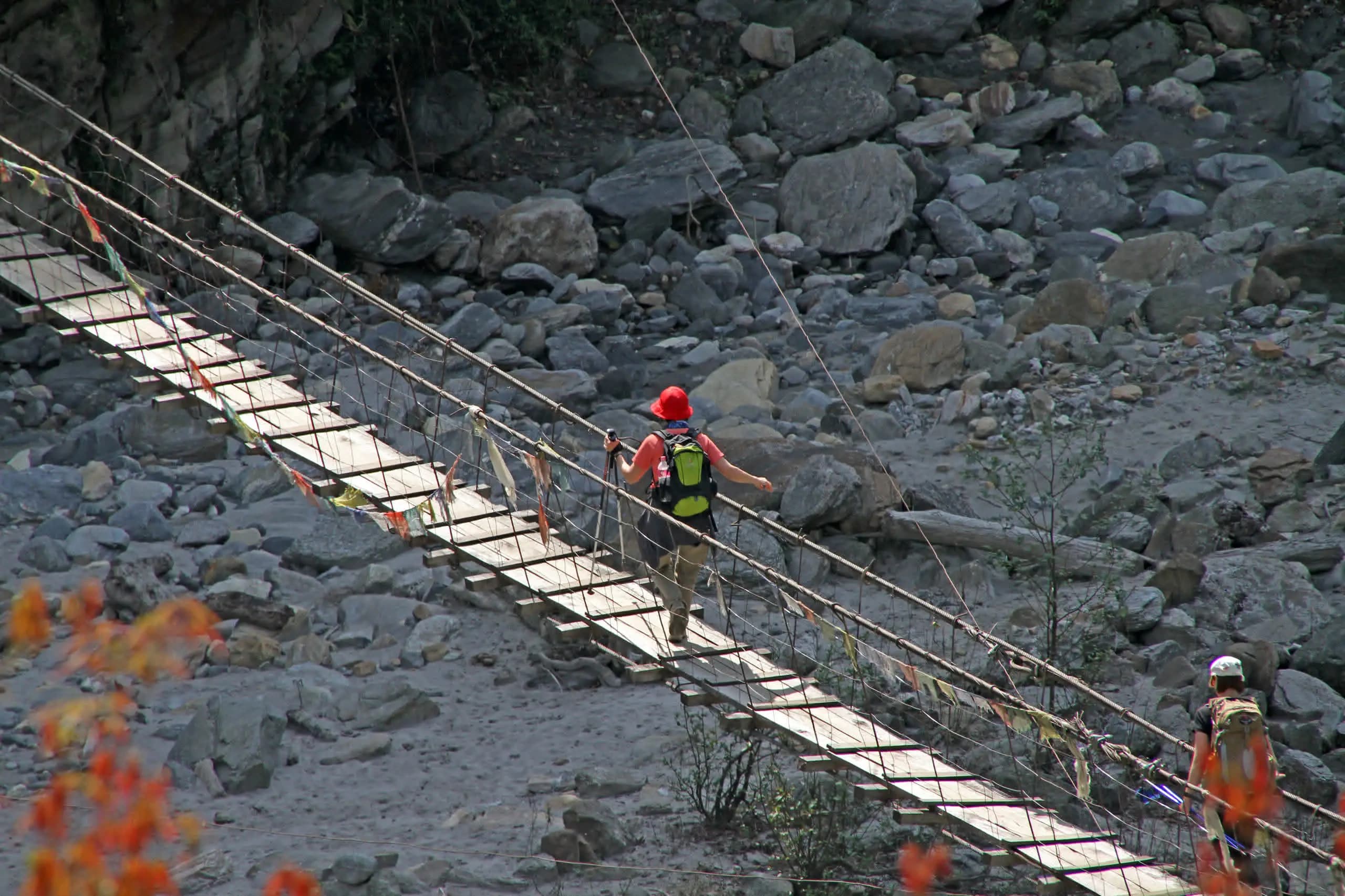
The road into the Annapurna region from Pokhara
India · No visa · SAARC rates

Mardi Himal for Indian trekkers.

India is where more of our trekkers come from than anywhere else, and Indian citizens walk this trail on terms nobody else gets: no visa, no entry fee, and permits at about a third of what everyone beside you on the ridge is paying. Here is what that actually saves, which ID gets you in, how Indian rupees behave once you cross, and the honest answer on flying into Kathmandu against Pokhara.

Four things that are cheaper or simpler.

Visa

You do not need one

Indian citizens enter Nepal without a visa and without the USD 30 to 50 entry fee every other nationality pays. There is no arrival form to fill, no queue at the visa desk, and no limit on how long you can stay for tourism. This is the single biggest cost difference between an Indian trekker and everyone else on the same trail.

ACAP permit

NPR 1,000 instead of NPR 3,000

The Annapurna Conservation Area Permit is charged at the SAARC rate for Indian nationals: NPR 1,000 against NPR 3,000 for other foreigners. At the fixed peg that is INR 625 rather than INR 1,875. Children under ten are free. Paid once, covering the whole trek.

TIMS card

NPR 300 to 600 instead of NPR 2,000

The Trekkers' Information Management System card is NPR 300 at the SAARC group rate or NPR 600 individual, against NPR 2,000 for other foreigners. It is issued only through a registered agency, so it is not something you can buy yourself at a counter.

Getting there

A short flight or an overnight bus

Kathmandu is under two hours from Delhi and about ninety minutes from Kolkata. Pokhara, which is where this trek actually starts, has its own international airport. Overland through Sunauli or Raxaul is slower and cheaper, and is the usual route for anyone travelling with a lot of gear.

Everything else is the same as for any other trekker: the same guide rule, the same teahouses, the same weather. For the full fee table both rates come from, see permits and cost.

Rupees, and which ones work.

The exchange rate does not move

The Nepalese rupee has been pegged to the Indian rupee at NPR 1.60 to INR 1 since 1993. It is not a floating rate and it does not shift while you are on the trail, which makes budgeting in advance genuinely reliable: NPR 1,000 is INR 625, today and in six months.

Carry small Indian notes, or none

Indian notes of INR 100 and below are accepted in Nepal. INR 500 and INR 2,000 notes are not legal tender there and teahouses will refuse them, which strands people who arrived assuming otherwise. Change money at the border or in Pokhara and carry Nepalese rupees onto the trail.

Above Pokhara it is cash only

There is no ATM on the Mardi trail and no card machine in any teahouse. Whatever you will spend on drinks, hot showers, charging and Wi-Fi for the whole trek has to come up the hill with you in Nepalese rupees. Budget roughly NPR 2,500 to 3,500 a day above Kande for those extras, and carry small notes because change is scarce at High Camp.

Trek prices are quoted in US dollars

Our published rates are in USD, because that is what the industry quotes in and because a USD price does not go stale between the day we publish it and the day you walk. Ask and we will convert to rupees at the day's rate rather than putting a figure on this page that will be wrong next month.

Which ID actually works.

Nepal does not require a visa from Indian citizens, but it does require you to prove you are one. This is the thing that most often goes wrong at the airport, and it goes wrong at check-in in India rather than at immigration in Nepal.

  • A valid Indian passport is the simplest document and the one that causes no argument anywhere.
  • A voter ID card (EPIC) is accepted at land borders and, in practice, by airlines on the Nepal sector. Rules change, so confirm with your carrier before you fly rather than at the counter.
  • Aadhaar and PAN are not travel documents and should not be relied on to enter Nepal.
  • Whatever you carry, you will need it again for the ACAP permit and the TIMS card, both of which are issued in your name.
  • Under-18s travelling without a parent should carry a birth certificate and a letter of consent.

What Indian trekkers ask us.

Do Indians need a visa or permit for the Mardi Himal trek?

No visa. Indian citizens enter Nepal freely and pay no entry fee. You do still need the two trekking permits everyone needs: the ACAP permit, at the SAARC rate of NPR 1,000, and a TIMS card at NPR 300 to 600. Both are issued in your name through a registered agency, and we arrange both as part of the trek.

How much does the Mardi Himal trek cost for an Indian trekker?

The package rate is the same as for anyone else, and it falls with group size: our published tiers run from USD 294 to USD 508 per person on the 5-day itinerary. Where an Indian trekker saves is around the edges. No visa fee, permits at roughly a third of the foreigner rate, and the cheapest flights into Nepal of any nationality. Full rates by group size are on the group booking page.

Can I do the trek without a guide as an Indian citizen?

No, and nationality makes no difference here. A licensed guide has been mandatory in the Annapurna Conservation Area since April 2023 for every foreign trekker, SAARC included. Only Nepali citizens are exempt. Our solo trekking page explains the three legal ways to walk this trail alone.

Which airport should I fly into, Kathmandu or Pokhara?

Pokhara if you can, because the trek starts an hour's drive from it and flying into Kathmandu adds a 200 km road day in each direction. Kathmandu has far more connections from Indian cities, so most people land there and take the tourist bus or a domestic flight on to Pokhara. Both work; Pokhara just saves you two days.

Is the trek suitable if I have never walked at altitude?

Yes, with the right itinerary. Mardi Himal is one of the gentler introductions to Himalayan trekking, but Base Camp is at 4,500 m and that is high enough to matter. If nobody in your group has been above 3,000 m, take the 6-day or 8-day version rather than the 5-day; the extra nights are acclimatisation, not padding.

When is the best time to come from India?

October and November, then March to May. Avoid the monsoon between June and early September, when the views disappear and the road in is landslide-prone. Note that Dashain and Tihar fall inside the autumn window, so trails, buses and flights are all busier and book out earlier than usual.

Next: the day-by-day itinerary, rates by group size on group booking, and how to reach the trailhead from either airport.

Ask in rupees.

Tell us your group size and month and we will send a fixed quote, converted to INR at the day’s rate if that is easier, with the SAARC permit rates already applied.