The highest teahouses on the trek, at 3,580 metres, and the last place you sleep before the viewpoint. Plywood rooms, one stove, solar power that fades after a cloudy afternoon, and a headtorch start in the dark. This is what High Camp is, where it sits, and why its handful of beds go before anything else on the route.
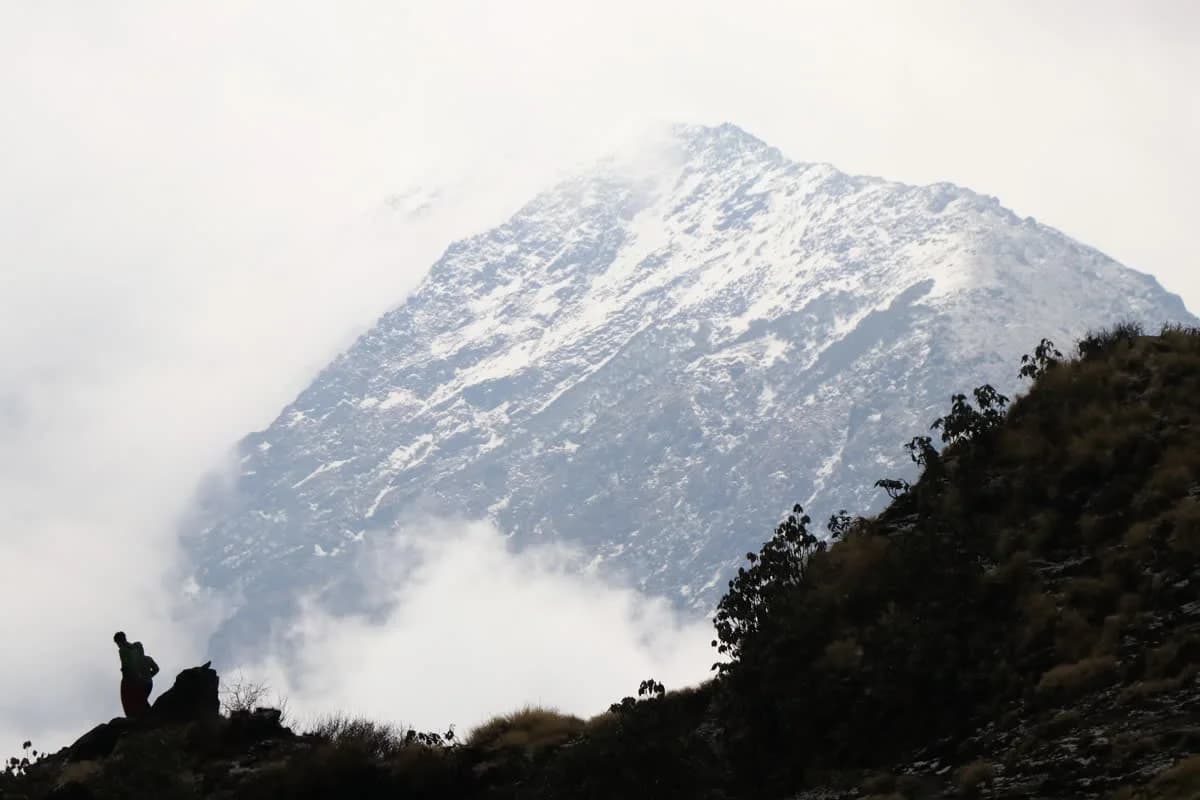
High Camp sits at 3,580 metres on the Mardi ridge, above Badal Danda at 3,210 metres and about 595 metres above Low Camp. The treeline is behind you within an hour of leaving Low Camp, and the last stretch rides an open spine with Machhapuchhre standing directly ahead and Annapurna South away to the west. There is no village up here, no shop, no road. There is a line of stone lodges on a shelf of the ridge, and then the mountain.
It is the highest cluster of teahouses on the trek and the last bed before the viewpoint. Nothing above it is a place to sleep. The trail carries on to the Lower Viewpoint at 3,900 metres and the Upper Viewpoint at 4,200 metres, which is the high point of every published Mardi itinerary, and then, on longer trips only, to Mardi Himal Base Camp at 4,500 metres. Mardi Himal itself, 5,587 metres, stands above all of it, and the trek does not climb it.
On the standard route you arrive at High Camp in the early afternoon of day four, watch the light go off the Annapurnas from the dining-room window, and leave again in the dark. The day-by-day itinerary sets out how the ridge is walked either side of it.
High Camp is a teahouse stop, not a mountaineering camp, but it is the plainest one on the trek. Everything here was carried up, so everything here is rationed: warmth, power, water, and menu. Knowing that in advance is the difference between a rough night and a good story.
Basic plywood twins with some dorm beds. Bathrooms are shared and squat-style is the norm at this height. Nothing is heated, so you sleep in your layers and ask for the second blanket at check-in rather than at midnight.
The only warm room in the place, and the reason everyone ends up in it. One stove, wet gloves drying above it, tea and cards until the fuel runs low. When the stove goes out, the evening is over.
Solar panels and a small generator, billed per device. Output drops after a cloudy afternoon, so charge over dinner while the room is busy and carry a power bank for the morning climb.
Cold, and rationed by what can be carried. A hot wash here is usually a bucket of warm water rather than a plumbed shower, and plenty of trekkers skip it and clean up properly on the descent instead of getting chilled at 3,580 m.
Tap and stream water is not safe untreated. Lodges sell boiled or filtered water by the litre and the price climbs with the altitude, so carry a bottle and either buy refills or treat your own with a filter, tablets, or a UV pen.
The standard teahouse menu, narrower than it was lower down, with dal bhat as the backbone. Everything arrived on a porter's back. Mobile signal is weak and unreliable above Low Camp, and lodge wifi at High Camp is slow at best, so plan to be offline.
We do not publish room, meal, or extras rates for High Camp. Lodges set their own and move them season to season, so any figure here would be wrong by the time you walked in. Ask at check-in and carry enough cash for the whole trek, because there is no ATM on the ridge. Stop-by-stop detail for every lodge on the route is on Mardi Himal accommodation.
Nobody sleeps late at High Camp. The whole point of the stop is the ridge above it in the dark. Groups leave roughly 90 minutes before first light, which through the trekking season falls somewhere between about 04:00 and 05:15 depending on the month, so you are in position and settled before the colour arrives rather than still climbing into it.
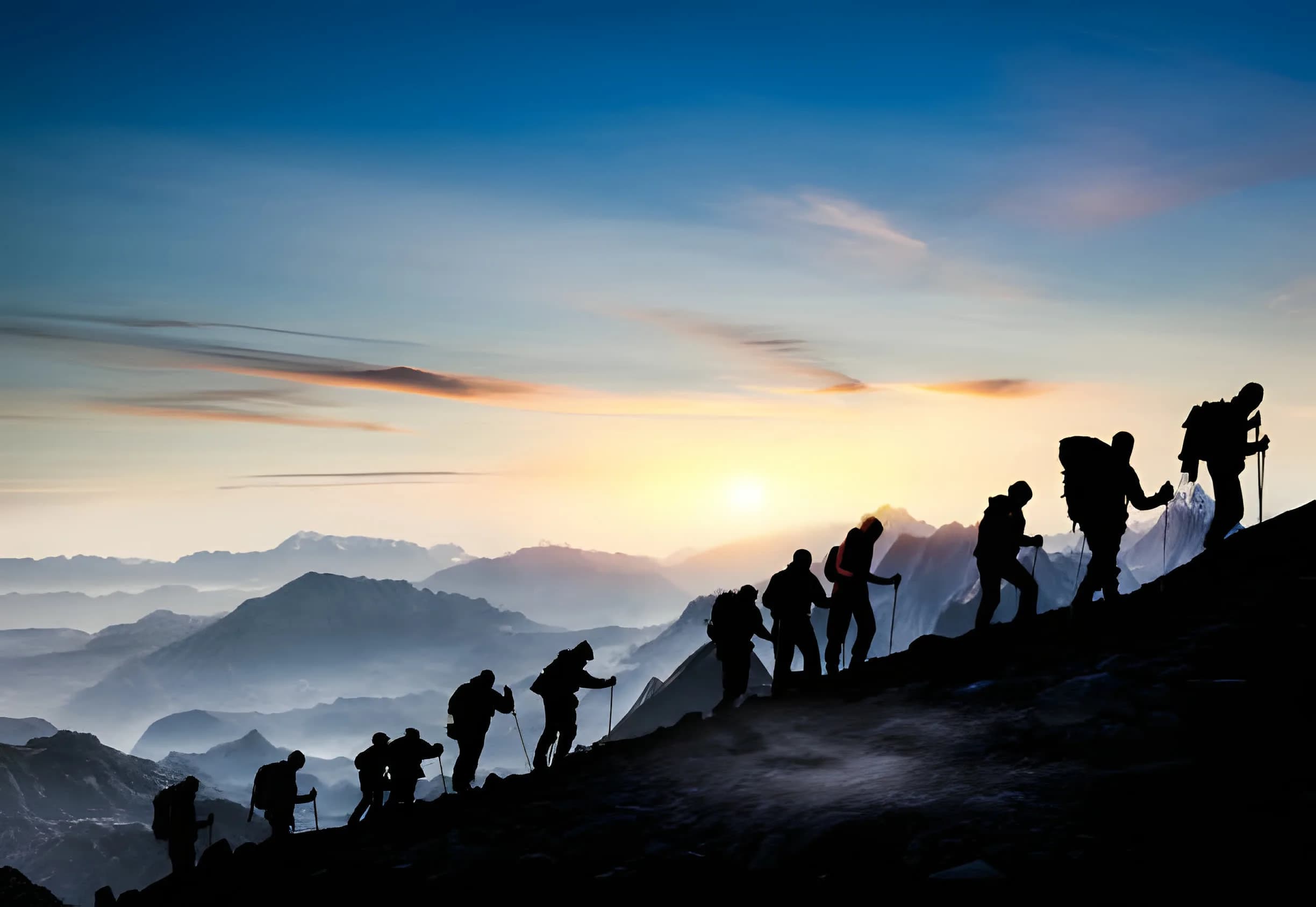
The trail narrows onto the crest straight out of the lodges. Most trekkers reach the Lower Viewpoint at 3,900 metres in about 90 minutes and the Upper Viewpoint at 4,200 metres an hour after that, with faster groups pushing on to the moraine ledge at 4,250 metres. None of it is technical. It is 620 metres of gain in the cold and the dark, and altitude makes every breath count.
Then you come back down to High Camp for a hot breakfast, and on the standard itinerary you keep going the same afternoon, off the ridge and down the forest to Sidhing. That is why this one bed matters more than any other on the trek: it is the only one you use twice in twelve hours. Trekkers on a longer trip continue past the Upper Viewpoint to the true Mardi Himal Base Camp at 4,500 metres, two to three hours and about 920 metres above the lodges.
For most people who walk this ridge, High Camp is the highest they have ever spent a night. The walking is not the hard part. The night is where the altitude shows up: shallow, broken sleep, waking short of breath, a headache that arrives with dinner and is gone by the time you are moving in the morning. Mild headaches at Low Camp and High Camp are the most common complaint on the route, and they usually pass.
You gain about 595 metres of sleeping altitude coming up from Low Camp, a little more than the roughly 500 metres a night that altitude authorities suggest above 3,000 metres. That is one reason the arrival afternoon is worth spending slowly: walk gently, drink more than you want to, eat properly, and skip the cold wash.
The shape of the day after is on your side. You climb above High Camp at dawn and sleep far lower the same night, which is exactly the climb-high, sleep-low pattern acclimatisation guidance recommends, and help is downhill and close if you need it. Tell your guide early rather than at two in the morning. Symptoms, prevention, and what we do about it are covered on altitude sickness on Mardi Himal.
High Camp fills before anything else on the trek, and the reason is structural rather than seasonal. It is a small number of lodges on a narrow shelf, and almost every trekker on the route needs a bed there on the same night of their itinerary. There is no second village to spill into and nowhere higher to go.
October and April are when this bites. Teahouses above Low Camp fill in both months, so operators book them ahead, phoning up the ridge or sending a guide early to hold rooms. Badal Danda, the next stop down, goes the same way. Mardi is still a quiet trail by Annapurna standards, and even in peak weeks you might pass twenty to forty other trekkers in a day, but all of them want the same shelf at 3,580 metres.
Walking independently in a peak week, plan to be at High Camp by early afternoon rather than at dusk. On a guided trip the room is held before you leave Pokhara. Month-by-month detail is on the best season guide, and the group dates we hold rooms against are on fixed departures.
High Camp sits at 3,580 m. It is the highest place you sleep on the Mardi Himal trek and the last lodge before the viewpoint. Above it the trail reaches the Lower Viewpoint at 3,900 m and the Upper Viewpoint at 4,200 m, and carries on, on longer itineraries only, to Mardi Himal Base Camp at 4,500 m.
No. High Camp at 3,580 m is where you sleep. Mardi Himal Base Camp is a separate point at 4,500 m, roughly 920 m and two to three hours higher, and it is reached only on longer trips. Some operators label the 3,580 m lodges as base camp, which is where most of the confusion on this trek comes from.
Basic plywood twin rooms with some dorm beds, shared and mostly squat toilets, and no heating anywhere except the stove in the dining room. Power comes from solar and a small generator and charging is billed per device. A hot wash is a bucket rather than a shower. It is a real bed and a hot meal at 3,580 m, and that is the standard to expect.
In October and April, yes. It is a small cluster of lodges on a narrow ridge and almost everyone on the trek needs a bed there on the same night, so it fills before anything else. Operators hold rooms ahead in peak season. Outside those months you can usually walk in, but arriving by early afternoon is still the safe play.
Nights drop below freezing even in autumn, and the rooms are unheated. Bring a warm sleeping bag or ask for extra blankets, sleep in your layers, and keep the next morning's clothes inside the bag with you. In heavy winters High Camp can be snow-blocked between December and February.
About 90 minutes before first light, which lands between roughly 04:00 and 05:15 depending on the month. The Lower Viewpoint at 3,900 m takes about 90 minutes from the lodges and the Upper Viewpoint at 4,200 m about an hour more. You come back down to High Camp for breakfast afterwards.
Still working out which point is which? The altitudes, the peaks you can name from the top, and the walk to 4,500 metres are on Mardi Himal Base Camp. For what to put in the pack for a freezing night at 3,580 metres, see the packing list.
We run small-group trips from Pokhara every Saturday from September to May. We also run private trips any day. A 30 % deposit holds your place, and the balance is paid on arrival.