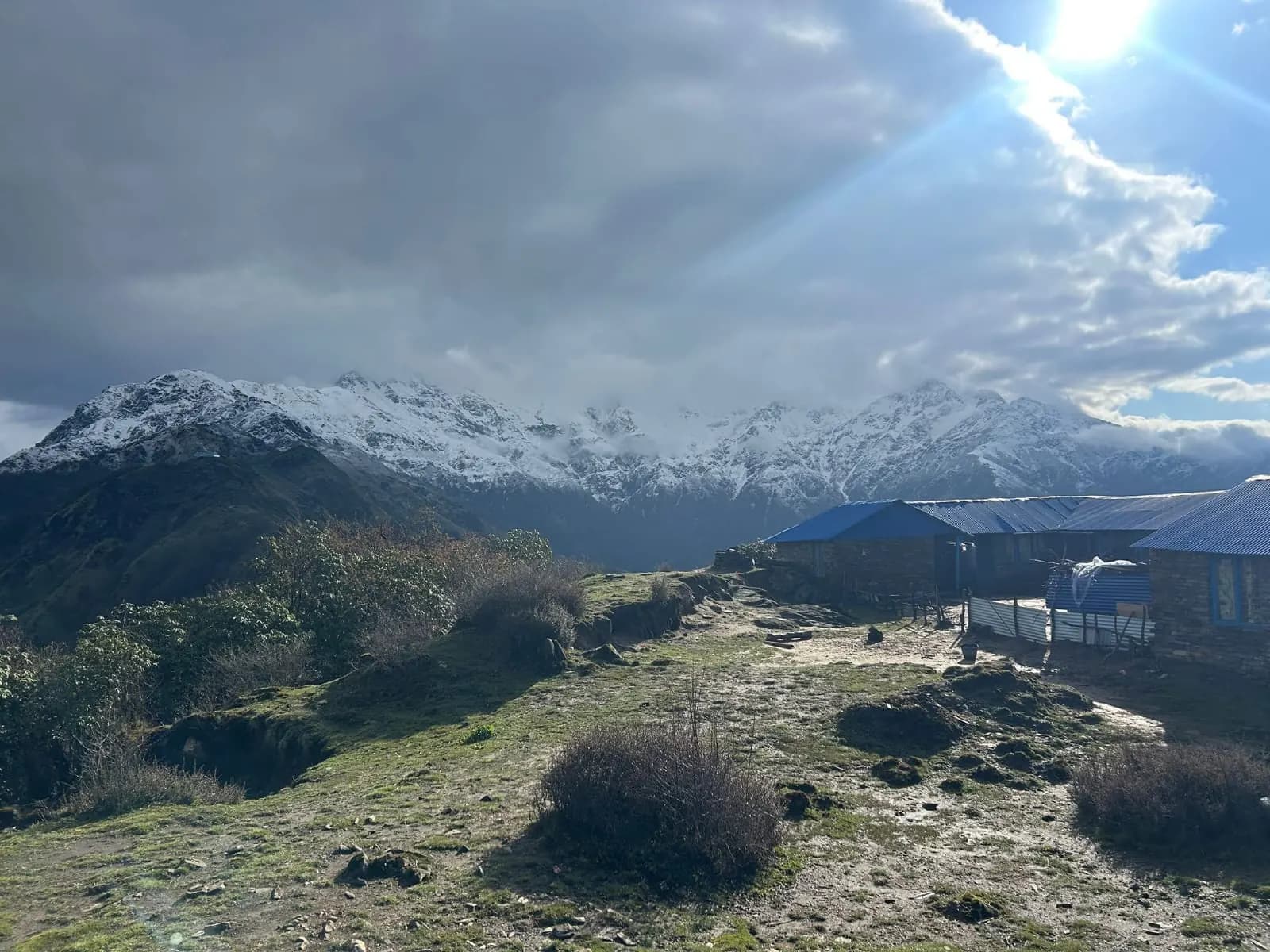
The mountain was first climbed in 1961. The trail beneath it opened in 2012, half a century later, and it was built by hand, lodge by lodge, by the families who live below it. One of them built the first lodge at High Camp five years before the route was official.
Three things had to exist before anyone could walk this ridge for pleasure: somewhere to sleep at the end of each day, a body to maintain the path, and someone willing to tell the world it was there. One man had a hand in all three.
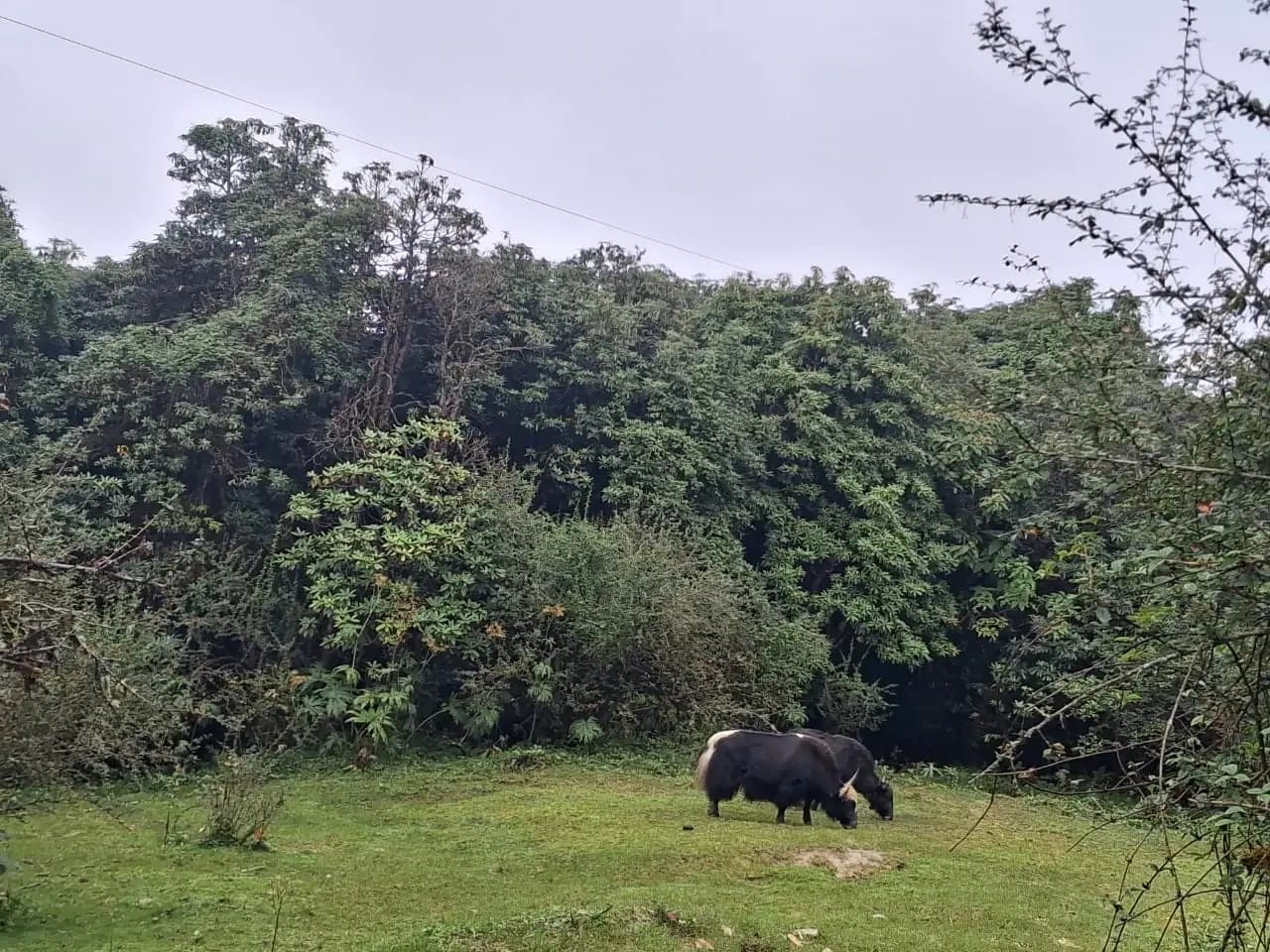
The ridge had a use long before it had a line on a trekking map. Sheep, buffalo and chauri grazed the high pastures, and every summer herders brought sheep and goats up through the rhododendron from Sidhing and Ghalel.
The only buildings on the ridge were goths: sheds for people minding animals, not people watching mountains. High Camp was where Sudip Gautam's father kept his. Nobody was selling a bed. Our page on how the region lives covers the farming, herding and honey seasons this trail was laid over.
Sudip Gautam was born on Wednesday 4 November 1987, the eldest son of Reshamlal and Harimaya Gautam. He grew up in the village of Machhapuchhre in Kaski, finished his secondary education there, and moved down to Pokhara to study further.
He wanted to study hospitality management in Switzerland. Then he failed his exams, and the plan collapsed. He turned to a new one: to run a tea house on the ridge where his father kept his goth.
Later he learned the failure had been a technical error, and Tribhuvan University corrected his results. By then he had started on the ridge, and he did not go back. The hospitality career happened anyway: at 3,580 m, with no road, no power line and hardly any trekkers.
He started with a tea shop at High Camp. To grow it, he had NPR 44,000 that his father had sent home from Malaysia. He borrowed the rest from relatives and friends, and built an eight-room house: Hotel Trekkers Paradise, at a cost of NPR 2.9 million.
“I took a loan from relatives and friends and build an eight-room house at the high camp at the cost of Rs 2.9 million.”
Sudip Gautam, to Onlinekhabar, November 2021
Hotel Trekkers Paradise opened in 2007. At the time there was no hotel at High Camp or anywhere else on the route, not at Forest Camp, Low Camp, Badal Danda or Dund Kharka, and the few trekkers who came up camped.
NPR 44,000 is a modest sum, the kind millions of Nepali families receive from someone working abroad. This one became the first lodge on the Mardi Himal trek.
One lodge on a ridge is a curiosity. A line of them is a trek. Sudip encouraged his relatives to build along the route. One of his uncles put up a two-room house at Low Camp, and another built a tea house at Forest Camp. Between them they began to make the one thing a walker actually needs: a roof at the end of each day.
The stages trekkers walk today follow where those families built, not a plan drawn up by an agency in Kathmandu. Our 3-day and 4-day itineraries still run on them.
Lodges alone do not make a route. Somebody has to maintain the path, mark it, and speak for it to the outside world. Under Sudip's leadership the Mardi Trek Tourism Management and Business Committee was registered at the District Administration Office in Kaski, and he became its founding chairperson at 25.
After that, twice a year, the lodge owners cleaned and built the route themselves, and put between 60 and 100 percent of the money they earned from the business back into it. It is hard to think of many trails anywhere built on those terms.
The path existed and the beds existed, and still hardly anyone knew. Sudip took the route to the people who sell treks. He frequented the meetings and conventions of the Trekking Agencies' Association of Nepal (TAAN) and other tourism bodies, talking up a ridge most of them had never walked.
He was marketing a destination before it was one. He also ran a trekking company of his own, Trek Inside Nepal, served as secretary of the Gandaki branch of the Nepal Mountaineering Association, and was associated with TAAN Gandaki.
He kept finding new reasons for people to come up. In 2021, on his initiative, the Sustainable Himalayan Fund held what the national news agency called Nepal's first ski festival, at Mardi Himal Base Camp. For the walk beyond High Camp, see our base camp page.

The ridge was officially opened as a trekking route in 2012, which makes it one of the youngest trails in the region: younger than the Annapurna Circuit by decades, and younger than most of the people walking it.
What came next is the part every trekker sees. In 2007 there had been one hotel on the route. By 2022 the national news agency RSS counted 13 at High Camp, 12 at Forest Camp, 9 at Low Camp, 6 at Badal Danda and 3 at Dund Kharka. Tea houses opened because trekkers had started to appear, and trekkers kept coming because the tea houses were there. How many walk it now is on our trekker statistics page. The 1961 climb and the disputed summit are a separate story, told on the peak and its first ascent.
He put ten percent of his profits into social causes. He donated the land for the health post at Sidhing. He campaigned against cutting down trees, and spent time looking for alternatives to firewood and gas.
It is worth being plain about what that last one means. The man who stood to gain most from more lodges on this ridge spent his own time arguing about what those lodges burned. That forest is the one the trail walks through between Forest Camp (Kokar) and Low Camp.
On 30 September 2022, Sudip Gautam slipped and fell while repairing a water pipe at High Camp, fifteen years after he had opened the first lodge there. He died of head injuries. He was 34, five weeks short of his 35th birthday. He left his wife, Kabita, and two children.
Two years later, on 9 October 2024, a bust of him was unveiled at Badal Danda, the open ridge between Low Camp and High Camp, in a small park beside the trail. Machhapuchhre Rural Municipality, TAAN Gandaki Province, the Mardi Himal hotel management committee and the Nepal Tourism Board built it together. It stands on a stone plinth beside a Nepali flag. Trekkers leave khatas, marigolds and rice at it, and many walk past without knowing who he was.
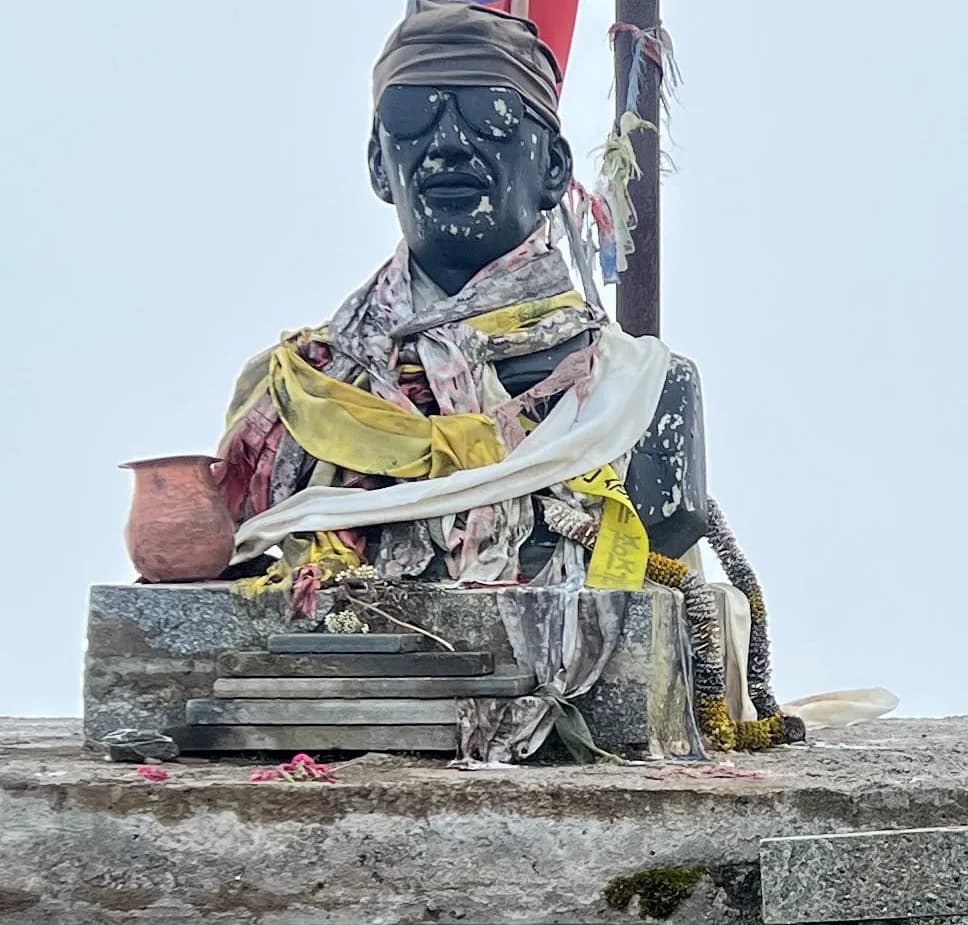
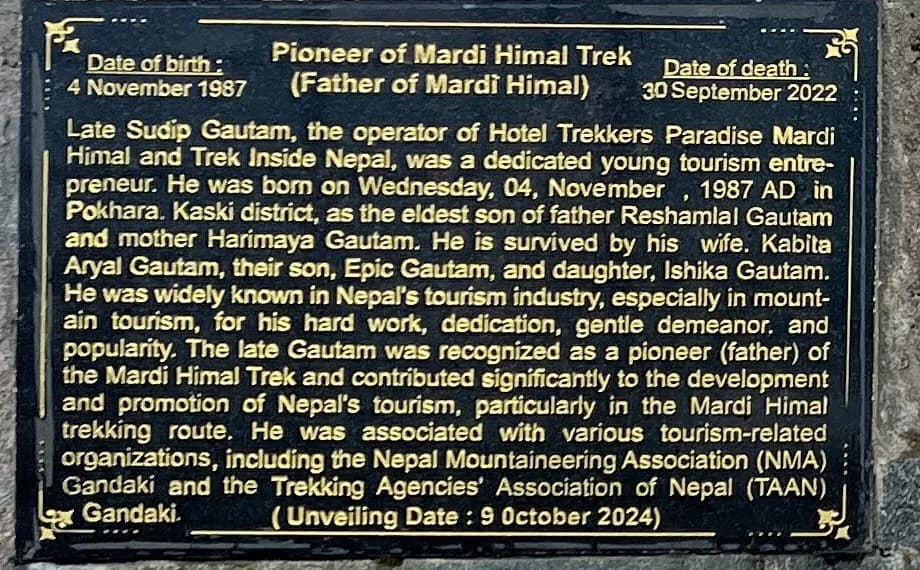
Pioneer of Mardi Himal Trek (Father of Mardi Himal)
Date of birth: 4 November 1987 · Date of death: 30 September 2022
“Late Sudip Gautam, the operator of Hotel Trekkers Paradise Mardi Himal and Trek Inside Nepal, was a dedicated young tourism entrepreneur. He was born on Wednesday, 04 November 1987 AD in Pokhara, Kaski district, as the eldest son of father Reshamlal Gautam and mother Harimaya Gautam. He is survived by his wife, Kabita Aryal Gautam, [and their son and daughter]. He was widely known in Nepal's tourism industry, especially in mountain tourism, for his hard work, dedication, gentle demeanor and popularity. The late Gautam was recognized as a pioneer (father) of the Mardi Himal Trek and contributed significantly to the development and promotion of Nepal's tourism, particularly in the Mardi Himal trekking route. He was associated with various tourism-related organizations, including the Nepal Mountaineering Association (NMA) Gandaki and the Trekking Agencies' Association of Nepal (TAAN) Gandaki.”
Unveiling date: 9 October 2024
Sudip Gautam is the best documented of the people who built this route. He was not the only one, and the record should say so.
Tanka Prasad Gautam, known as Chiya Kaka, opened the first tea shop at the Mardi Himal viewpoint. Uncertain about land rights at High Camp, he chose not to build there, and built Hotel Mardi Chiya Kaka on his own land at Sidhing instead.
Then there are the uncle at Low Camp, the builder at Forest Camp, and the families who built at Badal Danda. Most of them have never been written down. Walking it, and paying for a bed on the ridge, is how the thing he built keeps working. The trek itineraries start here.
In September 2026 we walked this trail with our team: three days on the trail, four out of Kathmandu, guided by the crew from Himalayan 360.
We went up knowing the elevation profile and the permit costs. We came down knowing about Sudip Gautam.
What has stayed with us is the arithmetic. NPR 44,000, sent home by a father working abroad, is not a large sum in Nepal. It became eight rooms, then a chain of lodges, then a committee, then a route that now feeds a valley.
Some trails are built with footsteps. This one was built with a remittance, a failed exam, and a great deal of stubbornness.
Amrit Nepal and an old friend from Himalayan 360 · September 2026
Families from Machhapuchhre in Kaski built it, lodge by lodge. Sudip Gautam opened the first lodge at High Camp, Hotel Trekkers Paradise, in 2007, when there was no other hotel anywhere on the route. He persuaded relatives to build at Low Camp and Forest Camp, and became founding chairperson of the committee that manages the trail. The ridge was officially opened as a trekking route in 2012.
2012, when the ridge was officially opened as a trekking route. Hotel Trekkers Paradise had already been running at High Camp since 2007, so the lodges came before the official route, which is the opposite of the order most people assume.
A lodge owner and trekking entrepreneur from Machhapuchhre, Kaski, born on 4 November 1987. He built Hotel Trekkers Paradise at High Camp, ran a trekking company called Trek Inside Nepal, was founding chairperson of the Mardi Trek Tourism Management and Business Committee, served as secretary of the Nepal Mountaineering Association's Gandaki branch, and promoted the route at TAAN meetings and conventions. His memorial calls him the Pioneer of Mardi Himal Trek, or Father of Mardi Himal. He died on 30 September 2022.
He slipped and fell while repairing a water pipe at Mardi Himal High Camp on 30 September 2022, and died of head injuries. He was 34. His body was brought down to Pokhara the next day.
At Badal Danda, the open ridge between Low Camp and High Camp, in a small park beside the trail. The bust was unveiled on 9 October 2024. It was built by Machhapuchhre Rural Municipality, TAAN Gandaki Province, the Mardi Himal hotel management committee and the Nepal Tourism Board. A plaque on the plinth gives his dates, his family and his role in building the route.
Yes, by Nepali standards. It opened officially in 2012, which makes it one of the youngest routes in the Annapurna region. The Annapurna Circuit and the Poon Hill trails were being walked by trekkers decades earlier.
Summer grazing. Sheep, buffalo and chauri grazed the high pastures, and herders brought sheep and goats up from Sidhing and Ghalel every summer. The only buildings on the ridge were herders' sheds, called goths. High Camp was where Sudip Gautam's father kept his.
Tanka Prasad Gautam, known as Chiya Kaka, opened the first tea shop at the Mardi Himal viewpoint. Uncertain about land rights at High Camp, he built Hotel Mardi Chiya Kaka on his own land at Sidhing instead. He is a different person from Sudip Gautam.
His date of birth and his parents' names come from the plaque on his memorial. Everything else is from the reporting below. Where sources disagree, as they do on exactly where he died, we give the account written at the time.
Sudip Gautam
4 November 1987 · 30 September 2022
Pioneer of Mardi Himal Trek
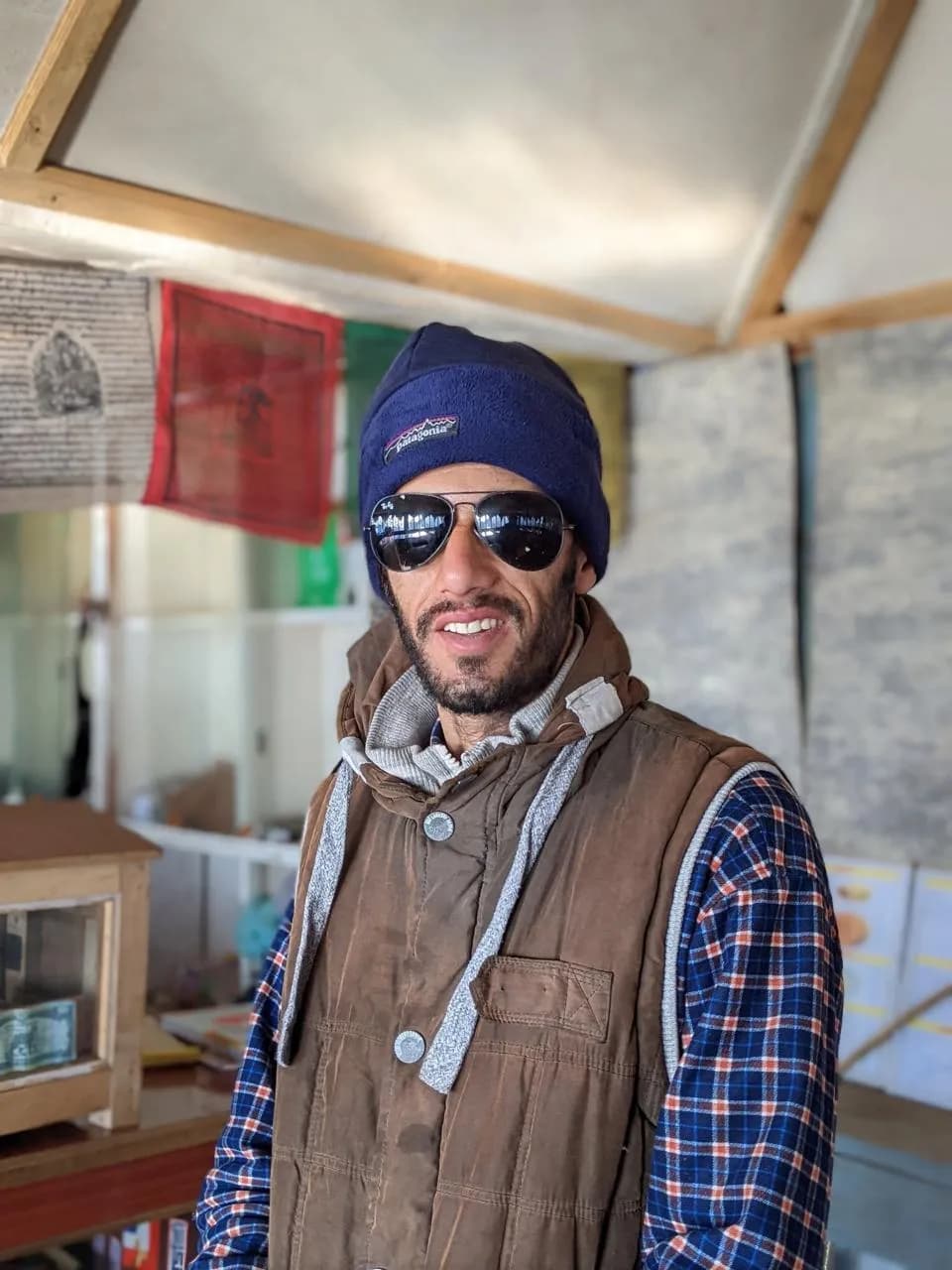
From an old friend.
We run scheduled departures from Pokhara, September to May. Most weeks the 5-day itinerary leaves on a Sunday and the 6-day on a Thursday, plus extra dates as groups form. Every other trip on this site runs privately, on your own dates. A 20 % deposit holds your place, and the balance is paid in Kathmandu before the trip starts.