
Surya Namaskar and pranayama
Before breakfast, before walking. Rounds of sun salutation to get warm in cold air, then breathing work. Twenty to forty minutes depending on the day ahead, and shorter on the two big climbing days.
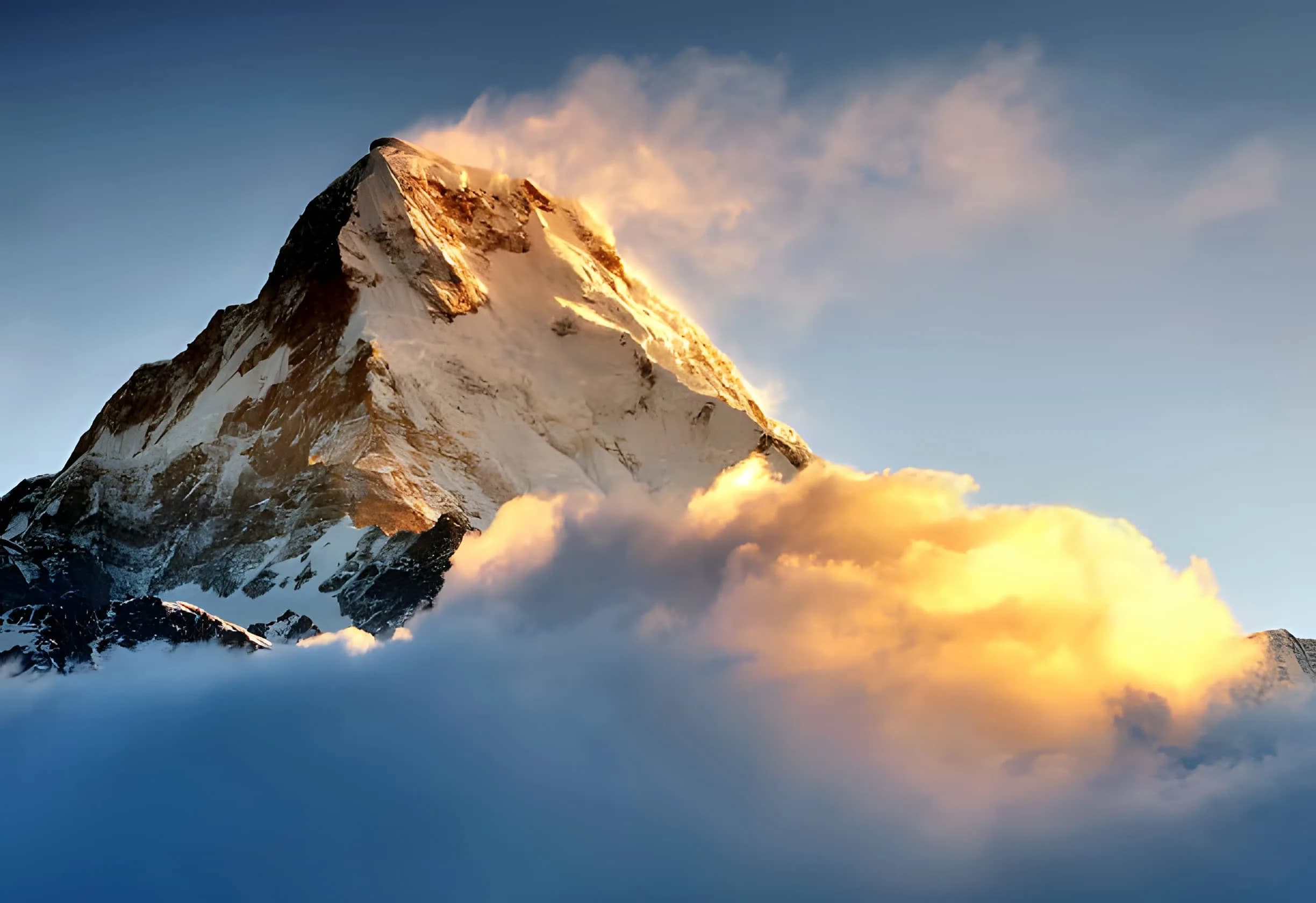
The same ridge as the classic trek, walked slower, with sunrise and sunset practice built into the day. Nine days from Kathmandu to Base Camp at 4,500 m and down through Sidhing to the Lwang tea gardens, led by a guide who is also a certified yoga teacher. Every session is optional, the breathing work is genuinely useful at altitude, and no yoga experience is assumed.
Most Mardi itineraries are built to get you to the viewpoint and back in the fewest days that is safe. This one is built the other way round. It takes the same ridge, adds two days, and exits east through Sidhing and Lwang instead of retracing the climb, which gives the descent somewhere to go and the practice somewhere to happen. If you want the mountain without the yoga, the 6-day and 8-day treks cover the same ground.
Before breakfast, before walking. Rounds of sun salutation to get warm in cold air, then breathing work. Twenty to forty minutes depending on the day ahead, and shorter on the two big climbing days.
After walking, aimed squarely at hips, hamstrings, calves and lower back. Long holds, props improvised from what the teahouse has. On descent days this is the session that decides how your knees feel the next morning.
Pranayama helps you use the air that is there and settles the nervous system on a hard day. It does not shortcut acclimatisation and nobody should treat it as if it does. The itinerary is built to gain height slowly for that reason, and the altitude rules on this trek are the same as on any other.
The practice adapts to whoever turns up, including people who have never done a class. Skipping a session because you are tired is not a problem and is sometimes the right call. Sessions move indoors when the weather makes outdoor practice unpleasant or unsafe.
One person guides the trek and leads the practice, for all nine days. That is deliberate: they see how you walked before they decide what the evening session should be. For how altitude actually behaves on this trail, read altitude sickness.
The tourist bus follows the Trishuli river west for most of the day. An opening practice at the hotel in the evening, mostly gentle hip and hamstring work to undo the bus, plus the breathing pattern you will use every morning from here on.
A short drive to the Kande trailhead at 1,770 m, then stone steps up through Australian Camp at 2,060 m to the ridge at Pitam Deurali. The first day is deliberately light. Sunset practice here looks straight down the Pokhara valley.
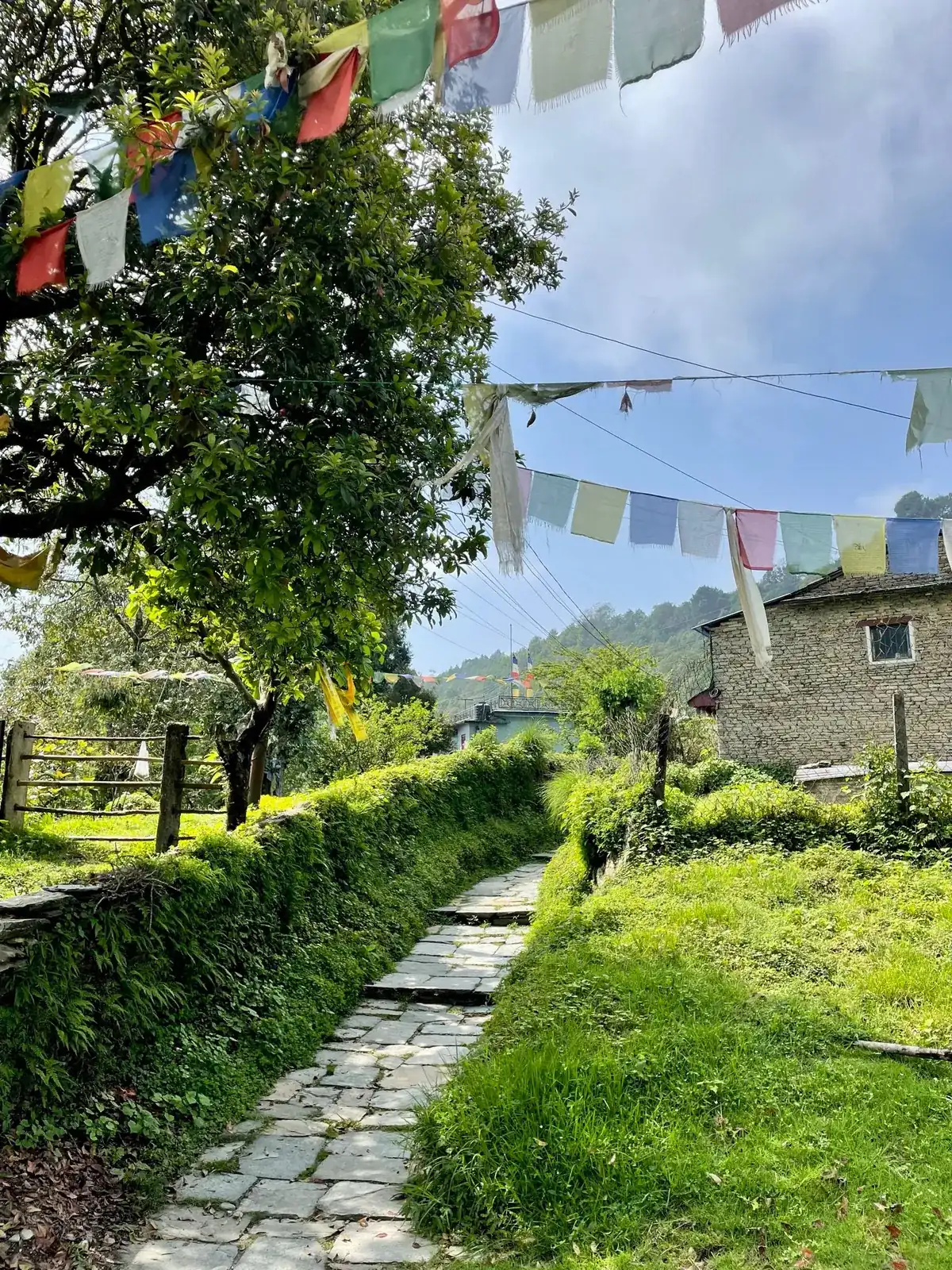
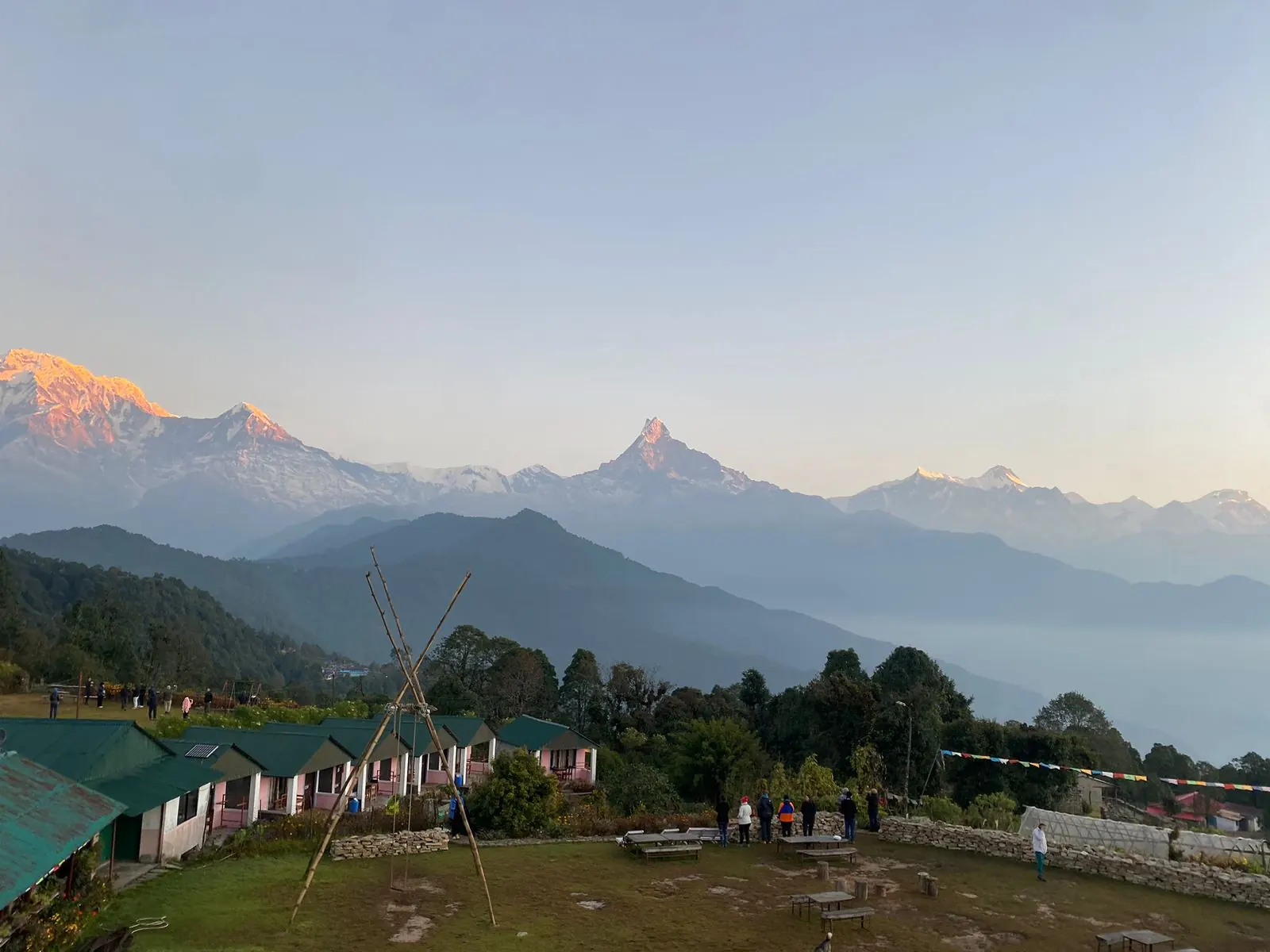
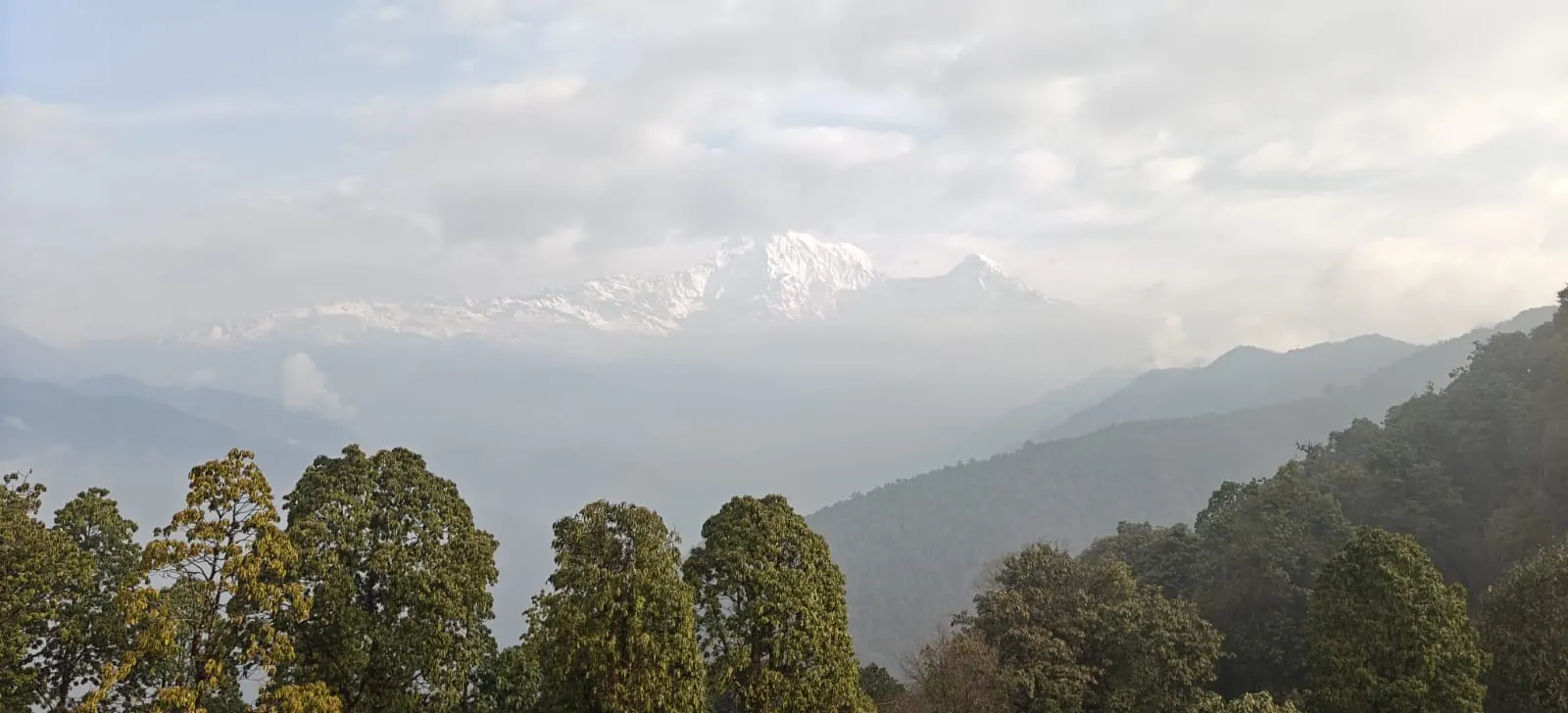
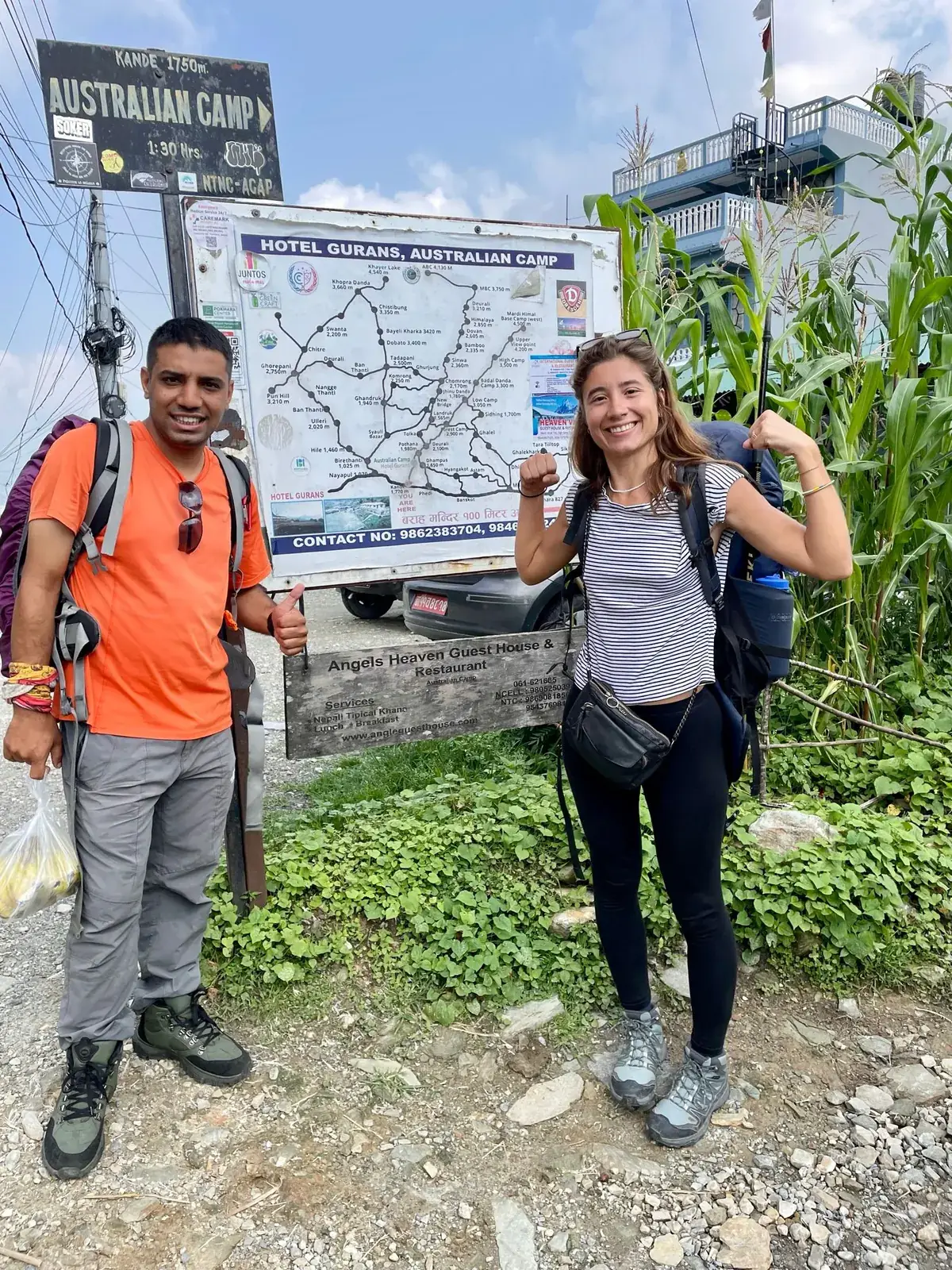
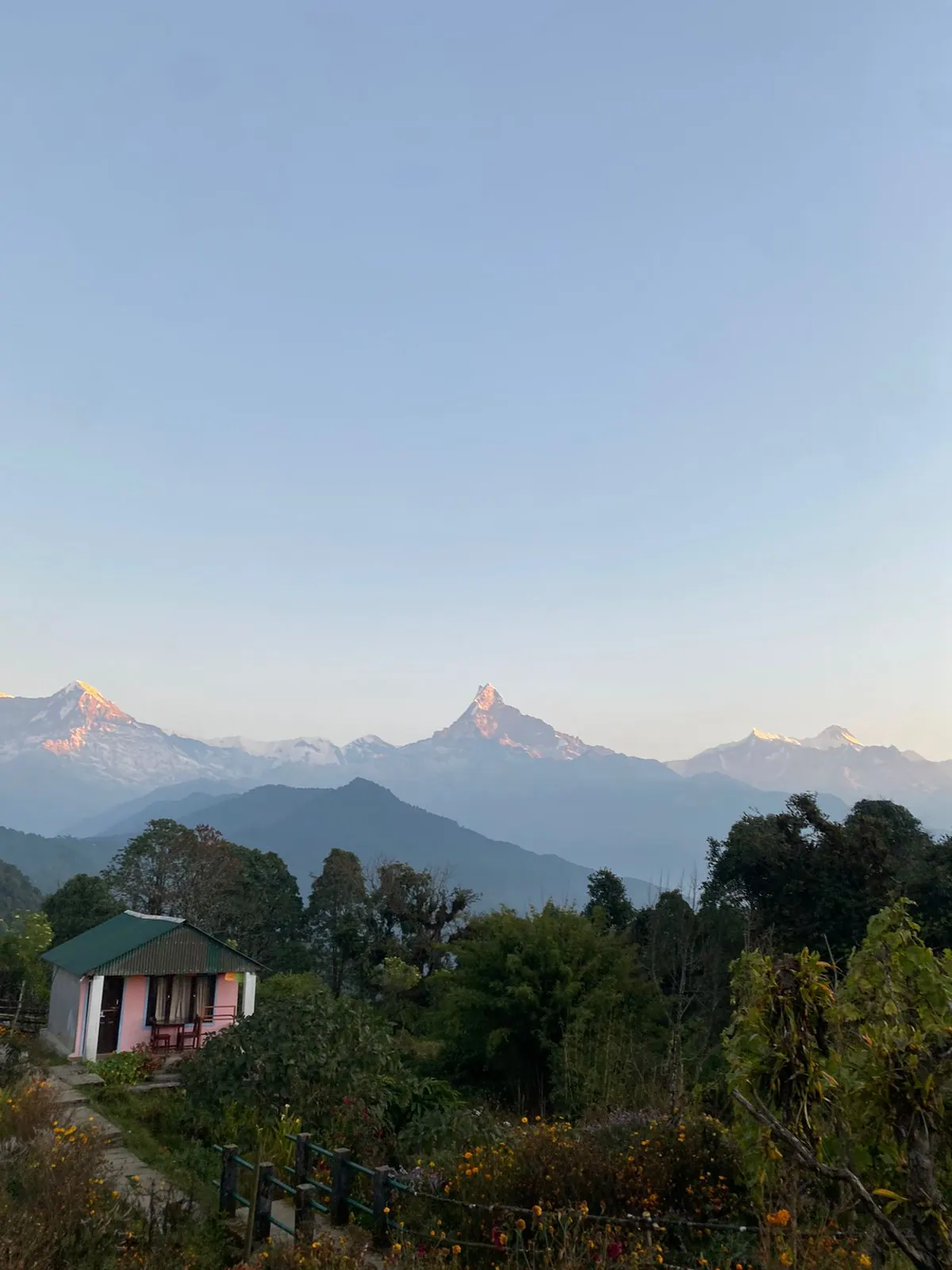
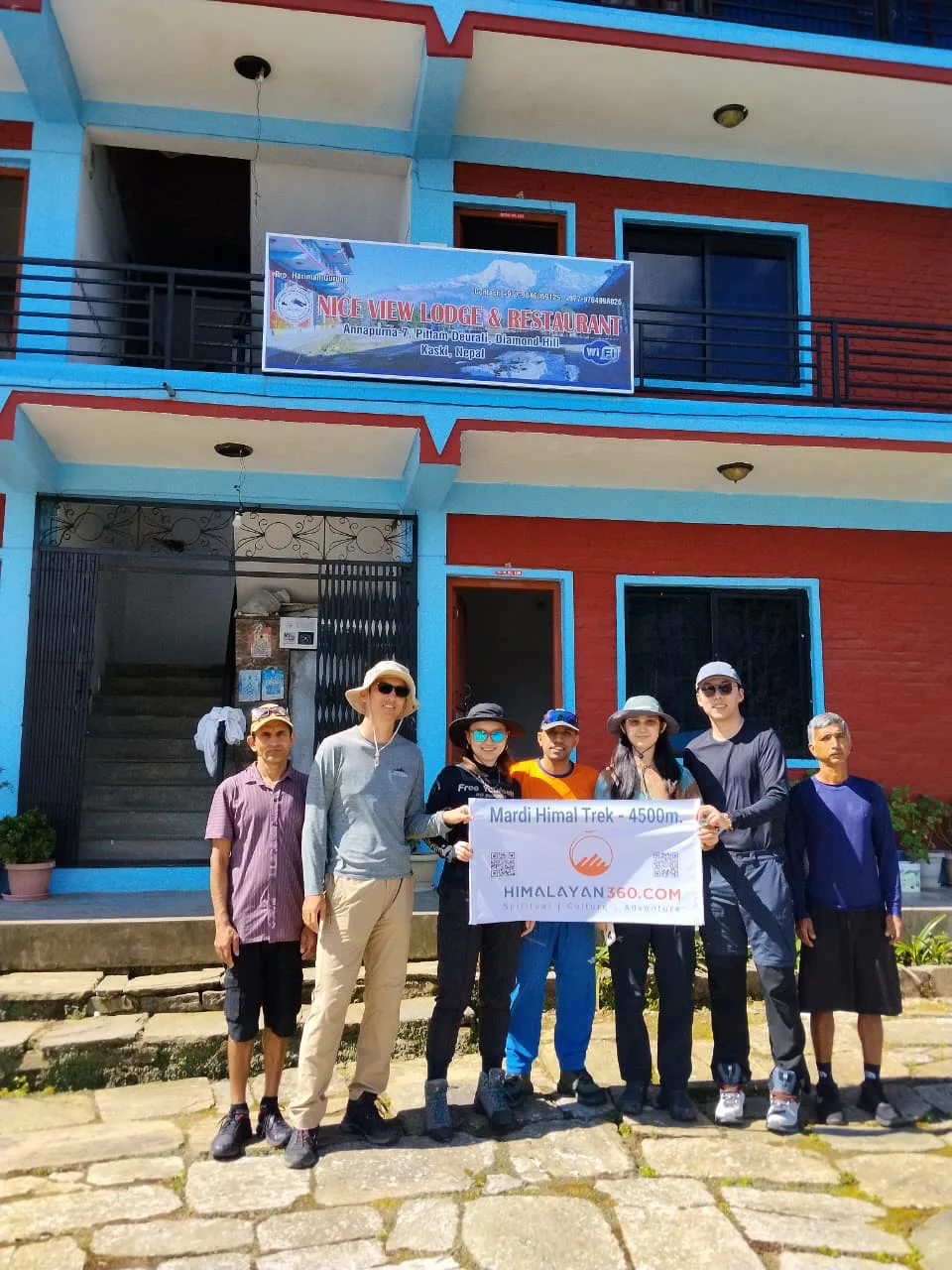
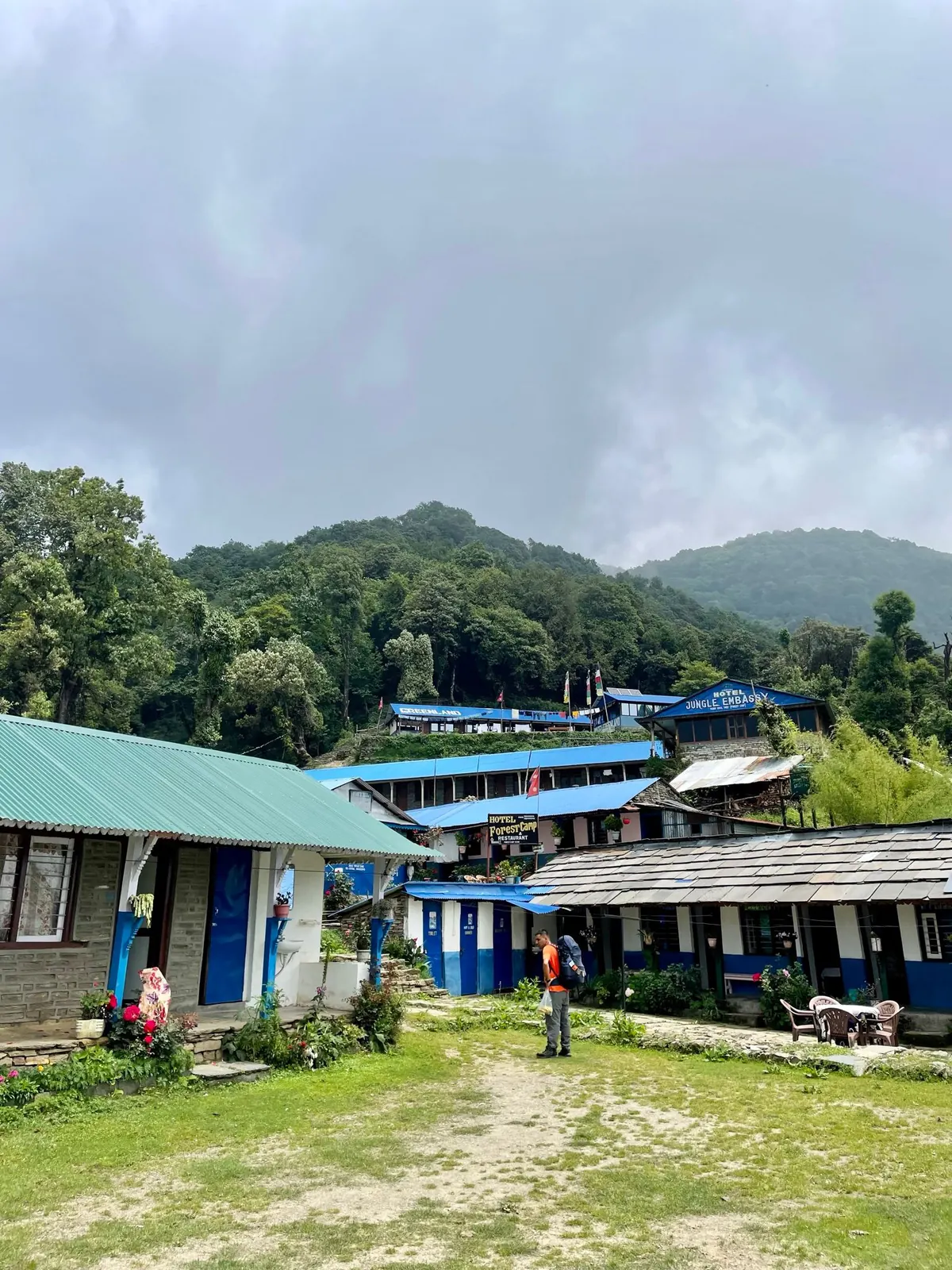
Into the rhododendron and oak forest, walking under canopy for most of the day. Forest Camp has no view to speak of, which makes it the quietest practice of the trek: moss, cloud, and birds, with the mountains still hidden.
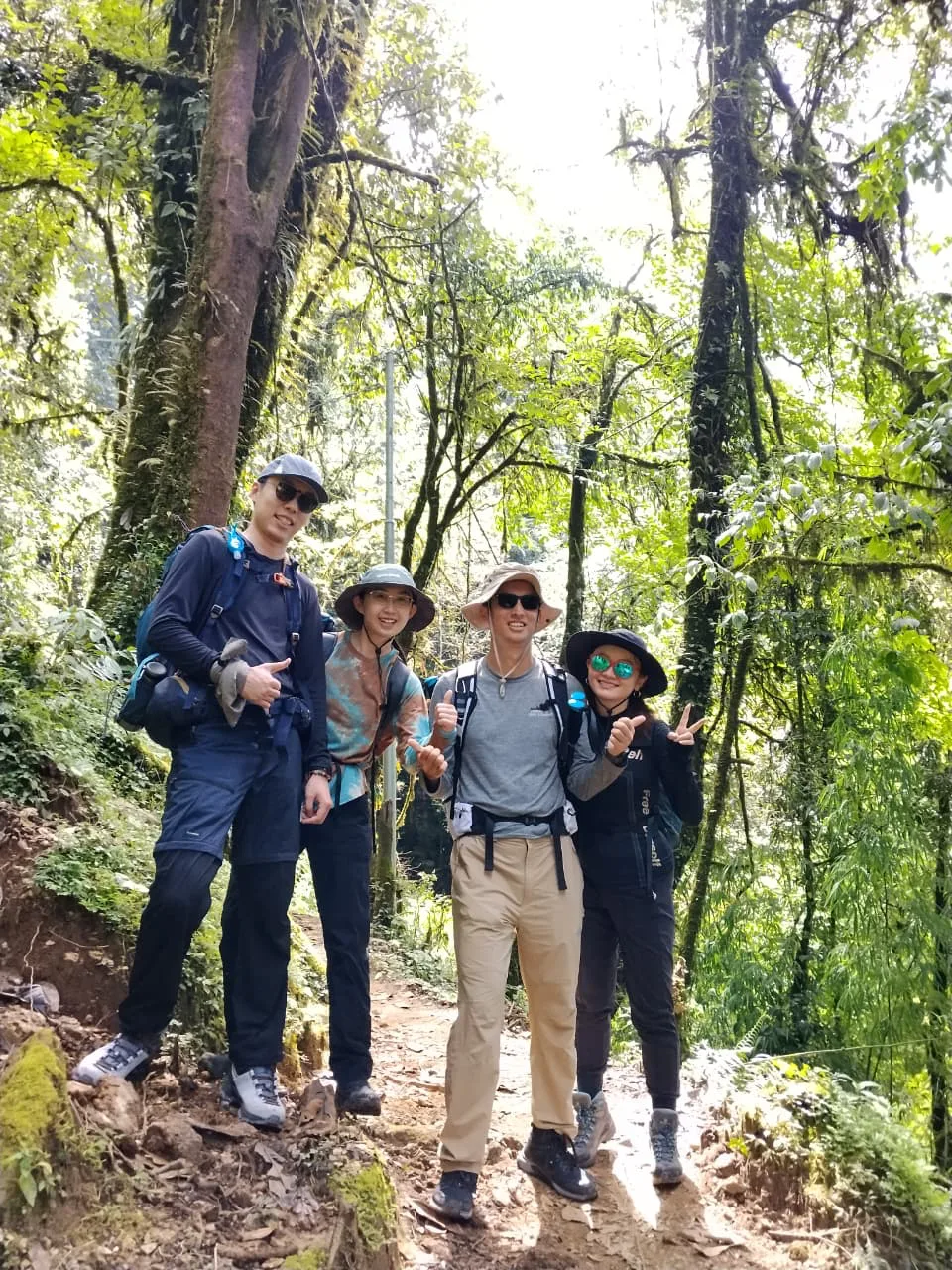
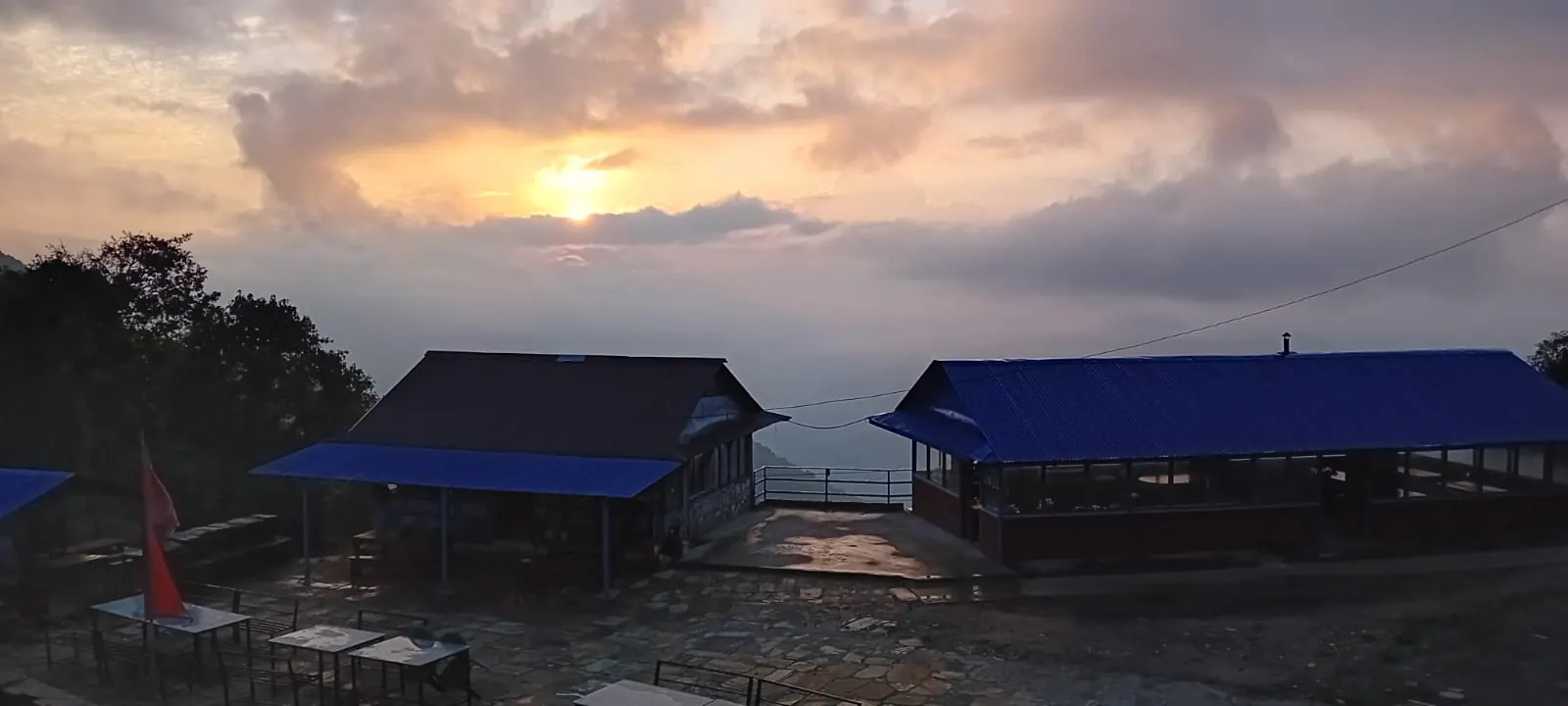
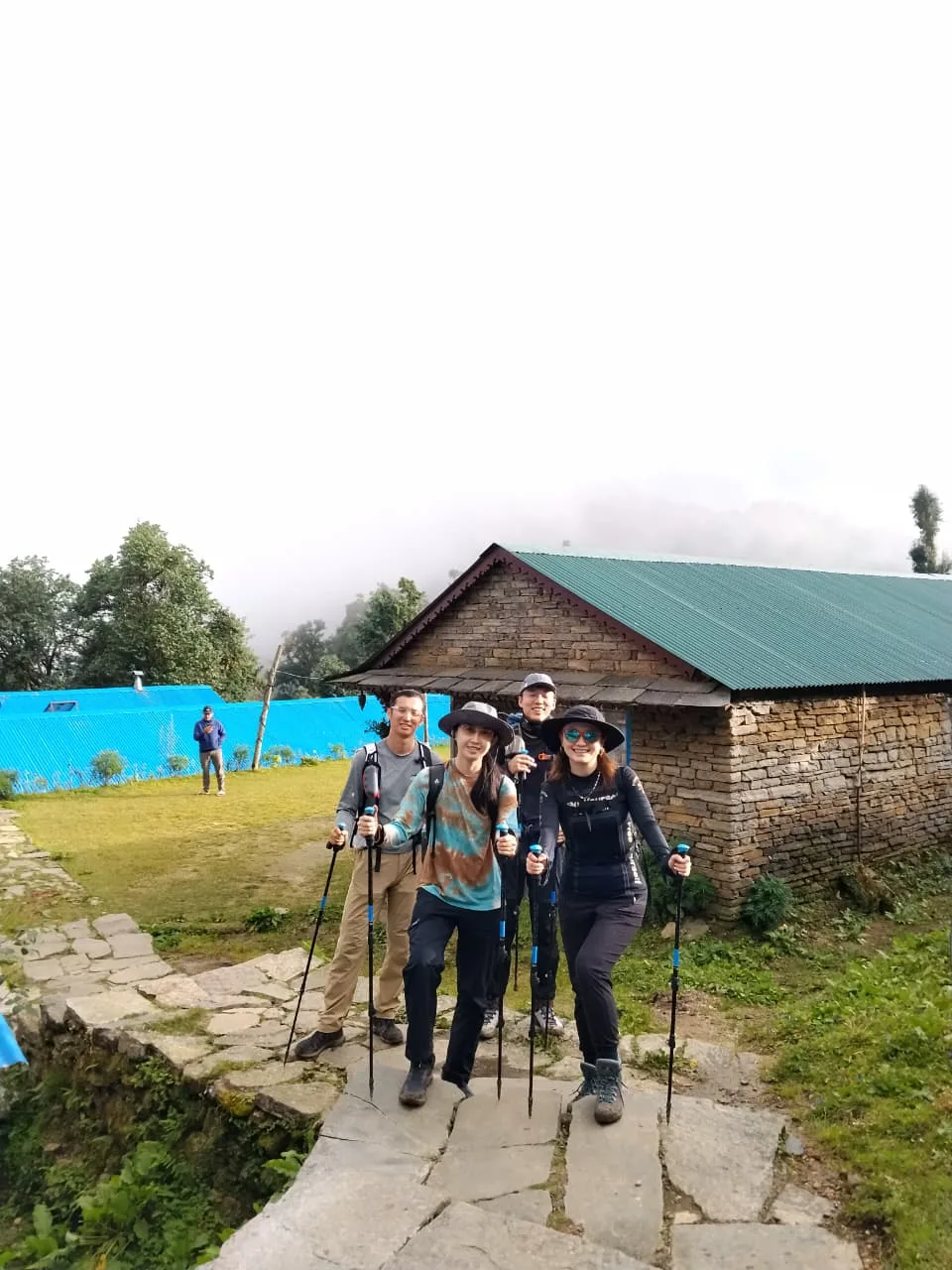
The big climbing day. The forest thins at Low Camp (2,985 m), then the trail breaks onto the open ridge at Badal Danda (3,210 m) with Machhapuchhre directly ahead. Over 1,000 m of gain, so the evening is pranayama and rest rather than a full practice.
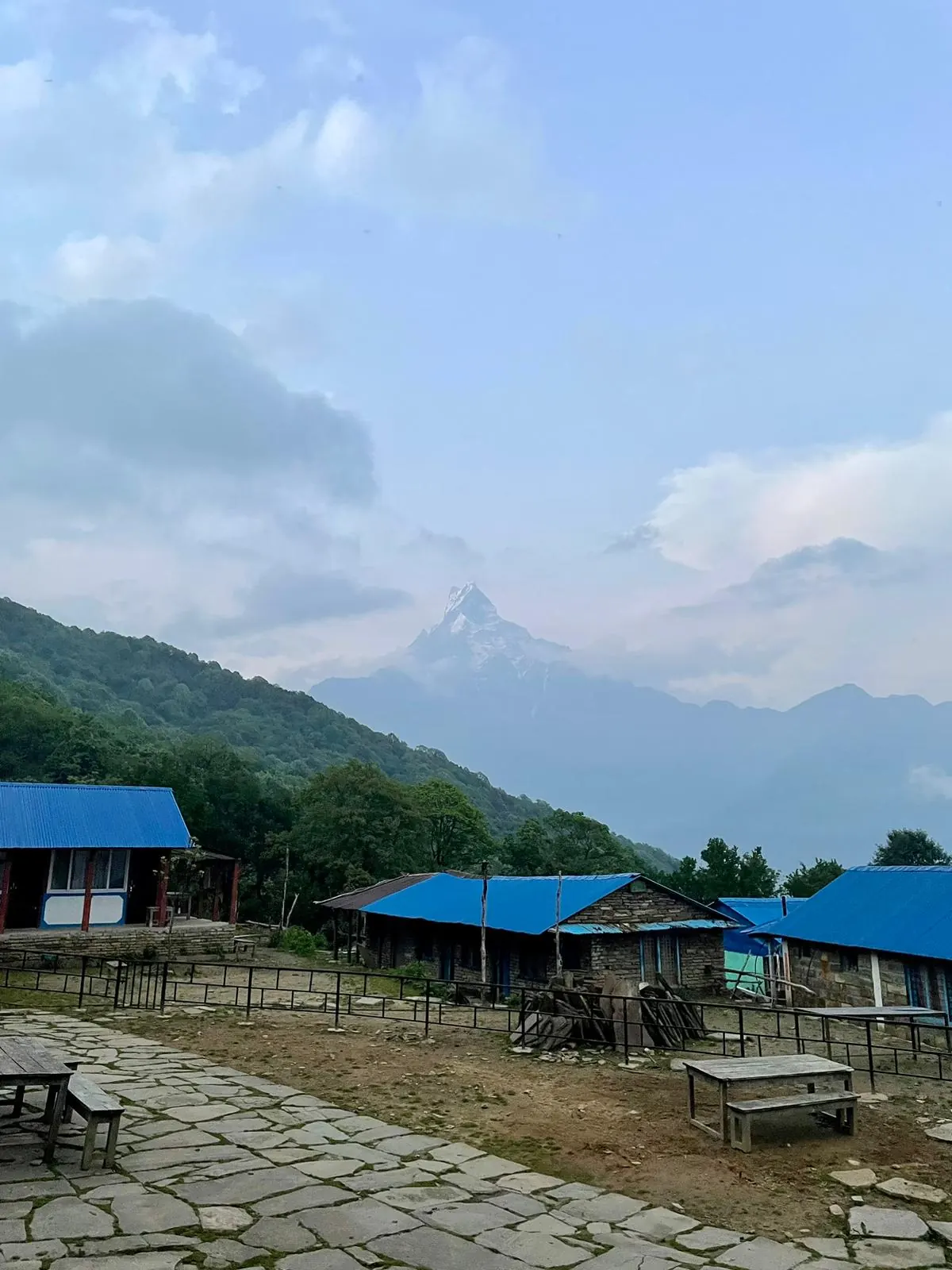
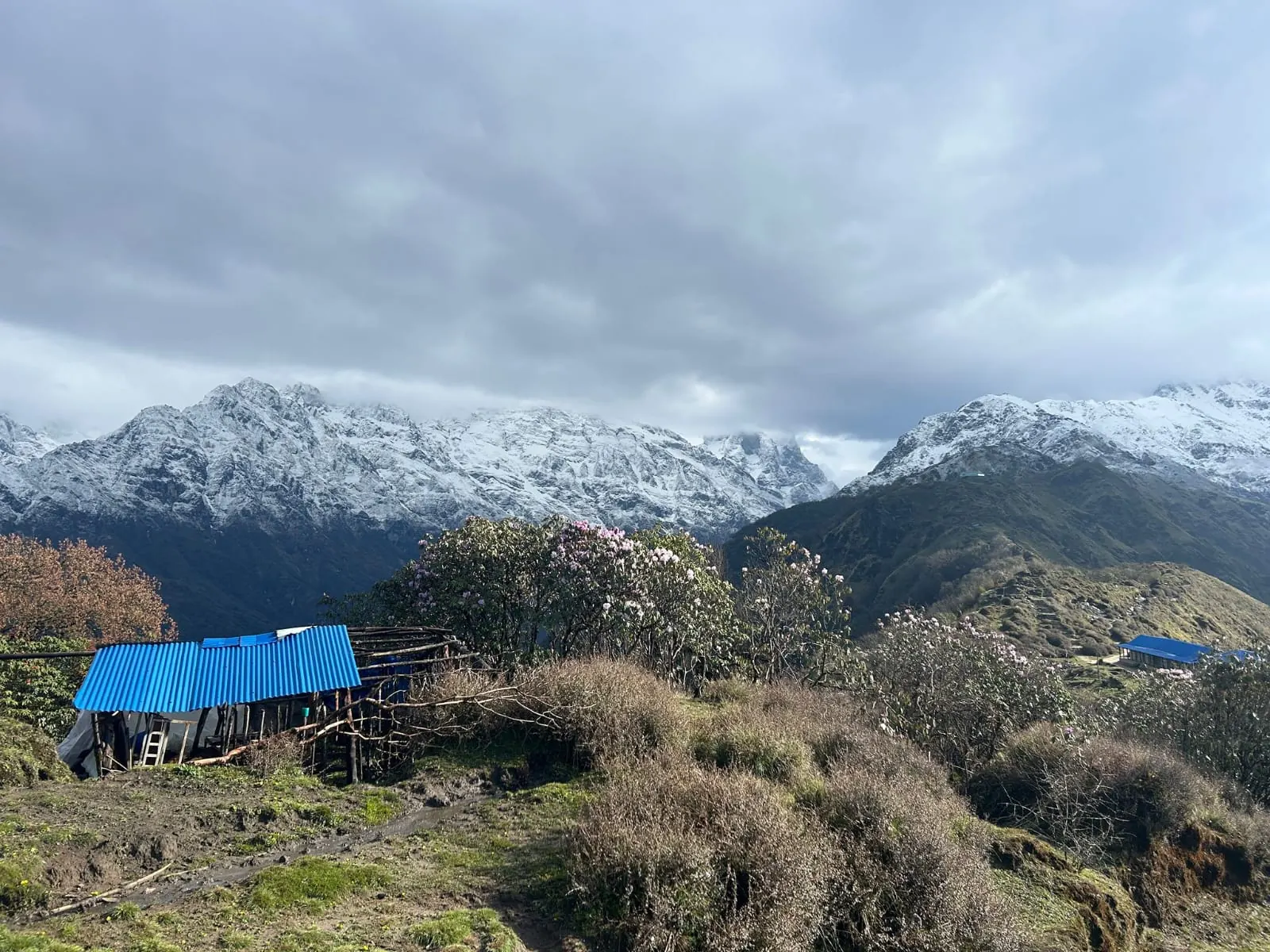
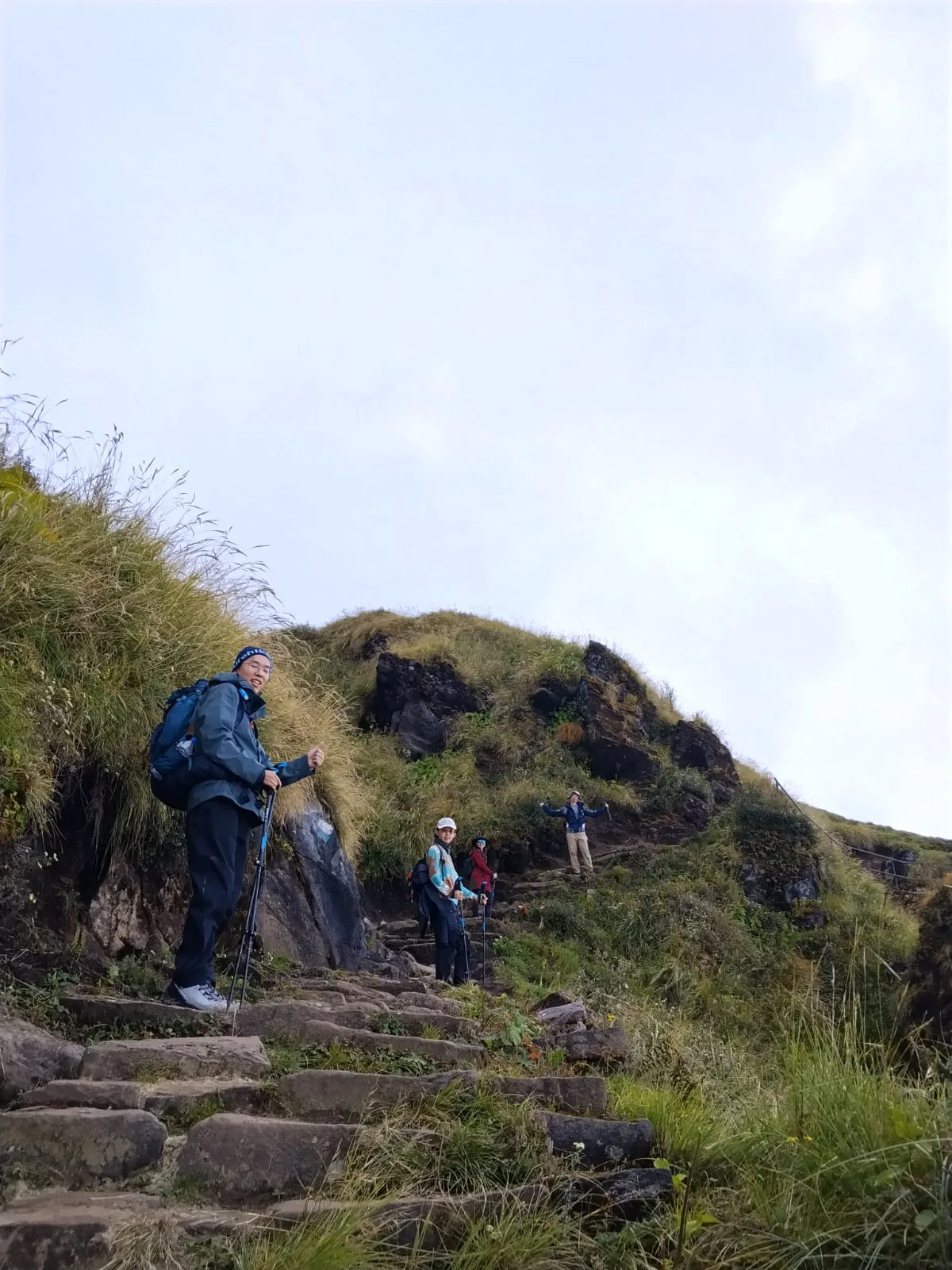
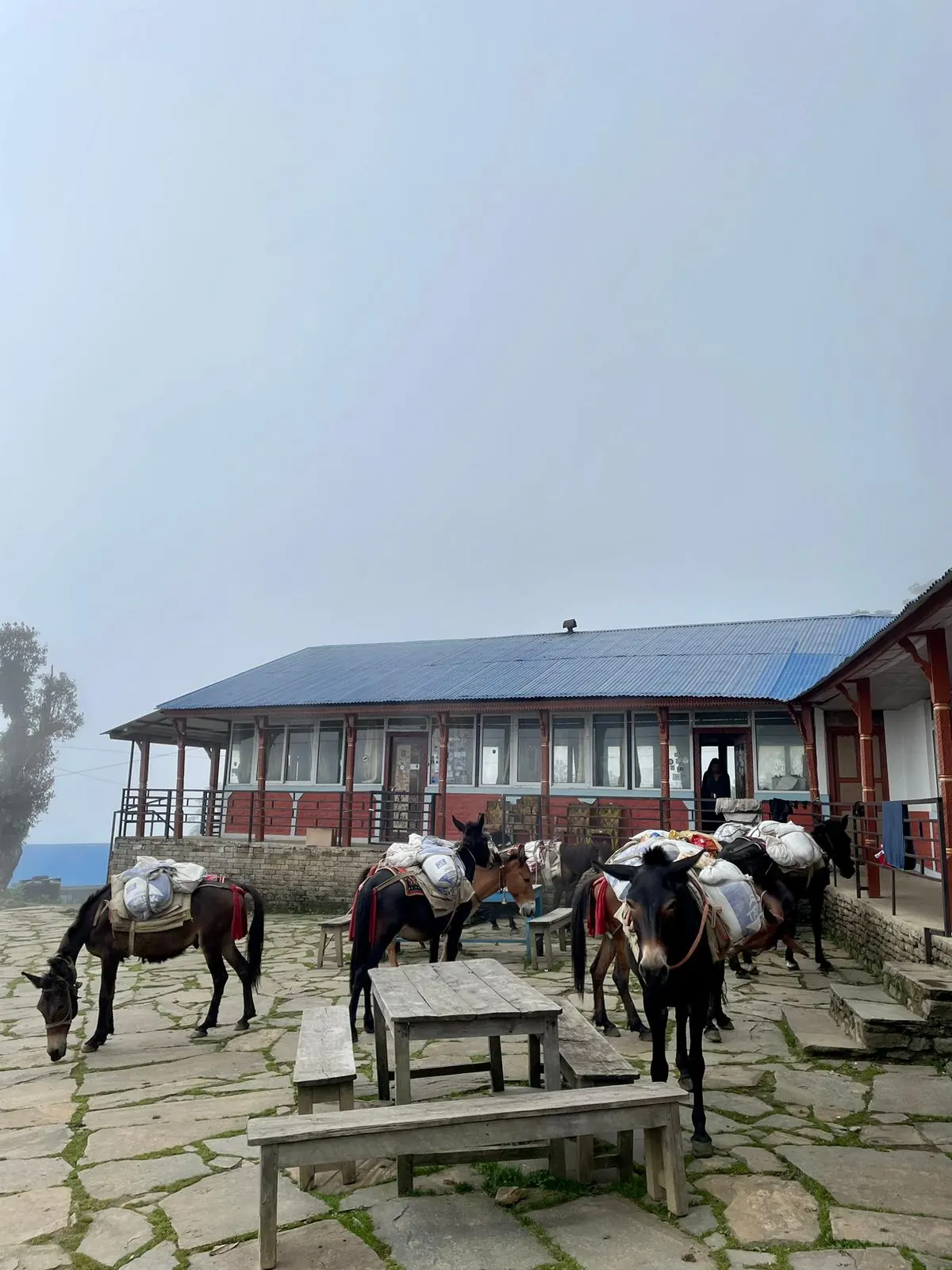
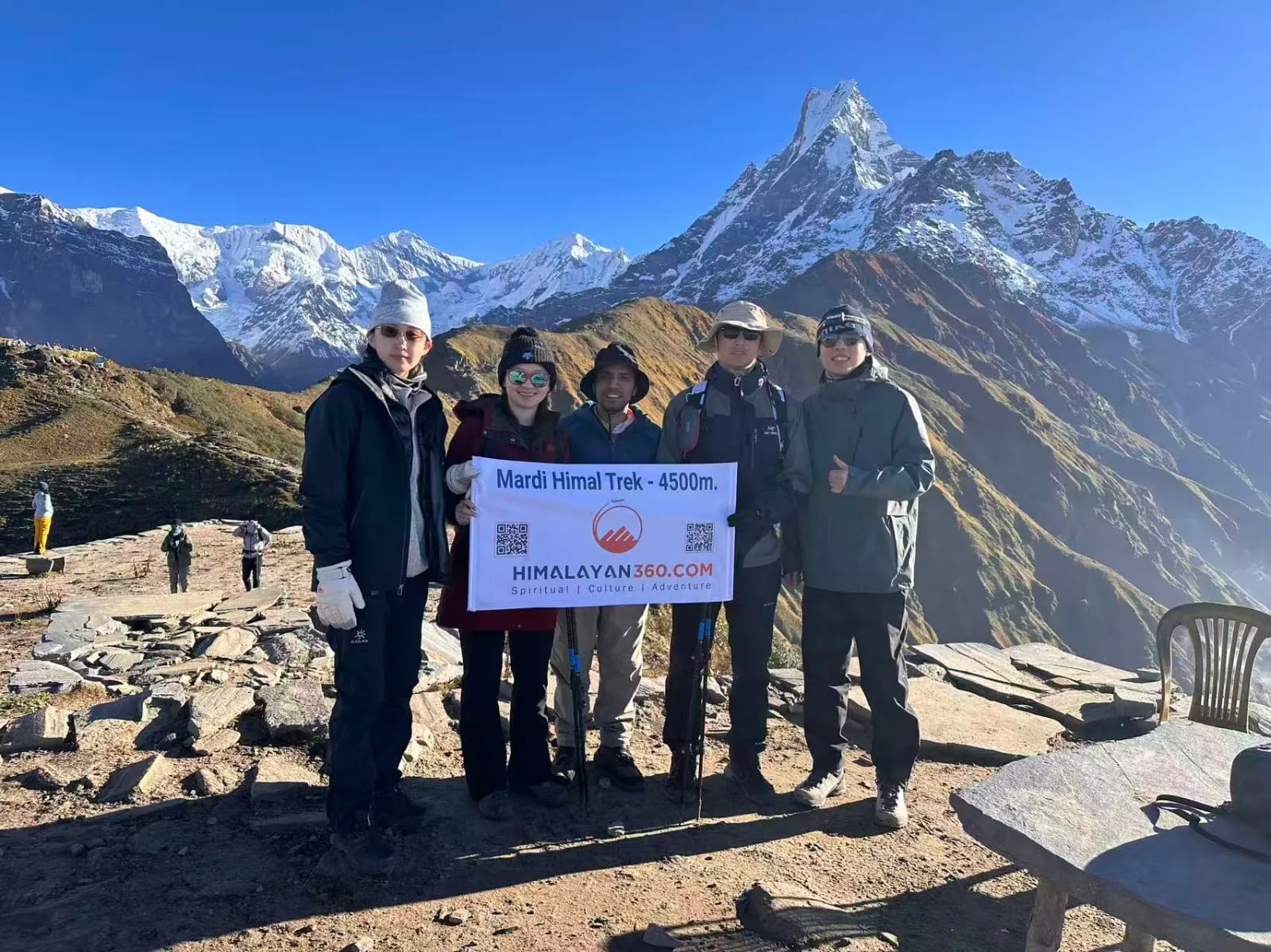
The pre-dawn start along the ridge to Base Camp at 4,500 m, the highest point of the trek, with the Annapurna wall and Machhapuchhre close enough to feel. Nothing strenuous is attempted at 4,500 m beyond seated breathing. The restorative session comes back down at High Camp.
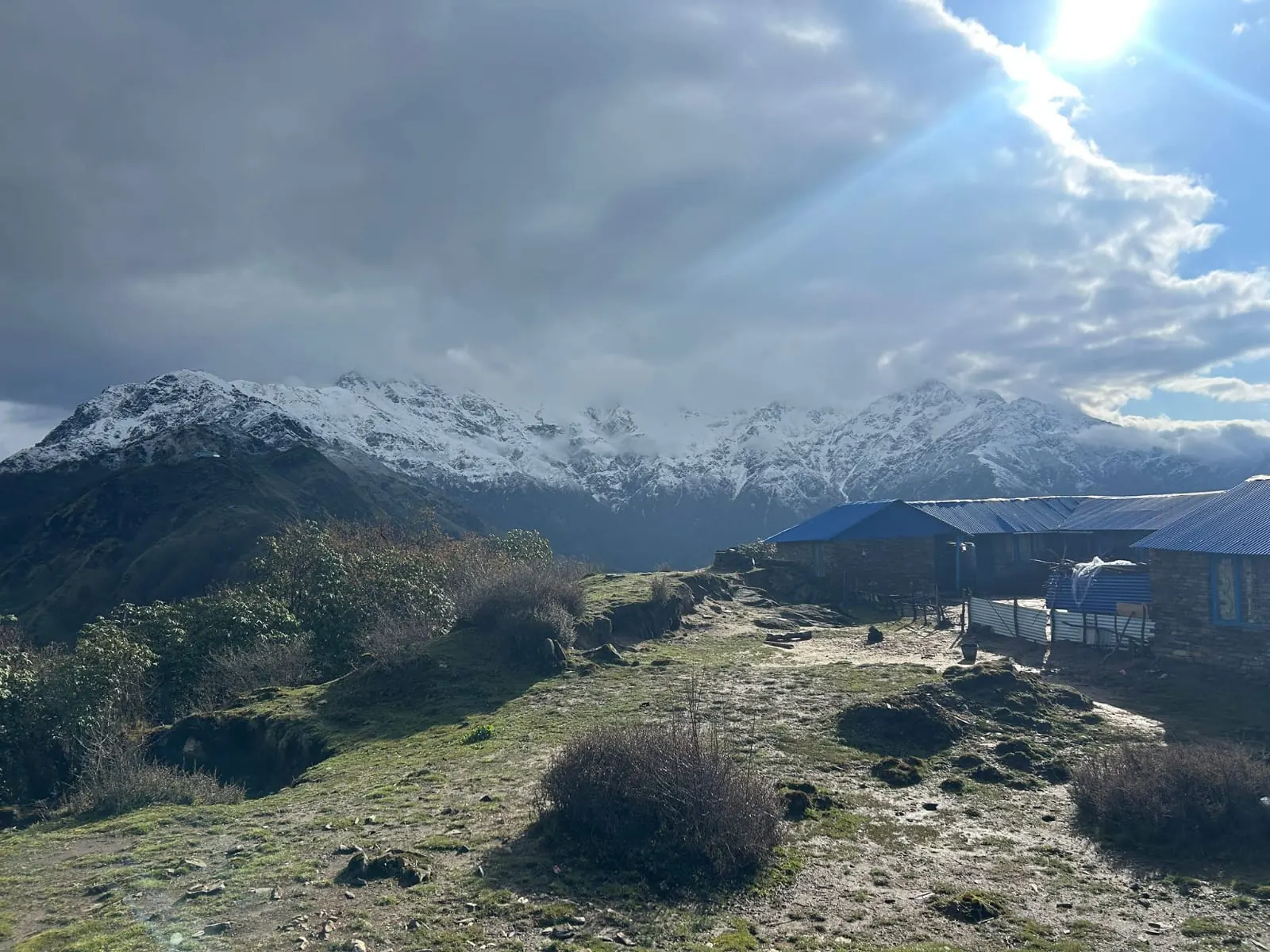
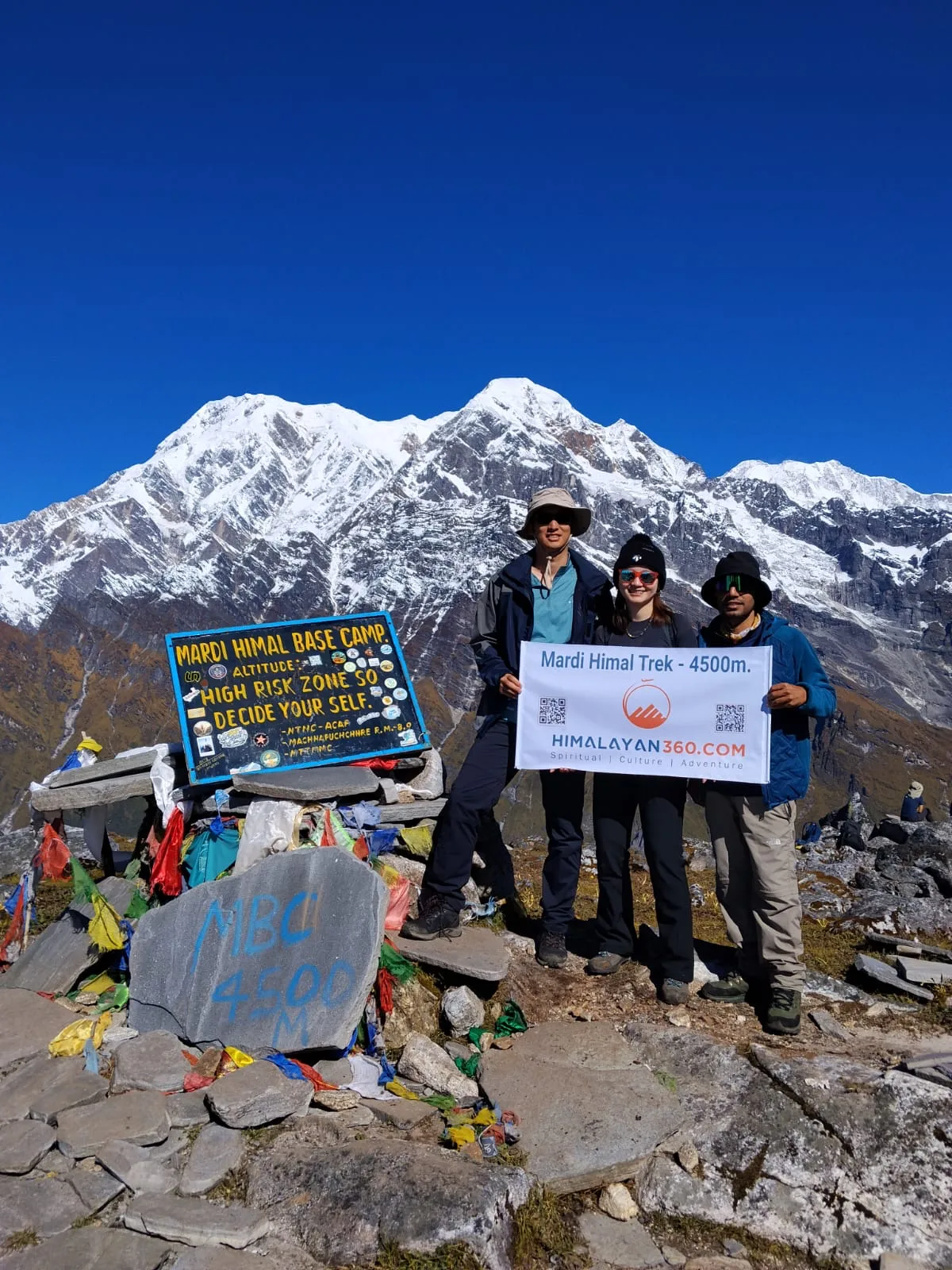
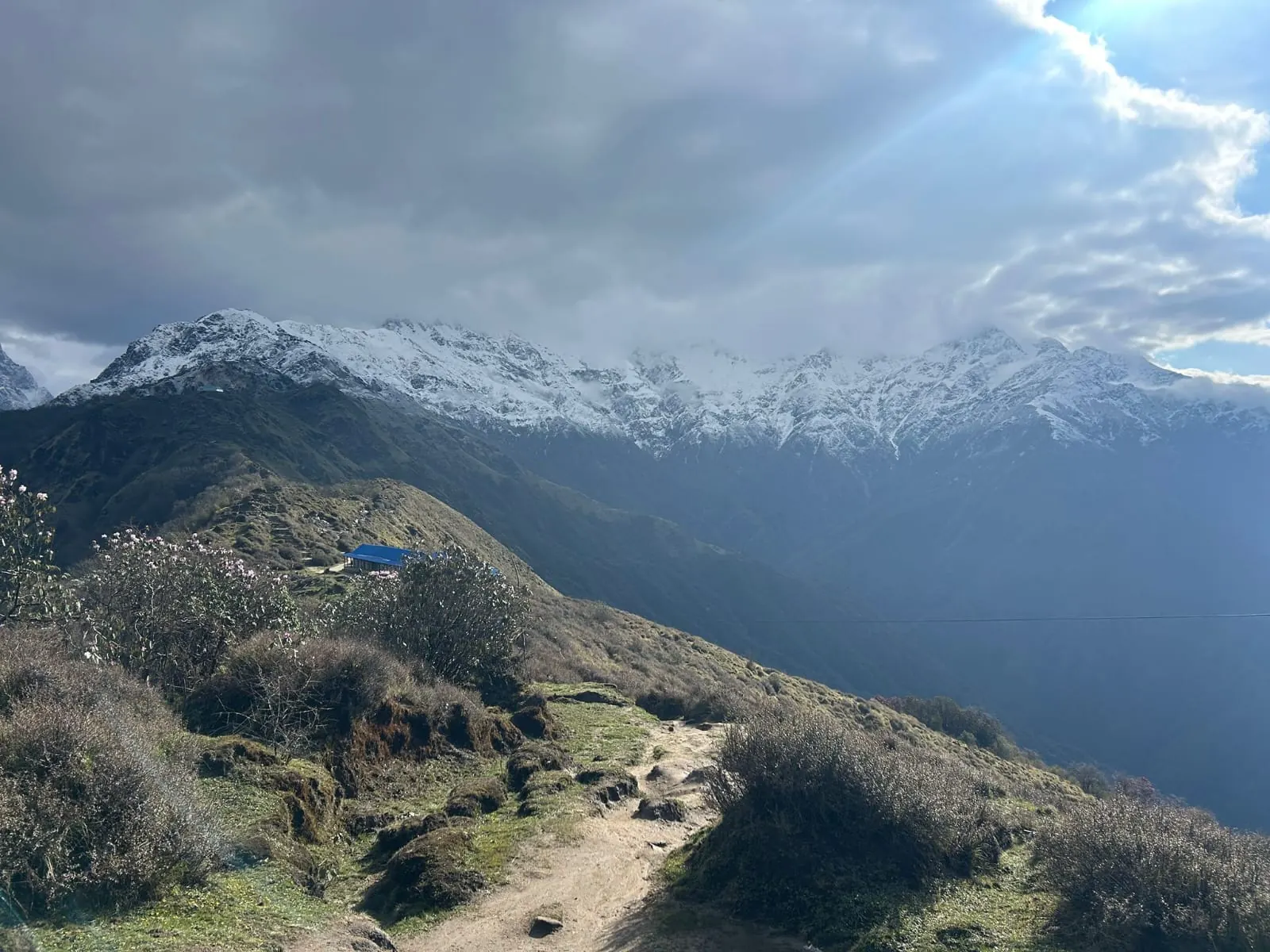
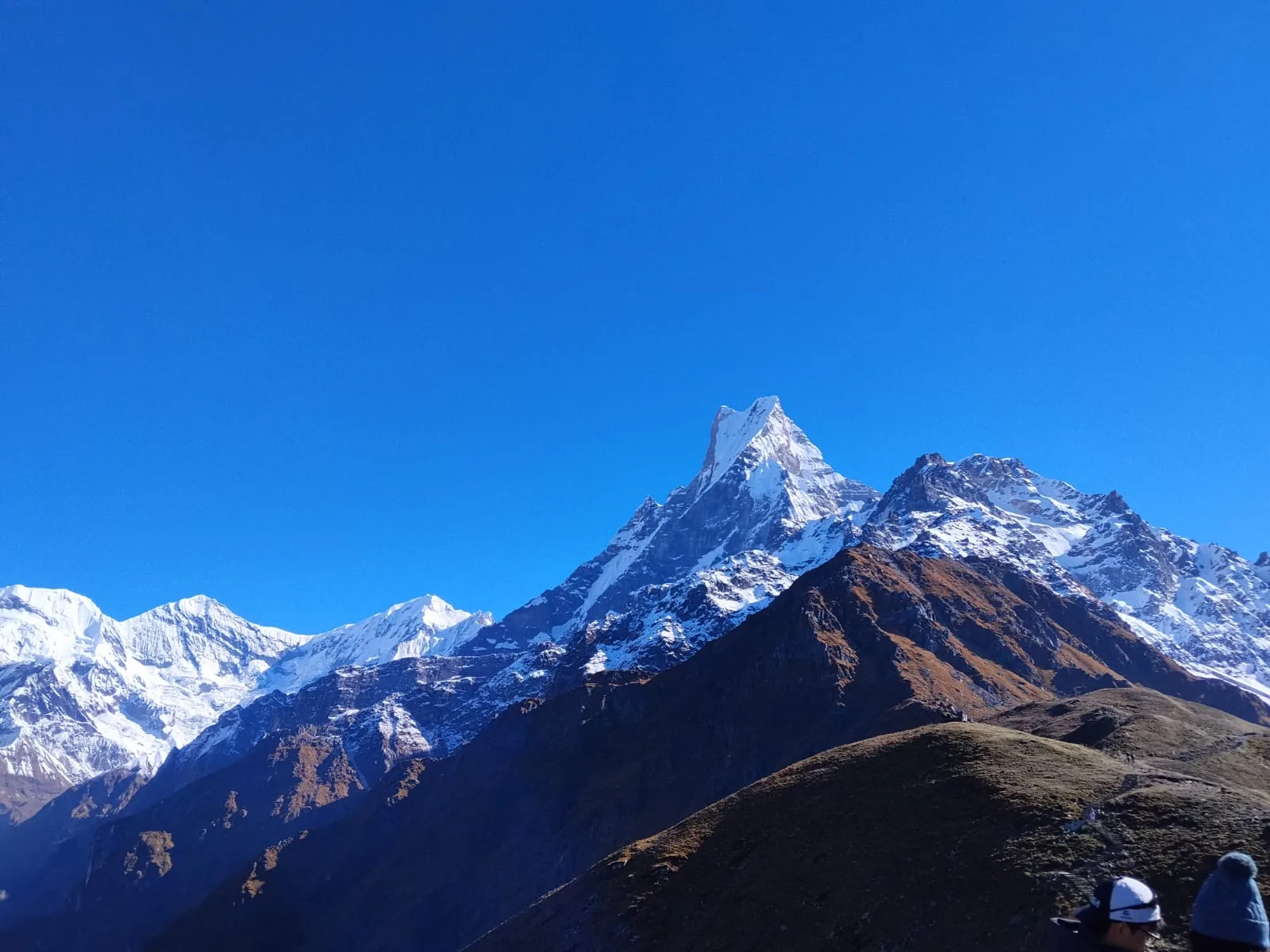
A long descent off the east side of the ridge, losing more than 1,700 m through forest to terraced farmland. Hard on the knees, which is exactly what the evening practice is for.
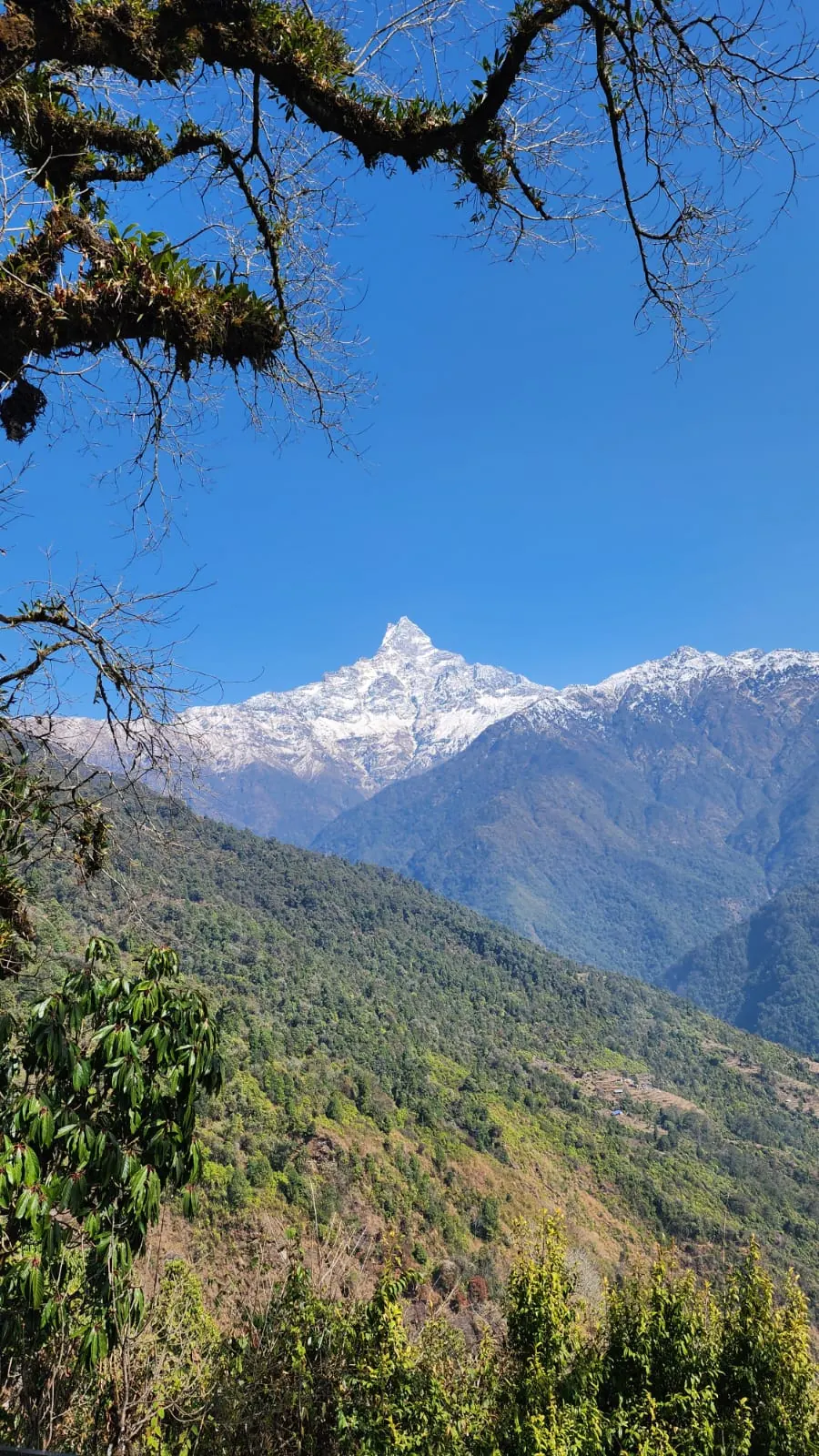
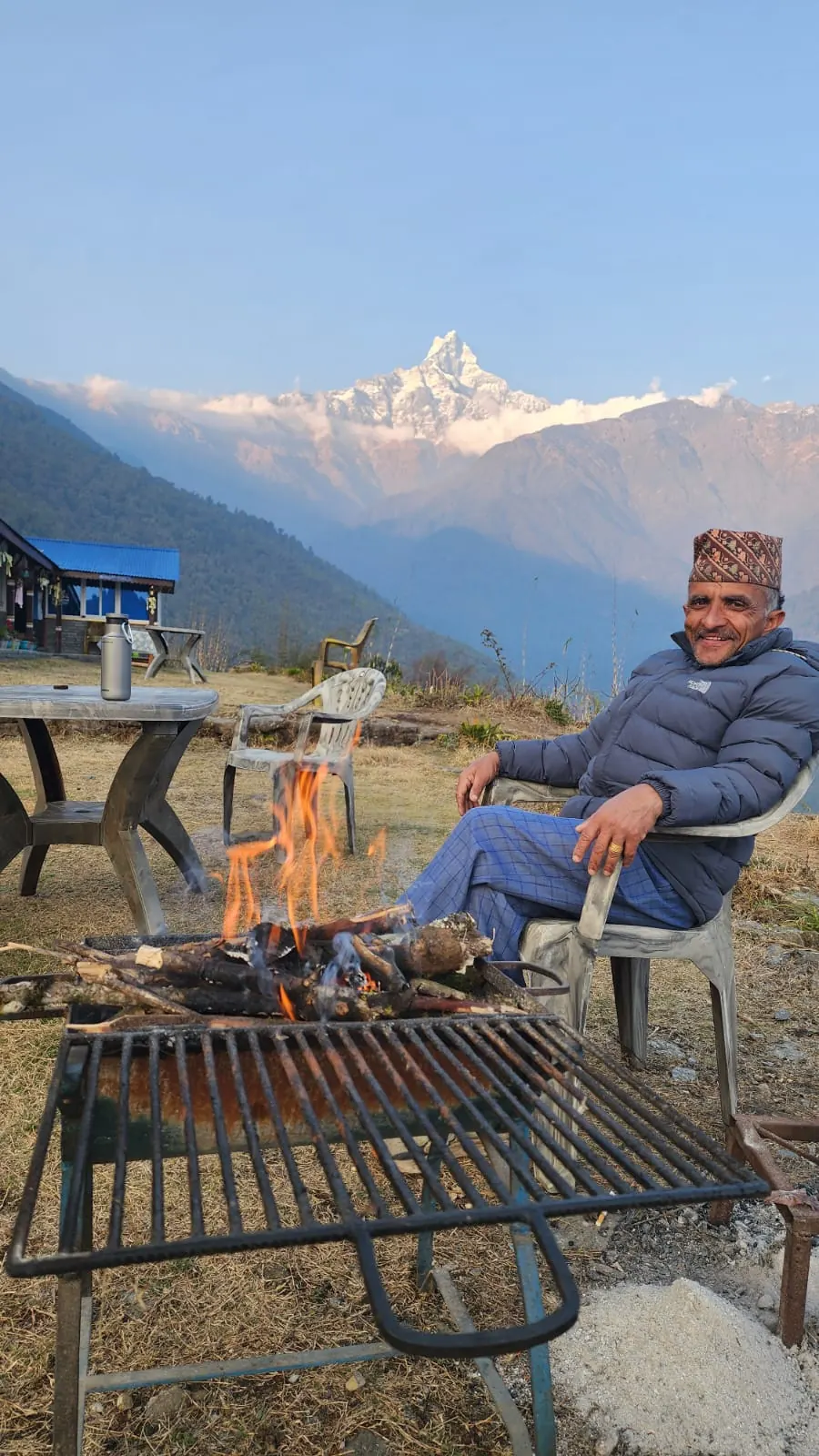
Across to Lwang, a Gurung village whose terraced tea gardens are its best-known feature and the most photographed practice spot on the trek. Homestay rather than teahouse, so the evening is with a family rather than in a dining room.
The last walking day drops through farmland to the road at Phedi. The closing practice happens back in Pokhara, at lake level, where full lungs make everything feel considerably easier than it did four days earlier.
The road back, or a domestic flight if you would rather buy the day back. Flights are not included in the trek price and are quoted separately.
All figures are per person in USD for the 9-day itinerary starting and ending in Kathmandu, valid through 31 December 2026. A solo private departure is quoted on request rather than published, because at one trekker the guide, the teacher and the vehicle are all carried by one person.
Want it private, just your party with your own guide? Add 5% per person.
Bringing a group of your own, or a class? Rates by group size across every itinerary are on group booking. A 20 % deposit reserves the departure; the balance is paid in Kathmandu before the trek starts.
Secure card payment. The balance is paid in Kathmandu before the trek. See the booking policy.
No. Sessions are built for mixed rooms and adapt to complete beginners, and the guide leading them is a certified teacher. What matters much more on this trip is walking fitness: the trek reaches Base Camp at 4,500 m and includes a day with over 1,000 m of ascent, which is a real day out whatever your yoga background.
No. Both the morning and evening sessions are optional and nobody counts heads. On the day you walk to Base Camp and back, most people take the evening session lying down and some skip it entirely, which is fine.
Outdoors on the ridge and in the tea gardens when the weather allows, indoors in the teahouse dining room when it does not. Mornings above 3,000 m are cold, so practice happens in layers rather than in shorts. Teahouses on this trail have limited flat indoor space, which is one reason group size is capped.
The route is the same ridge, but the shape is different. This version starts and ends in Kathmandu, adds the Sidhing and Lwang descent rather than retracing the ridge, and runs nine days instead of five or six. If you want the walking without the practice, the 6-day and 8-day itineraries cover the same ground.
Yes. Teahouse menus on this trail are largely vegetarian anyway, and dal bhat is vegan as served in most lodges. Tell us before departure and we brief the lodges ahead rather than negotiating it at 3,580 m.
No, and this matters more on a nine-day trek than a short one. A porter is quoted separately and shared between two trekkers. Our guide and porter page has the rates and what each role actually does.
Yes, and teachers do. That changes what the trip needs from us, since you would be bringing the teaching and we would be providing the guiding, logistics and permits. It also changes the price, so ask rather than booking the standard rate. Group rates by size are on the group booking page.
Tell us a target month and how many of you there are. We come back with the dates we can run it, a fixed per-person quote, and an honest answer on whether the season you picked is the right one.
Scheduled departures run the 5-day and 6-day Mardi Himal itineraries. Most weeks the 5-day leaves on a Sunday and the 6-day on a Thursday, plus extra dates as groups form; every other trip on this site runs privately on your own dates. A date is Guaranteed once its first booking is paid, and then anyone can join, even on their own. Until then it needs at least two people booking together. A 20 % deposit holds your seat, and the balance is paid in Kathmandu. Prices are per person for two booking together; three or more pay less.
The 6 reviews below are all Mardi Himal treks, each rated 5 out of 5. Every one is on TripAdvisor or Google and links back to the original. Quotes are shortened excerpts; names, dates and trek lengths are taken from the source. Counts as of April 2026.
Our recent trip to Nepal and trek to Mardi Himal turned out to be one of the most memorable adventures of my life. Our guide Max was friendly, knowledgeable, and incredibly supportive, especially during the steep sections. The views along the route were breathtaking.
We had an excellent five-day trek on the Mardi Himal trail. It is frequented primarily by Nepali tourists. The views are incredible all along the trail, and many guest houses have spectacular views. Our guide was a joy to be with.
We were considering trekking to Annapurna Base Camp, but changed to the Mardi Himal based on Raj's advice. This was probably the best advice we got in Nepal. Mountains were fully covered in snow, the lower fields were green, and the rhododendron trees were flourishing.
Prakash was our trekking guide for the Mardi Himal trek. Even when we arrived feeling unwell, he showed immediate sympathy and organised a range of Pokhara-based activities for us. We can't recommend him enough. Prakash has completed over 500 trips on this route.
Our Mardi Himal trekking experience was great because of this team. Our guide Gautam was so professional, cordial and hospitable. We enjoyed it a lot. Looking forward to our next adventure with them.
Truly exceeded our expectations and made our trip to the Himalayas absolutely memorable. From the moment we inquired until the day we returned, their professionalism and attention to detail were outstanding.