Chinese nationals pay no fee for a Nepal tourist visa, pay the same permit fees as other foreign trekkers, and almost always arrive through Kathmandu. This page covers the visa, the flights, our prices in yuan, how to pay from China, and which 2027 group dates fall in the Spring Festival, Labour Day and Golden Week holidays.
§ 01 · What is different
Visa, permits and flights.
Visa
No fee, but you still need one
Chinese nationals pay nothing for a Nepal tourist visa. Most other nationalities pay USD 30 for 15 days, USD 50 for 30 and USD 125 for 90. Get it on arrival at Tribhuvan International Airport in Kathmandu, or before you go at the Embassy of Nepal in Beijing or the consulates in Lhasa, Hong Kong and Guangzhou. Fill in the online tourist visa form first and print the receipt, which is valid for 15 days. Your passport needs more than six months of validity.
Permits
The foreigner rate, included in our price
The SAARC permit discount is only for the eight SAARC member states, and China is an observer, so Chinese trekkers are charged the foreigner rate: NPR 3,000, about USD 20 for the ACAP permit and NPR 2,000, about USD 13 for the TIMS card. Both are included in our trek price and issued in your passport name.
Flights
Direct to Kathmandu from several cities
As of October 2026, nonstop flights reach Kathmandu from Chengdu (Sichuan Airlines and Air China), Kunming (China Eastern) and Guangzhou (China Southern and Nepal Airlines). Himalaya Airlines, a Nepal and China joint venture, flies to Kathmandu from Lhasa, Shanghai and several other Chinese cities. Timetables change by season, so check the route with the airline before you book.
Pokhara
No scheduled flight from China
Pokhara is where the trek starts and ends, but when we checked in November 2026 its international airport had no regular flight from China. Himalaya Airlines' weekly Lhasa to Pokhara service, started in March 2025, was suspended for low occupancy, and Sichuan Airlines flights from Chengdu have been charters. From Kathmandu, the domestic flight to Pokhara costs from around USD 87, and USD 100 to 200 in peak season, and the tourist bus NPR 1,200 to 1,700. Our guides in Pokhara look after anyone who flies straight into Pokhara.
The rest is the same for every foreign trekker: a licensed guide is mandatory (see guide and porter), and your travel insurance must cover trekking to 4,500 m and helicopter evacuation. For the full fee table, see permits and cost.
§ 02 · The trek
The 5-day trek, day by day.
The trek is the same whatever passport you hold. The 5-day Mardi Himal trek is the version we run most often: four days of trekking to the ridge and a fifth day that finishes the descent and drives you out. Altitudes and walking hours are listed for every day. Day 2 is the longest climbing day; Day 4 is the summit morning and the start of the descent.
Days
5
Highest point
4,200m
Walking distance
~46km
Walking hours
4 – 7 / day
Start / finish
Pokhara
Day 1
Pokhara → Kande → Australian Camp → Pitam Deurali
Drive
1.5 hrs (Pokhara to Kande)
Trek
5 – 6 hrs
Distance
~9 km
Altitude
Kande 1,770 m → Pitam Deurali 2,100 m
Net change
+330 m
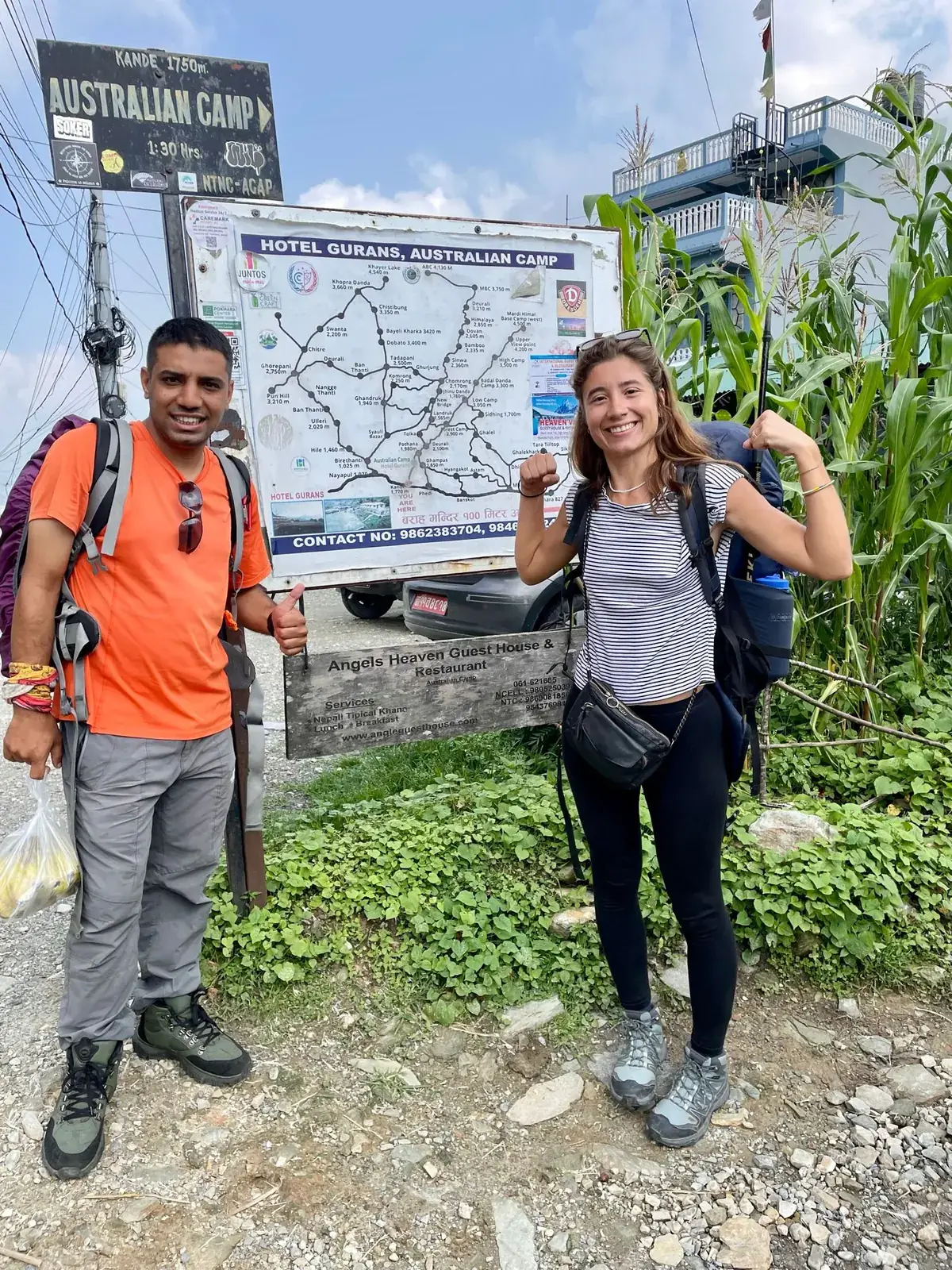
We leave Pokhara around 07:30 for the 1 to 1.5-hour drive to the Kande trailhead at 1,770 m. Stone steps climb steadily to Australian Camp at 2,060 m, where the first wide view of Annapurna South and Hiunchuli opens up and the ACAP permit is checked.
From Australian Camp the trail continues through rhododendron and oak forest to Pitam Deurali at 2,100 m, the junction where the Mardi route leaves the busier Annapurna Base Camp path and turns onto its own quiet ridge. Lunch is taken here.
Arrive Pitam Deurali by mid afternoon. The teahouses on this stretch are simple but warm, and the ridge ahead is already visible through the trees. Early dinner, early night, because Day 2 is the longest day of the trek.
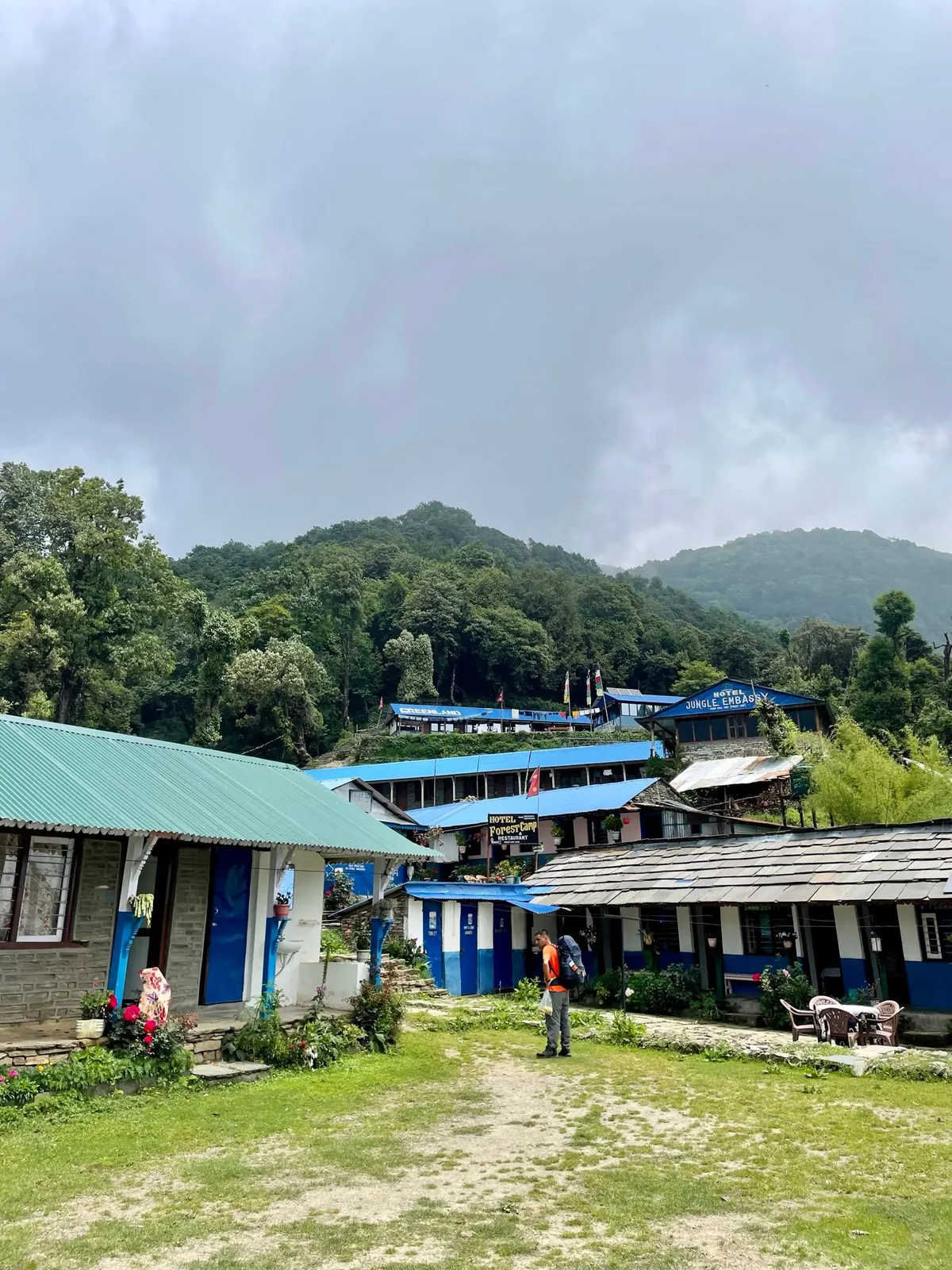
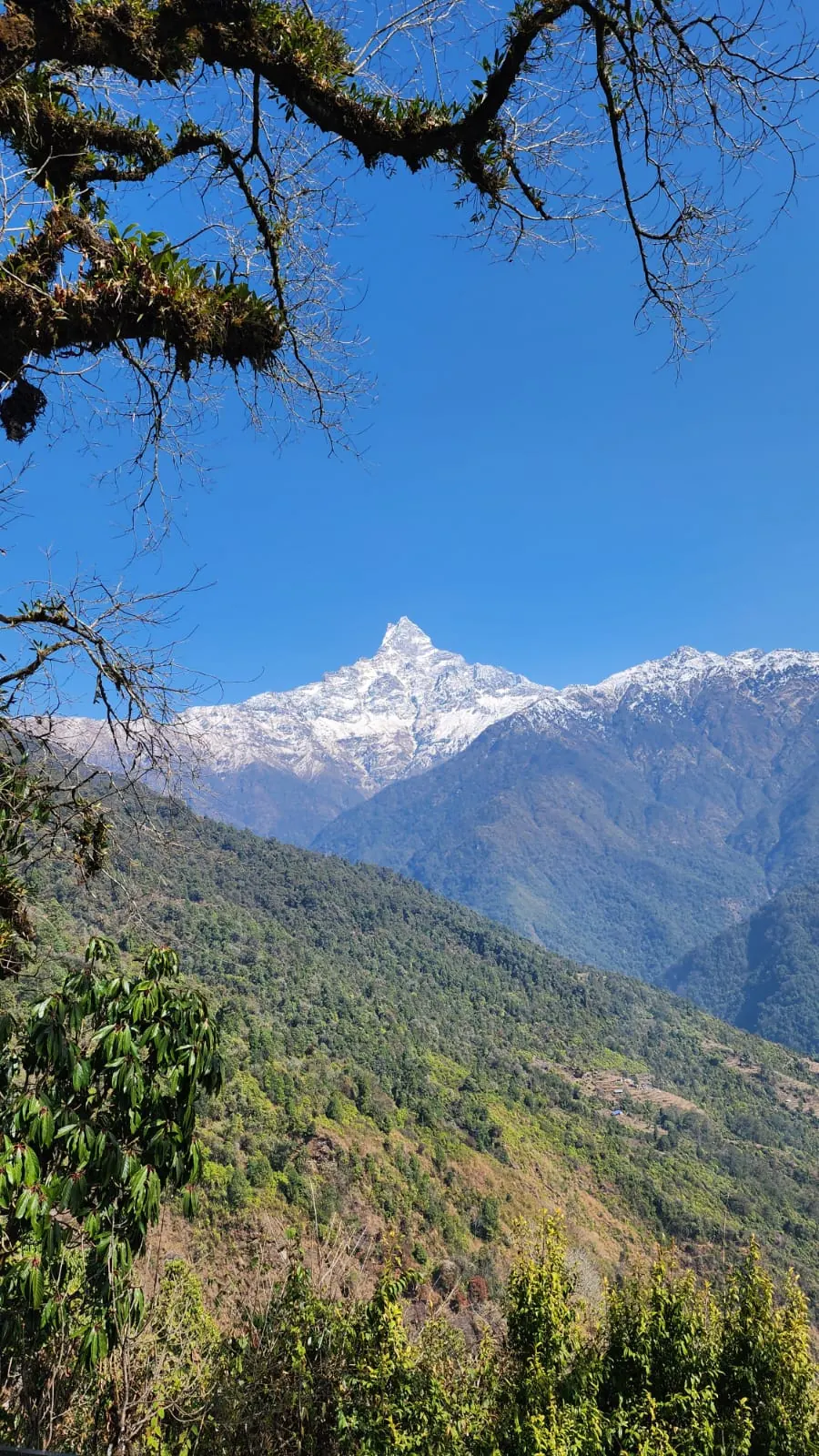
The longest day of the five. The trail climbs through cloud forest of oak, maple, and rhododendron to Forest Camp at 2,550 m, where langur troops are common in the canopy, then continues to Rest Camp at roughly 2,600 m for a short break.
From Rest Camp the forest thins as the trail pushes on to Low Camp at 2,985 m, gaining close to 900 m over the day. This is the day to pace yourself: eat and drink on schedule, and say something if you notice a headache or nausea building.
Arrive Low Camp in the afternoon with the first real views of the Annapurna massif opening up above the treeline. Dinner and an early night, because Day 3 finishes at High Camp.
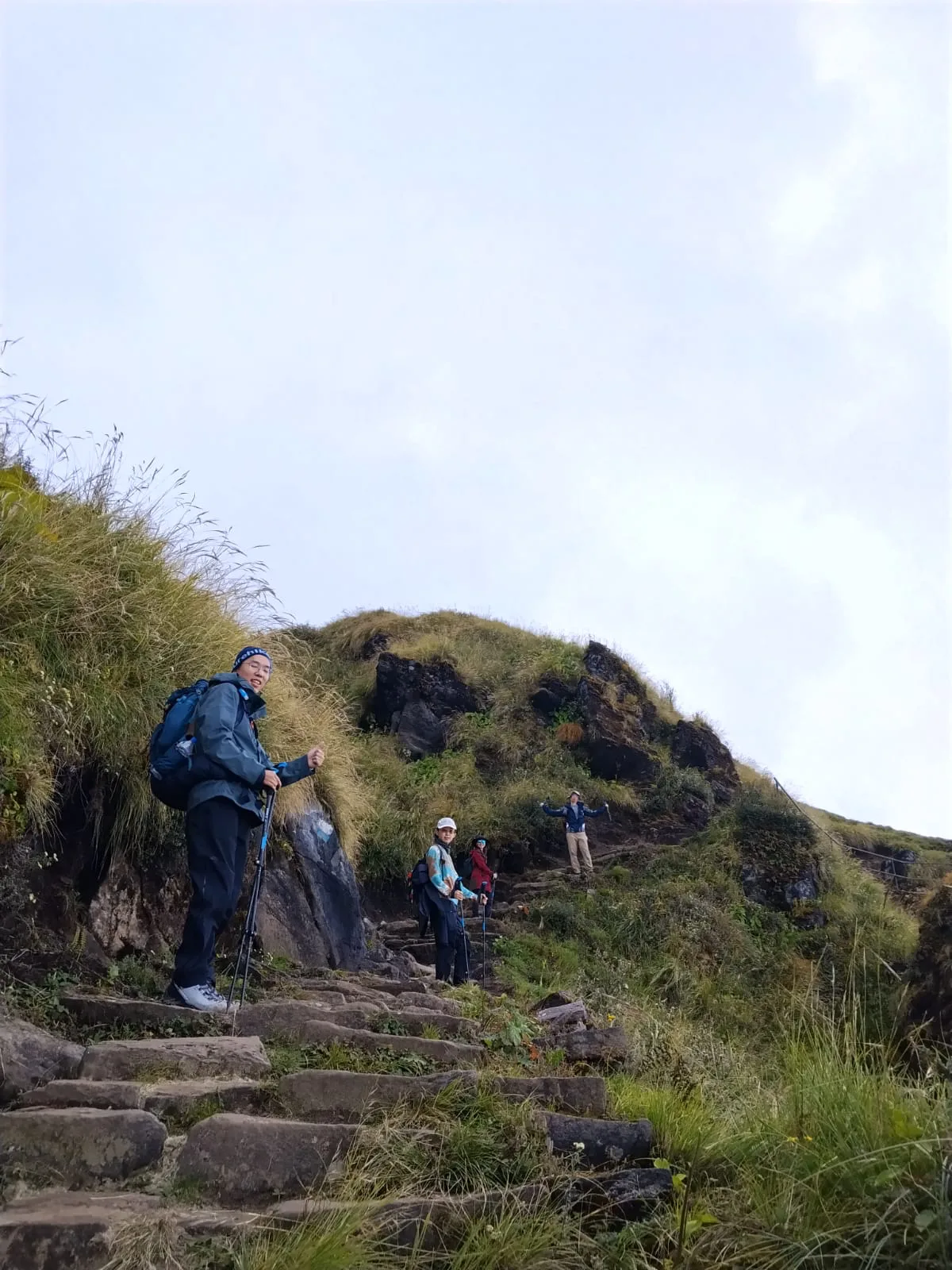
Pitam DeuraliForest CampLow CampPitam DeuraliTrail to Forest CampLow Camp
6 photos from day 2, taken on the trail.
Day 3
Low Camp → Badal Danda → High Camp
Drive
None
Trek
4 – 5 hrs
Distance
~6 km
Altitude
2,985 → 3,210 → 3,580 m
Net change
+595 m
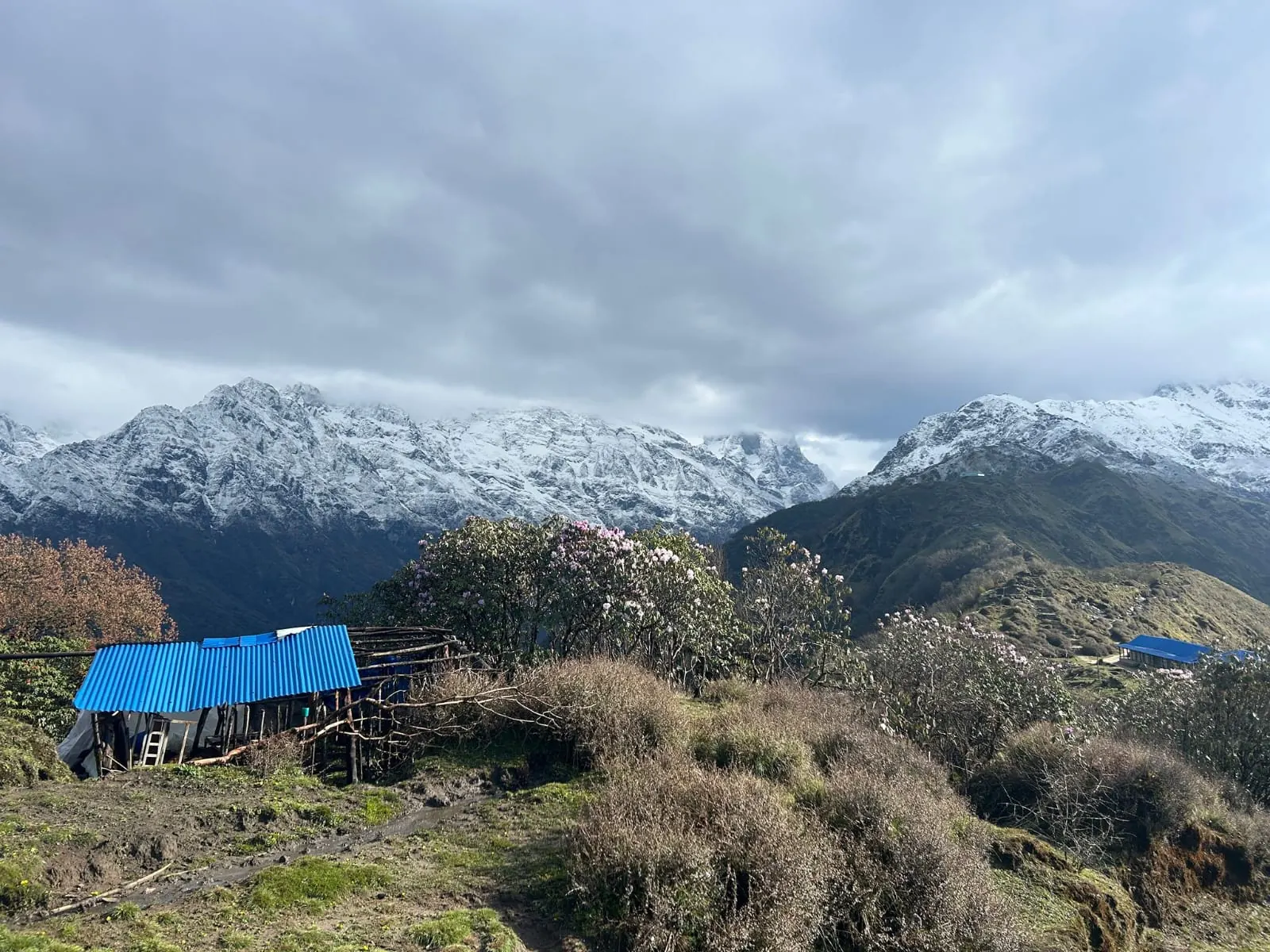
A shorter day on paper, but the altitude starts to matter. The trail breaks out of the last forest above Low Camp and onto the open ridge, crossing Badal Danda (Cloud Ridge) at 3,210 m, where the trees give way to rhododendron scrub and rock.
From Badal Danda the path climbs steadily to High Camp at 3,580 m. We run a pulse-oximetry check on arrival and keep the pace deliberately slow above Low Camp; anyone showing early symptoms is held here rather than pushed on toward the viewpoint. If you are new to walking above 3,000 m, read our guide to altitude sickness before you book.
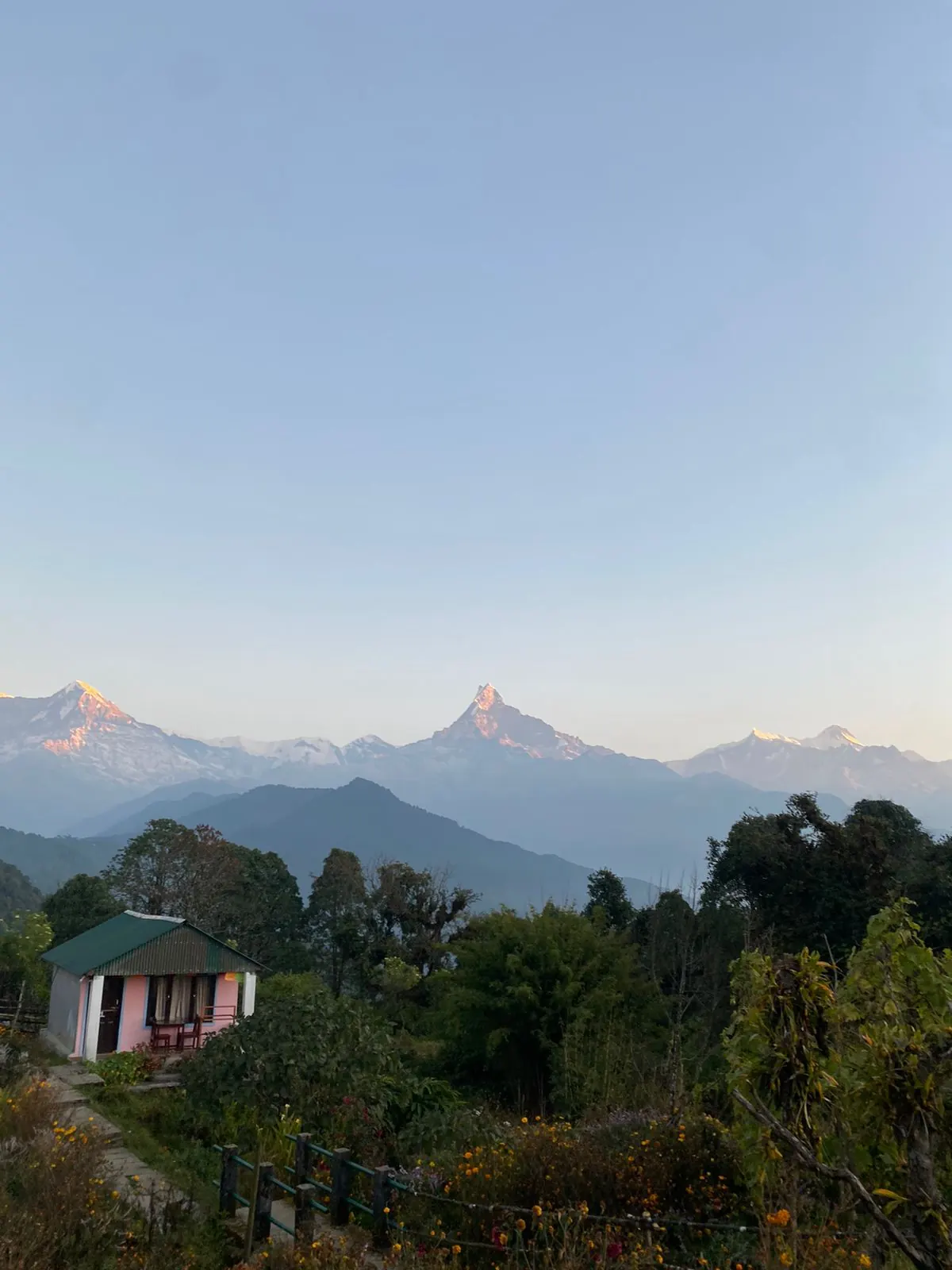
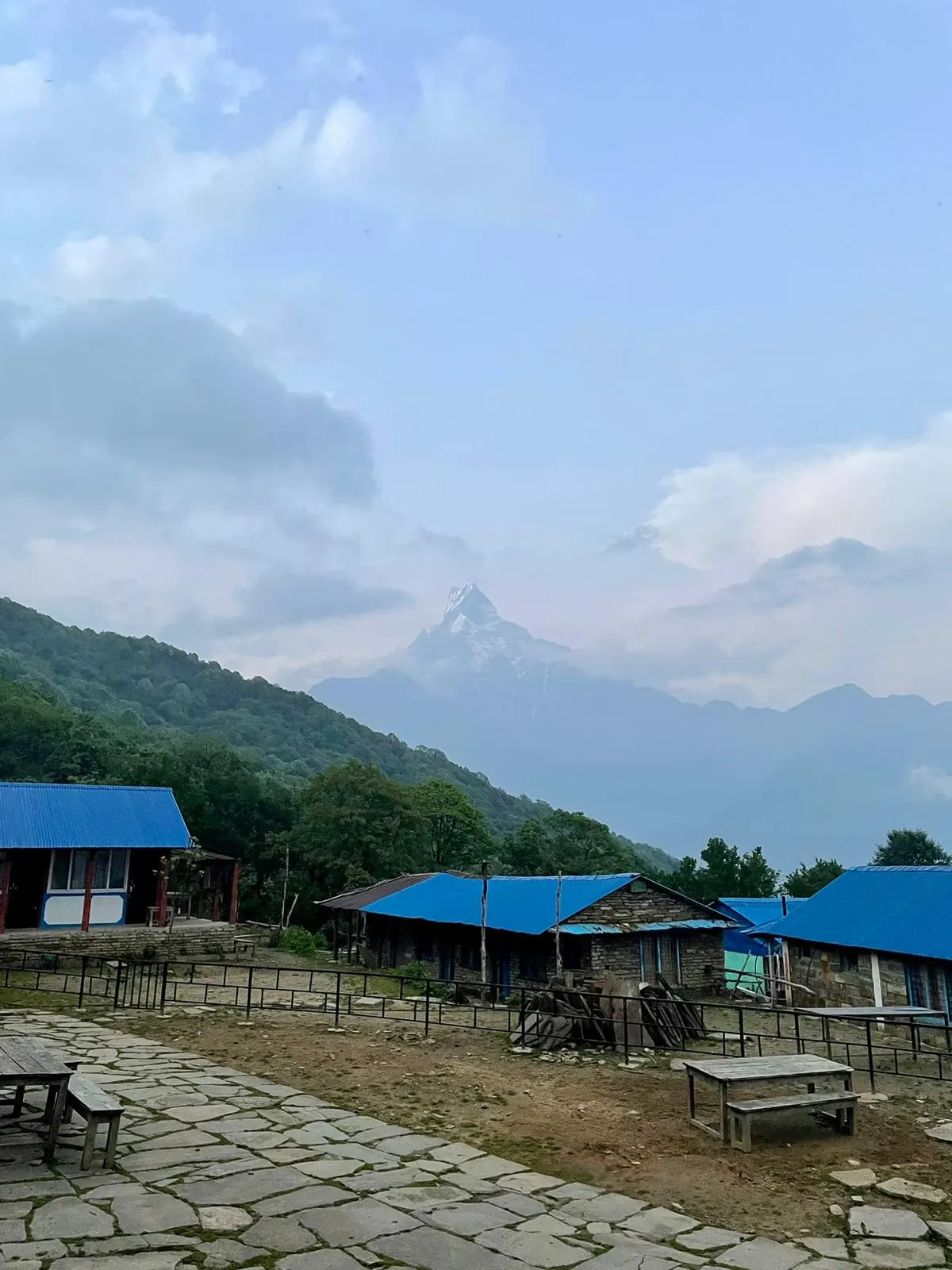
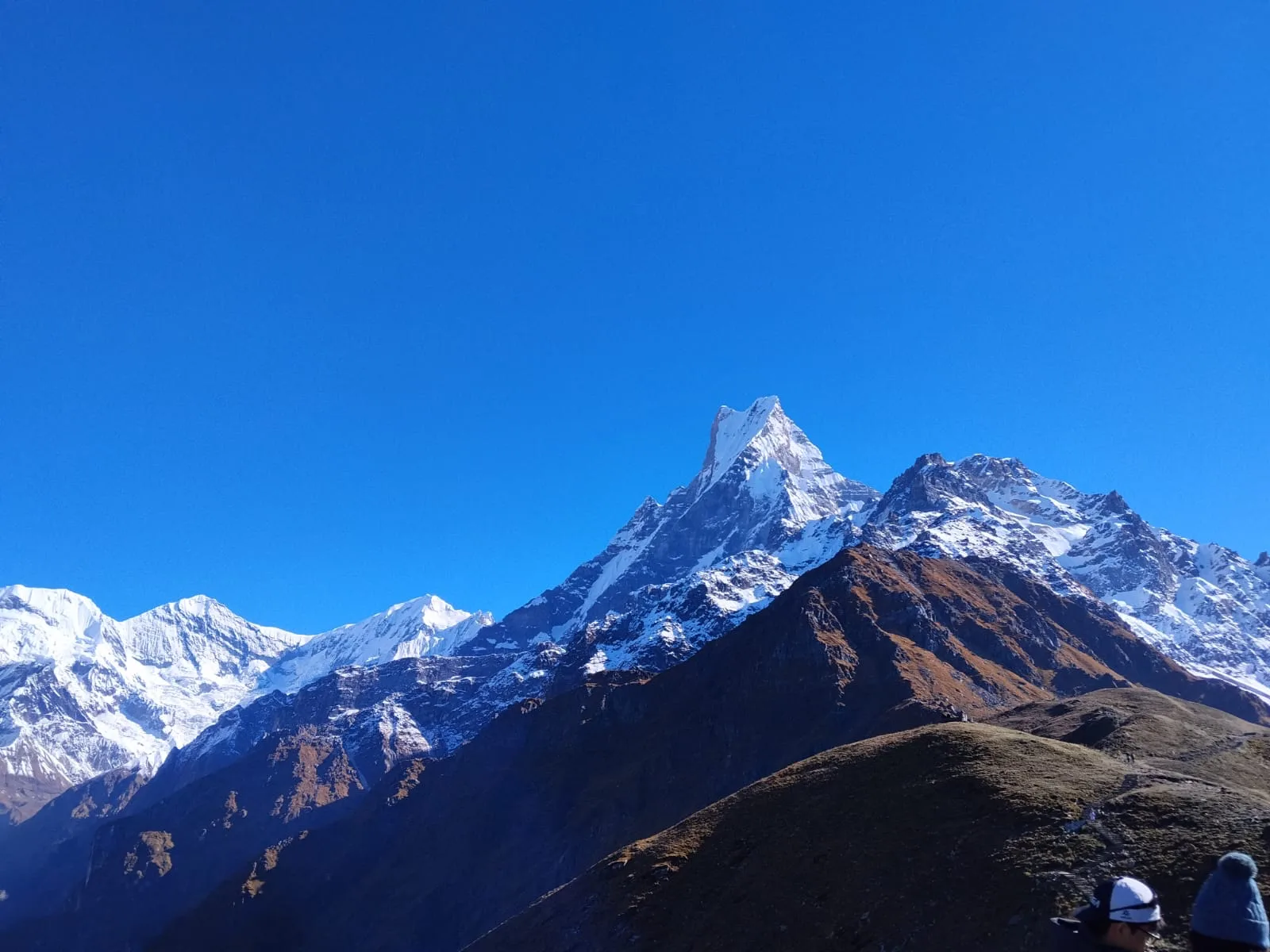
Arrive High Camp in the early afternoon with time to rest before the pre-dawn start. Machhapuchhre stands directly ahead across the valley, and the sunset from the dining hall is the moment most trekkers remember from the whole trip.
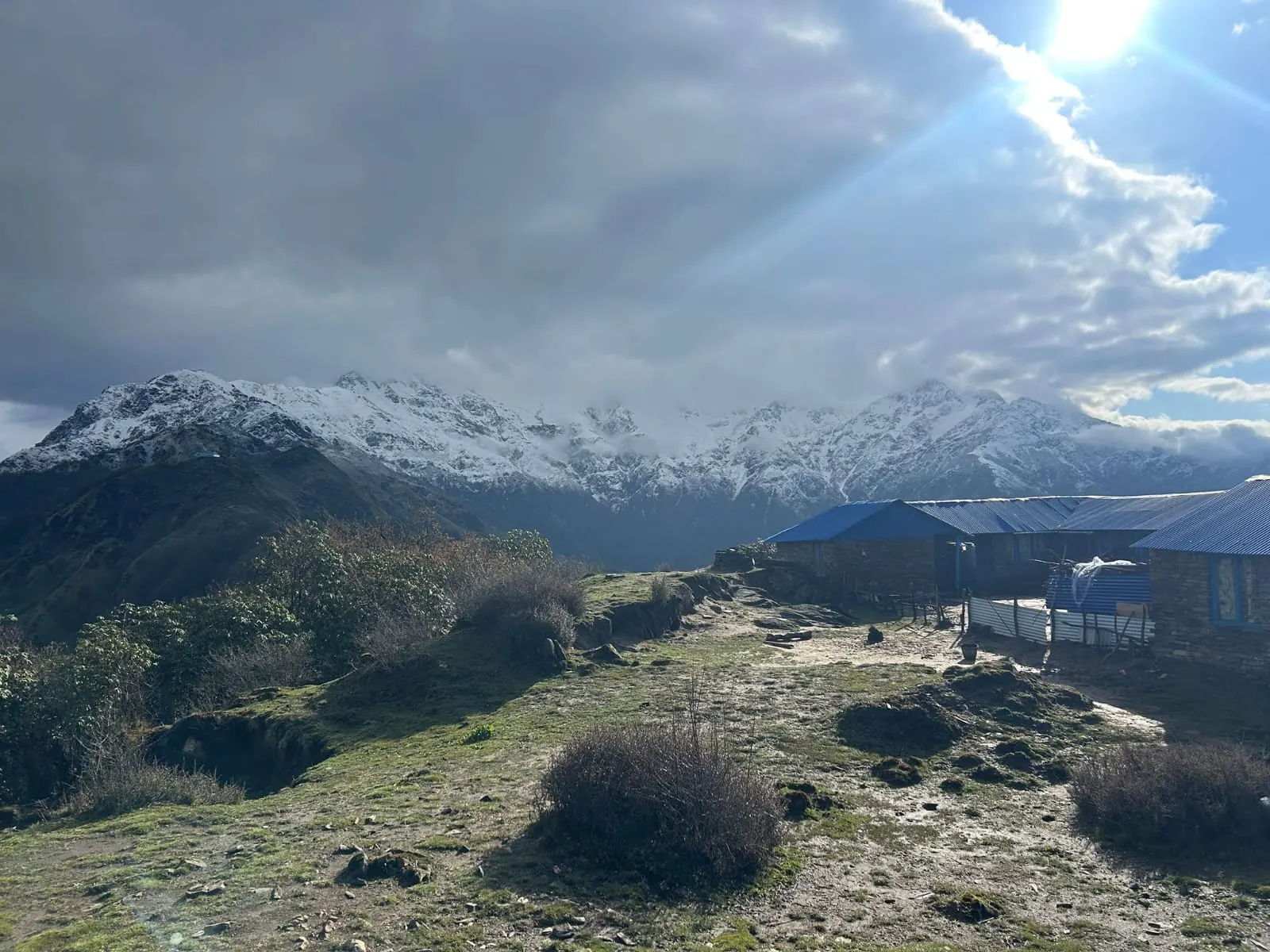
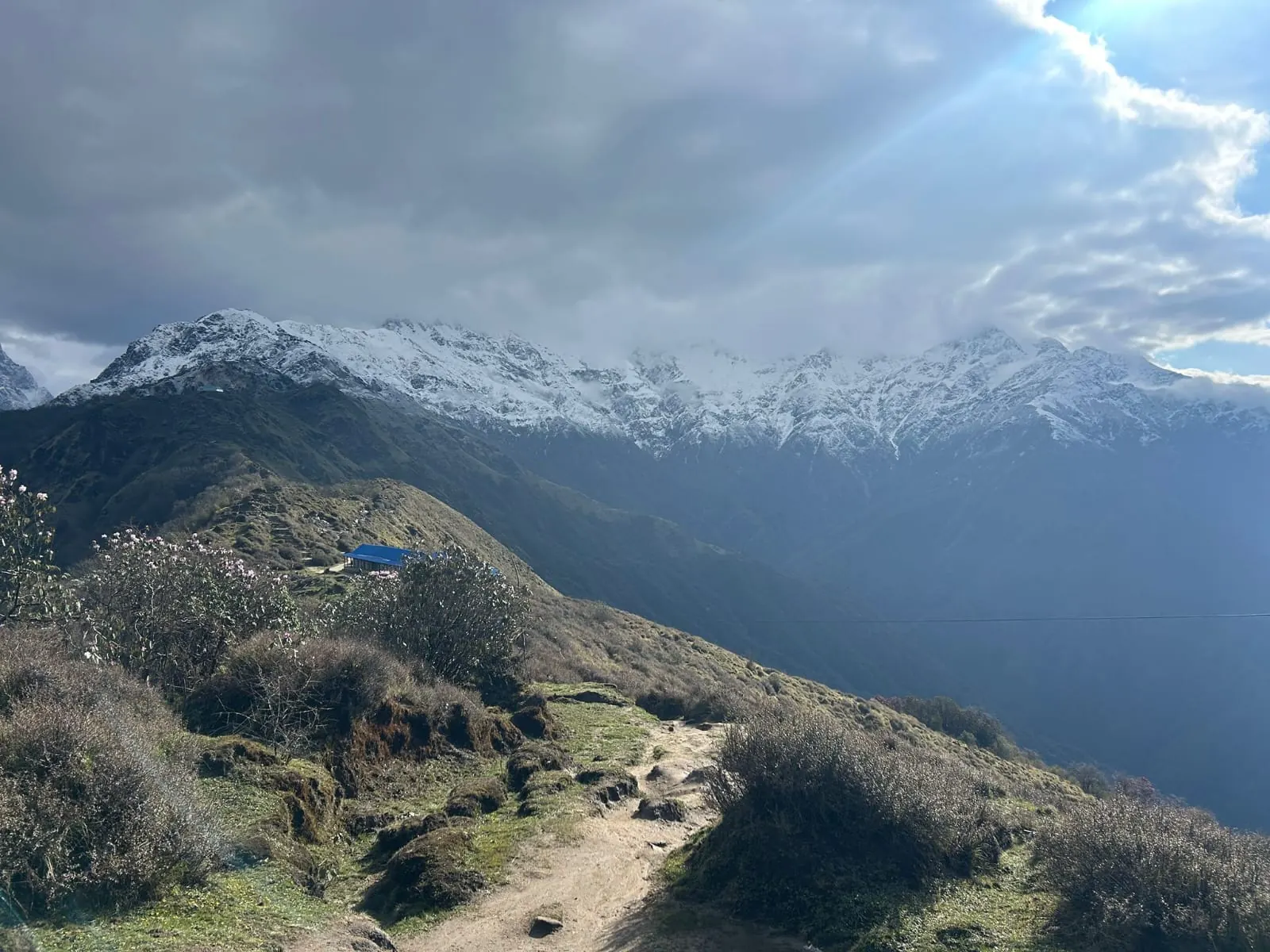
Low CampHigh Camp & Badal DandaTrail to High CampLow CampHigh Camp & Badal DandaHigh Camp & Badal Danda
6 photos from day 3, taken on the trail.
Day 4
High Camp → Upper Viewpoint → Badal Danda
Drive
None
Trek
6 – 7 hrs
Distance
~10 km
Altitude
3,580 → 4,200 → 3,210 m
Net change
+620 m / -990 m
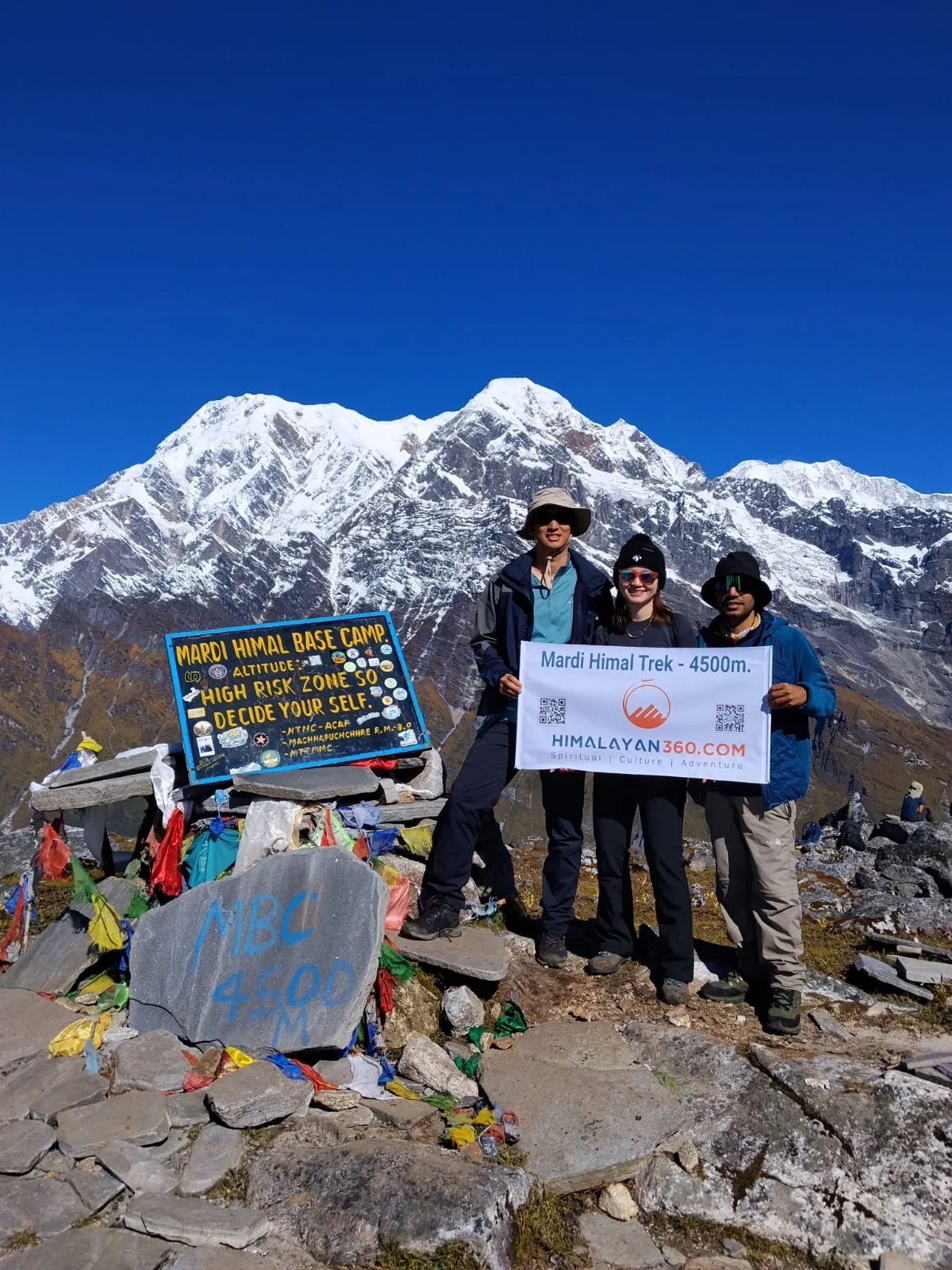
The summit morning. We leave High Camp around 04:30 with headtorches for the climb to the Mardi Himal Upper Viewpoint at 4,200 m. On a clear morning the sun lifts over the eastern peaks while Dhaulagiri sits far to the west and the Annapurna wall fills the sky in front of you. This is the highest point of the trek. Mardi Himal Base Camp at 4,500 m is about 1 hour 30 minutes further along the ridge. If you want to go on, ask your guide, and expect a longer day.
Return to High Camp for a proper breakfast, then descend the ridge to Badal Danda at 3,210 m, between High Camp and Low Camp. Trekking poles matter on this stretch; the drop is steep in places and the knees feel it.
Overnight at Badal Danda. The hard climbing is behind you, and Day 5 is a walk down to the road and a jeep back to the lake.
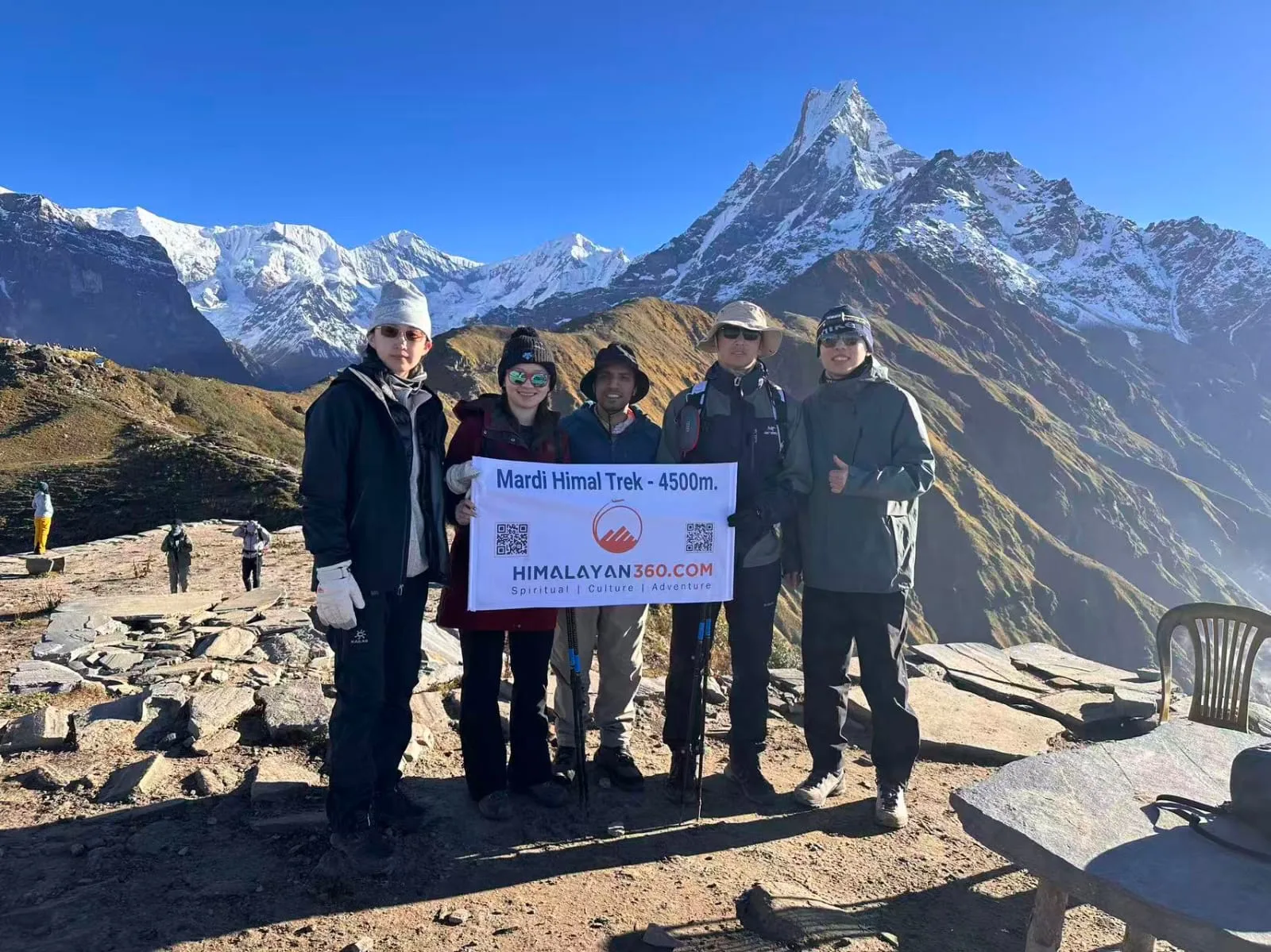
High Camp & Badal DandaUpper ViewpointHigh Camp & Badal DandaMardi Himal Base CampHigh Camp & Badal DandaTrail to the Viewpoint
6 photos from day 4, taken on the trail.
Day 5
Badal Danda → Sidhing → Pokhara
Drive
2.5 to 3 hrs (Sidhing to Pokhara)
Trek
4 – 5 hrs (descent)
Distance
~9 km
Altitude
3,210 → 1,860 → 820 m
Net change
-2,390 m
A steady final descent through terraced farmland to Sidhing at 1,860 m, a working Gurung village where the trekking properly ends. The local jeep meets us here for the road back to Pokhara at 820 m, roughly 2.5 to 3 hours depending on the state of the track.
We reach the Pokhara lakeside by mid to late afternoon. A hot shower and a real bed close out the trip. After four nights on the trail the contrast is the point.
Prices in that list are per person, at the lowest group rate. The 6-day Mardi Himal trek has a gentler daily pace, with the extra day spent on the walk out through Sidhing and Lumre. Every length from 3 to 8 days is set out night by night on the Mardi Himal trek itinerary, and the 5-day route is drawn on a map on its own page. For what to bring, see the packing list.
§ 03 · Prices
Our prices, in yuan.
We charge in US dollars. The yuan figures are approximate: converted at the Nepal Rastra Bank rate of 18 November 2026and rounded to the nearest 5. Your bank’s rate on the day you pay will differ.
Per-person prices by group size, 5-day and 6-day treks
Group size
5 days
About
6 days
About
1 person (private)
USD 508
CNY 3,385
USD 607
CNY 4,045
2 people
USD 380
CNY 2,535
USD 461
CNY 3,075
3 to 5 people
USD 336
CNY 2,240
USD 412
CNY 2,745
6 to 10 people
USD 315
CNY 2,100
USD 390
CNY 2,600
11 to 20 people
USD 294
CNY 1,960
USD 354
CNY 2,360
Joining a fixed departure on your own, you pay the two-person rate: USD 380 (about CNY 2,535) on the 5-day Mardi Himal trek and USD 461 (about CNY 3,075) on the 6-day Mardi Himal trek. Want it private, just your party with your own guide? Add 5% per person. Going private on your own, you pay the 1-person rate. Every itinerary is priced on group booking.
§ 04 · Payment
Paying from China.
Step 1
Deposit
20 % of the trip cost holds your place. Pay it by Visa or Mastercard when you book and pay online, on Himalayan Bank’s secure card page, charged in US dollars. Or send it by bank wire to Everest Bank in Kathmandu.
Step 2
Card fee
Card payments carry a 3.5 % bank charge, 3.75 % at most, passed on at cost. Paying the balance in cash avoids it.
Step 3
Balance
The rest is paid at our Kathmandu office before the trek, in cash (US dollars, euros, pounds, Australian dollars or Nepalese rupees) or by card. Yuan, UnionPay, Alipay and WeChat Pay are not on that list, so bring a Visa or Mastercard card or US dollars from home.
Step 4
On the trail
Above Pokhara there are no card machines, so carry Nepalese rupees for drinks, hot showers, charging and wifi: roughly NPR 2,000 to 3,500 a day.
Our groups run from September to May. Most weeks the 5-day leaves Pokhara on a Sunday and the 6-day on a Thursday, and there are no scheduled groups from June to early September, during the monsoon. These are the 2027 holidays from the State Council notice of 5 November 2026, set against those dates.
9 days off
Spring Festival
5 to 13 February 2027
February is one of the quietest months on the trail. It is cold at High Camp, the last snow of winter falls in the first half of the month, and the skies are often the sharpest of the year.
Group dates in this holiday
Sun 7 Feb, 5-day, back in Pokhara Thu 11 Feb. USD 380 (about CNY 2,535) per person when you join.
5 days off
Labour Day
1 to 5 May 2027
May is still busy in the first half and thins out later. Mornings are clear, and afternoons tend to cloud over with occasional rain.
Sun 2 May, 5-day, back in Pokhara Thu 6 May. USD 380 (about CNY 2,535) per person when you join.
7 days off
National Day (Golden Week)
1 to 7 October 2027
October has the clearest skies of the year and the most trekkers. In 2027 Golden Week is expected to overlap Dashain, Nepal's biggest festival: Fulpati, its seventh day, is listed for 6 October. Buses and flights inside Nepal book out early around Dashain.
Group dates in this holiday
Not published yet.
The notice encourages employers and staff to combine these holidays with paid annual leave. The trek starts and ends in Pokhara, so count your travel days on top of the trek days. Month by month detail is in the best time for the Mardi Himal trek, and every date is on fixed departures.
§ 06 · Guests from China
In their own words.
5reviews from guests from China, copied word for word from Google. Where a review is in Chinese, the English under it is Google’s translation.
DAYONG ZHANG
China · Reviewed November 2026 · Google
服務、講解、線路、餐食安排,超讚👍
Translated from Chinese by Google
The service, explanations, itinerary, and meal arrangements were all excellent! 👍
Xi Zhai
China · Reviewed October 2026 · Google
Excellent trekking experience! The travel company took care of every detail of our trip. Our guide Binod was attentive and professional. He chose a wonderful trail. Huge thanks to Binod and the whole team. Would definitely recommend this company.
hongyang ding
China · Reviewed October 2026 · Google
binod is a good guide with patience and take care of every member in the team
Tommy Wang
China · Reviewed October 2026 · Google
Excellent experience with our great guide Binod here on the Mardi Himal Trek.
Binod was attentive and professional, guiding us safely through forests and high ridges. The trek offers incredible, up-close views of Machhapuchhre and Annapurna range, with peaceful trails and amazing sunrise moments. Thanks to Binod, we had an unforgettable mountain trip. 10/10 recommend!
Yezi Gong
China · Reviewed October 2026 · Google
很好 特别好 推荐向导bino
Translated from Chinese by Google
Very good. Excellent. Highly recommended. (Bino guide)
Video reviews, filmed on the trail
A very unique experience: trekking with our guide Binod
Yes, but it is free. Nepal charges Chinese nationals no tourist visa fee, where most other nationalities pay USD 30 to USD 125. You can get the visa on arrival at Tribhuvan International Airport in Kathmandu after filling in the online tourist visa form, or apply before you travel at the Embassy of Nepal in Beijing or the consulates in Lhasa, Hong Kong and Guangzhou. Your passport should be valid for more than six months.
How much does the Mardi Himal trek cost in yuan?
We charge in US dollars. Per person, the 5-day trek costs USD 294 (about CNY 1,960) in a group of 11 to 20 and USD 508 (about CNY 3,385) for one person on a private trek. Joining a fixed departure on your own, you pay the two-person rate of USD 380 (about CNY 2,535). Yuan figures use the Nepal Rastra Bank rate of 18 November 2026. The price includes the ACAP permit and TIMS card at the foreigner rate, a licensed guide, and teahouse accommodation and meals on the trail. Flights, travel insurance and the Nepal visa fee are not included; for Chinese nationals the visa fee is zero.
Can I fly from China straight to Pokhara?
Not on a scheduled flight. When we checked in November 2026, Pokhara International Airport had no regular flight from China: Himalaya Airlines suspended its weekly Lhasa to Pokhara service, and Sichuan Airlines flights from Chengdu have been charters. Fly into Kathmandu instead. The domestic flight on to Pokhara costs from around USD 87, and USD 100 to 200 in peak season, and the tourist bus costs NPR 1,200 to 1,700.
Can I pay in yuan, or with Alipay, WeChat Pay or UnionPay?
Our prices are in US dollars, and yuan is not one of the currencies we take. Pay the 20 % deposit by Visa or Mastercard on our online payment page, which charges in US dollars, or by bank wire to Everest Bank. The balance is paid at our Kathmandu office before the trek, in cash (US dollars, euros, pounds, Australian dollars or Nepalese rupees) or by card. Alipay, WeChat Pay and UnionPay are not on that list, so bring a Visa or Mastercard card or US dollars.
Can I trek Mardi Himal during Golden Week or the Spring Festival?
The 2027 Spring Festival holiday runs 5 to 13 February 2027 and Golden Week 1 to 7 October 2027. The 5-day trek starts and ends in Pokhara, so add your travel days from China to the five trek days. Of our published dates, the 5-day group leaving Pokhara on Sunday 7 February falls inside the Spring Festival break. October 2027 group dates are not published yet. The State Council notice encourages combining these holidays with paid annual leave.
Do I need a guide and travel insurance?
Yes, both. A licensed guide has been mandatory in the Annapurna Conservation Area since April 2023 for every foreign trekker, Chinese nationals included; only Nepali citizens are exempt. Your travel insurance must cover trekking to at least 4,500 m and helicopter evacuation, with at least USD 10,000 for the evacuation, and we ask for a copy of the policy schedule before the trek starts.
Tell us your group size and the holiday you are planning around, and we will send a fixed quote in US dollars, with the yuan figure at the day’s rate if that is easier.
From mainland China, where WhatsApp was removed from Apple’s App Store in April 2024, you can also email us at [email protected].